
Cell Communication Chapter 11 Overview Cellular Messaging Celltocell

- Slides: 50
Cell Communication Chapter 11
Overview: Cellular Messaging � Cell-to-cell communication is essential for both multicellular and unicellular organisms � Biologists have discovered some universal mechanisms of cellular regulation � Cells most often communicate with each other via chemical signals � For example, the fight-or-flight response is triggered by a signaling molecule called epinephrine
Cellular Messaging
External signals are converted to responses within the cell �Microbes provide a glimpse of the role of cell signaling in the evolution of life
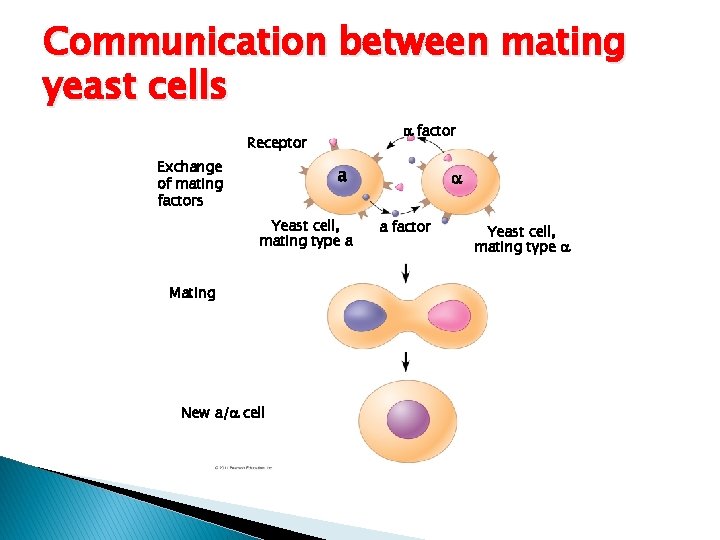
Evolution of Cell Signaling � The yeast, Saccharomyces cerevisiae, has two mating types, a and � Cells of different mating types locate each other via secreted factors specific to each type �A signal transduction pathway is a series of steps by which a signal on a cell’s surface is converted into a specific cellular response � Signal transduction pathways convert signals on a cell’s surface into cellular responses
Communication between mating yeast cells factor Receptor Exchange of mating factors a Yeast cell, mating type a Mating New a/ cell a factor Yeast cell, mating type
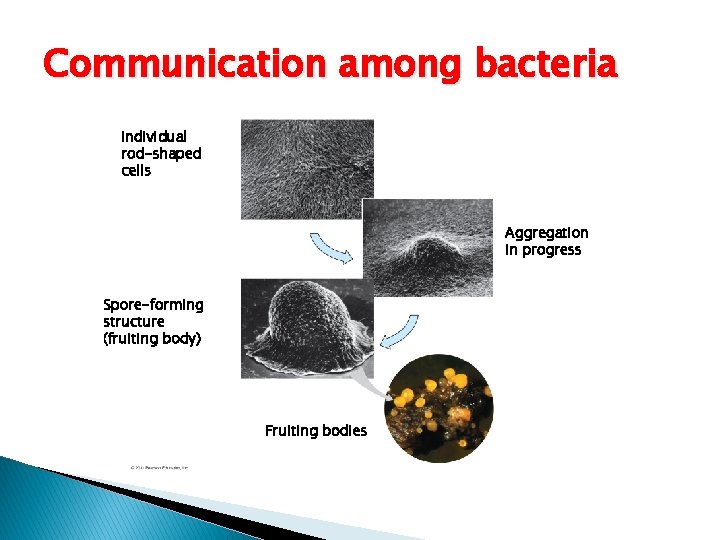
Cell Signaling �Pathway similarities suggest that ancestral signaling molecules evolved in prokaryotes and were modified later in eukaryotes �The concentration of signaling molecules allows bacteria to sense local population density
Communication among bacteria Individual rod-shaped cells Aggregation in progress Spore-forming structure (fruiting body) Fruiting bodies
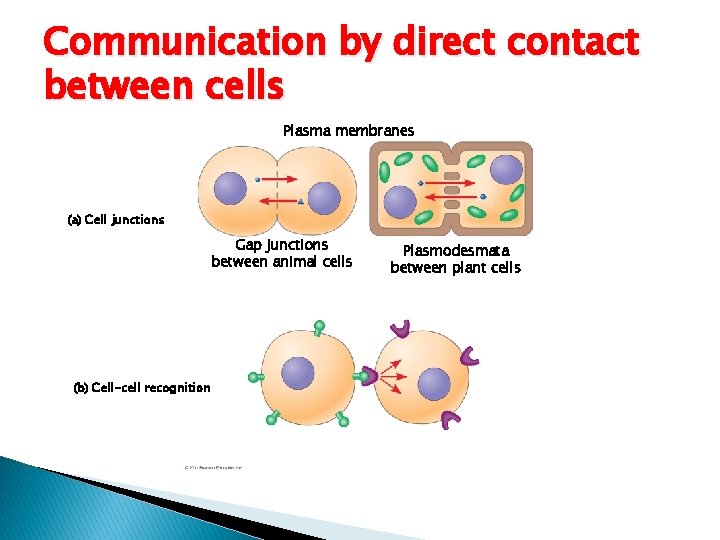
Local and Long-Distance Signaling �Cells in a multicellular organism communicate by chemical messengers �Animal and plant cells have cell junctions that directly connect the cytoplasm of adjacent cells �In local signaling, animal cells may communicate by direct contact, or cell-cell recognition
Communication by direct contact between cells Plasma membranes (a) Cell junctions Gap junctions between animal cells (b) Cell-cell recognition Plasmodesmata between plant cells
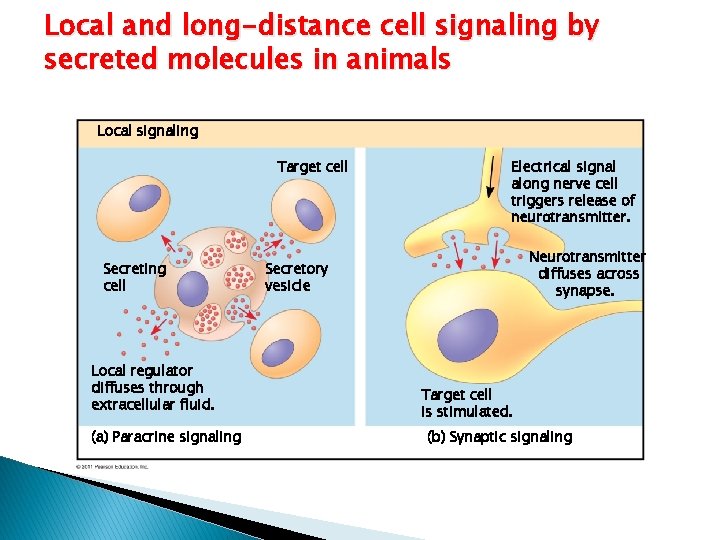
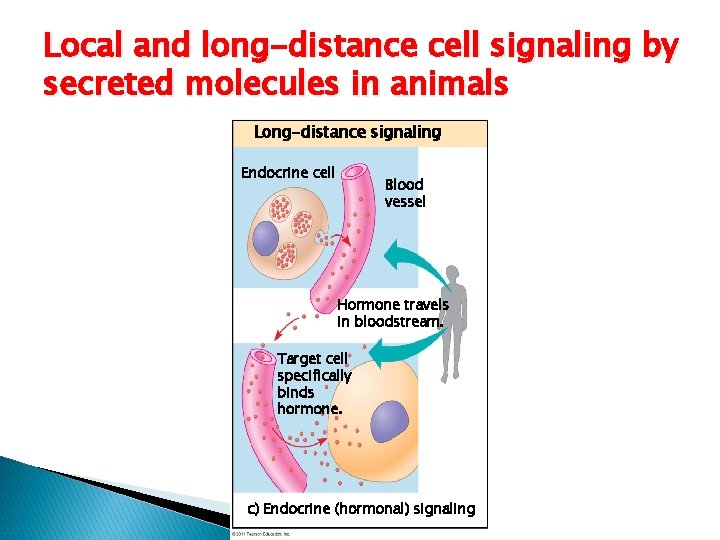
Local and Long-Distance Signaling �In many other cases, animal cells communicate using local regulators, messenger molecules that travel only short distances �In long-distance signaling, plants and animals use chemicals called hormones �The ability of a cell to respond to a signal depends on whether or not it has a receptor specific to that signal
Local and long-distance cell signaling by secreted molecules in animals Local signaling Target cell Secreting cell Local regulator diffuses through extracellular fluid. (a) Paracrine signaling Electrical signal along nerve cell triggers release of neurotransmitter. Neurotransmitter diffuses across synapse. Secretory vesicle Target cell is stimulated. (b) Synaptic signaling
Local and long-distance cell signaling by secreted molecules in animals Long-distance signaling Endocrine cell Blood vessel Hormone travels in bloodstream. Target cell specifically binds hormone. c) Endocrine (hormonal) signaling
The Three Stages of Cell Signaling: A Preview �Earl W. Sutherland discovered how the hormone epinephrine acts on cells �Sutherland suggested that cells receiving signals went through three processes ◦ Reception ◦ Transduction ◦ Response
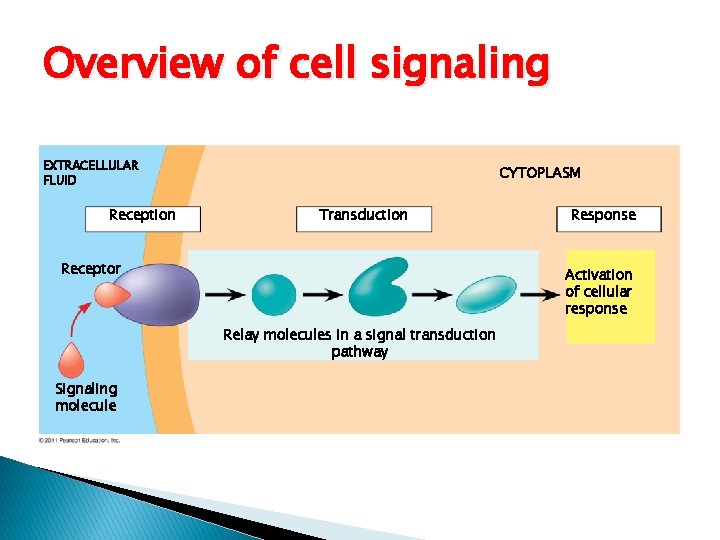
Overview of cell signaling EXTRACELLULAR FLUID Reception CYTOPLASM Transduction Receptor Activation of cellular response Relay molecules in a signal transduction pathway Signaling molecule Response
Reception: A signaling molecule binds to a receptor protein, causing it to change shape �The binding between a signal molecule (ligand) and receptor is highly specific �A shape change in a receptor is often the initial transduction of the signal �Most signal receptors are plasma membrane proteins
Receptors in the Plasma Membrane �Most water-soluble signal molecules bind to specific sites on receptor proteins that span the plasma membrane �There are three main types of membrane receptors: ◦ G protein-coupled receptors ◦ Receptor tyrosine kinases ◦ Ion channel receptors
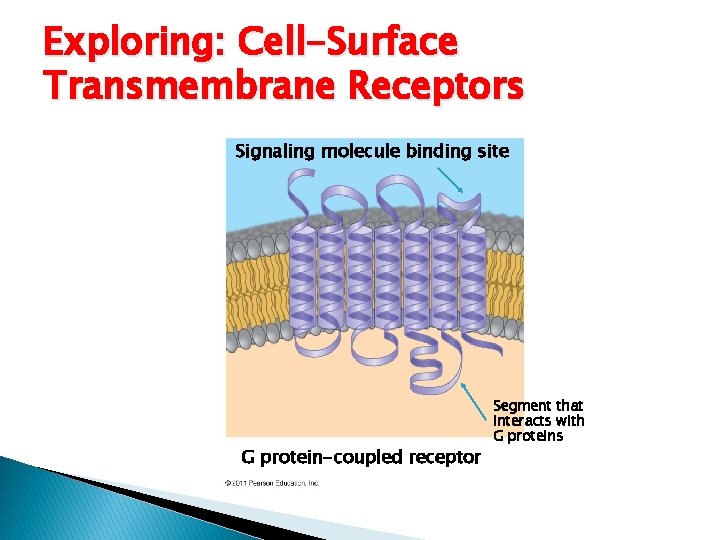
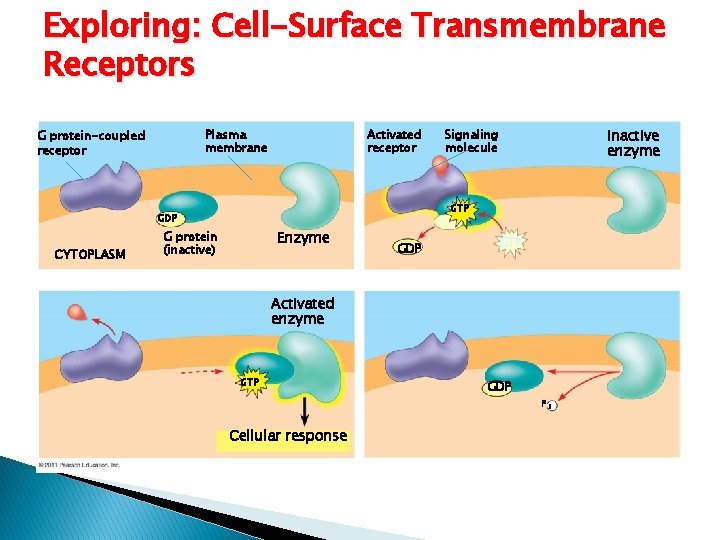
Receptors in the Plasma Membrane �G protein-coupled receptors (GPCRs) are the largest family of cell-surface receptors �A GPCR is a plasma membrane receptor that works with the help of a G protein �The G protein acts as an on/off switch: If GDP is bound to the G protein, the G protein is inactive
Exploring: Cell-Surface Transmembrane Receptors Signaling molecule binding site G protein-coupled receptor Segment that interacts with G proteins
Exploring: Cell-Surface Transmembrane Receptors Plasma membrane G protein-coupled receptor Activated receptor GTP GDP CYTOPLASM Inactive enzyme Signaling molecule Enzyme G protein (inactive) GDP GTP Activated enzyme GTP GDP P Cellular response i
Exploring: Cell-Surface Transmembrane Receptors �Receptor tyrosine kinases (RTKs) are membrane receptors that attach phosphates to tyrosines �A receptor tyrosine kinase can trigger multiple signal transduction pathways at once �Abnormal functioning of RTKs is associated with many types of cancers
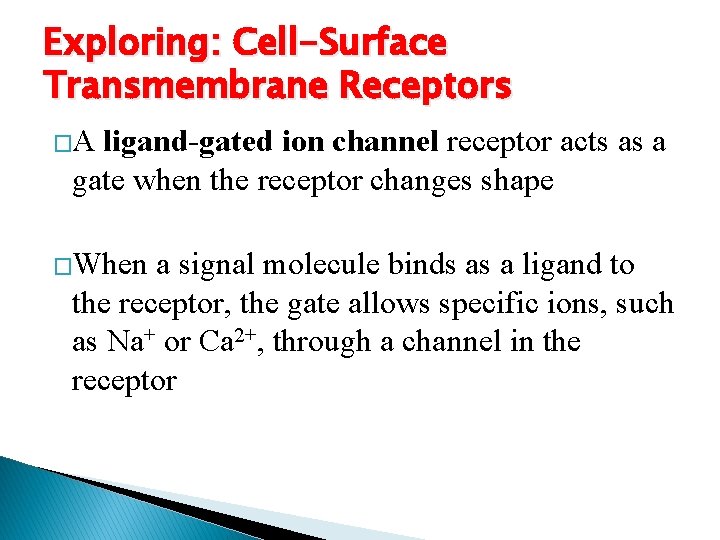
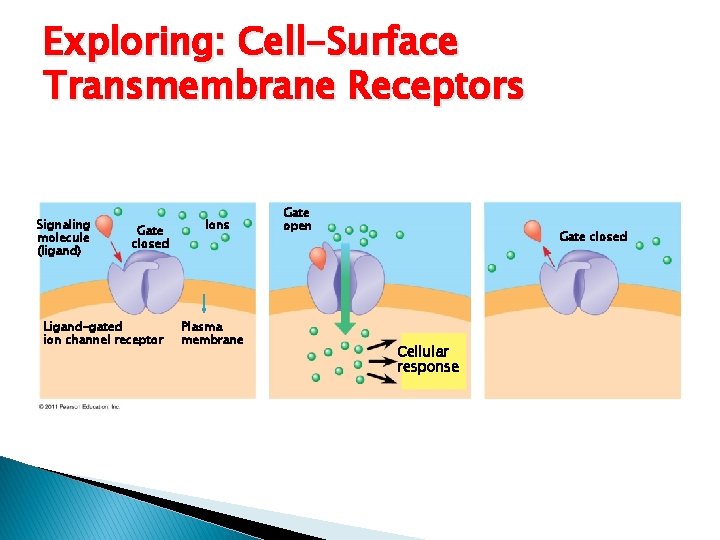
Exploring: Cell-Surface Transmembrane Receptors �A ligand-gated ion channel receptor acts as a gate when the receptor changes shape �When a signal molecule binds as a ligand to the receptor, the gate allows specific ions, such as Na+ or Ca 2+, through a channel in the receptor
Exploring: Cell-Surface Transmembrane Receptors Signaling molecule (ligand) Gate closed Ligand-gated ion channel receptor Ions Plasma membrane Gate open Gate closed Cellular response
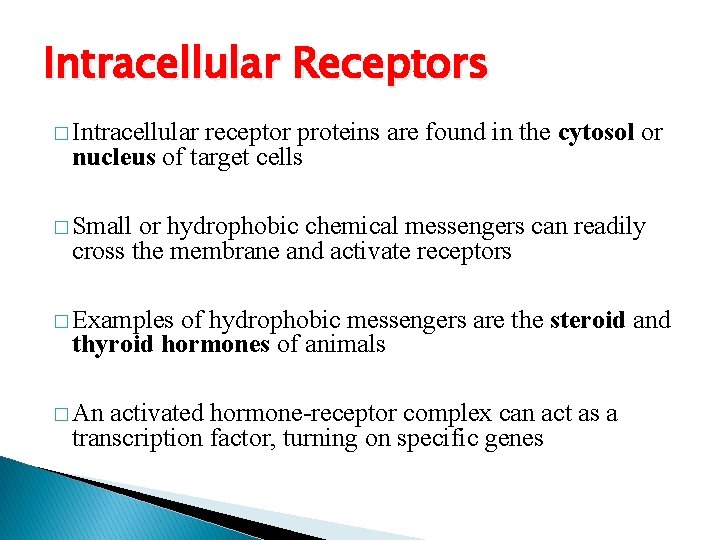
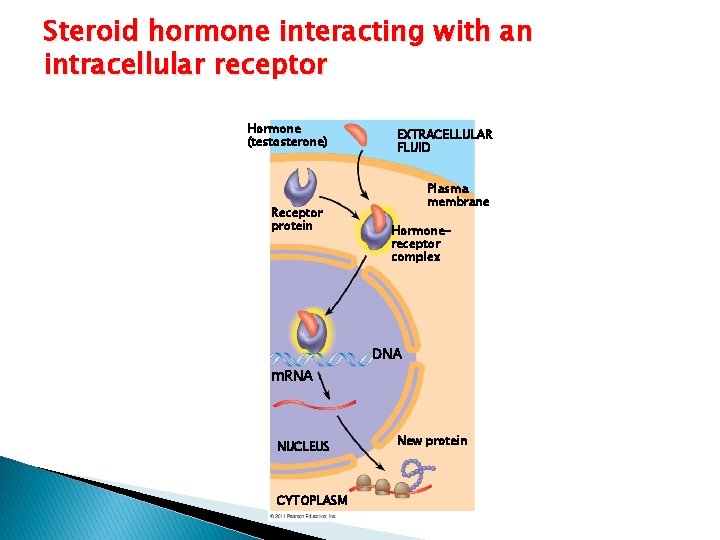
Intracellular Receptors � Intracellular receptor proteins are found in the cytosol or nucleus of target cells � Small or hydrophobic chemical messengers can readily cross the membrane and activate receptors � Examples of hydrophobic messengers are the steroid and thyroid hormones of animals � An activated hormone-receptor complex can act as a transcription factor, turning on specific genes
Steroid hormone interacting with an intracellular receptor Hormone (testosterone) Receptor protein EXTRACELLULAR FLUID Plasma membrane Hormonereceptor complex DNA m. RNA NUCLEUS CYTOPLASM New protein
Transduction: Cascades of molecular interactions relay signals from receptors to target molecules in the cell �Signal transduction usually involves multiple steps �Multistep pathways can amplify a signal: A few molecules can produce a large cellular response �Multistep pathways provide more opportunities for coordination and regulation of the cellular response
Signal Transduction Pathways �The molecules that relay a signal from receptor to response are mostly proteins �Like falling dominoes, the receptor activates another protein, which activates another, and so on, until the protein producing the response is activated �At each step, the signal is transduced into a different form, usually a shape change in a protein
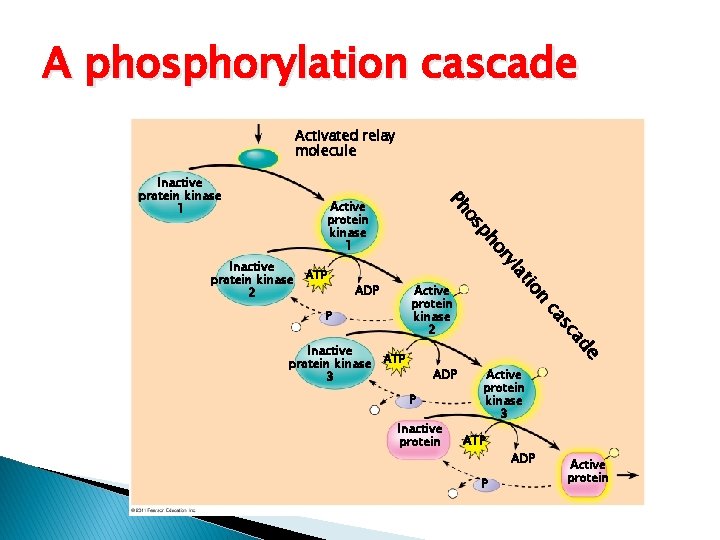
Protein Phosphorylation and Dephosphorylation �In many pathways, the signal is transmitted by a cascade of protein phosphorylations �Protein kinases transfer phosphates from ATP to protein, a process called phosphorylation
Protein Phosphorylation and Dephosphorylation � Protein phosphatases remove the phosphates from proteins, a process called dephosphorylation � This phosphorylation and dephosphorylation system acts as a molecular switch, turning activities on and off or up or down, as required
A phosphorylation cascade Activated relay molecule Inactive protein kinase 1 or ph Active protein kinase 2 ad sc e ATP ca Inactive protein kinase 3 n P io ADP at yl ATP os Inactive protein kinase 2 Ph Active protein kinase 1 ADP P Inactive protein Active protein kinase 3 ATP P ADP Active protein
Small Molecules and Ions as Second Messengers � The extracellular signal molecule (ligand) that binds to the receptor is a pathway’s “first messenger” � Second messengers are small, nonprotein, water-soluble molecules or ions that spread throughout a cell by diffusion � Second messengers participate in pathways initiated by GPCRs and RTKs � Cyclic AMP and calcium ions are common second messengers
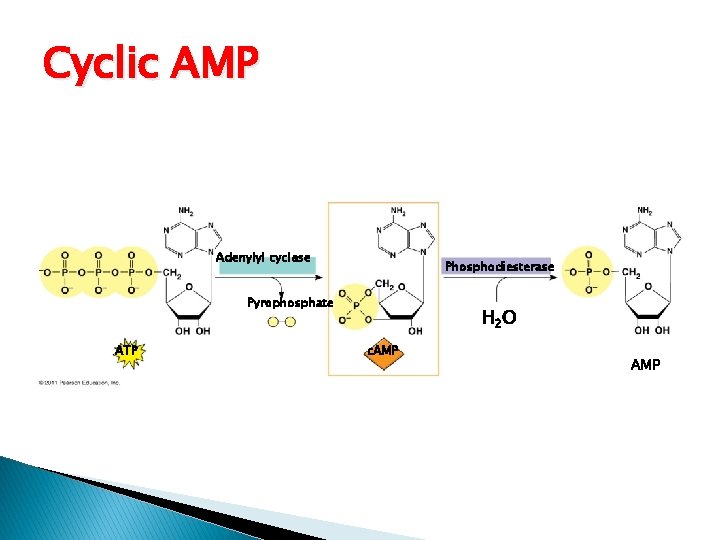
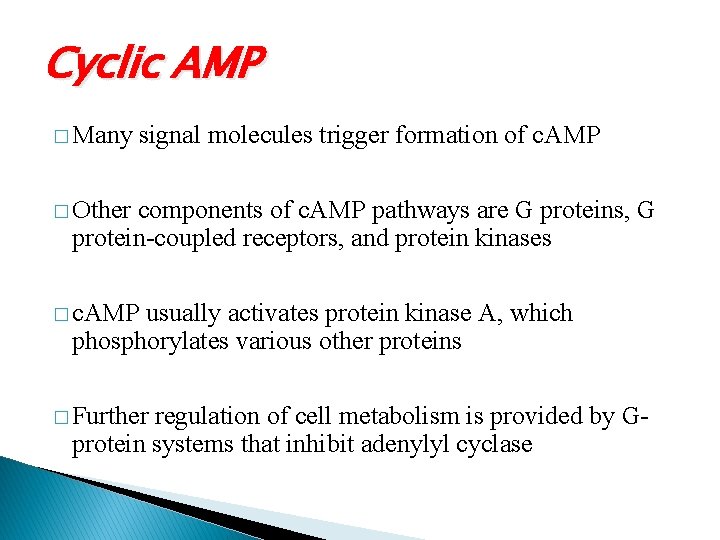
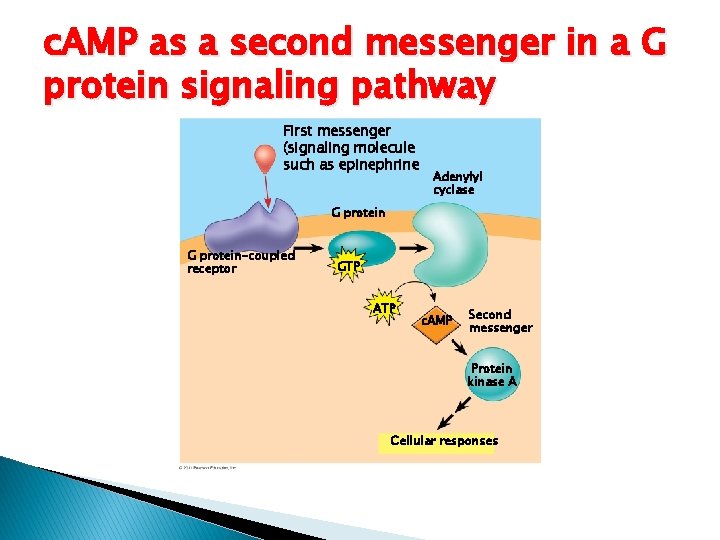
Cyclic AMP • Cyclic AMP (c. AMP) is one of the most widely used second messengers • Adenylyl cyclase, an enzyme in the plasma membrane, converts ATP to c. AMP in response to an extracellular signal
Cyclic AMP Adenylyl cyclase Phosphodiesterase Pyrophosphate ATP H 2 O c. AMP
Cyclic AMP � Many signal molecules trigger formation of c. AMP � Other components of c. AMP pathways are G proteins, G protein-coupled receptors, and protein kinases � c. AMP usually activates protein kinase A, which phosphorylates various other proteins � Further regulation of cell metabolism is provided by Gprotein systems that inhibit adenylyl cyclase
c. AMP as a second messenger in a G protein signaling pathway First messenger (signaling molecule such as epinephrine Adenylyl cyclase G protein-coupled receptor GTP ATP c. AMP Second messenger Protein kinase A Cellular responses
Calcium Ions and Inositol Triphosphate (IP 3) �Calcium ions (Ca 2+) act as a second messenger in many pathways �Calcium is an important second messenger because cells can regulate its concentration
Response: Cell signaling leads to regulation of transcription or cytoplasmic activities �The cell’s response to an extracellular signal is sometimes called the “output response”
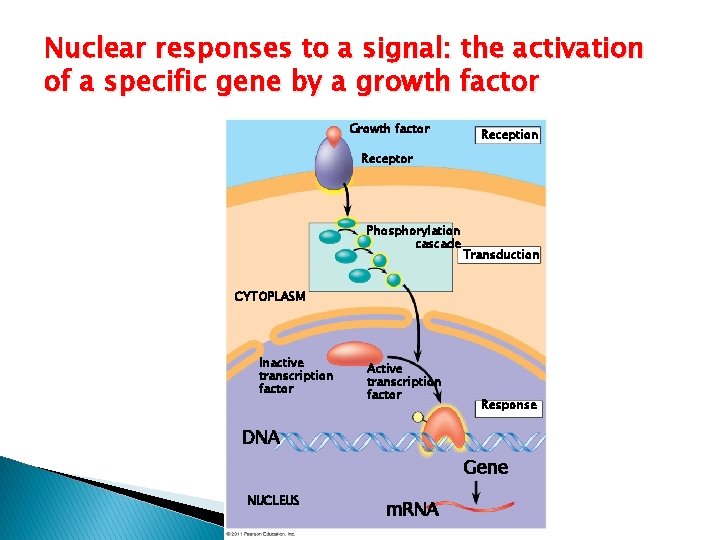
Nuclear and Cytoplasmic Responses � Ultimately, a signal transduction pathway leads to regulation of one or more cellular activities � The response may occur in the cytoplasm or in the nucleus � Many signaling pathways regulate the synthesis of enzymes or other proteins, usually by turning genes on or off in the nucleus � The final activated molecule in the signaling pathway may function as a transcription factor
Nuclear responses to a signal: the activation of a specific gene by a growth factor Growth factor Reception Receptor Phosphorylation cascade Transduction CYTOPLASM Inactive transcription factor Active transcription factor Response DNA Gene NUCLEUS m. RNA
Cell signaling �Signaling pathways can also affect the overall behavior of a cell, for example, changes in cell shape
Fine-Tuning of the Response �There are four aspects of fine-tuning to consider: ◦ Amplification of the signal (and thus the response) ◦ Specificity of the response ◦ Overall efficiency of response, enhanced by scaffolding proteins ◦ Termination of the signal
Signal Amplification �Enzyme �At cascades amplify the cell’s response each step, the number of activated products is much greater than in the preceding step
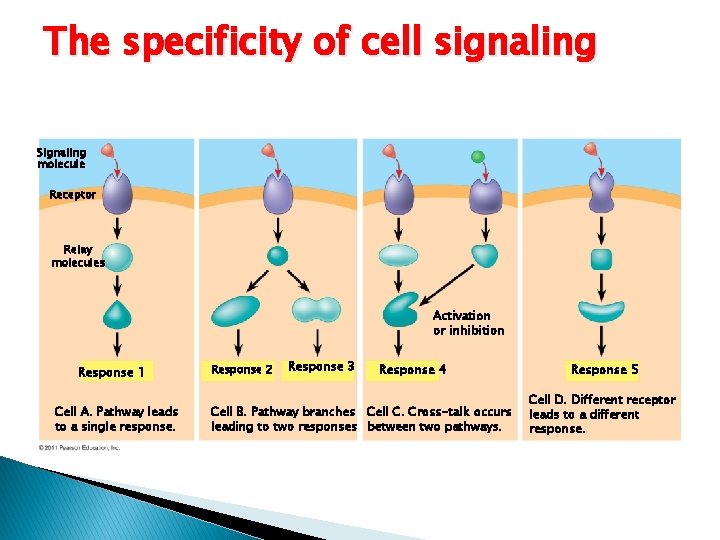
The Specificity of Cell Signaling and Coordination of the Response �Different kinds of cells have different collections of proteins �These different proteins allow cells to detect and respond to different signals �Even the same signal can have different effects in cells with different proteins and pathways �Pathway branching and “cross-talk” further help the cell coordinate incoming signals
The specificity of cell signaling Signaling molecule Receptor Relay molecules Activation or inhibition Response 1 Cell A. Pathway leads to a single response. Response 2 Response 3 Response 4 Cell B. Pathway branches Cell C. Cross-talk occurs leading to two responses between two pathways. Response 5 Cell D. Different receptor leads to a different response.
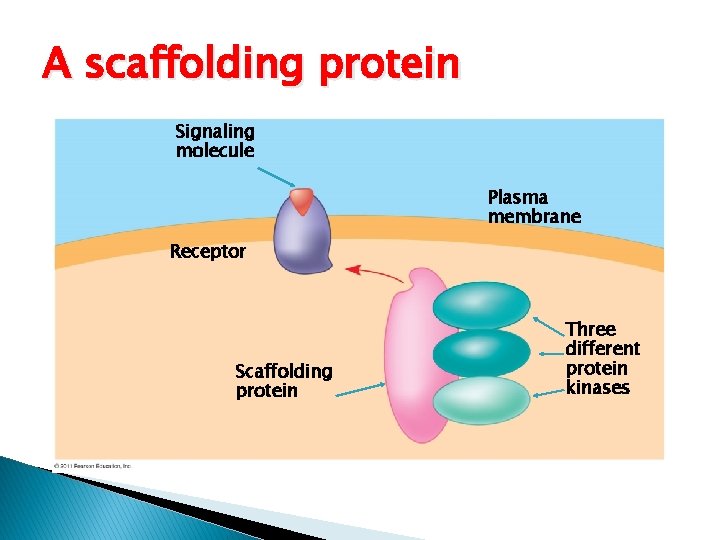
Signaling Efficiency: Scaffolding Proteins and Signaling Complexes �Scaffolding proteins are large relay proteins to which other relay proteins are attached �Scaffolding proteins can increase the signal transduction efficiency by grouping together different proteins involved in the same pathway �In some cases, scaffolding proteins may also help activate some of the relay proteins
A scaffolding protein Signaling molecule Plasma membrane Receptor Scaffolding protein Three different protein kinases
Termination of the Signal �Inactivation mechanisms are an essential aspect of cell signaling �If ligand concentration falls, fewer receptors will be bound �Unbound receptors revert to an inactive state
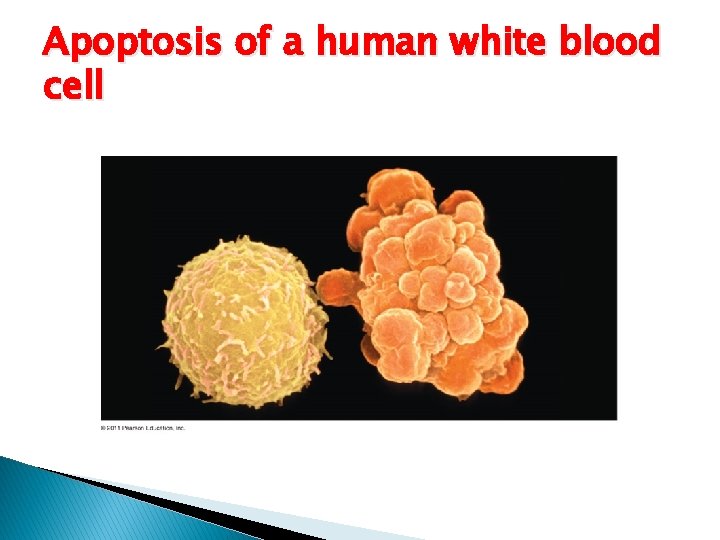
Apoptosis integrates multiple cellsignaling pathways �Apoptosis suicide is programmed or controlled cell �Components of the cell are chopped up and packaged into vesicles that are digested by scavenger cells �Apoptosis prevents enzymes from leaking out of a dying cell and damaging neighboring cells
Apoptosis of a human white blood cell
Apoptotic Pathways and the Signals That Trigger Them � Caspases are the main proteases (enzymes that cut up proteins) that carry out apoptosis � Apoptosis can be triggered by: ◦ An extracellular death-signaling ligand ◦ DNA damage in the nucleus ◦ Protein misfolding in the endoplasmic reticulum