
Cell Communication AP Biology The Cellular Internet All
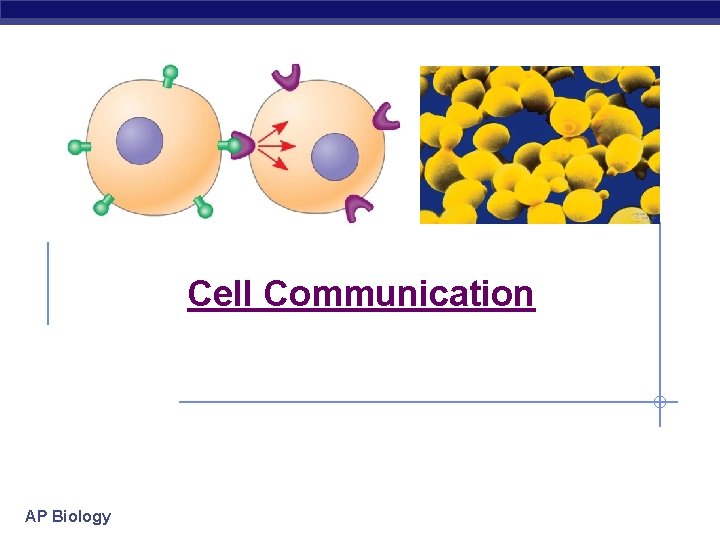
Cell Communication AP Biology
The “Cellular Internet” • All multicellular organisms must “communicate and cooperate” to maintain homeostasis • Science has identified universal (meaning ALL life) mechanisms of cell-to-cell communication. • Communication in cells is similar to communication in general. Cells communicate by sending/receiving signals and then converting the signals into a response Copyright © 2005 Pearson Education, Inc. publishing as Benjamin Cummings
Communication Methods • Cell Signaling occurs using chemical messengers (proteins, steroids, electrical impulses, etc) that pass from one cell to another 1. 2. Local signaling occurs over short distances • Ex: Cell-Cell Recognition Proteins attached to cell exterior; glycolipids and glycoproteins (e. g. blood type proteins); cells must TOUCH at least temporarily • Ex: Local regulators (chem signals from the neighboring cells); communication between cells in the same area Long distance signaling occurs over larger distances • Ex: Hormones (chemical messengers in the form of proteins or steroids) are put into the blood and travel through the body until they reach the target cell Copyright © 2005 Pearson Education, Inc. publishing as Benjamin Cummings
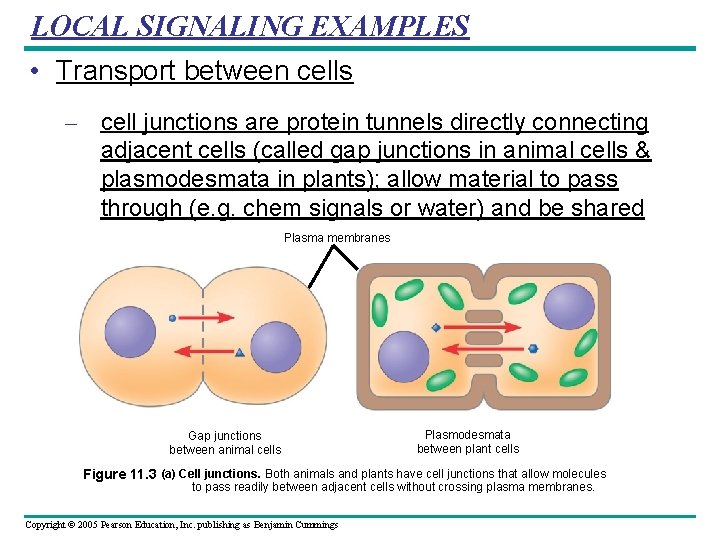
LOCAL SIGNALING EXAMPLES • Transport between cells – cell junctions are protein tunnels directly connecting adjacent cells (called gap junctions in animal cells & plasmodesmata in plants); allow material to pass through (e. g. chem signals or water) and be shared Plasma membranes Gap junctions between animal cells Plasmodesmata between plant cells Figure 11. 3 (a) Cell junctions. Both animals and plants have cell junctions that allow molecules to pass readily between adjacent cells without crossing plasma membranes. Copyright © 2005 Pearson Education, Inc. publishing as Benjamin Cummings
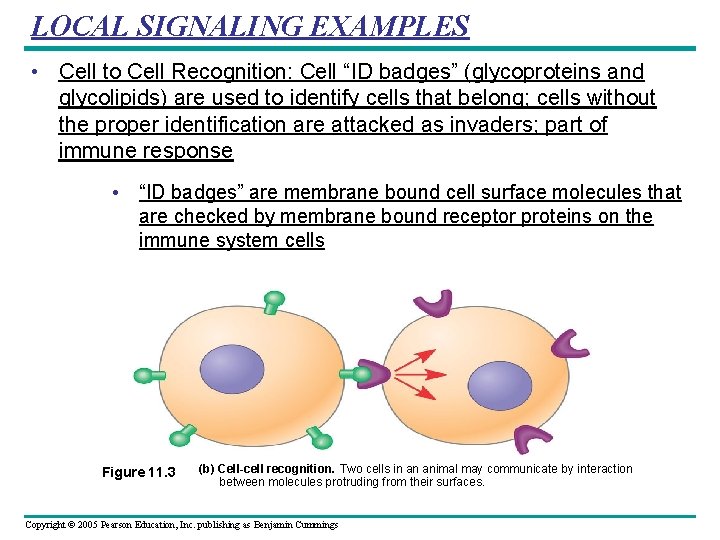
LOCAL SIGNALING EXAMPLES • Cell to Cell Recognition: Cell “ID badges” (glycoproteins and glycolipids) are used to identify cells that belong; cells without the proper identification are attacked as invaders; part of immune response • “ID badges” are membrane bound cell surface molecules that are checked by membrane bound receptor proteins on the immune system cells Figure 11. 3 (b) Cell-cell recognition. Two cells in an animal may communicate by interaction between molecules protruding from their surfaces. Copyright © 2005 Pearson Education, Inc. publishing as Benjamin Cummings
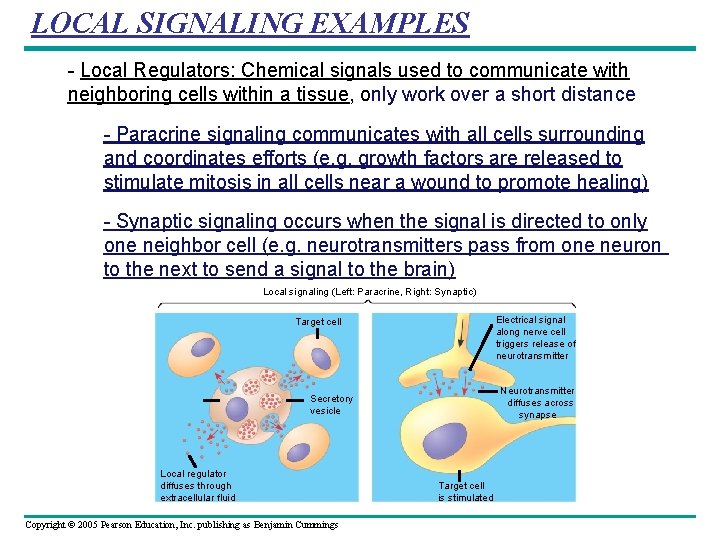
LOCAL SIGNALING EXAMPLES - Local Regulators: Chemical signals used to communicate with neighboring cells within a tissue, only work over a short distance - Paracrine signaling communicates with all cells surrounding and coordinates efforts (e. g. growth factors are released to stimulate mitosis in all cells near a wound to promote healing) - Synaptic signaling occurs when the signal is directed to only one neighbor cell (e. g. neurotransmitters pass from one neuron to the next to send a signal to the brain) Local signaling (Left: Paracrine, Right: Synaptic) Electrical signal along nerve cell triggers release of neurotransmitter Target cell Neurotransmitter diffuses across synapse Secretory vesicle Local regulator diffuses through extracellular fluid Copyright © 2005 Pearson Education, Inc. publishing as Benjamin Cummings Target cell is stimulated
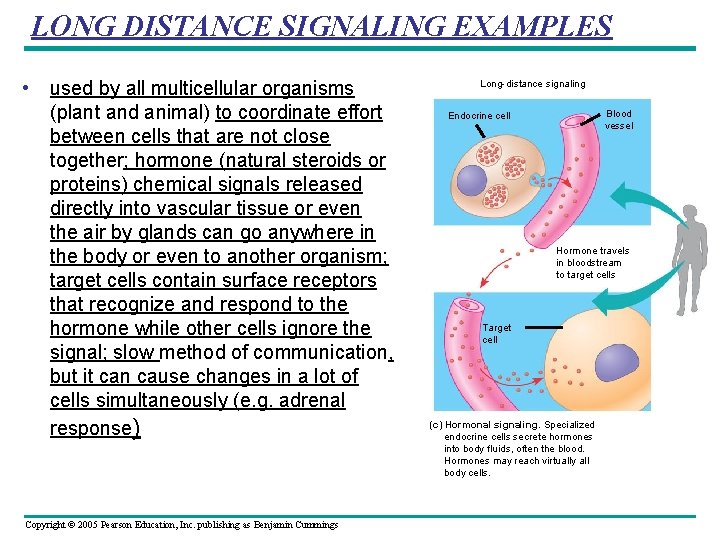
LONG DISTANCE SIGNALING EXAMPLES • used by all multicellular organisms (plant and animal) to coordinate effort between cells that are not close together; hormone (natural steroids or proteins) chemical signals released directly into vascular tissue or even the air by glands can go anywhere in the body or even to another organism; target cells contain surface receptors that recognize and respond to the hormone while other cells ignore the signal; slow method of communication, but it can cause changes in a lot of cells simultaneously (e. g. adrenal response) Copyright © 2005 Pearson Education, Inc. publishing as Benjamin Cummings Long-distance signaling Blood vessel Endocrine cell Hormone travels in bloodstream to target cells Target cell (c) Hormonal signaling. Specialized endocrine cells secrete hormones into body fluids, often the blood. Hormones may reach virtually all body cells.
Three Stages of Cell Signaling • All cell signaling (long or short distance) occurs in three stages – Reception – cell receives the signal (called a ligand) at the membrane – Transduction – signal causes a cascade of communication inside the cell to relay the message from the membrane to the appropriate interior organelle – Response – cell responds to the signal by generating an appropriate change • Called Signal transduction pathways – Note: Pathways may vary in the specifics, but all living things use these three steps; support for evolution Copyright © 2005 Pearson Education, Inc. publishing as Benjamin Cummings
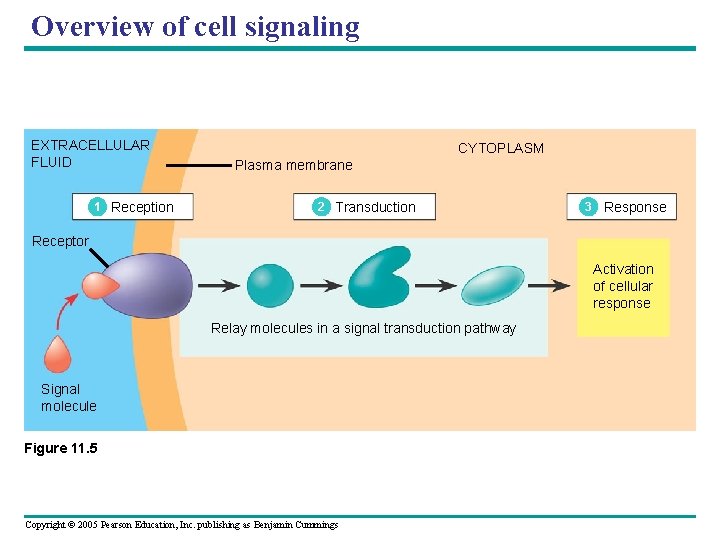
Overview of cell signaling EXTRACELLULAR FLUID 1 Reception CYTOPLASM Plasma membrane 2 Transduction 3 Response Receptor Activation of cellular response Relay molecules in a signal transduction pathway Signal molecule Figure 11. 5 Copyright © 2005 Pearson Education, Inc. publishing as Benjamin Cummings
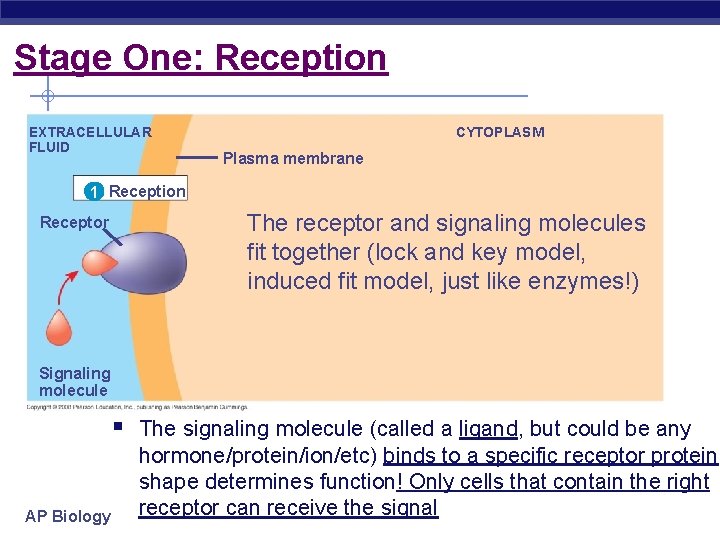
Stage One: Reception EXTRACELLULAR FLUID CYTOPLASM Plasma membrane 1 Reception Receptor The receptor and signaling molecules fit together (lock and key model, induced fit model, just like enzymes!) Signaling molecule § The signaling molecule (called a ligand, but could be any AP Biology hormone/protein/ion/etc) binds to a specific receptor protein; shape determines function! Only cells that contain the right receptor can receive the signal
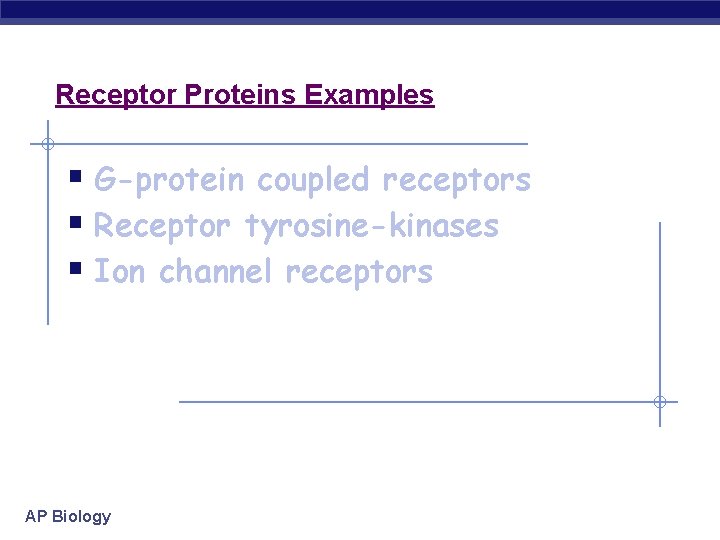
Receptor Proteins Examples § G-protein coupled receptors § Receptor tyrosine-kinases § Ion channel receptors AP Biology
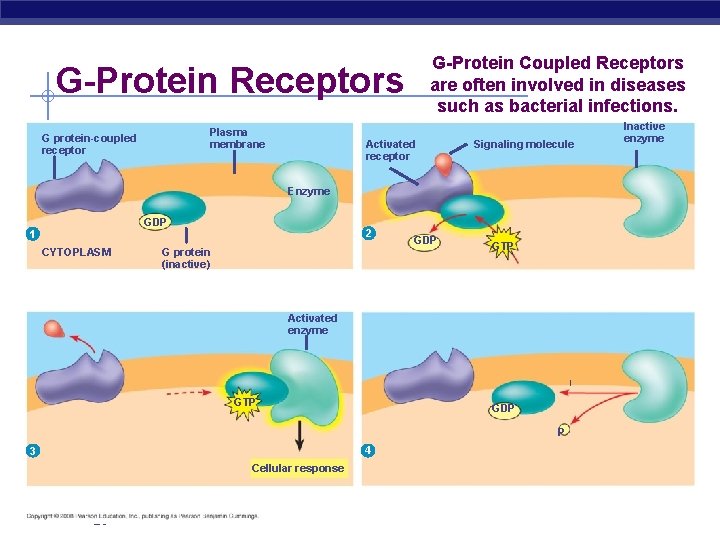
G-Protein Coupled Receptors are often involved in diseases such as bacterial infections. G-Protein Receptors Plasma membrane G protein-coupled receptor Activated receptor Signaling molecule Enzyme GDP 1 CYTOPLASM 2 G protein (inactive) GDP GTP Activated enzyme i GTP GDP P 4 3 Cellular response AP Biology Inactive enzyme
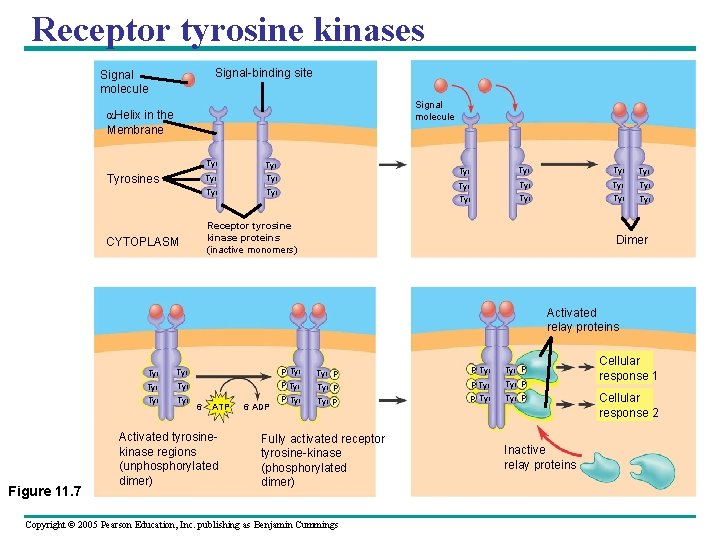
Receptor tyrosine kinases Signal-binding site Signal molecule Helix in the Membrane Tyrosines CYTOPLASM Tyr Tyr Tyr Tyr Tyr Receptor tyrosine kinase proteins (inactive monomers) Dimer Activated relay proteins Figure 11. 7 Tyr Tyr P Tyr Tyr P P Tyr P 6 ATP 6 ADP Activated tyrosinekinase regions (unphosphorylated dimer) Fully activated receptor tyrosine-kinase (phosphorylated dimer) Copyright © 2005 Pearson Education, Inc. publishing as Benjamin Cummings Inactive relay proteins Cellular response 1 Cellular response 2
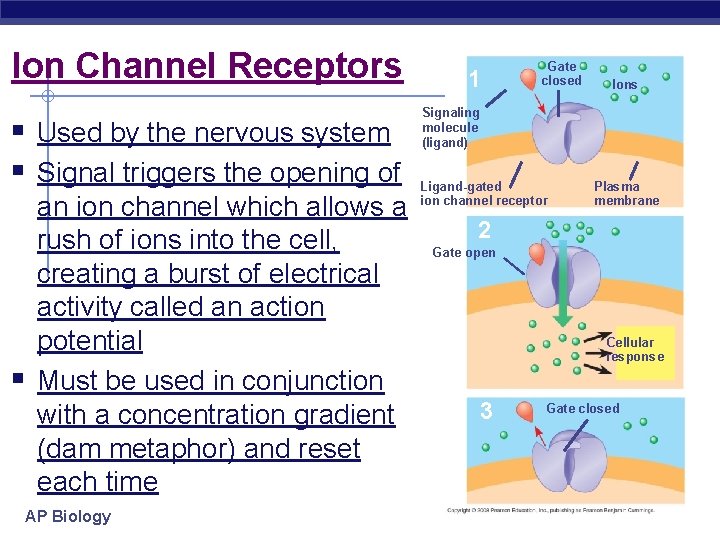
Ion Channel Receptors § Used by the nervous system § Signal triggers the opening of § an ion channel which allows a rush of ions into the cell, creating a burst of electrical activity called an action potential Must be used in conjunction with a concentration gradient (dam metaphor) and reset each time AP Biology 1 Gate closed Ions Signaling molecule (ligand) Ligand-gated ion channel receptor Plasma membrane 2 Gate open Cellular response 3 Gate closed
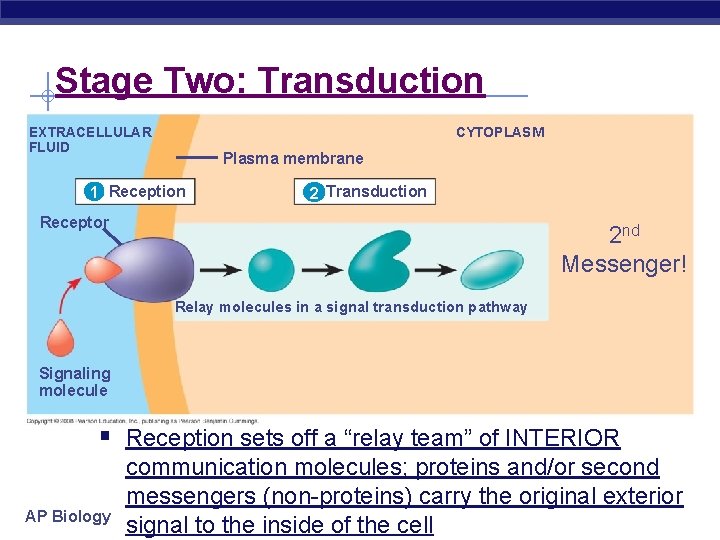
Stage Two: Transduction CYTOPLASM EXTRACELLULAR FLUID Plasma membrane 1 Reception 2 Transduction Receptor 2 nd Messenger! Relay molecules in a signal transduction pathway Signaling molecule § Reception sets off a “relay team” of INTERIOR AP Biology communication molecules; proteins and/or second messengers (non-proteins) carry the original exterior signal to the inside of the cell
Notes about Transduction • It is a multistep pathway – can amplify (increase) a signal and create a large response from a single ligand – Requires communication and coordination within the cell itself Copyright © 2005 Pearson Education, Inc. publishing as Benjamin Cummings
Transduction Example • Protein Phosyphorylation Cascade - An example of transduction in which a series of proteins called kinases add a phosphate to the next one in line, activating it, and sending the signal to the target (like a bucket brigade!) – enzymes then remove the phosphates to reset the cascade Copyright © 2005 Pearson Education, Inc. publishing as Benjamin Cummings
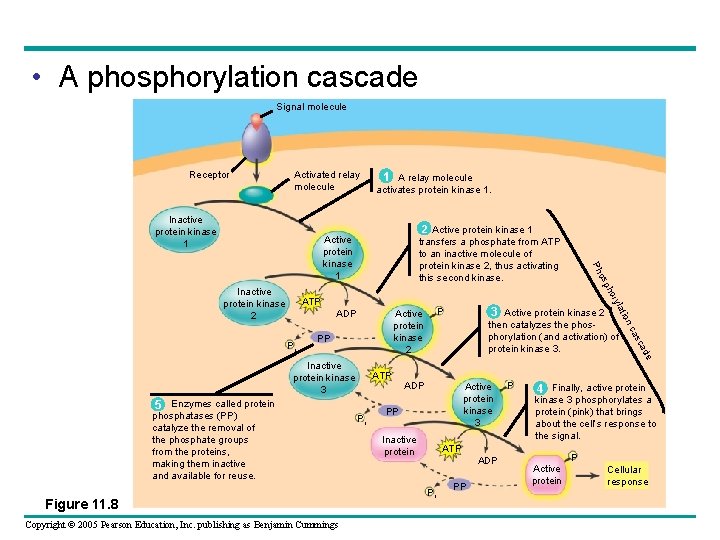
• A phosphorylation cascade Signal molecule Receptor Activated relay molecule Inactive protein kinase 1 1 A relay molecule activates protein kinase 1. ory ph ATP Figure 11. 8 Copyright © 2005 Pearson Education, Inc. publishing as Benjamin Cummings Pi ADP Active protein kinase 3 PP Inactive protein P Finally, active protein 4 kinase 3 phosphorylates a protein (pink) that brings about the cell’s response to the signal. ATP ADP P i PP de Enzymes called protein 5 phosphatases (PP) catalyze the removal of the phosphate groups from the proteins, making them inactive and available for reuse. ATP a sc Inactive protein kinase 3 ca PP on Pi Active protein kinase 2 3 then catalyzes the phosphorylation (and activation) of protein kinase 3. P Active protein kinase 2 ADP i lat Inactive protein kinase 2 os Ph Active protein kinase 1 2 transfers a phosphate from ATP to an inactive molecule of protein kinase 2, thus activating this second kinase. Active protein kinase 1 P Active protein Cellular response
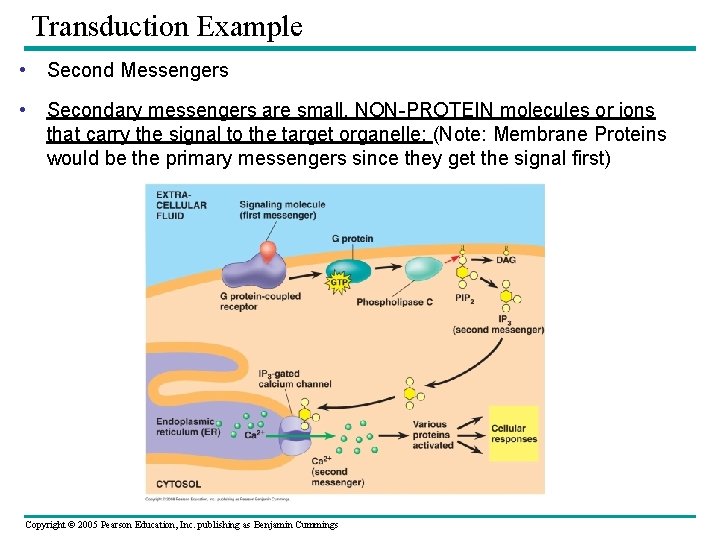
Transduction Example • Second Messengers • Secondary messengers are small, NON-PROTEIN molecules or ions that carry the signal to the target organelle; (Note: Membrane Proteins would be the primary messengers since they get the signal first) Copyright © 2005 Pearson Education, Inc. publishing as Benjamin Cummings
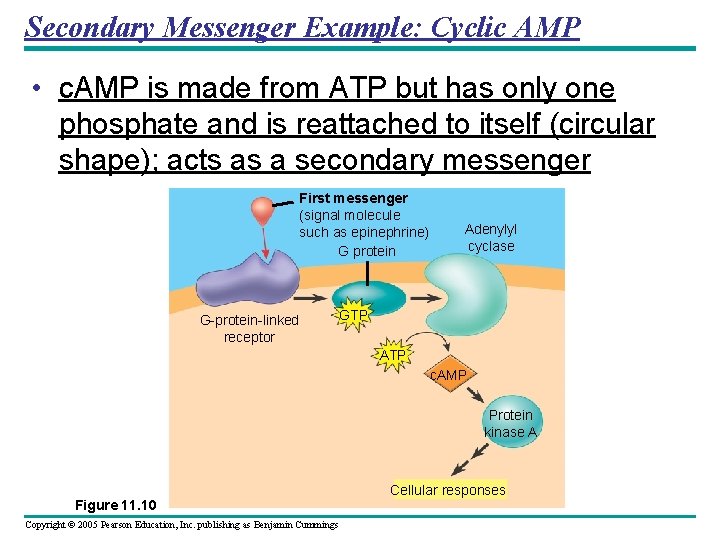
Secondary Messenger Example: Cyclic AMP • c. AMP is made from ATP but has only one phosphate and is reattached to itself (circular shape); acts as a secondary messenger First messenger (signal molecule such as epinephrine) G protein G-protein-linked receptor Adenylyl cyclase GTP ATP c. AMP Protein kinase A Figure 11. 10 Copyright © 2005 Pearson Education, Inc. publishing as Benjamin Cummings Cellular responses
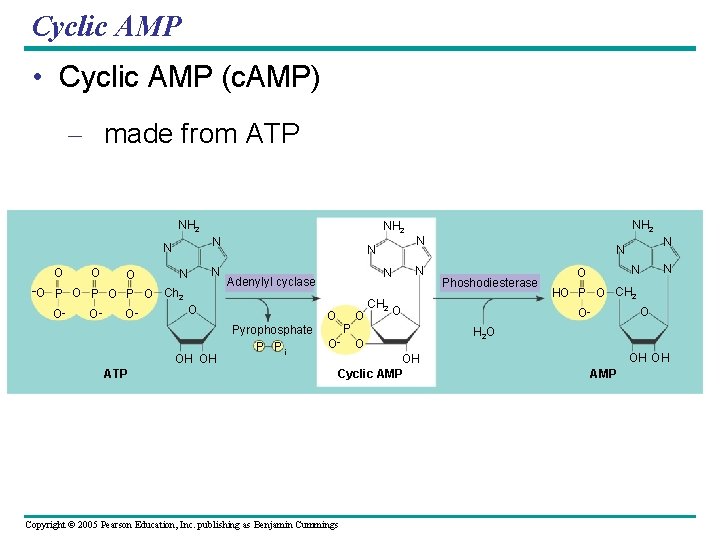
Cyclic AMP • Cyclic AMP (c. AMP) – made from ATP NH 2 N N O O O N N – O P O P O Ch 2 O O O N N O Pyrophosphate P Pi N N Adenylyl cyclase O OH OH ATP NH 2 O CH 2 O OH Cyclic AMP Copyright © 2005 Pearson Education, Inc. publishing as Benjamin Cummings Phoshodiesterase O P O N N O HO P O CH 2 O O H 2 O OH OH AMP
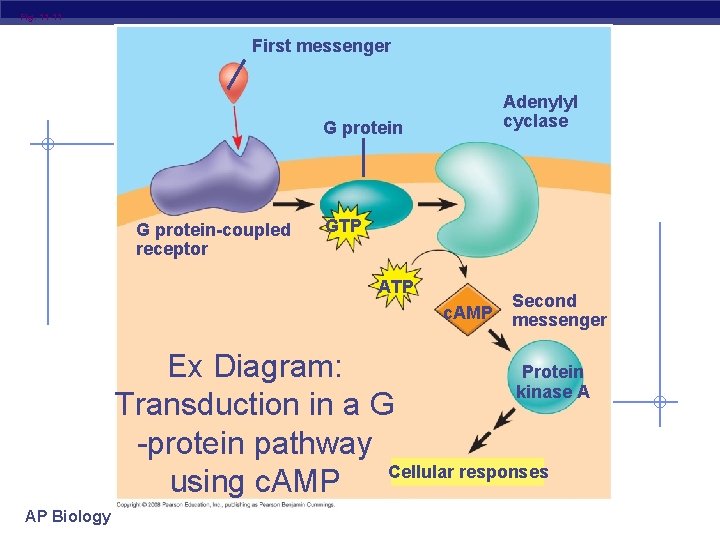
Fig. 11 -11 First messenger Adenylyl cyclase G protein-coupled receptor GTP ATP c. AMP Second messenger Ex Diagram: Protein kinase A Transduction in a G -protein pathway using c. AMP Cellular responses AP Biology
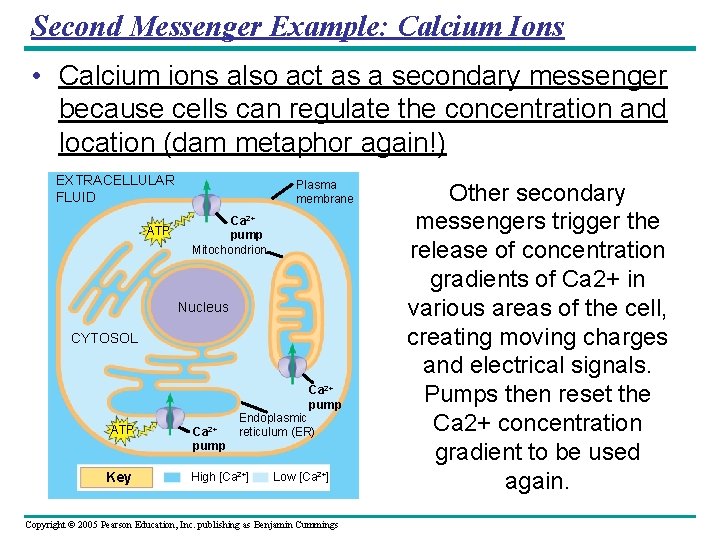
Second Messenger Example: Calcium Ions • Calcium ions also act as a secondary messenger because cells can regulate the concentration and location (dam metaphor again!) EXTRACELLULAR FLUID ATP Plasma membrane Ca 2+ pump Mitochondrion Nucleus CYTOSOL Ca 2+ pump ATP Key Ca 2+ pump Endoplasmic reticulum (ER) High [Ca 2+] Low [Ca 2+] Copyright © 2005 Pearson Education, Inc. publishing as Benjamin Cummings Other secondary messengers trigger the release of concentration gradients of Ca 2+ in various areas of the cell, creating moving charges and electrical signals. Pumps then reset the Ca 2+ concentration gradient to be used again.
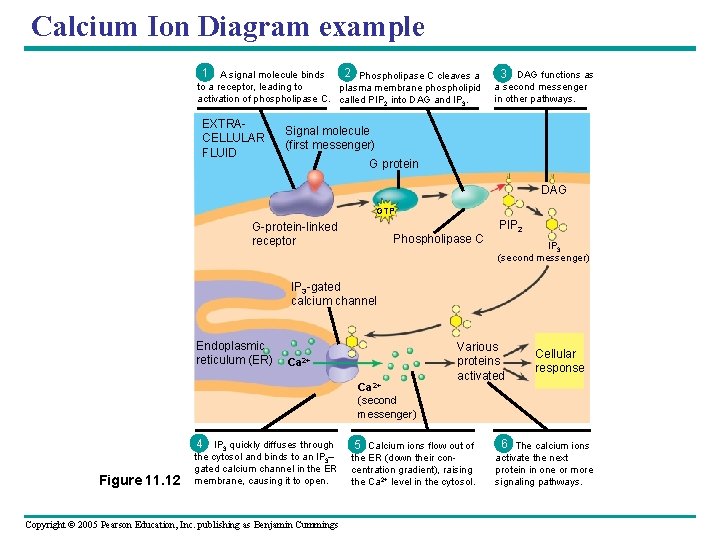
Calcium Ion Diagram example 1 2 A signal molecule binds Phospholipase C cleaves a to a receptor, leading to plasma membrane phospholipid activation of phospholipase C. called PIP 2 into DAG and IP 3. EXTRACELLULAR FLUID 3 DAG functions as a second messenger in other pathways. Signal molecule (first messenger) G protein DAG GTP G-protein-linked receptor Phospholipase C PIP 2 IP 3 (second messenger) IP 3 -gated calcium channel Endoplasmic reticulum (ER) Ca 2+ (second messenger) Figure 11. 12 4 IP 3 quickly diffuses through the cytosol and binds to an IP 3– gated calcium channel in the ER membrane, causing it to open. Copyright © 2005 Pearson Education, Inc. publishing as Benjamin Cummings Various proteins activated 5 Calcium ions flow out of the ER (down their concentration gradient), raising the Ca 2+ level in the cytosol. Cellular response 6 The calcium ions activate the next protein in one or more signaling pathways.
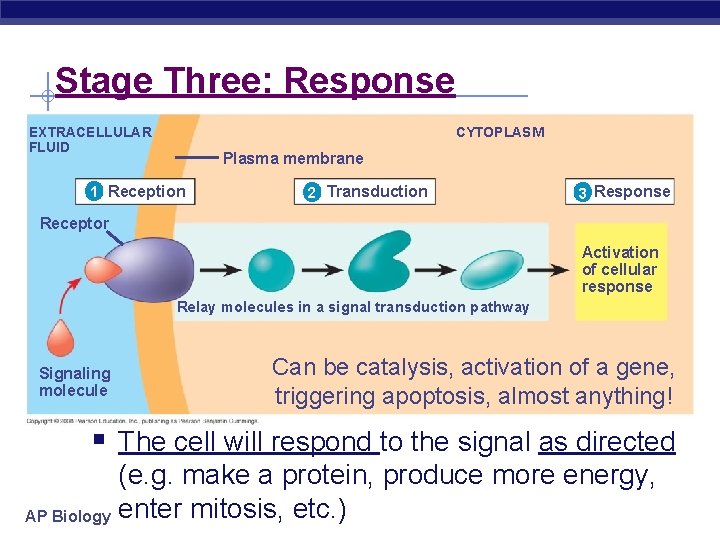
Stage Three: Response CYTOPLASM EXTRACELLULAR FLUID Plasma membrane 1 Reception 2 Transduction 3 Response Receptor Activation of cellular response Relay molecules in a signal transduction pathway Signaling molecule Can be catalysis, activation of a gene, triggering apoptosis, almost anything! § The cell will respond to the signal as directed (e. g. make a protein, produce more energy, AP Biology enter mitosis, etc. )
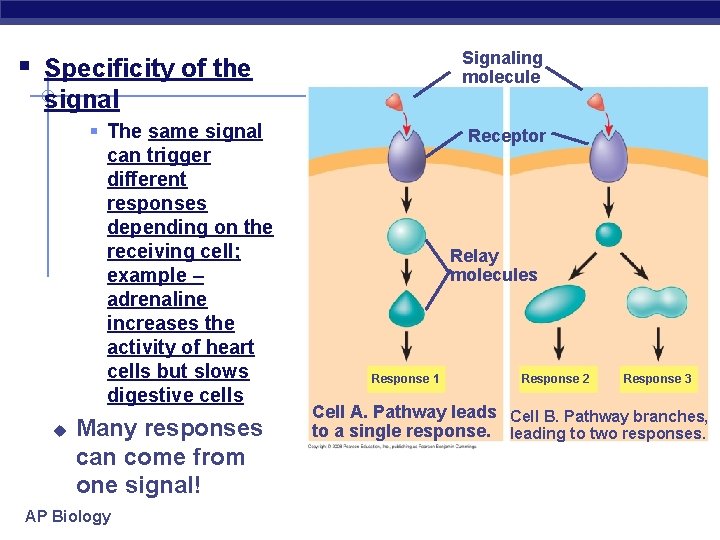
Signaling molecule § Specificity of the signal § The same signal can trigger different responses depending on the receiving cell; example – adrenaline increases the activity of heart cells but slows digestive cells u Many responses can come from one signal! AP Biology Receptor Relay molecules Response 1 Response 2 Response 3 Cell A. Pathway leads Cell B. Pathway branches, to a single response. leading to two responses.
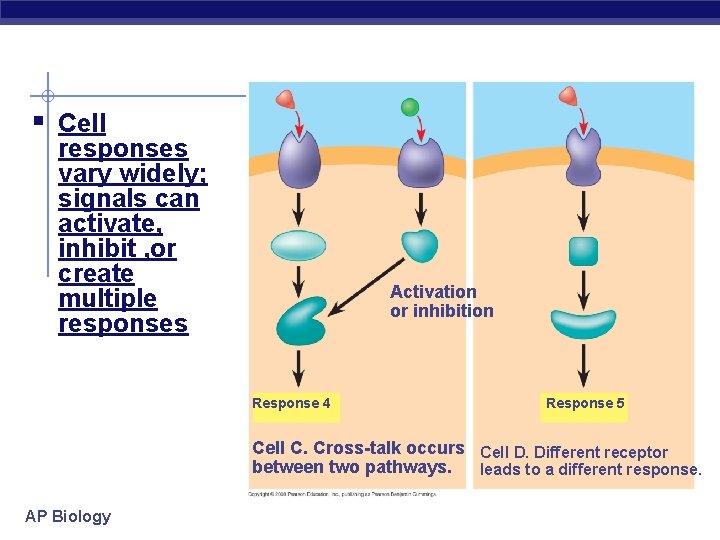
§ Cell responses vary widely; signals can activate, inhibit , or create multiple responses Activation or inhibition Response 4 Response 5 Cell C. Cross-talk occurs Cell D. Different receptor between two pathways. leads to a different response. AP Biology
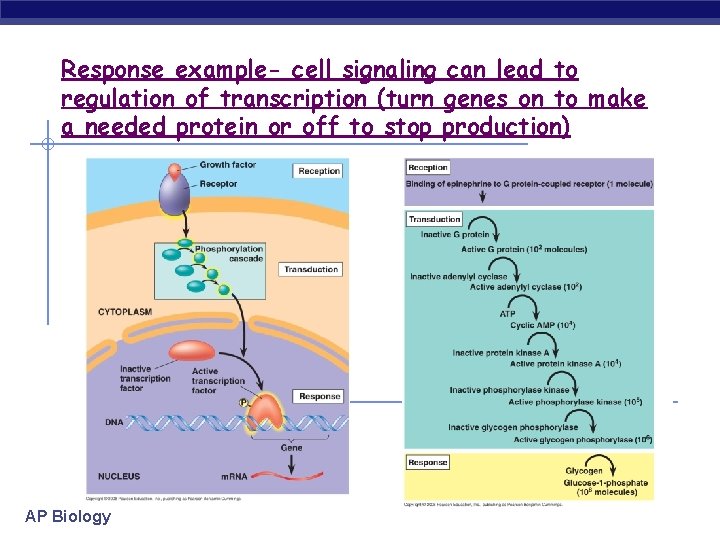
Response example- cell signaling can lead to regulation of transcription (turn genes on to make a needed protein or off to stop production) AP Biology
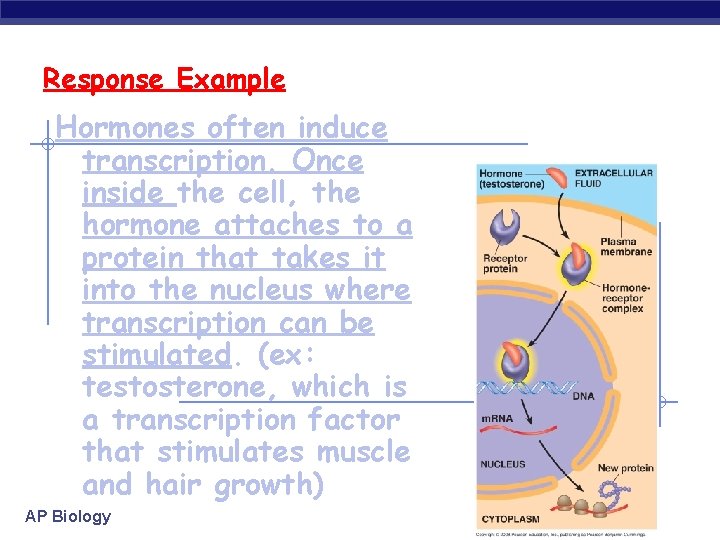
Response Example Hormones often induce transcription. Once inside the cell, the hormone attaches to a protein that takes it into the nucleus where transcription can be stimulated. (ex: testosterone, which is a transcription factor that stimulates muscle and hair growth) AP Biology
Termination of Communication • Response is terminated quickly by the reversal of ligand binding; once the signal is degraded or released, the response will conclude Copyright © 2005 Pearson Education, Inc. publishing as Benjamin Cummings
Any Questions? ? Can You Hear Me Now? AP Biology
Organ System Communication Specialists § Nervous System (Animals only) u Quick long distance communication done through chains of local synaptic signals that pass electrical stimulation through the cells themselves and chemicals called neurotransmitters in between neighboring cells; FAST, but limited in scope § Endocrine System (Animals only) u u AP Biology Glands (lymph nodes, adrenal gland, pituitary gland, etc) that secrete hormones into cell spaces or the blood stream to coordinate cells throughout the body; SLOW, but can generate a large response (ex: menstruation, fight or flight) Note: Plants also use hormones, but each cell releases hormones individually (no gland type tissues) § Plant hormomes are transported through vascular system, plasmodesmata, or released into air (e. g. ripening fruit)
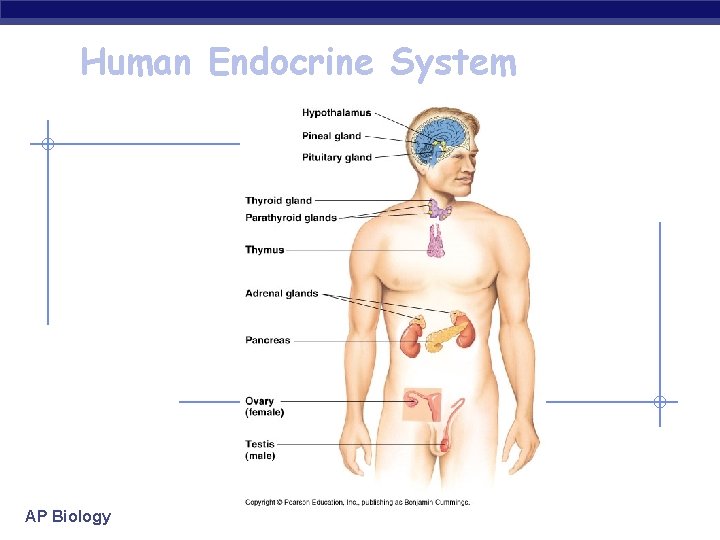
Human Endocrine System AP Biology
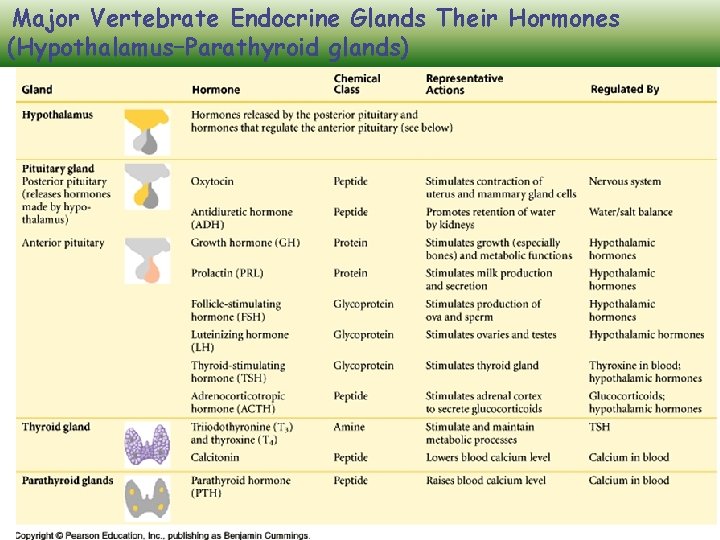
Major Vertebrate Endocrine Glands Their Hormones (Hypothalamus–Parathyroid glands) AP Biology
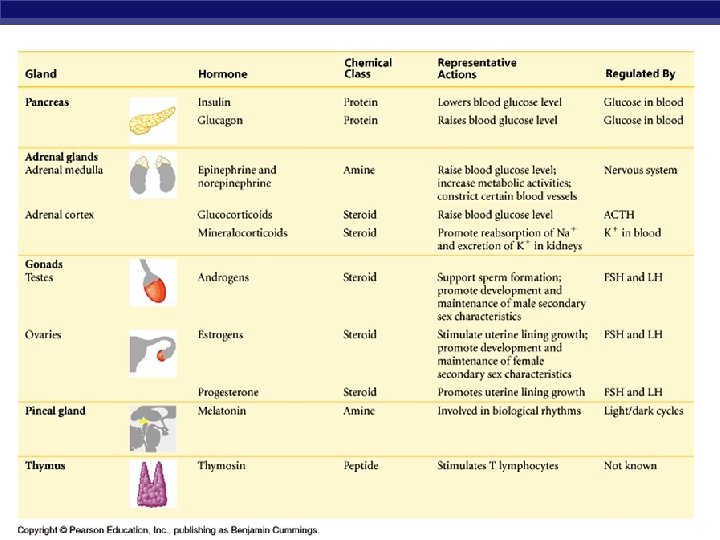
AP Biology
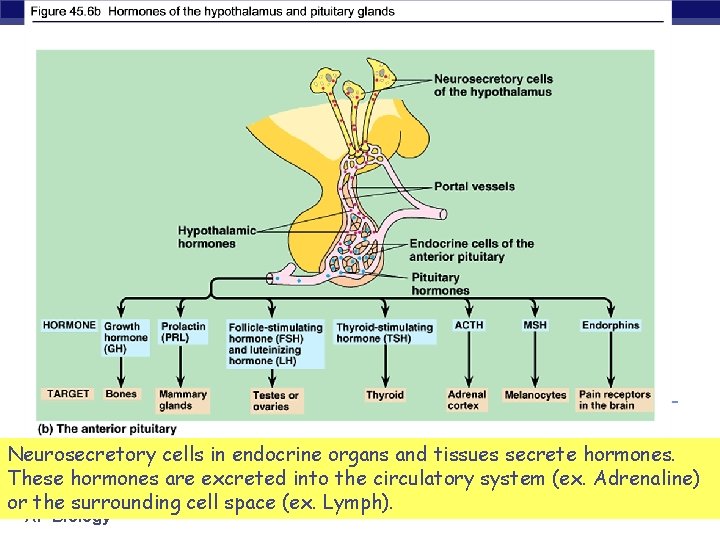
Neurosecretory cells in endocrine organs and tissues secrete hormones. These hormones are excreted into the circulatory system (ex. Adrenaline) or the surrounding cell space (ex. Lymph). AP Biology
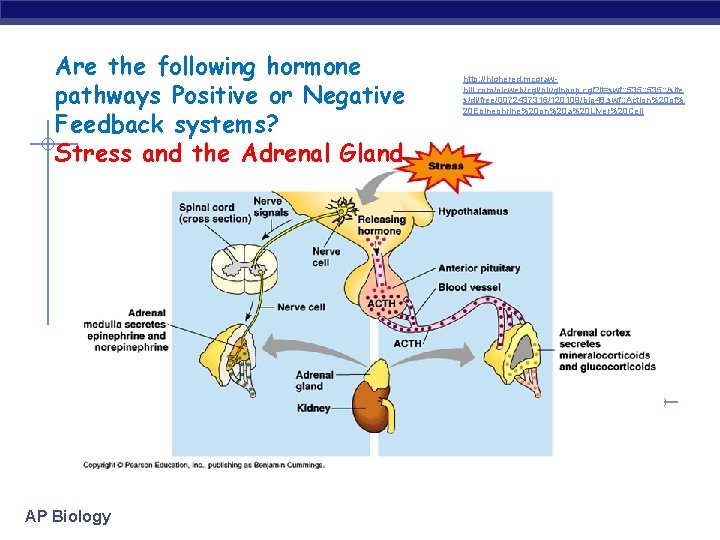
Are the following hormone pathways Positive or Negative Feedback systems? Stress and the Adrenal Gland AP Biology http: //highered. mcgrawhill. com/olcweb/cgi/pluginpop. cgi? it=swf: : 535: : /site s/dl/free/0072437316/120109/bio 48. swf: : Action%20 of% 20 Epinephrine%20 on%20 a%20 Liver%20 Cell
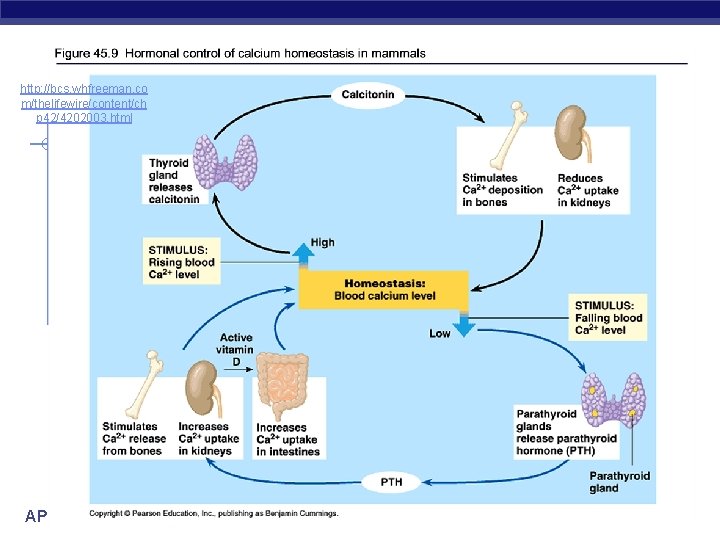
http: //bcs. whfreeman. co m/thelifewire/content/ch p 42/4202003. html AP Biology
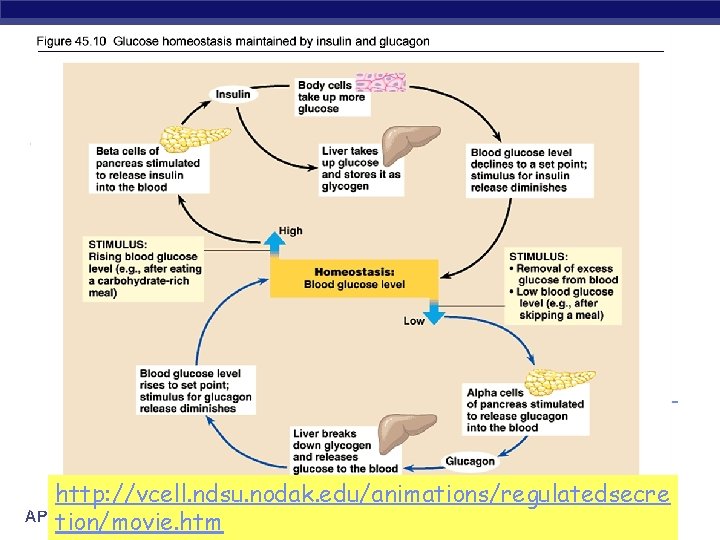
http: //vcell. ndsu. nodak. edu/animations/regulatedsecre AP Biology tion/movie. htm
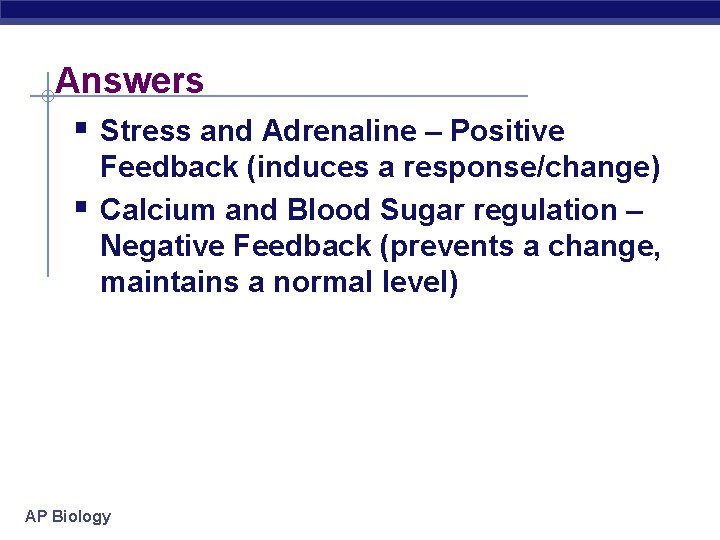
Answers § Stress and Adrenaline – Positive § Feedback (induces a response/change) Calcium and Blood Sugar regulation – Negative Feedback (prevents a change, maintains a normal level) AP Biology
- Slides: 40