
Cell Chemistry Water Why is water so important
- Slides: 45
Cell Chemistry
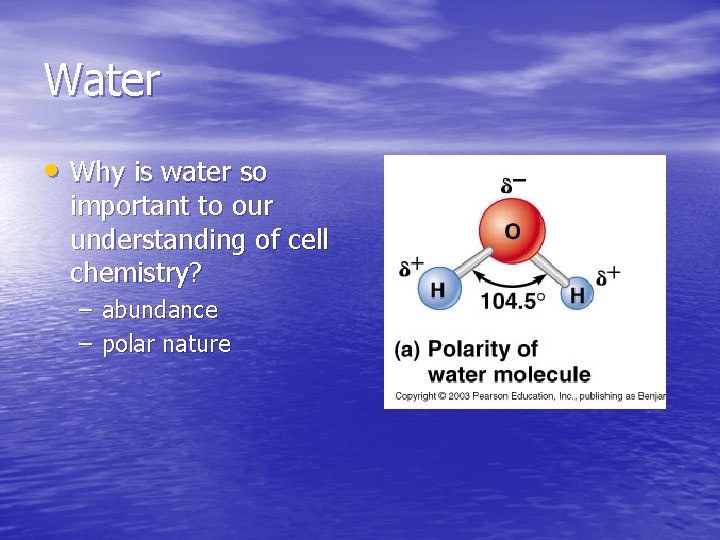
Water • Why is water so important to our understanding of cell chemistry? – abundance – polar nature
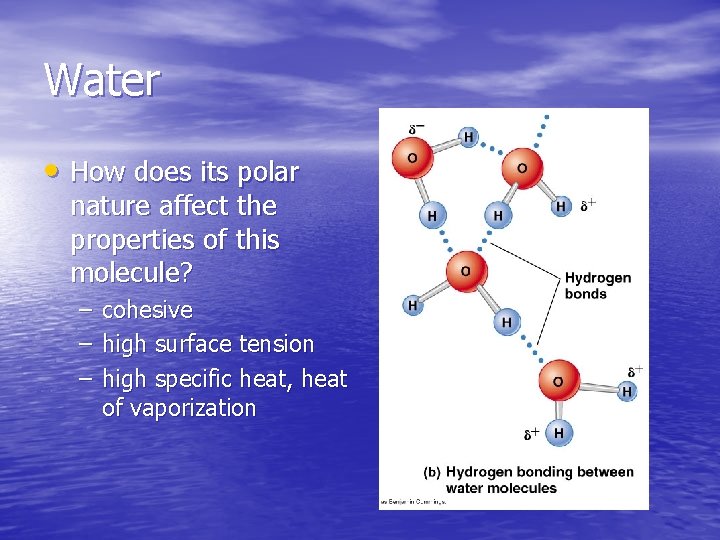
Water • How does its polar nature affect the properties of this molecule? – cohesive – high surface tension – high specific heat, heat of vaporization
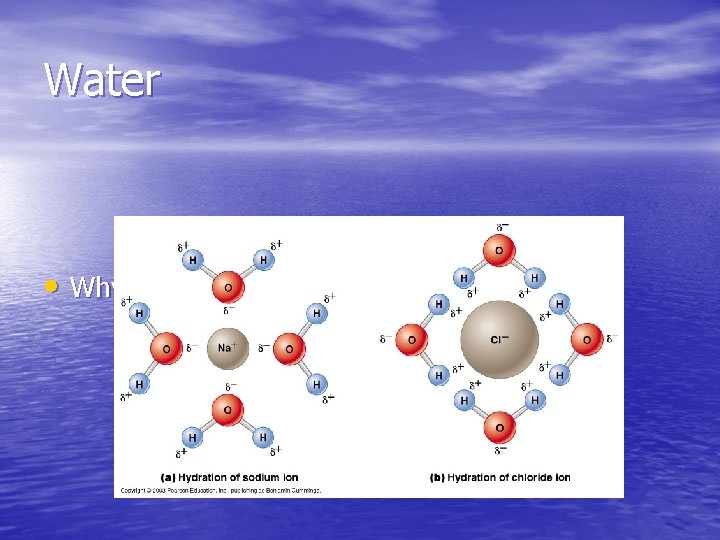
Water • Why is water such a good solvent?
Water • What kinds of cellular reactions involve water? – hydrolytic cleavages – dehydration synthesis – light reactions of photosynthesis
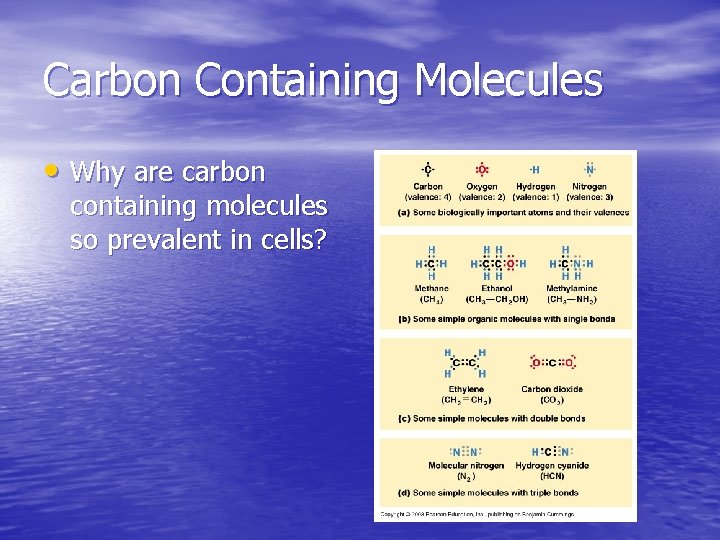
Carbon Containing Molecules • Why are carbon containing molecules so prevalent in cells?
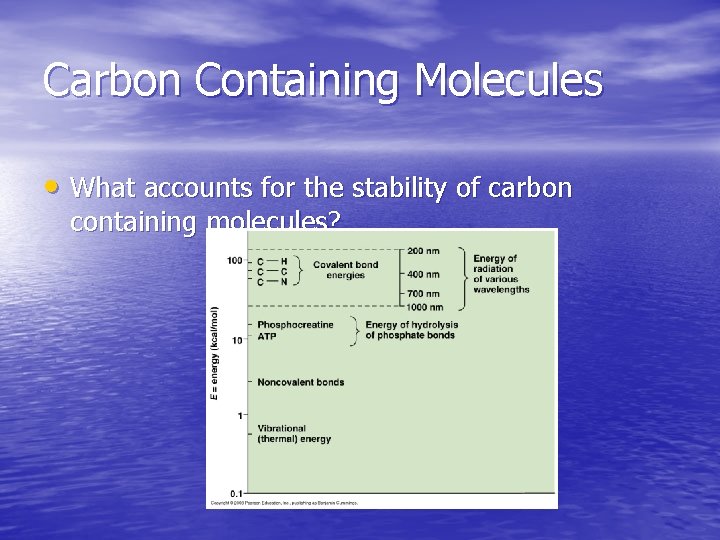
Carbon Containing Molecules • What accounts for the stability of carbon containing molecules?
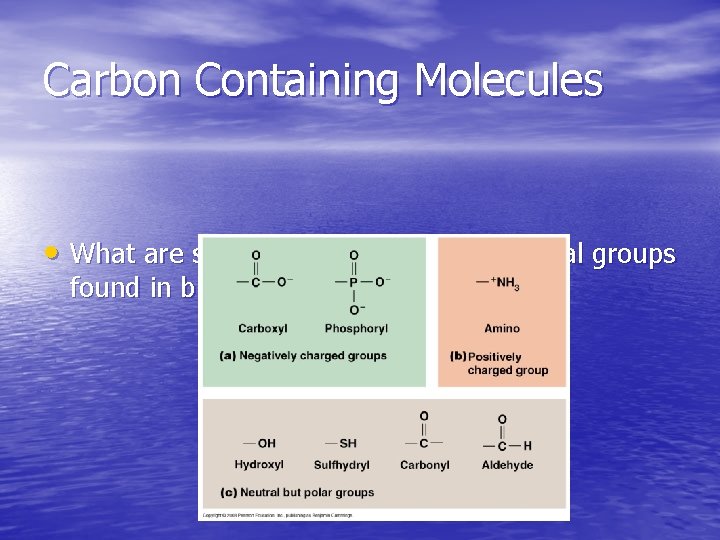
Carbon Containing Molecules • What are some of the common functional groups found in biological molecules?
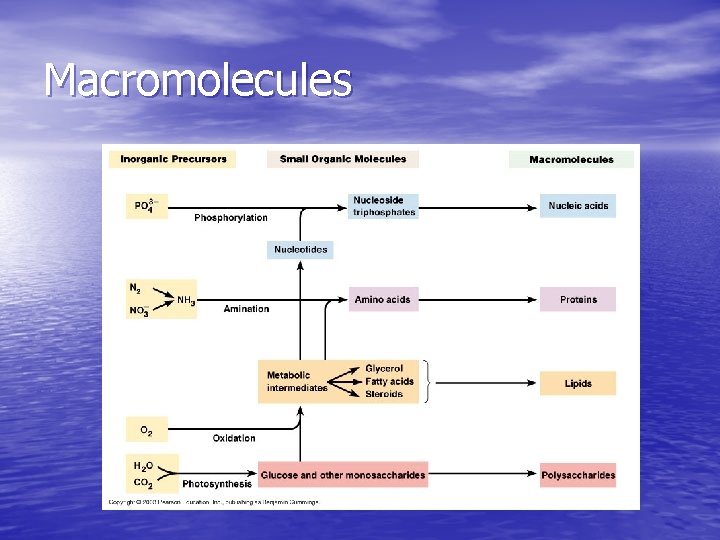
Macromolecules • From what are the most important biological polymers constructed?
Macromolecules
Macromolecules • Why would a molecule be classified as informational? structural? storage?
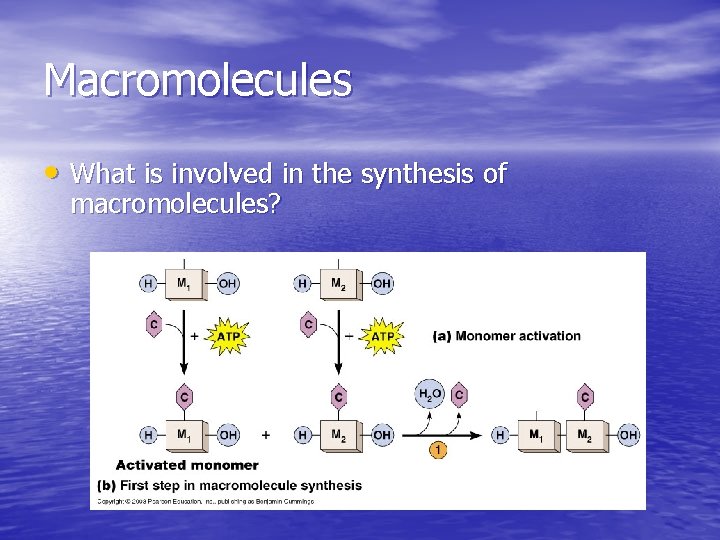
Macromolecules • What is involved in the synthesis of macromolecules?
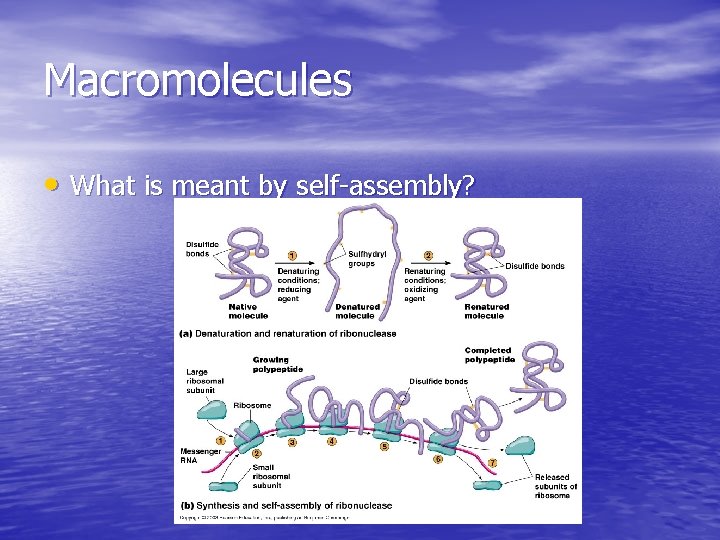
Macromolecules • What is meant by self-assembly?
Macromolecules • What is the role of a molecular chaperone?
Proteins • Where in the cell are proteins found and what are some of their functions?
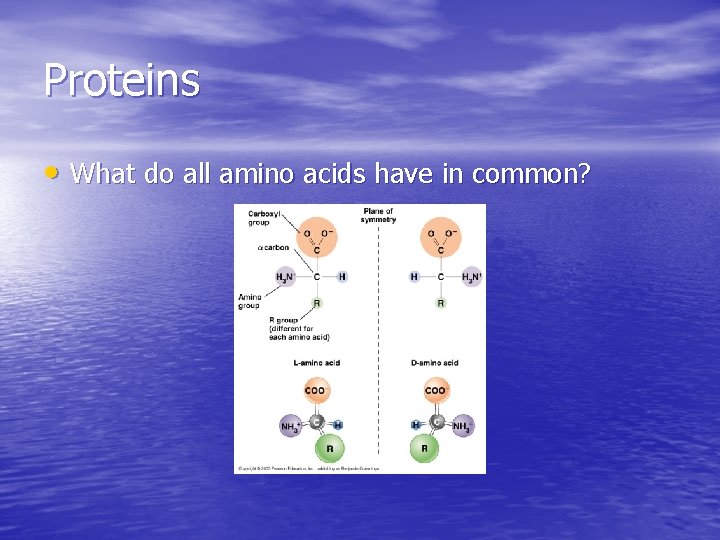
Proteins • What do all amino acids have in common?
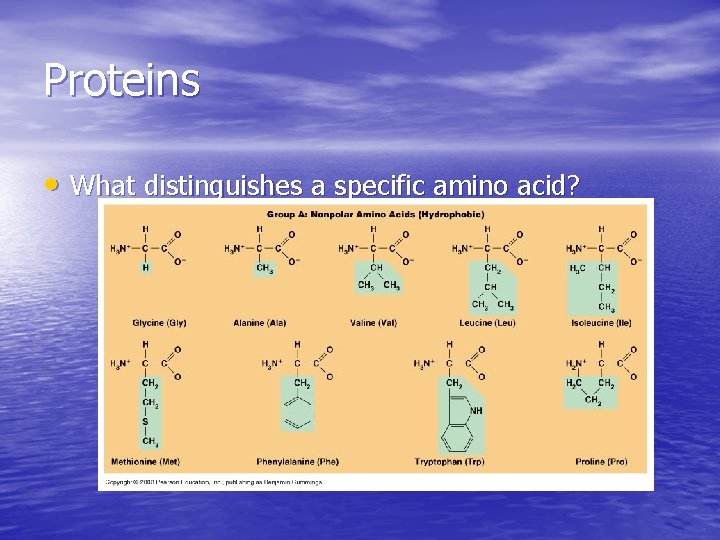
Proteins • What distinguishes a specific amino acid?
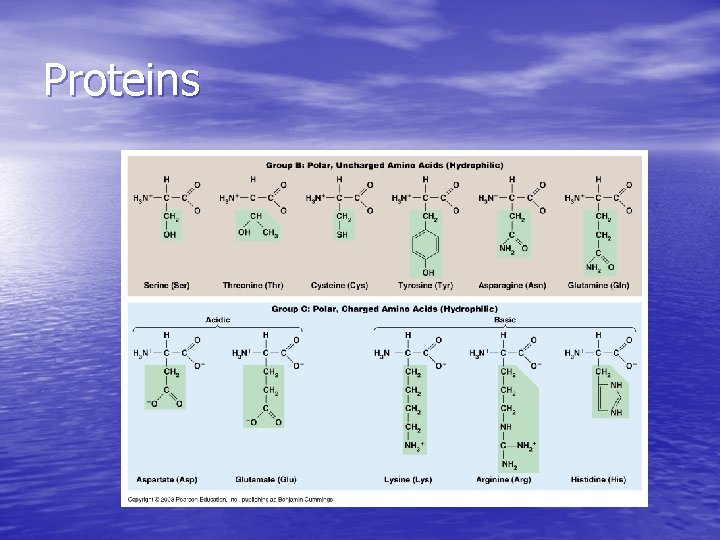
Proteins
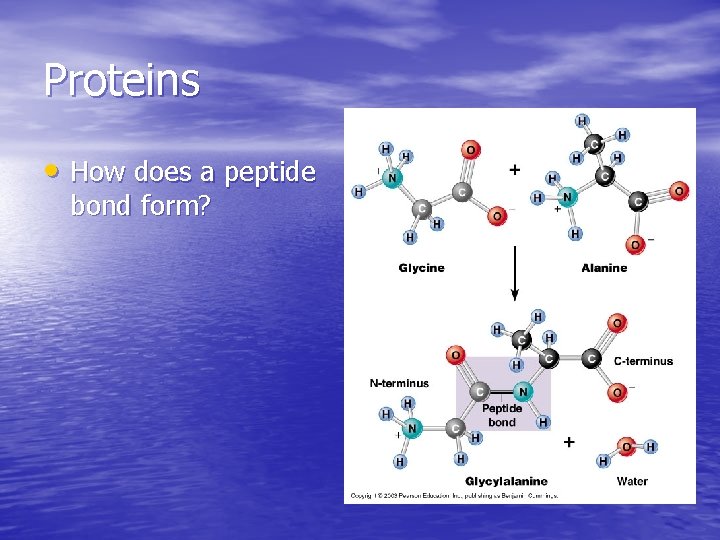
Proteins • How does a peptide bond form?
Proteins • What is the difference between a polypeptide and a protein? • How is a monomeric protein different from a multimeric protein?
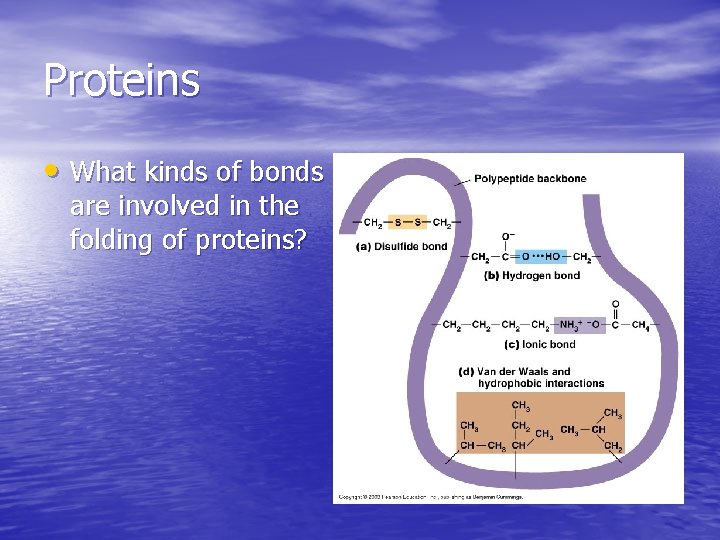
Proteins • What kinds of bonds are involved in the folding of proteins?
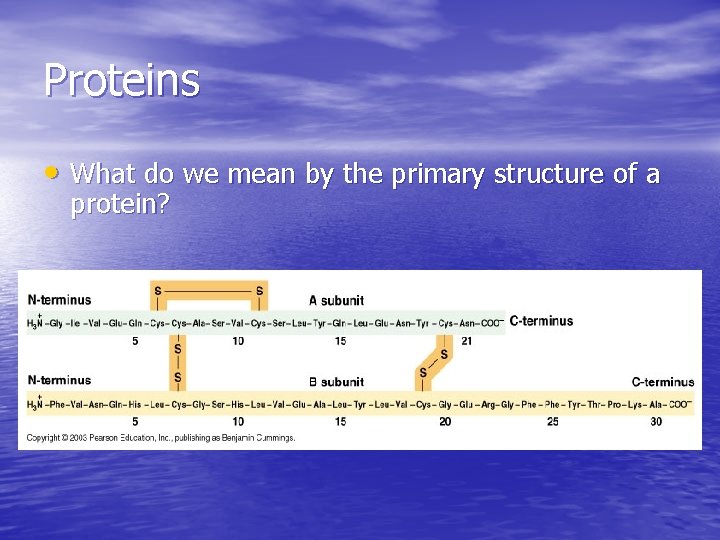
Proteins • What do we mean by the primary structure of a protein?
Proteins – secondary structure
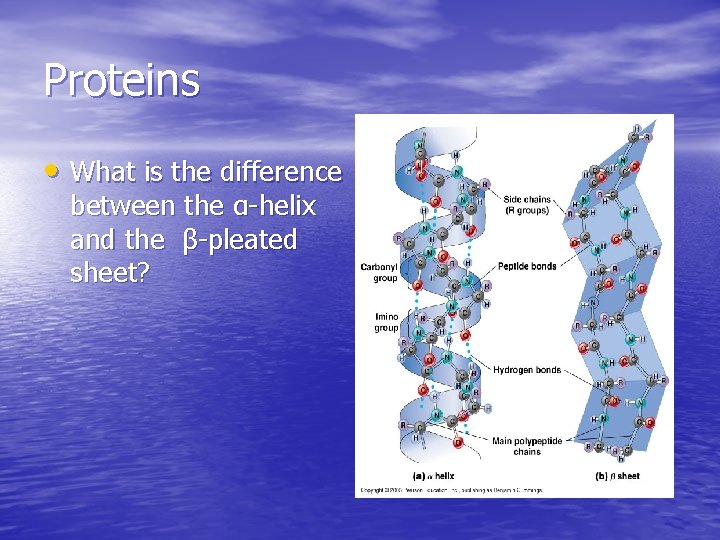
Proteins • What is the difference between the α-helix and the β-pleated sheet?
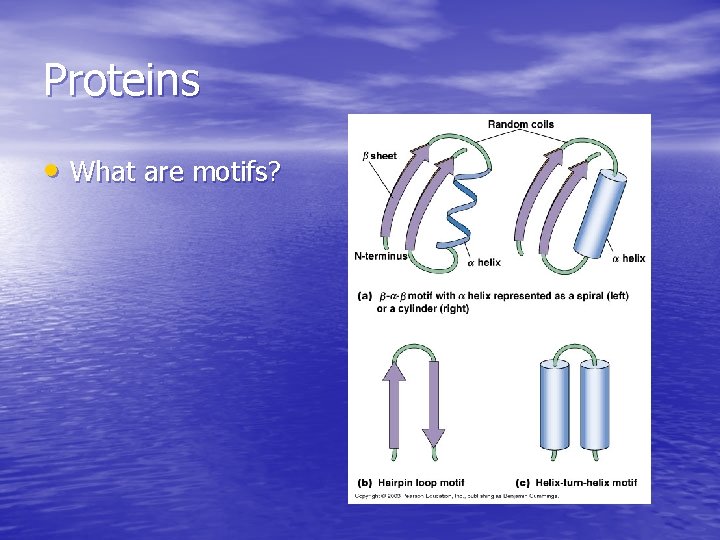
Proteins • What are motifs?
Proteins • How does tertiary structure compare with secondary structure
Proteins • What are some of the non-covalent interactions that determine the tertiary structure?
Proteins • What is the difference between a globular and a fibrous protein?
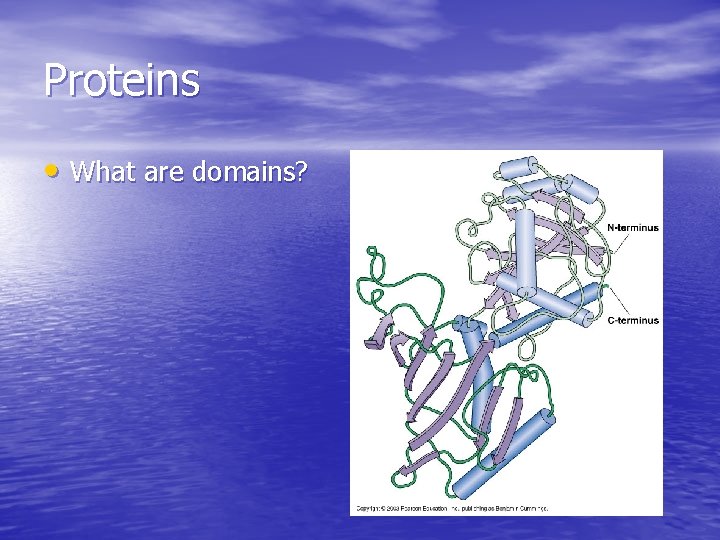
Proteins • What are domains?
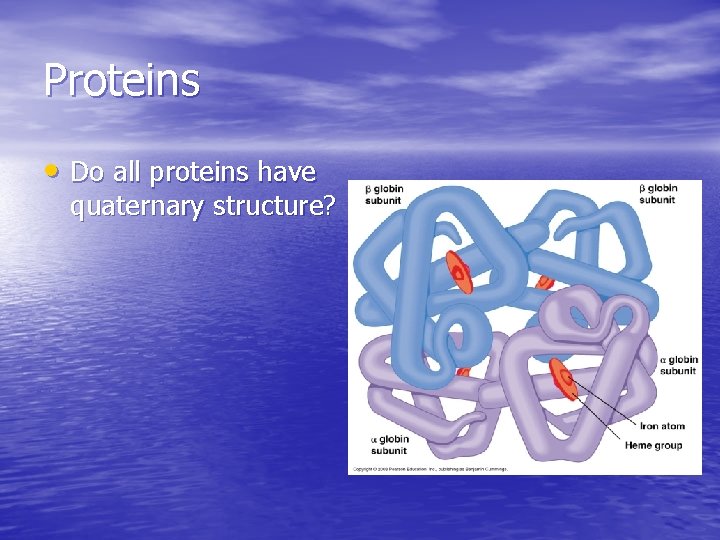
Proteins • Do all proteins have quaternary structure?
Nucleic Acids • How is DNA different from RNA both structurally and functionally?
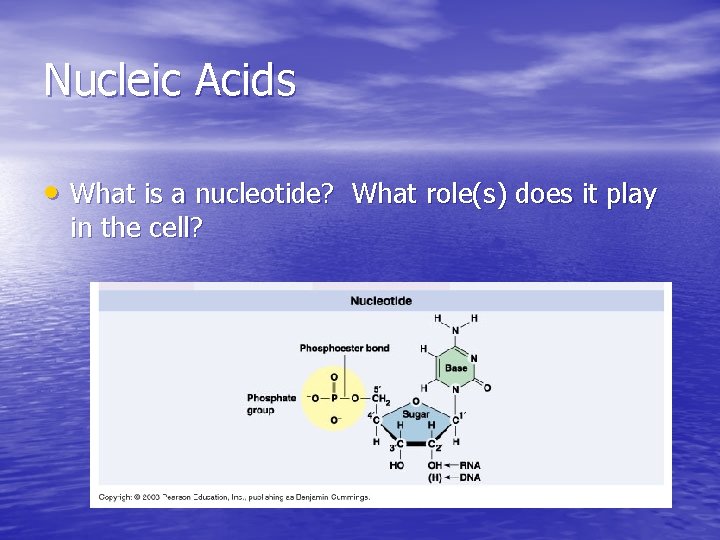
Nucleic Acids • What is a nucleotide? What role(s) does it play in the cell?
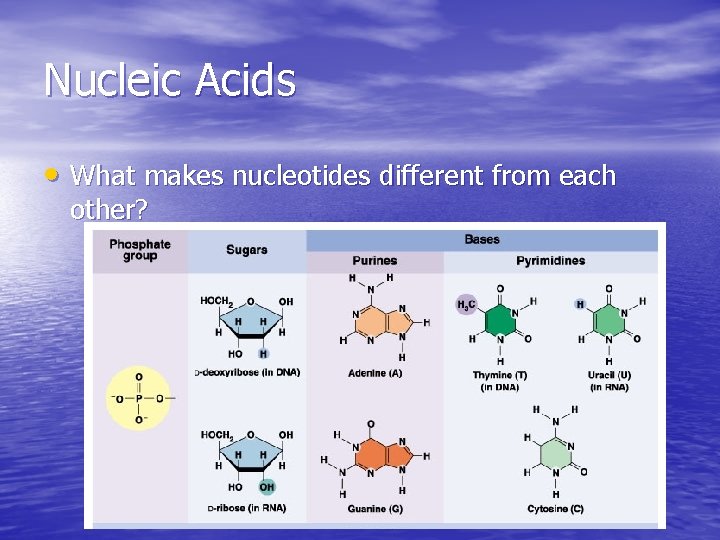
Nucleic Acids • What makes nucleotides different from each other?
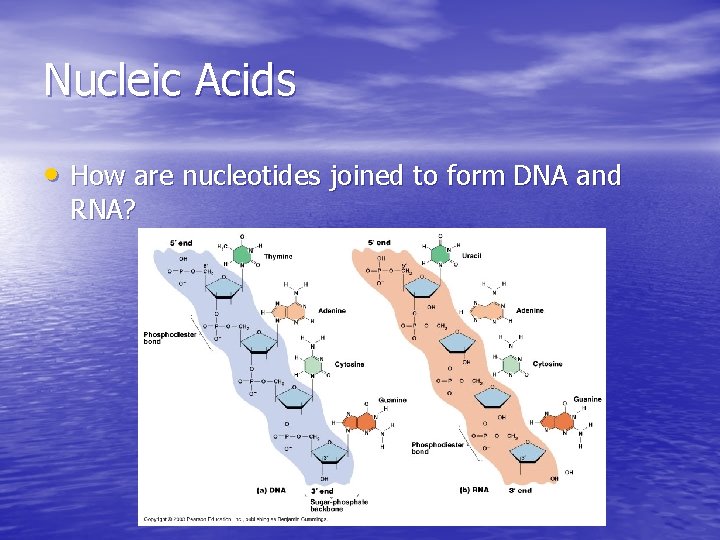
Nucleic Acids • How are nucleotides joined to form DNA and RNA?
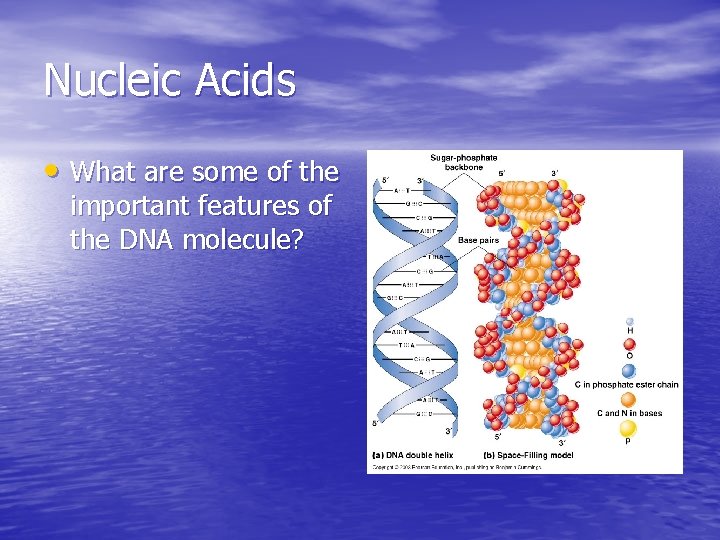
Nucleic Acids • What are some of the important features of the DNA molecule?
Polysaccharides • What are polysaccharides and how are they different from proteins or nucleic acids?
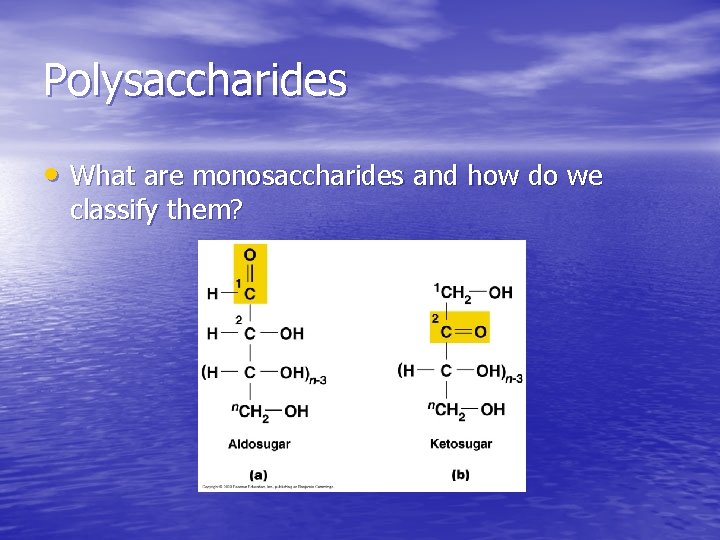
Polysaccharides • What are monosaccharides and how do we classify them?
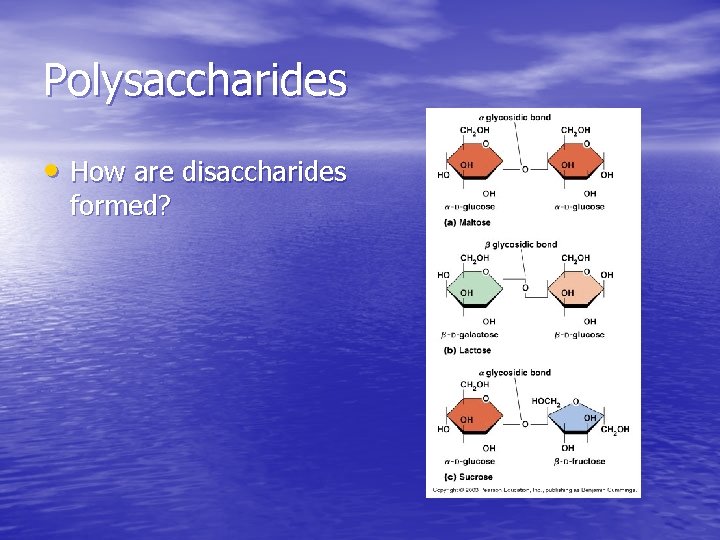
Polysaccharides • How are disaccharides formed?
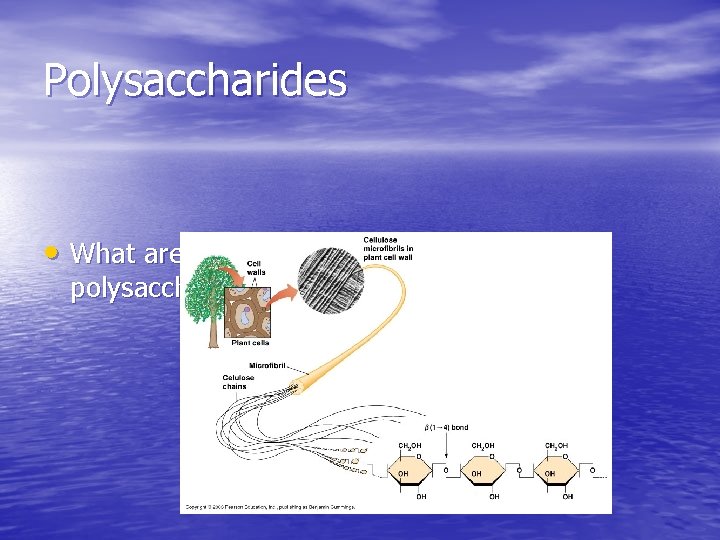
Polysaccharides • What are some of the functions of polysaccharides in cells?
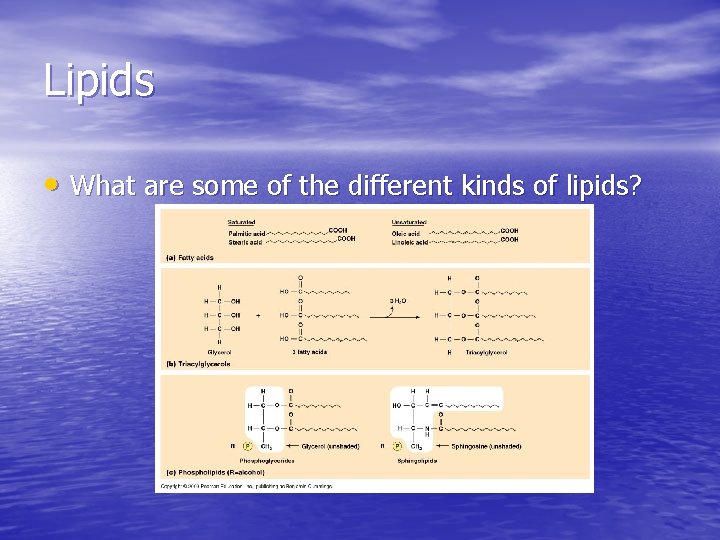
Lipids • How are lipids different from proteins, nucleic acids and polysaccharides? • What do all lipids have in common?
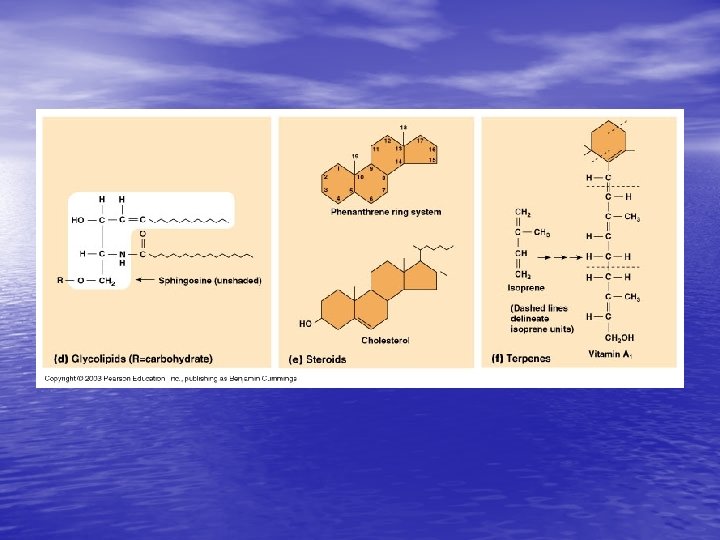
Lipids • What are some of the different kinds of lipids?
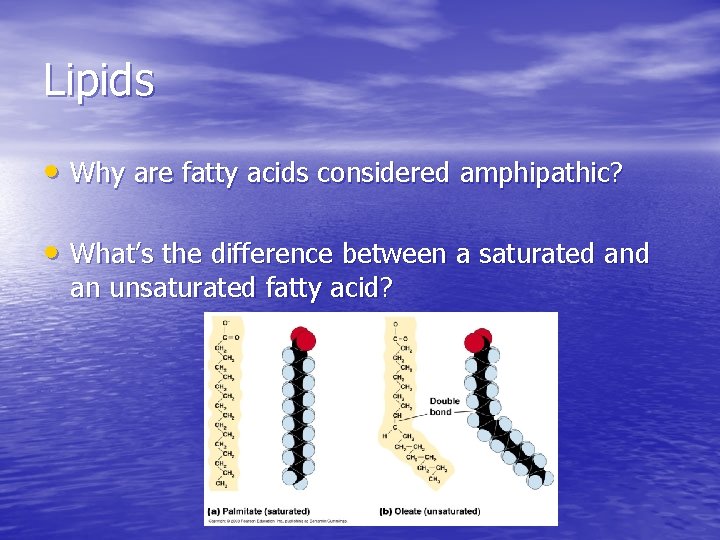
Lipids • Why are fatty acids considered amphipathic? • What’s the difference between a saturated an unsaturated fatty acid?
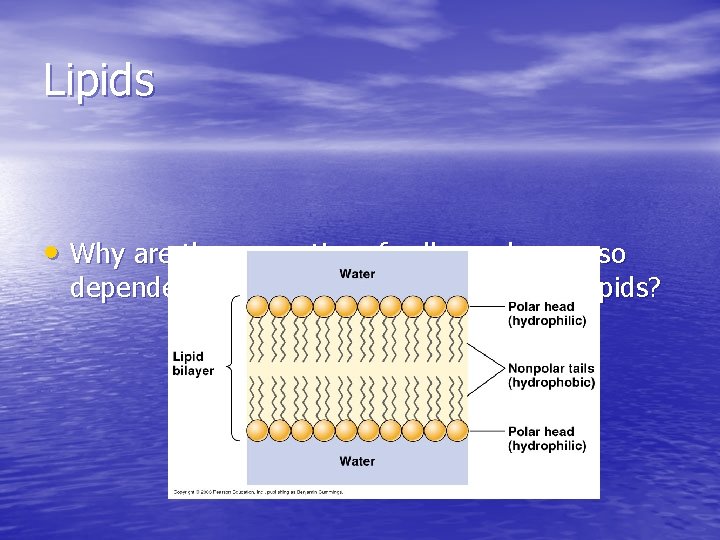
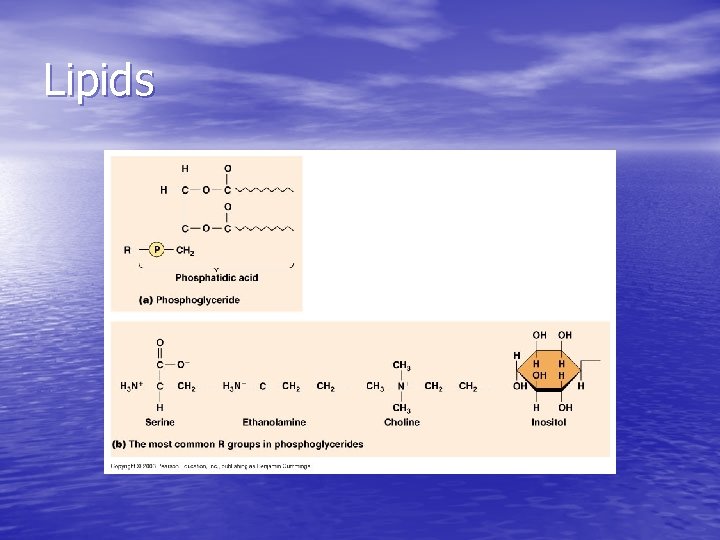
Lipids • Why are the properties of cell membranes so dependent upon the structure of phospholipids?
Lipids