
Cell Boundaries Unit 2 Part 2 Cell Membrane
Cell Boundaries Unit 2 -Part 2
Cell Membrane
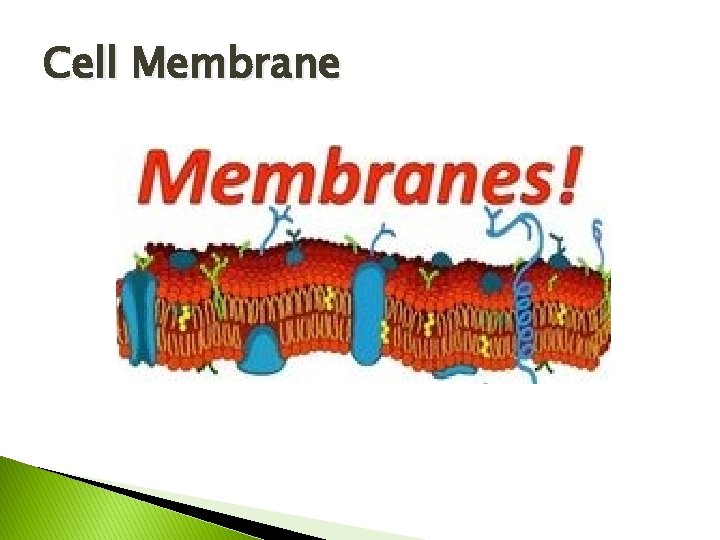
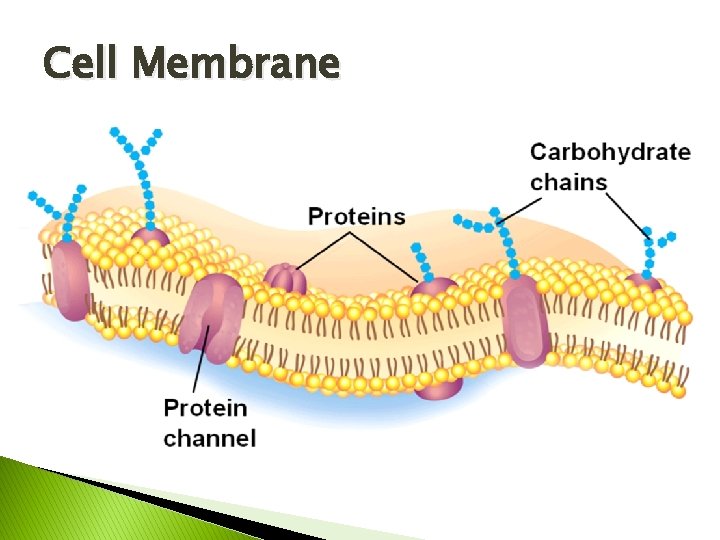
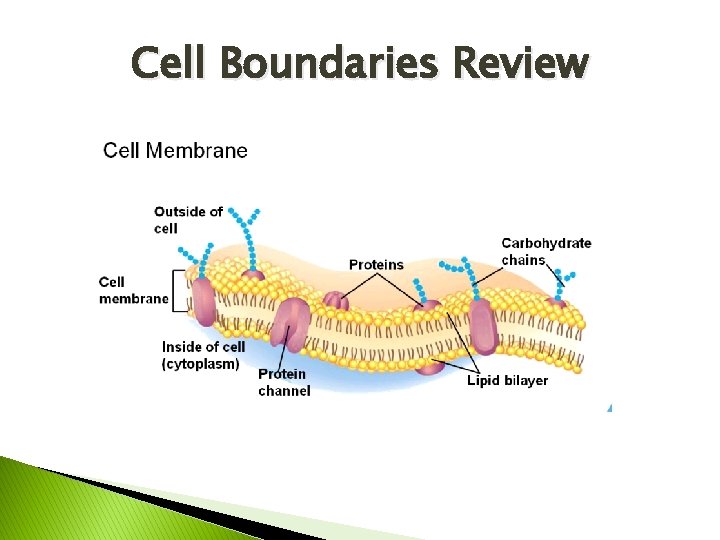
Cell Membrane � All cells are surrounded by a thin, flexible barrier known as the cell membrane (or plasma membrane). � Regulates what enters and leaves the cell and also provides protection and support.
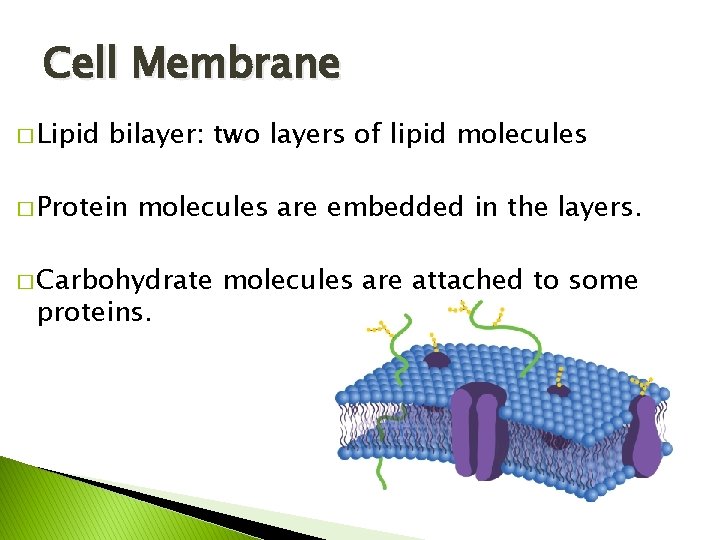
Cell Membrane � Lipid bilayer: two layers of lipid molecules � Protein molecules are embedded in the layers. � Carbohydrate proteins. molecules are attached to some
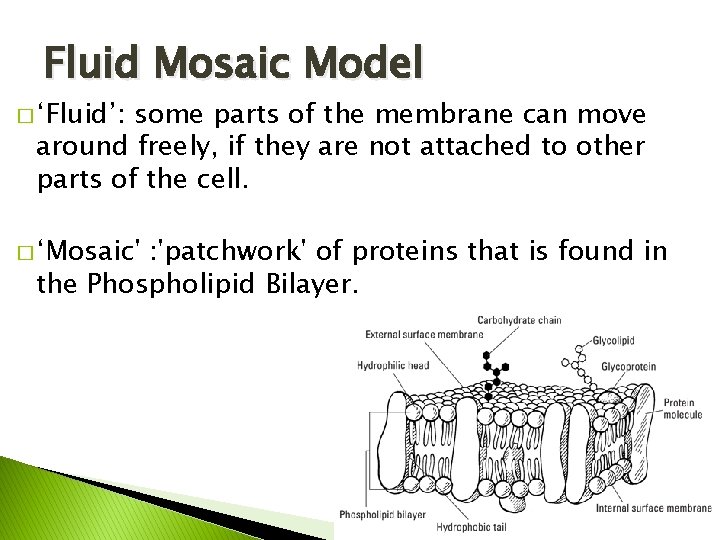
Fluid Mosaic Model � ‘Fluid’: some parts of the membrane can move around freely, if they are not attached to other parts of the cell. � ‘Mosaic' : 'patchwork' of proteins that is found in the Phospholipid Bilayer.
Article Review 1. Read Lipid Bilayer Article 2. Answer questions from CYU
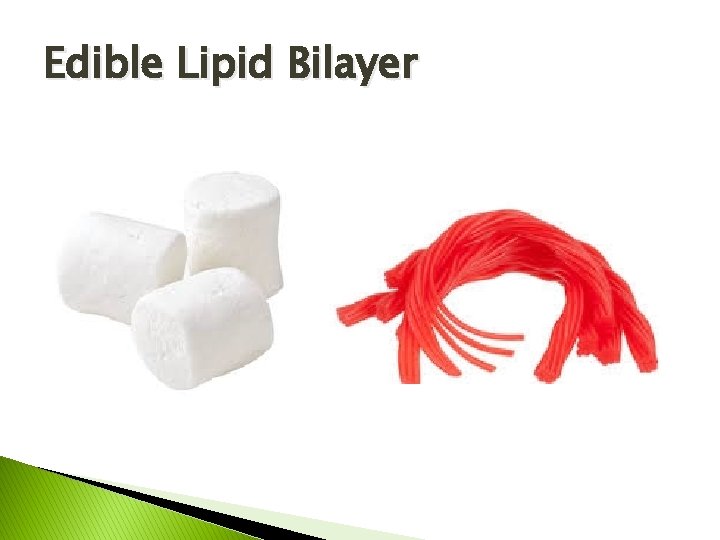
Edible Lipid Bilayer
Cell Membrane
Cell Walls � Present in plants, algae, fungi and many prokaryotes � Porous to allow water, oxygen, carbon dioxide to pass through easily. � Function: cell provide support and protection for
Read and Respond � Read pages 183 -186 � Write definition for the following terms: ◦ ◦ ◦ ◦ Concentration Diffusion Equilibrium Osmosis Isotonic Hypertonic Hypotonic
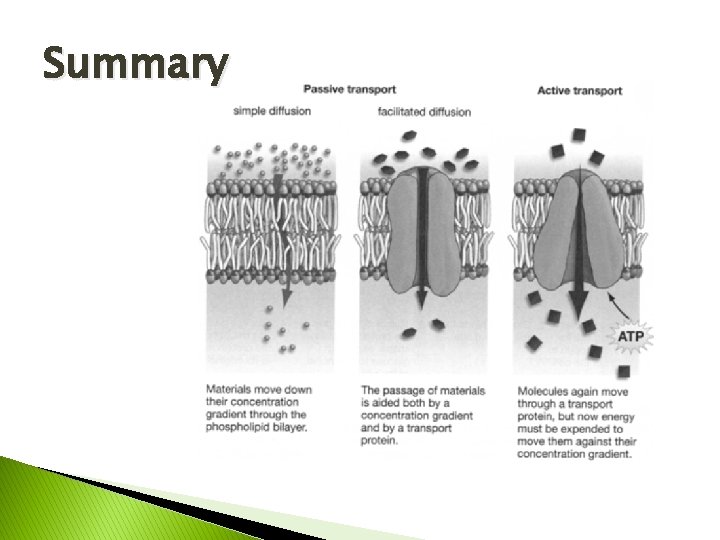
Diffusion � Particles are in constant, random motion. � Tend to move from area of high concentration to an area of low concentration. � Energy is not required. � Equilibrium: throughout concentration of solute is same
Osmosis � Some particles are too large or too strongly charged to cross the lipid bilayer. � If a substance can cross, it is said to be permeable. � Most biological membranes are selectively permeable, meaning that some substances can pass, but others cannot.
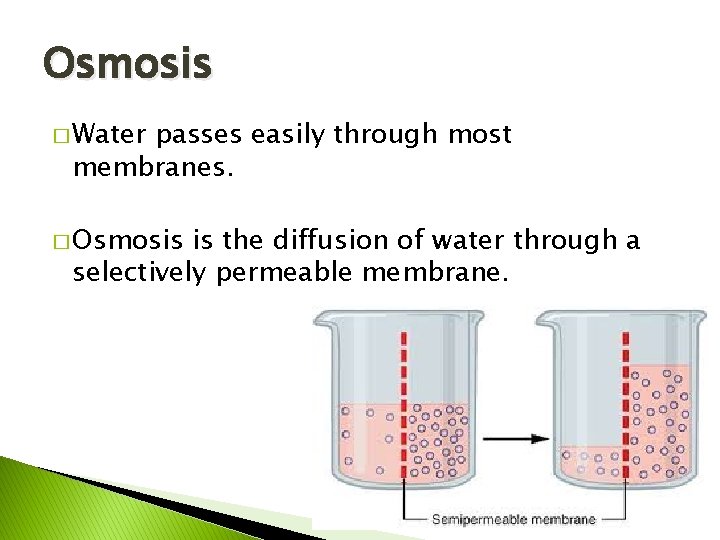
Osmosis � Water passes easily through most membranes. � Osmosis is the diffusion of water through a selectively permeable membrane.
Osmosis � Water will tend to move across the membrane until equilibrium is reached. � When the concentrations of water and solute are the same on each side of the membrane, the solution is said to be isotonic (same strength). � Hypertonic � Hypotonic solute. (above strength) means more solute. (below strength) means dilute, or less
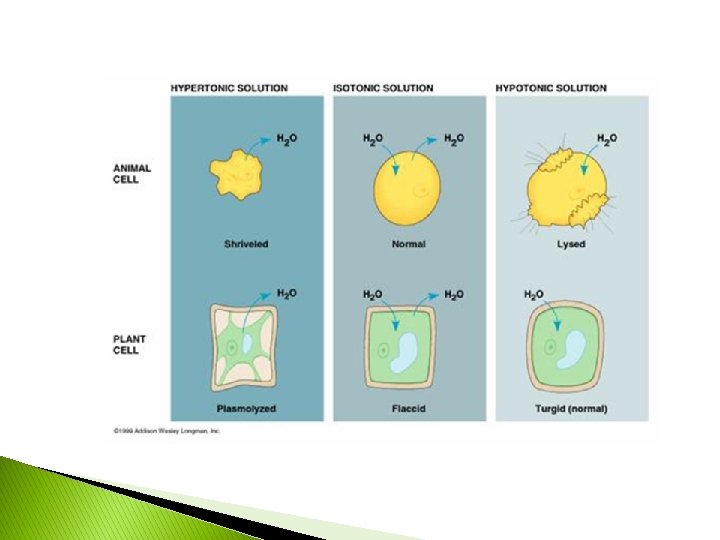
Osmotic Pressure � For survival, organisms must balance intake and loss of water. � Cells placed in fresh water (or hypotonic) will have more solutes inside, and therefore water will tend to diffuse INTO the cell. The cell may burst if it takes in too much water. � Cells placed in a concentrated (hypertonic) solution will tend to lose water (water moves OUT), and may result in the cell shrinking.

Osmosis Lab
Cell Boundaries Review
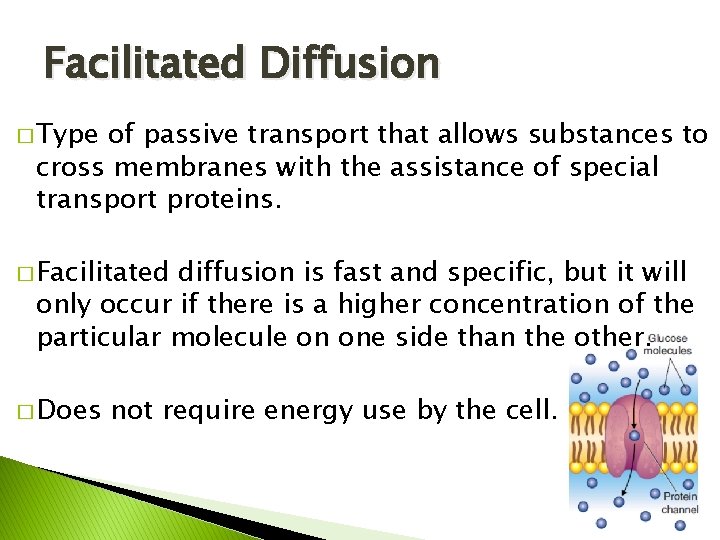
Facilitated Diffusion � Type of passive transport that allows substances to cross membranes with the assistance of special transport proteins. � Facilitated diffusion is fast and specific, but it will only occur if there is a higher concentration of the particular molecule on one side than the other. � Does not require energy use by the cell.
Active Transport � Cells must sometimes move materials in the opposite direction of diffusion (against the concentration difference). � Active transport of small molecules across the membrane is usually carried out by transport proteins (or protein "pumps"). � Active transport requires energy.
Summary
Endocytosis & Exocytosis � Larger molecules and clumps of material may be transported by the cell membrane. � Endocytosis is the process of taking materials INTO the cell by "infolding, " or forming pockets in the cell membrane. � The pocket that forms breaks loose, and forms a vacuole. ◦ Two types: 1. Pinocytosis - intake of liquid 2. Phagocytosis-intake of larger particles � Exocytosis: releasing large amounts of material from the cell; vacuole membrane fuses with cell membrane, forcing the contents out of the cell.
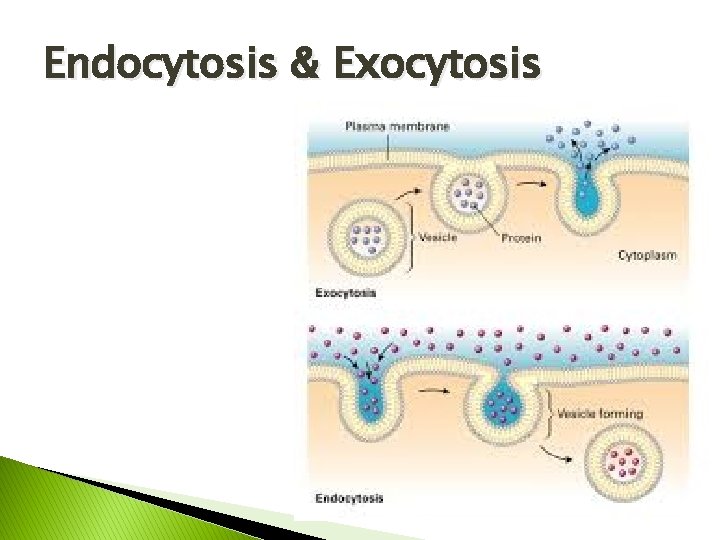
Endocytosis & Exocytosis
Warm-Up! � Define: ◦ ◦ Endocytosis Exocyotis Pinocyotis Phagocytosis
Correct Cell Boundaries Worksheet
Questions � Page � Pg 189 # 1 -6 197 #6 -8
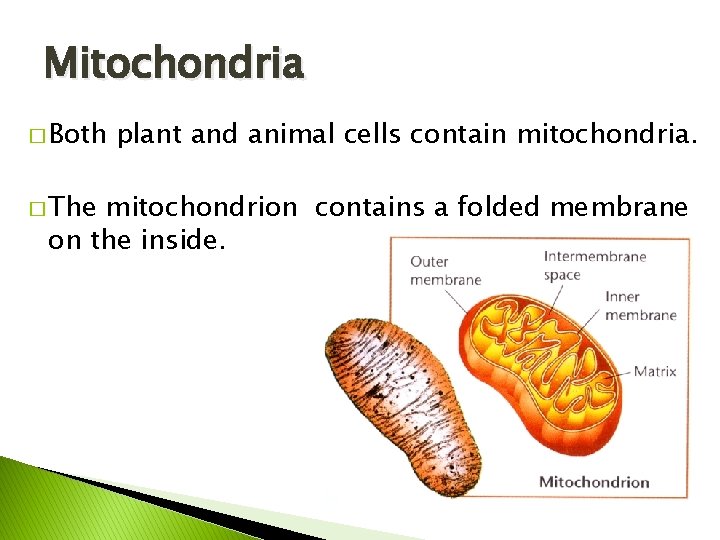
Mitochondria � Both � The plant and animal cells contain mitochondria. mitochondrion contains a folded membrane on the inside.
Using Food for Energy � Glycolysis releases a small amount of energy, and takes place in the cytoplasm. � In the presence of oxygen, glycolysis is followed by the Krebs Cycle and the electron transport chain. � These processes are known collectively as cellular respiration.
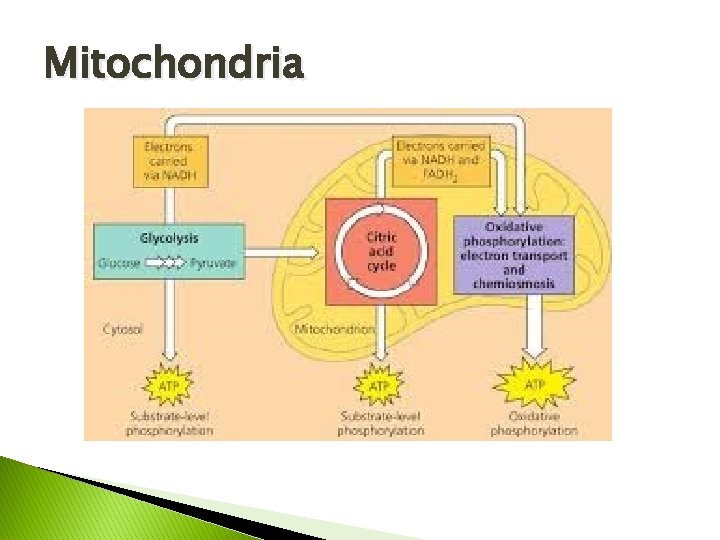
Mitochondria
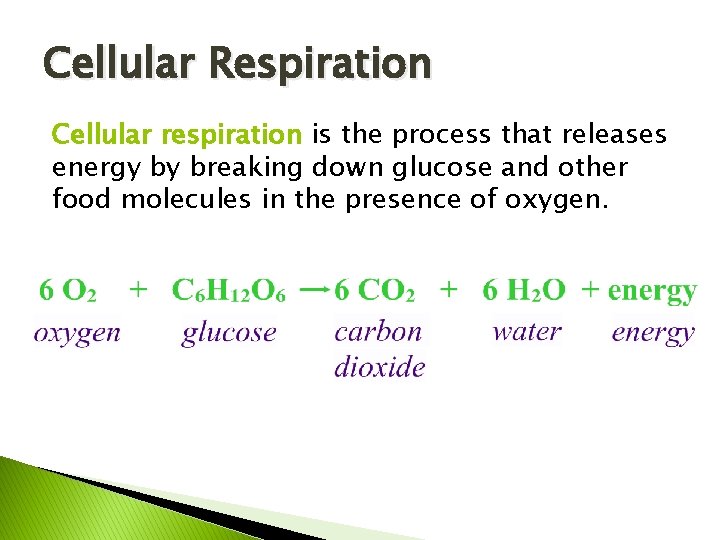
Cellular Respiration Cellular respiration is the process that releases energy by breaking down glucose and other food molecules in the presence of oxygen.
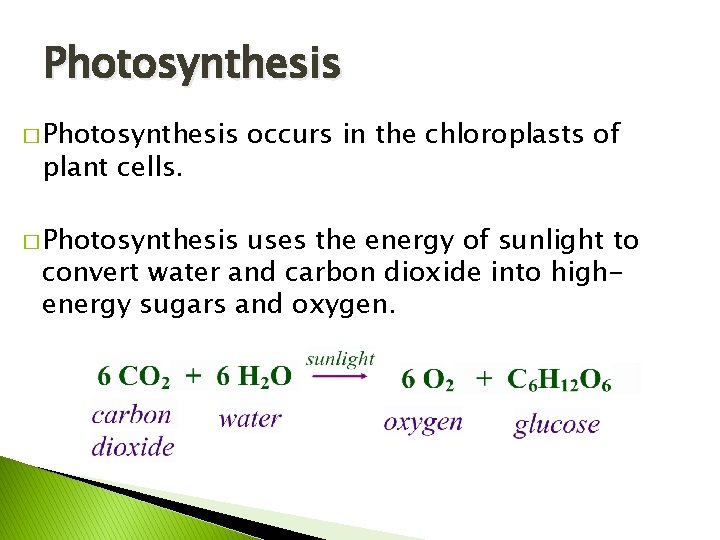
Photosynthesis � Photosynthesis plant cells. � Photosynthesis occurs in the chloroplasts of uses the energy of sunlight to convert water and carbon dioxide into highenergy sugars and oxygen.
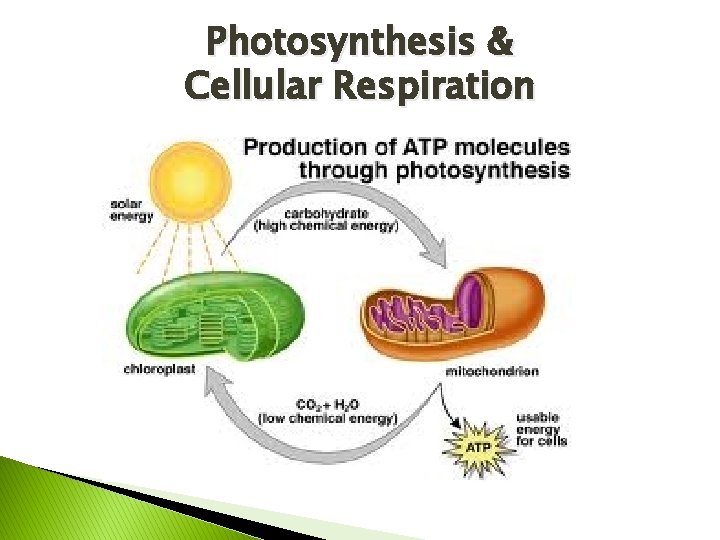
Photosynthesis & Cellular Respiration
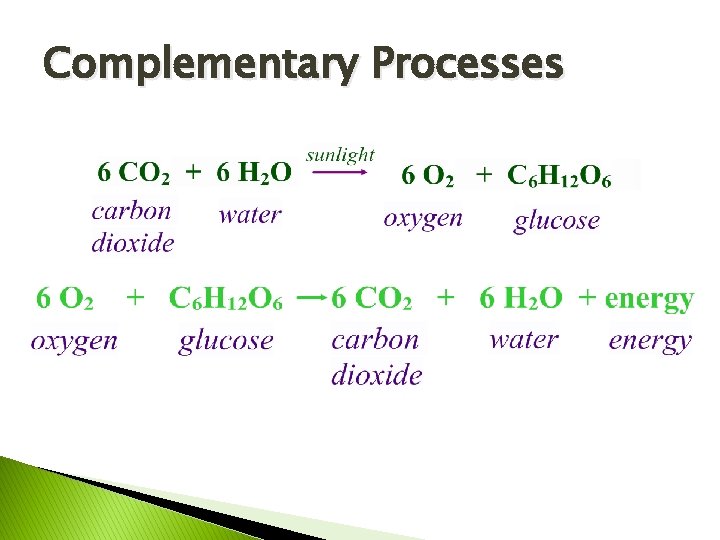
Complementary Processes

Crossword
Warm-Up! � What is the chemical reaction for photosynthesis? � What is the chemical reaction for cellular respiration?

Review: Test #3

Whiteboard Battle
Question #1 � What is diffusion?
Question #2 � What is osmosis?
Question #3 Hypertonic? Hypotonic? Or Isotonic? 1. A solution has the same concentration on both sides of the permeable membrane. 2. A solution has a larger concentration of solute. 3. A solution has a smaller concentration of solute.
Question #4 � What is the chemical equation for photosynthesis?
Question #5 � What is the chemical equation for cellular respiration?
- Slides: 42