
Cell Boundaries Composition Osmosis Diffusion ActivePassive Transport Cell
Cell Boundaries Composition, Osmosis, Diffusion Active/Passive Transport
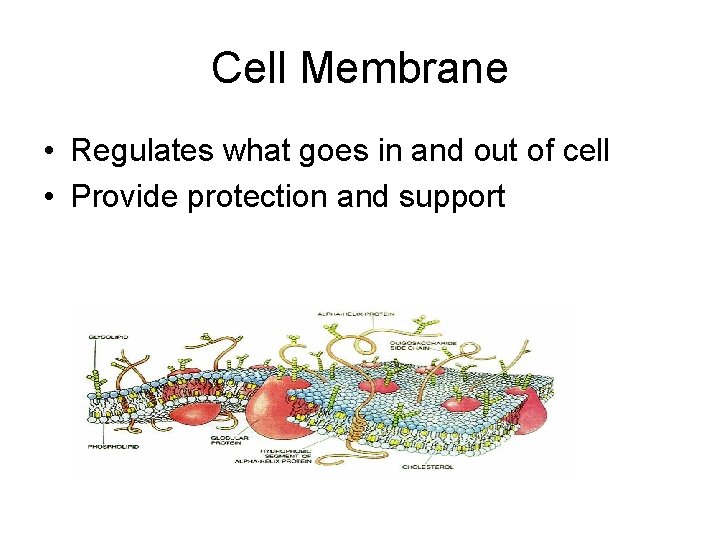
Cell Membrane • Regulates what goes in and out of cell • Provide protection and support
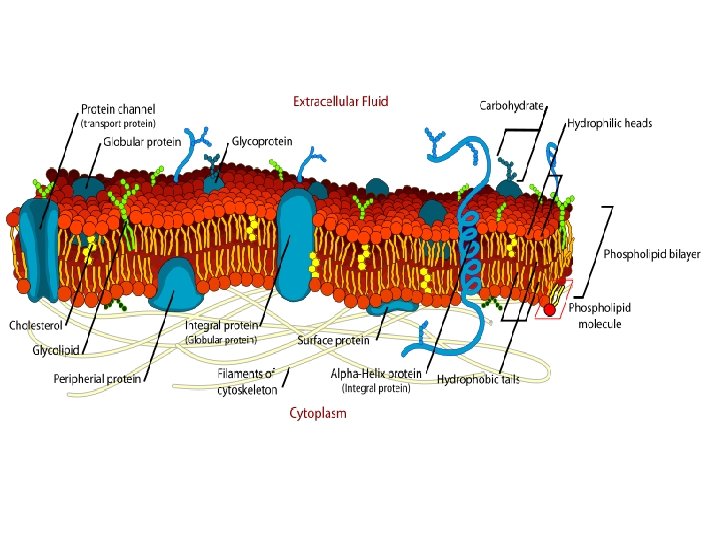
Cell Membrane Components • Review complex molecules of life: proteins, carbohydrates, lipids • Lipid bilayer (blocks, wall) – Lipids = fats, fatty acids, Bilayer = 2 walls – Hydro = water – Phylic = “love” for, Phobic, aversion for • Proteins (doors, windows) • Carbohydrates (address, keyhole)

Phyllic/Phobic
Fluid Mosiac Model • http: //www. stolaf. edu/people/giannini/flash animat/lipids/membrane%20 fluidity. swf
Fluid Mosiac Model • The proteins, lipids are like different tiles • The “walls” are moving
Diffusion • Review solution, solvent, solute • Concentration – 12 g/L mass of solute per volume of solution – The more solute there is, the more concentrated the solution will be if volume is constant. • Permeable/permeability – Allowing liquids, gases to pass through
Diffusion • Diffusion – particle movement from area of high concentration to area of low concentration • Equilibrium – situation where the concentration in a solution is the same throughout. • Diffusion is random particle (solute) movement, so in or in/out of a cell, no energy is needed for this to happen
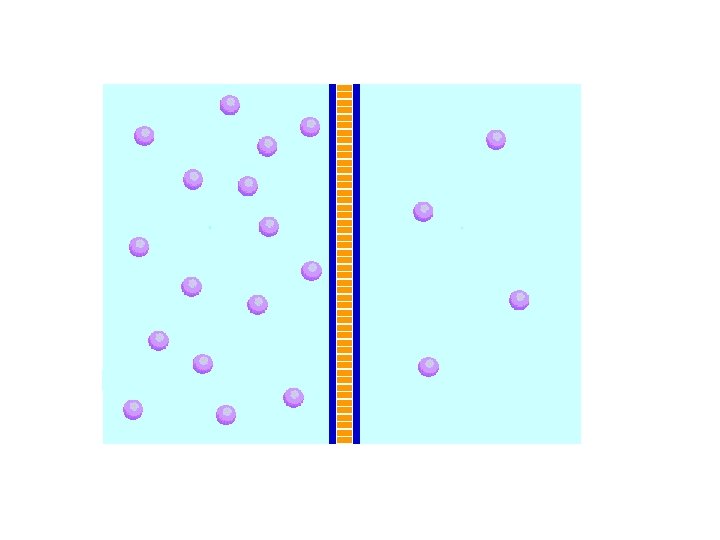
Osmosis • Diffusion of WATER through a selectively permeable membrane • http: //edtech. clas. pdx. edu/osmosis_tut orial/ • http: //virtualbiologytutor. co. uk/images/ diffusion. gif
Osmosis • Isotonic Iso – same – equal concentration on both sides of a membrane • Hypertonic a solution with higher solute concentration compared with another. For example, if the extracellular fluid has greater amounts of solutes than the cytoplasm, the extracellular fluid is said to be hypertonic.
• Hypotonic – a solution with lower solute concentration compared with another. For example, if the extracellular fluid has lesser amounts of solutes than the cytoplasm, the extracellular fluid is said to be hypertonic.
Facilitated Diffusion • Still diffusion – so movement is from high concentration to low concentration, and no cell energy is required. • Protein channels help the movement of specific molecules, by allowing them to pass through. • A door with a key, ex. glucose has the key, salt doesn’t

• http: //www. youtube. com/watch? v=I 4123 h UU 8 xo
Active Transport • Needed when cells need materials to move against a concentration gradient • This process requires cell energy – Protein “pumps” – Endo- exo- cytosis – Phago- pino- cytosis
Protein Pumps • Small molecules and ions moved this way • A significant amount of the cells energy is needed to do this on a daily basis.
Endocytosis • Bringing material into cell • Phagocytosis – Forming a pocket around the molecule or food particle – Surround, bring in to cell • Pinocytosis – Smaller scale, for liquid
Exocytosis • Opposite of Endocytosis • Expel material from the cell

• http: //www. stanford. edu/group/Urchin/GIF S/exocyt. gif.
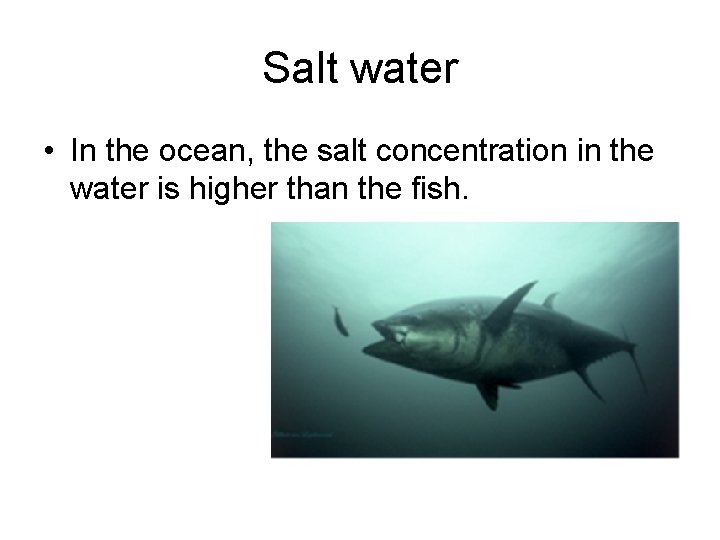
Salt water • In the ocean, the salt concentration in the water is higher than the fish.
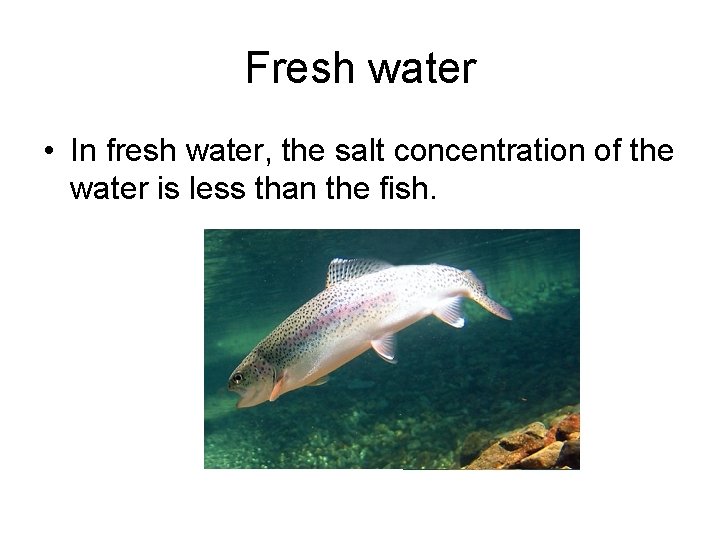
Fresh water • In fresh water, the salt concentration of the water is less than the fish.

• Salt water • Fresh water
- Slides: 23