
Cell Boundaries Cell membrane thin flexible barriers that
Cell Boundaries

Cell membrane • thin, flexible barriers that surrounds all cells and separate some areas within cells
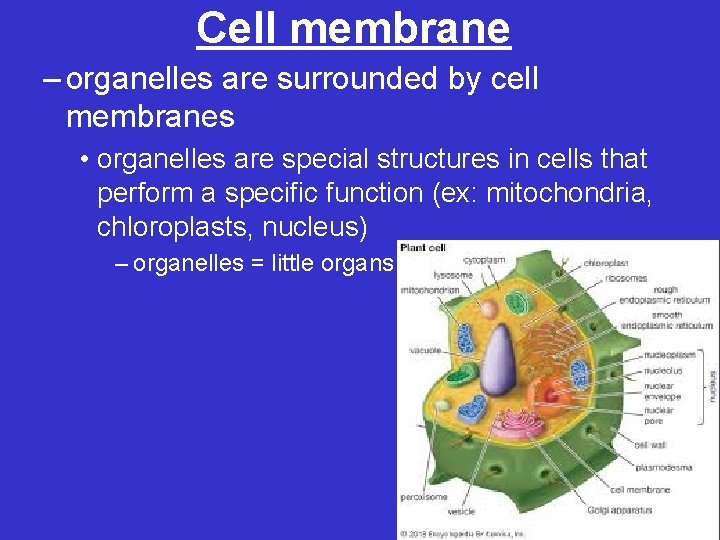
Cell membrane – organelles are surrounded by cell membranes • organelles are special structures in cells that perform a specific function (ex: mitochondria, chloroplasts, nucleus) – organelles = little organs
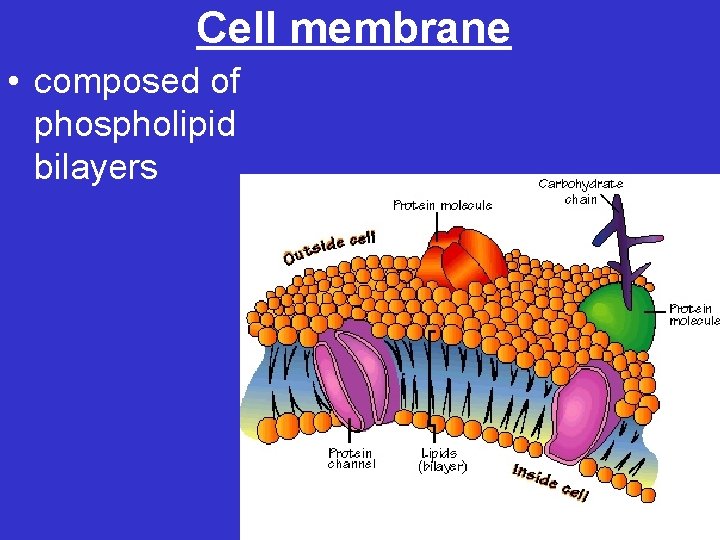
Cell membrane • composed of phospholipid bilayers
Plasma membrane • cell membrane on the outside of the cell – regulates (controls) what enters and leaves the cell – provides protection and support • sometimes just called THE cell membrane
Phospholipid • have two distinct ends Crash. Course Biology Episode #3 You Are What You Eat Beginning Watching at 9: 42 Stop Watching at 10: 27
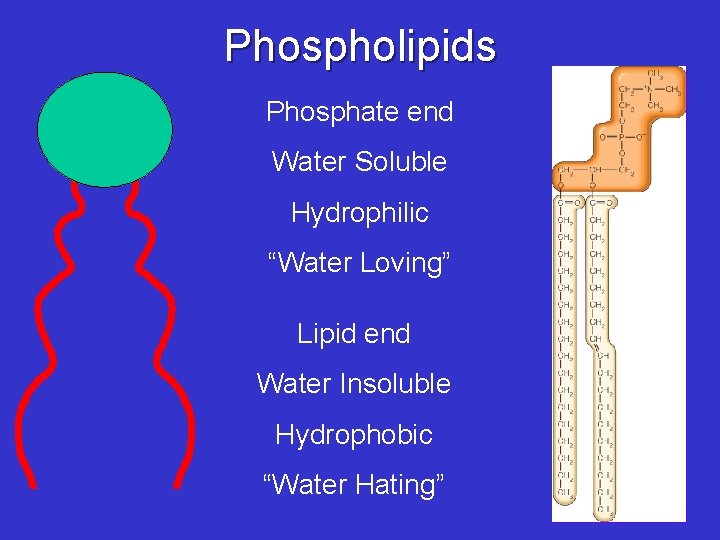
Phospholipids Phosphate end Water Soluble Hydrophilic “Water Loving” Lipid end Water Insoluble Hydrophobic “Water Hating”
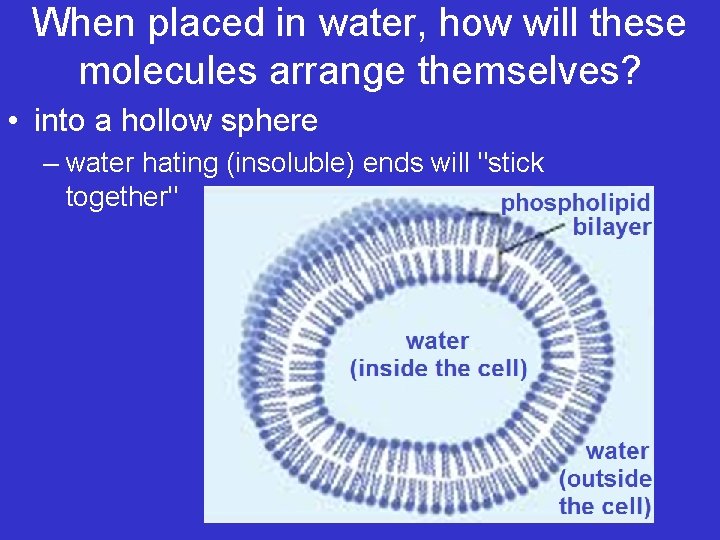
When placed in water, how will these molecules arrange themselves? • into a hollow sphere – water hating (insoluble) ends will "stick together"
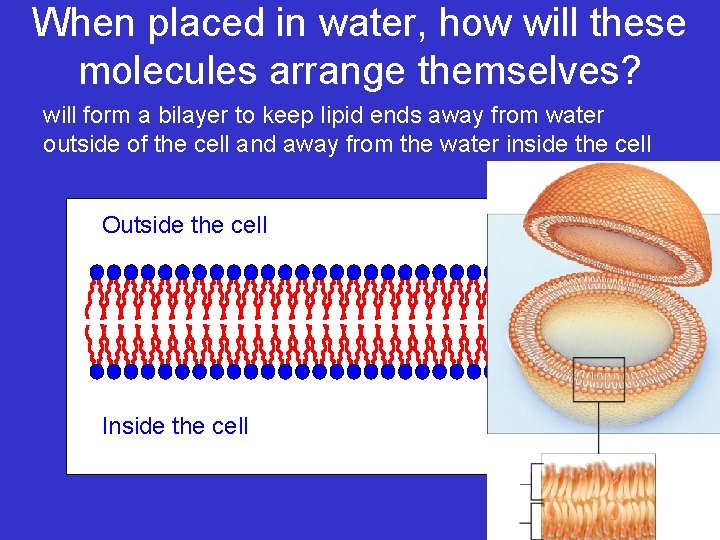
When placed in water, how will these molecules arrange themselves? will form a bilayer to keep lipid ends away from water outside of the cell and away from the water inside the cell Outside the cell Inside the cell
Phospholipid bilayer as a Barrier • The lipid portion in the center is very oil like. This oil like layer repels water, and water-soluble molecules. • Most molecules inside or outside of the cell are water-soluble and cannot easily pass through this oil like layer. • This layer thus forms a barrier to most molecules trying to pass in or out of a cell.
Membrane Proteins • protein molecules embedded within the phospholipid bilayer – They may form channels. If small enough, watersoluble molecules can cross the barrier through the protein channel. – Other protein molecules are located on the inside or outside surface of the membrane and "transport" or move particular molecules across the membrane using energy.
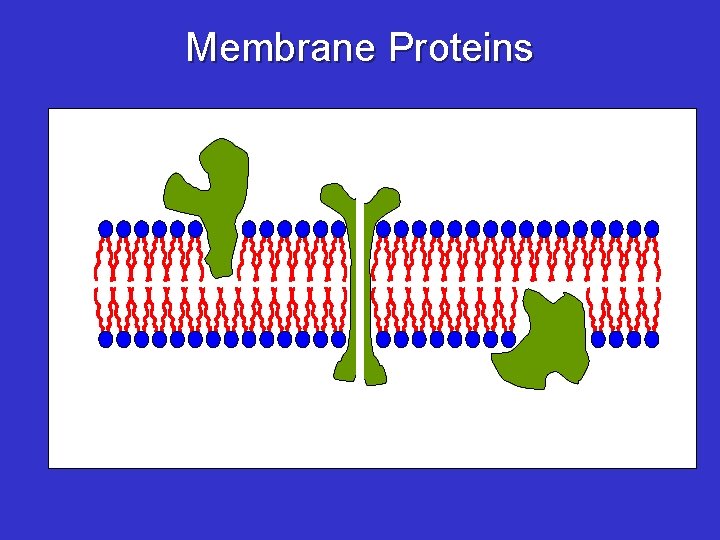
Membrane Proteins
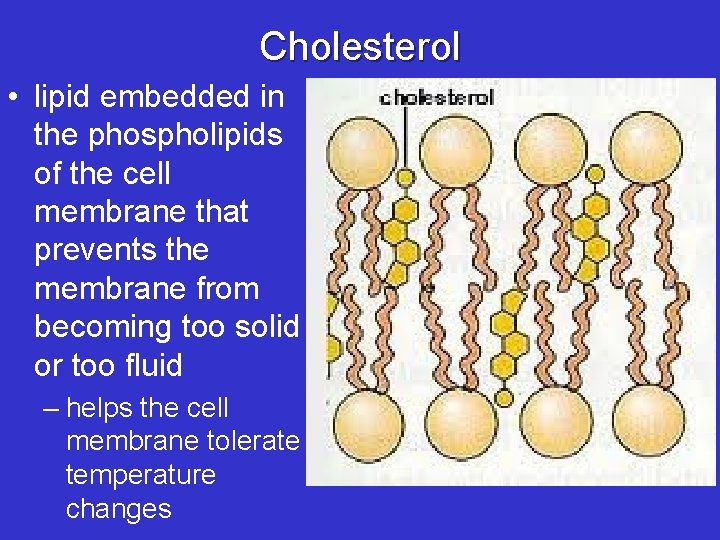
Cholesterol • lipid embedded in the phospholipids of the cell membrane that prevents the membrane from becoming too solid or too fluid – helps the cell membrane tolerate temperature changes
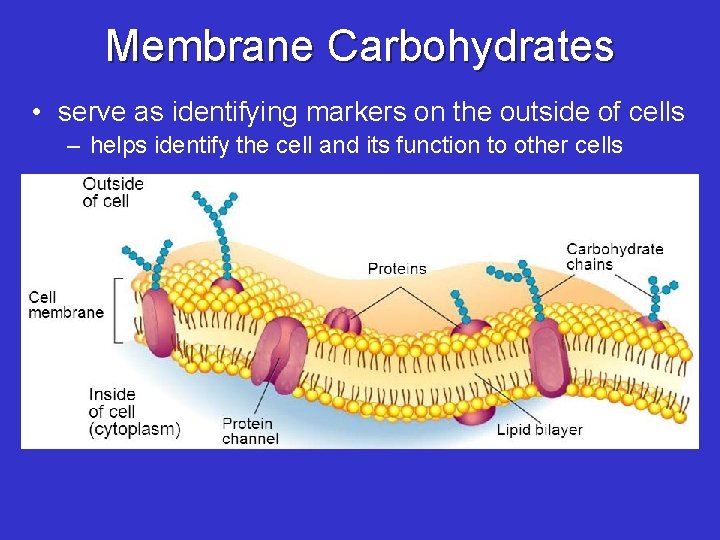
Membrane Carbohydrates • serve as identifying markers on the outside of cells – helps identify the cell and its function to other cells
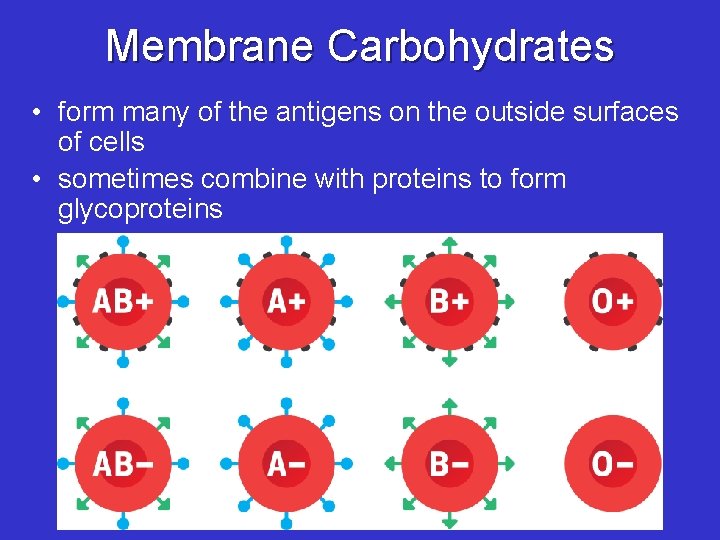
Membrane Carbohydrates • form many of the antigens on the outside surfaces of cells • sometimes combine with proteins to form glycoproteins
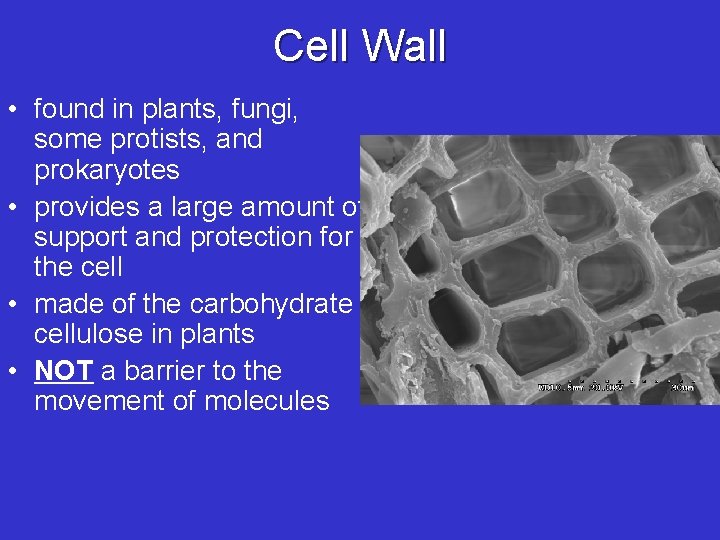
Cell Wall • found in plants, fungi, some protists, and prokaryotes • provides a large amount of support and protection for the cell • made of the carbohydrate cellulose in plants • NOT a barrier to the movement of molecules
Summary Identify one similarity and one difference between a plasma membrane and a cell wall.
- Slides: 17