
Cell Boundaries 7 3 u All cells are
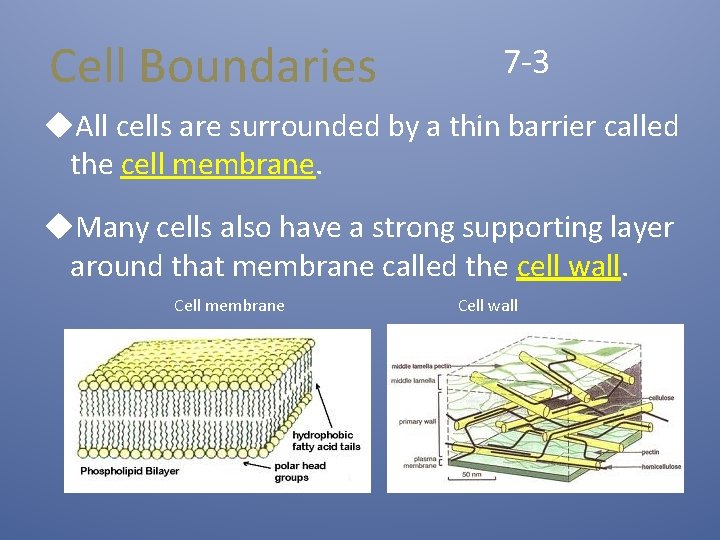
Cell Boundaries 7 -3 u. All cells are surrounded by a thin barrier called the cell membrane. u. Many cells also have a strong supporting layer around that membrane called the cell wall. Cell membrane Cell wall
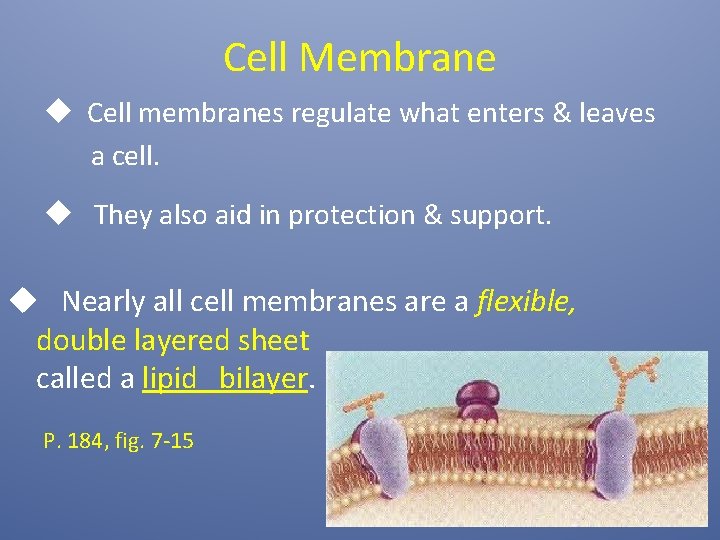
Cell Membrane u Cell membranes regulate what enters & leaves a cell. u They also aid in protection & support. u Nearly all cell membranes are a flexible, double layered sheet called a lipid bilayer. P. 184, fig. 7 -15
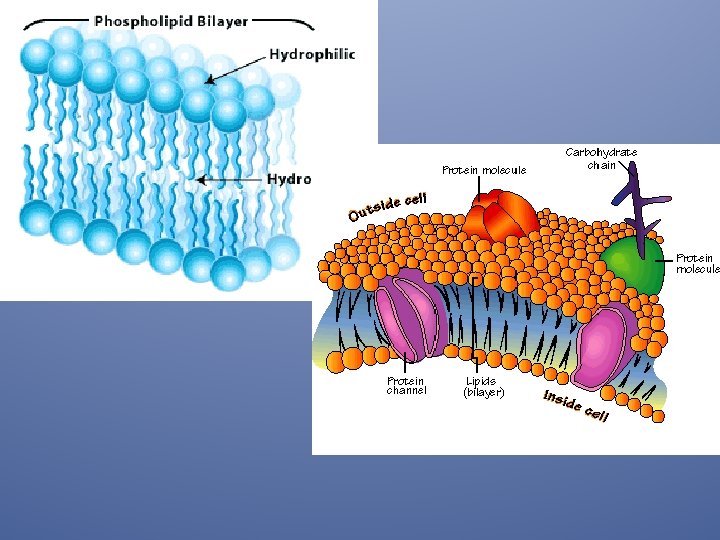
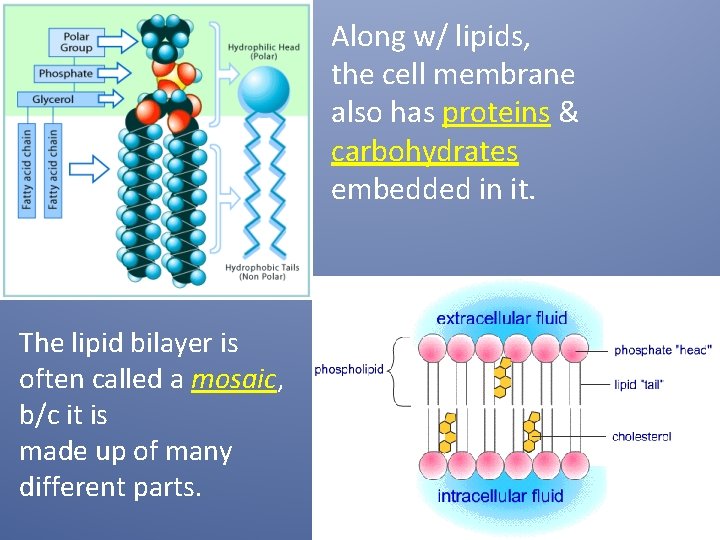
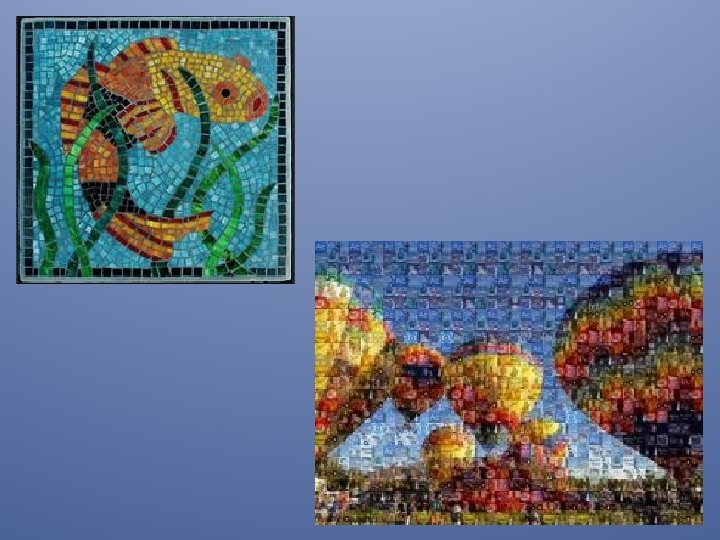
Along w/ lipids, the cell membrane also has proteins & carbohydrates embedded in it. The lipid bilayer is often called a mosaic, b/c it is made up of many different parts.
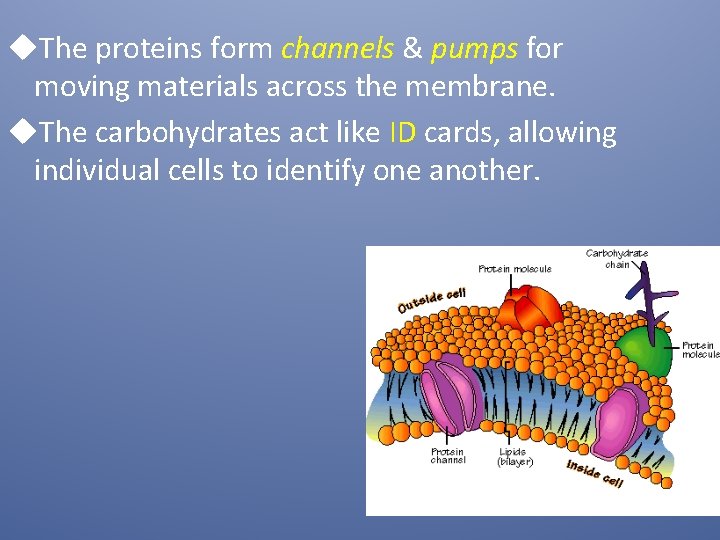
u. The proteins form channels & pumps for moving materials across the membrane. u. The carbohydrates act like ID cards, allowing individual cells to identify one another.

• http: //www. youtube. com/watch? v=Qqsf_UJcf Bc&feature=related • http: //www. youtube. com/watch? v=vh 5 dhj. Xz b. Xc
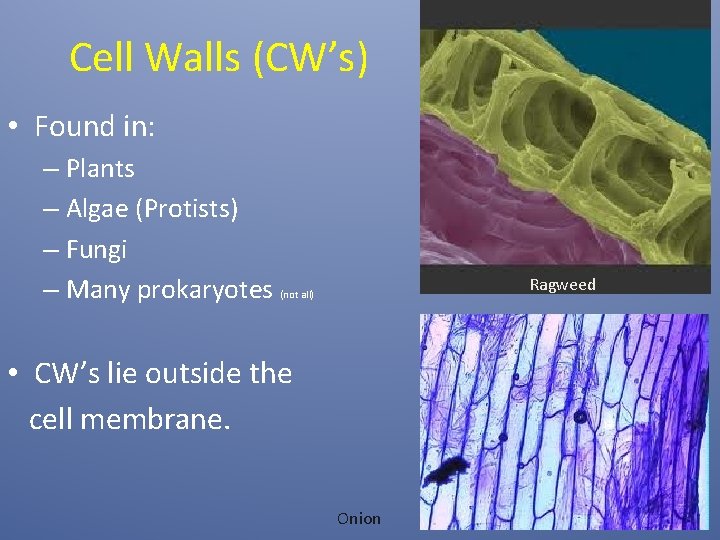
Cell Walls (CW’s) • Found in: – Plants – Algae (Protists) – Fungi – Many prokaryotes Ragweed (not all) • CW’s lie outside the cell membrane. Onion
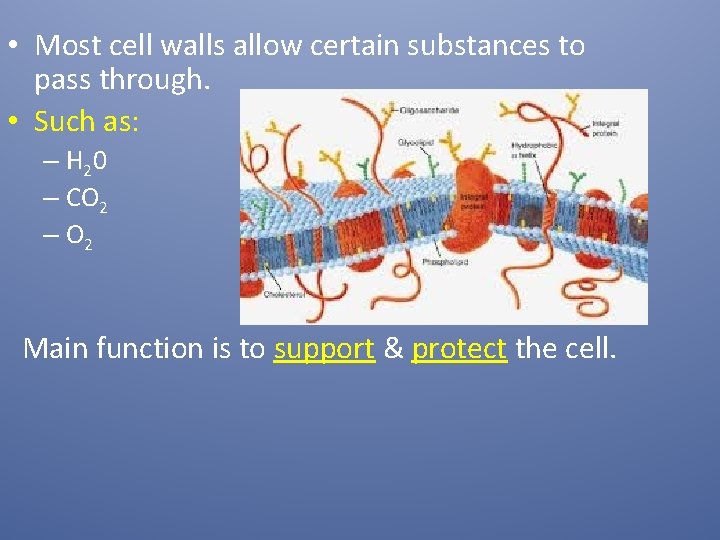
• Most cell walls allow certain substances to pass through. • Such as: – H 2 0 – CO 2 – O 2 Main function is to support & protect the cell.
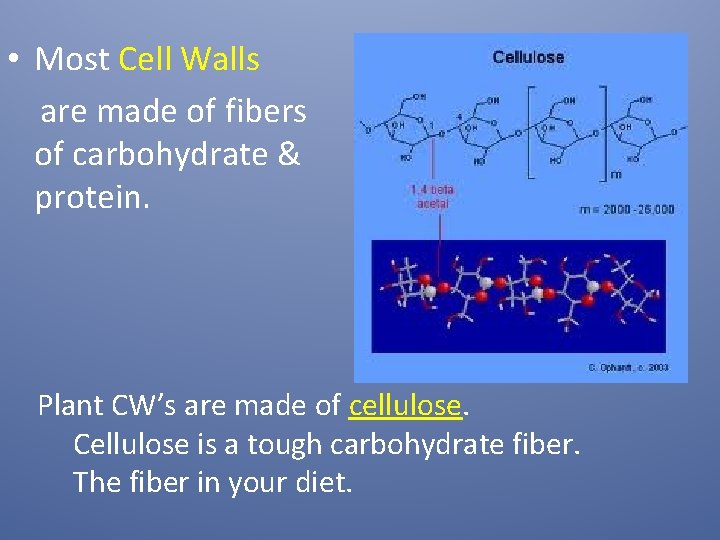
• Most Cell Walls are made of fibers of carbohydrate & protein. Plant CW’s are made of cellulose. Cellulose is a tough carbohydrate fiber. The fiber in your diet.
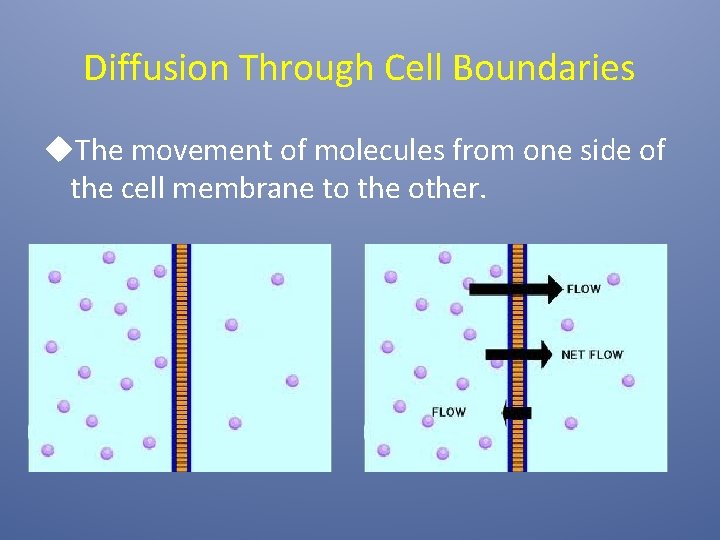
Diffusion Through Cell Boundaries u. The movement of molecules from one side of the cell membrane to the other.
Measuring Concentration • Recall what a solution is. – What’s a solute? – What’s a solvent? • Concentration –the mass of solute in a given volume of solution, or mass/volume. • Lets figure concentration of a solution. – If you dissolved 12 g of salt in 3 L of water, the concentration would be: 12 g/3 L = 4 g/L

Diffusion • Diffusion –process of molecules moving from an area of high concentration to an area of low concentration. – Equilibrium –when the concentration of a solute is the same throughout a solution. What does diffusion have to do w/ a cell membrane? P. 184, fig. 7 -14 Diffusion requires no E output by the cell. It’s free!
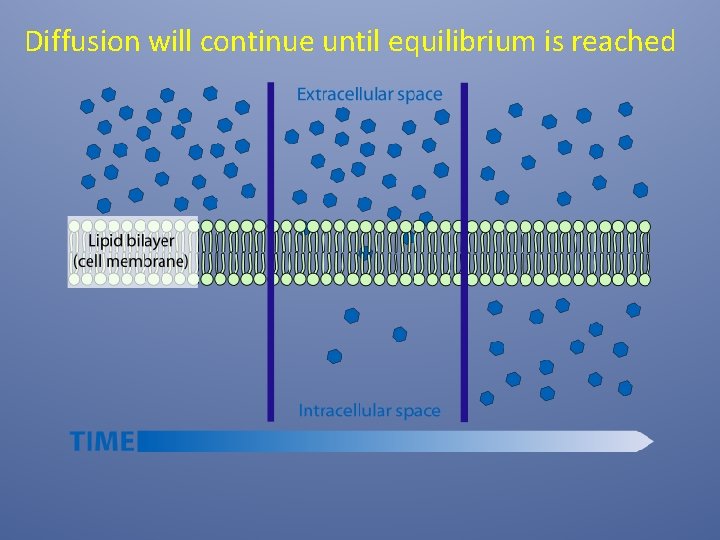
Diffusion will continue until equilibrium is reached
Osmosis • Biological membranes are selectively permeable. – Some substances can pass & some can’t. • Water passes very easily. • However, many solutes can’t. • Osmosis –the diffusion of water through a selectively permeable membrane.
How Osmosis Works • H 2 O moves from an area of high H 2 O concentration to an area of low H 2 O concentration. • Water moves across the membrane until EQ is reached.
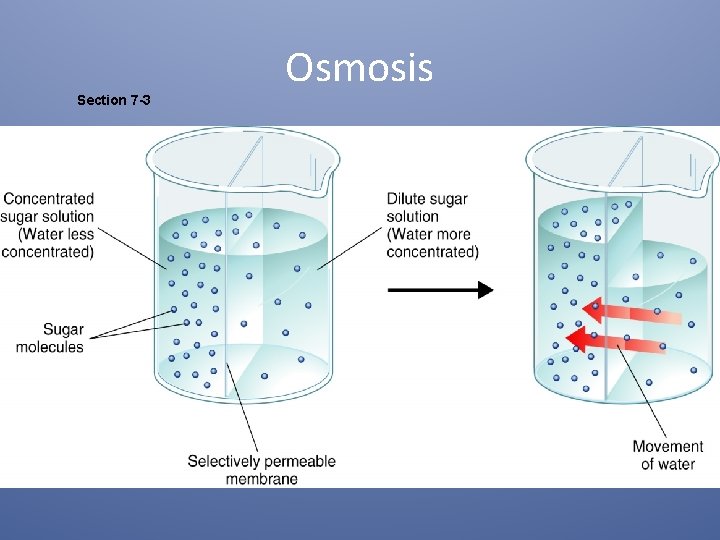
Section 7 -3 Osmosis

• http: //www. youtube. com/watch? v=sdi. Jt. DRJQ Ec&feature=related
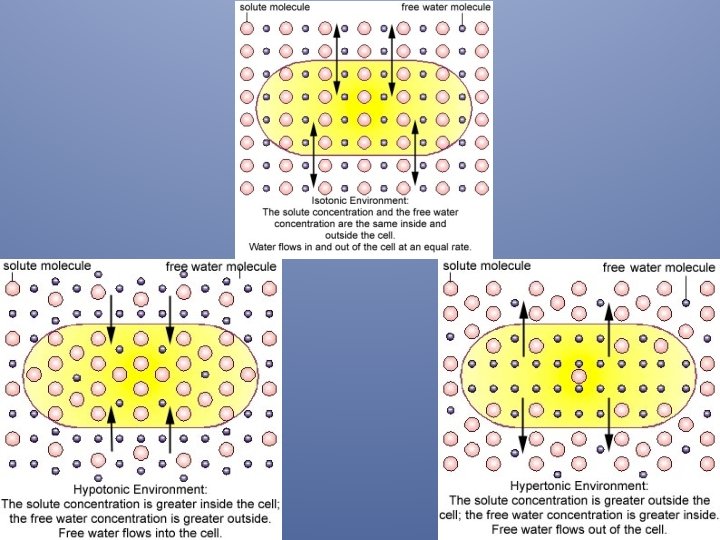
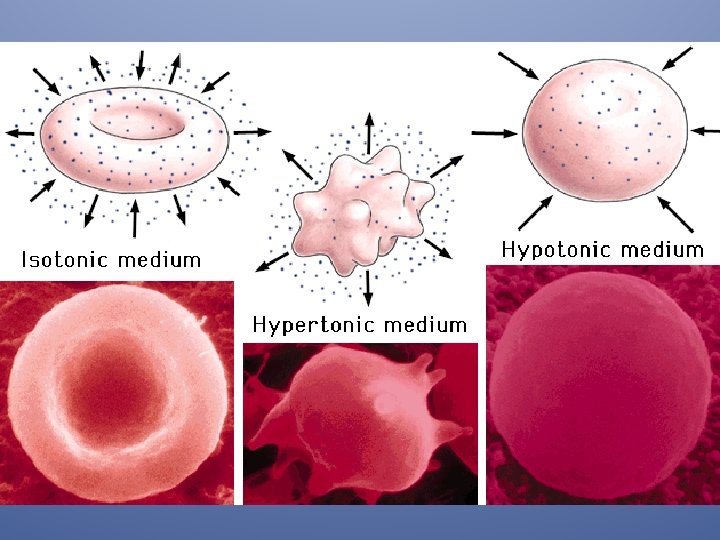
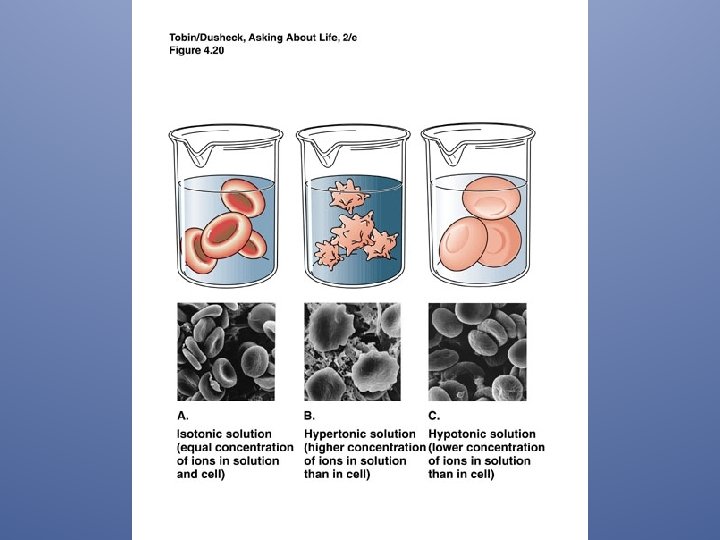
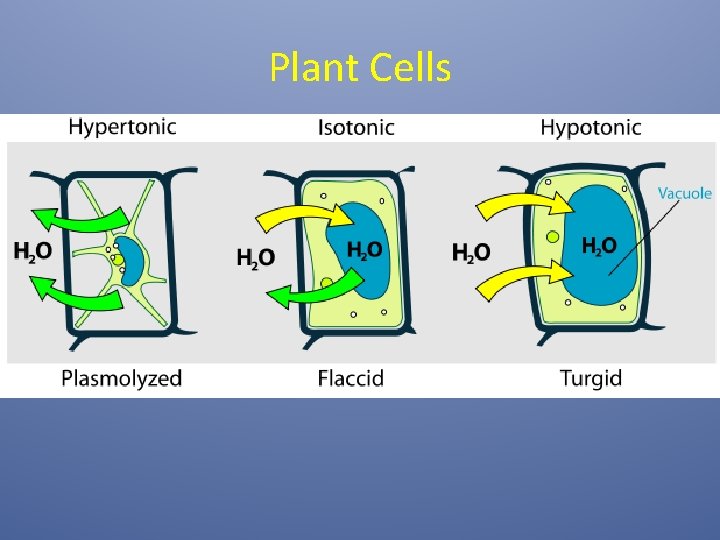
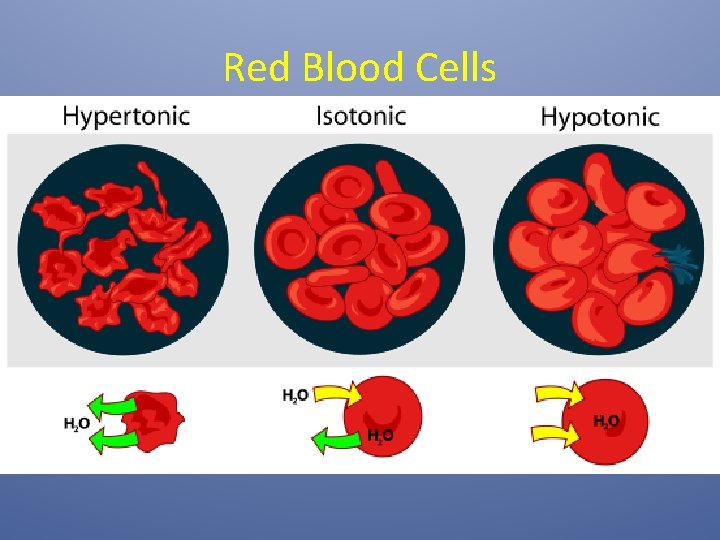
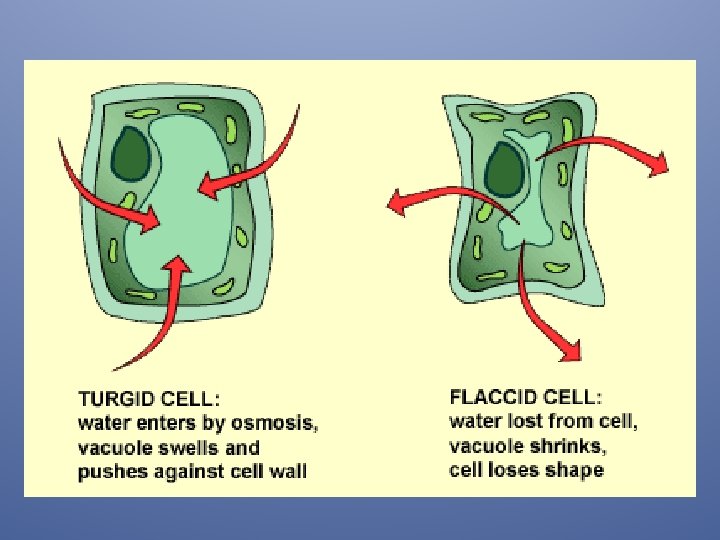
3 types of Osmotic Solutions: P. 186, fig. 7 -16 u Isotonic – Concentrations are equal on both sides of the membrane. – Normal looking cells u Hypertonic – Solution outside the cell has a higher solute concentration than the inside of the cell. – Water leaves the cell. – Cells shrink u Hypotonic – Solution has a lower solute concentration than the cell. – Water enters the cell. – Cells swell
Plant Cells
Plant Cells • http: //www. youtube. com/watch? v=GOxou. JUt Eh. E&feature=related

Turgid Flaccid
Red Blood Cells
Osmotic Pressure • Osmosis exerts a pressure known as osmotic pressure. • Osmotic pressure -the pressure exerted by the flow of water through a semi permeable membrane. • This can cause serious problems for a cell. – Cells can swell to the point of bursting.
• Fortunately, animal cells are in a isotonic solution & don’t come into contact w/ pure H 2 O. – If they did they would burst. • Also, plant cells & bacterial cells have cell walls that prevent the cell from bursting.
Facilitated Diffusion • Facilitated diffusion –movement of specific molecules across CM’s via protein channels. – P. 187, fig. 7 -17 • There are hundreds of protein channels that allow only certain substances to cross different membranes.
u. This process does not require E. u. It acts just as diffusion. – It goes from high to low concentrations.
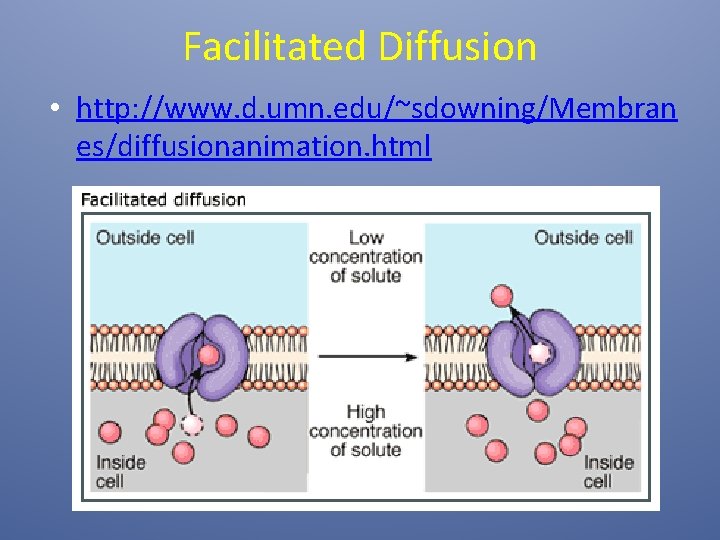
Facilitated Diffusion • http: //www. d. umn. edu/~sdowning/Membran es/diffusionanimation. html
Active Transport u. When cells move materials against the concentration gradient, they are using Active Transport. – This process requires E. u. Active transport is carried out by transport proteins or pumps found in the membrane.
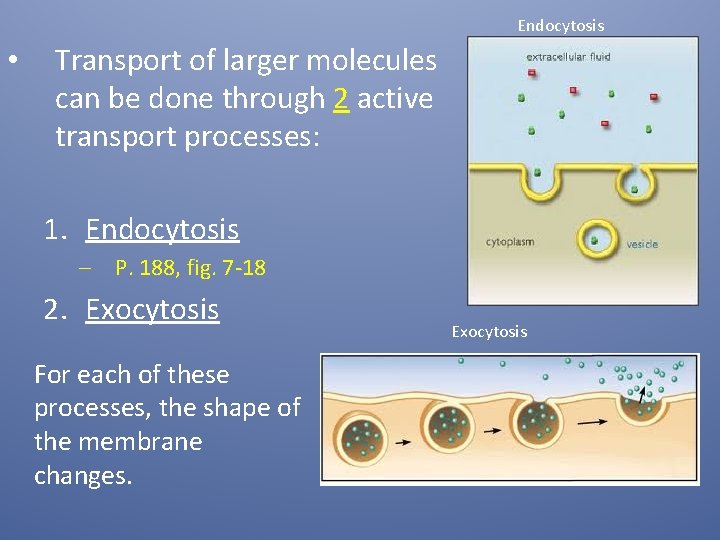
Endocytosis • Transport of larger molecules can be done through 2 active transport processes: 1. Endocytosis – P. 188, fig. 7 -18 2. Exocytosis For each of these processes, the shape of the membrane changes. Exocytosis

Endo & Exo • http: //www. youtube. com/watch? v=K 7 yku 3 sa 4 Y 8&feature=related
Molecular Transport • Endocytosis –process of taking material into the cell by infolding or pocketing of the CM. – This process forms a vacuole in the cell. – This process works for: • • • taking in food larger molecules other cells – 2 examples of endocytosis are: • • Phagocytosis Pinocytosis
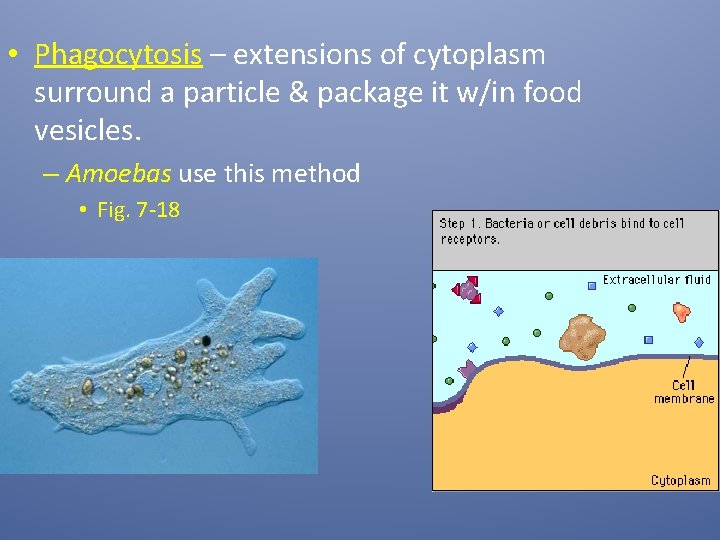
• Phagocytosis – extensions of cytoplasm surround a particle & package it w/in food vesicles. – Amoebas use this method • Fig. 7 -18
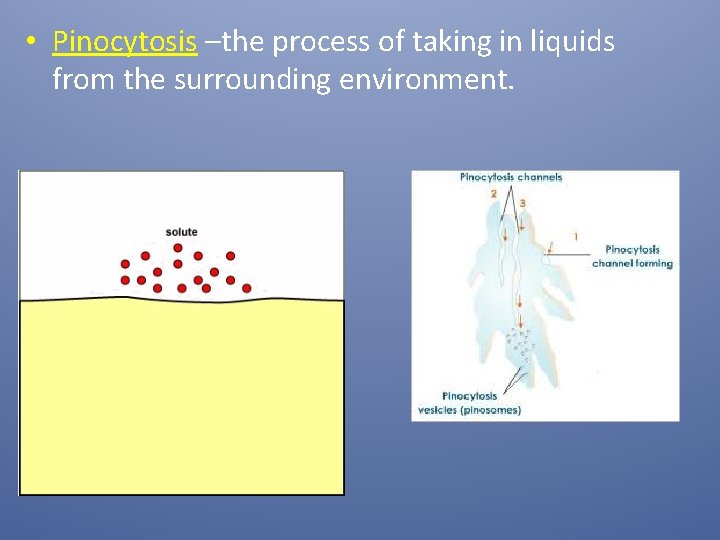
• Pinocytosis –the process of taking in liquids from the surrounding environment.
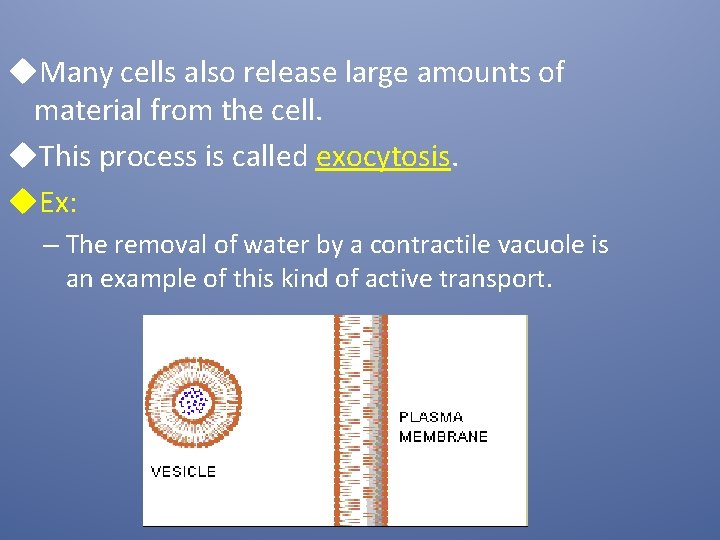
u. Many cells also release large amounts of material from the cell. u. This process is called exocytosis. u. Ex: – The removal of water by a contractile vacuole is an example of this kind of active transport.

• http: //highered. mcgrawhill. com/sites/0072437316/student_view 0/ch apter 6/animations. html#
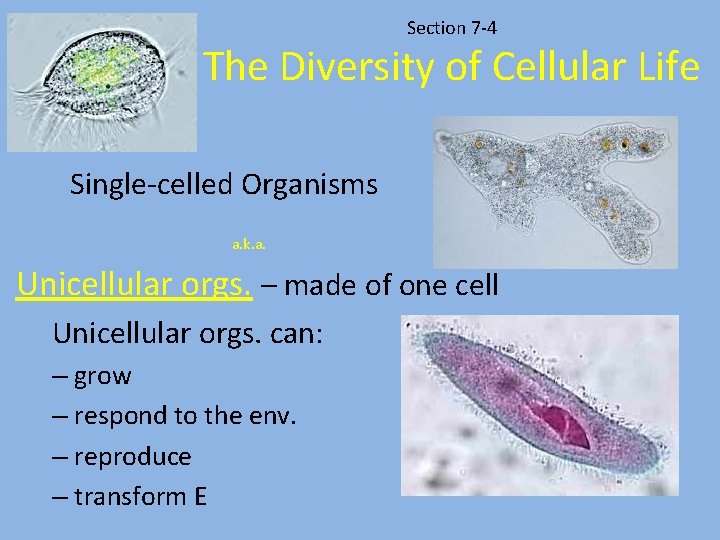
Section 7 -4 The Diversity of Cellular Life Single-celled Organisms a. k. a. Unicellular orgs. – made of one cell Unicellular orgs. can: – grow – respond to the env. – reproduce – transform E
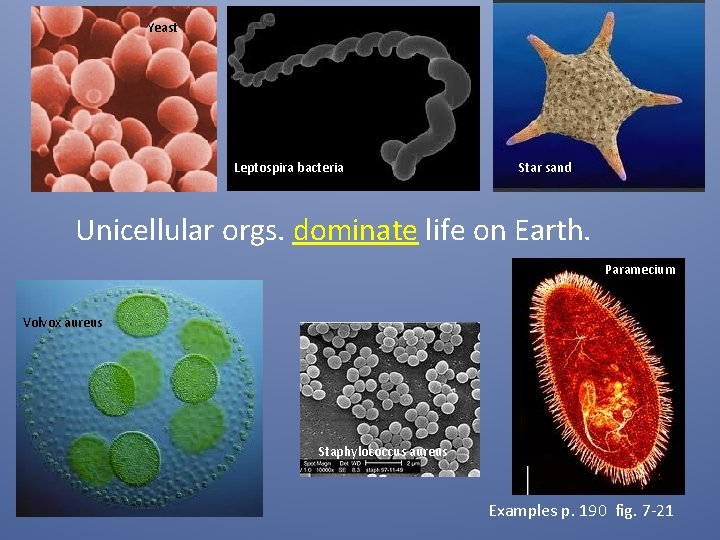
Yeast Leptospira bacteria Star sand Unicellular orgs. dominate life on Earth. Paramecium Volvox aureus Staphylococcus aureus Examples p. 190 fig. 7 -21
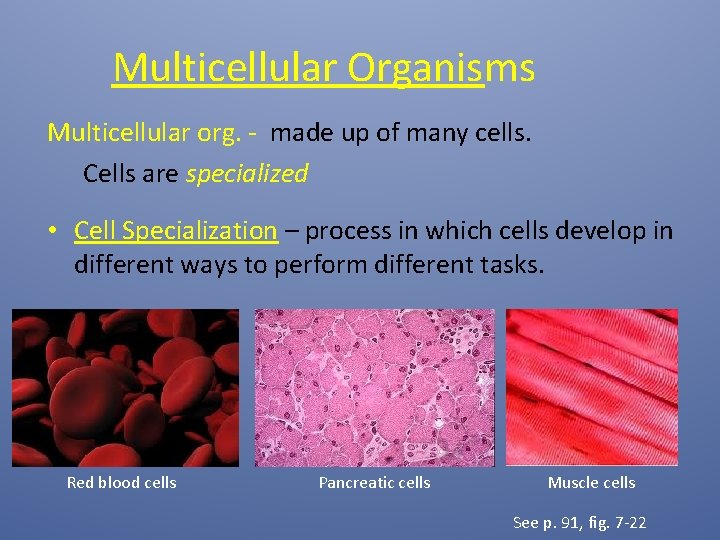
Multicellular Organisms Multicellular org. - made up of many cells. Cells are specialized • Cell Specialization – process in which cells develop in different ways to perform different tasks. Red blood cells Pancreatic cells Muscle cells See p. 91, fig. 7 -22
Specialized Animal Cells • Examples of specialized cells in animals: – Red blood cells • Transport O 2 throughout the body. – Pancreatic cells • Produce enzymes that aid in digestion. • Contain cells specialized for making proteins. – These cells have numerous ribosomes. – Muscle cells • Able to contract & relax, causing movement of our bones.
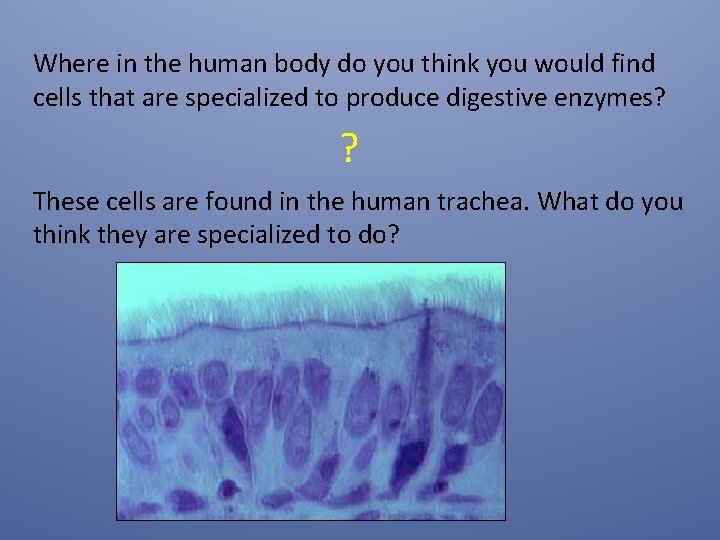
Where in the human body do you think you would find cells that are specialized to produce digestive enzymes? ? These cells are found in the human trachea. What do you think they are specialized to do?
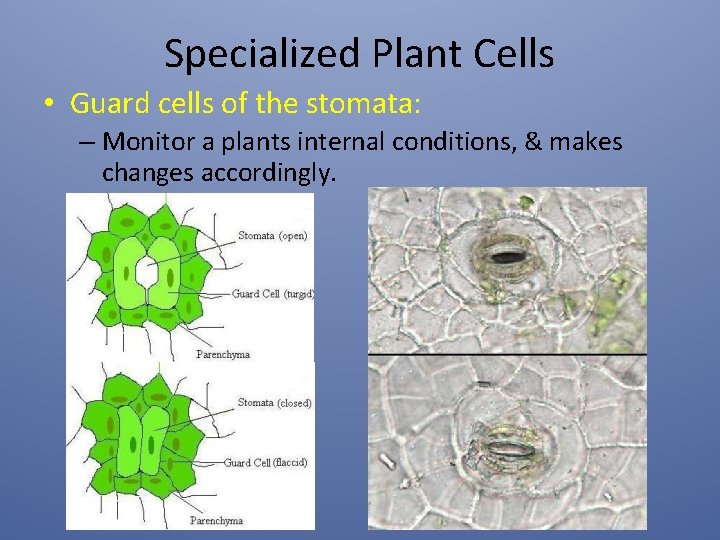
Specialized Plant Cells • Guard cells of the stomata: – Monitor a plants internal conditions, & makes changes accordingly.
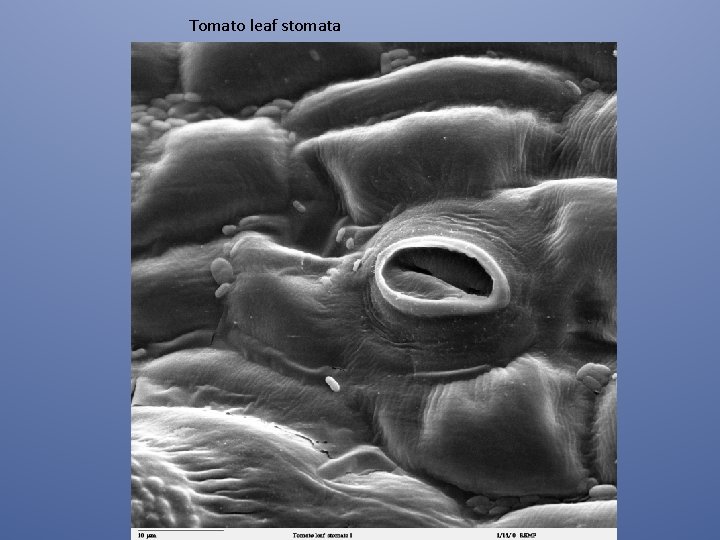
Tomato leaf stomata
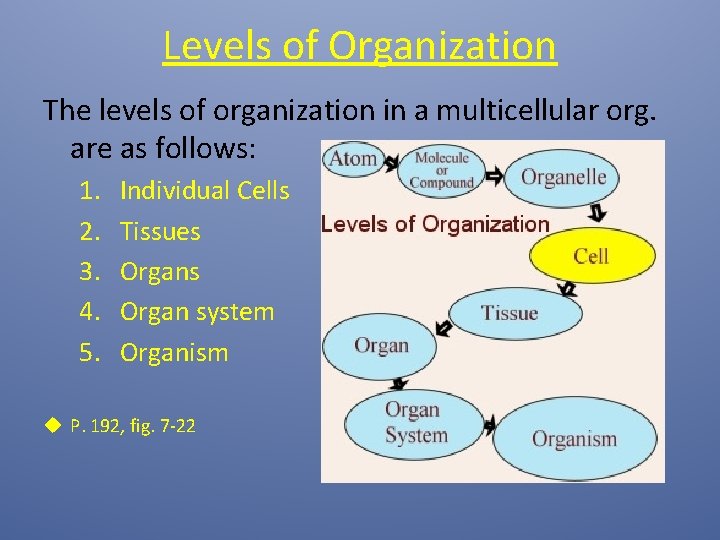
Levels of Organization The levels of organization in a multicellular org. are as follows: 1. 2. 3. 4. 5. Individual Cells Tissues Organ system Organism u P. 192, fig. 7 -22
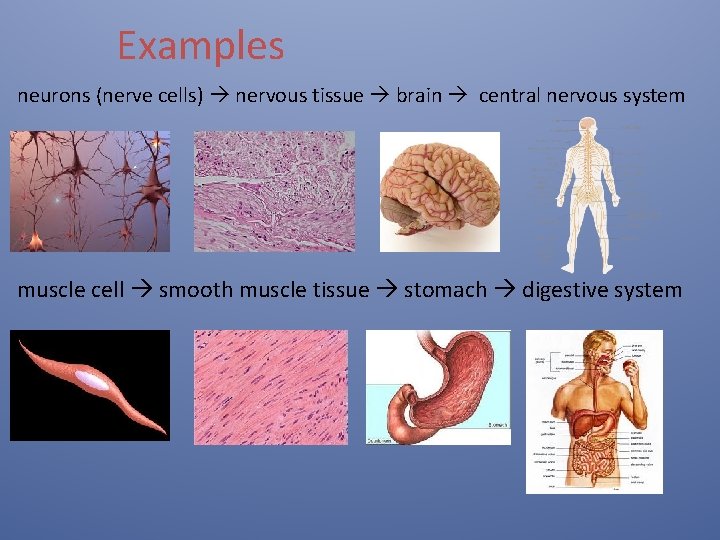
Examples neurons (nerve cells) nervous tissue brain central nervous system muscle cell smooth muscle tissue stomach digestive system
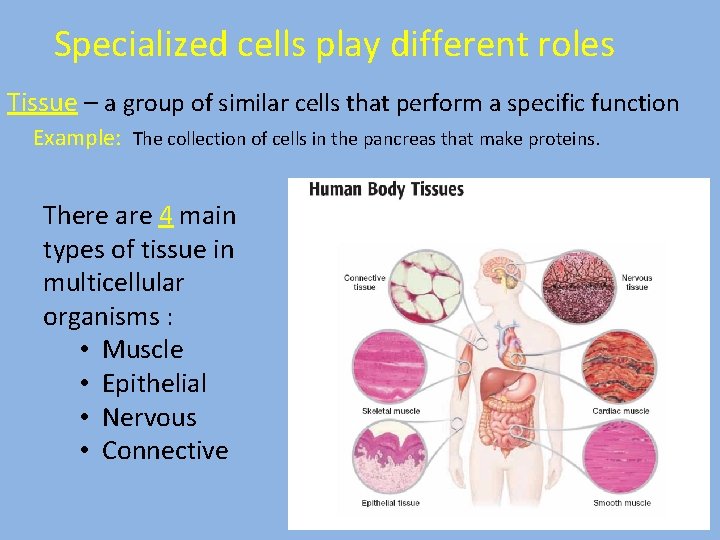
Specialized cells play different roles Tissue – a group of similar cells that perform a specific function Example: The collection of cells in the pancreas that make proteins. There are 4 main types of tissue in multicellular organisms : • Muscle • Epithelial • Nervous • Connective
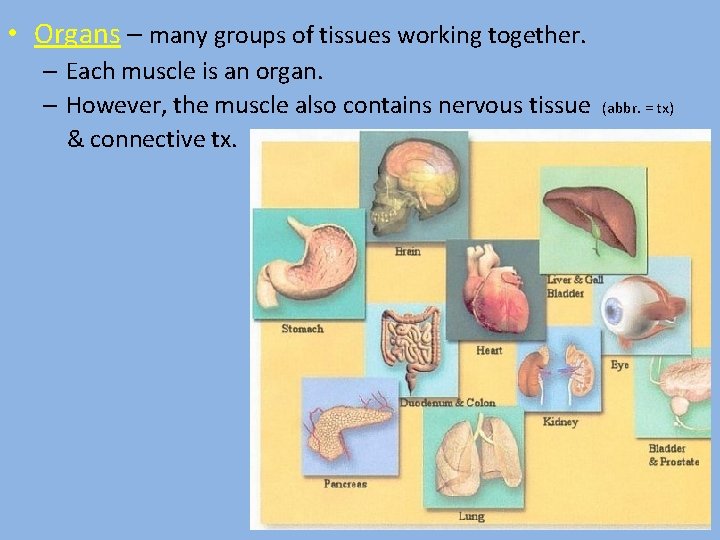
• Organs – many groups of tissues working together. – Each muscle is an organ. – However, the muscle also contains nervous tissue & connective tx. (abbr. = tx)
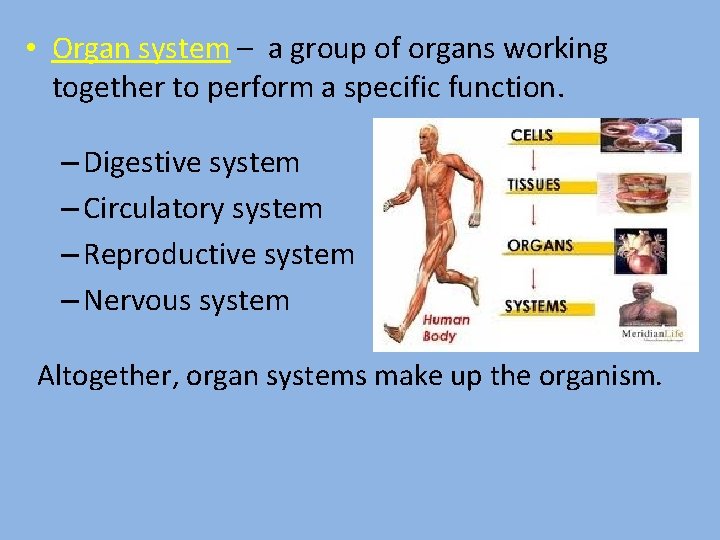
• Organ system – a group of organs working together to perform a specific function. – Digestive system – Circulatory system – Reproductive system – Nervous system Altogether, organ systems make up the organism.
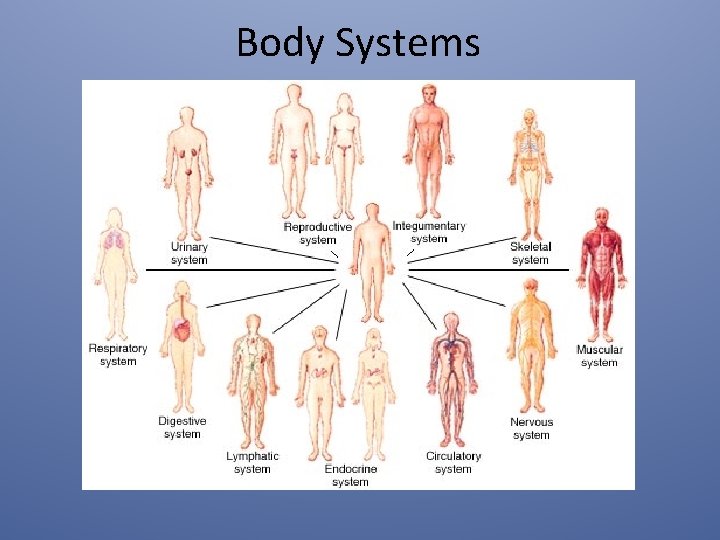
Body Systems
- Slides: 53