
Cell Biology The Cell Theory Microscopes Cell Growth
Cell Biology The Cell Theory Microscopes Cell Growth and Division Protein Synthesis Energy Conversion (aka cellular respiration and photosynthesis) Cell Homeostasis Cell Specialization
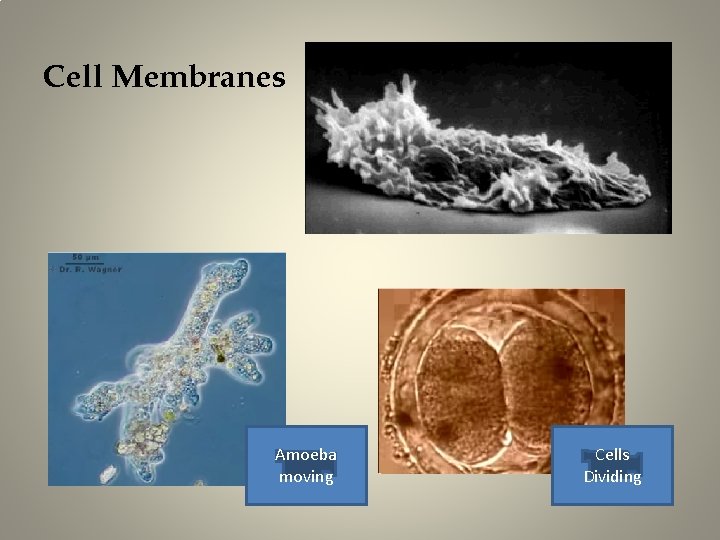
Cell Membranes Amoeba moving Cells Dividing
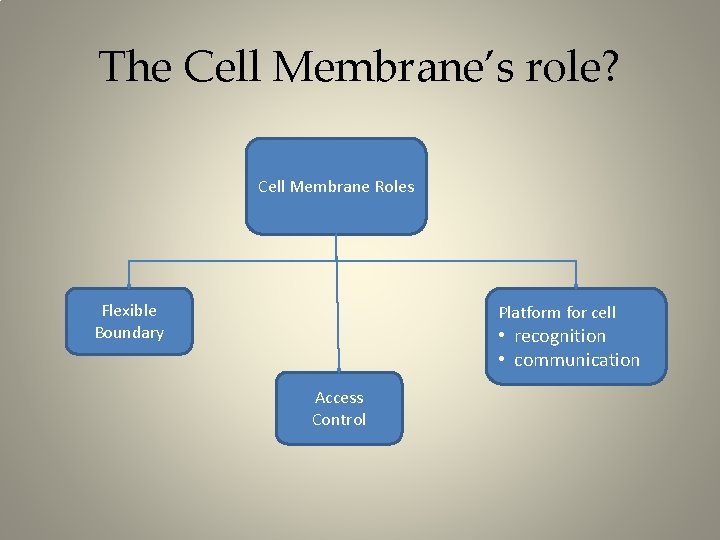
The Cell Membrane’s role? Cell Membrane Roles Flexible Boundary Platform for cell • recognition • communication Access Control
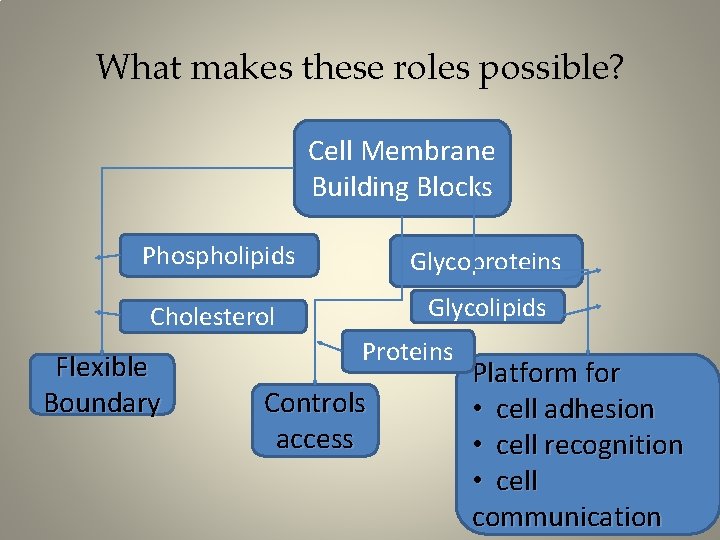
What makes these roles possible? Cell Membrane Building Blocks Phospholipids Glycoproteins Cholesterol Glycolipids Flexible Boundary Proteins Controls access Platform for • cell adhesion • cell recognition • cell communication
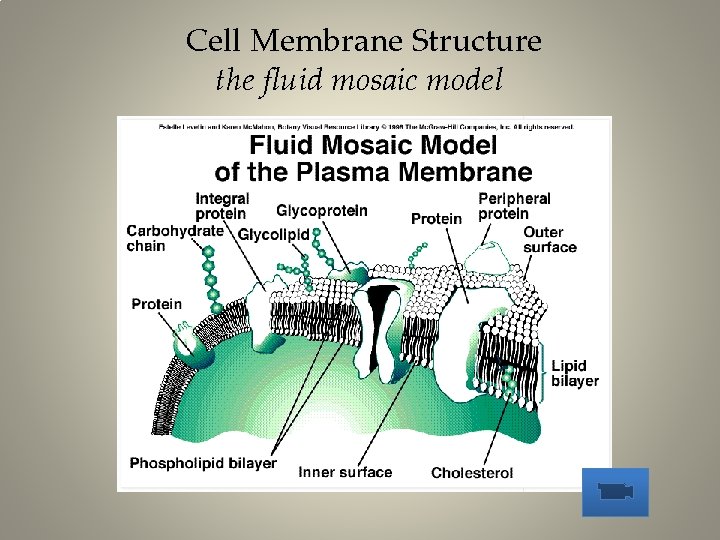
Cell Membrane Structure the fluid mosaic model
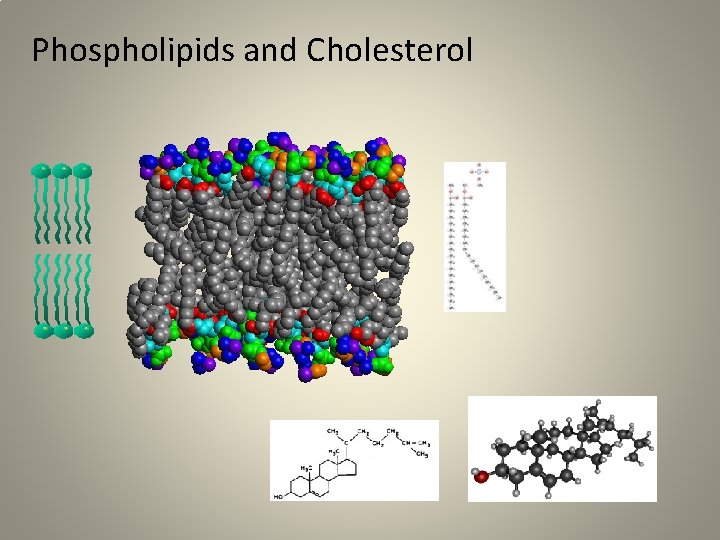
Phospholipids and Cholesterol
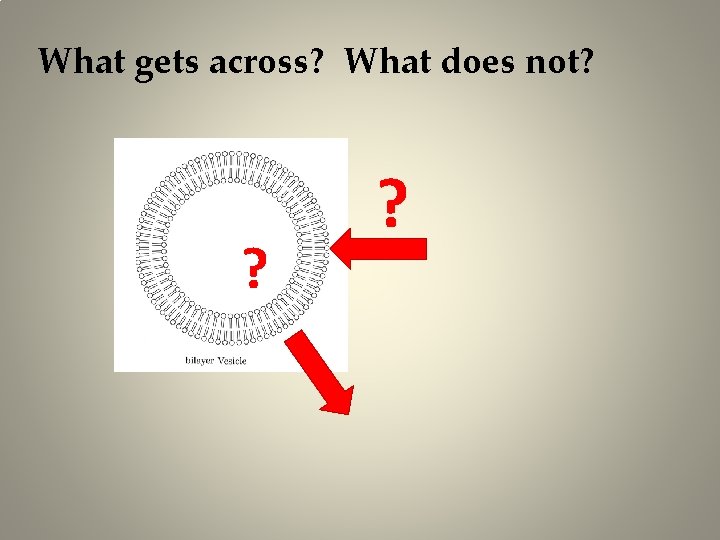
What gets across? What does not? ? ?
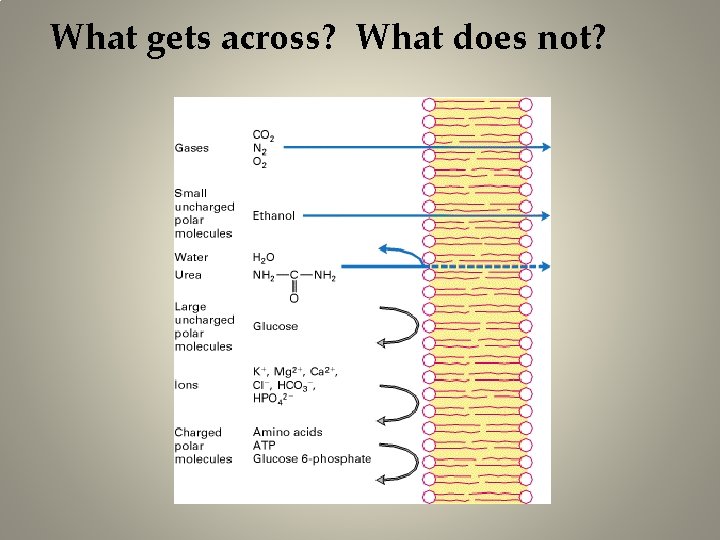
What gets across? What does not?

Diffusion – the natural motion
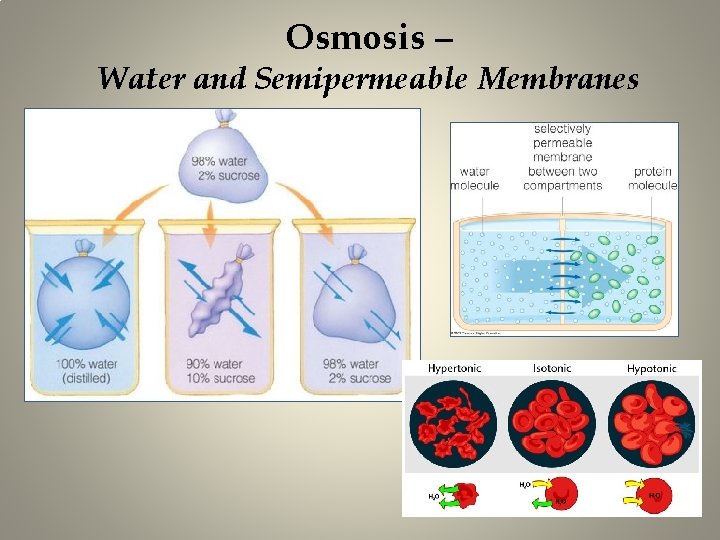
Osmosis – Water and Semipermeable Membranes
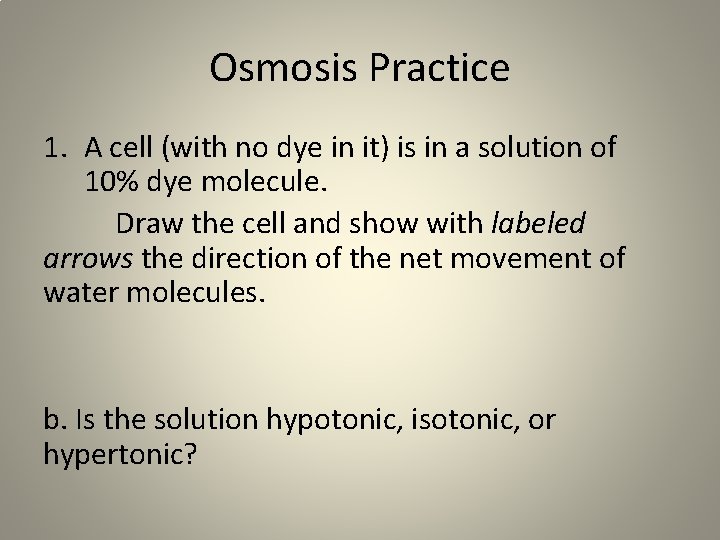
Osmosis Practice 1. A cell (with no dye in it) is in a solution of 10% dye molecule. Draw the cell and show with labeled arrows the direction of the net movement of water molecules. b. Is the solution hypotonic, isotonic, or hypertonic?
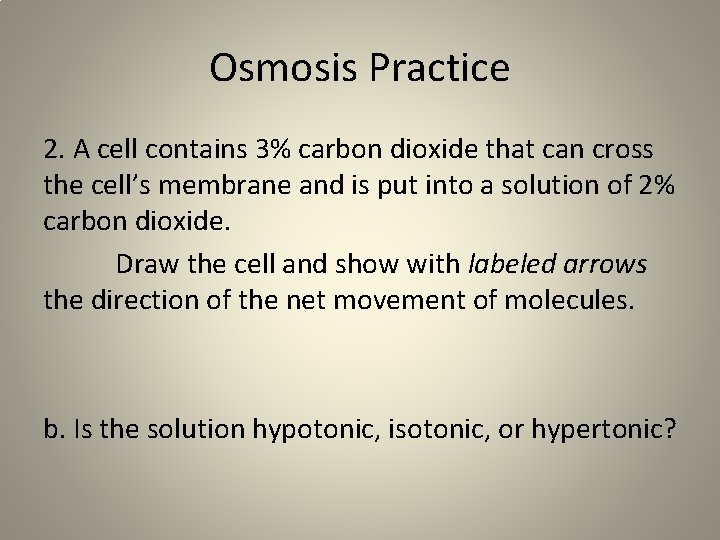
Osmosis Practice 2. A cell contains 3% carbon dioxide that can cross the cell’s membrane and is put into a solution of 2% carbon dioxide. Draw the cell and show with labeled arrows the direction of the net movement of molecules. b. Is the solution hypotonic, isotonic, or hypertonic?
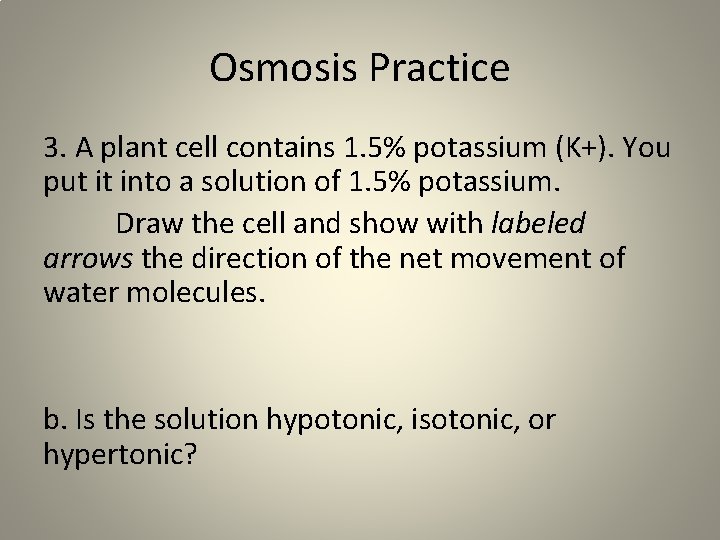
Osmosis Practice 3. A plant cell contains 1. 5% potassium (K+). You put it into a solution of 1. 5% potassium. Draw the cell and show with labeled arrows the direction of the net movement of water molecules. b. Is the solution hypotonic, isotonic, or hypertonic?
Osmosis Practice 4. A patient in a hospital needs a blood transfusion, but an absent minded nurse accidentally gives the patient pure water. Draw a red blood cell in its new, partially water environment and show arrows indicating the movement of water across the cell membrane. b. Is the solution hypotonic, isotonic, or hypertonic?
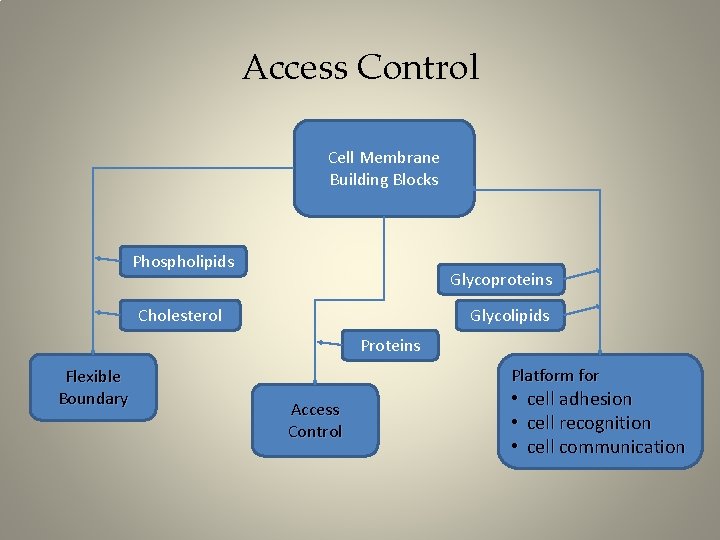
Access Control Cell Membrane Building Blocks Phospholipids Glycoproteins Cholesterol Glycolipids Proteins Flexible Boundary Platform for Access Control • cell adhesion • cell recognition • cell communication
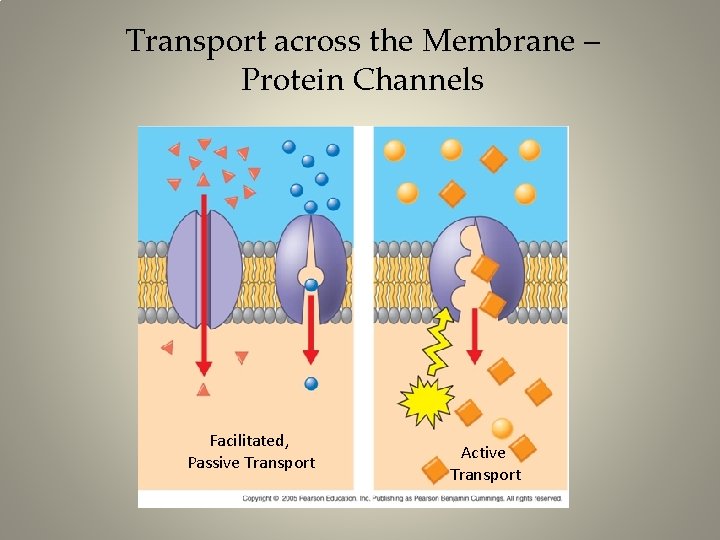
Transport across the Membrane – Protein Channels Facilitated, Passive Transport Active Transport
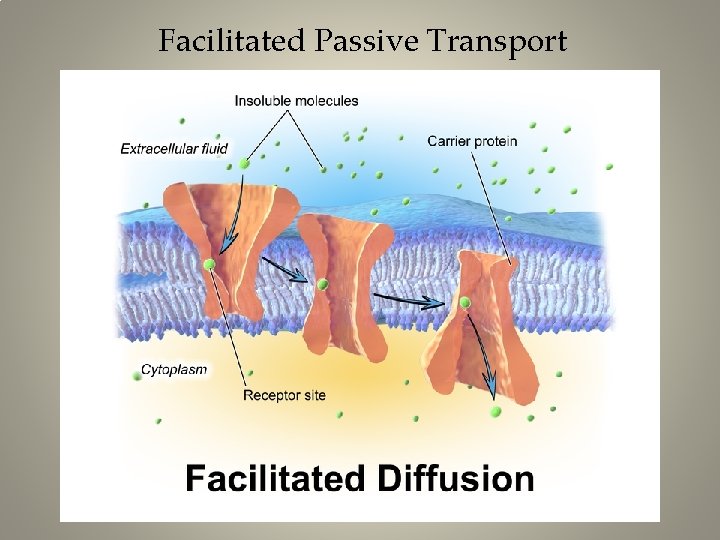
Facilitated Passive Transport
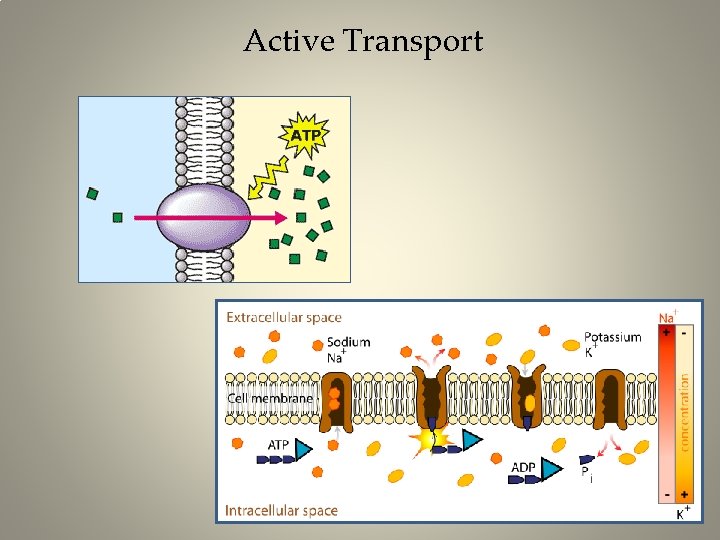
Active Transport
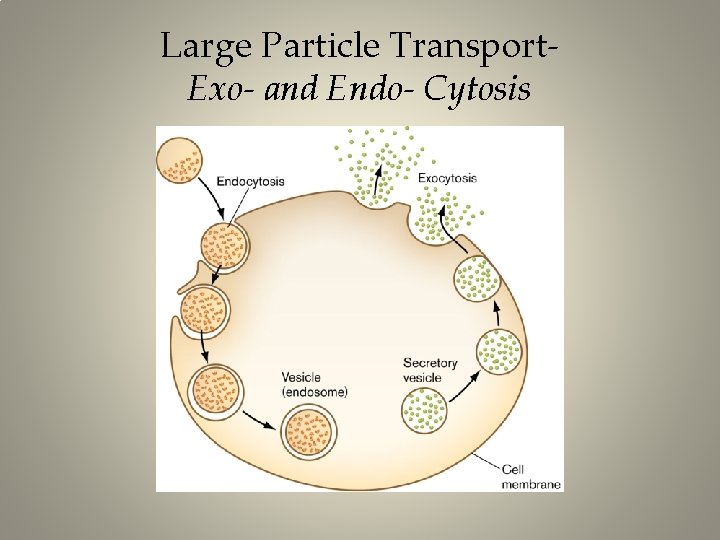
Large Particle Transport. Exo- and Endo- Cytosis
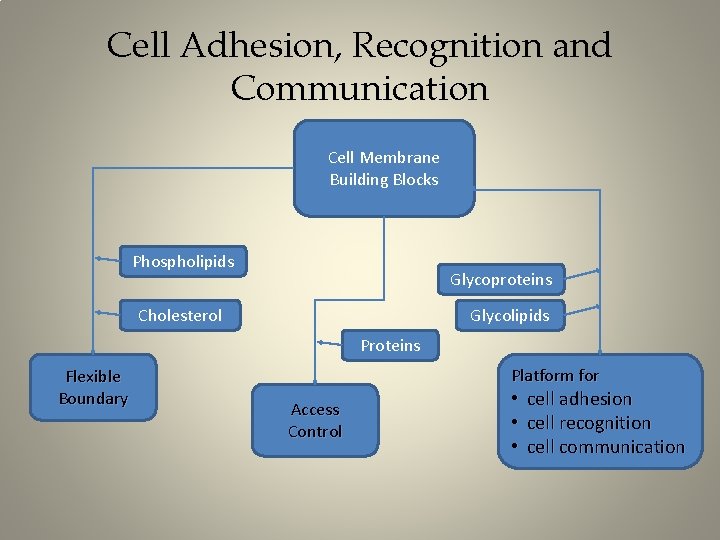
Cell Adhesion, Recognition and Communication Cell Membrane Building Blocks Phospholipids Glycoproteins Cholesterol Glycolipids Proteins Flexible Boundary Platform for Access Control • cell adhesion • cell recognition • cell communication
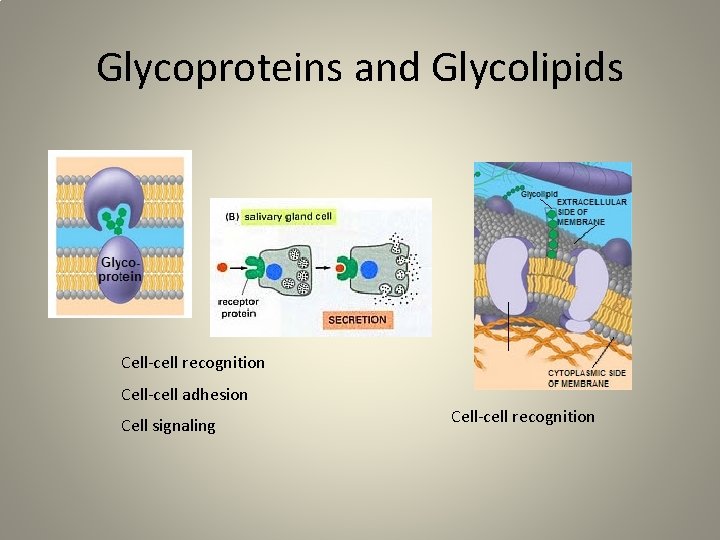
Glycoproteins and Glycolipids Cell-cell recognition Cell-cell adhesion Cell signaling Cell-cell recognition
- Slides: 21