
Cell Biology Prokaryotic Cell Small 1 2m 01
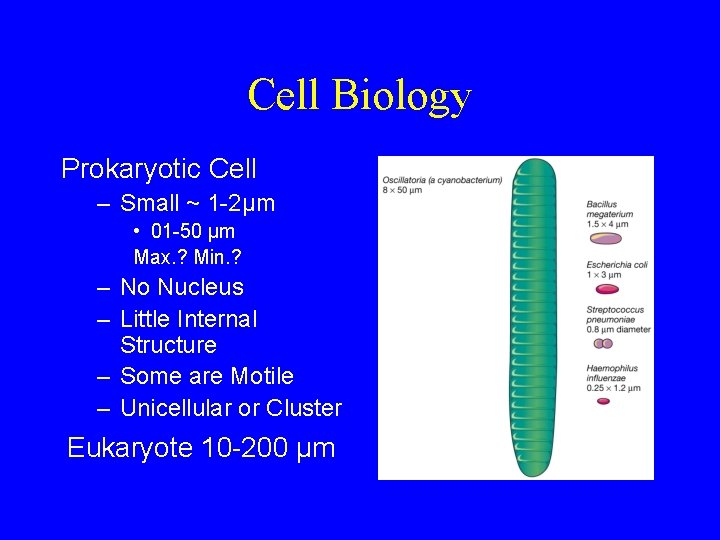
Cell Biology Prokaryotic Cell – Small ~ 1 -2µm • 01 -50 µm Max. ? Min. ? – No Nucleus – Little Internal Structure – Some are Motile – Unicellular or Cluster Eukaryote 10 -200 μm
Nanobacteria • • 0. 1 μm 104 – 105 /ml Ocean waters 0. 15 μm minimum size?
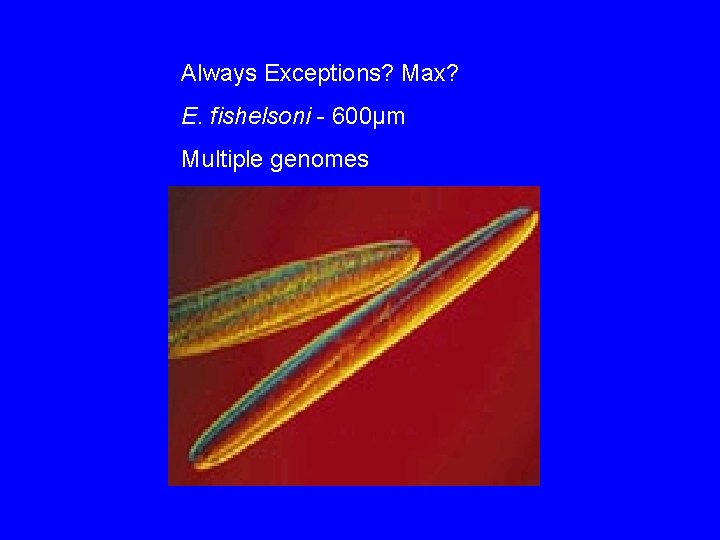
Always Exceptions? Max? E. fishelsoni - 600µm Multiple genomes
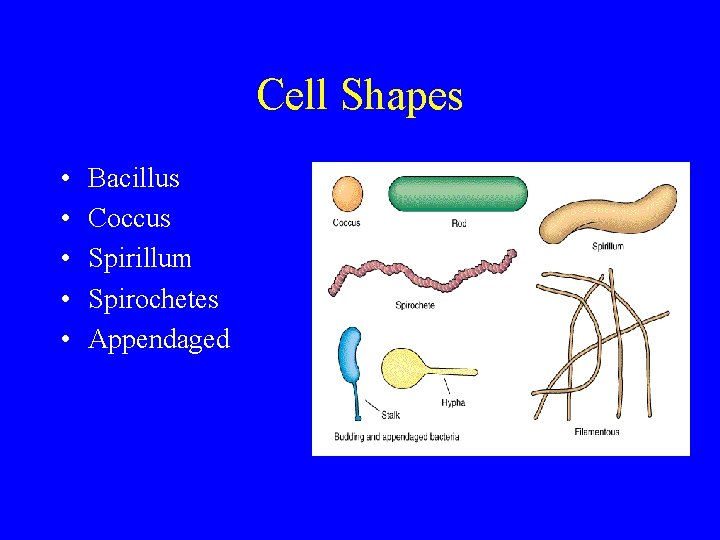
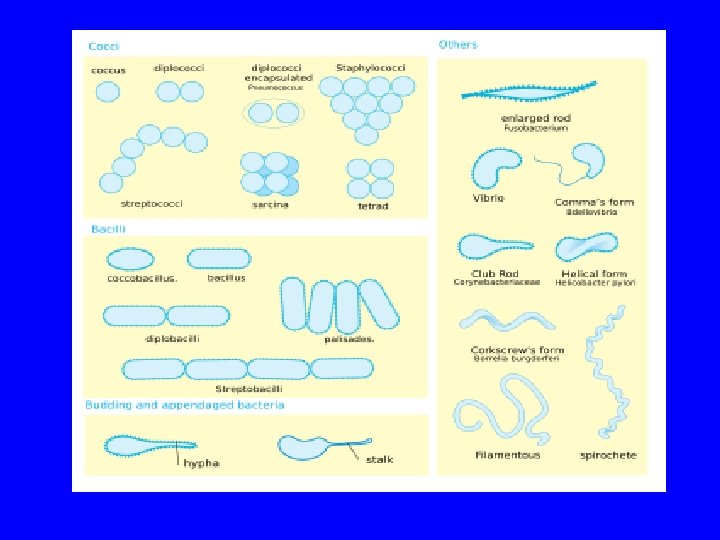
Cell Shapes • • • Bacillus Coccus Spirillum Spirochetes Appendaged
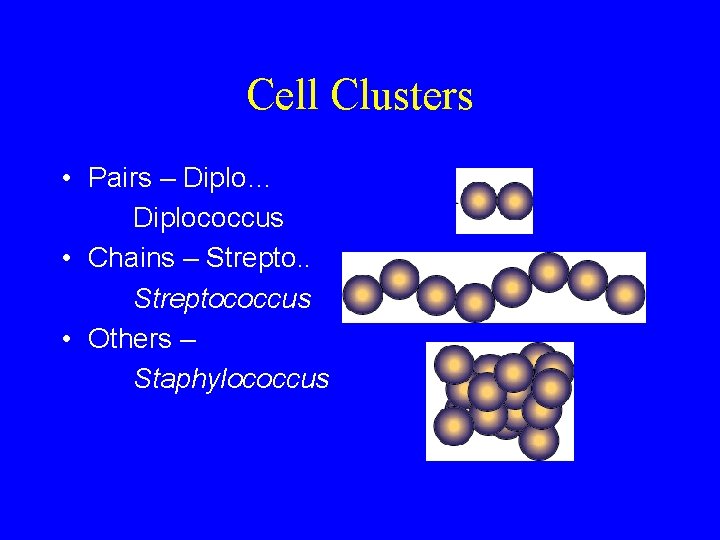
Cell Clusters • Pairs – Diplo… Diplococcus • Chains – Strepto. . Streptococcus • Others – Staphylococcus
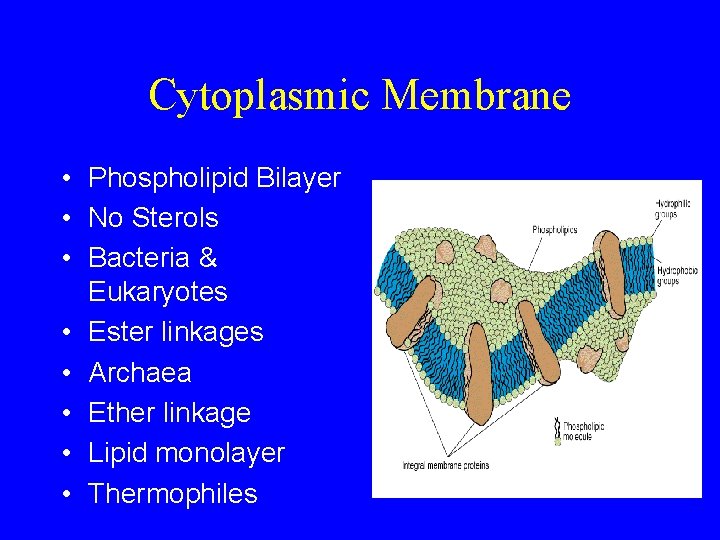
Cytoplasmic Membrane • Phospholipid Bilayer • No Sterols • Bacteria & Eukaryotes • Ester linkages • Archaea • Ether linkage • Lipid monolayer • Thermophiles
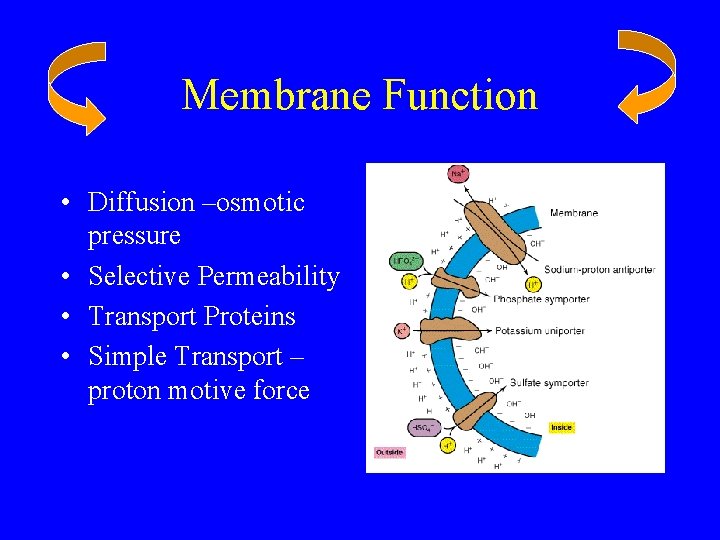
Membrane Function • Diffusion –osmotic pressure • Selective Permeability • Transport Proteins • Simple Transport – proton motive force
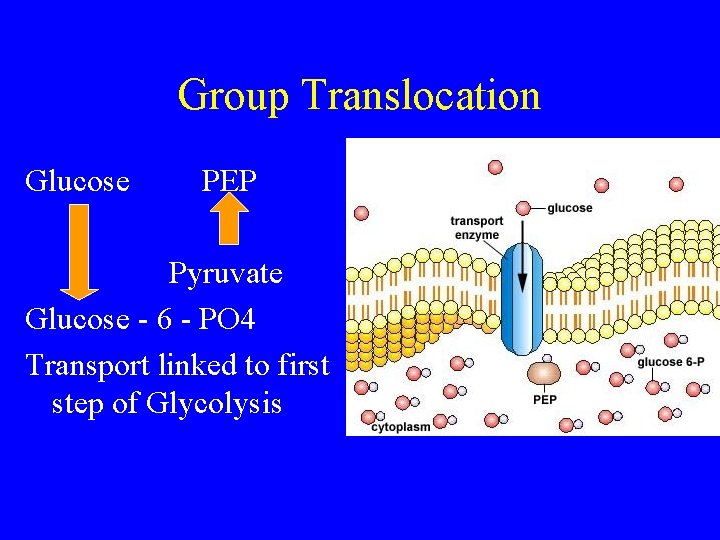
Group Translocation Glucose PEP Pyruvate Glucose - 6 - PO 4 Transport linked to first step of Glycolysis
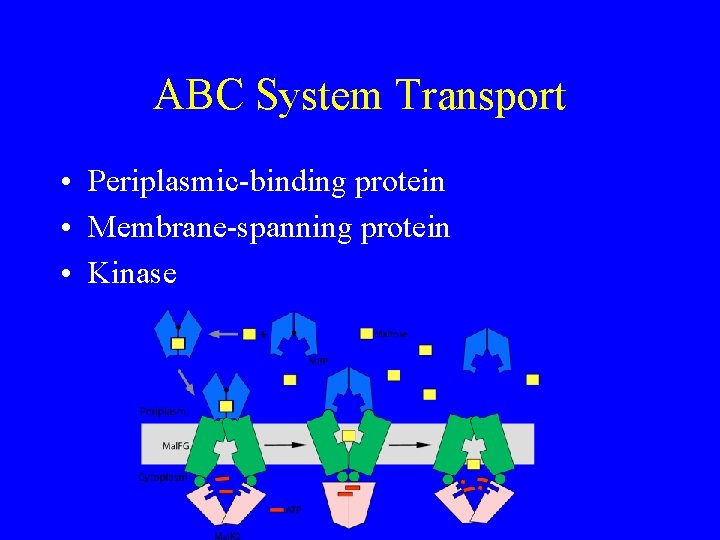
ABC System Transport • Periplasmic-binding protein • Membrane-spanning protein • Kinase
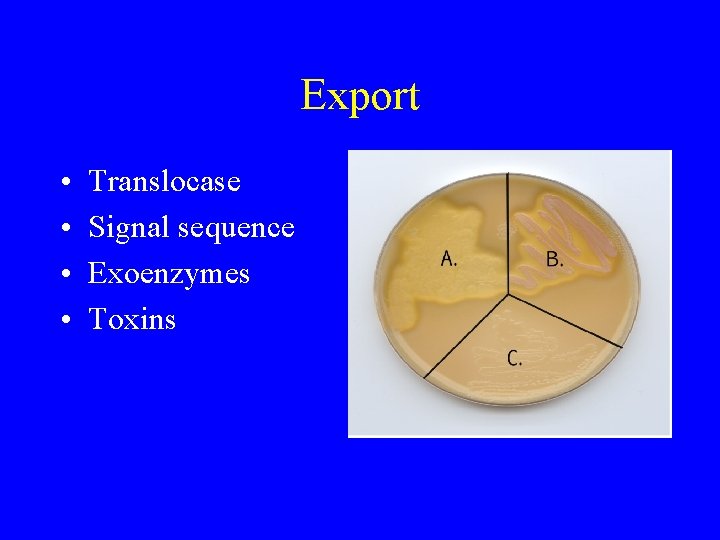
Export • • Translocase Signal sequence Exoenzymes Toxins
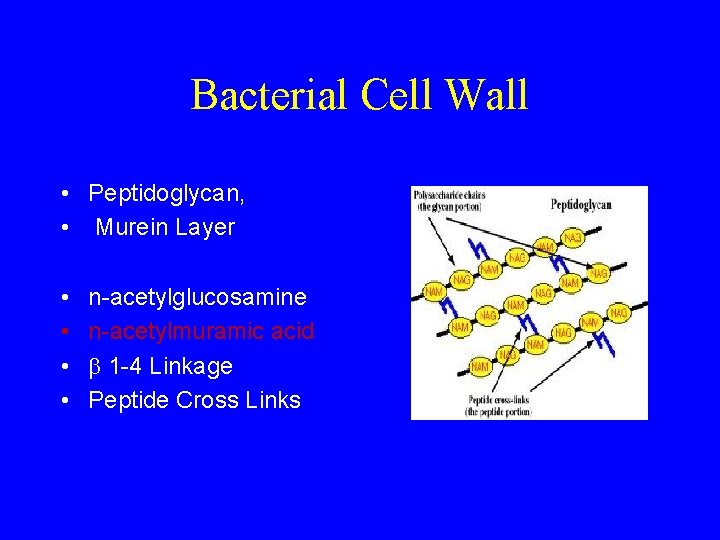
Bacterial Cell Wall • Peptidoglycan, • Murein Layer • • n-acetylglucosamine n-acetylmuramic acid 1 -4 Linkage Peptide Cross Links
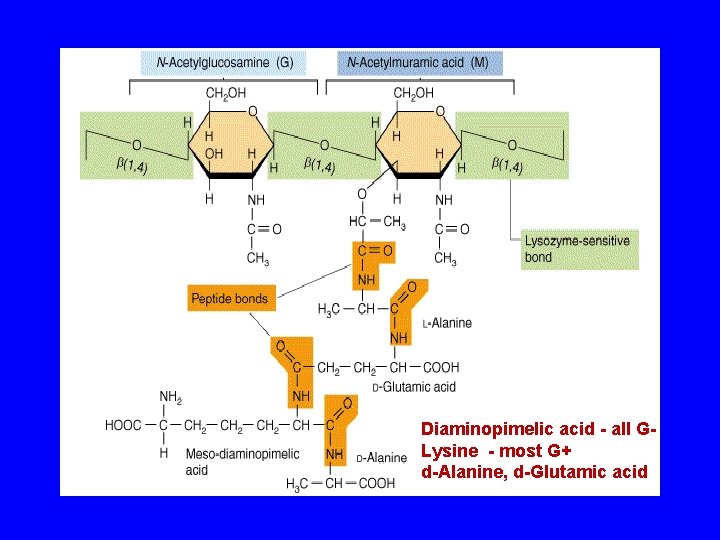
Diaminopimelic acid - all GLysine - most G+ d-Alanine, d-Glutamic acid
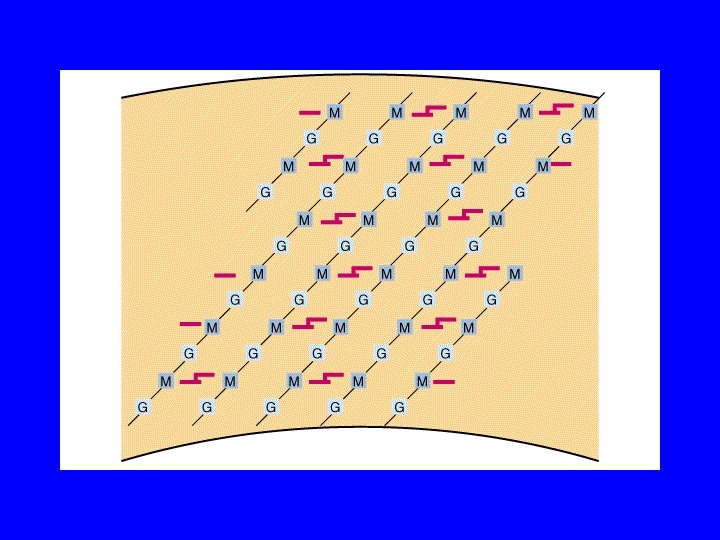
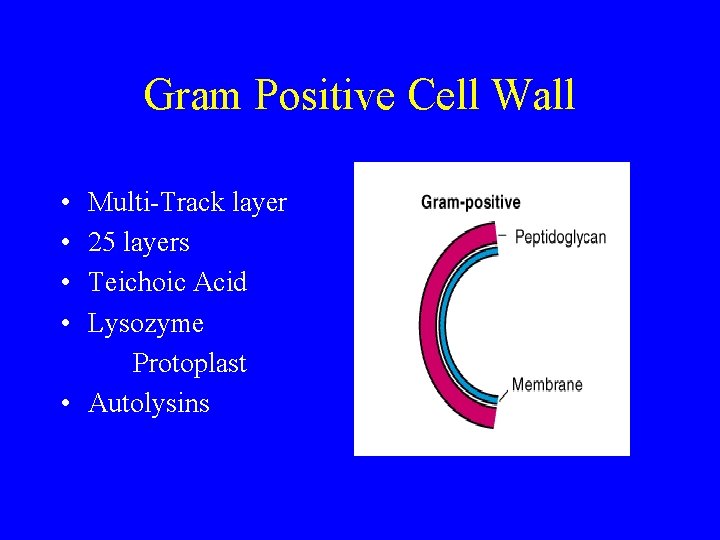
Gram Positive Cell Wall • • Multi-Track layer 25 layers Teichoic Acid Lysozyme Protoplast • Autolysins
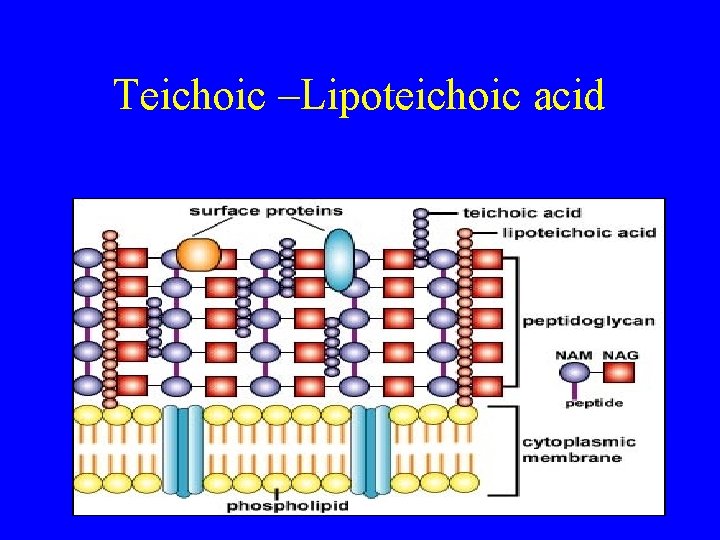
Teichoic –Lipoteichoic acid
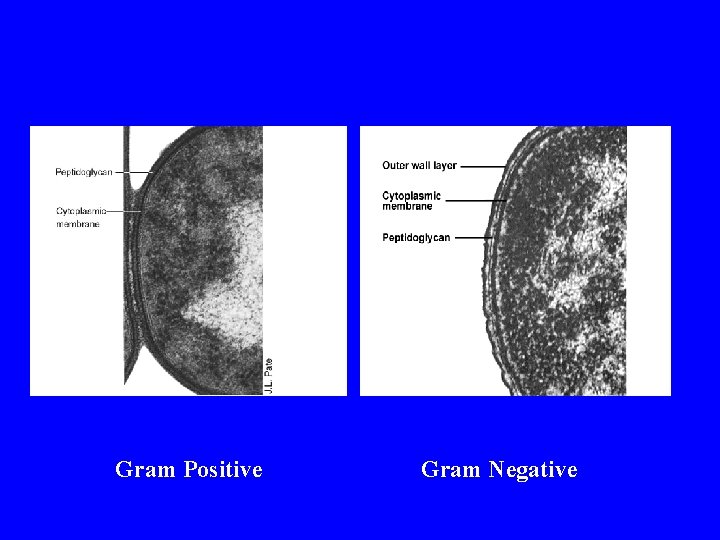
Gram Positive Gram Negative
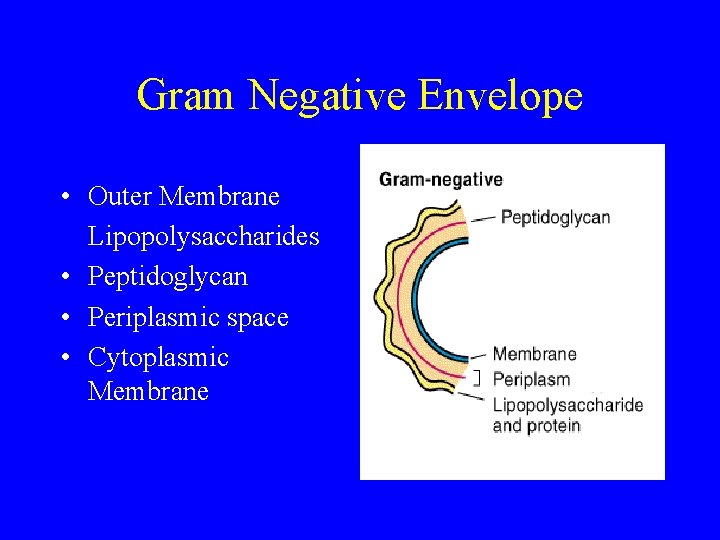
Gram Negative Envelope • Outer Membrane Lipopolysaccharides • Peptidoglycan • Periplasmic space • Cytoplasmic Membrane
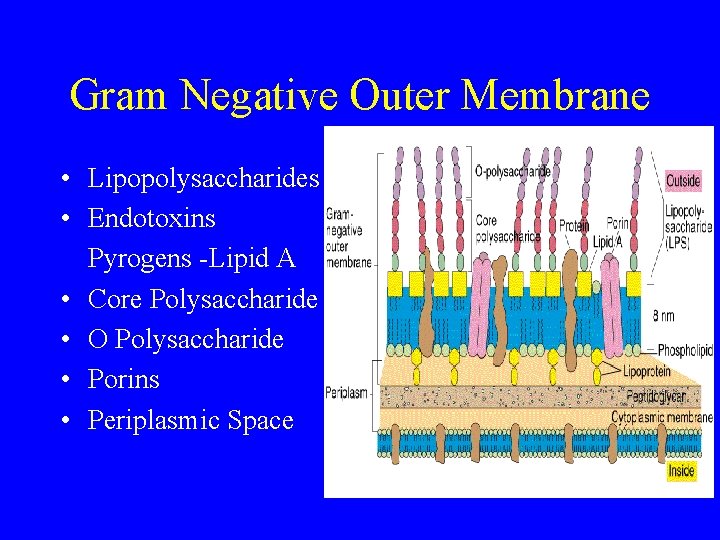
Gram Negative Outer Membrane • Lipopolysaccharides • Endotoxins Pyrogens -Lipid A • Core Polysaccharide • O Polysaccharide • Porins • Periplasmic Space
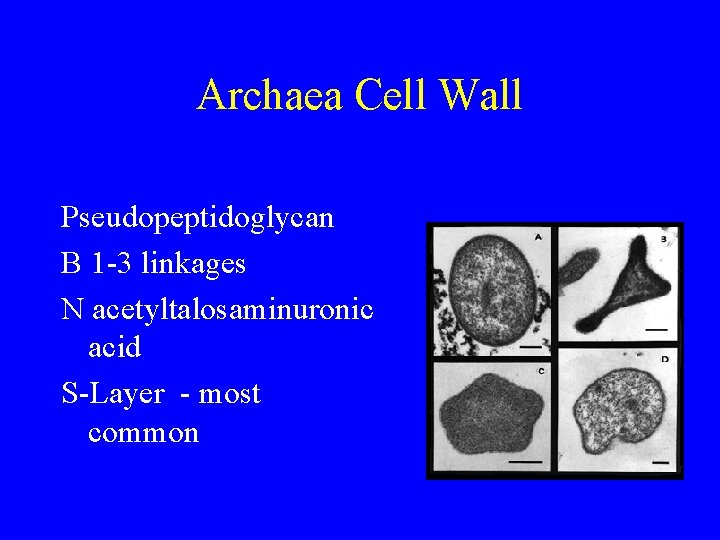
Archaea Cell Wall Pseudopeptidoglycan Β 1 -3 linkages N acetyltalosaminuronic acid S-Layer - most common
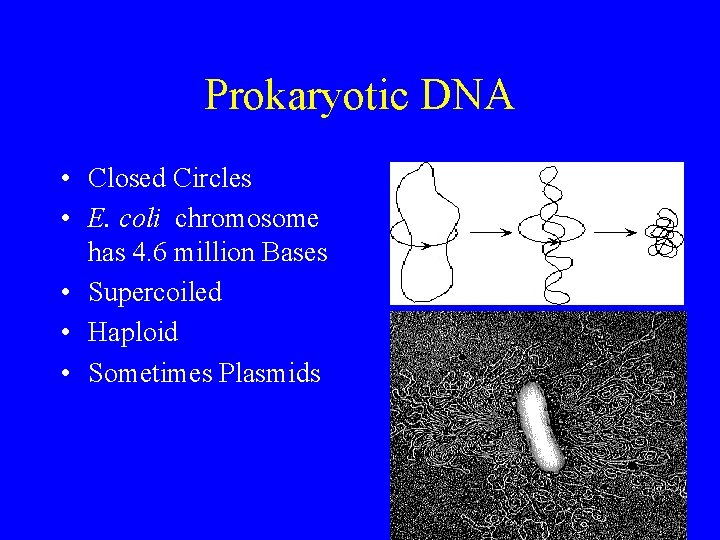
Prokaryotic DNA • Closed Circles • E. coli chromosome has 4. 6 million Bases • Supercoiled • Haploid • Sometimes Plasmids
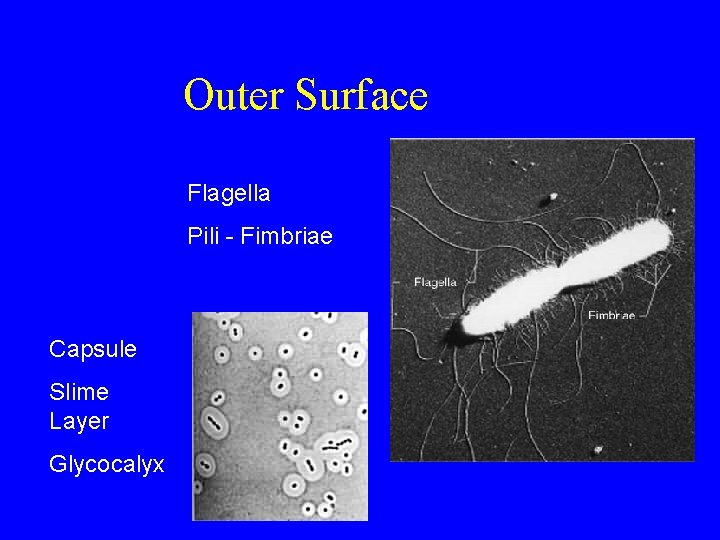
Outer Surface Flagella Pili - Fimbriae Capsule Slime Layer Glycocalyx
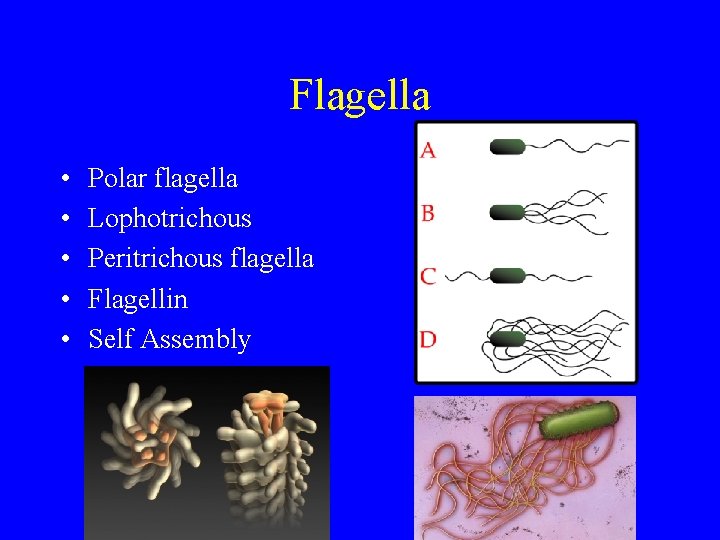
Flagella • • • Polar flagella Lophotrichous Peritrichous flagella Flagellin Self Assembly
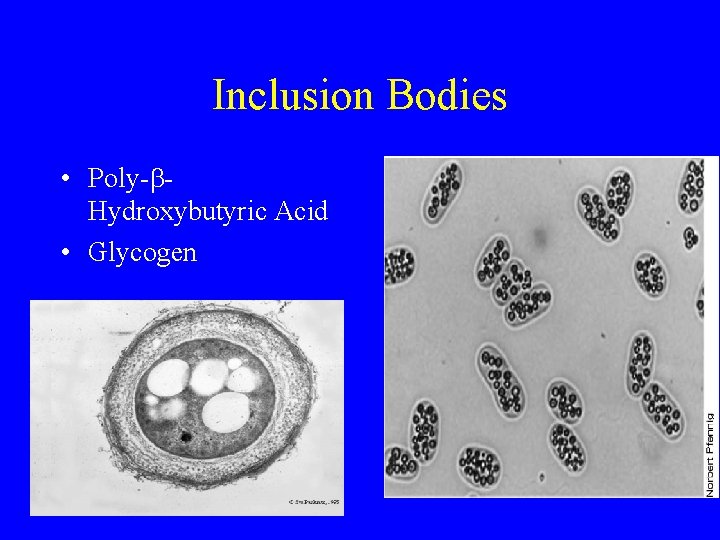
Inclusion Bodies • Poly- Hydroxybutyric Acid • Glycogen
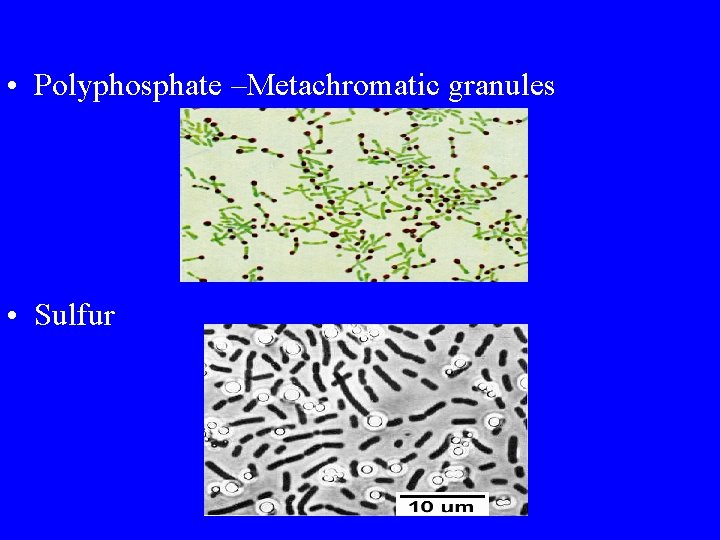
• Polyphosphate –Metachromatic granules • Sulfur
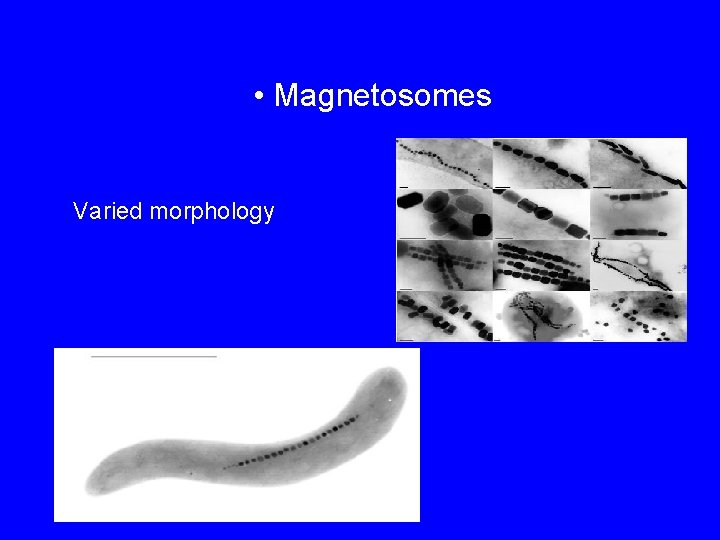
• Magnetosomes Varied morphology
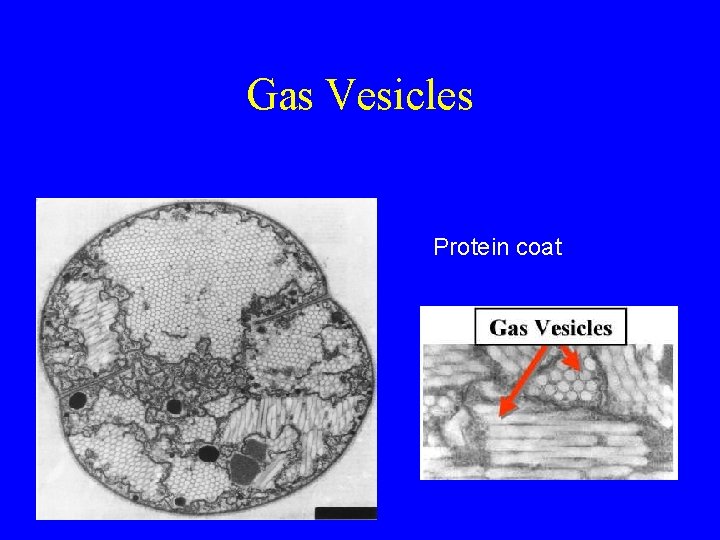
Gas Vesicles Protein coat
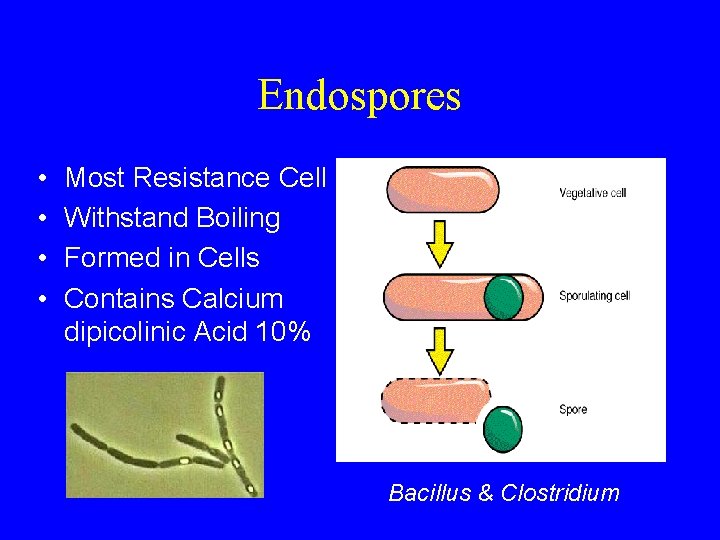
Endospores • • Most Resistance Cell Withstand Boiling Formed in Cells Contains Calcium dipicolinic Acid 10% Bacillus & Clostridium
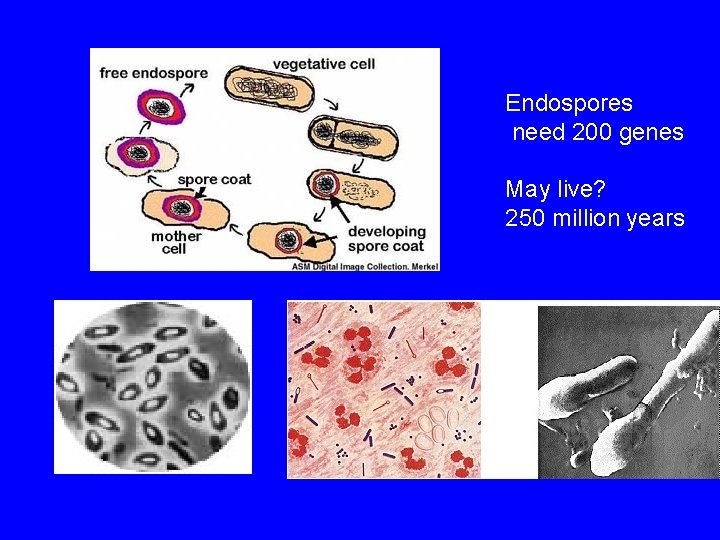
Endospores need 200 genes May live? 250 million years
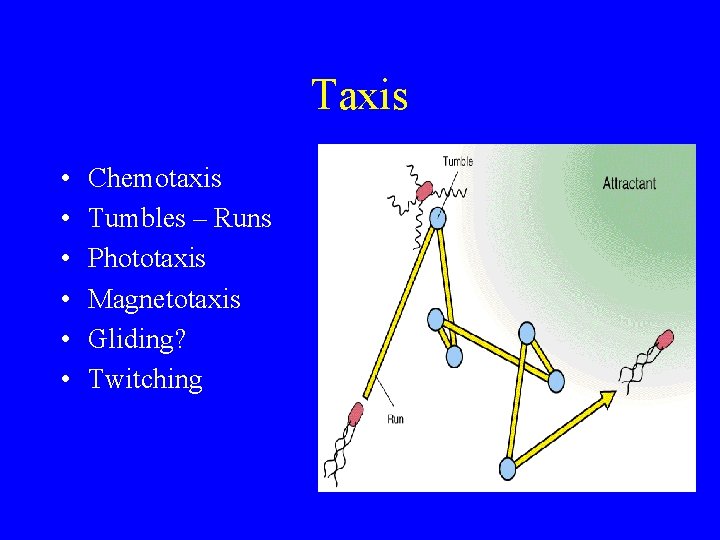
Taxis • • • Chemotaxis Tumbles – Runs Phototaxis Magnetotaxis Gliding? Twitching
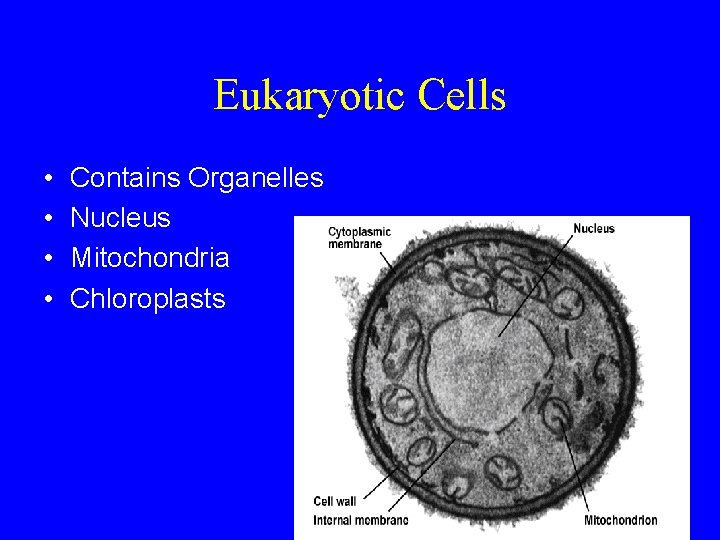
Eukaryotic Cells • • Contains Organelles Nucleus Mitochondria Chloroplasts
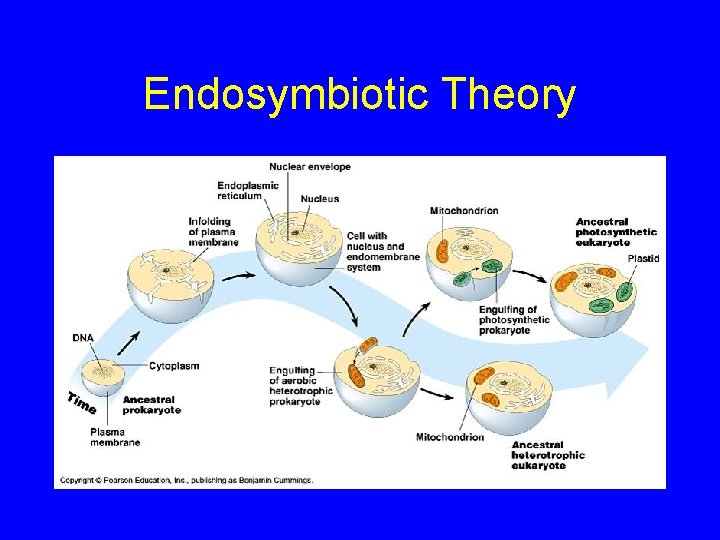
Endosymbiotic Theory
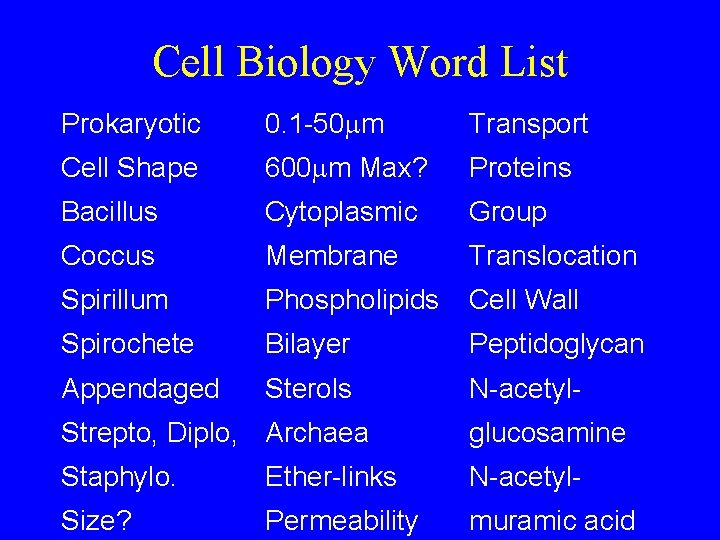
Cell Biology Word List Prokaryotic 0. 1 -50 m Transport Cell Shape 600 m Max? Proteins Bacillus Cytoplasmic Group Coccus Membrane Translocation Spirillum Phospholipids Cell Wall Spirochete Bilayer Peptidoglycan Appendaged Sterols N-acetyl- Strepto, Diplo, Archaea glucosamine Staphylo. Ether-links N-acetyl- Size? Permeability muramic acid
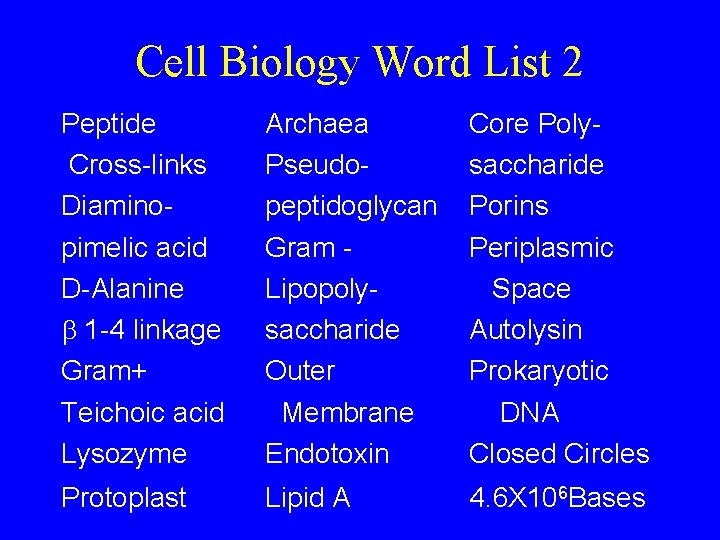
Cell Biology Word List 2 Peptide Cross-links Diaminopimelic acid D-Alanine 1 -4 linkage Gram+ Teichoic acid Lysozyme Archaea Pseudopeptidoglycan Gram Lipopolysaccharide Outer Membrane Endotoxin Core Polysaccharide Porins Periplasmic Space Autolysin Prokaryotic DNA Closed Circles Protoplast Lipid A 4. 6 X 10⁶ Bases
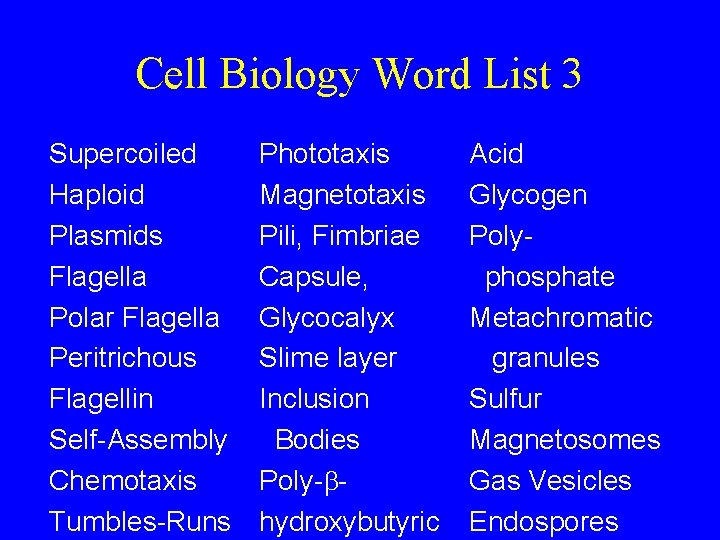
Cell Biology Word List 3 Supercoiled Haploid Plasmids Flagella Polar Flagella Peritrichous Flagellin Self-Assembly Chemotaxis Tumbles-Runs Phototaxis Magnetotaxis Pili, Fimbriae Capsule, Glycocalyx Slime layer Inclusion Bodies Poly- hydroxybutyric Acid Glycogen Polyphosphate Metachromatic granules Sulfur Magnetosomes Gas Vesicles Endospores
Cell Biology Word List 4 Endospores Dipicolinic Acid Eukaryotic Organelles Nucleus Mitochondria Chloroplasts Endosymbiotic Theory
- Slides: 36