
Cell Biology of the Nervous System D Allen
Cell Biology of the Nervous System • D. Allen, Ph. D.
Types of Cells in the Nervous System • Glial – Supporting cells • Neurons • Neural Stem Cells
Neural Stem Cells • • Relatively new discovery Both developing and adult brains Precursors to both neurons and glial cells Role in mature brains unclear – Hippocampus – neurons that have divided
Glial cells – Supporting cells • Macroglia – Astrocytes – CNS – Oligodendrocytes – CNS – Schwann Cells – PNS • Microglia – Microglia - CNS

CNS - Macroglia

Astrocytes • Star-shaped • Functions – Cell signaling – Scavengers – Blood-brain barrier – Development – Support for neurons
Other functions of astrocytes • Clean up cellular debris • Component of blood brain barrier (restrict substances that enter the brain from the blood) • Astrocytes produce trophic substances that help keep neurons alive and promote neuron process outgrowth • Radial glia – form a framework for migration of neurons during development
Myelin-producing cells • Schwann cells – PNS • Oligodendrocytes – CNS • Functions of myelin – Insulate axons and soma of neurons – Speed up rate of transmission of action potentials • Schwann cells also can be phagocytic
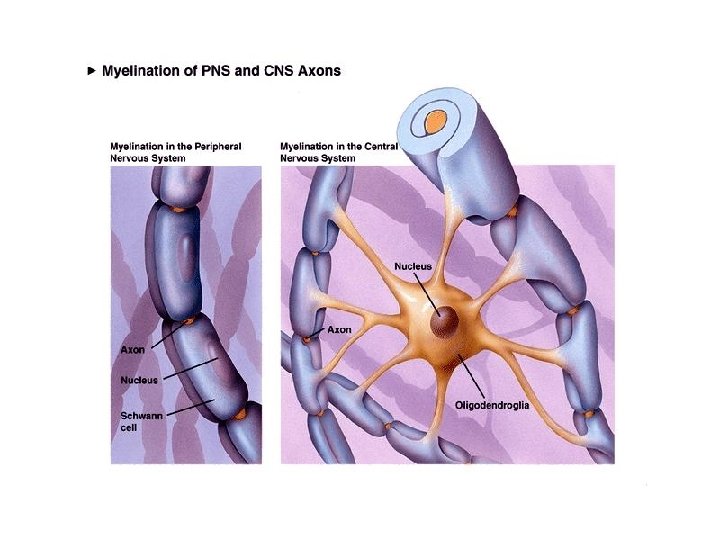
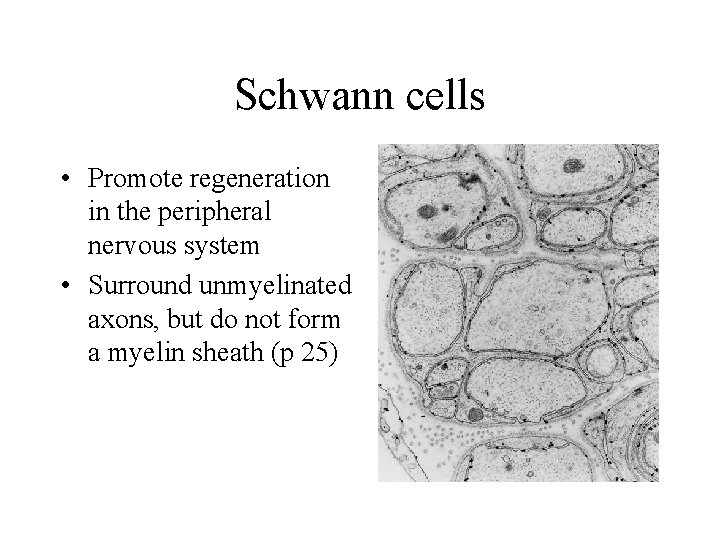
Schwann cells • Promote regeneration in the peripheral nervous system • Surround unmyelinated axons, but do not form a myelin sheath (p 25)
Microglia • • Phagocytic cells Macrophages that migrate into brain Normally at rest in brain Become activated after injury, infection or disease
• Ingest and destroy bacteria • Destroy injured or aging neurons • Associated with some diseases – Alzheimer’s disease – AIDS
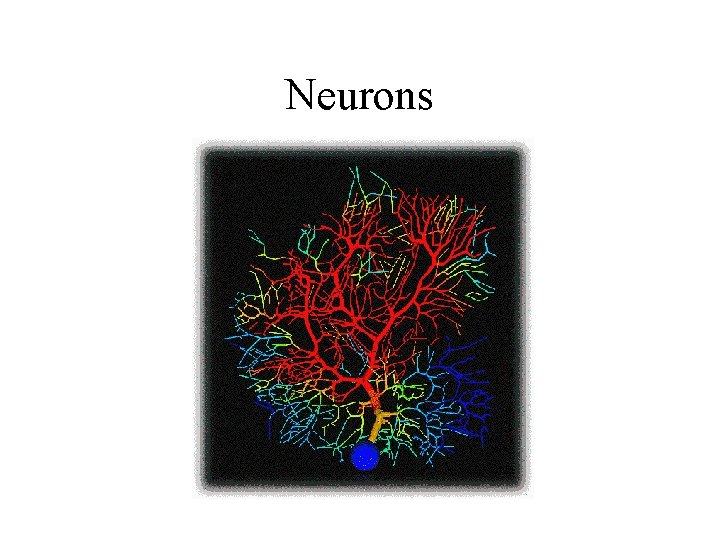
Neurons
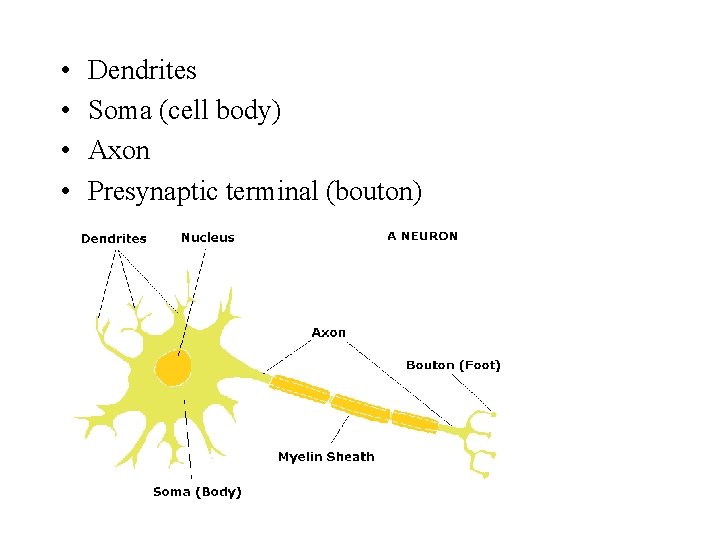
• • Dendrites Soma (cell body) Axon Presynaptic terminal (bouton)
Soma • Contains nucleus • Site of protein synthesis • Receives information from other neurons
Dendrites • Project from soma – Branchlike extensions • Specialized for receiving information • One or many dendrites
Axon • Specialized for the transmission of information • Single axon • Arises from axon hillock • Action potentials occur only at the axon • Axon can branch at their distal end (axon collaterals)
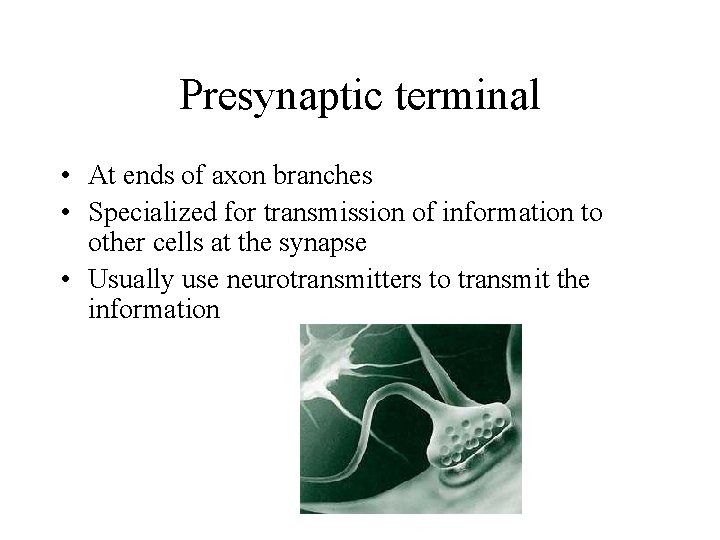
Presynaptic terminal • At ends of axon branches • Specialized for transmission of information to other cells at the synapse • Usually use neurotransmitters to transmit the information
Axoplasmic transport • The distance from the soma (site of protein synthesis) to the presynaptic terminal can be 1 -2 meters. This is too long for diffusion to be effective. • Axoplasmic transport is the mechanism for the relatively rapid transport of organelles and molecules to and from the presynaptic terminal
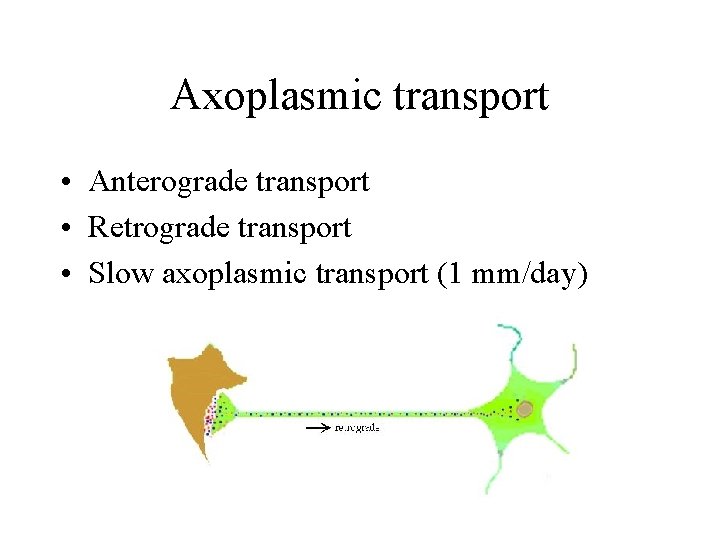
Axoplasmic transport • Anterograde transport • Retrograde transport • Slow axoplasmic transport (1 mm/day)
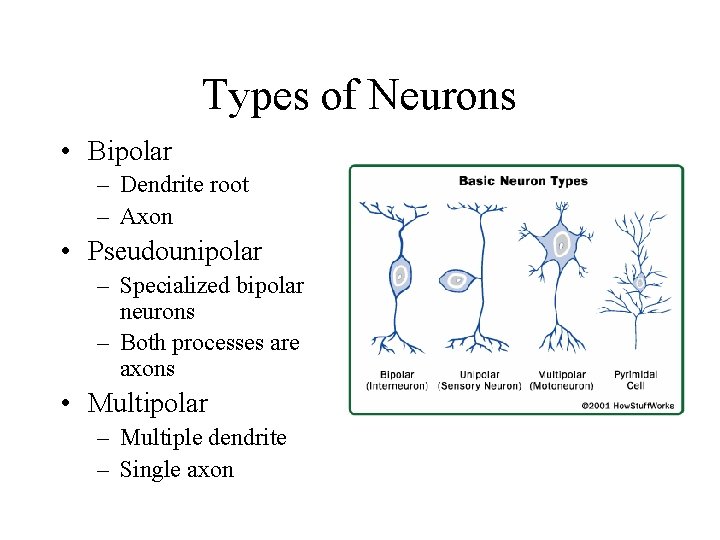
Types of Neurons • Bipolar – Dendrite root – Axon • Pseudounipolar – Specialized bipolar neurons – Both processes are axons • Multipolar – Multiple dendrite – Single axon
Functions of neurons • Bipolar – Transmitting information from one neuron to another – Many sensory neurons
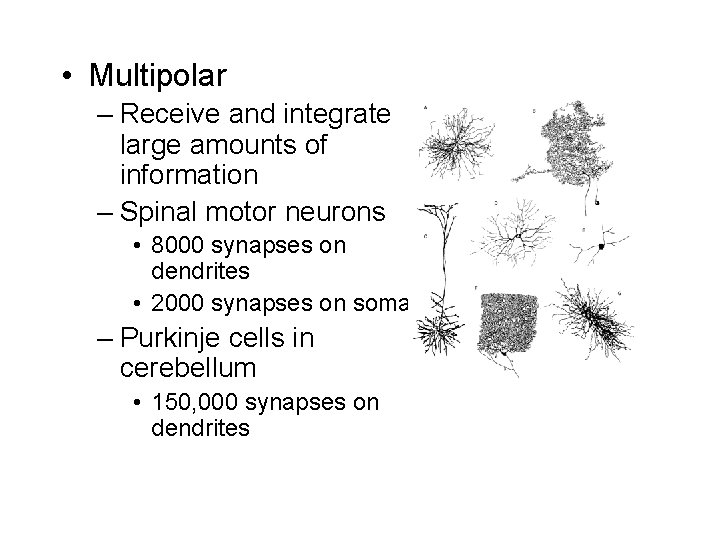
• Multipolar – Receive and integrate large amounts of information – Spinal motor neurons • 8000 synapses on dendrites • 2000 synapses on soma – Purkinje cells in cerebellum • 150, 000 synapses on dendrites
Interactions between Neurons • Two main overall patterns – Divergence – Convergence
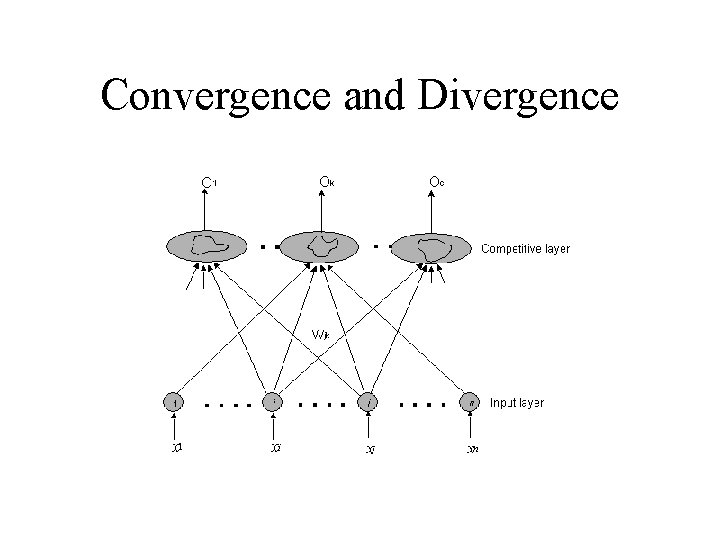
Convergence and Divergence
Divergence • A single axon has several branches that terminate on many different cells • Single sensory neuron - proprioception – Interneurons that mediate reflexes – Cerebral cortex for consciousness of sensation – Cerebellum – unconscious proprioception
Convergence • Multiple inputs from different neurons terminate on a single neuron • Neurons may: – Respond to 2 or more stimuli • Texture and temperature – Respond to complex stimuli • Lines at a specific angle
Convergence in visual system • Rods and cones – points of light • Retina – On center / Off surround • Visual cortex – bars of light
• Most neurons require excitatory input from more than one neuron in order to fire an action potential – Summation • Spinal motor neurons – 10, 000 synapses
Diseases of Myelination • With demyelination, there is a slowing or even blocking of action potentials • Peripheral demyelination – Metabolic abnormalities – Viruses – Toxic chemicals – Immune system • Central demyelination
Demyelination • 2 diseases • Guillan-Barre – Peripheral demyelination – Schwann cells • Multiple Sclerosis – Central demyelination – Oligodendrocytes
Guillain-Barre • Acute inflammation and demyelination • Patient Hx – Mild infection – Symptoms begin 2 -3 weeks later – Thought to be autoimmune attack on myelin in peripheral nervous system
G-B – Signs and Symptoms • Decreased sensation • Motor paralysis • Cranial nerves often affected – Difficulty chewing, swallowing, speaking, facial expressions • Weakness in respiratory muscles • Altered sensation/pain • Autonomic dysfunction
G-B Prognosis • Symptoms worsen over 2 -3 weeks, then plateau • Patient then usually gradually gets better (weeks to years) • If demyelination is severe, there may be scarring and a permanent loss of axons • ~3% mortality – cardiac or respiratory problems
Multiple Sclerosis • Central nervous system demyelination • Incidence – High in this region (ND 2 nd highest state) – 2 -3 X in women – Highest in whites, Scandinavian descent – Living in northern climates before age of 15 – Highest prevalence in young adults • Increases up to age 35, then gradually declines
MS • Autoimmune disease • Will see patches of demyelination, called plaques, due to the degeneration of oligodendrocytes • Variable course of the disease – Periods of exacerbation and remission • In chronic MS, the myelin sheath is replaced by glial scarring
MS – Initial S & S • Sensory symptoms usually first complaint – Paresthesia – abnormal non-painful sensations – Dysesthesia – abnormal painful sensations – In one extremity or head and face • Visual blurring • Diplopia – double vision
- Slides: 37