
Cell Biology Learning Target I can describe three
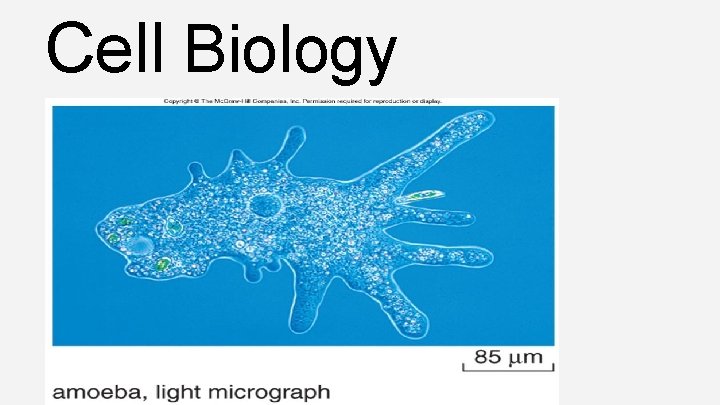
Cell Biology
Learning Target: I can describe three components of the cell theory.
What is a cell?
What is a cell? Cell = basic unit of life A cell is the smallest 'thing' that has all of the characteristics of life made of cells maintains homeostasis can reproduce uses energy moves grows is organized has adaptations is interdependent
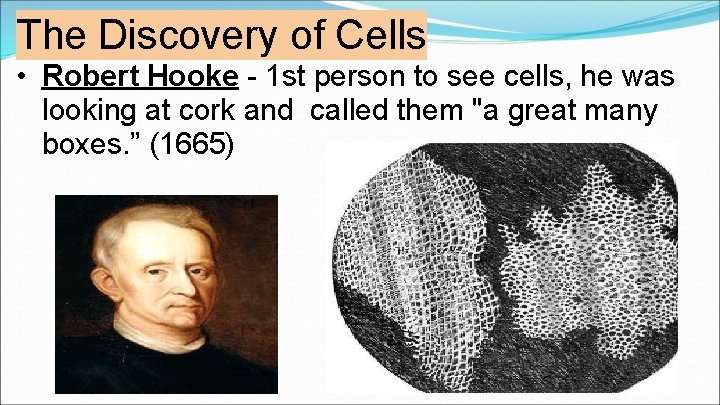
The Discovery of Cells • Robert Hooke - 1 st person to see cells, he was looking at cork and called them "a great many boxes. ” (1665)
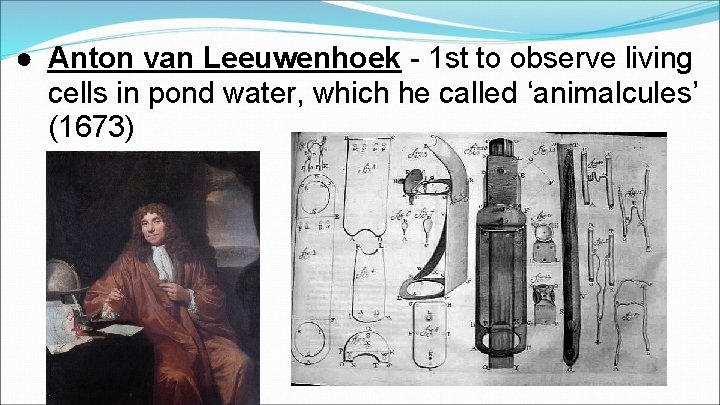
● Anton van Leeuwenhoek - 1 st to observe living cells in pond water, which he called ‘animalcules’ (1673)
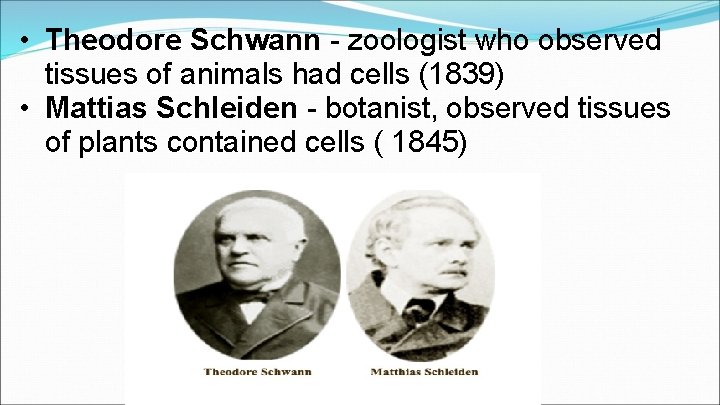
• Theodore Schwann - zoologist who observed tissues of animals had cells (1839) • Mattias Schleiden - botanist, observed tissues of plants contained cells ( 1845)
● Rudolf Virchow - also reported that every living thing is made up of vital units, known as cells. He predicted that cells come from other cells. (1850)
What are the 3 parts of cell theory?
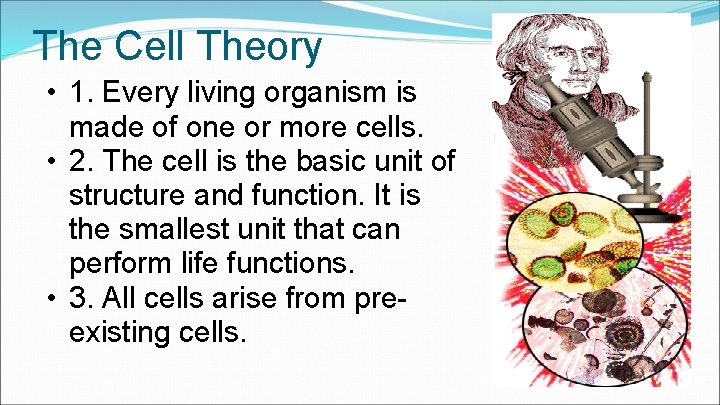
The Cell Theory • 1. Every living organism is made of one or more cells. • 2. The cell is the basic unit of structure and function. It is the smallest unit that can perform life functions. • 3. All cells arise from preexisting cells.
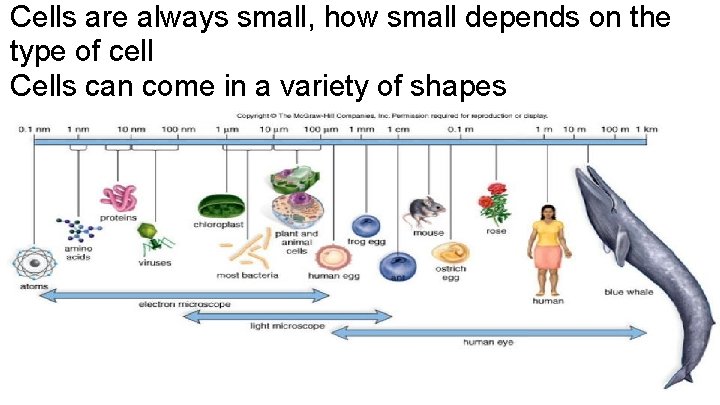
Cells are always small, how small depends on the type of cell Cells can come in a variety of shapes
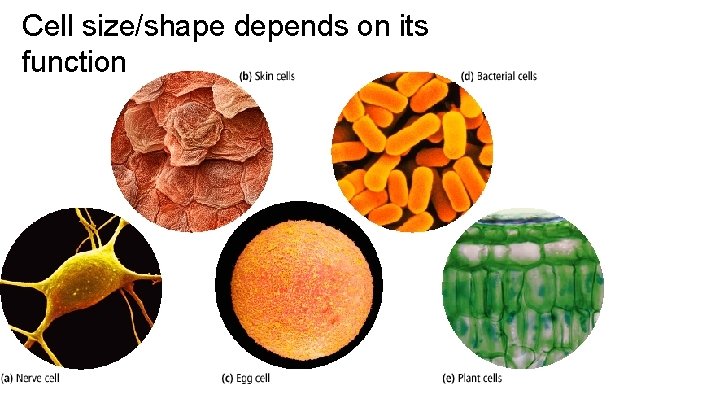
Cell size/shape depends on its function
The Size of Cells -limited by Surface Area to Volume ratio surface area ÷ volume -cells want more surface area -cells absorb food through their surface at a certain SA: V ratio, the cell won’t be able to absorb enough food to survive
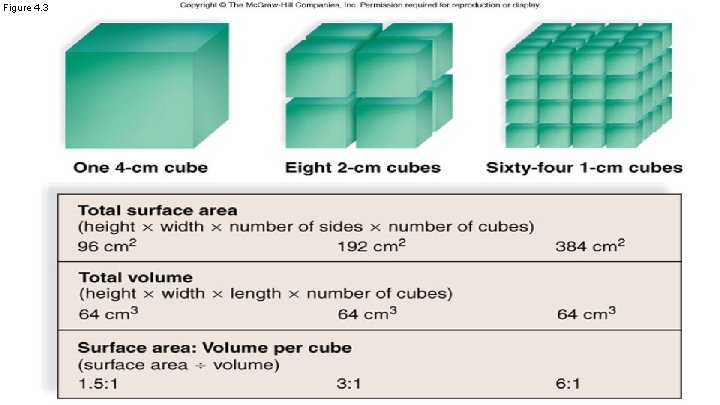
Figure 4. 3
Learning Target: I can identify the three main features of cells.
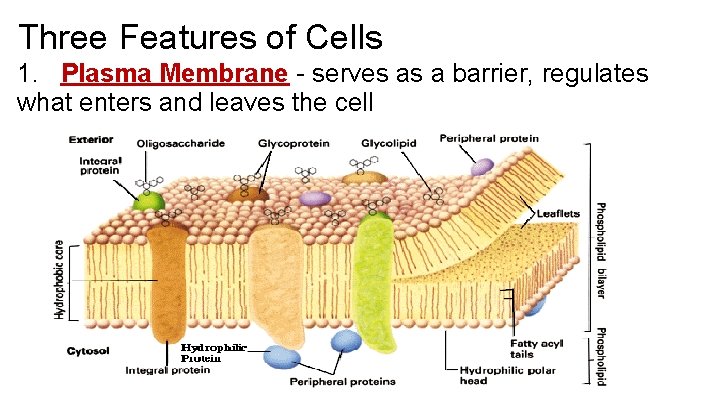
Three Features of Cells 1. Plasma Membrane - serves as a barrier, regulates what enters and leaves the cell
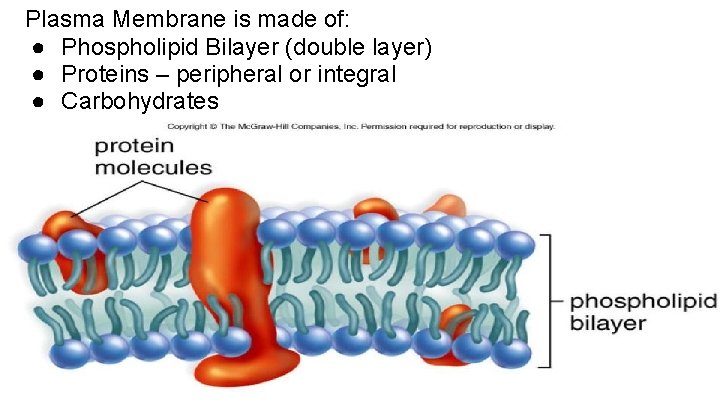
Plasma Membrane is made of: ● Phospholipid Bilayer (double layer) ● Proteins – peripheral or integral ● Carbohydrates
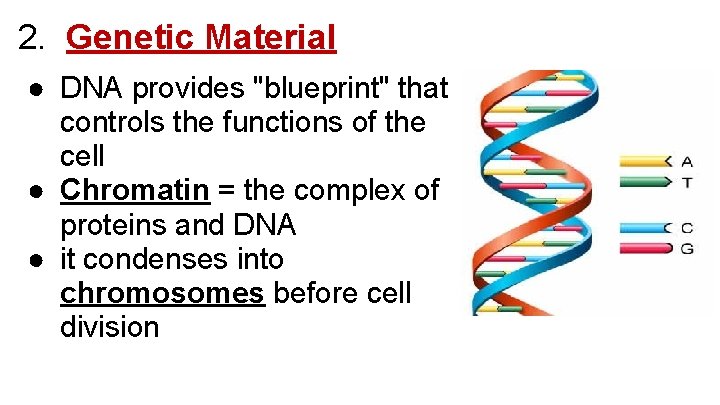
2. Genetic Material ● DNA provides "blueprint" that controls the functions of the cell ● Chromatin = the complex of proteins and DNA ● it condenses into chromosomes before cell division
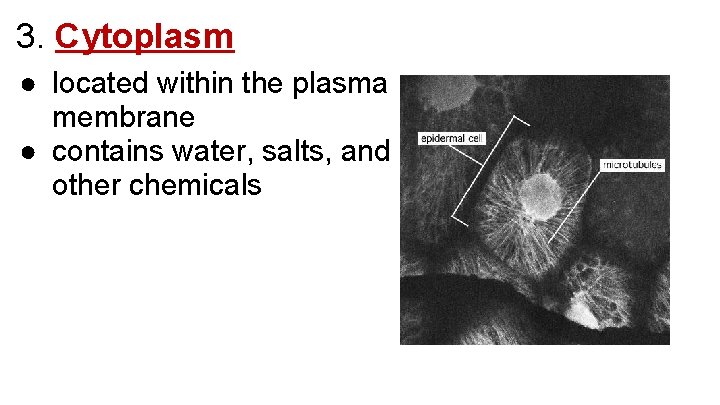
3. Cytoplasm ● located within the plasma membrane ● contains water, salts, and other chemicals
Cytoplasm vs. Cytosol ● cytosol = liquid jelly ● cytoplasm = cytosol + organelles + cytoskeleton ● organelles specialized cell structures; float within the cytosol ● cytoskeleton = microtubules and filaments (proteins) for support and structure
Learning Target: I can identify and compare the two main types of cells.
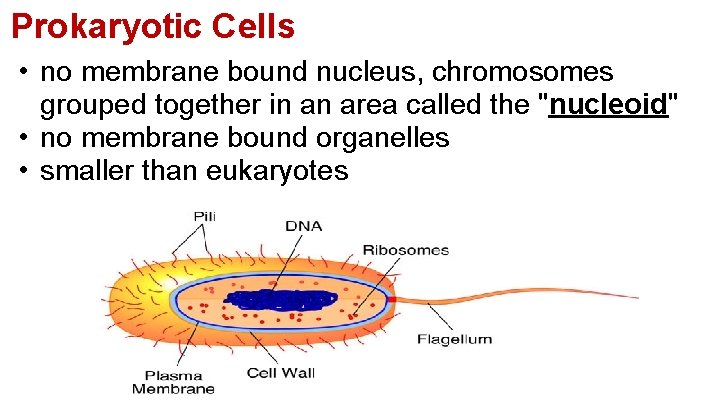
Prokaryotic Cells • no membrane bound nucleus, chromosomes grouped together in an area called the "nucleoid" • no membrane bound organelles • smaller than eukaryotes
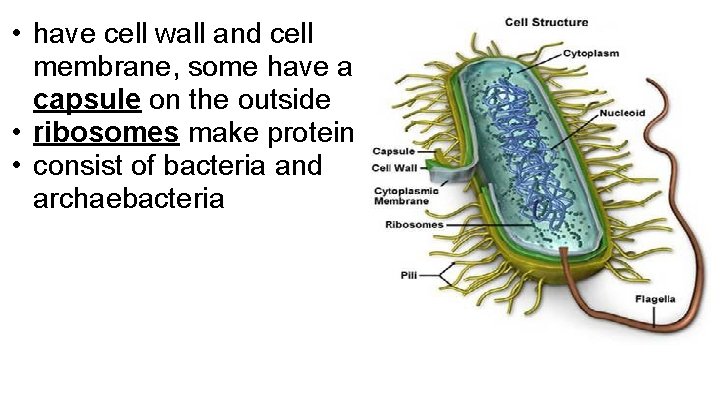
• have cell wall and cell membrane, some have a capsule on the outside • ribosomes make protein • consist of bacteria and archaebacteria
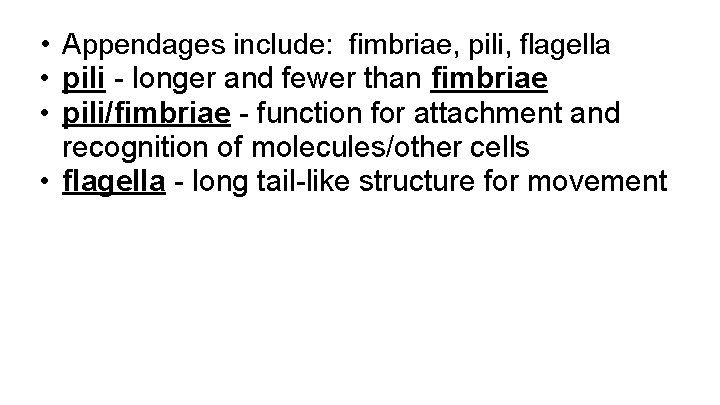
• Appendages include: fimbriae, pili, flagella • pili - longer and fewer than fimbriae • pili/fimbriae - function for attachment and recognition of molecules/other cells • flagella - long tail-like structure for movement
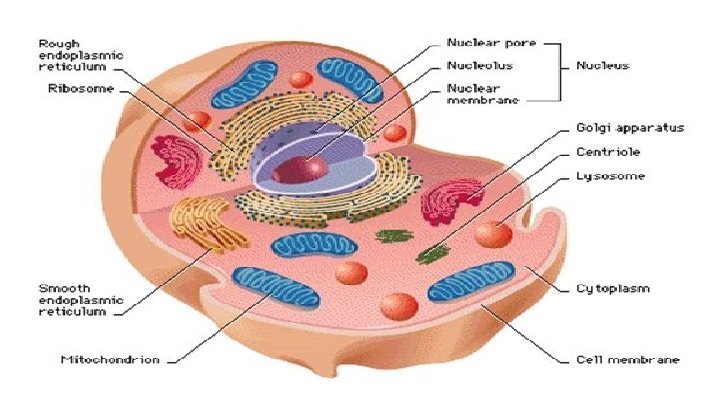
Eukaryotes • have a membrane bound nucleus • has membrane bound organelles in cytoplasm • organelles perform specific functions • much larger than prokaryotes organisms in Animalia, Plantae, Protista and Fungi kingdoms are all eukaryotes
Endosymbiotic Theory Endosymbiosis Theory -some organelles, called Mitochondria & Chloroplasts, have their own DNA & reproduce on their own -these organelles are descended from bacteria which were eaten by the cell and developed a symbiotic relationship which was mutually beneficial to both bacteria and larger eukaryotic cell -this theory helps explain the evolution of eukaryotic cells
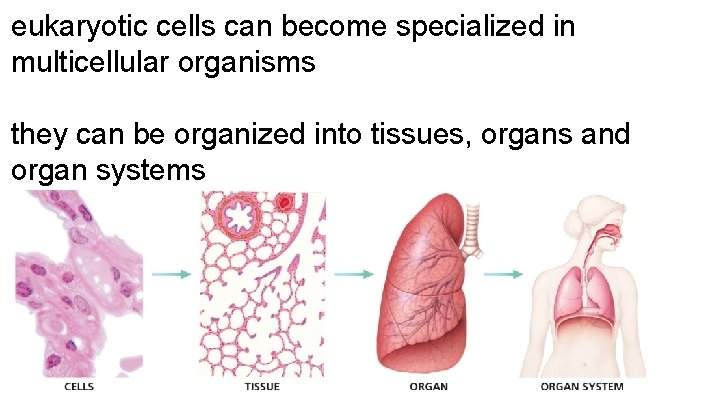
eukaryotic cells can become specialized in multicellular organisms they can be organized into tissues, organs and organ systems
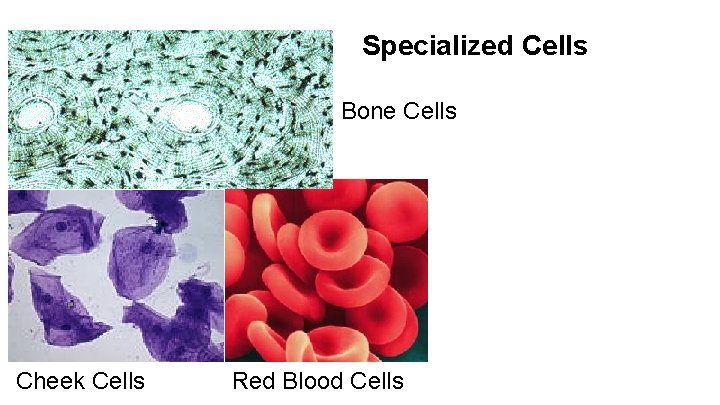
Specialized Cells Bone Cells Cheek Cells Red Blood Cells
Quick Recap. . . . 1. What are the two main types of cells? 2. Which one is larger? 3. Which one does not have a membrane bound nucleus? 4. What are three main parts of the cell (that all cells have)? 5. What are the 3 components of the cell theory? 6. What theory explains how eukaryotes evolved?
- Slides: 30