
Cell Biology Introduction to cells Learning Intentions By
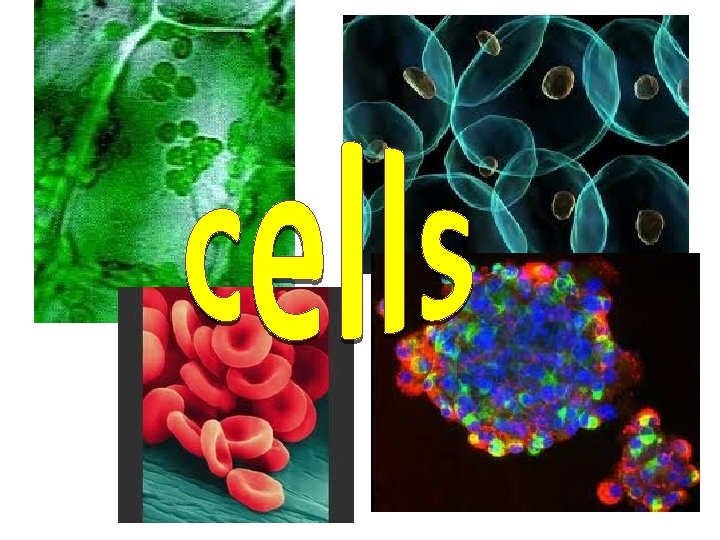
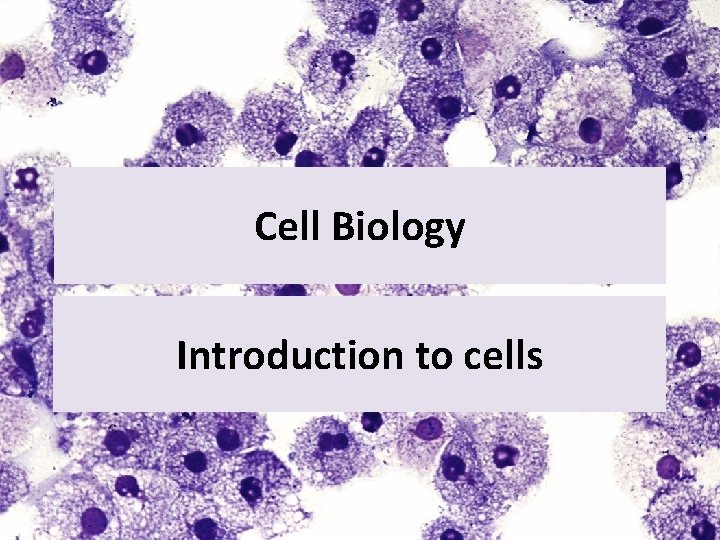
Cell Biology Introduction to cells
Learning Intentions By investigating cell structure I can recognise and give the function of a variety of cell organelles in typical plant and animal cells. Success criteria • I can state which organelles are present in typical plant and animal cells • I can recognise and state the function of the cell wall, chloroplasts, cell membrane, vacuole, nucleus and cytoplasm • I can state why cells are stained to be viewed under a microscope
Activity One • Watch the video “Cells” closely • Write down three facts about cells
Activity One • Complete question one of your summary booklet • What is the name given to the basic units of which all living things are made? Cells
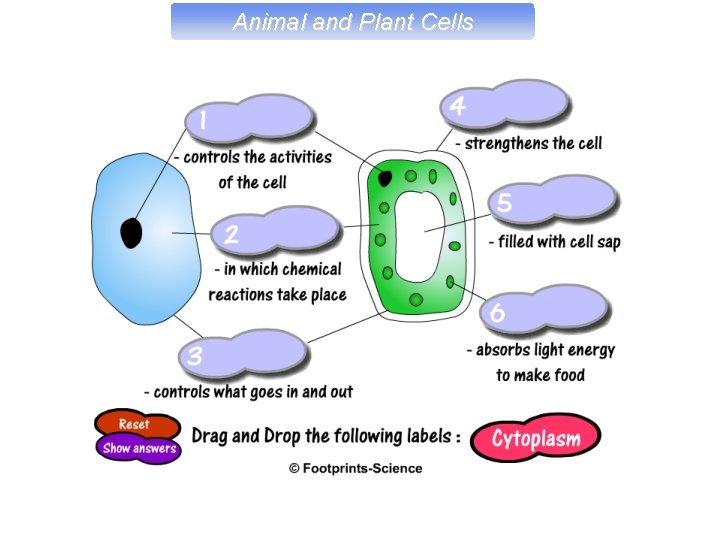
Animal and Plant Cells
Activity One • Label the diagram of an animal cell – Nucleus – Cytoplasm – Cell membrane • Label the diagram of a plant cell – – – Nucleus Cytoplasm Cell membrane Chloroplast Vacuole Cell wall

Animal Cell Cytoplasm Cell membrane Nucleus
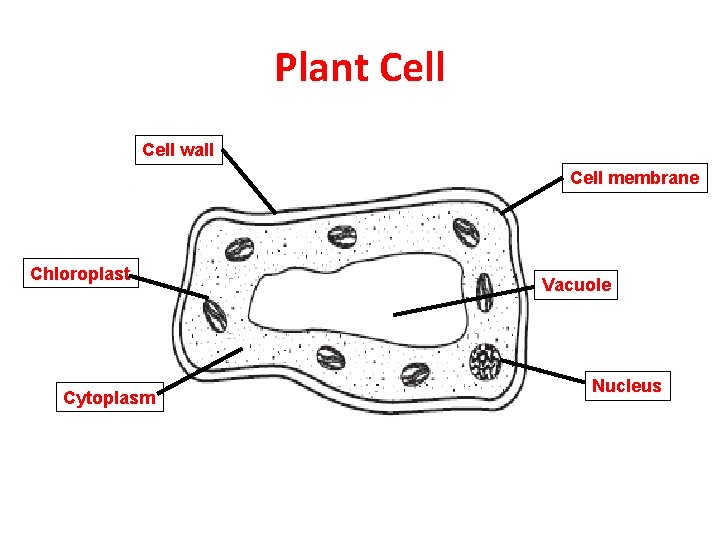
Plant Cell wall Cell membrane Chloroplast Cytoplasm Vacuole Nucleus
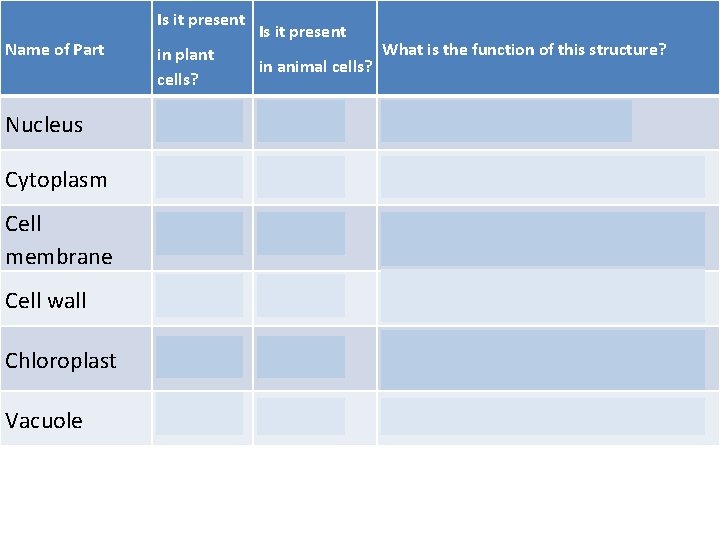
Is it present Name of Part Is it present What is the function of this structure? in plant cells? in animal cells? Nucleus Yes Controls cell activities Cytoplasm Yes Where chemical reactions occur Cell membrane Yes Controls what enters and exits the cell Cell wall Yes No Gives the cell shape and support Some No Where food is produced by photosynthesis Yes No Contains sap Chloroplast Vacuole
Activity Two • Watch the video “How to use a microscope” • Choose one or more of the tissues below to examine under the microscope. – Cheek epithelium – Onion epidermis – Rhubarb /red onion epidermis – Elodea – Yeast – bacteria (bio-slides)
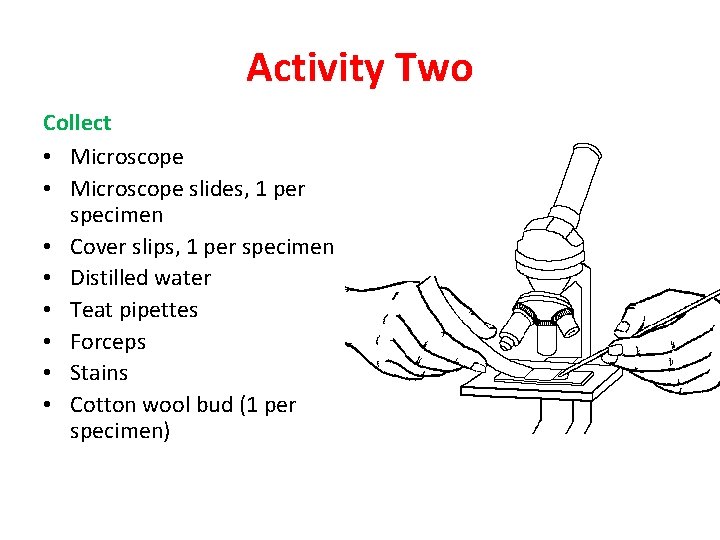
Activity Two Collect • Microscope slides, 1 per specimen • Cover slips, 1 per specimen • Distilled water • Teat pipettes • Forceps • Stains • Cotton wool bud (1 per specimen)

Making a plant cell slide
Activity Two Method Safety Cautions • Put a drop of Methylene BE CAREFUL – blue stain on a slide. METHYLENE BLUE CAN • Take a cotton bud and place STAIN CLOTHES!! it against the inside of your mouth. Remove from PLACE ALL COTTON BUDS IN WASTE mouth BEAKER. • Dip the end of the cotton DO NOT HANDLE ANY COTTON BUDS OR SLIDES OTHER THAN YOUR bud into the stain and mix OWN!! • Place a cover slip on the drop of stain, lowering it gently using the cotton bud. SLIDES ARE MADE FROM THIN GLASS. • Observe your cells under a TAKE CARE WHEN microscope. HANDLING • Using a similar procedure make slides of different cells.
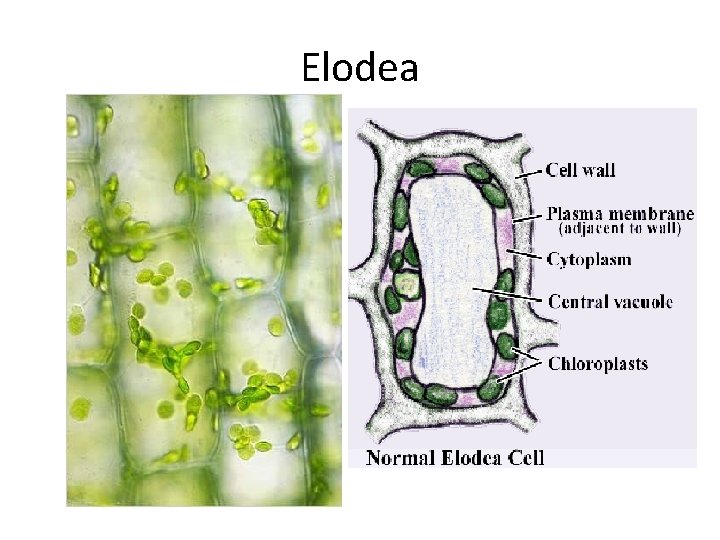
Elodea
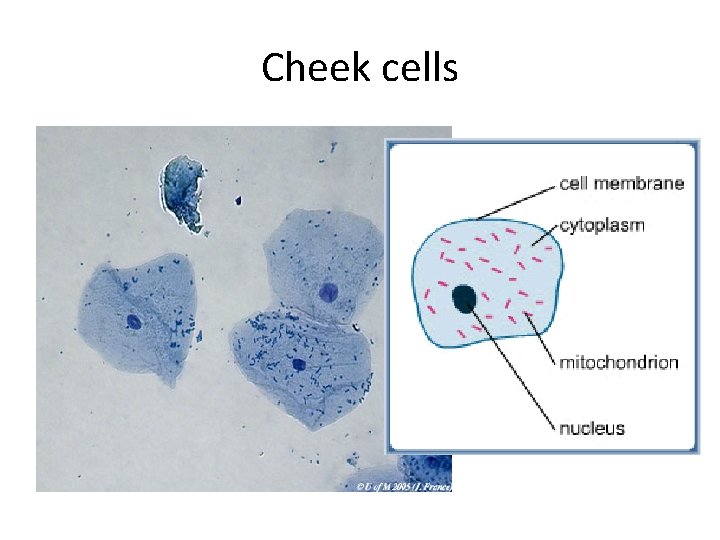
Cheek cells

• Red onion cells • Yeast cells
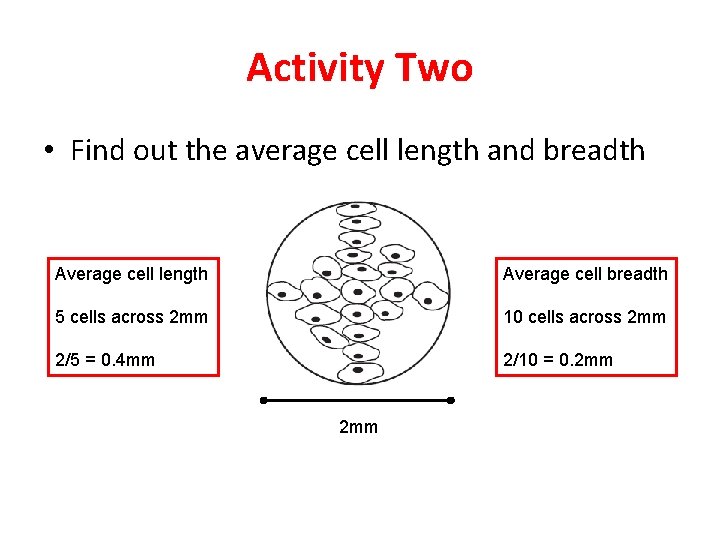
Activity Two • Find out the average cell length and breadth Average cell length Average cell breadth 5 cells across 2 mm 10 cells across 2 mm 2/5 = 0. 4 mm 2/10 = 0. 2 mm
Activity Two • Explain why animal and plant cells should be stained before examining them with a microscope Because the stain allows the parts of the cell to be seen more clearly
Activity Four • Watch the video “Types of cells” • Complete the sentence shape • Specialised cells have a certain _____ function suited to their ______.
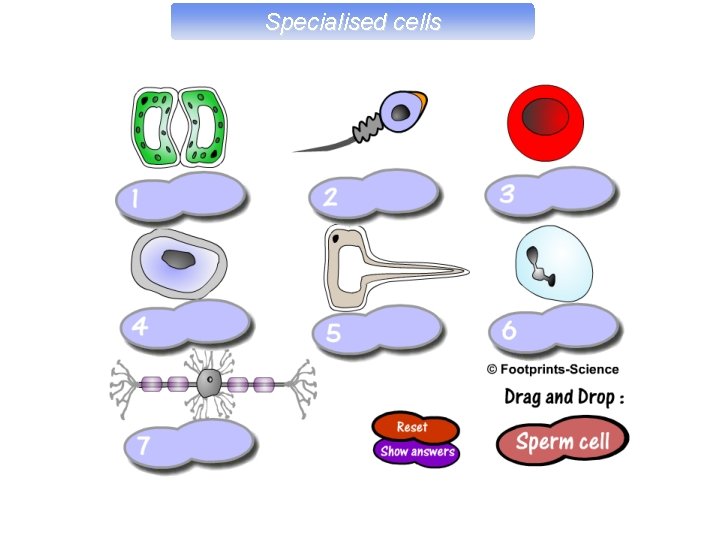
Specialised cells
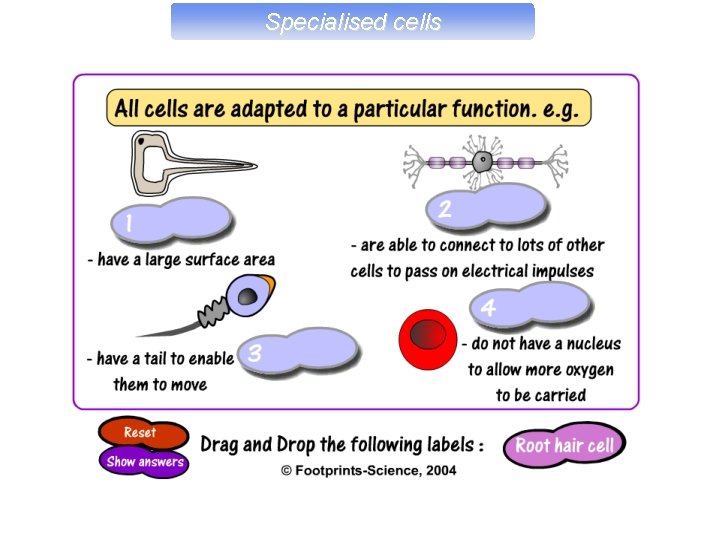
Specialised cells
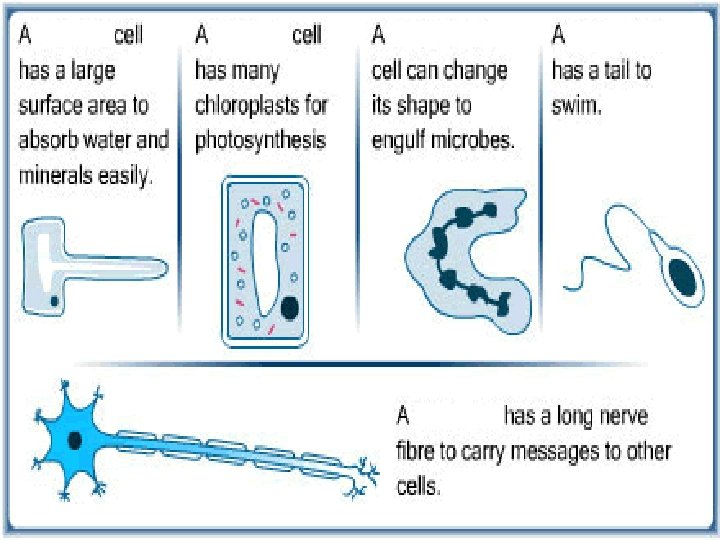
leaf
Self Evaluation • I can state which organelles are present in typical plant and animal cells • I can recognise and state the function of the cell wall, chloroplasts, cell membrane, vacuole, nucleus and cytoplasm • I can state why cells are stained to be viewed under a microscope • I can state why specialised cells have a different shapes
- Slides: 24