
Cell Biology Cytoskeleton Alberts Bruce Essential Cell Biology
Cell Biology Cytoskeleton Alberts, Bruce. Essential Cell Biology. 4 th ed. New York, NY: Garland Science Pub. , 2013. Print. Copyright © Garland Science 2013
Cytoskeleton Cytoskeleton: a network of protein filaments including intermediate filaments, microtubules, and actin filaments, which extends throughout the cytoplasm. Cytoskeleton is particularly important in animal cells, which have no cell walls. Eucaryotic cells depends on the cytoskeleton to • adopt a variety of shapes • organize many components including various organelles • provide the machinery for the transport between organelles • interact mechanically with the environment • carry out coordinated movements The cytoskeleton is not only the “bones” of a cell but its “muscles” too. The cytoskeleton is directly responsible for large-scale movements, such as: • crawling of cells along a surface • contraction of muscle cells • changes in cell shape that take place as an embryo develops • movement of sperms to reach the egg for fertilization • segregation of chromosomes into daughter cell during cell division
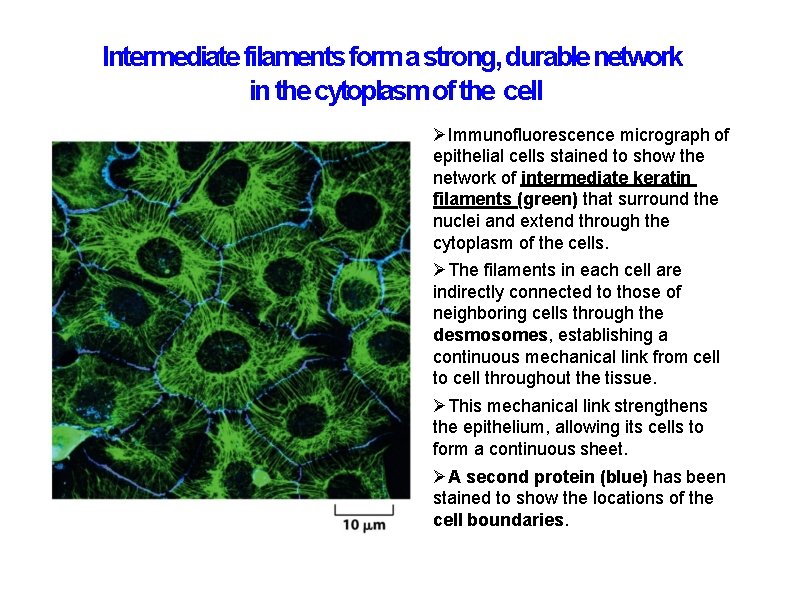
Intermediate filaments form a strong, durable network in the cytoplasm of the cell Immunofluorescence micrograph of epithelial cells stained to show the network of intermediate keratin filaments (green) that surround the nuclei and extend through the cytoplasm of the cells. The filaments in each cell are indirectly connected to those of neighboring cells through the desmosomes, establishing a continuous mechanical link from cell to cell throughout the tissue. This mechanical link strengthens the epithelium, allowing its cells to form a continuous sheet. A second protein (blue) has been stained to show the locations of the cell boundaries.
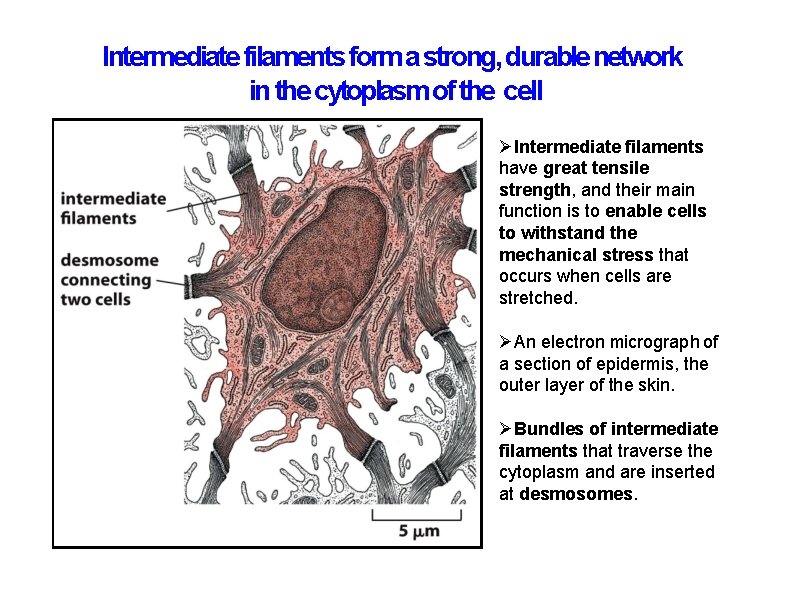
Intermediate filaments form a strong, durable network in the cytoplasm of the cell Intermediate filaments have great tensile strength, and their main function is to enable cells to withstand the mechanical stress that occurs when cells are stretched. An electron micrograph of a section of epidermis, the outer layer of the skin. Bundles of intermediate filaments that traverse the cytoplasm and are inserted at desmosomes.

Intermediate filaments are like ropes made of long, twisted strands of protein (A) Monomer: A central rod domain + two globular regions at end. (B) A dimer: A pair of monomers. (C) Two dimers: Line up to form a staggered tetramer. (D) Tetramers: Pack together end-to-end.

Intermediate filaments are like ropes made of long, twisted strands of protein Tetramers can pack together end-to-end assemble into a helical array. An array contains eight strands of tetramers that twist together to form the final ropelike intermediate filament.
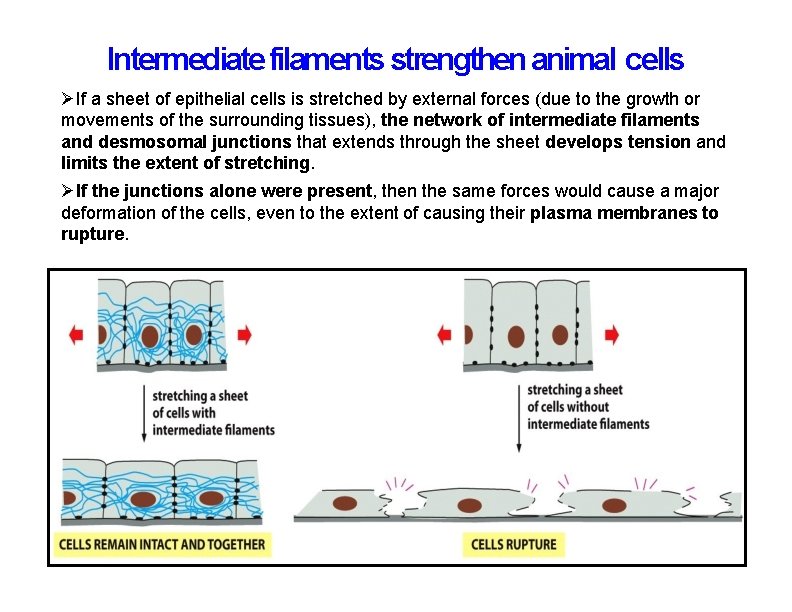
Intermediate filaments strengthen animal cells If a sheet of epithelial cells is stretched by external forces (due to the growth or movements of the surrounding tissues), the network of intermediate filaments and desmosomal junctions that extends through the sheet develops tension and limits the extent of stretching. If the junctions alone were present, then the same forces would cause a major deformation of the cells, even to the extent of causing their plasma membranes to rupture.
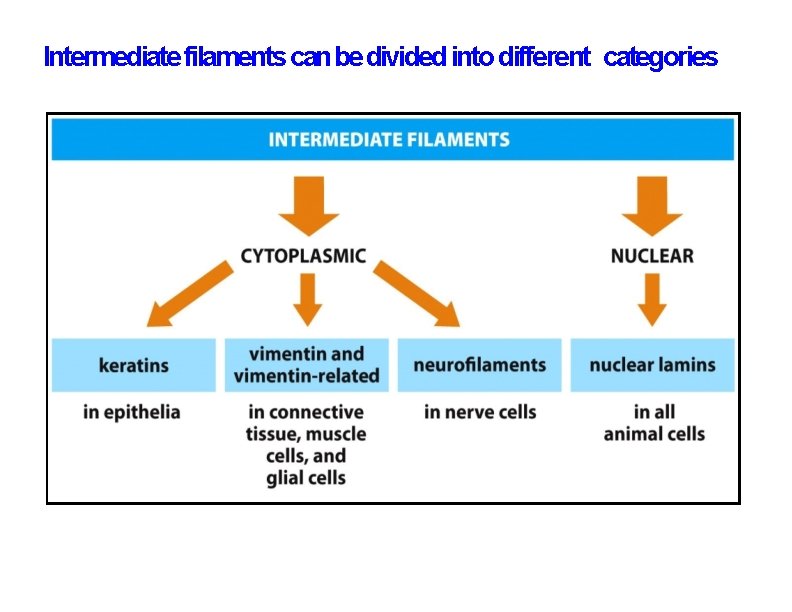
Intermediate filaments can be divided into different categories
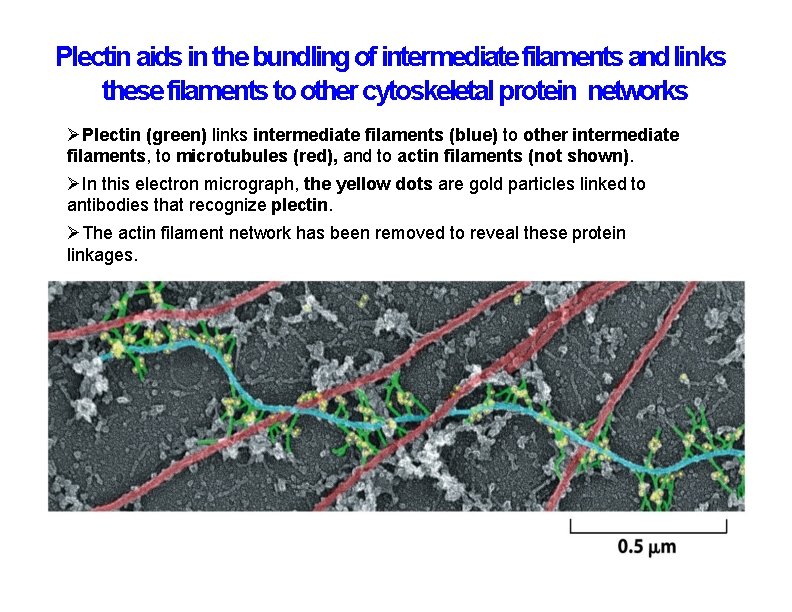
Plectin aids in the bundling of intermediate filaments and links these filaments to other cytoskeletal protein networks Plectin (green) links intermediate filaments (blue) to other intermediate filaments, to microtubules (red), and to actin filaments (not shown). In this electron micrograph, the yellow dots are gold particles linked to antibodies that recognize plectin. The actin filament network has been removed to reveal these protein linkages.

Intermediate filaments support and strengthen the nuclear envelope The intermediate filaments of the nuclear lamina line the inner face of the nuclear envelope and are thought to provide attachment sites for chromatin. Lamina are constructed from a class of intermediate filament proteins called lamins.
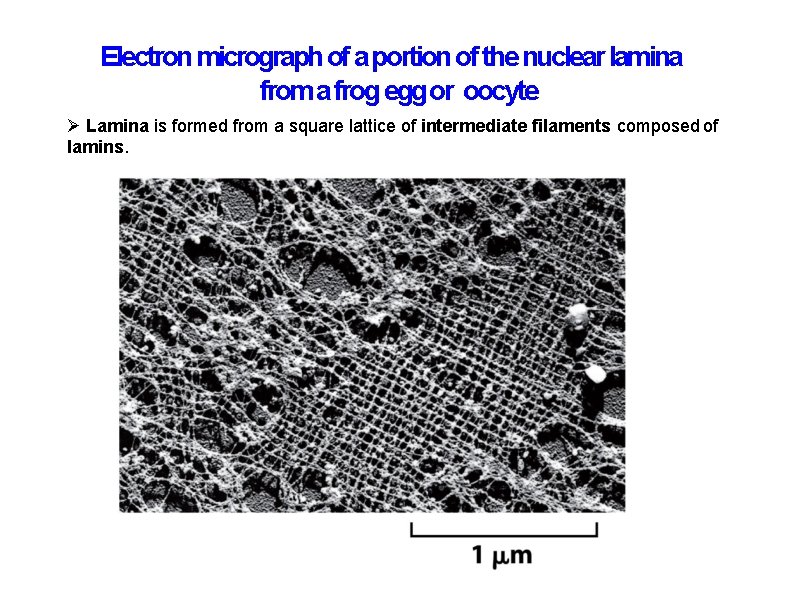
Electron micrograph of a portion of the nuclear lamina from a frog egg or oocyte Lamina is formed from a square lattice of intermediate filaments composed of lamins.
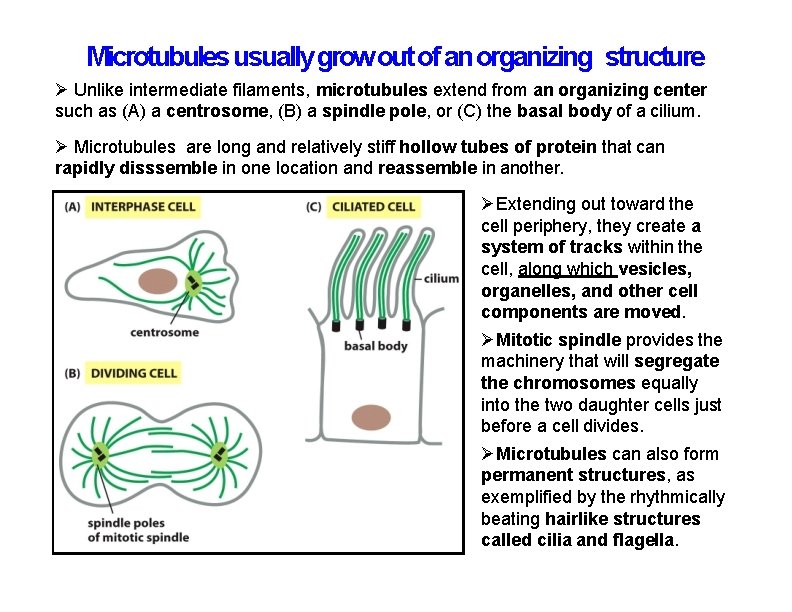
Microtubules usually grow out of an organizing structure Unlike intermediate filaments, microtubules extend from an organizing center such as (A) a centrosome, (B) a spindle pole, or (C) the basal body of a cilium. Microtubules are long and relatively stiff hollow tubes of protein that can rapidly disssemble in one location and reassemble in another. Extending out toward the cell periphery, they create a system of tracks within the cell, along which vesicles, organelles, and other cell components are moved. Mitotic spindle provides the machinery that will segregate the chromosomes equally into the two daughter cells just before a cell divides. Microtubules can also form permanent structures, as exemplified by the rhythmically beating hairlike structures called cilia and flagella.
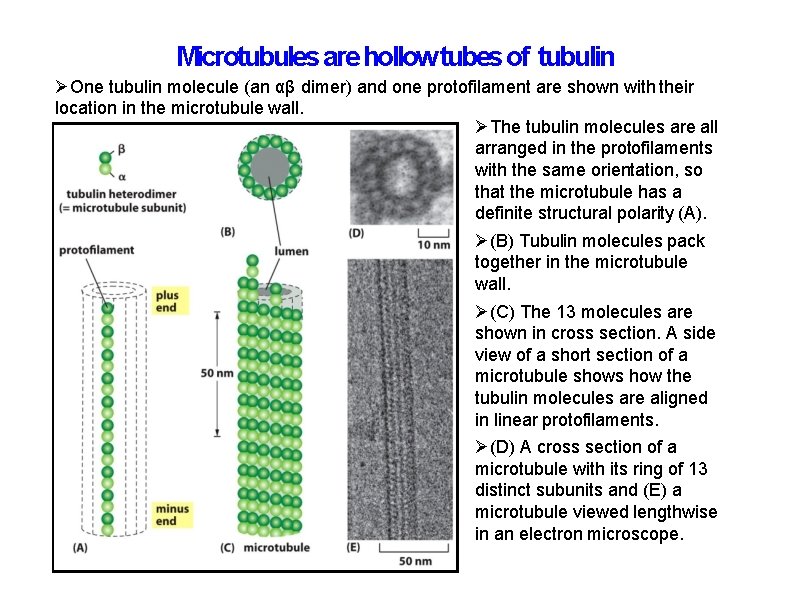
Microtubules are hollow tubes of tubulin One tubulin molecule (an αβ dimer) and one protofilament are shown with their location in the microtubule wall. The tubulin molecules are all arranged in the protofilaments with the same orientation, so that the microtubule has a definite structural polarity (A). (B) Tubulin molecules pack together in the microtubule wall. (C) The 13 molecules are shown in cross section. A side view of a short section of a microtubule shows how the tubulin molecules are aligned in linear protofilaments. (D) A cross section of a microtubule with its ring of 13 distinct subunits and (E) a microtubule viewed lengthwise in an electron microscope.
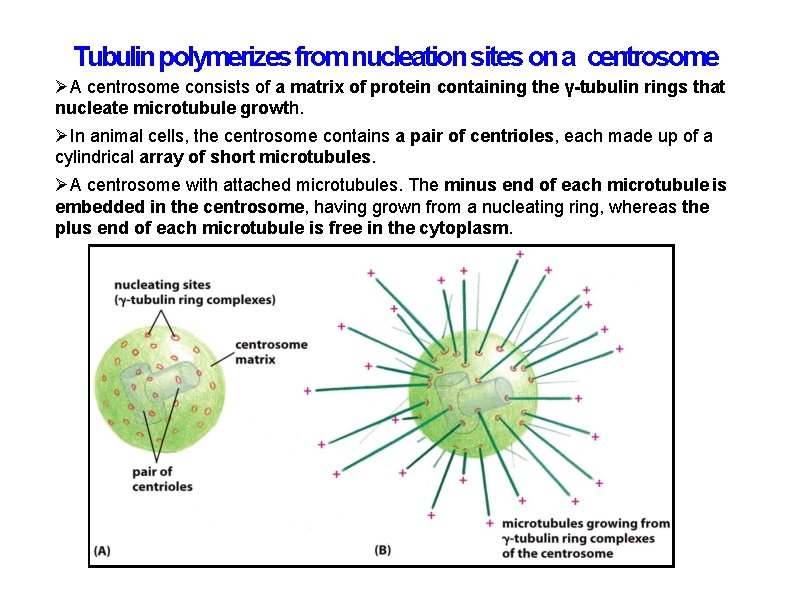
Tubulin polymerizes from nucleation sites on a centrosome A centrosome consists of a matrix of protein containing the γ-tubulin rings that nucleate microtubule growth. In animal cells, the centrosome contains a pair of centrioles, each made up of a cylindrical array of short microtubules. A centrosome with attached microtubules. The minus end of each microtubule is embedded in the centrosome, having grown from a nucleating ring, whereas the plus end of each microtubule is free in the cytoplasm.
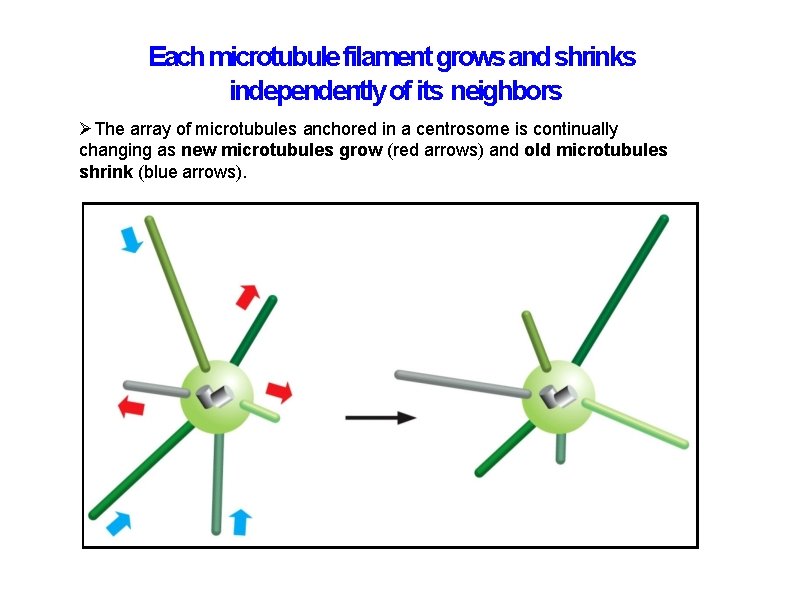
Each microtubule filament grows and shrinks independently of its neighbors The array of microtubules anchored in a centrosome is continually changing as new microtubules grow (red arrows) and old microtubules shrink (blue arrows).

GTP hydrolysis controls the growth of microtubules (A) Tubulin dimers carrying GTP (red) bind more tightly to one another than do tubulin dimers carrying GDP (dark green). Therefore, microtubules that have freshly added tubulin dimers at their end with GTP bound tend to keep growing. (B) When microtubule growth is slow, the subunits in this GTP cap will hydrolyze their GTP to GDP before fresh subunits loaded with GTP have time to bind. The GTP cap is thereby lost; the GDP-carrying subunits are less tightly bound in the polymer and are readily released from the free end, so that the microtubule begins to shrink continuously.
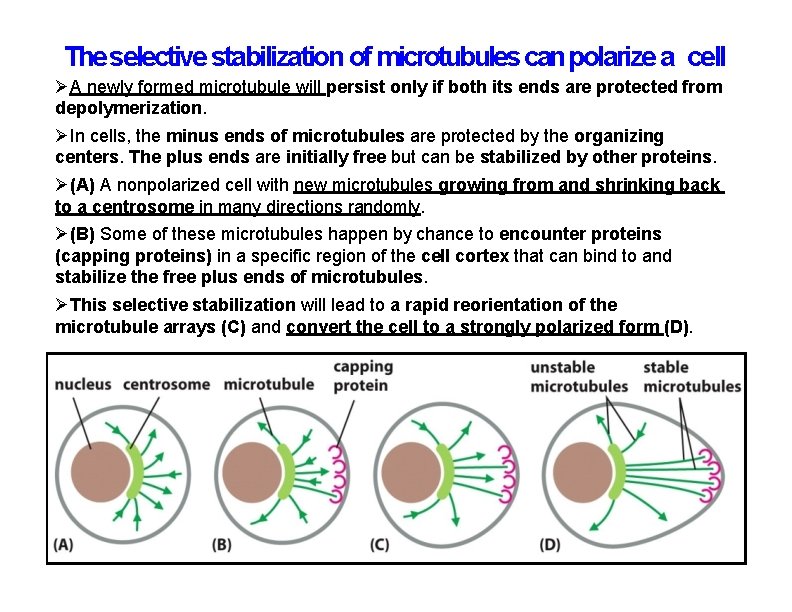
The selective stabilization of microtubules can polarize a cell A newly formed microtubule will persist only if both its ends are protected from depolymerization. In cells, the minus ends of microtubules are protected by the organizing centers. The plus ends are initially free but can be stabilized by other proteins. (A) A nonpolarized cell with new microtubules growing from and shrinking back to a centrosome in many directions randomly. (B) Some of these microtubules happen by chance to encounter proteins (capping proteins) in a specific region of the cell cortex that can bind to and stabilize the free plus ends of microtubules. This selective stabilization will lead to a rapid reorientation of the microtubule arrays (C) and convert the cell to a strongly polarized form (D).
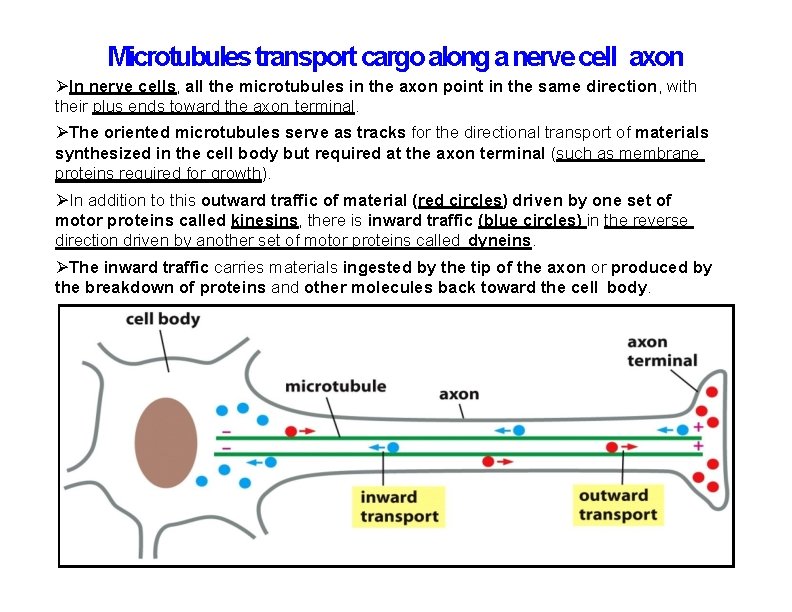
Microtubules transport cargo along a nerve cell axon In nerve cells, all the microtubules in the axon point in the same direction, with their plus ends toward the axon terminal. The oriented microtubules serve as tracks for the directional transport of materials synthesized in the cell body but required at the axon terminal (such as membrane proteins required for growth). In addition to this outward traffic of material (red circles) driven by one set of motor proteins called kinesins, there is inward traffic (blue circles) in the reverse direction driven by another set of motor proteins called dyneins. The inward traffic carries materials ingested by the tip of the axon or produced by the breakdown of proteins and other molecules back toward the cell body.
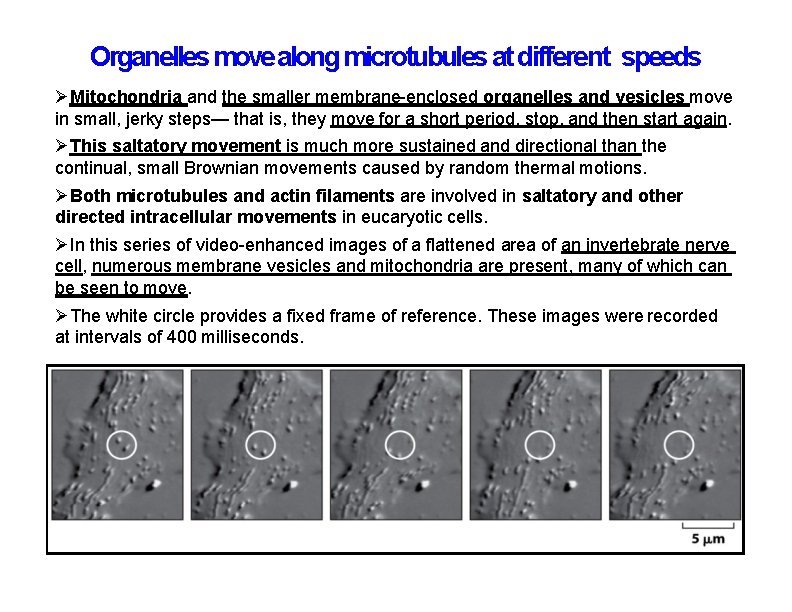
Organelles move along microtubules at different speeds Mitochondria and the smaller membrane-enclosed organelles and vesicles move in small, jerky steps— that is, they move for a short period, stop, and then start again. This saltatory movement is much more sustained and directional than the continual, small Brownian movements caused by random thermal motions. Both microtubules and actin filaments are involved in saltatory and other directed intracellular movements in eucaryotic cells. In this series of video-enhanced images of a flattened area of an invertebrate nerve cell, numerous membrane vesicles and mitochondria are present, many of which can be seen to move. The white circle provides a fixed frame of reference. These images were recorded at intervals of 400 milliseconds.
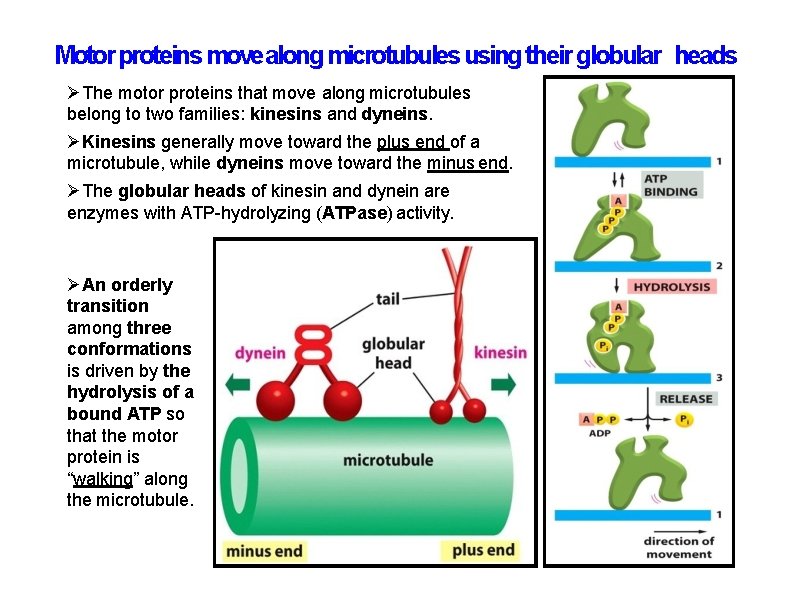
Motor proteins move along microtubules using their globular heads The motor proteins that move along microtubules belong to two families: kinesins and dyneins. Kinesins generally move toward the plus end of a microtubule, while dyneins move toward the minus end. The globular heads of kinesin and dynein are enzymes with ATP-hydrolyzing (ATPase) activity. An orderly transition among three conformations is driven by the hydrolysis of a bound ATP so that the motor protein is “walking” along the microtubule.
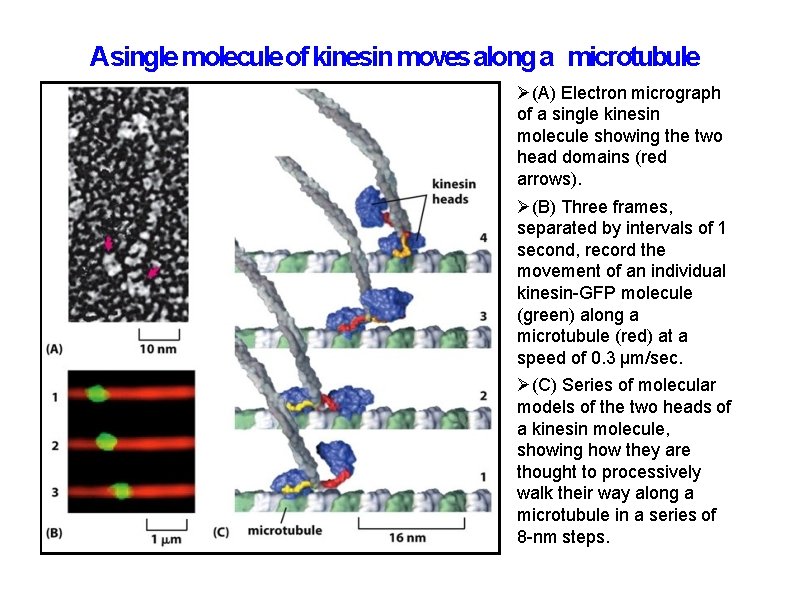
Asingle molecule of kinesin moves along a microtubule (A) Electron micrograph of a single kinesin molecule showing the two head domains (red arrows). (B) Three frames, separated by intervals of 1 second, record the movement of an individual kinesin-GFP molecule (green) along a microtubule (red) at a speed of 0. 3 μm/sec. (C) Series of molecular models of the two heads of a kinesin molecule, showing how they are thought to processively walk their way along a microtubule in a series of 8 -nm steps.
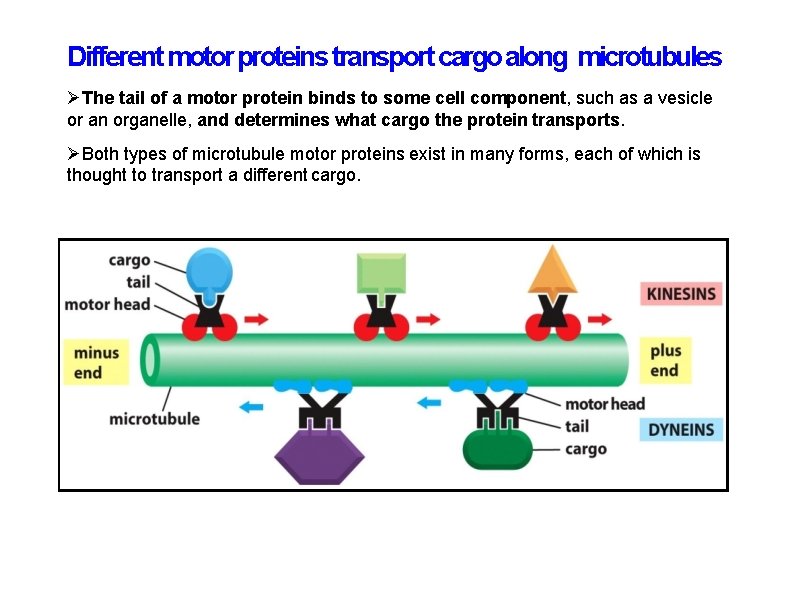
Different motor proteins transport cargo along microtubules The tail of a motor protein binds to some cell component, such as a vesicle or an organelle, and determines what cargo the protein transports. Both types of microtubule motor proteins exist in many forms, each of which is thought to transport a different cargo.
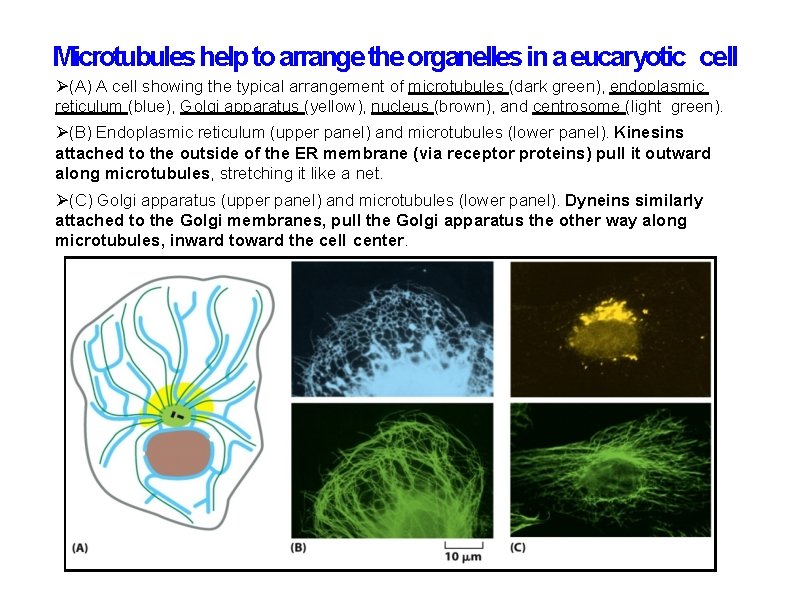
Microtubules help to arrange the organelles in a eucaryotic cell (A) A cell showing the typical arrangement of microtubules (dark green), endoplasmic reticulum (blue), Golgi apparatus (yellow), nucleus (brown), and centrosome (light green). (B) Endoplasmic reticulum (upper panel) and microtubules (lower panel). Kinesins attached to the outside of the ER membrane (via receptor proteins) pull it outward along microtubules, stretching it like a net. (C) Golgi apparatus (upper panel) and microtubules (lower panel). Dyneins similarly attached to the Golgi membranes, pull the Golgi apparatus the other way along microtubules, inward toward the cell center.
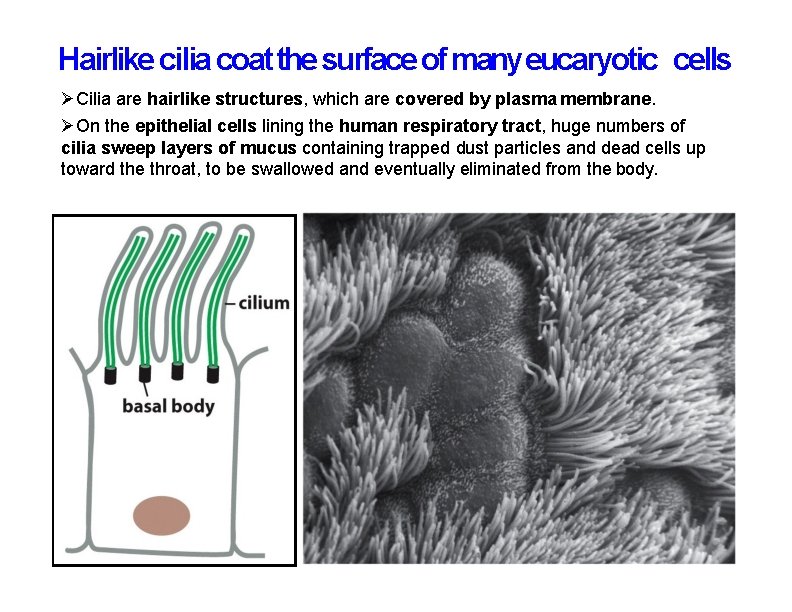
Hairlike cilia coat the surface of many eucaryotic cells Cilia are hairlike structures, which are covered by plasma membrane. On the epithelial cells lining the human respiratory tract, huge numbers of cilia sweep layers of mucus containing trapped dust particles and dead cells up toward the throat, to be swallowed and eventually eliminated from the body.
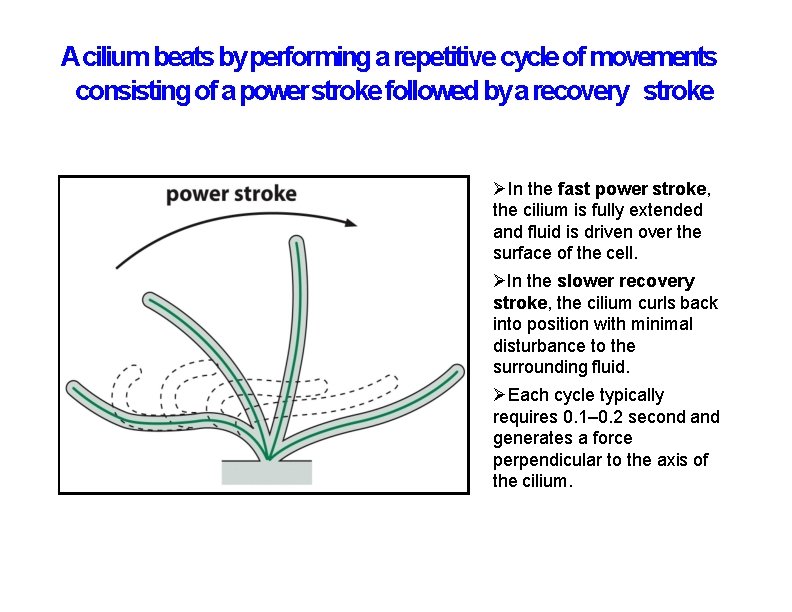
Acilium beats by performing a repetitive cycle of movements consisting of a power stroke followed by a recovery stroke In the fast power stroke, the cilium is fully extended and fluid is driven over the surface of the cell. In the slower recovery stroke, the cilium curls back into position with minimal disturbance to the surrounding fluid. Each cycle typically requires 0. 1– 0. 2 second and generates a force perpendicular to the axis of the cilium.
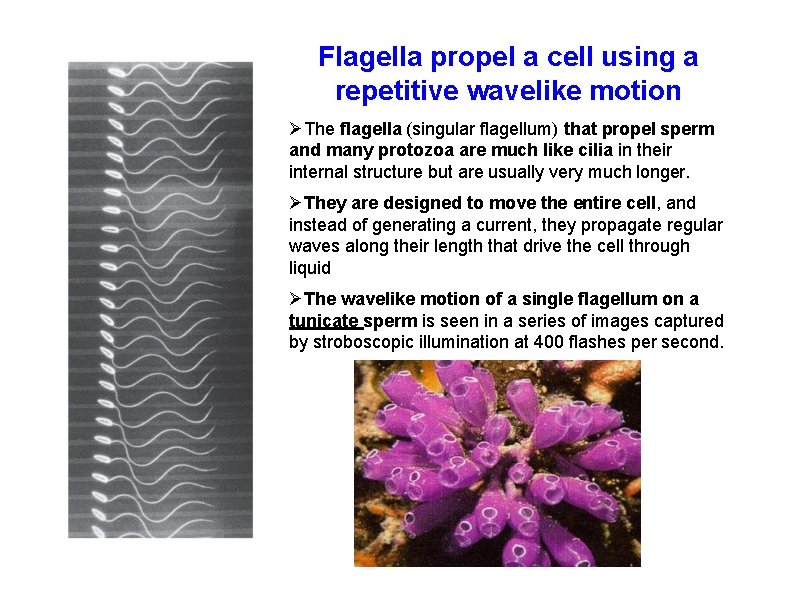
Flagella propel a cell using a repetitive wavelike motion The flagella (singular flagellum) that propel sperm and many protozoa are much like cilia in their internal structure but are usually very much longer. They are designed to move the entire cell, and instead of generating a current, they propagate regular waves along their length that drive the cell through liquid The wavelike motion of a single flagellum on a tunicate sperm is seen in a series of images captured by stroboscopic illumination at 400 flashes per second.
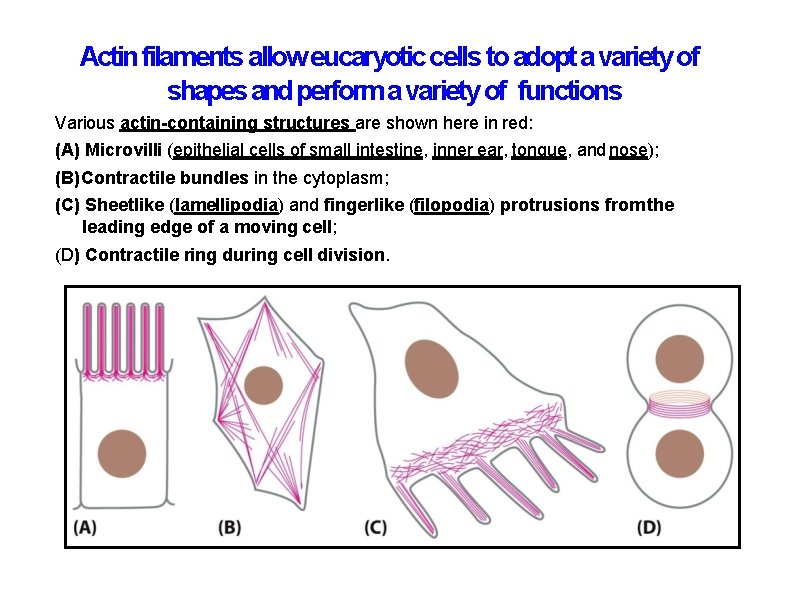
Actin filaments allow eucaryotic cells to adopt a variety of shapes and perform a variety of functions Various actin-containing structures are shown here in red: (A) Microvilli (epithelial cells of small intestine, inner ear, tongue, and nose); (B) Contractile bundles in the cytoplasm; (C) Sheetlike (lamellipodia) and fingerlike (filopodia) protrusions from the leading edge of a moving cell; (D) Contractile ring during cell division.
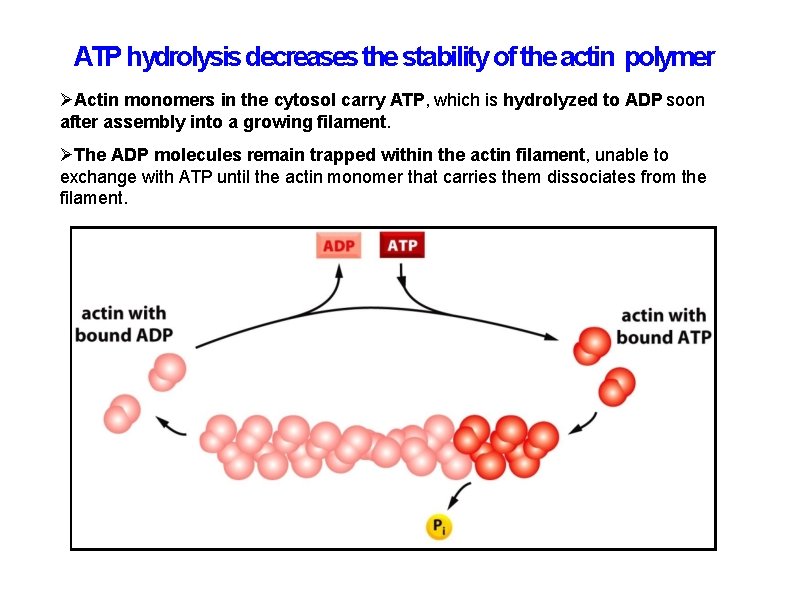
ATP hydrolysis decreases the stability of the actin polymer Actin monomers in the cytosol carry ATP, which is hydrolyzed to ADP soon after assembly into a growing filament. The ADP molecules remain trapped within the actin filament, unable to exchange with ATP until the actin monomer that carries them dissociates from the filament.

Forces generated in the actin-rich cortex move a cell forward During cell movement, actin polymerization at the leading edge of the cell pushes the plasma membrane forward (protrusion) and forms new regions of actin cortex, shown here in red. New points of anchorage are made between the actin filaments and the surface on which the cell is crawling (attachment). Contraction at the rear of the cell then draws the body of the cell forward (traction). New anchorage points are established at the front, and old ones are released at the back as the cell crawls forward. The same cycle is repeated over and over again, moving the cell forward.
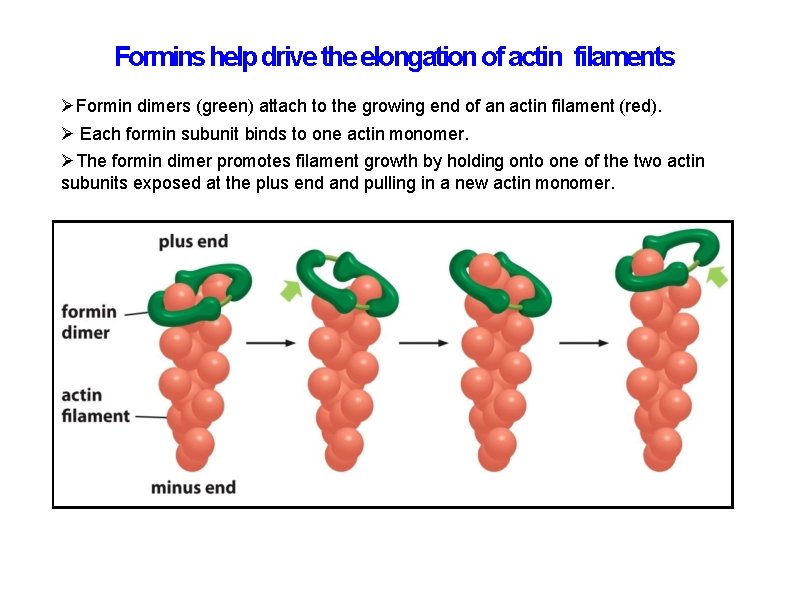
Formins help drive the elongation of actin filaments Formin dimers (green) attach to the growing end of an actin filament (red). Each formin subunit binds to one actin monomer. The formin dimer promotes filament growth by holding onto one of the two actin subunits exposed at the plus end and pulling in a new actin monomer.
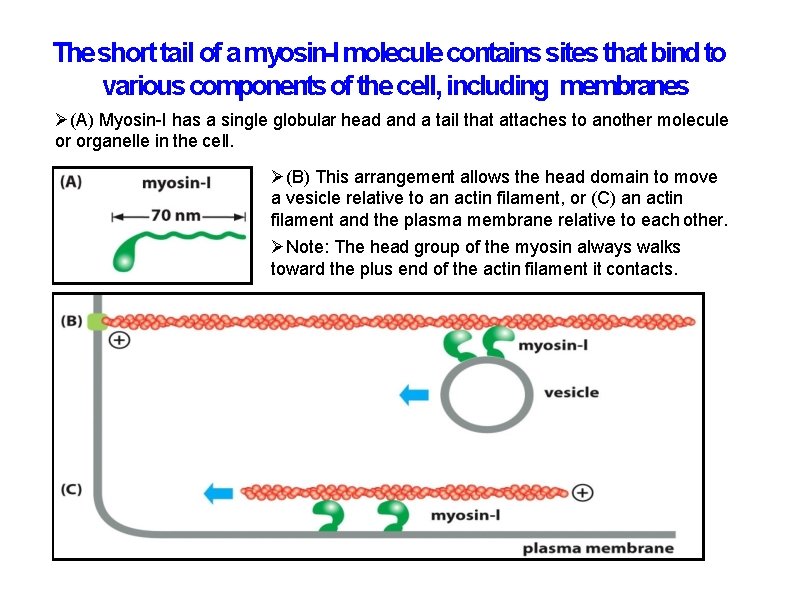
The short tail of a myosin-I molecule contains sites that bind to various components of the cell, including membranes (A) Myosin-I has a single globular head and a tail that attaches to another molecule or organelle in the cell. (B) This arrangement allows the head domain to move a vesicle relative to an actin filament, or (C) an actin filament and the plasma membrane relative to each other. Note: The head group of the myosin always walks toward the plus end of the actin filament it contacts.
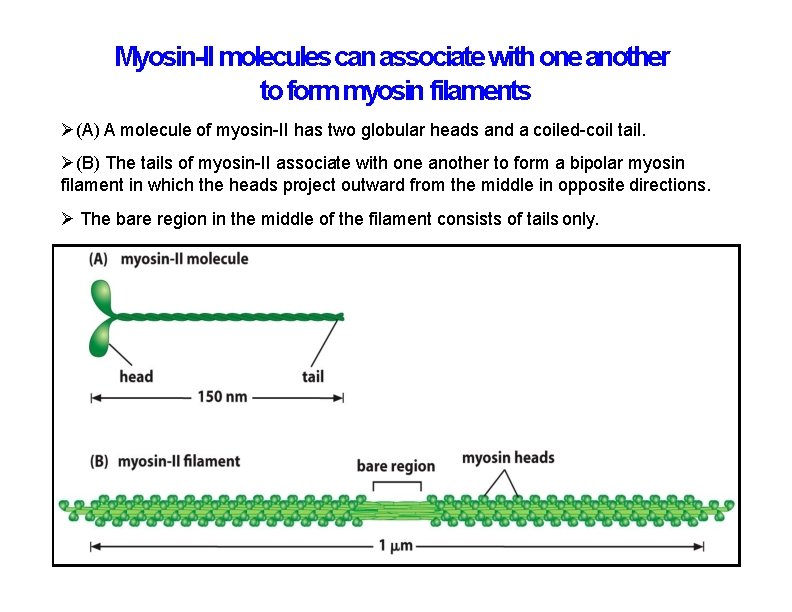
Myosin-II molecules can associate with one another to form myosin filaments (A) A molecule of myosin-II has two globular heads and a coiled-coil tail. (B) The tails of myosin-II associate with one another to form a bipolar myosin filament in which the heads project outward from the middle in opposite directions. The bare region in the middle of the filament consists of tails only.
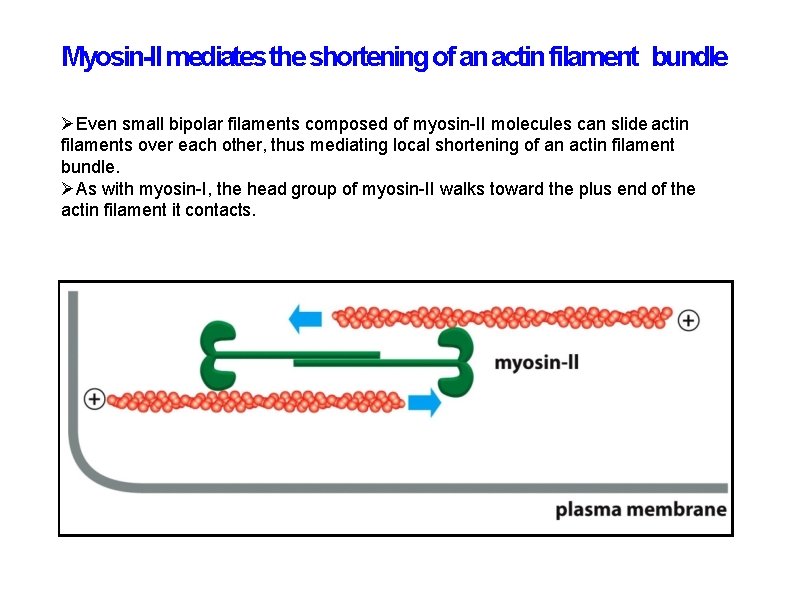
Myosin-II mediates the shortening of an actin filament bundle Even small bipolar filaments composed of myosin-II molecules can slide actin filaments over each other, thus mediating local shortening of an actin filament bundle. As with myosin-I, the head group of myosin-II walks toward the plus end of the actin filament it contacts.
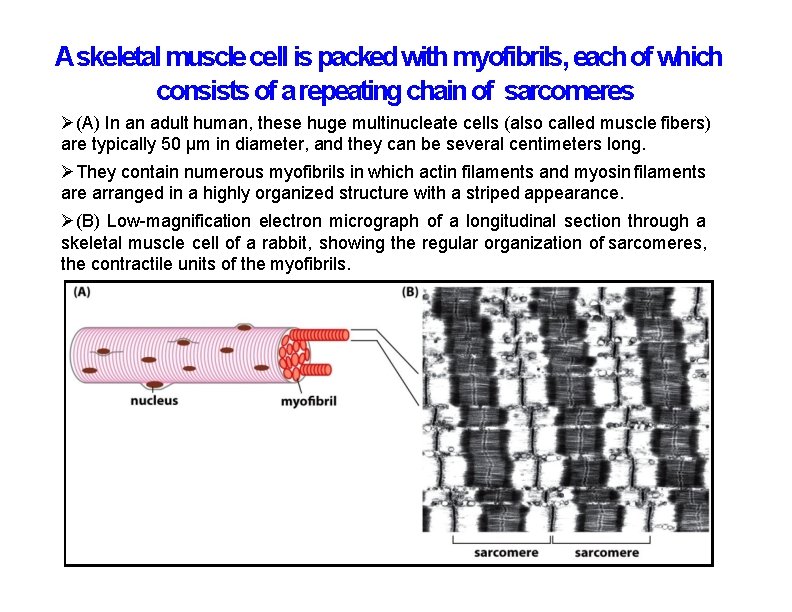
Askeletal muscle cell is packed with myofibrils, each of which consists of a repeating chain of sarcomeres (A) In an adult human, these huge multinucleate cells (also called muscle fibers) are typically 50 μm in diameter, and they can be several centimeters long. They contain numerous myofibrils in which actin filaments and myosin filaments are arranged in a highly organized structure with a striped appearance. (B) Low-magnification electron micrograph of a longitudinal section through a skeletal muscle cell of a rabbit, showing the regular organization of sarcomeres, the contractile units of the myofibrils.
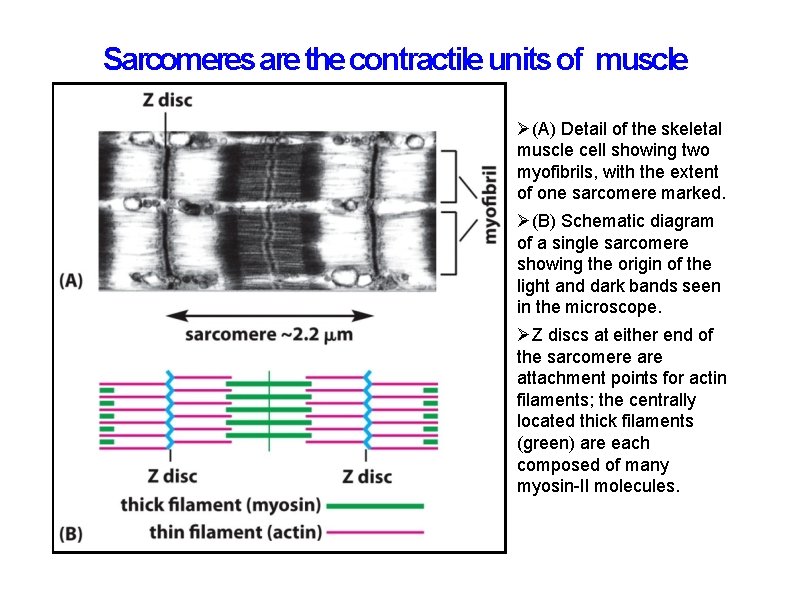
Sarcomeres are the contractile units of muscle (A) Detail of the skeletal muscle cell showing two myofibrils, with the extent of one sarcomere marked. (B) Schematic diagram of a single sarcomere showing the origin of the light and dark bands seen in the microscope. Z discs at either end of the sarcomere attachment points for actin filaments; the centrally located thick filaments (green) are each composed of many myosin-II molecules.
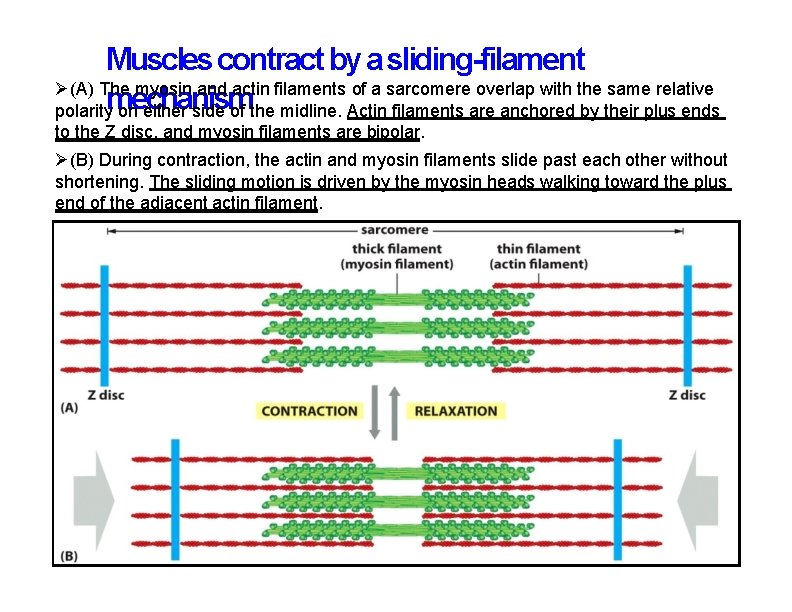
Muscles contract by a sliding-filament (A) The myosin and actin filaments of a sarcomere overlap with the same relative polaritymechanism on either side of the midline. Actin filaments are anchored by their plus ends to the Z disc, and myosin filaments are bipolar. (B) During contraction, the actin and myosin filaments slide past each other without shortening. The sliding motion is driven by the myosin heads walking toward the plus end of the adjacent actin filament.
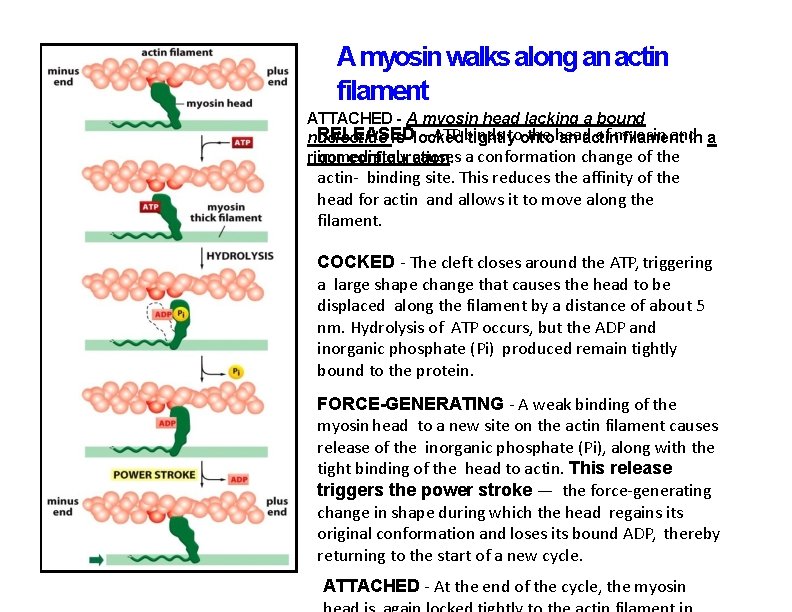
A myosin walks along an actin filament ATTACHED - A myosin head lacking a bound RELEASED – ATP binds toonto the head of myosin and nucleotide is locked tightly an actin filament in a immediately causes a conformation change of the rigor configuration. actin- binding site. This reduces the affinity of the head for actin and allows it to move along the filament. COCKED - The cleft closes around the ATP, triggering a large shape change that causes the head to be displaced along the filament by a distance of about 5 nm. Hydrolysis of ATP occurs, but the ADP and inorganic phosphate (Pi) produced remain tightly bound to the protein. FORCE-GENERATING - A weak binding of the myosin head to a new site on the actin filament causes release of the inorganic phosphate (Pi), along with the tight binding of the head to actin. This release triggers the power stroke — the force-generating change in shape during which the head regains its original conformation and loses its bound ADP, thereby returning to the start of a new cycle. ATTACHED - At the end of the cycle, the myosin
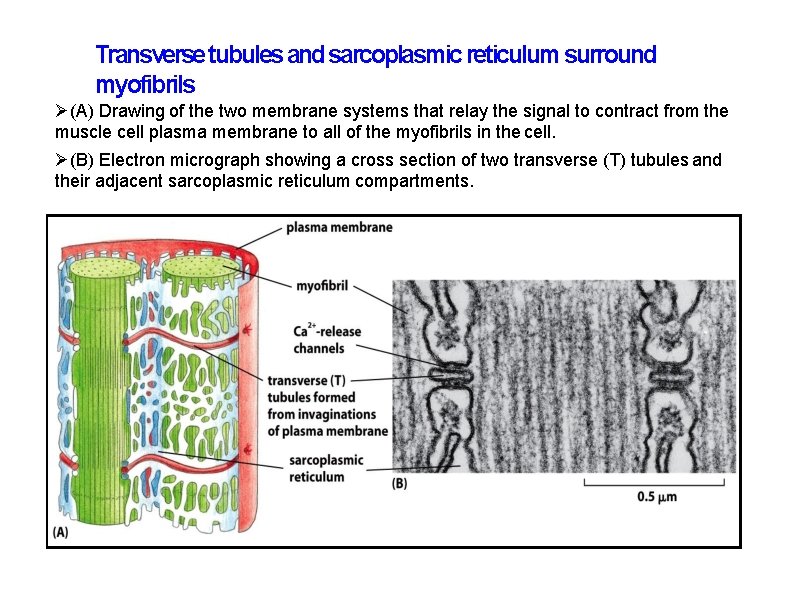
Transverse tubules and sarcoplasmic reticulum surround myofibrils (A) Drawing of the two membrane systems that relay the signal to contract from the muscle cell plasma membrane to all of the myofibrils in the cell. (B) Electron micrograph showing a cross section of two transverse (T) tubules and their adjacent sarcoplasmic reticulum compartments.
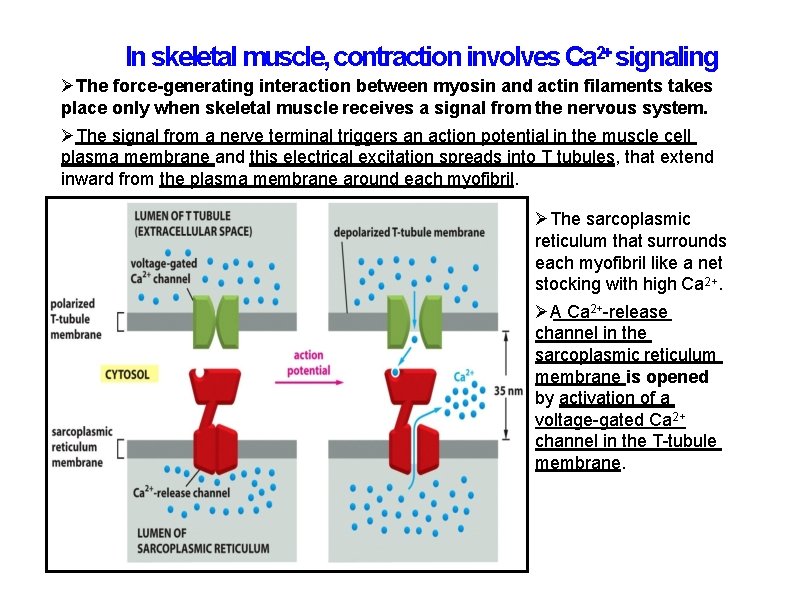
In skeletal muscle, contraction involves Ca 2+ signaling The force-generating interaction between myosin and actin filaments takes place only when skeletal muscle receives a signal from the nervous system. The signal from a nerve terminal triggers an action potential in the muscle cell plasma membrane and this electrical excitation spreads into T tubules, that extend inward from the plasma membrane around each myofibril. The sarcoplasmic reticulum that surrounds each myofibril like a net stocking with high Ca 2+. A Ca 2+-release channel in the sarcoplasmic reticulum membrane is opened by activation of a voltage-gated Ca 2+ channel in the T-tubule membrane.
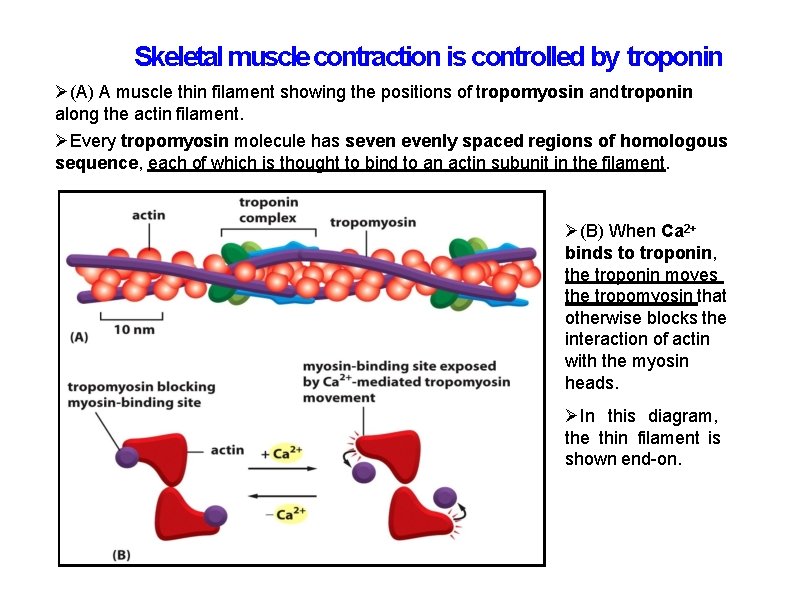
Skeletal muscle contraction is controlled by troponin (A) A muscle thin filament showing the positions of tropomyosin and troponin along the actin filament. Every tropomyosin molecule has sevenly spaced regions of homologous sequence, each of which is thought to bind to an actin subunit in the filament. (B) When Ca 2+ binds to troponin, the troponin moves the tropomyosin that otherwise blocks the interaction of actin with the myosin heads. In this diagram, the thin filament is shown end-on.
- Slides: 40