
Cell Biology and Physiology Stem Cells Cell Asymmetry
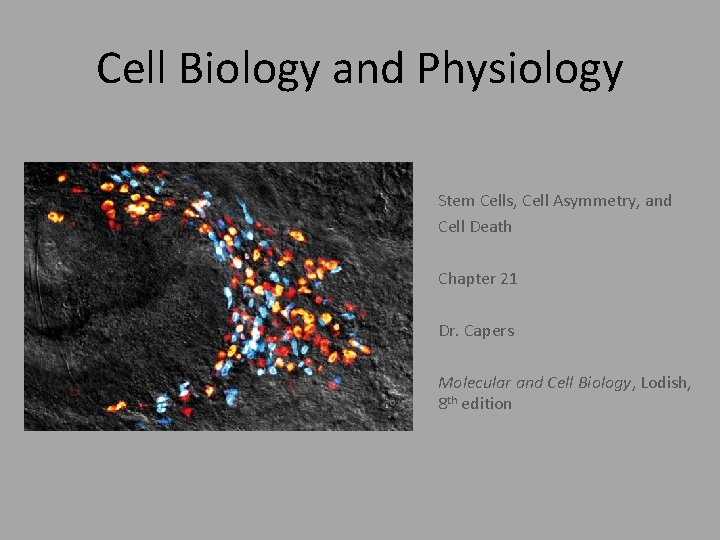
Cell Biology and Physiology Stem Cells, Cell Asymmetry, and Cell Death Chapter 21 Dr. Capers Molecular and Cell Biology, Lodish, 8 th edition
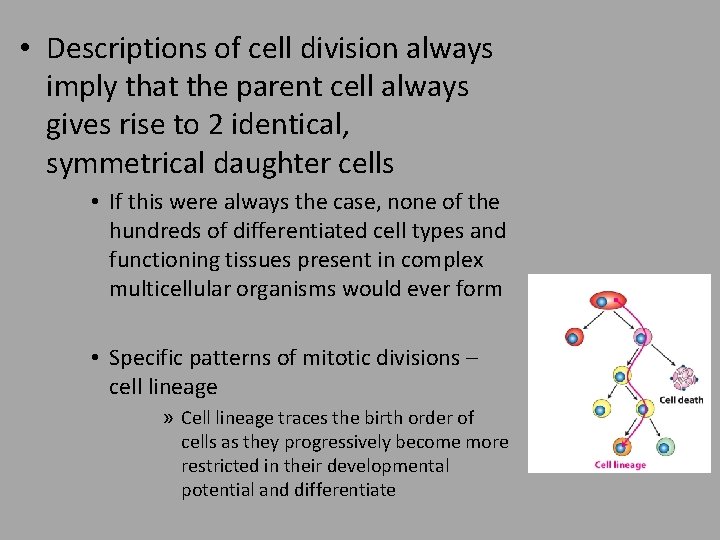
• Descriptions of cell division always imply that the parent cell always gives rise to 2 identical, symmetrical daughter cells • If this were always the case, none of the hundreds of differentiated cell types and functioning tissues present in complex multicellular organisms would ever form • Specific patterns of mitotic divisions – cell lineage » Cell lineage traces the birth order of cells as they progressively become more restricted in their developmental potential and differentiate
• Both mouse and human embryos pass through 8 -cell stage in which each cell can still form every tissue • All of these cells are totipotent • At the 16 -cell stage, this is no longer possible – Some cells will become embryo, some will become placental – Those that will become embryo are pluripotent
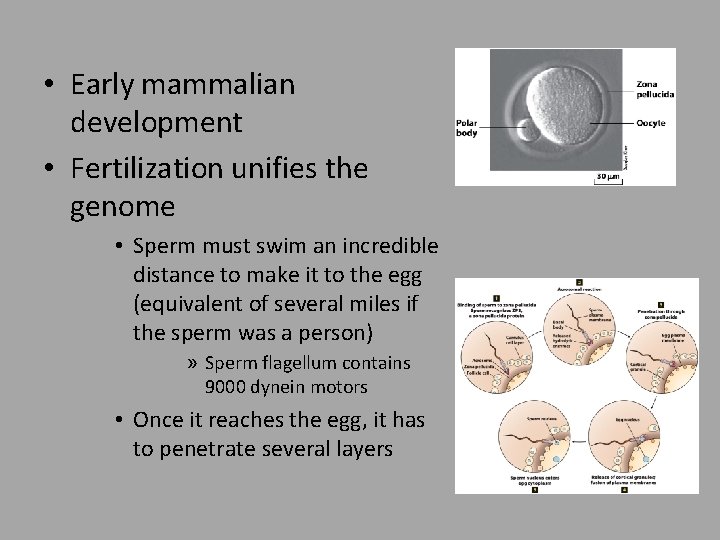
• Early mammalian development • Fertilization unifies the genome • Sperm must swim an incredible distance to make it to the egg (equivalent of several miles if the sperm was a person) » Sperm flagellum contains 9000 dynein motors • Once it reaches the egg, it has to penetrate several layers
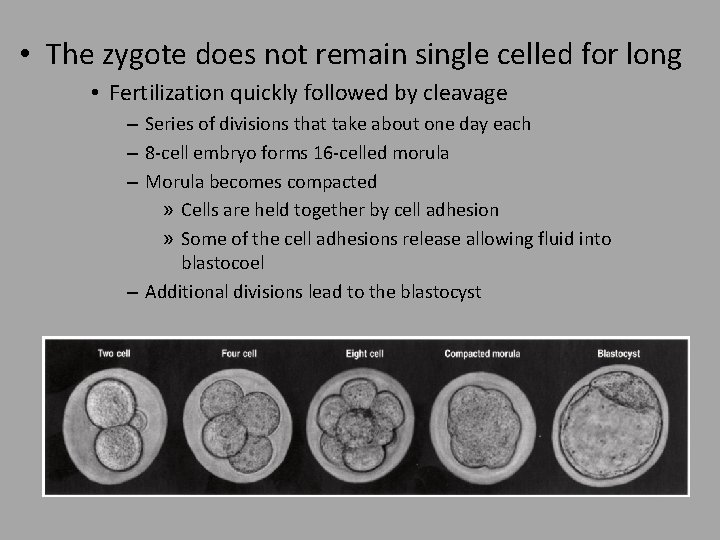
• The zygote does not remain single celled for long • Fertilization quickly followed by cleavage – Series of divisions that take about one day each – 8 -cell embryo forms 16 -celled morula – Morula becomes compacted » Cells are held together by cell adhesion » Some of the cell adhesions release allowing fluid into blastocoel – Additional divisions lead to the blastocyst
• Blastocyst • Composed of 64 cells • 2 cell types: » Trophectoderm – form the placenta » Inner cell mass (ICM) – forms embryo
• Embryonic Stem cells (ES cells) • Isolated from inner cell mass • Grown indefinitely in culture • Pluripotency of ES cells is controlled by multiple factors: » » State of DNA methylation Chromatin regulators Certain micro-RNAs Transcription factors: Oct 4, Sox 2, Nanog
• Animal cloning shows that differentiation can be reversed • For the most part, genome is the same in all types of cells in an organism » Exception would be T cells and B cells • In somatic-cell nuclear transfer, a nucleus of an adult somatic cell is introduced into an egg whose nucleus has been removed – Then implanted into a foster mother – Has been successful in developing into embryo and then growing animal • However, there are issues: low clone success, high obesity in cloned animals, etc • Induced Pluripotent Stem Cells (i. PS)
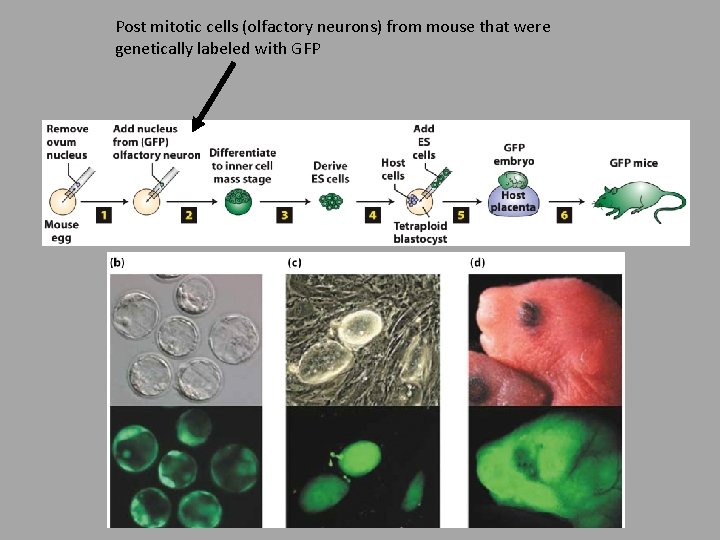
Post mitotic cells (olfactory neurons) from mouse that were genetically labeled with GFP
• Stem cells and niches in multicellular organisms • Cells in an animal can have a shorter lifespan the animal itself • Therefore, cells need to be replenished • There are populations of multipotent stem cells – In contrast to pluripotent ES cells, multipotent can give rise to some but not all cell types – Stem cell populations for many tissues: • Blood, intestine, skin, ovaries, testes, muscle, even some parts of the brain
• Multipotent somatic stem cells have 3 key properties: • Give rise to multiple types of differentiated cells. Stem cells have the ability for self renewal • Undifferentiated – they do not express proteins characteristic of the differentiated cell types formed by their descendants • The # of stem cells of a particular type generally increases during embryonic development and then remains constant over the individual’s lifetime. » These stem cell can be lost after chronic tissue injury, chemotherapy/radiation, etc.
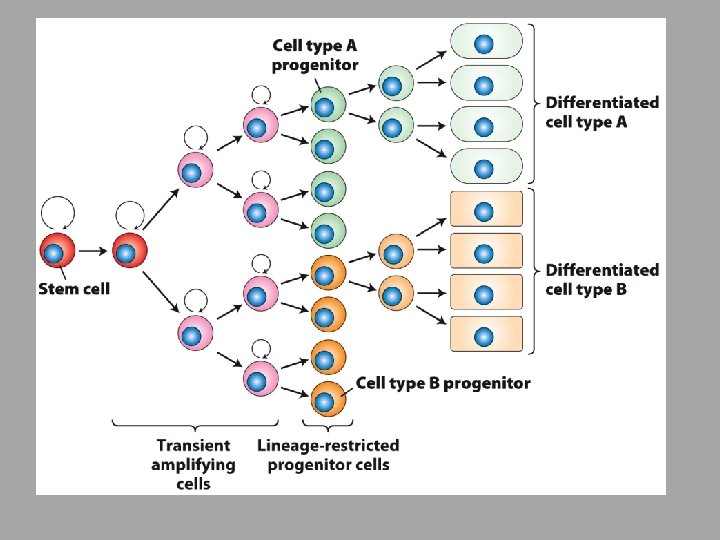
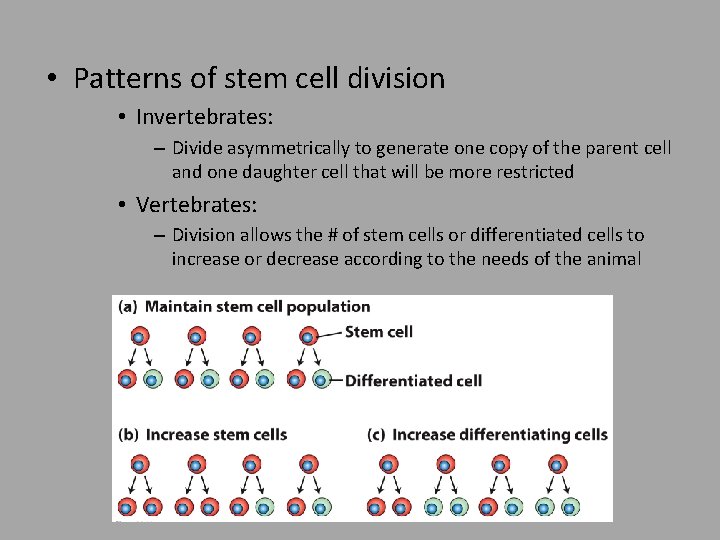
• Patterns of stem cell division • Invertebrates: – Divide asymmetrically to generate one copy of the parent cell and one daughter cell that will be more restricted • Vertebrates: – Division allows the # of stem cells or differentiated cells to increase or decrease according to the needs of the animal
• Stem cells need the right microenvironment to remain multipotent and regulate divisions • Need certain transcription factors to remain active inside them • Hormone signals • Location: stem-cell niche • In order to investigate or use stem cells, scientists must find them and isolate them
• Germ-line Stem Cells • Germ line is the cell lineage that gives rise to oocytes and sperm • Unipotent – only give rise to one type of cell • Will undergo meiosis
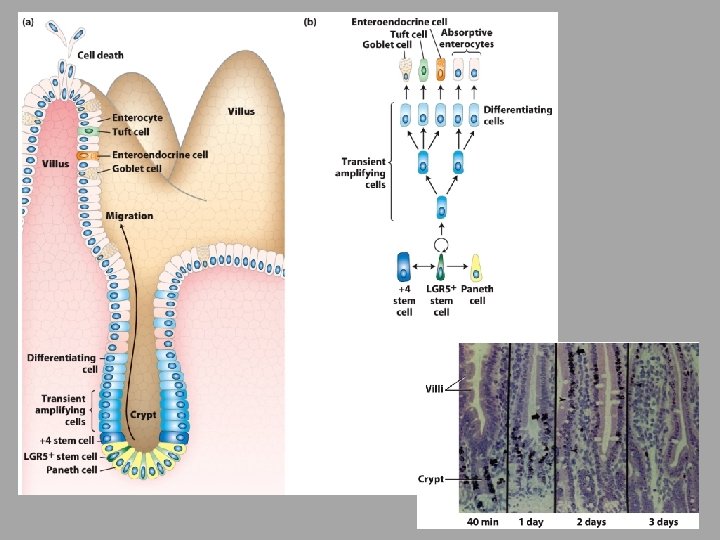
• Intestinal stem cells continuously generate all the cells of the intestinal epithelium • Enterocytes – transport nutrients from the lumen into the blood – Continuously self renewed – Stem cell population located in the crypts of the intestine • Include Paneth cells, these cells also have immune function (secrete antimicrobial proteins)
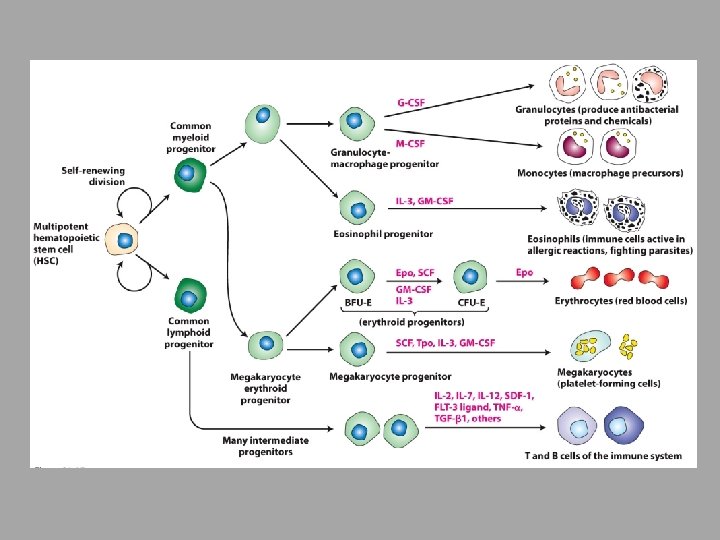
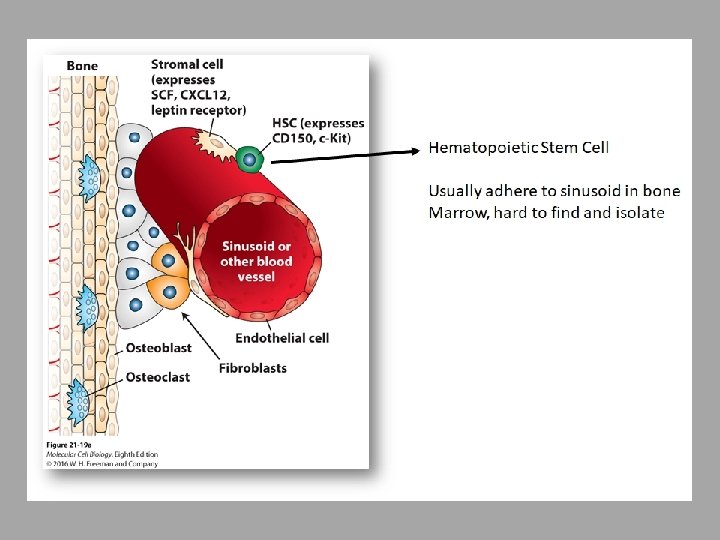
• Hematopoietic Stem Cells • Replenish all blood cells • Located in embryonic liver and then in adult bone marrow • Give rise to other multipotent cell types: » Myeloid » Lymphoid • Numerous cytokines involved
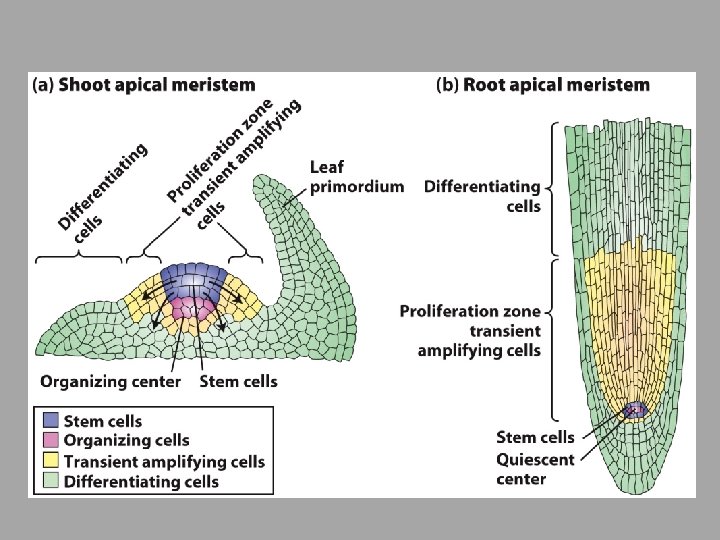
• Meristems are niches for stems cells in plants • Shoot apical meristems • Root apical meristems • Unlike somatic stem cells in animals, somatic stem cells in plants give rise to entire organs (not just tissues like in animals)
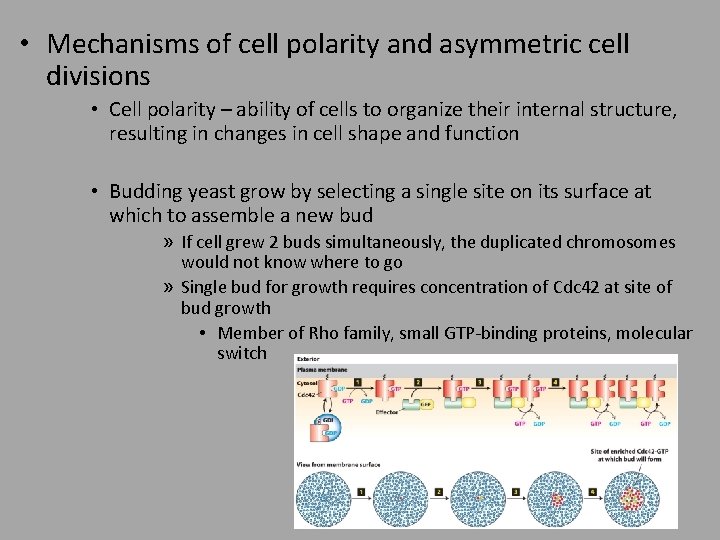
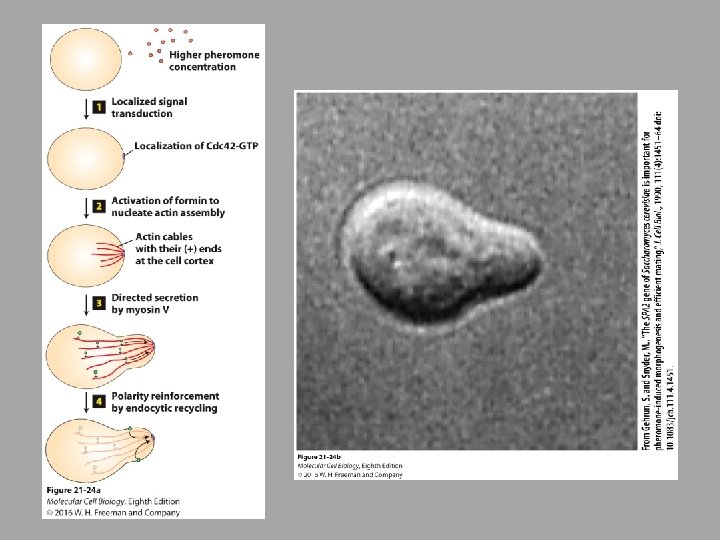
• Mechanisms of cell polarity and asymmetric cell divisions • Cell polarity – ability of cells to organize their internal structure, resulting in changes in cell shape and function • Budding yeast grow by selecting a single site on its surface at which to assemble a new bud » If cell grew 2 buds simultaneously, the duplicated chromosomes would not know where to go » Single bud for growth requires concentration of Cdc 42 at site of bud growth • Member of Rho family, small GTP-binding proteins, molecular switch
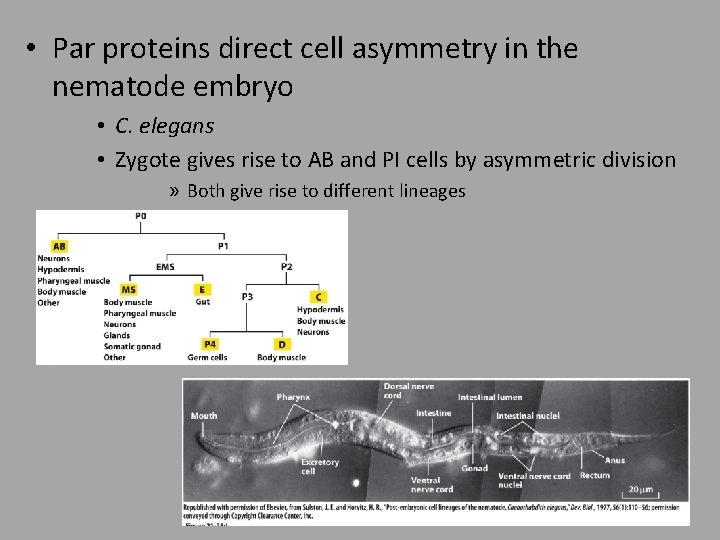
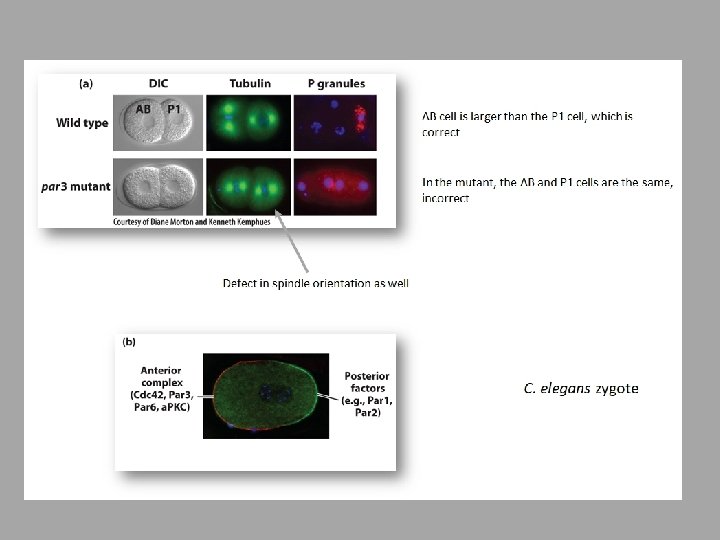
• Par proteins direct cell asymmetry in the nematode embryo • C. elegans • Zygote gives rise to AB and PI cells by asymmetric division » Both give rise to different lineages
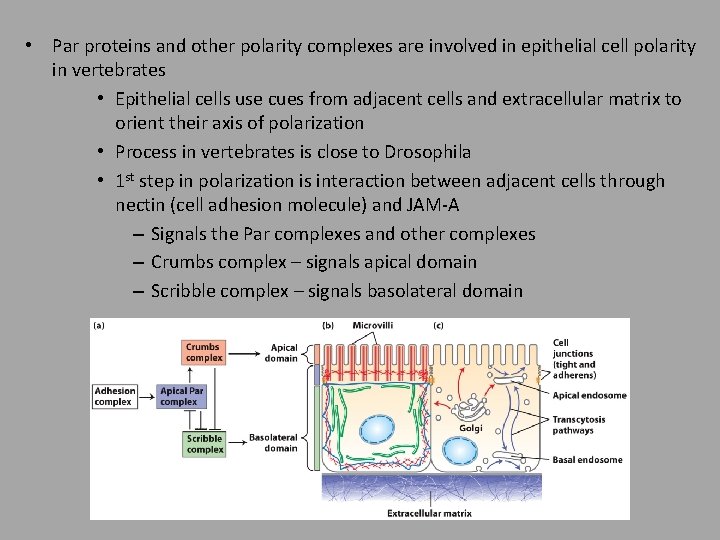
• Par proteins and other polarity complexes are involved in epithelial cell polarity in vertebrates • Epithelial cells use cues from adjacent cells and extracellular matrix to orient their axis of polarization • Process in vertebrates is close to Drosophila • 1 st step in polarization is interaction between adjacent cells through nectin (cell adhesion molecule) and JAM-A – Signals the Par complexes and other complexes – Crumbs complex – signals apical domain – Scribble complex – signals basolateral domain
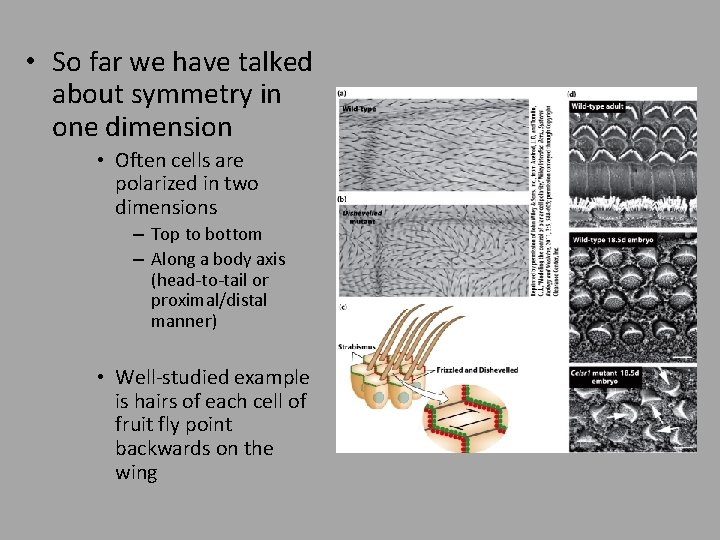
• So far we have talked about symmetry in one dimension • Often cells are polarized in two dimensions – Top to bottom – Along a body axis (head-to-tail or proximal/distal manner) • Well-studied example is hairs of each cell of fruit fly point backwards on the wing
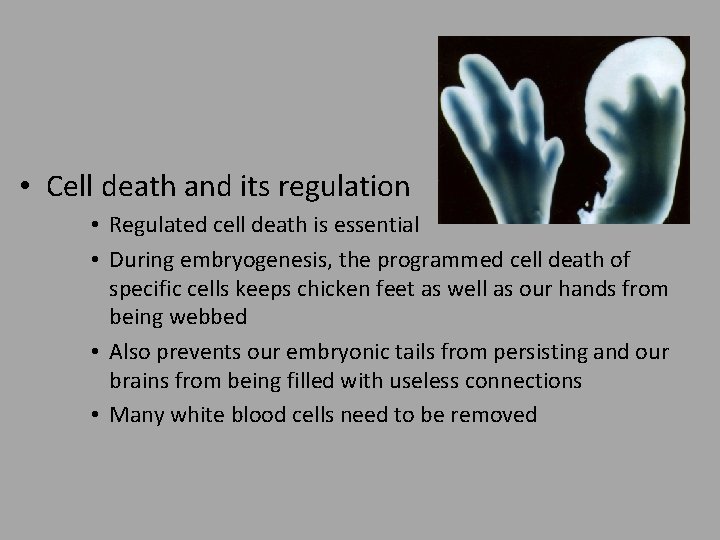
• Cell death and its regulation • Regulated cell death is essential • During embryogenesis, the programmed cell death of specific cells keeps chicken feet as well as our hands from being webbed • Also prevents our embryonic tails from persisting and our brains from being filled with useless connections • Many white blood cells need to be removed
• Cells need certain signals to survive • “trophic factors” • In the absence of these, cell will have suicide signal • In other instances, cells might receive a “murder” signal • Both will initiate apoptosis
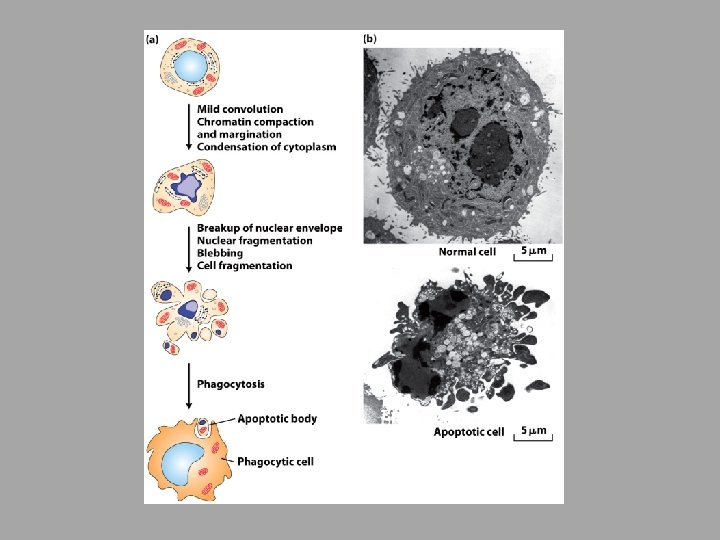
• Genes involved in controlling cell death encode proteins with 3 distinct functions: • “killer” proteins – required for a cell to begin the apoptosis process • “destruction” proteins – perform functions such as digesting proteins and DNA in a dying cell • “engulfment” proteins – required for phagocytosis of the dying cell by another cell • Evolutionarily conserved pathways
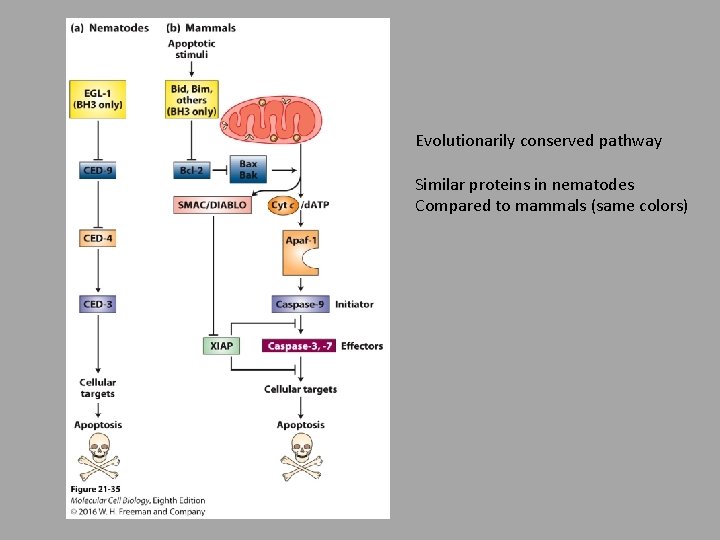
Evolutionarily conserved pathway Similar proteins in nematodes Compared to mammals (same colors)
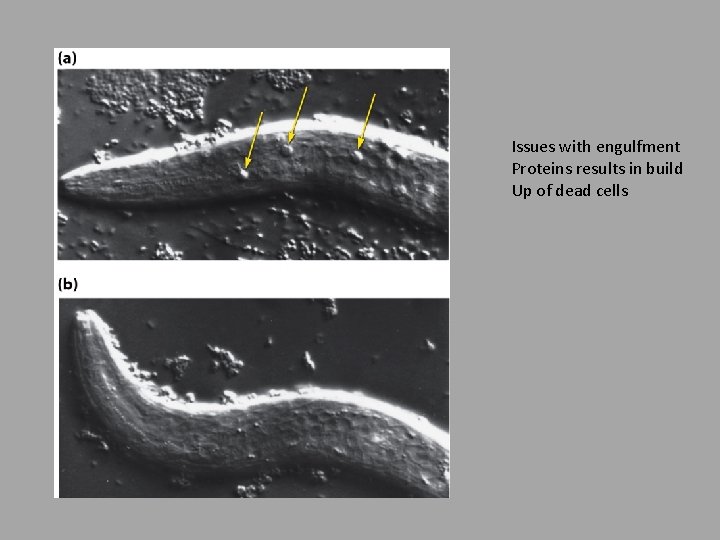
Issues with engulfment Proteins results in build Up of dead cells
• Caspases • Amplify the initial apoptotic signal and destroy key cellular proteins • Named caspases because they contain a key cysteine residue in the catalytic site and cleave proteins near asparatate residues
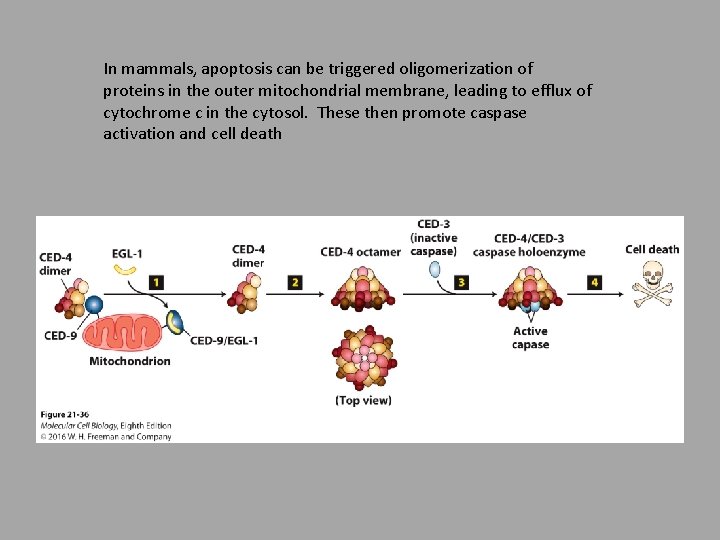
In mammals, apoptosis can be triggered oligomerization of proteins in the outer mitochondrial membrane, leading to efflux of cytochrome c in the cytosol. These then promote caspase activation and cell death
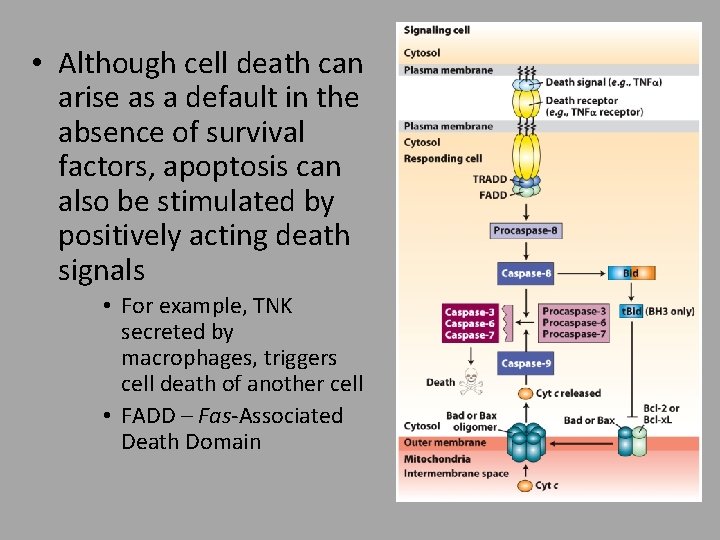
• Although cell death can arise as a default in the absence of survival factors, apoptosis can also be stimulated by positively acting death signals • For example, TNK secreted by macrophages, triggers cell death of another cell • FADD – Fas-Associated Death Domain
- Slides: 37