
CELL ADAPTATIONS Objectives What is cell adaptations Different
CELL ADAPTATIONS Objectives: • What is cell adaptations? • Different types of cell adaptations • Contractile vacuole • Cilia • Flagella • Pseudo pod • Eyespots
What is cell adaptation? �Changes made by a cell in response to adverse environmental changes. Types: �Contractile vacuole �Cilia �Flagella �Pseudo pod �Eyespots

Contractile Vacuole(osmo regulation) �A sub-cellular structure (organelle)involved in osmoregulation. �Vacuoles store materials such as water, salts, proteins, and carbohydrates. �Found in protists and unicellular algae �Paramecium contains contractile
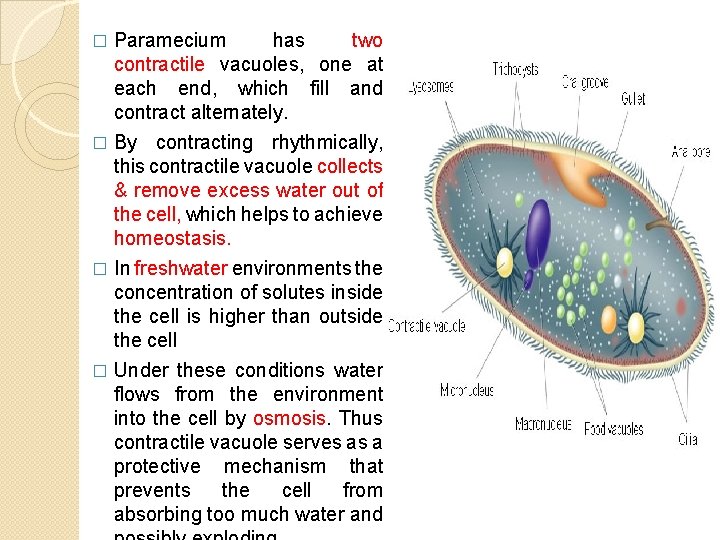
Paramecium has two contractile vacuoles, one at each end, which fill and contract alternately. � By contracting rhythmically, this contractile vacuole collects & remove excess water out of the cell, which helps to achieve homeostasis. � In freshwater environments the concentration of solutes inside the cell is higher than outside the cell � Under these conditions water flows from the environment into the cell by osmosis. Thus contractile vacuole serves as a protective mechanism that prevents the cell from absorbing too much water and �
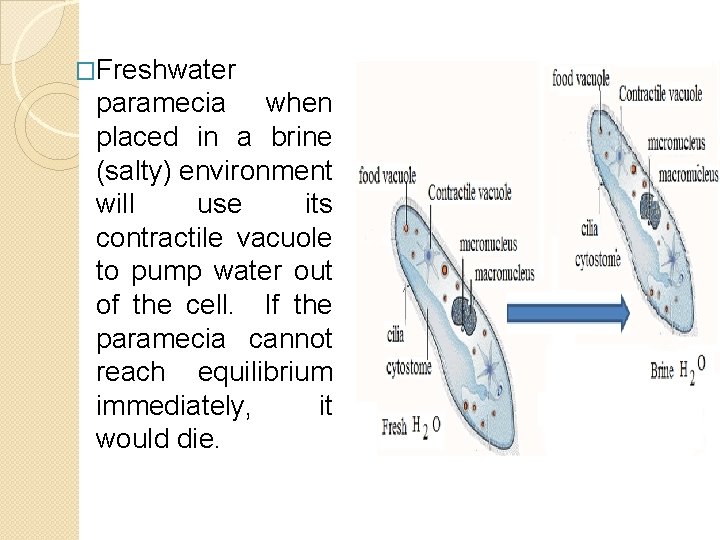
�Freshwater paramecia when placed in a brine (salty) environment will use its contractile vacuole to pump water out of the cell. If the paramecia cannot reach equilibrium immediately, it would die.
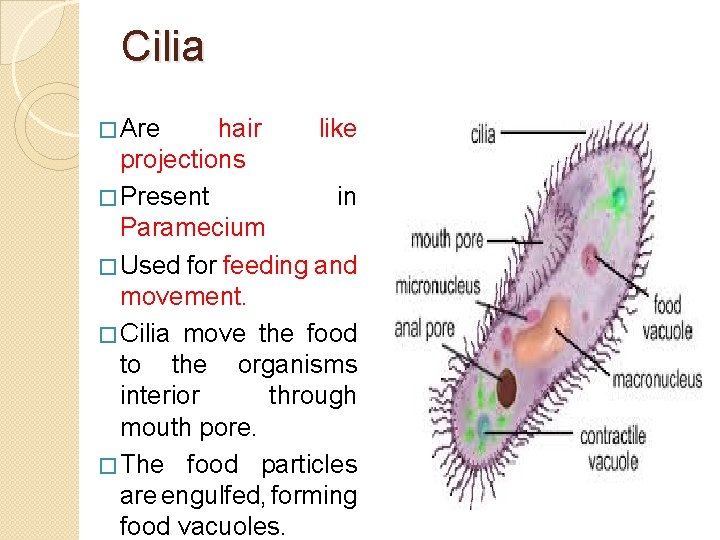
Cilia � Are hair like projections � Present in Paramecium � Used for feeding and movement. � Cilia move the food to the organisms interior through mouth pore. � The food particles are engulfed, forming food vacuoles.
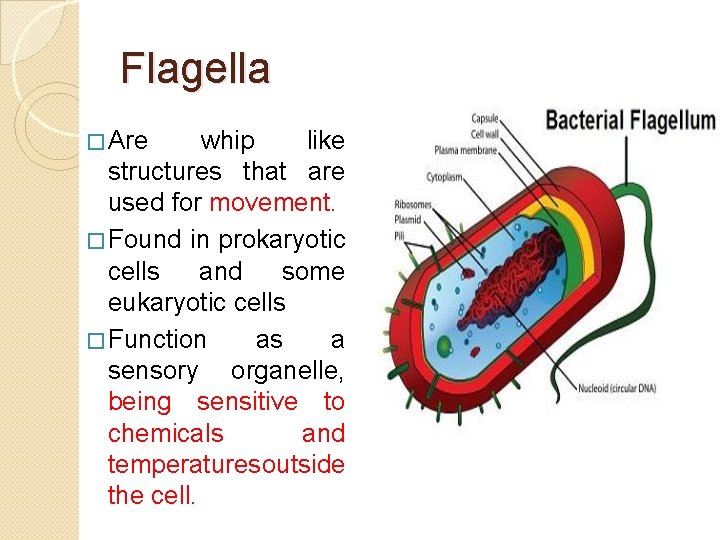
Flagella � Are whip like structures that are used for movement. � Found in prokaryotic cells and some eukaryotic cells � Function as a sensory organelle, being sensitive to chemicals and temperaturesoutside the cell.
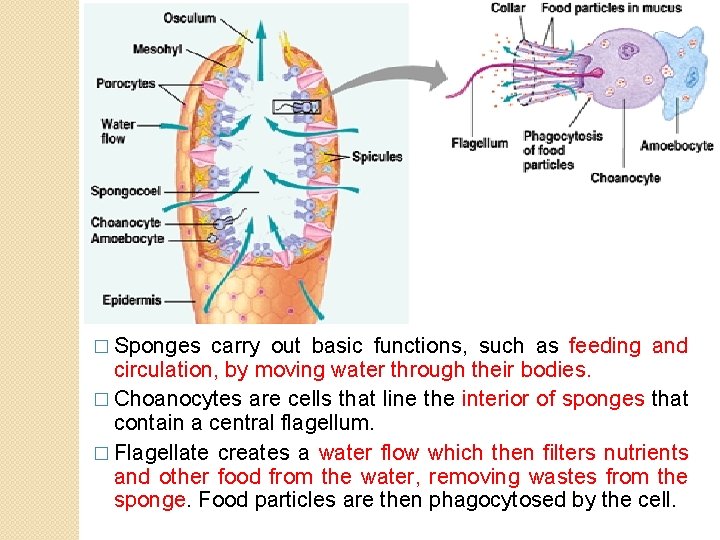
� Sponges carry out basic functions, such as feeding and circulation, by moving water through their bodies. � Choanocytes are cells that line the interior of sponges that contain a central flagellum. � Flagellate creates a water flow which then filters nutrients and other food from the water, removing wastes from the sponge. Food particles are then phagocytosed by the cell.
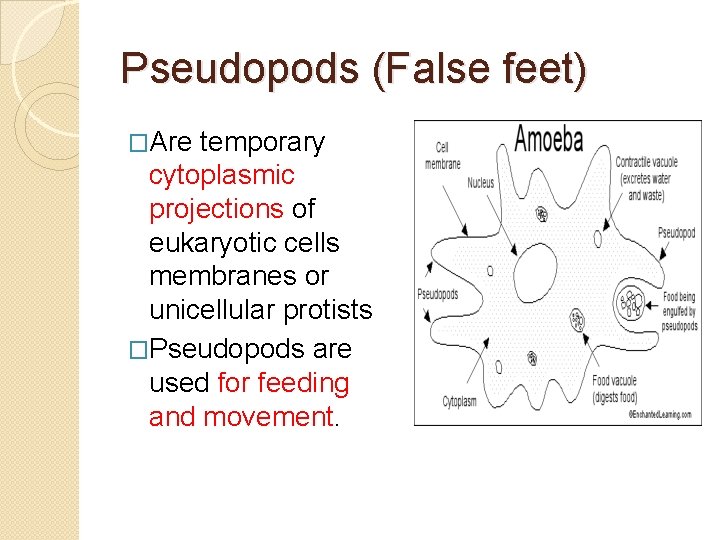
Pseudopods (False feet) �Are temporary cytoplasmic projections of eukaryotic cells membranes or unicellular protists �Pseudopods are used for feeding and movement.
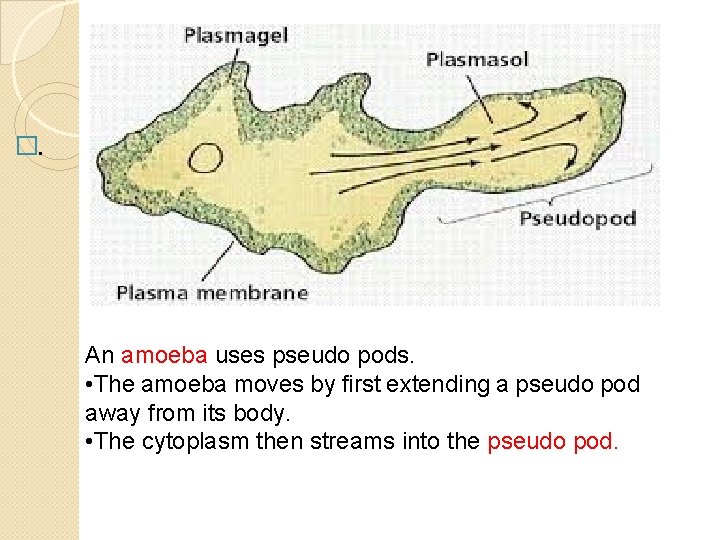
�. An amoeba uses pseudo pods. • The amoeba moves by first extending a pseudo pod away from its body. • The cytoplasm then streams into the pseudo pod.
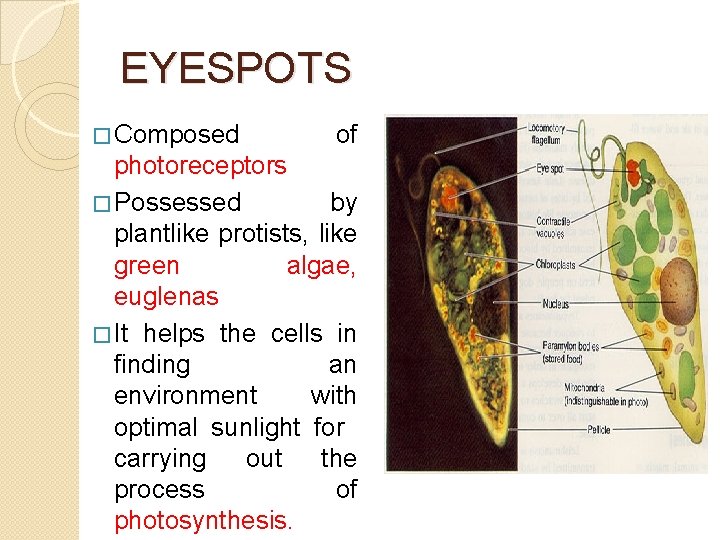
EYESPOTS � Composed of photoreceptors � Possessed by plantlike protists, like green algae, euglenas � It helps the cells in finding an environment with optimal sunlight for carrying out the process of photosynthesis.
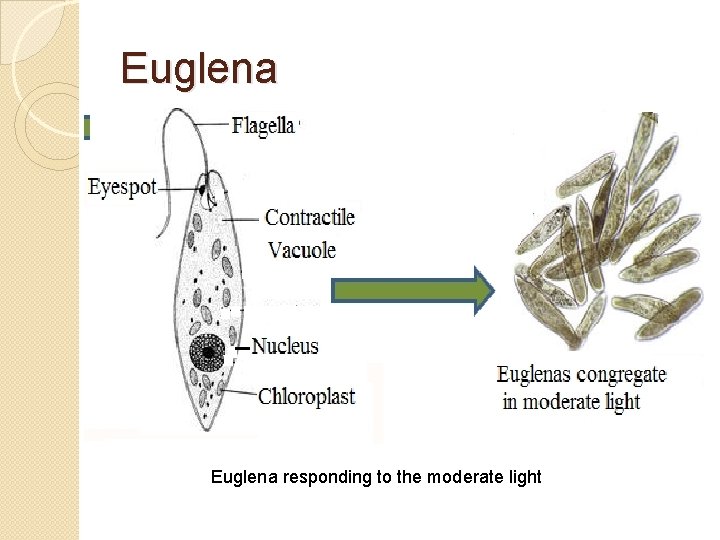
Euglena responding to the moderate light
- Slides: 12