
CE 3500 Transportation Engineering Shockwave basics February 11
CE 3500 Transportation Engineering Shockwave basics February 11, 2011

REVIEW
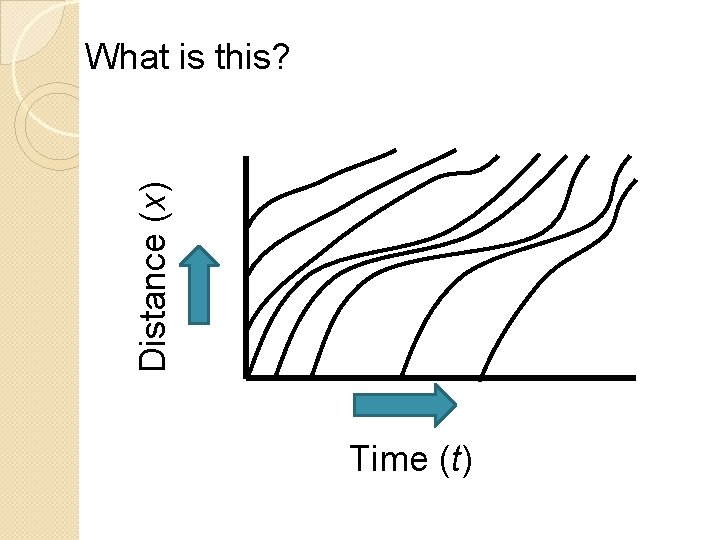
Distance (x) What is this? Time (t)
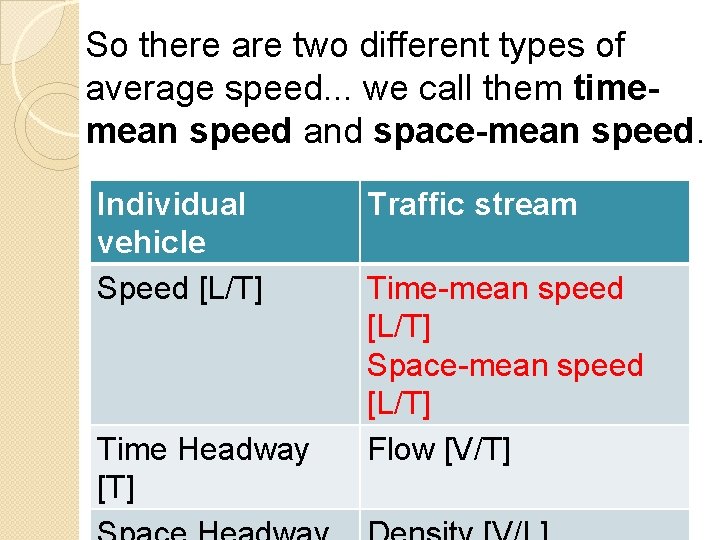
So there are two different types of average speed. . . we call them timemean speed and space-mean speed. Individual vehicle Speed [L/T] Time Headway [T] Traffic stream Time-mean speed [L/T] Space-mean speed [L/T] Flow [V/T]
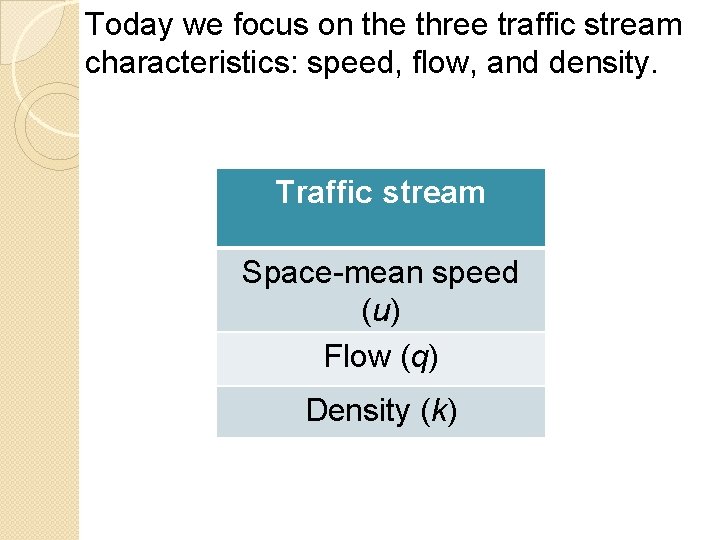
Today we focus on the three traffic stream characteristics: speed, flow, and density. Traffic stream Space-mean speed (u) Flow (q) Density (k)
![More generally, we always have: q = uk Think units: [veh/hr] = [mi/hr][veh/mi] This](http://slidetodoc.com/presentation_image_h2/0552538f7b47105872857fb8cbadf1a9/image-6.jpg "More generally, we always have: q = uk Think units: [veh/hr] = [mi/hr][veh/mi] This")
More generally, we always have: q = uk Think units: [veh/hr] = [mi/hr][veh/mi] This is the “fundamental relationship” between speed, flow, and density.
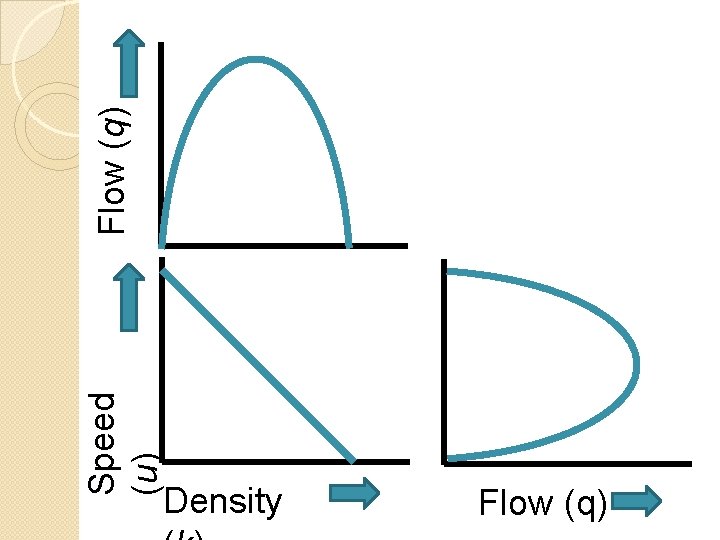
Speed (u) Density Flow (q)
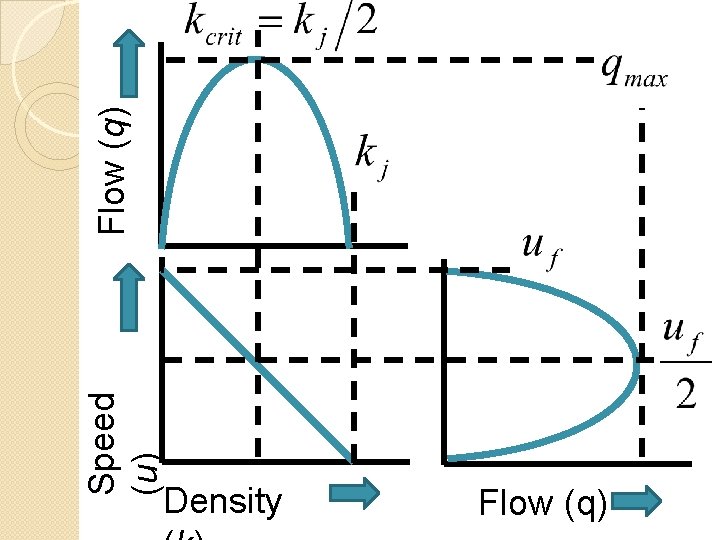
Speed (u) Density Flow (q)

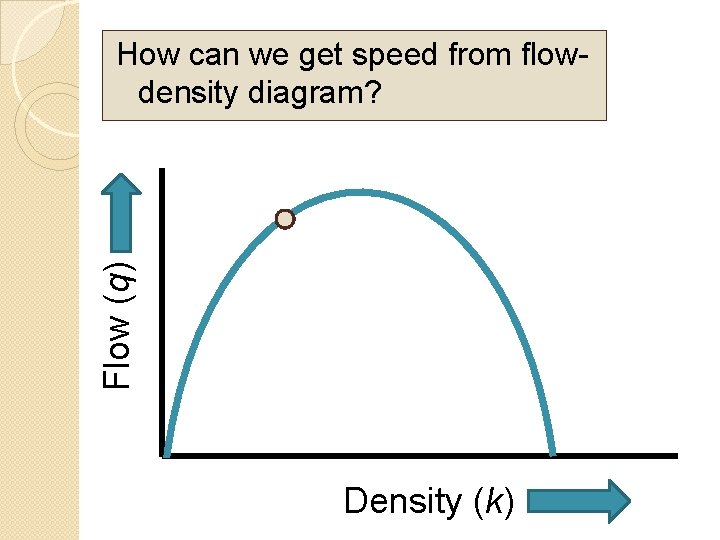
Flow (q) How can we get speed from flowdensity diagram? Density (k)
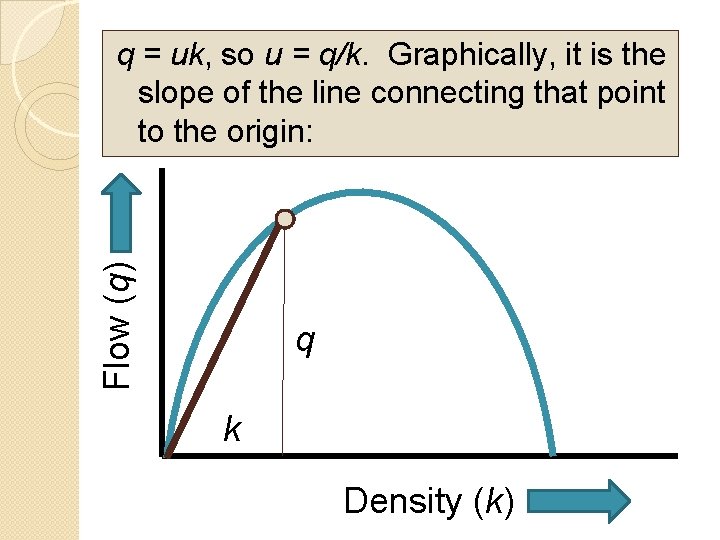
Flow (q) q = uk, so u = q/k. Graphically, it is the slope of the line connecting that point to the origin: q k Density (k)
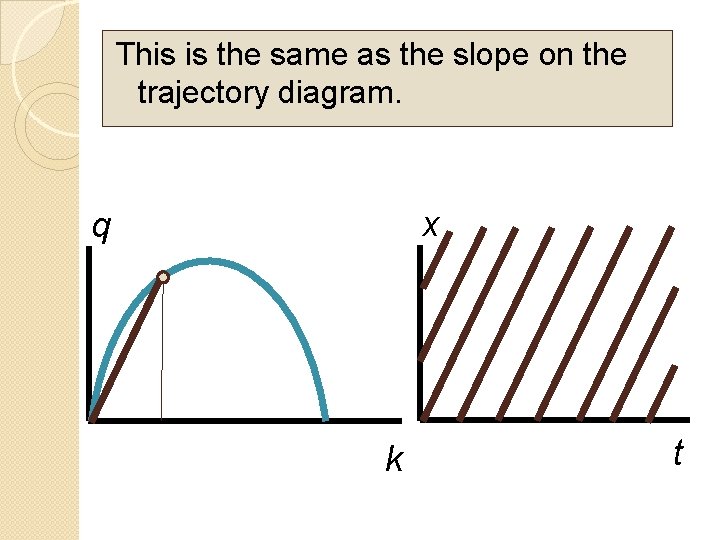
This is the same as the slope on the trajectory diagram. x q k t
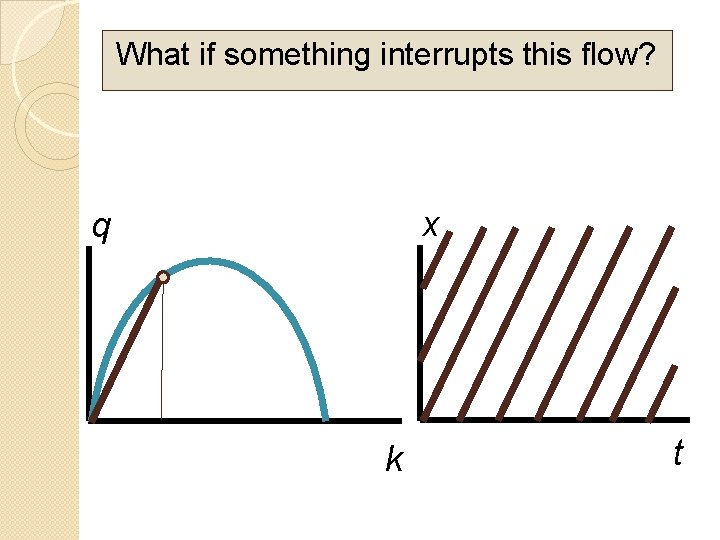
What if something interrupts this flow? x q k t

SHOCKWAVES
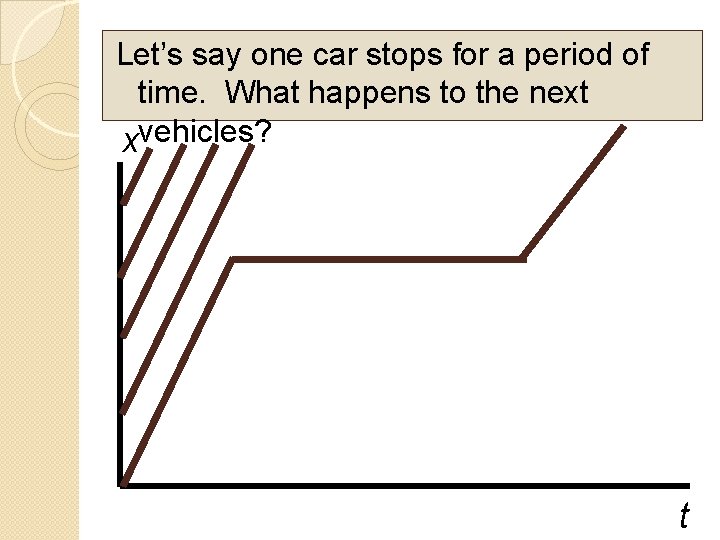
Let’s say one car stops for a period of time. What happens to the next xvehicles? t
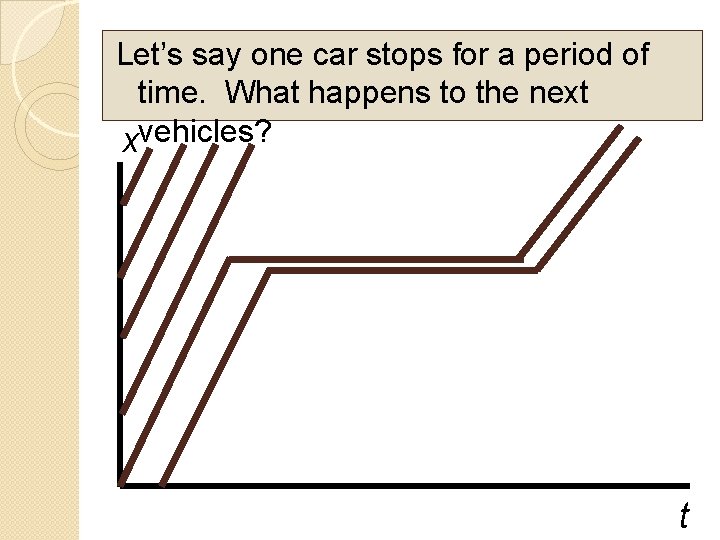
Let’s say one car stops for a period of time. What happens to the next xvehicles? t
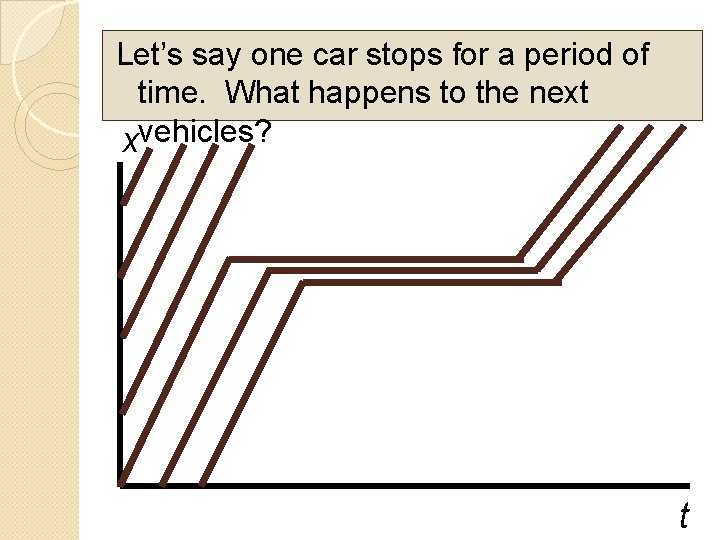
Let’s say one car stops for a period of time. What happens to the next xvehicles? t
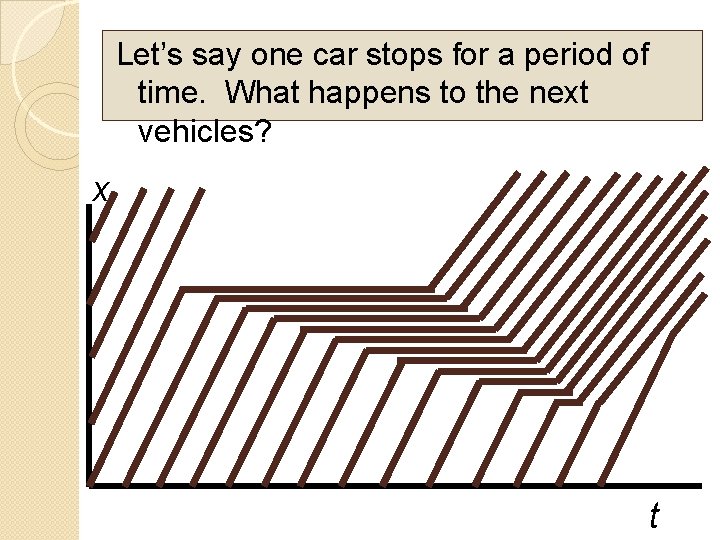
Let’s say one car stops for a period of time. What happens to the next vehicles? x t
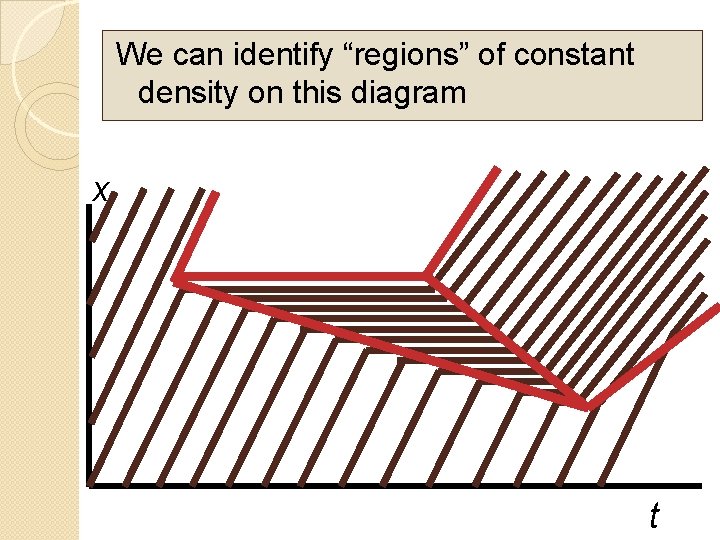
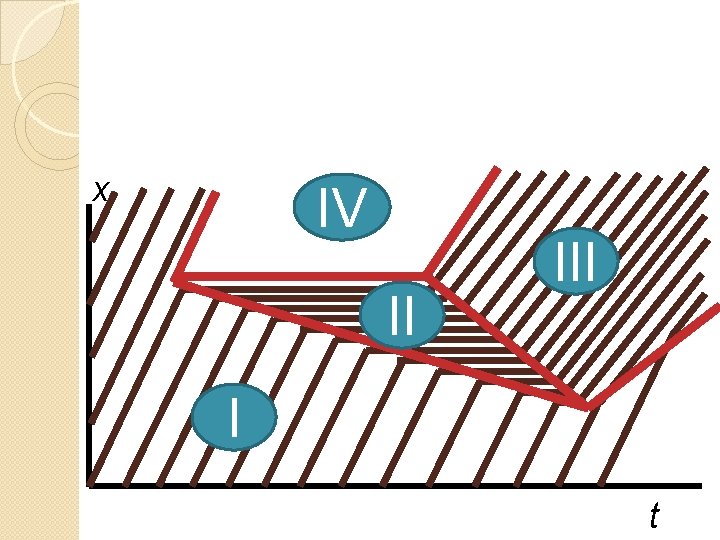
We can identify “regions” of constant density on this diagram x t
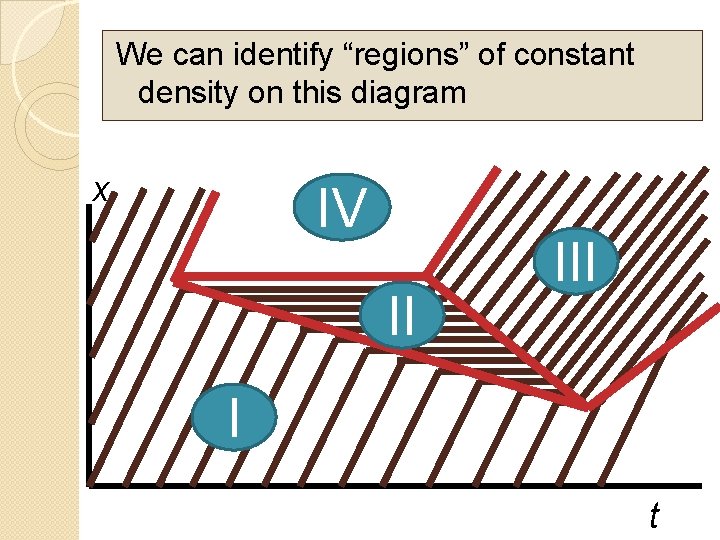
We can identify “regions” of constant density on this diagram x IV II I t
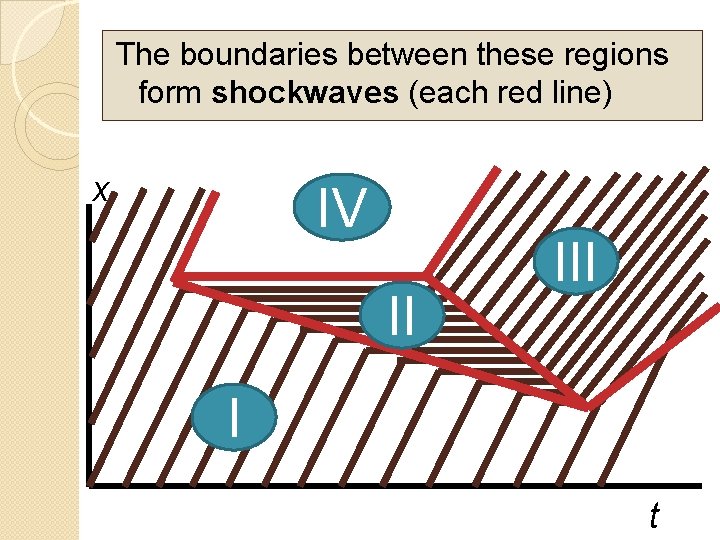
The boundaries between these regions form shockwaves (each red line) x IV II I t
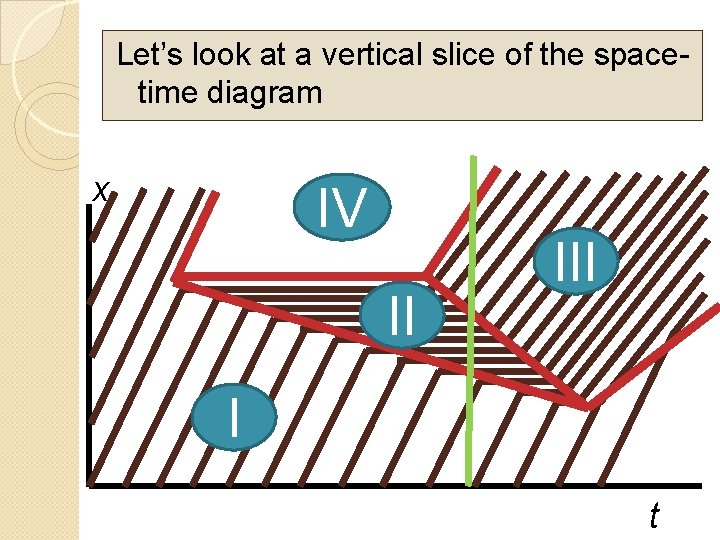
Let’s look at a vertical slice of the spacetime diagram x IV II I t
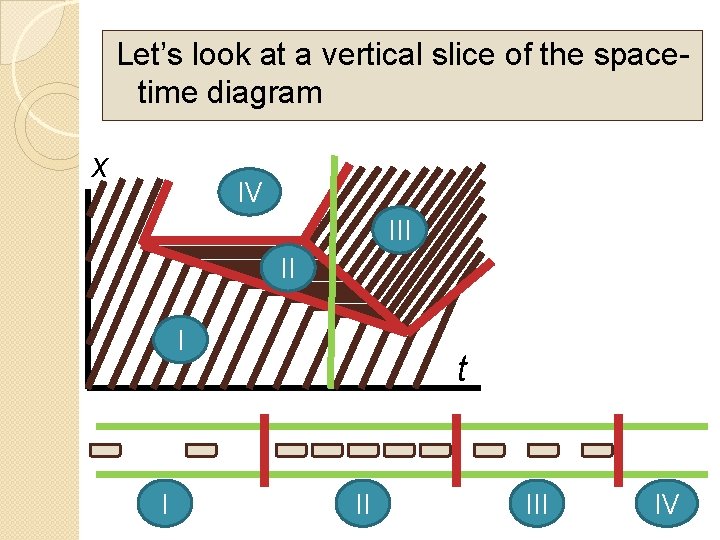
Let’s look at a vertical slice of the spacetime diagram x IV III II I I t II IV
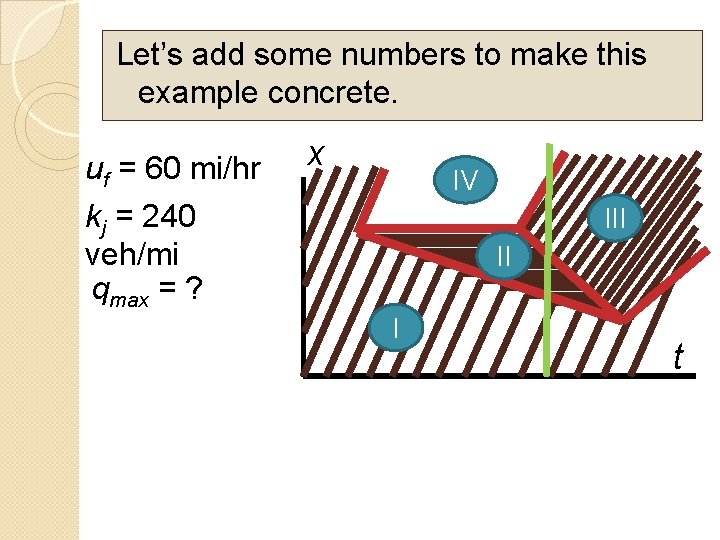
Let’s add some numbers to make this example concrete. uf = 60 mi/hr kj = 240 veh/mi qmax = ? x IV III II I t
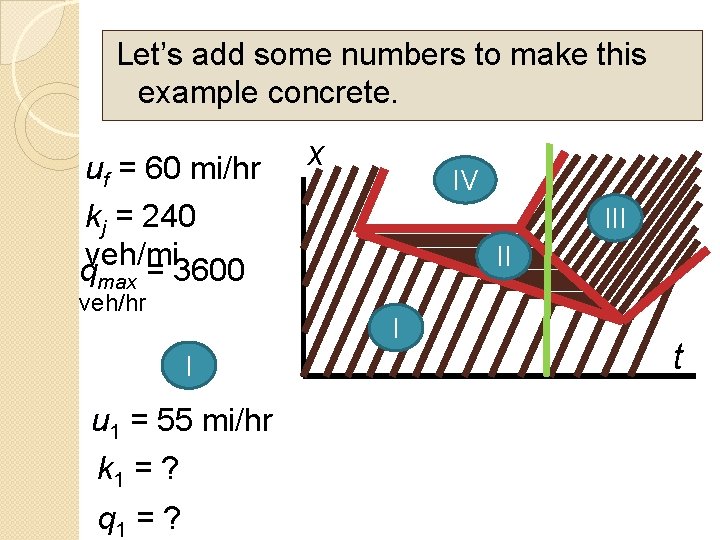
Let’s add some numbers to make this example concrete. uf = 60 mi/hr kj = 240 veh/mi q = 3600 x IV III II max veh/hr I I u 1 = 55 mi/hr k 1 = ? q 1 = ? t
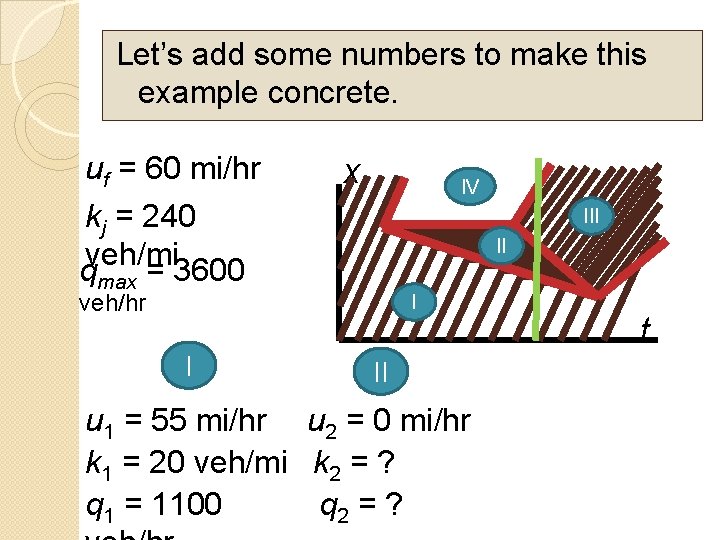
Let’s add some numbers to make this example concrete. uf = 60 mi/hr kj = 240 veh/mi q = 3600 x IV III II max veh/hr I I II u 1 = 55 mi/hr u 2 = 0 mi/hr k 1 = 20 veh/mi k 2 = ? q 1 = 1100 q 2 = ? t
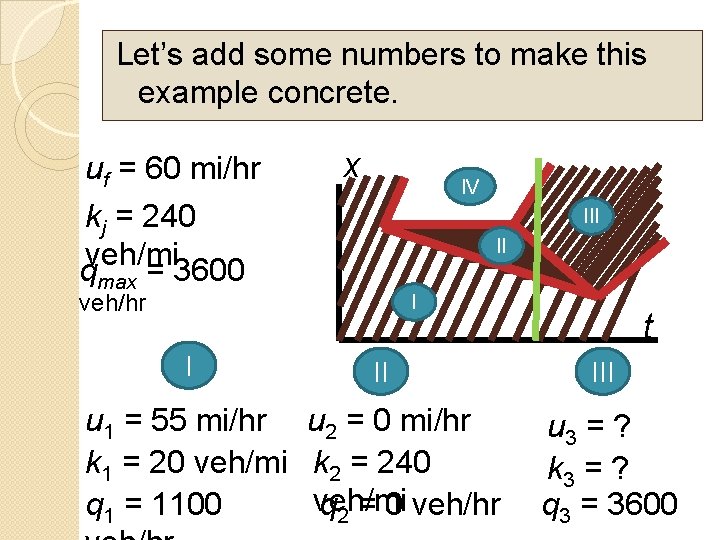
Let’s add some numbers to make this example concrete. uf = 60 mi/hr kj = 240 veh/mi q = 3600 x IV III II max veh/hr I I u 1 = 55 mi/hr k 1 = 20 veh/mi q 1 = 1100 II u 2 = 0 mi/hr k 2 = 240 veh/mi q 2 = 0 veh/hr t III u 3 = ? k 3 = ? q 3 = 3600
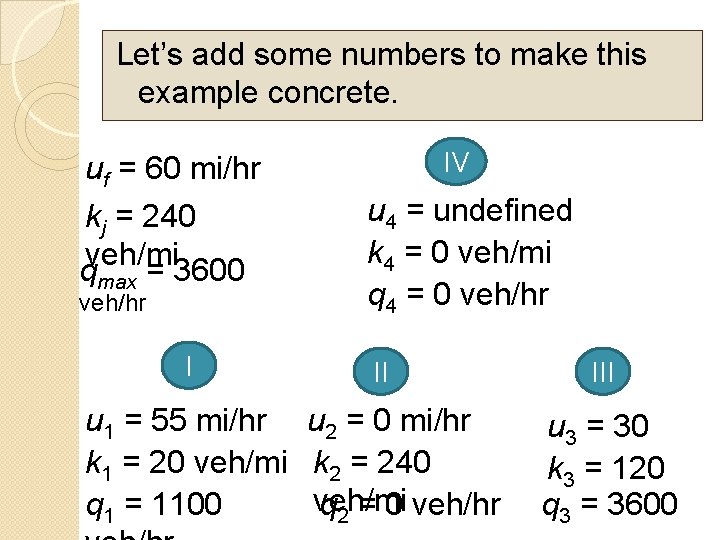
Let’s add some numbers to make this example concrete. uf = 60 mi/hr kj = 240 veh/mi q = 3600 max veh/hr I u 1 = 55 mi/hr k 1 = 20 veh/mi q 1 = 1100 IV u 4 = undefined k 4 = 0 veh/mi q 4 = 0 veh/hr II u 2 = 0 mi/hr k 2 = 240 veh/mi q 2 = 0 veh/hr III u 3 = 30 k 3 = 120 q 3 = 3600
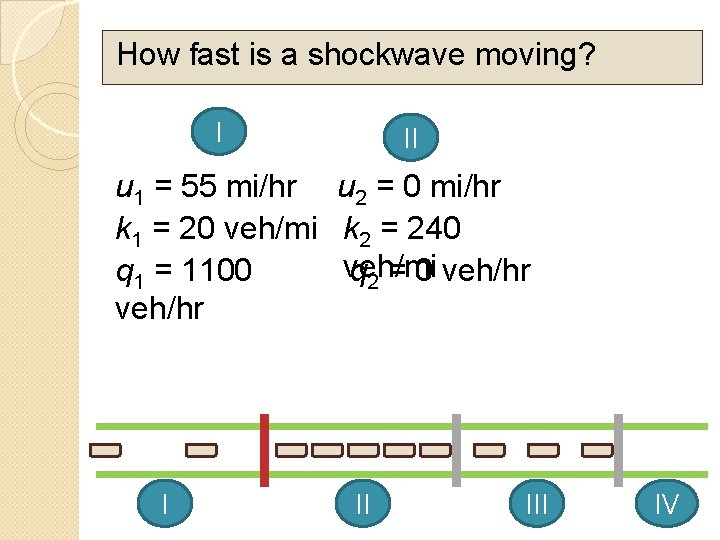
How fast is a shockwave moving? I u 1 = 55 mi/hr k 1 = 20 veh/mi q 1 = 1100 veh/hr I II u 2 = 0 mi/hr k 2 = 240 veh/mi q 2 = 0 veh/hr II IV
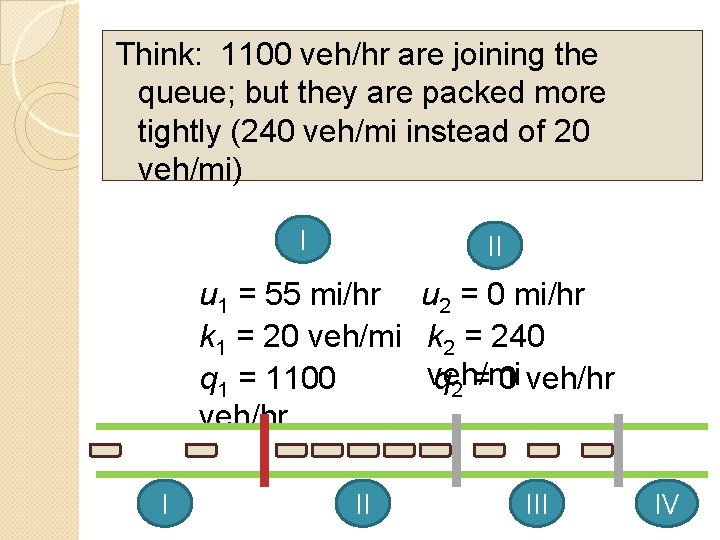
Think: 1100 veh/hr are joining the queue; but they are packed more tightly (240 veh/mi instead of 20 veh/mi) I II u 1 = 55 mi/hr k 1 = 20 veh/mi q 1 = 1100 veh/hr I II u 2 = 0 mi/hr k 2 = 240 veh/mi q 2 = 0 veh/hr III IV
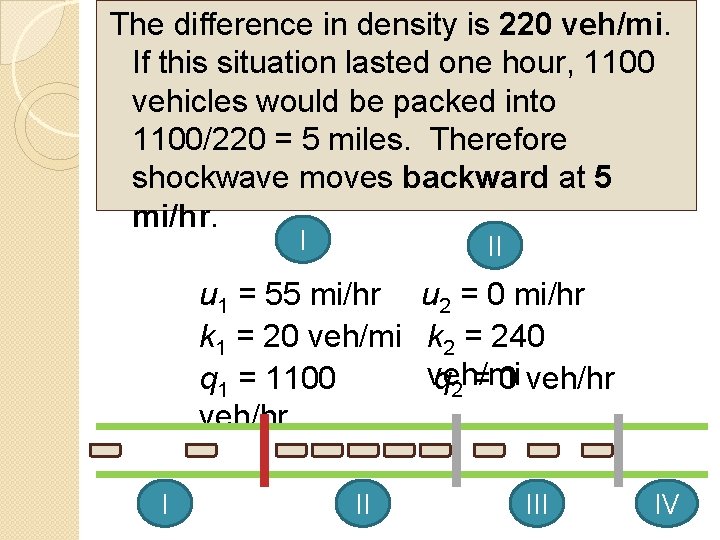
The difference in density is 220 veh/mi. If this situation lasted one hour, 1100 vehicles would be packed into 1100/220 = 5 miles. Therefore shockwave moves backward at 5 mi/hr. I II u 1 = 55 mi/hr k 1 = 20 veh/mi q 1 = 1100 veh/hr I II u 2 = 0 mi/hr k 2 = 240 veh/mi q 2 = 0 veh/hr III IV
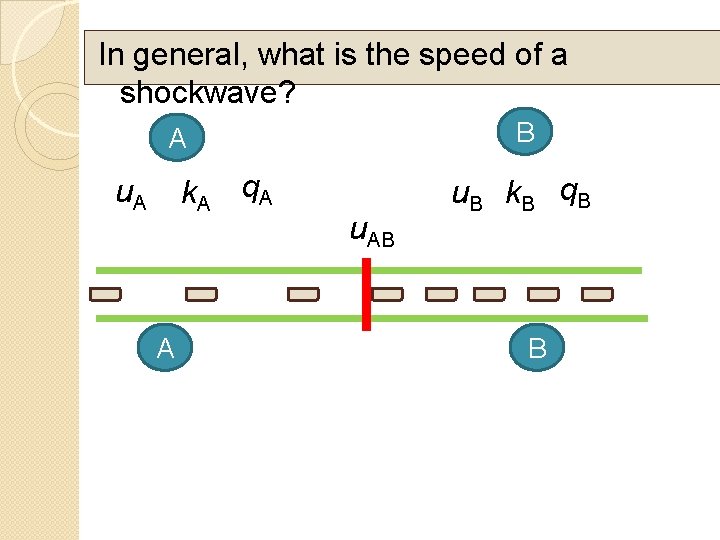
In general, what is the speed of a shockwave? B A k. A q. A u. AB u. B k. B q. B B
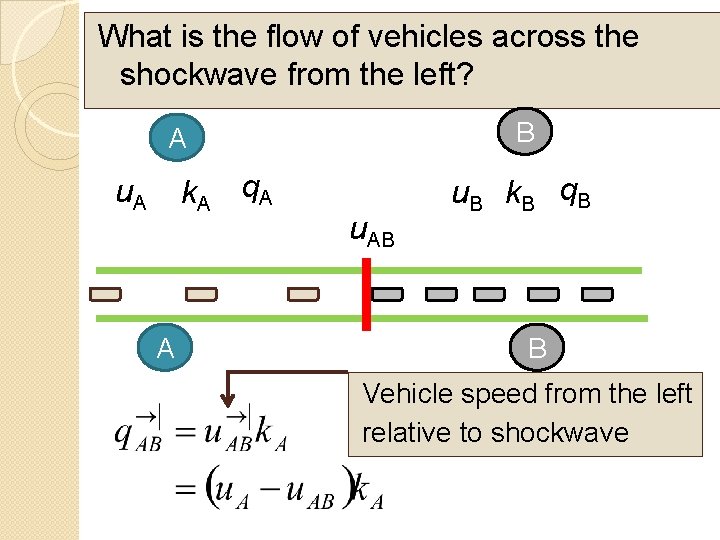
What is the flow of vehicles across the shockwave from the left? B A k. A q. A u. AB u. B k. B q. B B Vehicle speed from the left relative to shockwave
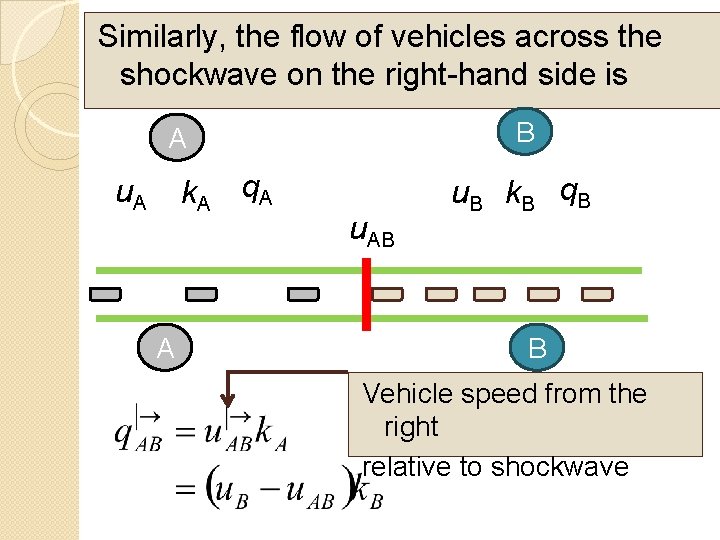
Similarly, the flow of vehicles across the shockwave on the right-hand side is B A k. A q. A u. AB u. B k. B q. B B Vehicle speed from the right relative to shockwave
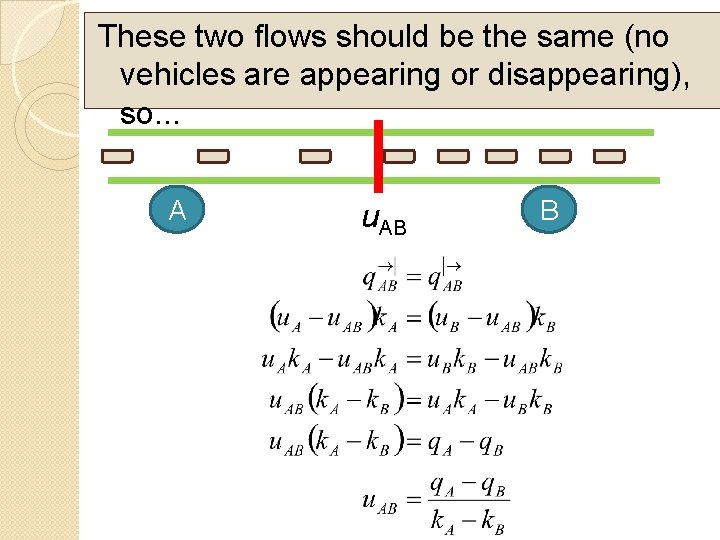
These two flows should be the same (no vehicles are appearing or disappearing), so. . . A u. AB B
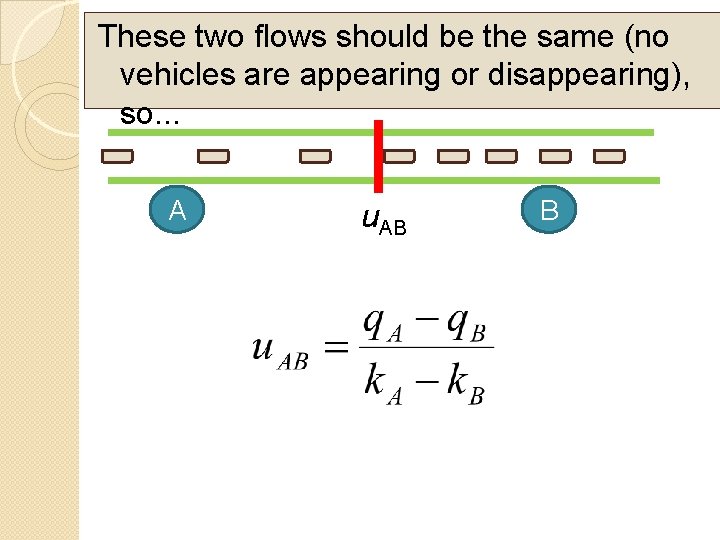
These two flows should be the same (no vehicles are appearing or disappearing), so. . . A u. AB B
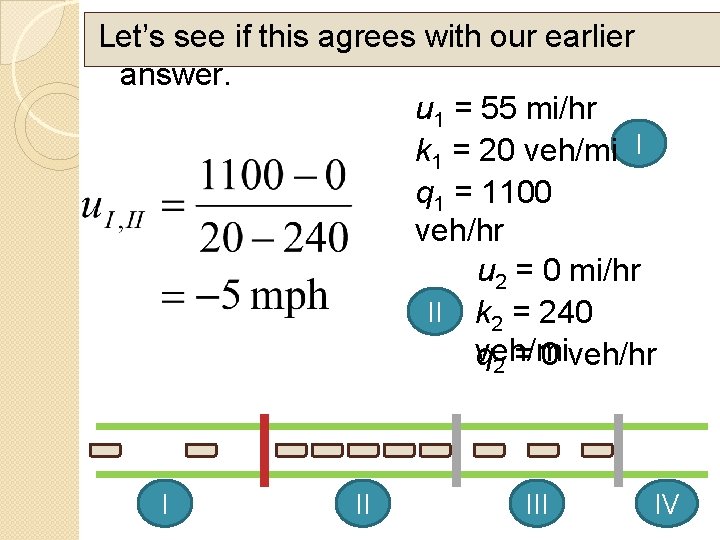
Let’s see if this agrees with our earlier answer. u 1 = 55 mi/hr k 1 = 20 veh/mi I q 1 = 1100 veh/hr u 2 = 0 mi/hr II k 2 = 240 veh/mi q 2 = 0 veh/hr I II IV
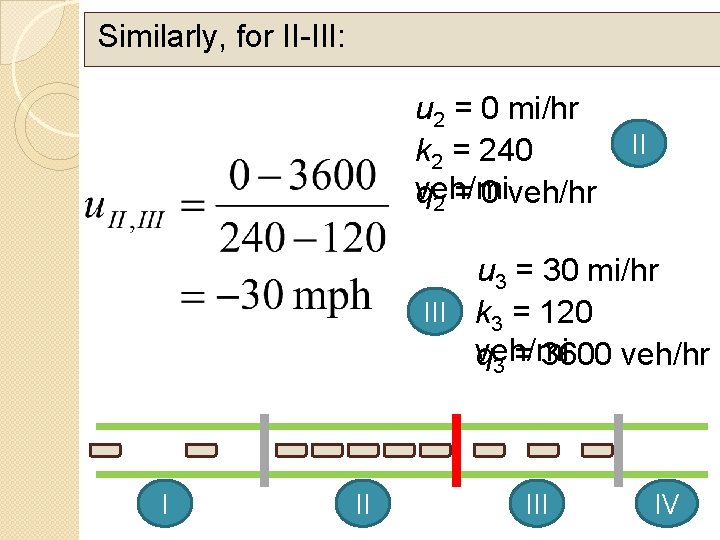
Similarly, for II-III: u 2 = 0 mi/hr k 2 = 240 veh/mi q 2 = 0 veh/hr II u 3 = 30 mi/hr III k 3 = 120 veh/mi q 3 = 3600 veh/hr I II IV
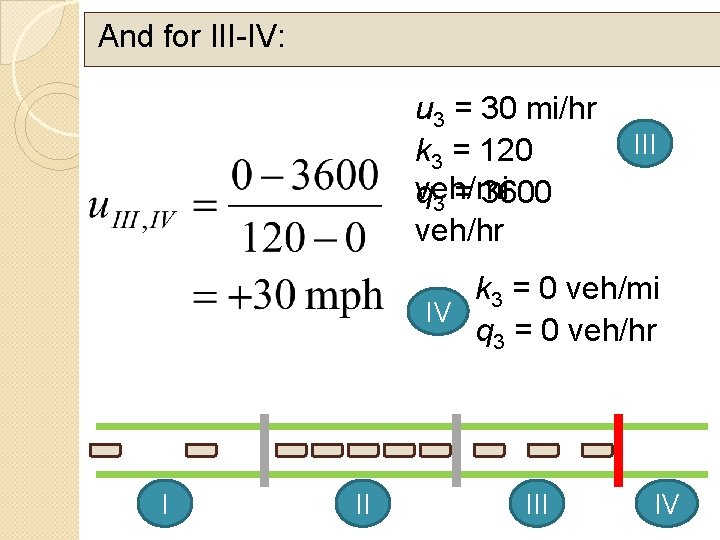
And for III-IV: u 3 = 30 mi/hr k 3 = 120 veh/mi q 3 = 3600 veh/hr III k 3 = 0 veh/mi IV q 3 = 0 veh/hr I II IV
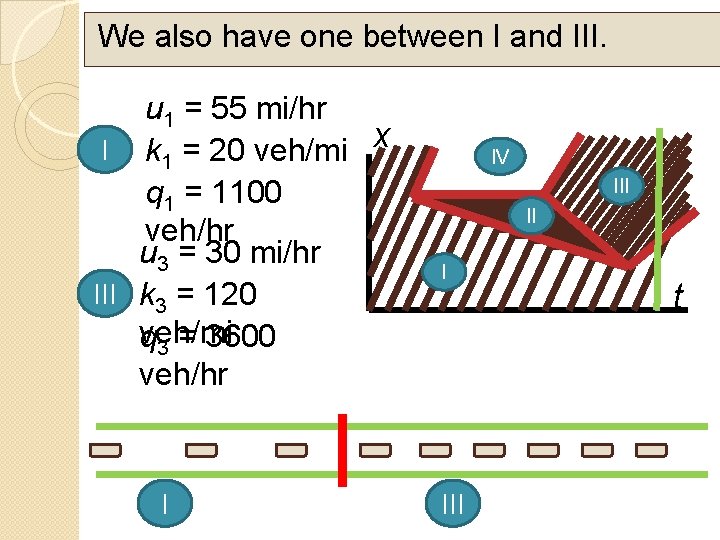
We also have one between I and III. u 1 = 55 mi/hr I k 1 = 20 veh/mi x q 1 = 1100 veh/hr u 3 = 30 mi/hr III k 3 = 120 veh/mi q 3 = 3600 veh/hr I IV III III t
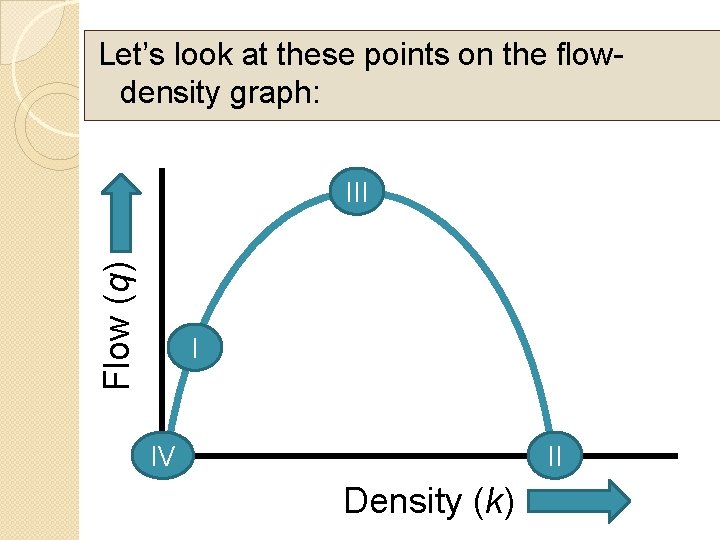
Let’s look at these points on the flowdensity graph: Flow (q) III I IV II Density (k)
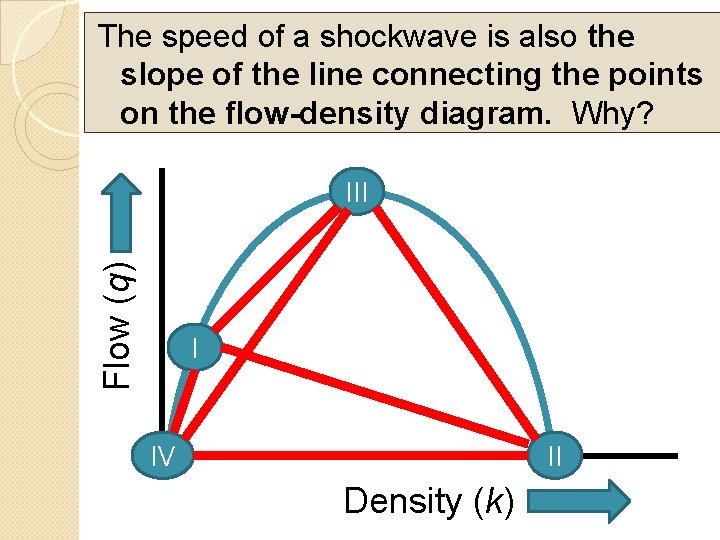
The speed of a shockwave is also the slope of the line connecting the points on the flow-density diagram. Why? Flow (q) III I IV II Density (k)
x IV II I t

IN-CLASS EVALUATION

1. Pace: Fast, slow, or OK? 2. What is the most unclear topic so far? 3. What is helping you the most in this class? 4. What can I be doing better? 5. Any other comments.
- Slides: 45