
CE 34500 Transportation Engineering Chapter 15 Geometric Design


- Slides: 21
CE 34500 – Transportation Engineering Chapter 15: Geometric Design of Highway Facilities 1
Geometric Design consists of four major components: § Roadway Cross Section § Vertical Alignment § Horizontal Alignment § Roadside Area
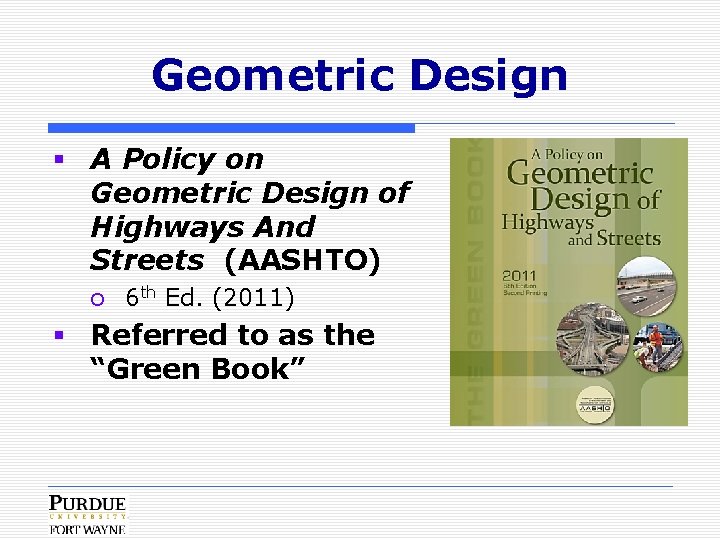
Geometric Design § A Policy on Geometric Design of Highways And Streets (AASHTO) o 6 th Ed. (2011) § Referred to as the “Green Book”
Highway Design § Factors Influencing Design o o o o o Functional classification Expected traffic volume and vehicle mix Design speed Design vehicle Topography of the area in which highway will be located Vehicles on steep grades Level of service to be provided Available funds Safety Social and environmental factors
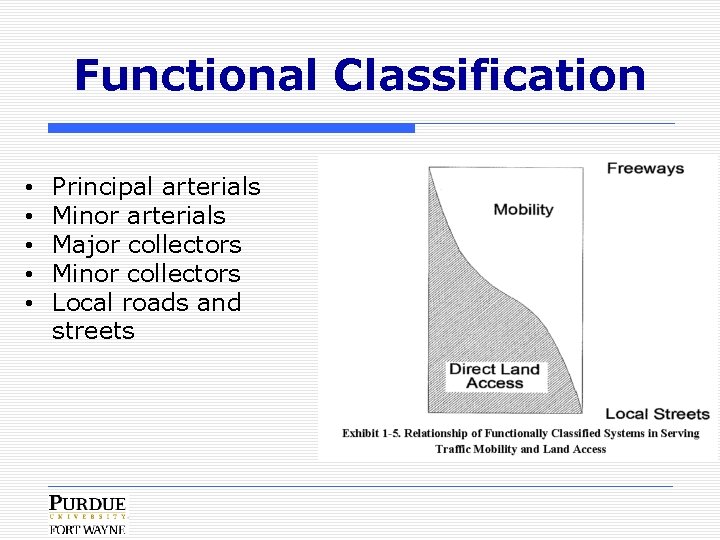
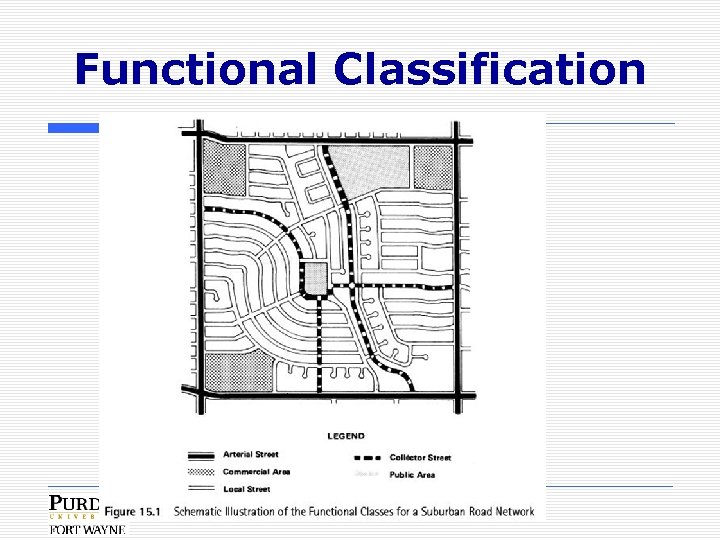
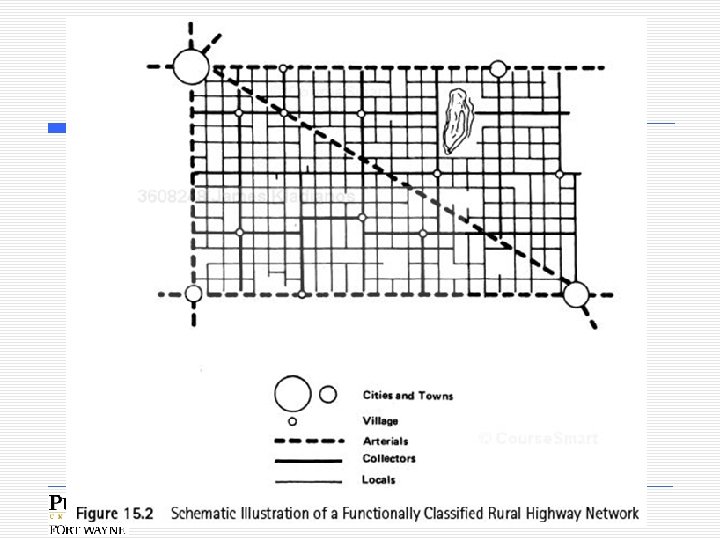
Functional Classification • • • Principal arterials Minor arterials Major collectors Minor collectors Local roads and streets
Functional Classification
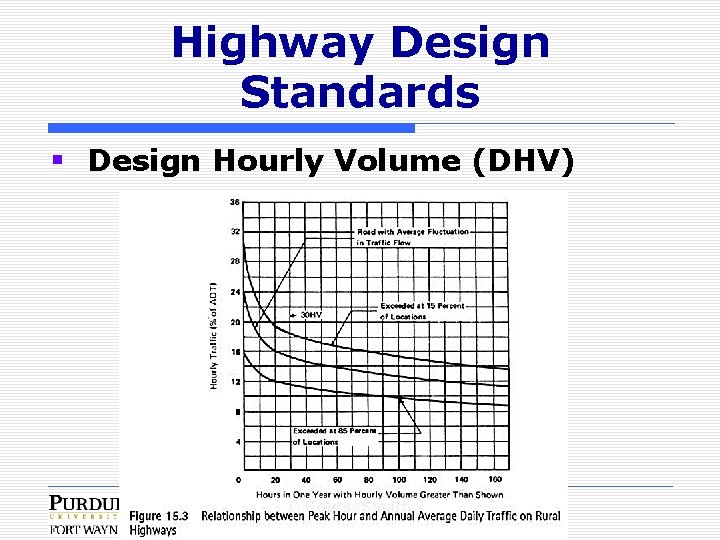
Highway Design Standards § Design Hourly Volume (DHV)
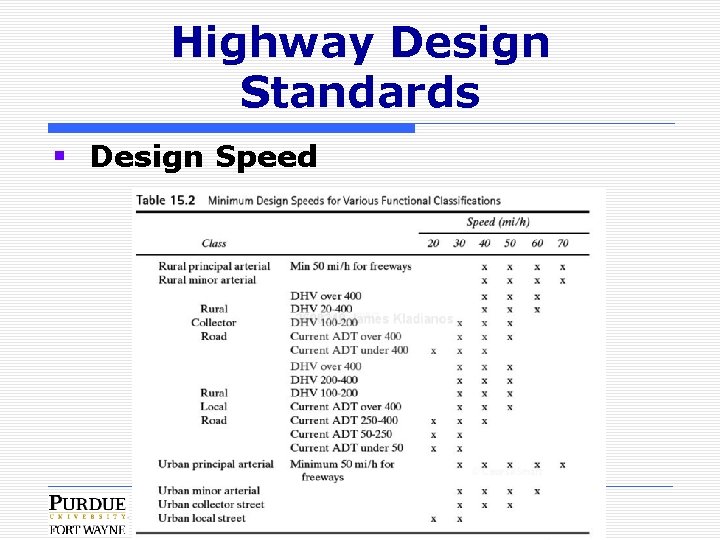
Highway Design Standards § Design Speed
Highway Design Standards § Design Speed
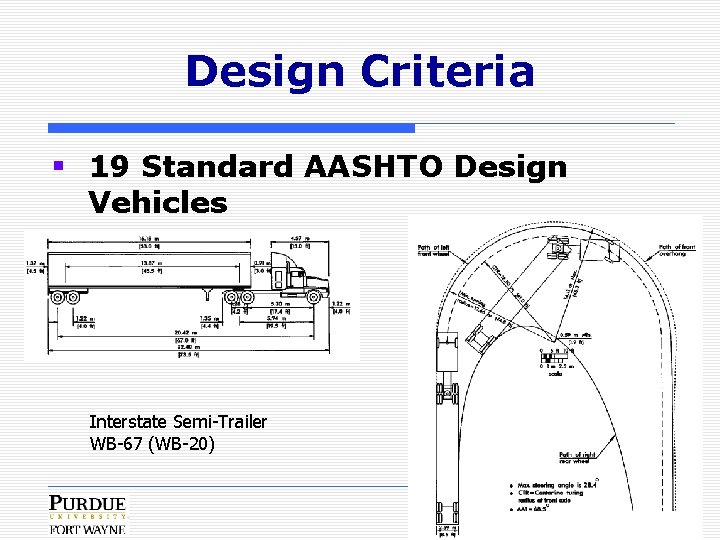
Design Criteria § 19 Standard AASHTO Design Vehicles Interstate Semi-Trailer WB-67 (WB-20)
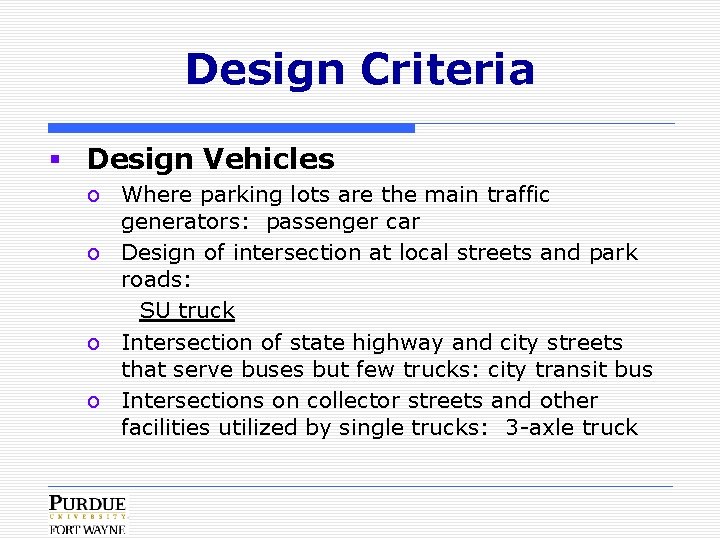
Design Criteria § Design Vehicles o Where parking lots are the main traffic generators: passenger car o Design of intersection at local streets and park roads: SU truck o Intersection of state highway and city streets that serve buses but few trucks: city transit bus o Intersections on collector streets and other facilities utilized by single trucks: 3 -axle truck
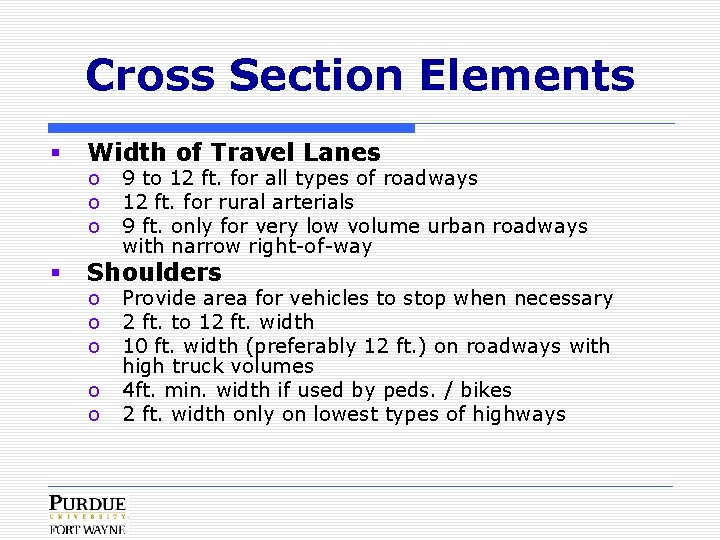
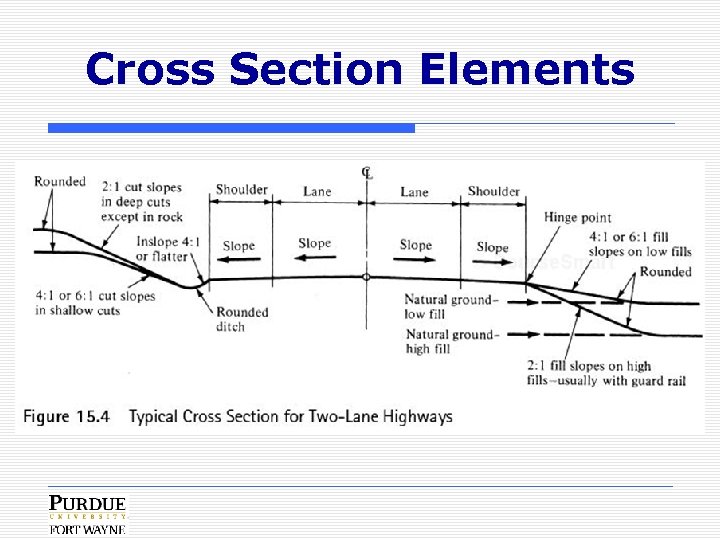
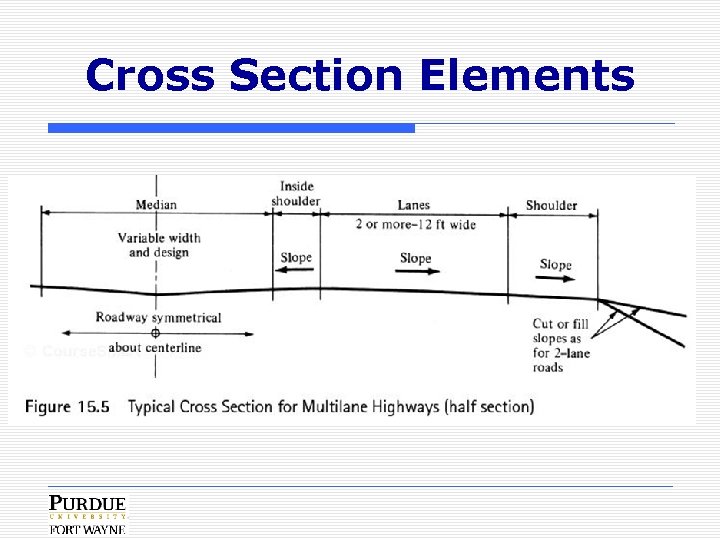
Cross Section Elements § Width of Travel Lanes § Shoulders o o o o 9 to 12 ft. for all types of roadways 12 ft. for rural arterials 9 ft. only for very low volume urban roadways with narrow right-of-way Provide area for vehicles to stop when necessary 2 ft. to 12 ft. width 10 ft. width (preferably 12 ft. ) on roadways with high truck volumes 4 ft. min. width if used by peds. / bikes 2 ft. width only on lowest types of highways
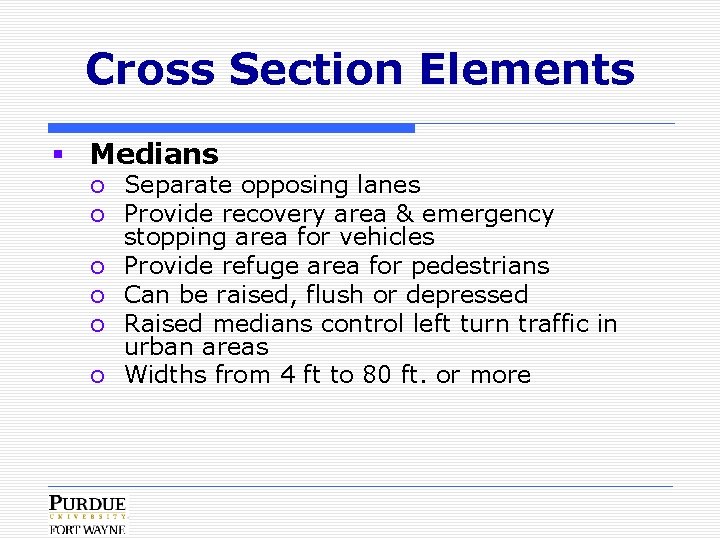
Cross Section Elements § Medians o Separate opposing lanes o Provide recovery area & emergency stopping area for vehicles o Provide refuge area for pedestrians o Can be raised, flush or depressed o Raised medians control left turn traffic in urban areas o Widths from 4 ft to 80 ft. or more
Cross Section Elements § Roadside Barriers o Protect vehicles from hazardous obstacles, steep slopes, etc § Median Barriers o Prevent errant vehicles from crossing area separating traveled ways for traffic in opposite directions § Curbs and Gutters o Used in urban areas to delineate pavement edges & sidewalks, to control access, to control drainage, etc.
Cross Section Elements § Sidewalks o o Provide area separate from roadway for pedestrians Must be designed to accommodate disabled individuals (American with Disabilities Act--ADA) § Roadway Cross Slopes § Roadside Earth Slopes o o o 1. 5% to 2% for paved roadways to drain water off roadway surface Embankment slopes can be traversed safely by errant vehicles if flatter that 1 V: 4 H Embankment & excavation slopes have major effect on grading volumes
Cross Section Elements § Right-of-way o Width sufficient to accommodate all cross section elements, future widening, etc
Cross Section Elements
Cross Section Elements
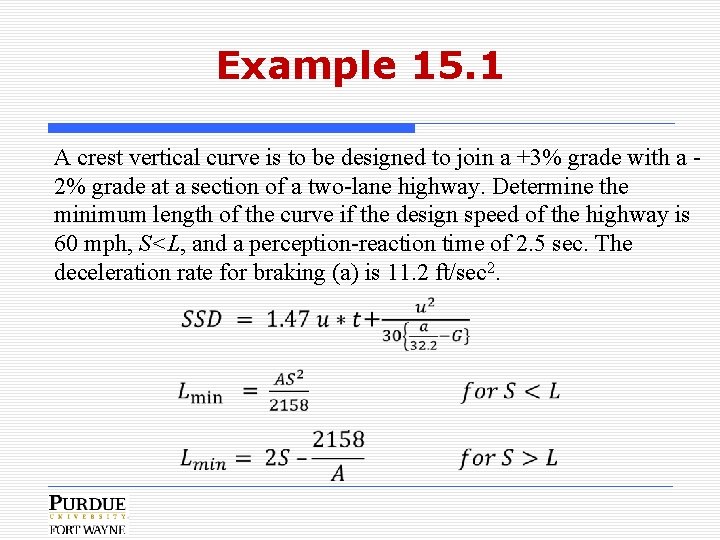
Example 15. 1 A crest vertical curve is to be designed to join a +3% grade with a 2% grade at a section of a two-lane highway. Determine the minimum length of the curve if the design speed of the highway is 60 mph, S<L, and a perception-reaction time of 2. 5 sec. The deceleration rate for braking (a) is 11. 2 ft/sec 2.
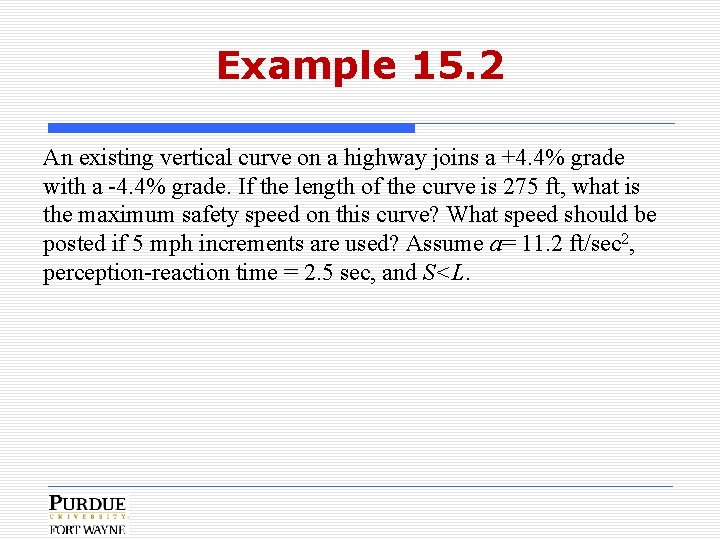
Example 15. 2 An existing vertical curve on a highway joins a +4. 4% grade with a -4. 4% grade. If the length of the curve is 275 ft, what is the maximum safety speed on this curve? What speed should be posted if 5 mph increments are used? Assume a= 11. 2 ft/sec 2, perception-reaction time = 2. 5 sec, and S<L.