
CDC Recommendations for Lead Poisoning Prevention in Newly
- Slides: 22
CDC Recommendations for Lead Poisoning Prevention in Newly Arrived Refugee Children Medical Provider Module U. S. Department of Health and Human Services Centers for Disease Control and Prevention
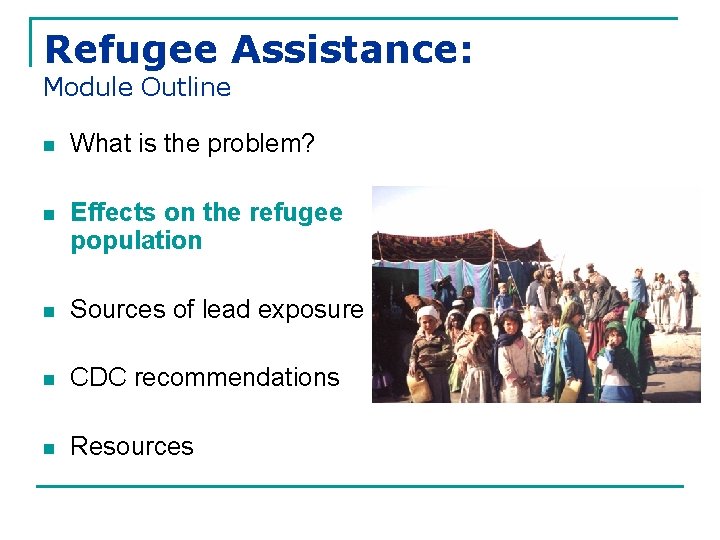
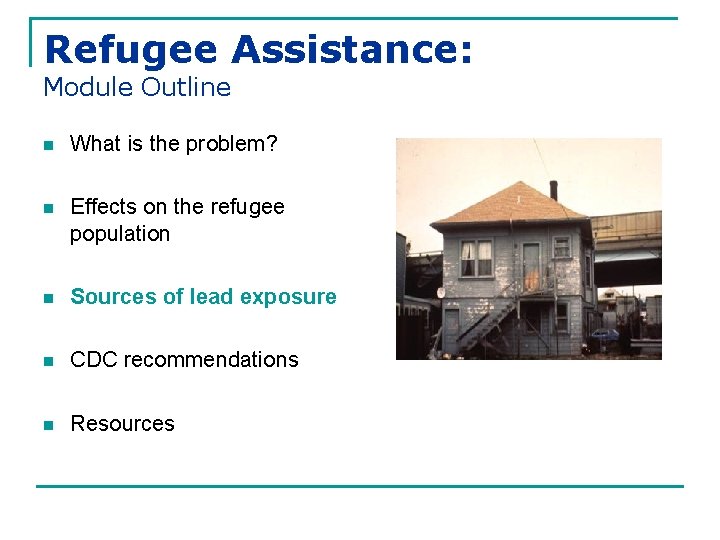
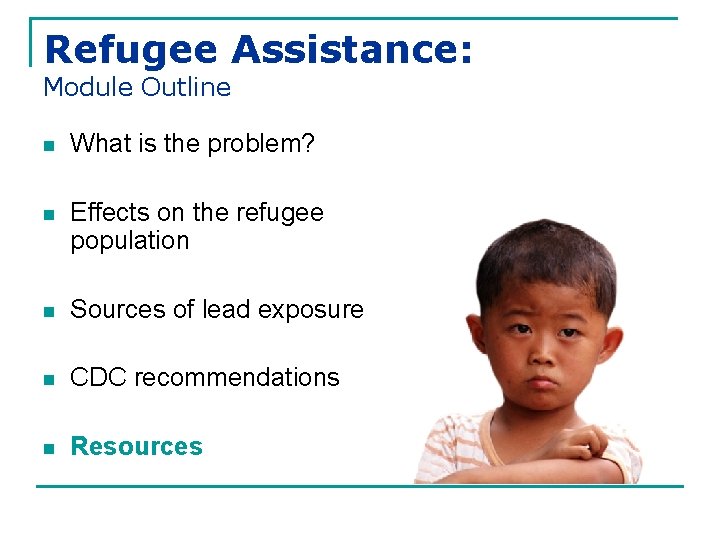
Refugee Assistance: Module Outline n What is the problem? n Effects on the refugee population n Sources of lead exposure n CDC recommendations n Resources
Childhood Lead Poisoning n Lead poisoning is a common and preventable childhood health problem n Lead is everywhere in the environment due to industrialization n Lead exposure is measured in children by blood lead testing
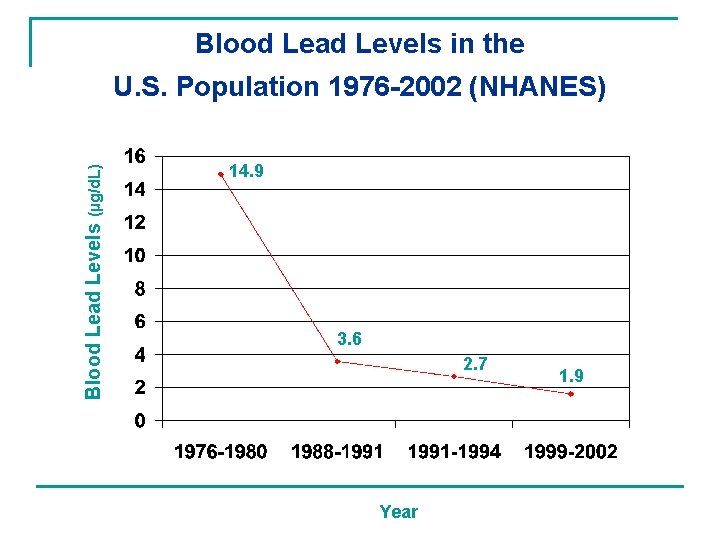
Blood Lead Levels in the Blood Lead Levels (µg/d. L) U. S. Population 1976 -2002 (NHANES) 14. 9 3. 6 2. 7 Year 1. 9
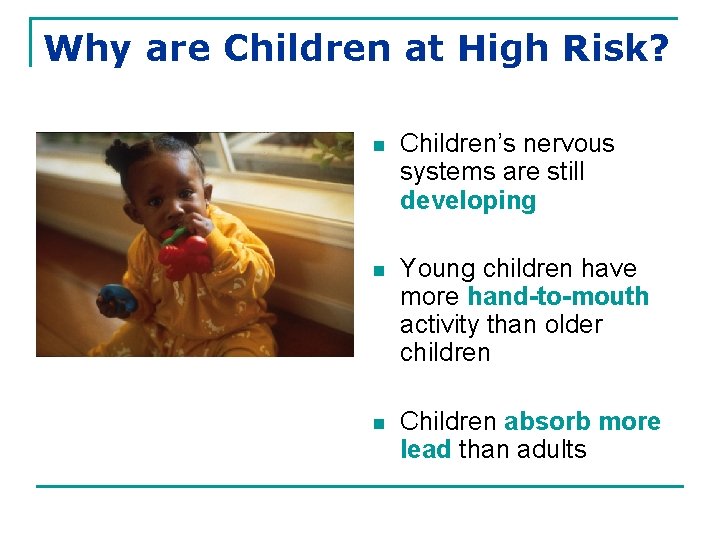
Why are Children at High Risk? n Children’s nervous systems are still developing n Young children have more hand-to-mouth activity than older children n Children absorb more lead than adults
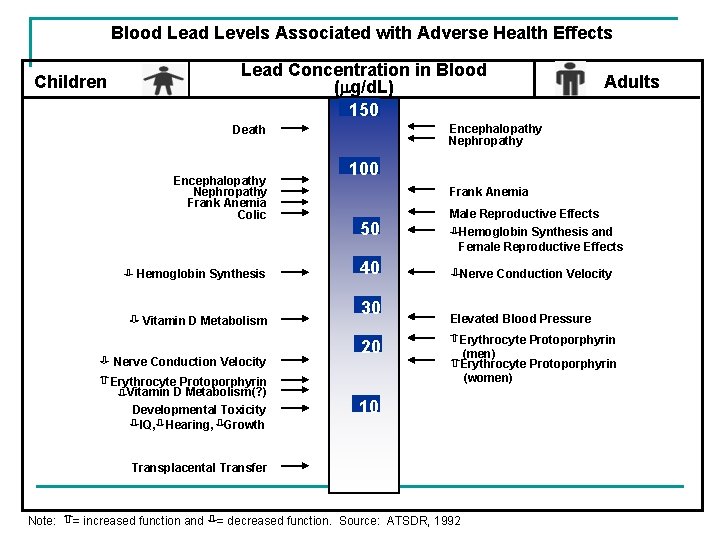
Blood Lead Levels Associated with Adverse Health Effects Lead Concentration in Blood ( g/d. L) 150 Children Encephalopathy Nephropathy Death Encephalopathy Nephropathy Frank Anemia Colic Hemoglobin Synthesis Vitamin D Metabolism Nerve Conduction Velocity Erythrocyte Protoporphyrin Vitamin D Metabolism(? ) Developmental Toxicity IQ, Hearing, Growth 100 Frank Anemia 50 40 30 20 Male Reproductive Effects Hemoglobin Synthesis and Female Reproductive Effects Nerve Conduction Velocity Elevated Blood Pressure Erythrocyte Protoporphyrin (men) Erythrocyte Protoporphyrin (women) 10 Transplacental Transfer Note: = increased function and Adults = decreased function. Source: ATSDR, 1992
Refugee Assistance: Module Outline n What is the problem? n Effects on the refugee population n Sources of lead exposure n CDC recommendations n Resources
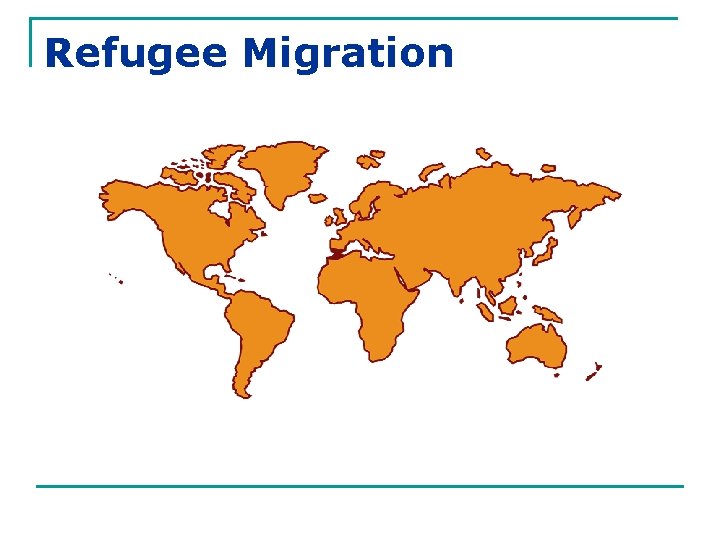
Refugee Migration
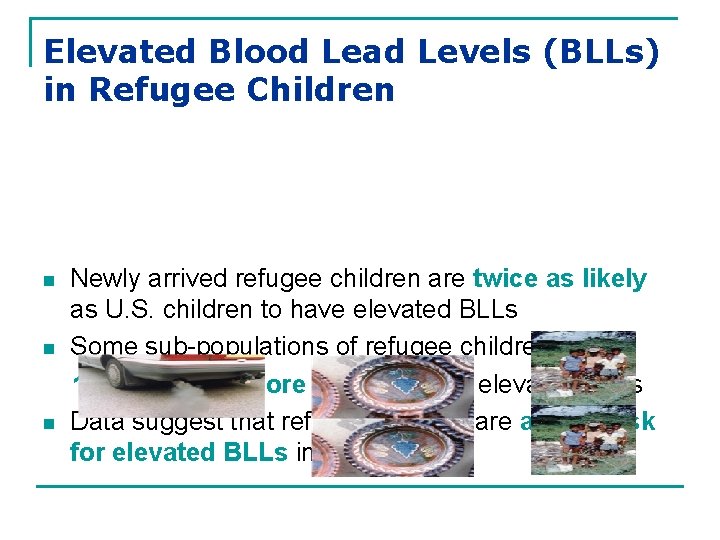
Elevated Blood Lead Levels (BLLs) in Refugee Children n Newly arrived refugee children are twice as likely as U. S. children to have elevated BLLs Some sub-populations of refugee children are 12 -14. 5 times more likely to have elevated BLLs Data suggest that refugee children are also at risk for elevated BLLs in the U. S.
Risk Factors for Elevated BLLs Among Refugees n Living in older homes n Presence of lead hazards n Cultural practices and traditional medicines n Lack of awareness about the dangers of lead n Compromised nutritional status
Refugee Assistance: Module Outline n What is the problem? n Effects on the refugee population n Sources of lead exposure n CDC recommendations n Resources
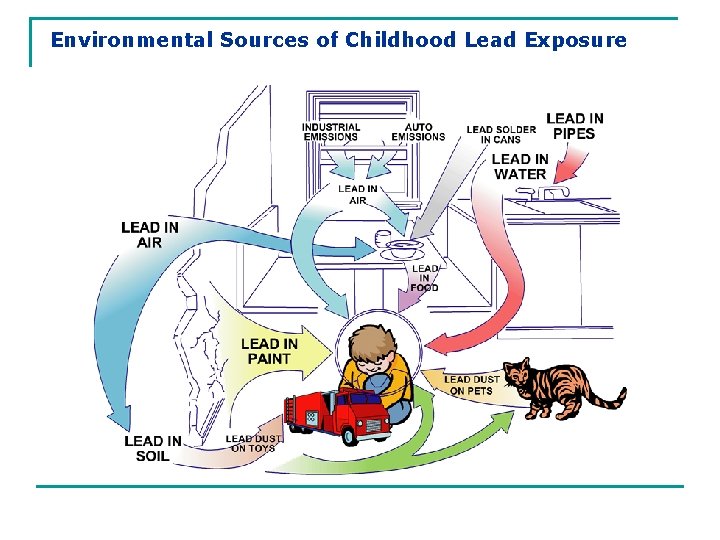
Lead Hazard Sources n Most lead hazards come from lead paint chips that have been ground into tiny bits. n These tiny bits of lead become part of the dust and soil in and around our homes.
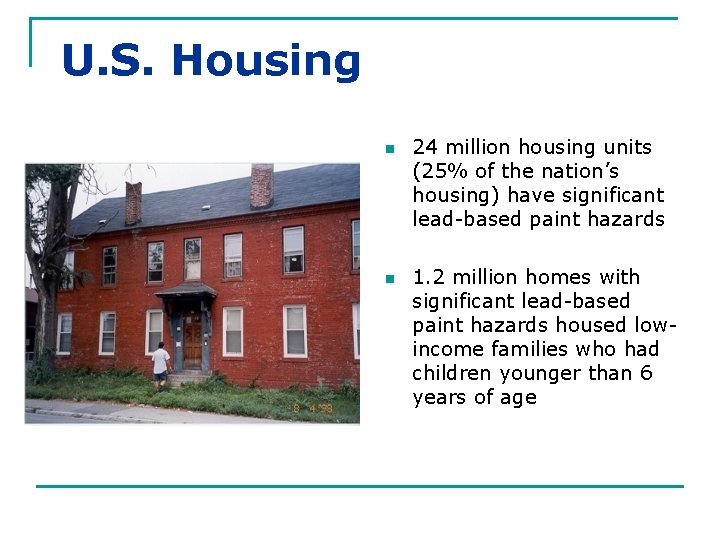
U. S. Housing n n 24 million housing units (25% of the nation’s housing) have significant lead-based paint hazards 1. 2 million homes with significant lead-based paint hazards housed lowincome families who had children younger than 6 years of age
Environmental Sources of Childhood Lead Exposure
Refugee Assistance: Module Outline n What is the problem? n Effects on the refugee population n Sources of lead exposure n CDC recommendations n Resources
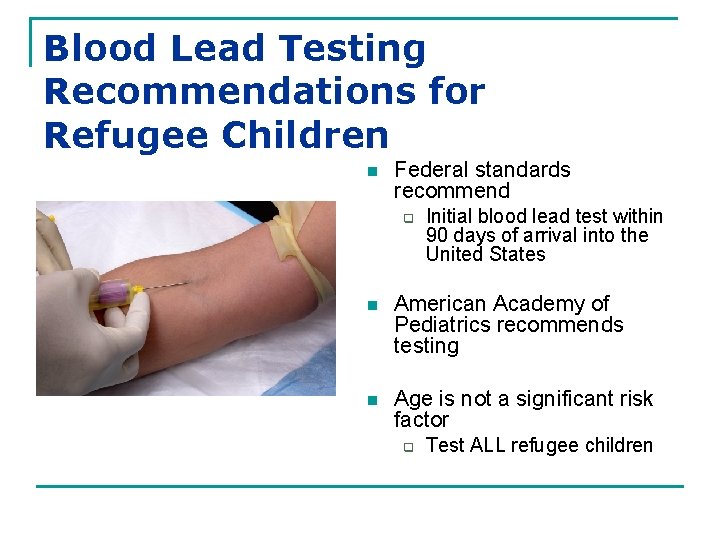
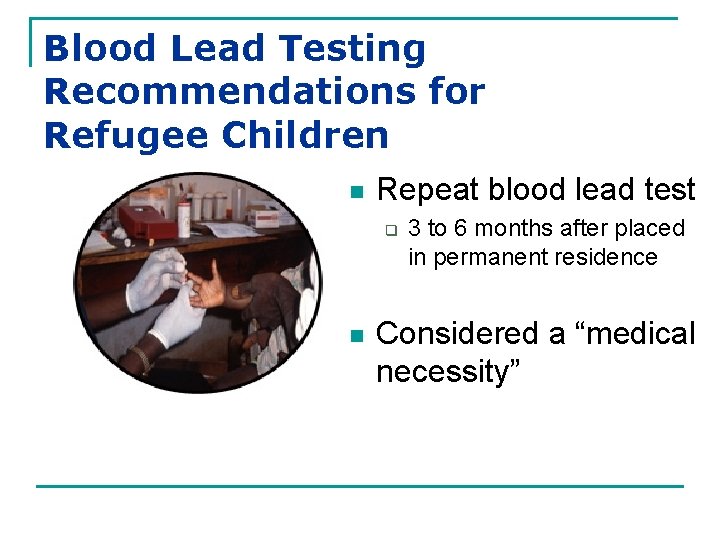
Blood Lead Testing Recommendations for Refugee Children n Federal standards recommend q Initial blood lead test within 90 days of arrival into the United States n American Academy of Pediatrics recommends testing n Age is not a significant risk factor q Test ALL refugee children
Blood Lead Testing Recommendations for Refugee Children n Repeat blood lead test q n 3 to 6 months after placed in permanent residence Considered a “medical necessity”
Post-Arrival Evaluation and Therapy n Nutritional evaluation n At a minimum, should include an evaluation of the child’s iron status including a hemoglobin/hematocrit and one or more of the following: q q Mean corpuscular volume (MCV) combined with red cell distribution width (RDW) Ferritin Transferring saturation Reticulocyte hemoglobin content
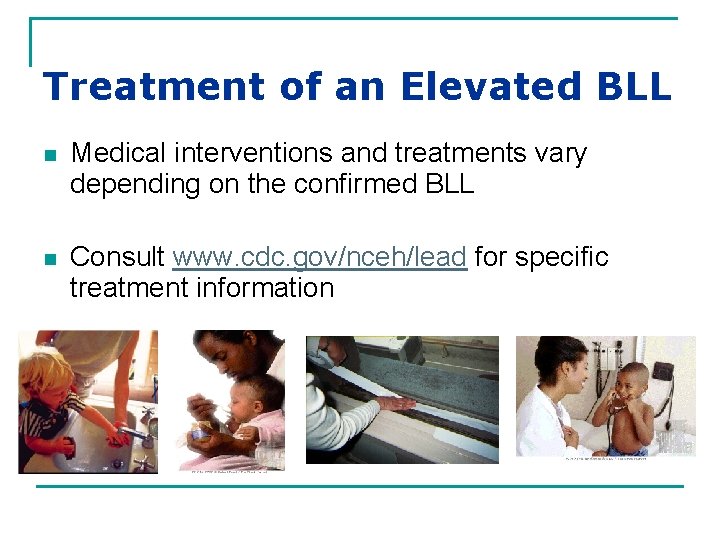
Treatment of an Elevated BLL n Medical interventions and treatments vary depending on the confirmed BLL n Consult www. cdc. gov/nceh/lead for specific treatment information
Long-term Sequelae n Neurodevelopmental monitoring should continue n Refer the child to Early Intervention or Stimulation Programs n A child’s elevated BLL history should be part of his permanent record
Refugee Assistance: Module Outline n What is the problem? n Effects on the refugee population n Sources of lead exposure n CDC recommendations n Resources
Resources n State and local childhood lead poisoning prevention programs http: //www. cdc. gov/nceh/lead/grants/contacts/CLPPP%20 Map. htm n CDC’s Lead Poisoning Prevention Program http: //www. cdc. gov/nceh/lead/ n Office of Refugee Resettlement http: //www. acf. hhs. gov/programs/orr/ n American Academy of Pediatrics http: //www. aap. org