
CDC Healthy Schools Chronic Health Conditions in School


- Slides: 42
CDC Healthy Schools Chronic Health Conditions in School Settings
Presentation Goals • Describe the relationship between chronic health conditions and academic achievement. • Discuss ways schools can help support students with chronic health conditions. 2
Presentation overview • U. S. children and adolescents with chronic health conditions • Relationship between chronic health conditions and academic achievement • Strategies for managing chronic health conditions in schools • CDC resources 3
Introduction • Students spend many hours every week in school. • Some children and adolescents with chronic health conditions may have lower academic achievement than those without those conditions. • Managing chronic health conditions can be challenging for school systems, educators, and clinicians. 4
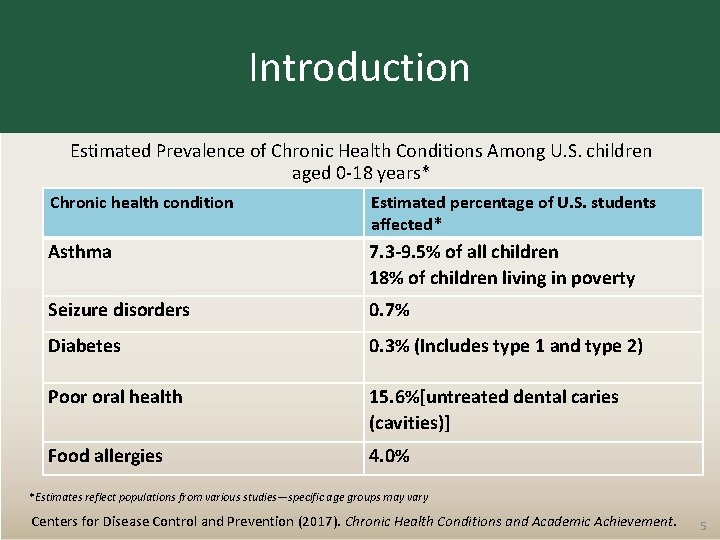
Introduction Estimated Prevalence of Chronic Health Conditions Among U. S. children aged 0 -18 years* Chronic health condition Estimated percentage of U. S. students affected* Asthma 7. 3 -9. 5% of all children 18% of children living in poverty Seizure disorders 0. 7% Diabetes 0. 3% (Includes type 1 and type 2) Poor oral health 15. 6%[untreated dental caries (cavities)] Food allergies 4. 0% *Estimates reflect populations from various studies—specific age groups may vary Centers for Disease Control and Prevention (2017). Chronic Health Conditions and Academic Achievement. 5
Introduction • Published scientific evidence shows the benefits of school-based management of chronic health conditions. • Managing chronic health conditions may help improve health and academic outcomes. • Schools can use several strategies to support students with chronic health conditions. Leroy Z, Wallin R, Lee S. The Role of School Health Services in Addressing the Needs of Students With Chronic Health Conditions: A Systematic Review. Journal of School Nursing. The Journal of School Nursing. 2017; 33(1): 64 -72 6
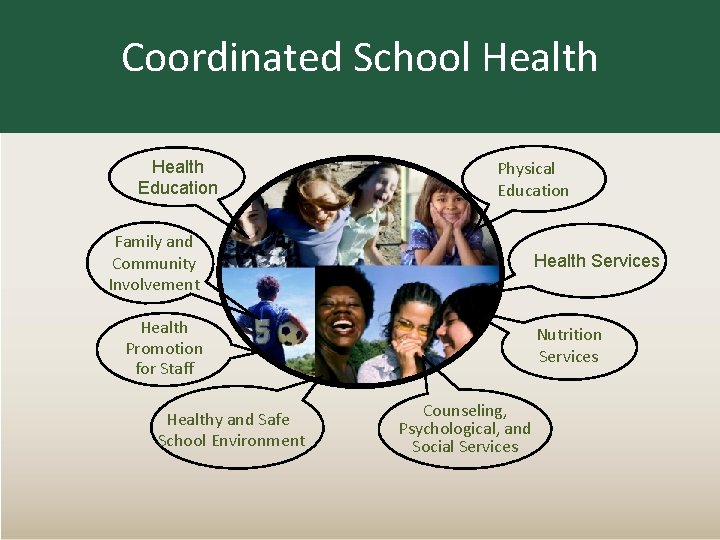
Coordinated School Health Education Family and Community Involvement Health Promotion for Staff Healthy and Safe School Environment Physical Education Health Services Nutrition Services Counseling, Psychological, and Social Services
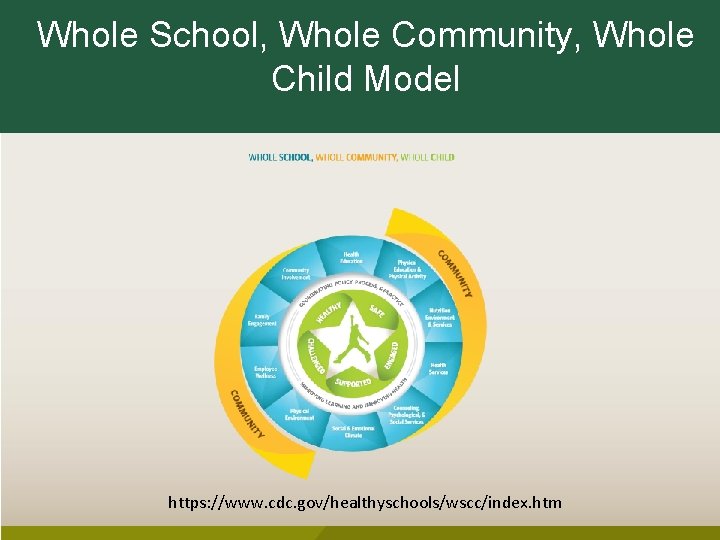
Whole School, Whole Community, Whole Child Model https: //www. cdc. gov/healthyschools/wscc/index. htm
Chronic Health Conditions and Academic Achievement
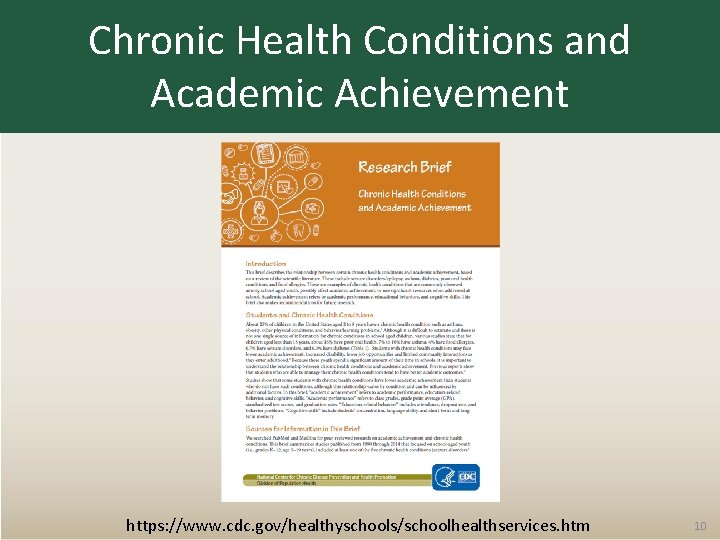
Chronic Health Conditions and Academic Achievement https: //www. cdc. gov/healthyschools/schoolhealthservices. htm 10
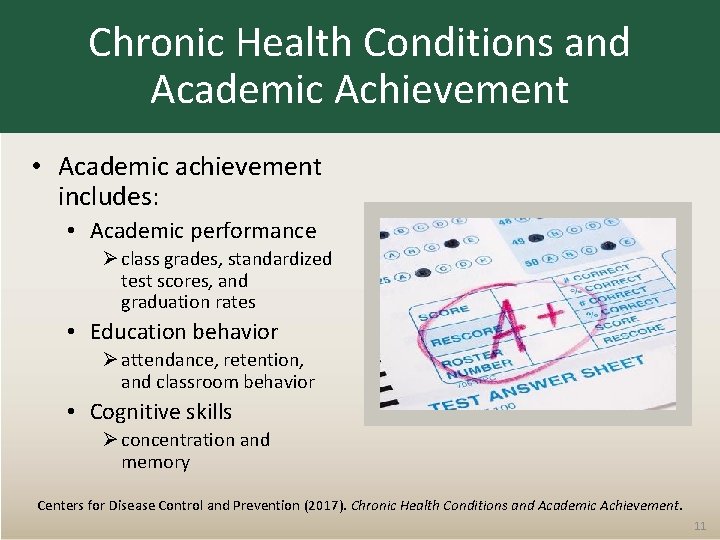
Chronic Health Conditions and Academic Achievement • Academic achievement includes: • Academic performance Ø class grades, standardized test scores, and graduation rates • Education behavior Ø attendance, retention, and classroom behavior • Cognitive skills Ø concentration and memory Centers for Disease Control and Prevention (2017). Chronic Health Conditions and Academic Achievement. 11
Chronic Health Conditions and Absenteeism • Attendance is linked to student progress and academic achievement. • Poor attendance can lead to dropping out. • Chronic absenteeism (missing 10 % or more of school days for any reason, excused or unexcused) is an early warning sign of academic risk. Centers for Disease Control and Prevention (2017). Chronic Health Conditions and Academic Achievement. 12
Chronic Health Conditions and Academic Achievement: Asthma • Asthma has been the focus of most studies that have student outcome data • most frequently associated with school days missed • Students in schools with a higher percentage of low-income students are more likely to miss school because of asthma. • Having asthma alone does not cause absenteeism or lower academic achievement. Centers for Disease Control and Prevention (2017). Chronic Health Conditions and Academic Achievement. 13
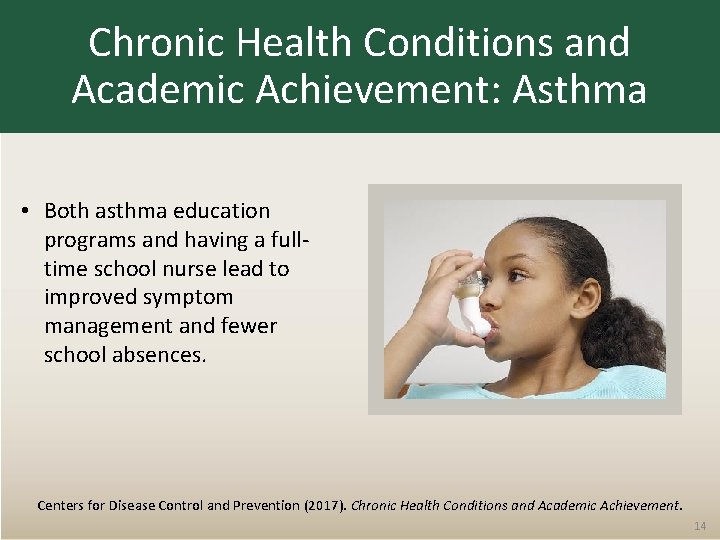
Chronic Health Conditions and Academic Achievement: Asthma • Both asthma education programs and having a fulltime school nurse lead to improved symptom management and fewer school absences. Centers for Disease Control and Prevention (2017). Chronic Health Conditions and Academic Achievement. 14
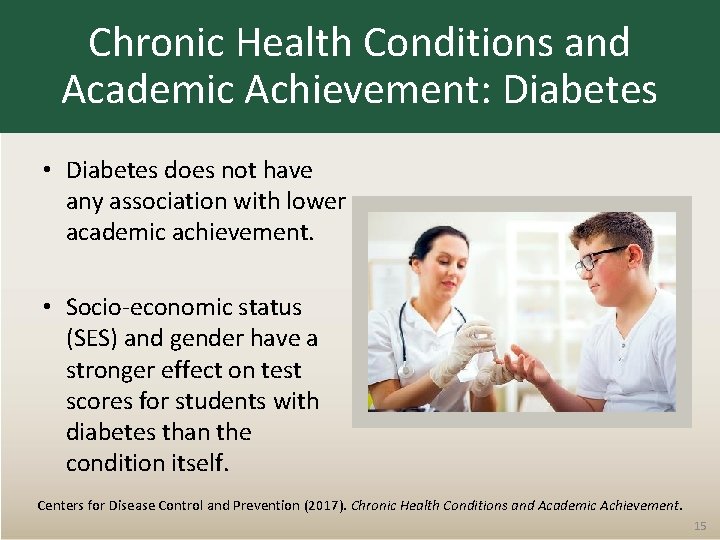
Chronic Health Conditions and Academic Achievement: Diabetes • Diabetes does not have any association with lower academic achievement. • Socio-economic status (SES) and gender have a stronger effect on test scores for students with diabetes than the condition itself. Centers for Disease Control and Prevention (2017). Chronic Health Conditions and Academic Achievement. 15
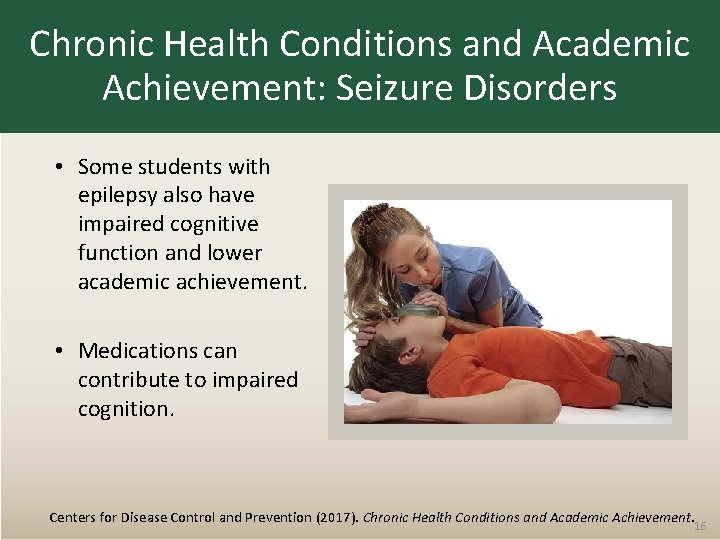
Chronic Health Conditions and Academic Achievement: Seizure Disorders • Some students with epilepsy also have impaired cognitive function and lower academic achievement. • Medications can contribute to impaired cognition. Centers for Disease Control and Prevention (2017). Chronic Health Conditions and Academic Achievement. 16
Chronic Health Conditions and Academic Achievement: Seizure Disorders • There can be variation in academic achievement by age. • Students with both ADHD and seizure disorders may have lower academic achievement than students with only one of these conditions. Centers for Disease Control and Prevention (2017). Chronic Health Conditions and Academic Achievement. 17
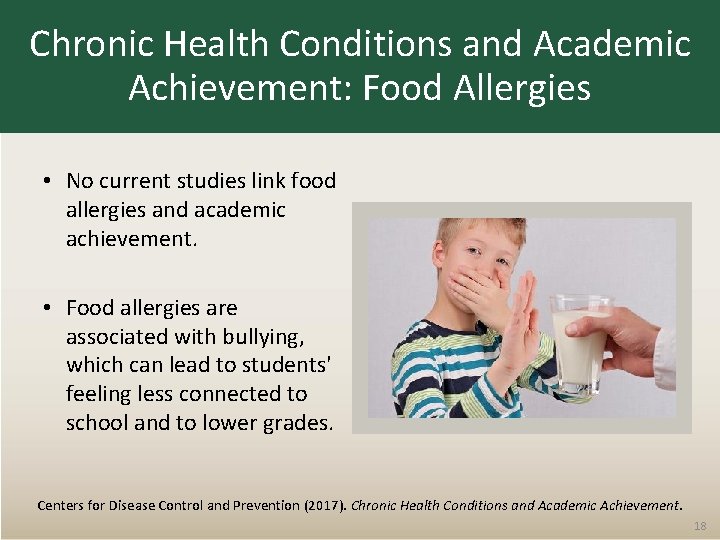
Chronic Health Conditions and Academic Achievement: Food Allergies • No current studies link food allergies and academic achievement. • Food allergies are associated with bullying, which can lead to students' feeling less connected to school and to lower grades. Centers for Disease Control and Prevention (2017). Chronic Health Conditions and Academic Achievement. 18
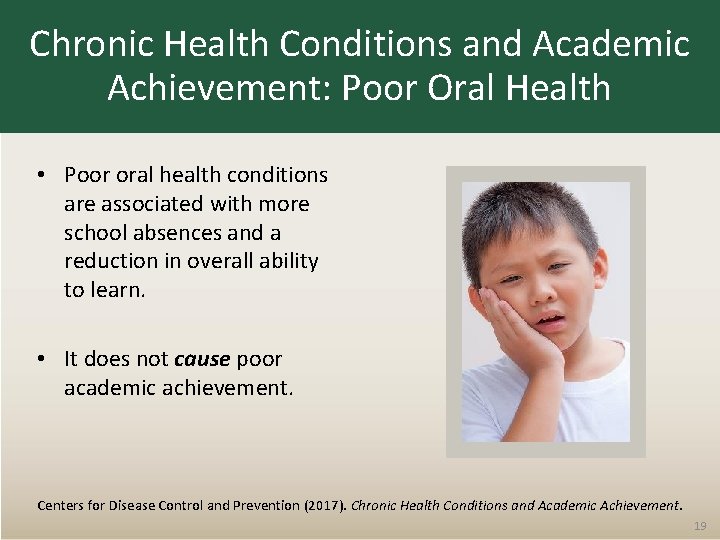
Chronic Health Conditions and Academic Achievement: Poor Oral Health • Poor oral health conditions are associated with more school absences and a reduction in overall ability to learn. • It does not cause poor academic achievement. Centers for Disease Control and Prevention (2017). Chronic Health Conditions and Academic Achievement. 19
Managing Chronic Health Conditions in Schools
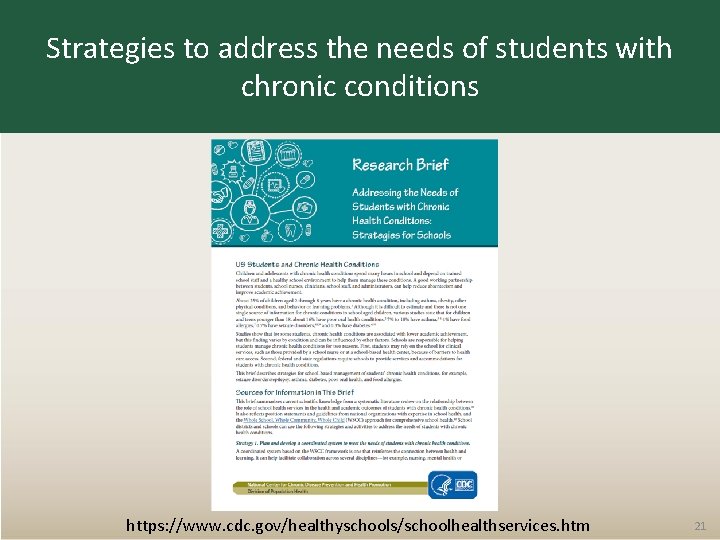
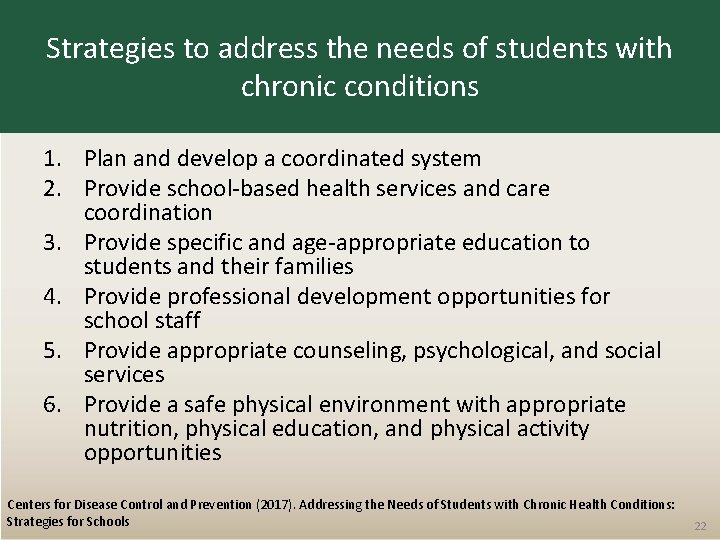
Strategies to address the needs of students with chronic conditions https: //www. cdc. gov/healthyschools/schoolhealthservices. htm 21
Strategies to address the needs of students with chronic conditions 1. Plan and develop a coordinated system 2. Provide school-based health services and care coordination 3. Provide specific and age-appropriate education to students and their families 4. Provide professional development opportunities for school staff 5. Provide appropriate counseling, psychological, and social services 6. Provide a safe physical environment with appropriate nutrition, physical education, and physical activity opportunities Centers for Disease Control and Prevention (2017). Addressing the Needs of Students with Chronic Health Conditions: Strategies for Schools 22
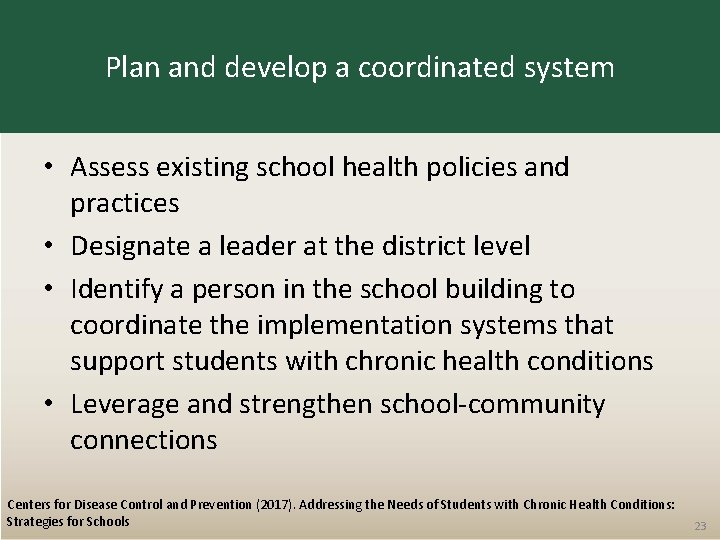
Plan and develop a coordinated system • Assess existing school health policies and practices • Designate a leader at the district level • Identify a person in the school building to coordinate the implementation systems that support students with chronic health conditions • Leverage and strengthen school-community connections Centers for Disease Control and Prevention (2017). Addressing the Needs of Students with Chronic Health Conditions: Strategies for Schools 23
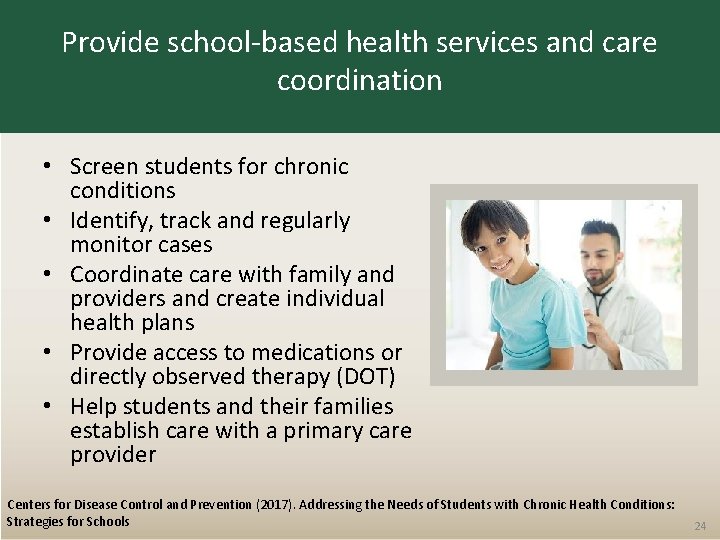
Provide school-based health services and care coordination • Screen students for chronic conditions • Identify, track and regularly monitor cases • Coordinate care with family and providers and create individual health plans • Provide access to medications or directly observed therapy (DOT) • Help students and their families establish care with a primary care provider Centers for Disease Control and Prevention (2017). Addressing the Needs of Students with Chronic Health Conditions: Strategies for Schools 24
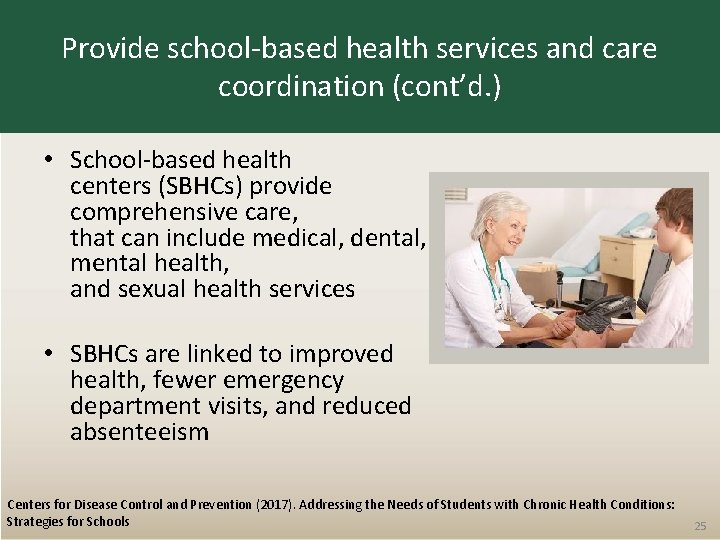
Provide school-based health services and care coordination (cont’d. ) • School-based health centers (SBHCs) provide comprehensive care, that can include medical, dental, mental health, and sexual health services • SBHCs are linked to improved health, fewer emergency department visits, and reduced absenteeism Centers for Disease Control and Prevention (2017). Addressing the Needs of Students with Chronic Health Conditions: Strategies for Schools 25
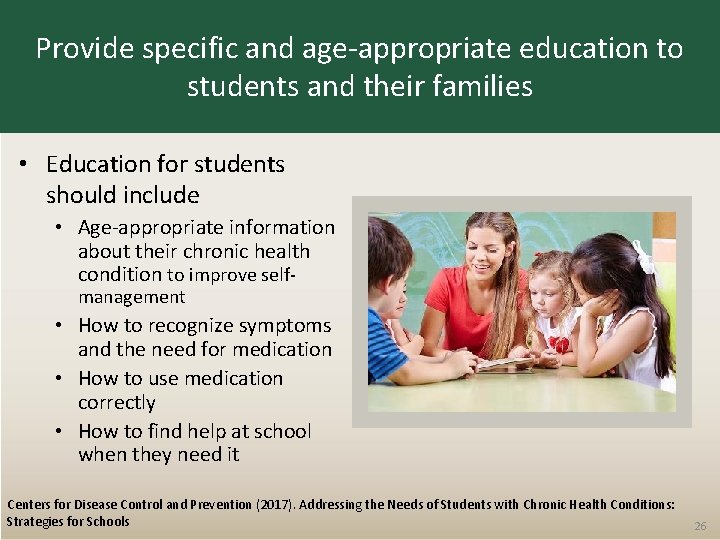
Provide specific and age-appropriate education to students and their families • Education for students should include • Age-appropriate information about their chronic health condition to improve selfmanagement • How to recognize symptoms and the need for medication • How to use medication correctly • How to find help at school when they need it Centers for Disease Control and Prevention (2017). Addressing the Needs of Students with Chronic Health Conditions: Strategies for Schools 26
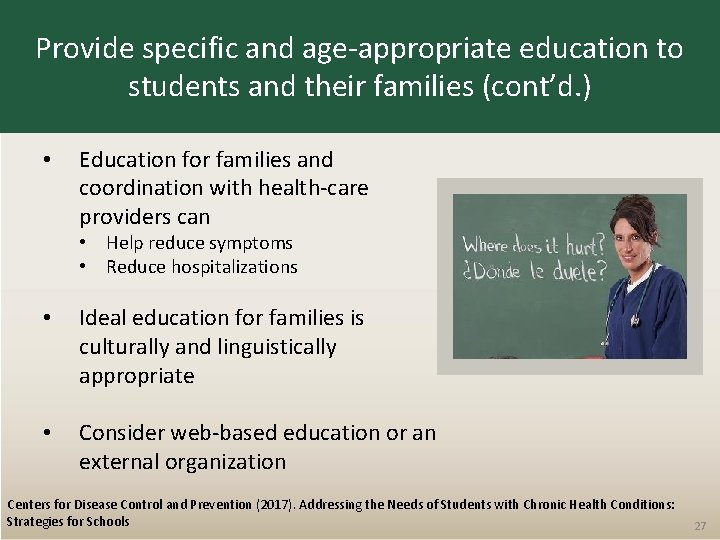
Provide specific and age-appropriate education to students and their families (cont’d. ) • Education for families and coordination with health-care providers can • Help reduce symptoms • Reduce hospitalizations • Ideal education for families is culturally and linguistically appropriate • Consider web-based education or an external organization Centers for Disease Control and Prevention (2017). Addressing the Needs of Students with Chronic Health Conditions: Strategies for Schools 27
Provide professional development opportunities for school staff • Create emergency protocols and Inform all school staff about the signs and symptoms of chronic health conditions that require immediate action • Provide training for appropriate school staff on resources that support students with chronic health conditions. • Consider allowing staff time to participate in off-site learning opportunities, e-learning modules, or webinars. Centers for Disease Control and Prevention (2017). Addressing the Needs of Students with Chronic Health Conditions: Strategies for Schools 28
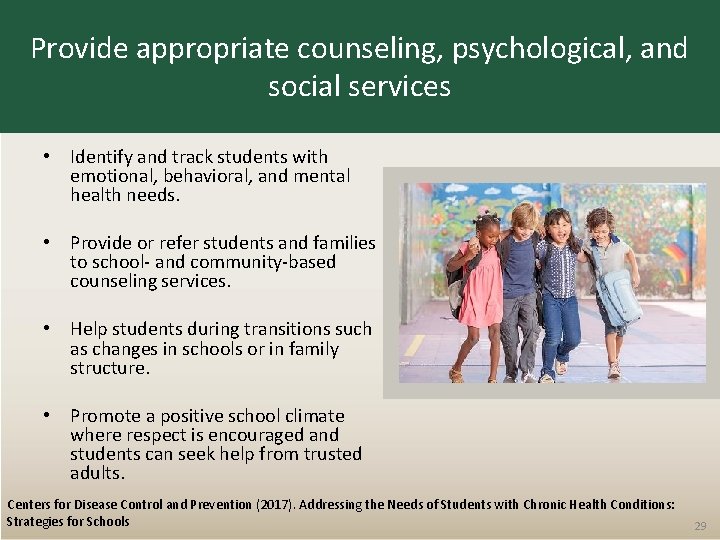
Provide appropriate counseling, psychological, and social services • Identify and track students with emotional, behavioral, and mental health needs. • Provide or refer students and families to school- and community-based counseling services. • Help students during transitions such as changes in schools or in family structure. • Promote a positive school climate where respect is encouraged and students can seek help from trusted adults. Centers for Disease Control and Prevention (2017). Addressing the Needs of Students with Chronic Health Conditions: Strategies for Schools 29
Provide a safe environment with appropriate nutrition, physical education, and physical activity • Provide a safe physical environment, both outside and inside school buildings. • Ensure that foods are labeled and that menus are available to students and their families. In addition, food allergens, such as peanuts, should be prohibited in the classroom. • Encourage all students to participate in physical activity, regardless of ability, unless medical needs prevent it. • Align activities with provisions in local wellness policies and with national or state physical education standards. Centers for Disease Control and Prevention (2017). Addressing the Needs of Students with Chronic Health Conditions: Strategies for Schools 30
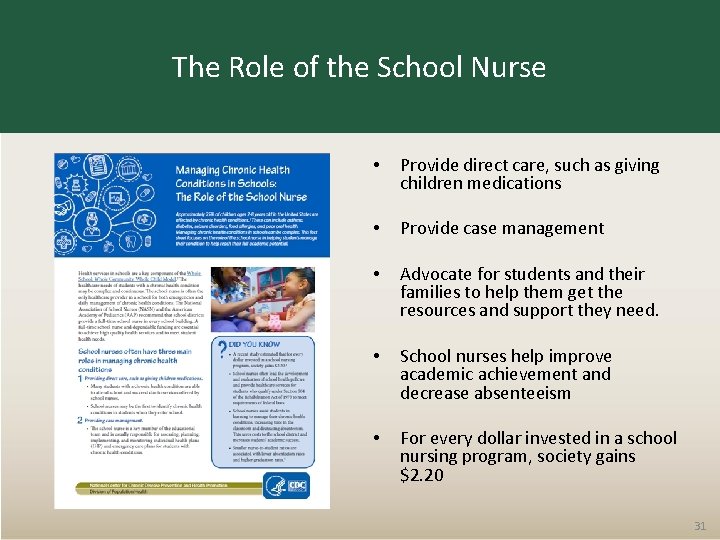
The Role of the School Nurse • Provide direct care, such as giving children medications • Provide case management • Advocate for students and their families to help them get the resources and support they need. • School nurses help improve academic achievement and decrease absenteeism • For every dollar invested in a school nursing program, society gains $2. 20 31
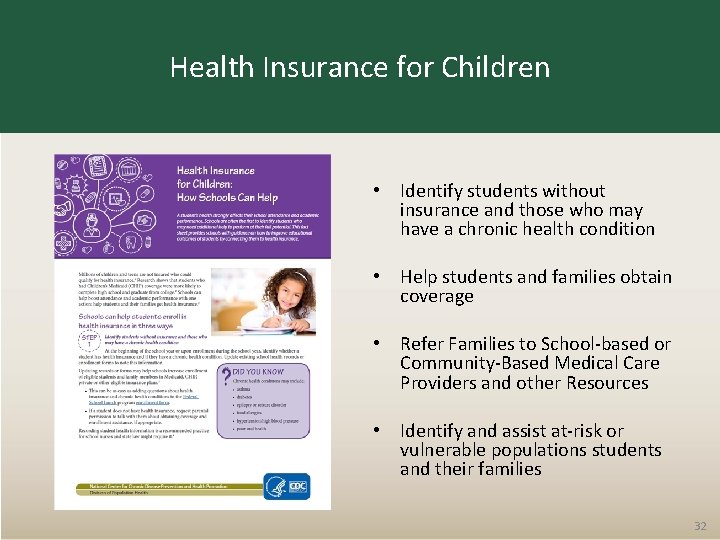
Health Insurance for Children • Identify students without insurance and those who may have a chronic health condition • Help students and families obtain coverage • Refer Families to School-based or Community-Based Medical Care Providers and other Resources • Identify and assist at-risk or vulnerable populations students and their families 32
Additional Resources
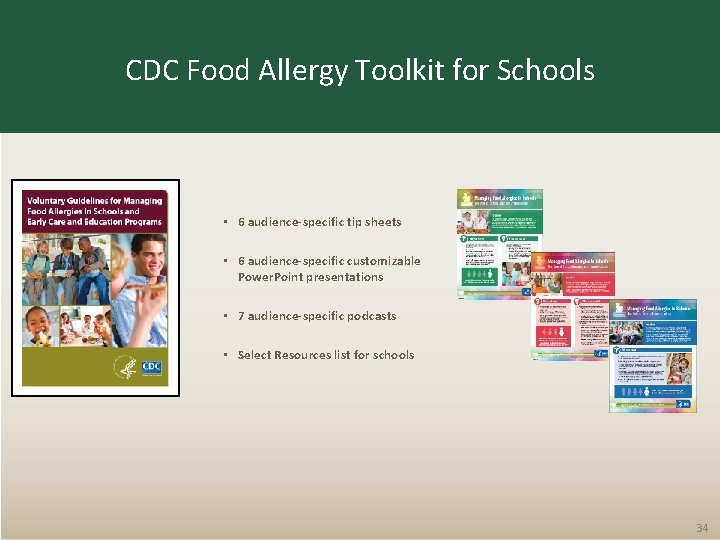
CDC Food Allergy Toolkit for Schools • 6 audience-specific tip sheets • 6 audience-specific customizable Power. Point presentations • 7 audience-specific podcasts • Select Resources list for schools 34
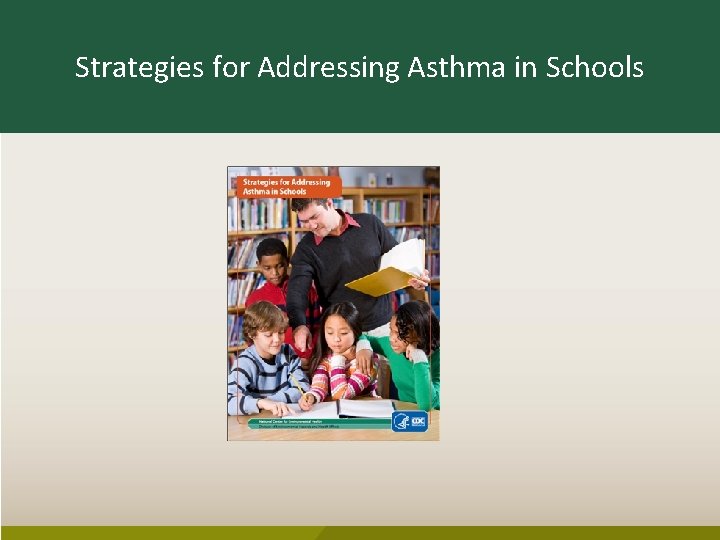
Strategies for Addressing Asthma in Schools
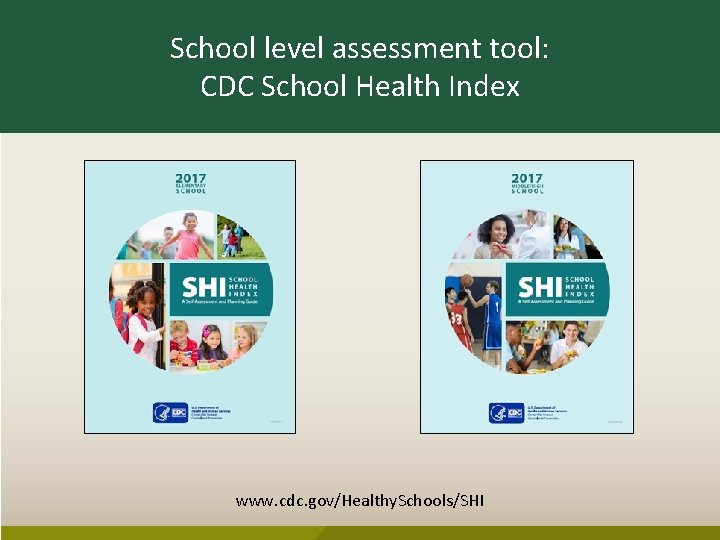
School level assessment tool: CDC School Health Index www. cdc. gov/Healthy. Schools/SHI
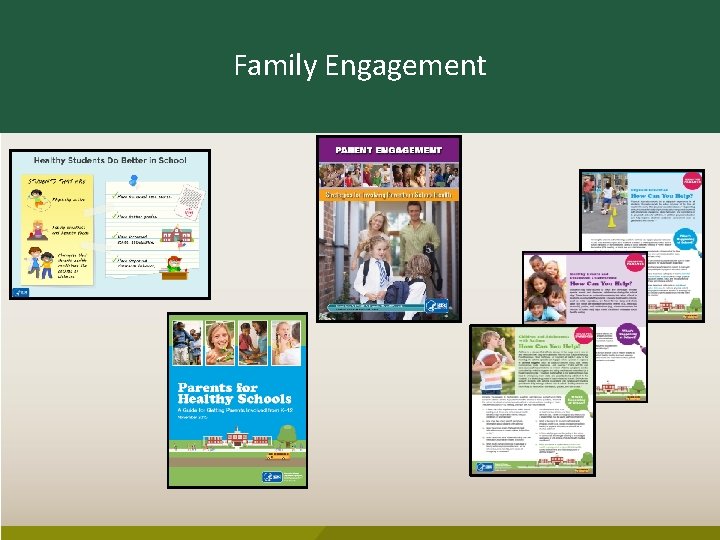
Family Engagement
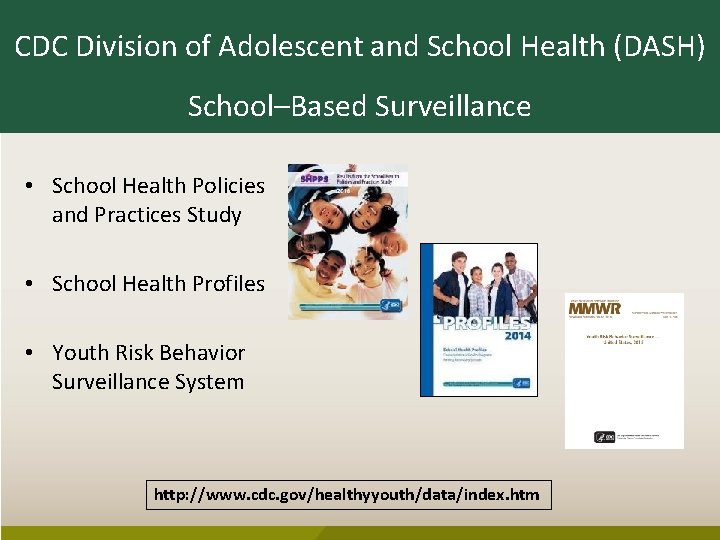
CDC Division of Adolescent and School Health (DASH) School–Based Surveillance • School Health Policies and Practices Study • School Health Profiles • Youth Risk Behavior Surveillance System http: //www. cdc. gov/healthyyouth/data/index. htm
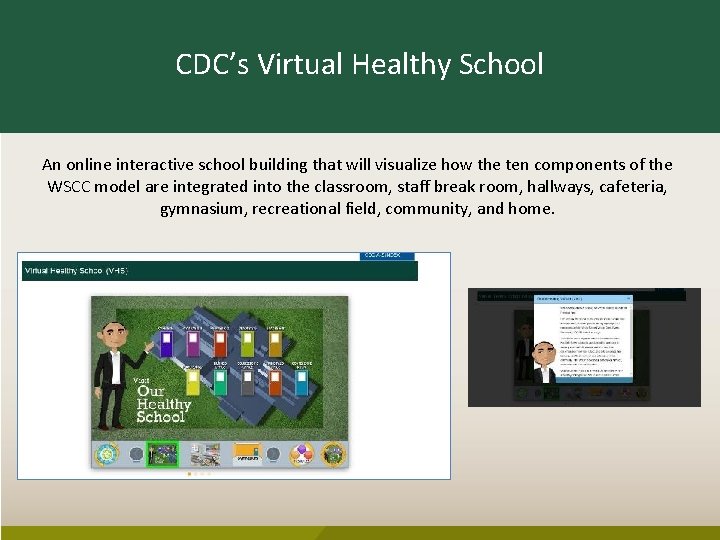
CDC’s Virtual Healthy School An online interactive school building that will visualize how the ten components of the WSCC model are integrated into the classroom, staff break room, hallways, cafeteria, gymnasium, recreational field, community, and home.
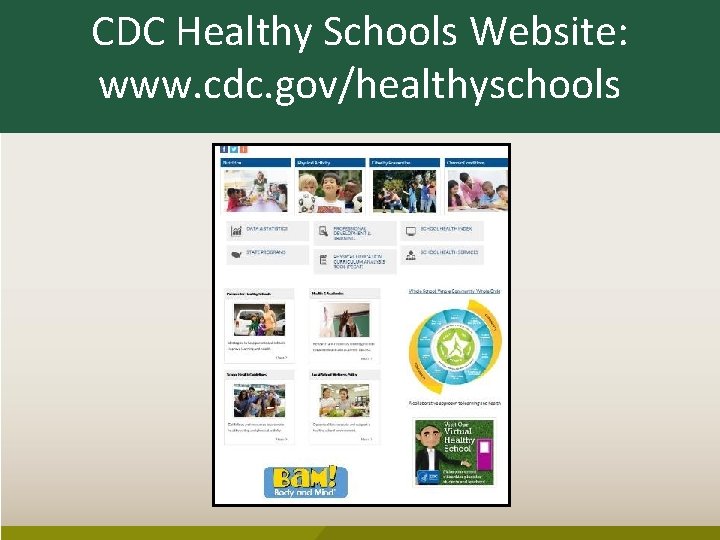
CDC Healthy Schools Website: www. cdc. gov/healthyschools
Conclusion • Studies show that school services can help school-aged youth and their families with chronic health conditions • Student whose symptoms are controlled are more likely to have higher school achievement • School nurses and school-based services can help schools increase students' overall health and academic success • Teacher and staff training should include accurate expectations about the academic potential of children with chronic health conditions – Try not to underestimate! 41
Thank you! For more information, please contact the Centers for Disease Control and Prevention: 4770 Buford Highway NE, Atlanta Georgia 30341 USA Visit: http: //www. cdc. gov/healthyschools/ Email CDC-INFO: www. cdc. gov/cdc-info Call: 1 -800 -CDC-INFO (232 -4636); TTY: 1 -888 -232 -6348 42