
CD 4 and CD 8 memory T cells
- Slides: 2
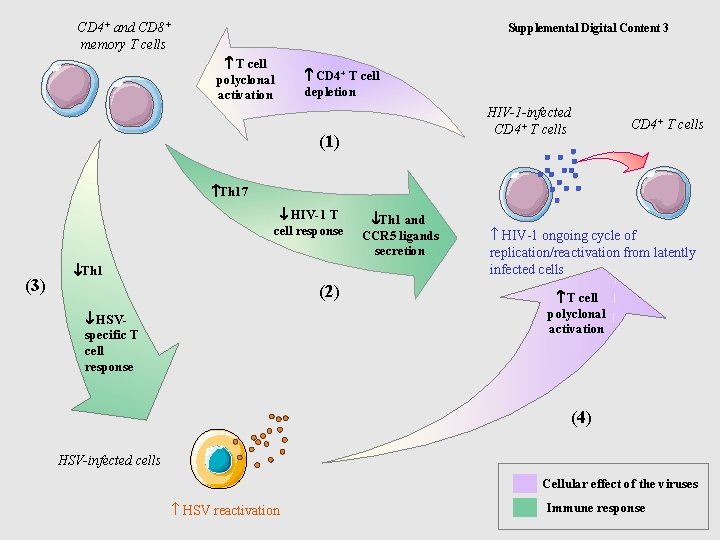
CD 4+ and CD 8+ memory T cells Supplemental Digital Content 3 T cell polyclonal activation CD 4+ T cell depletion HIV-1 -infected CD 4+ T cells (1) CD 4+ T cells Th 17 HIV-1 T cell response (3) Th 1 (2) HSVspecific T cell response Th 1 and CCR 5 ligands secretion HIV-1 ongoing cycle of replication/reactivation from latently infected cells T cell polyclonal activation (4) HSV-infected cells Cellular effect of the viruses HSV reactivation Immune response
Supplemental Figure 2. Schematic model of immune mechanisms contributing to HIV-1/HSV synergy. In HIV-1/HSV co-infected individuals, the impact of HIV-1 infection on the HSV-specific T cell response after HSV re-stimulation is illustrated by the effects of HIV-1 and HSV replication (in purple) and consequences on the immune response (in green). The anti-HSV T cell immune response is impaired in HIV-1 -infected individuals due to the depletion of CD 4+ T lymphocytes (1), the main HIV-1 target cells involved in both anti-HSV and anti-HIV-1 response, as well as the decreased of Th 1 cytokine and CCR 5 ligands secretion (2). This impairment is also associated with an enhanced Th 17 cytokine production and T cell polyclonal activation (1 and 2). The negative effect of HIV-1 -infection on the HSV-specific T cell response facilitates HSV reactivations (3) and consequently T cells activation (4), which, in turn, enhance ongoing HIV-1 dissemination and induce viral replication from latently infected CD 4+ T cells.