
CCSS Overview Introduction to Rigorous Curriculum Design Objective
CCSS Overview & Introduction to Rigorous Curriculum Design
Objective: • To understand Rigorous Curriculum Design and how it applies to planning units/lessons in your subject area.
Make a chart that compares the RCD model to your current unit /lesson plan model. Your current planning model RCD model
The Common Core State Standards – Insufficient by themselves “To be effective in improving education and getting all students ready for college, workforce training, and life, the Common Core State Standards must be partnered with a content-rich curriculum and robust assessments, both aligned to the Standards. ” -CCSSI Webinar, 2010
A curriculum model that provides the WHAT, WHY, and HOW 1. What do ALL students need to know and be able to do? CCSS 2. How do we teach so that all students will learn? Instruction 3. How will we know if they have learned it? Assessment 4. What will we do if they don’t know or if they come to us already knowing? Differentiation and Enrichment - Du. Four and Eaker, Professional Learning Communities at Work
Rigor Defined • Rigor refers to a level of difficulty and the ways in which students apply their knowledge through higher-order thinking skills. Rigor also means the reaching for a higher level of quality in both effort and outcome.
Rigorous Curriculum Defined • A rigorous curriculum is an inclusive set of intentionally aligned components – clearning outcomes with matching assessments, engaging learning experiences, and instructional strategies – organized into sequenced units of study.
Four parts of Rigorous Curriculum Design • • Big picture connections Building the foundation Designing the units of study Implementing the units
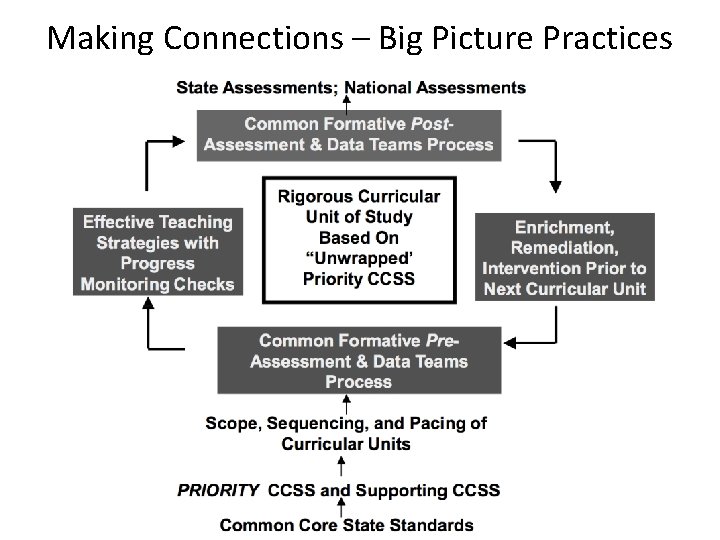
Making Connections – Big Picture Practices
Progress Check • Where are you now? • Which “big picture” practices are already in place? • What should your next steps be?
Brainstorm • What key components does a unit organizer need to include?
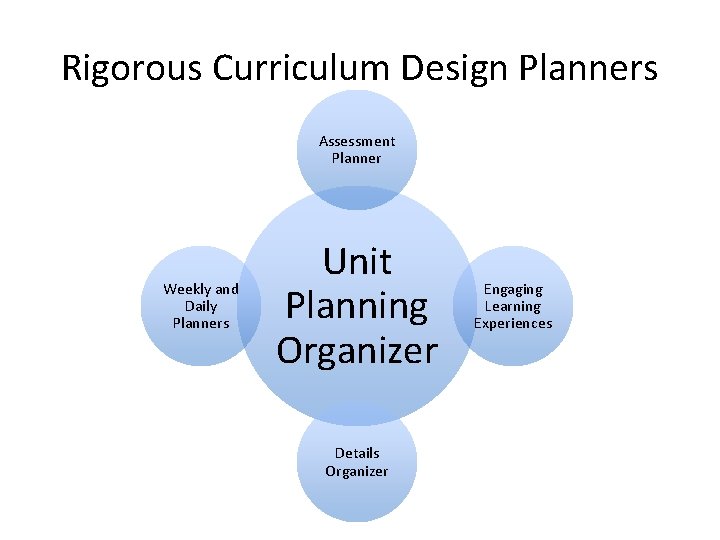
Rigorous Curriculum Design Planners Assessment Planner Weekly and Daily Planners Unit Planning Organizer Details Organizer Engaging Learning Experiences
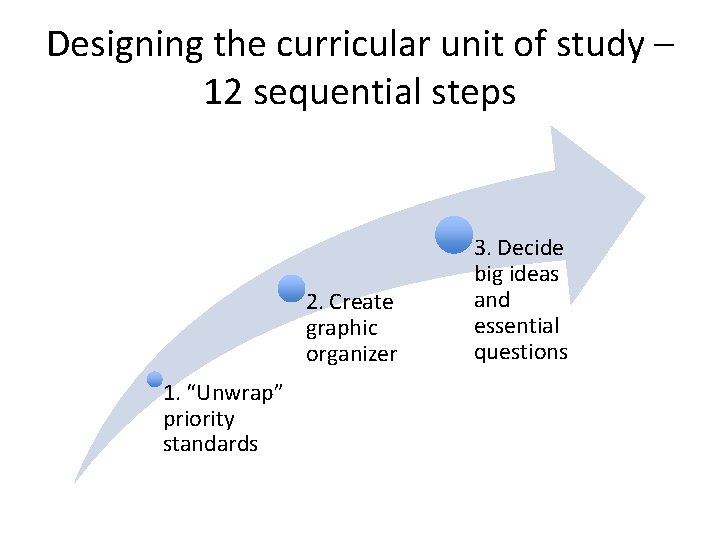
Designing the curricular unit of study – 12 sequential steps 2. Create graphic organizer 1. “Unwrap” priority standards 3. Decide big ideas and essential questions
1. “Unwrap” priority standards CCSS. ELA-Literacy. WHST. 9 -10. 7: -Conduct short as well as more sustained research projects to answer a question (including a self-generated question) or solve a problem; narrow or broaden the inquiry when appropriate; synthesize multiple sources on the subject, demonstrating understanding of the subject under investigation.
Priority Standards Defined • Priority standards are carefully selected subsets of the total list of the grade-specific and course-specific standards within each content area that students must know and be able to do by the end of each school year in order to be prepared to enter the next grade level or course.
Supporting Standards Defined • Supporting standards are those standards that support, connect to, or enhance the priority standards. They are taught within the context of the priority standards, but do not receive the same degree of instruction and assessment emphasis as do the priority standards.
Prioritization is not Elimination • All grade-level or course-specific standards are not equal in importance. • Prioritize those standards by distinguishing those that are essential from those that are supporting. • Teach the supporting standards in the context of or in relation to the essentials.
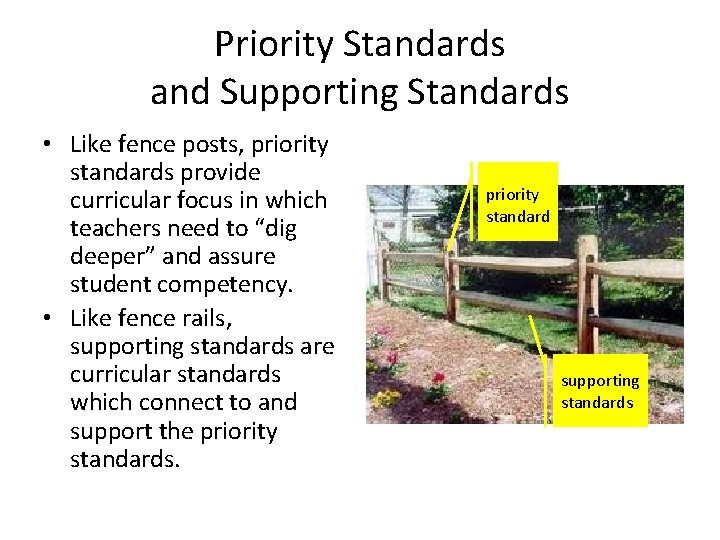
Priority Standards and Supporting Standards • Like fence posts, priority standards provide curricular focus in which teachers need to “dig deeper” and assure student competency. • Like fence rails, supporting standards are curricular standards which connect to and support the priority standards. priority standard supporting standards
2. Create graphic organizer Step 1: Make initial selections Step 2: Look for connections to state tests Step 3: Chart selections for each grade Step 4: Vertically align standards K-12 Step 5: Acquire feedback, revise, publish Step 6: Provide professional development
3. Decide big ideas and essential questions
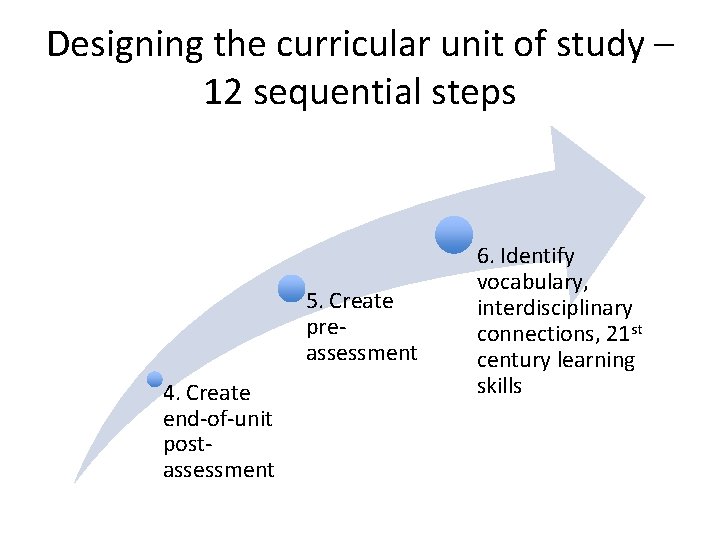
Designing the curricular unit of study – 12 sequential steps 5. Create preassessment 4. Create end-of-unit postassessment 6. Identify vocabulary, interdisciplinary connections, 21 st century learning skills
4. Create end-of-unit post-assessment 1. Know your purpose-what do you want the assessment to do? 2. Can be formative or summative 3. Match assessment question to skill’s level of rigor
5. Create pre-assessment Two types – Aligned-directly matched to the post assessment –Mirrored-has the same number and type of questions
6. Identify vocabulary, interdisciplinary connections, 21 st century learning skills • Make a list of skills you think our students will need to be successful
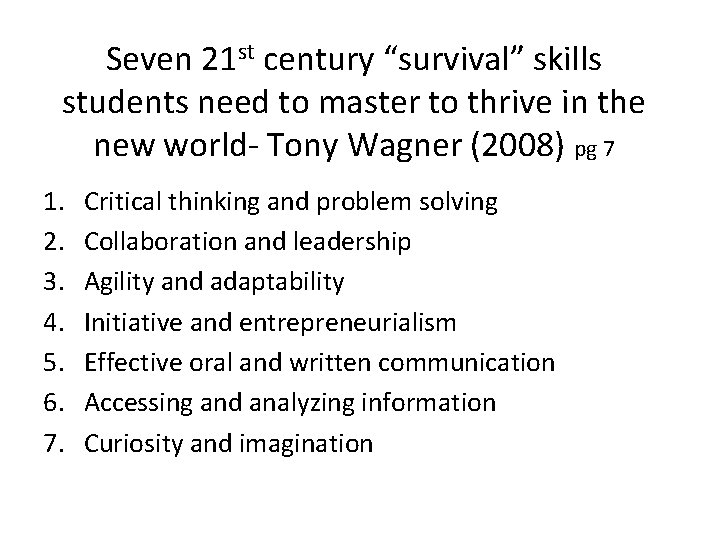
Seven 21 st century “survival” skills students need to master to thrive in the new world- Tony Wagner (2008) pg 7 1. 2. 3. 4. 5. 6. 7. Critical thinking and problem solving Collaboration and leadership Agility and adaptability Initiative and entrepreneurialism Effective oral and written communication Accessing and analyzing information Curiosity and imagination
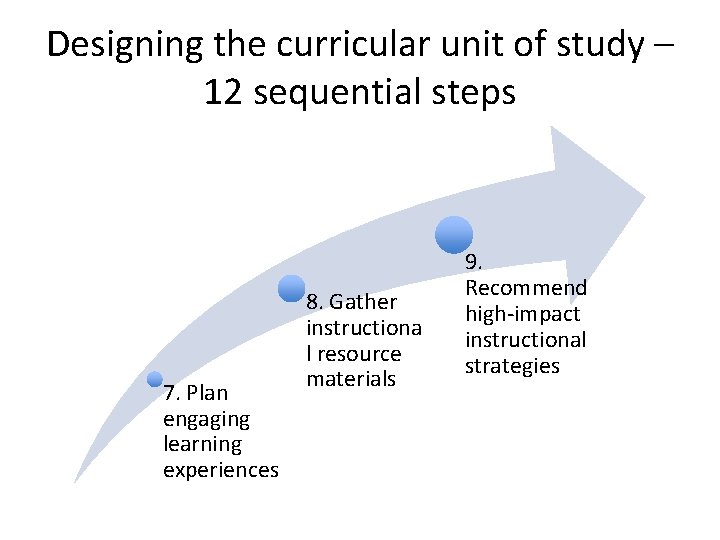
Designing the curricular unit of study – 12 sequential steps 7. Plan engaging learning experiences 8. Gather instructiona l resource materials 9. Recommend high-impact instructional strategies
7. Plan engaging learning experiences • Goal: to motivate students to engage in the corresponding performance tasks. • Promote students’ critical and creative thinking, communication, collaboration, problem-solving skills – necessary skills for the REAL WORLD. • Begins with an “engaging scenario. ”
Think SCRAP • • • Situation Challenge Role(s) Audience Product/Performance Look at p. 165 -170 in Rigorous Curriculum Design
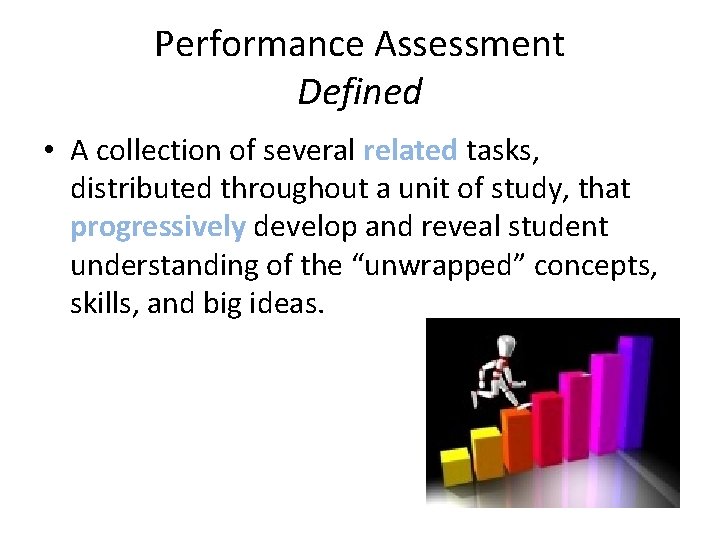
Performance Assessment Defined • A collection of several related tasks, distributed throughout a unit of study, that progressively develop and reveal student understanding of the “unwrapped” concepts, skills, and big ideas.
8. Gather instructional resource materials Teacher Resources
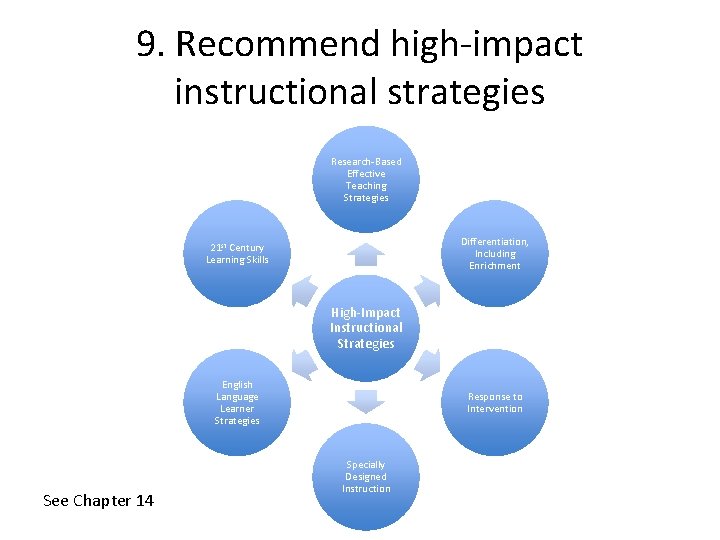
9. Recommend high-impact instructional strategies Research-Based Effective Teaching Strategies Differentiation, Including Enrichment 21 st Century Learning Skills High-Impact Instructional Strategies English Language Learner Strategies See Chapter 14 Response to Intervention Specially Designed Instruction
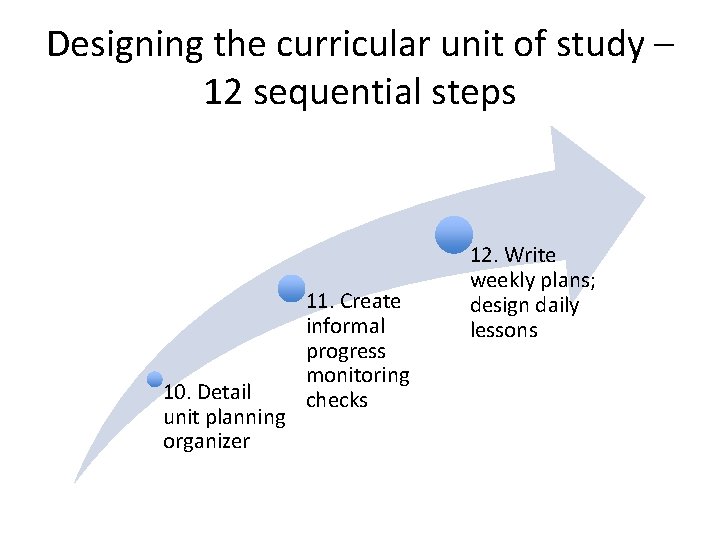
Designing the curricular unit of study – 12 sequential steps 10. Detail unit planning organizer 11. Create informal progress monitoring checks 12. Write weekly plans; design daily lessons
10. Detail unit planning organizer Jane Hammond, Fallen
Greater detail is needed • Sequencing and pacing of learning experiences • Suggested ways to use instructional strategies
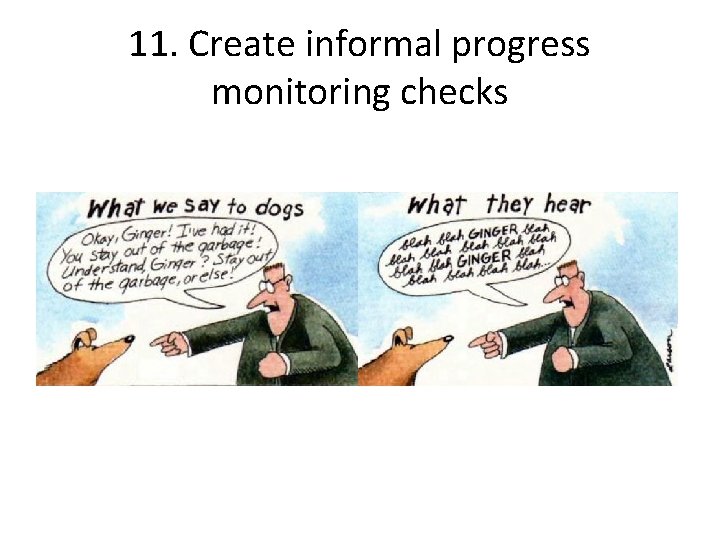
11. Create informal progress monitoring checks
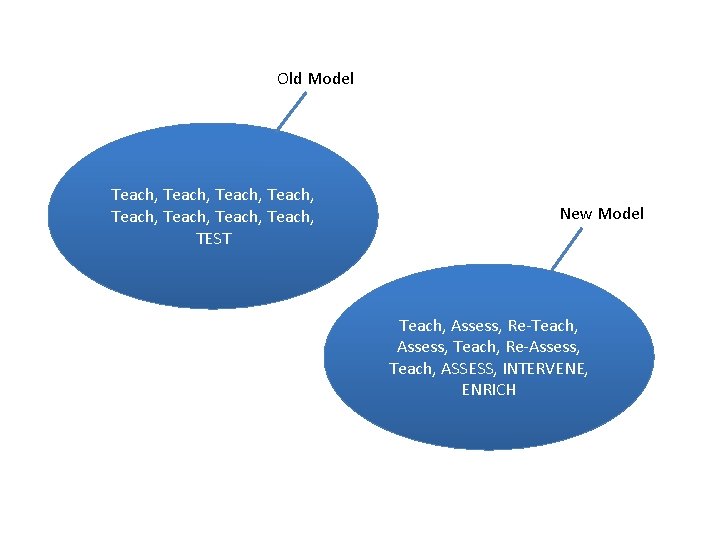
Old Model Teach, Teach, TEST New Model Teach, Assess, Re-Teach, Assess, Teach, Re-Assess, Teach, ASSESS, INTERVENE, ENRICH
12. Write weekly plans; design daily lessons
Make a chart that compares the RCD model to your current unit /lesson plan model. Your current planning model RCD model
Progress Check • Where are you now? • Which “big picture” practices are already in place? • What should your next steps be?
Next Opportunity v. Depth of Knowledge Workshop v. October 29 v. Rigorous Curriculum Design- Create your own performance task v. November 5 v. Create rubrics for your performance task v. November 19
Feedback
- Slides: 41