
CCNA Cisco Certified Network Associate Study Guide CHAPTER
- Slides: 42
CCNA: Cisco Certified Network Associate Study Guide CHAPTER 1: Internetworking © Wiley Inc. 2006. All Rights Reserved.
The CCNA exam topics covered in this chapter include the following: Technology • Describe network communications using layered models • Compare and contrast key characteristics of LAN environments • Describe the components of network devices • Evaluate rules for packet control © Wiley Inc. 2006. All Rights Reserved.
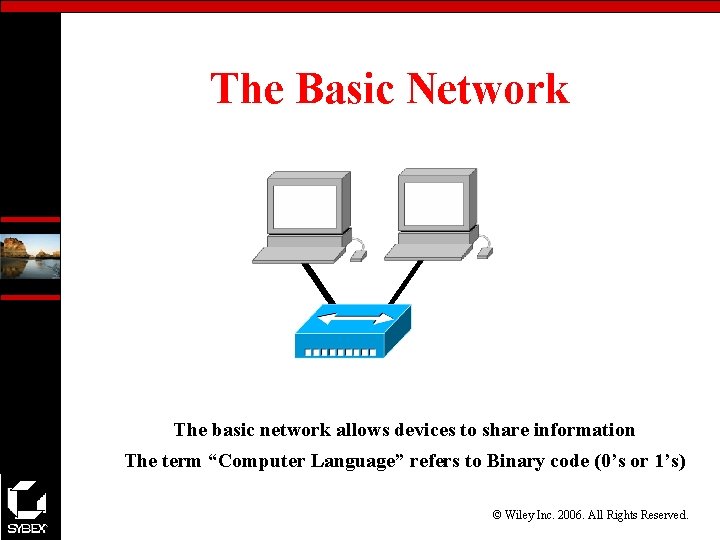
The Basic Network The basic network allows devices to share information The term “Computer Language” refers to Binary code (0’s or 1’s) © Wiley Inc. 2006. All Rights Reserved.
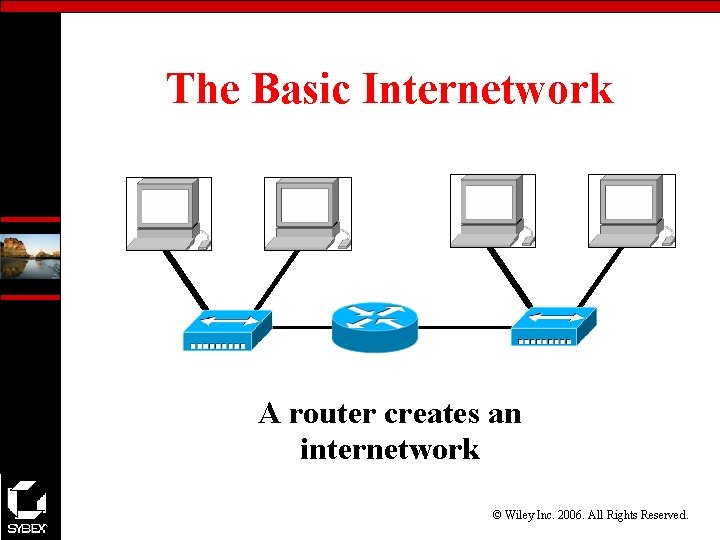
The Basic Internetwork A router creates an internetwork © Wiley Inc. 2006. All Rights Reserved.
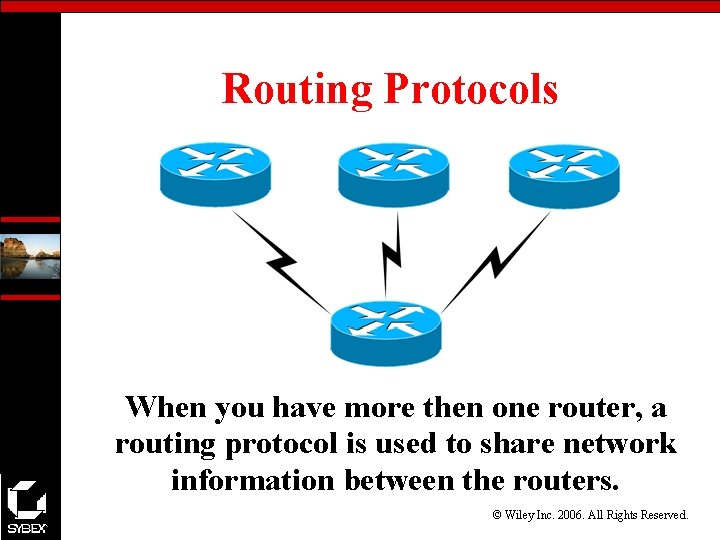
Routing Protocols When you have more then one router, a routing protocol is used to share network information between the routers. © Wiley Inc. 2006. All Rights Reserved.
Internetworking Basics Possible causes of LAN traffic congestion: • Too many hosts in the broadcast domain • Broadcast storms • Multicasting • Low Bandwidth © Wiley Inc. 2006. All Rights Reserved.
Internetworking Basics Advantages of using routers in your network: • Routers don’t forward broadcasts by default. • Routers can filter the network based on layer-3 (Network layer) information (i. e. , IP address). © Wiley Inc. 2006. All Rights Reserved.
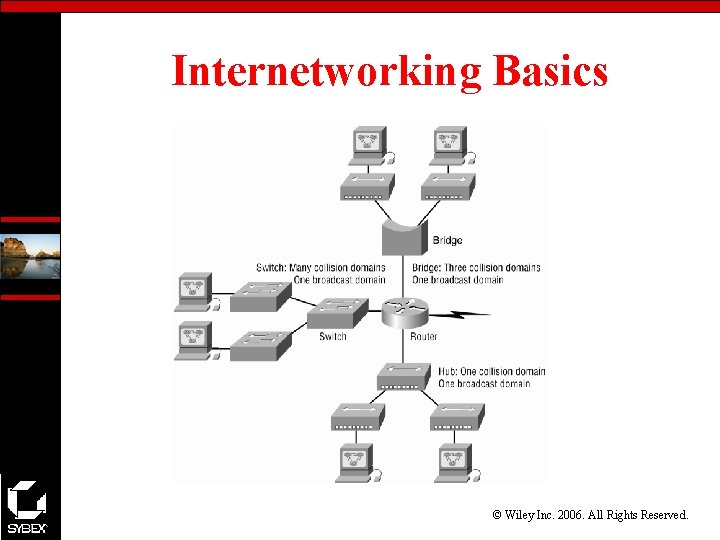
Internetworking Basics © Wiley Inc. 2006. All Rights Reserved.
Internetworking Models • The OSI Reference Model • The Layered Approach • Advantages of OSI layered model – Allows multiple-vendor development through standardization of network components – Allows various types of network hardware and software to communicate. – Prevents changes in one layer from affecting other layers, so it does not hamper development. © Wiley Inc. 2006. All Rights Reserved.
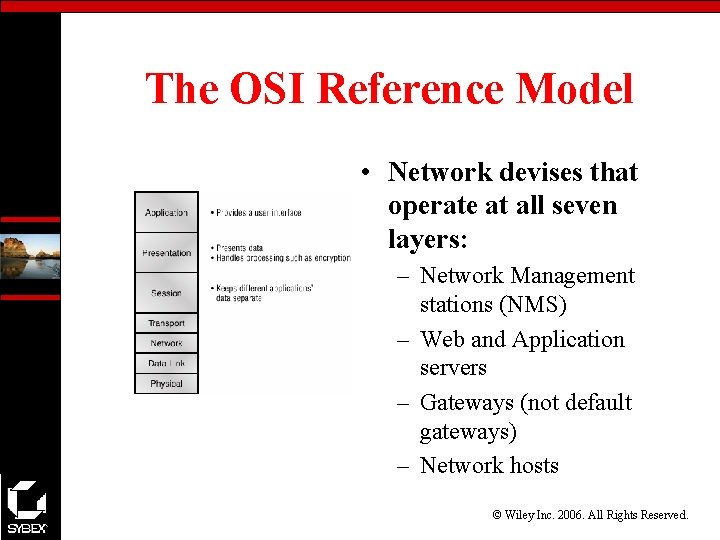
The OSI Reference Model’s Seven Layers – Application Layer – Presentation Layer – Session Layer – Transport Layer – Network Layer – Data Ling Layer – Physical Layer © Wiley Inc. 2006. All Rights Reserved.
The OSI Reference Model • Network devises that operate at all seven layers: – Network Management stations (NMS) – Web and Application servers – Gateways (not default gateways) – Network hosts © Wiley Inc. 2006. All Rights Reserved.
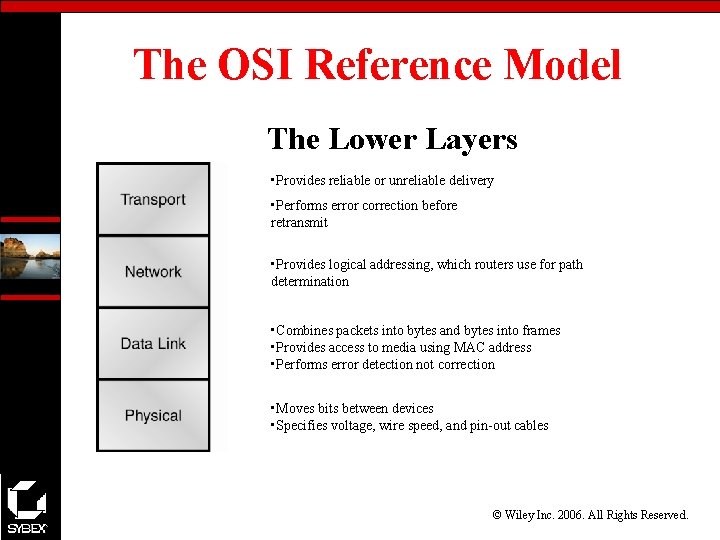
The OSI Reference Model The Lower Layers • Provides reliable or unreliable delivery • Performs error correction before retransmit • Provides logical addressing, which routers use for path determination • Combines packets into bytes and bytes into frames • Provides access to media using MAC address • Performs error detection not correction • Moves bits between devices • Specifies voltage, wire speed, and pin-out cables © Wiley Inc. 2006. All Rights Reserved.
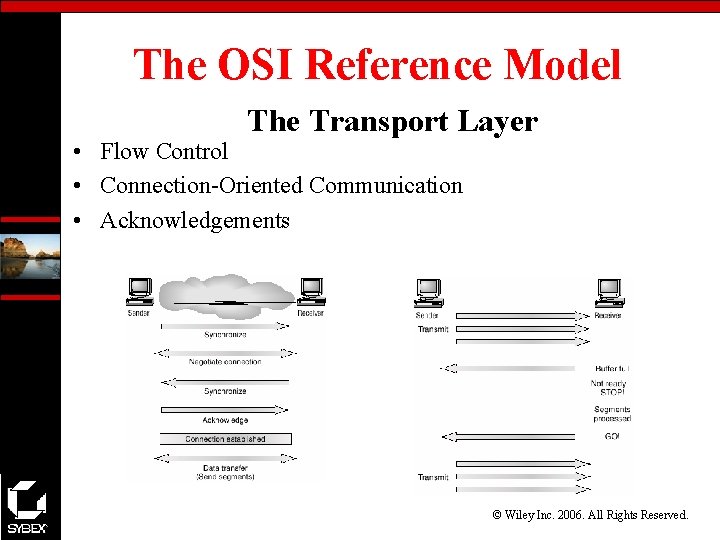
The OSI Reference Model The Transport Layer • Flow Control • Connection-Oriented Communication • Acknowledgements © Wiley Inc. 2006. All Rights Reserved.
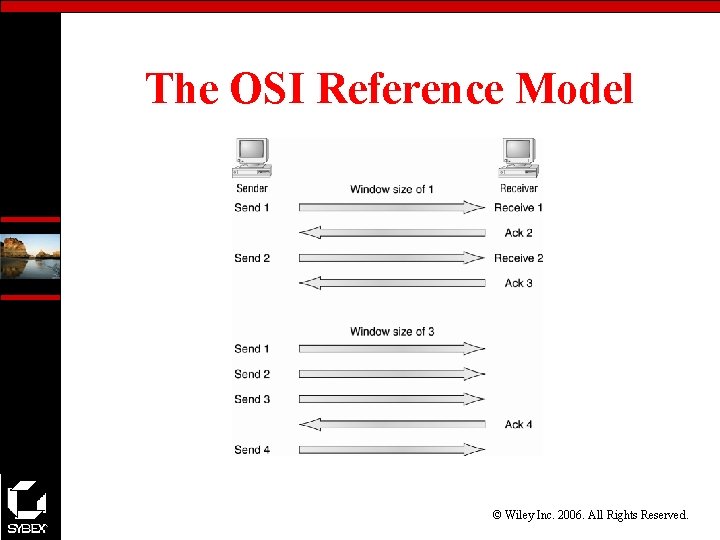
The OSI Reference Model © Wiley Inc. 2006. All Rights Reserved.
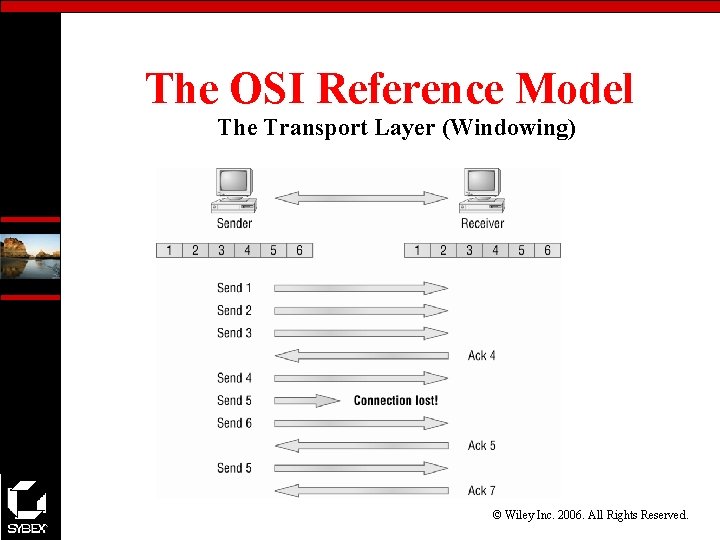
The OSI Reference Model The Transport Layer (Windowing) © Wiley Inc. 2006. All Rights Reserved.
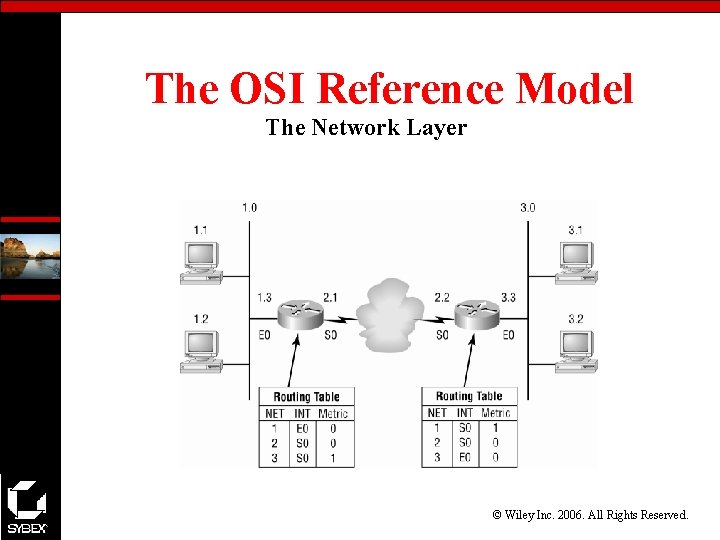
The OSI Reference Model The Network Layer © Wiley Inc. 2006. All Rights Reserved.
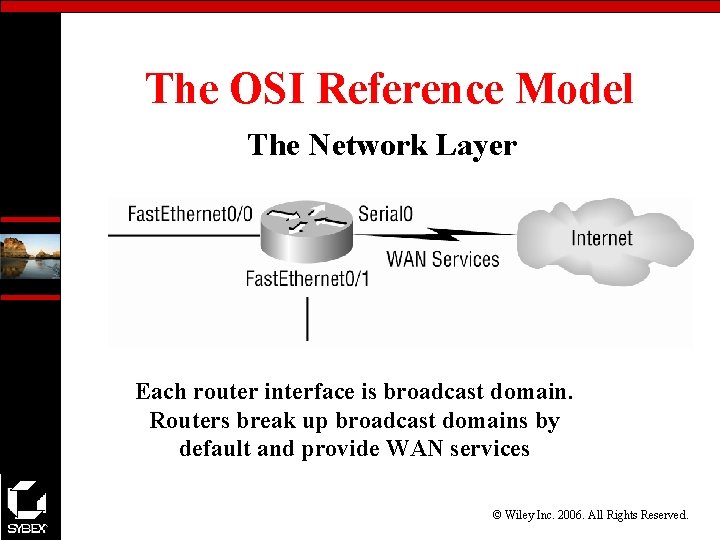
The OSI Reference Model The Network Layer Each router interface is broadcast domain. Routers break up broadcast domains by default and provide WAN services © Wiley Inc. 2006. All Rights Reserved.
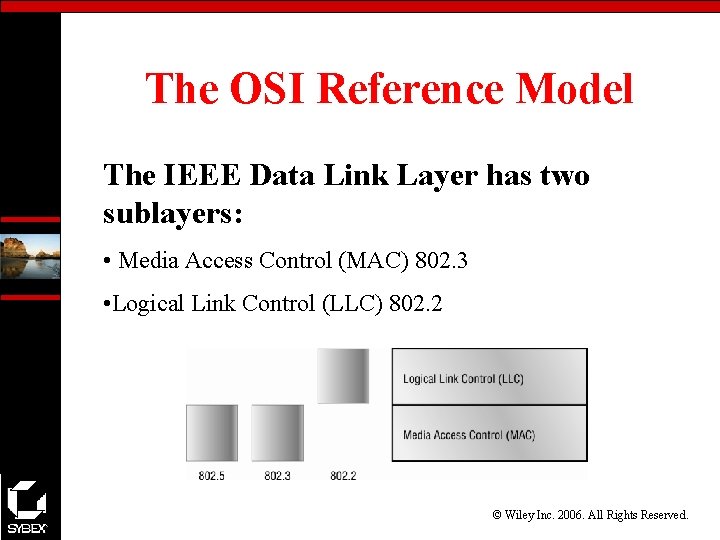
The OSI Reference Model The IEEE Data Link Layer has two sublayers: • Media Access Control (MAC) 802. 3 • Logical Link Control (LLC) 802. 2 © Wiley Inc. 2006. All Rights Reserved.
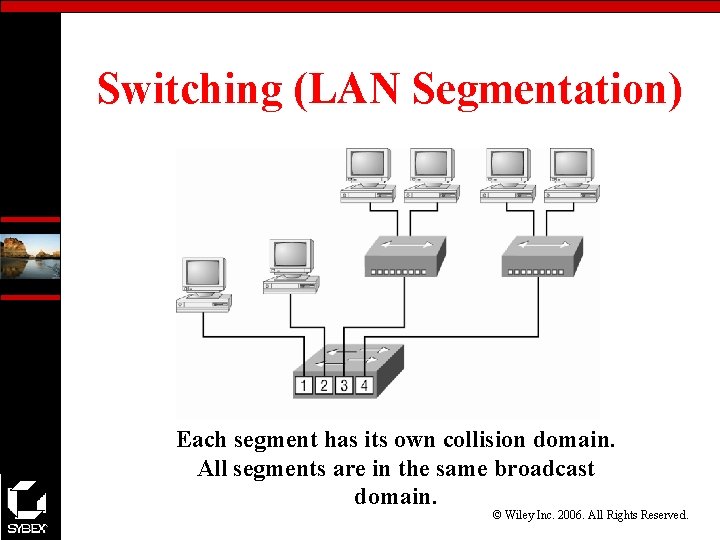
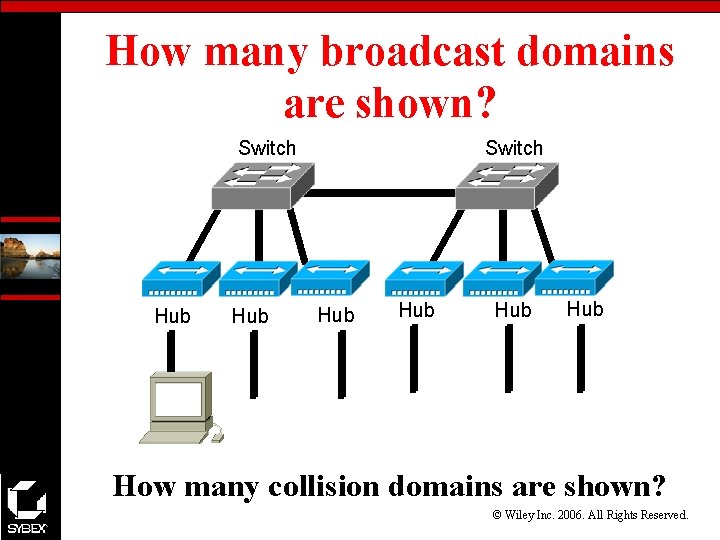
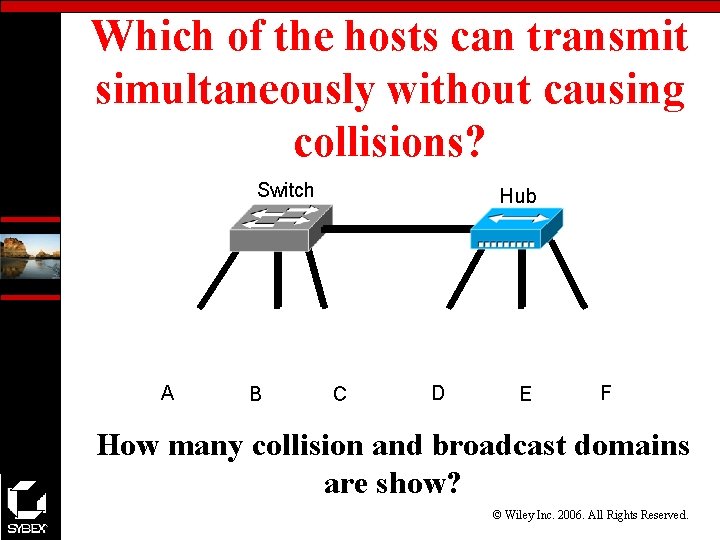
Switching (LAN Segmentation) Each segment has its own collision domain. All segments are in the same broadcast domain. © Wiley Inc. 2006. All Rights Reserved.
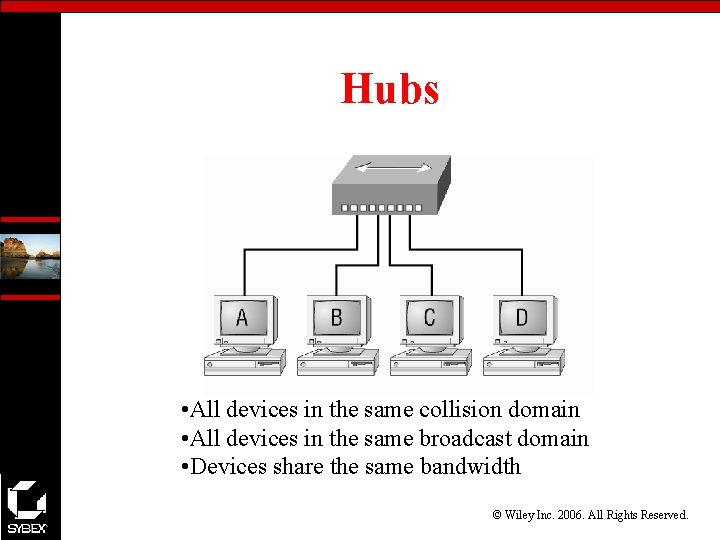
Hubs • All devices in the same collision domain • All devices in the same broadcast domain • Devices share the same bandwidth © Wiley Inc. 2006. All Rights Reserved.
The OSI Reference Model The Physical Layer • Sends and receives bits; 1’s & 0’s • Specify electrical, mechanical, procedural, and functional requirements • DTE/DCE interfaces identified • Hubs (Multi-port repeaters) © Wiley Inc. 2006. All Rights Reserved.
Ethernet Networking • A connection media access method that allows all hosts on a network to share the same bandwidth (Uses Data Link & Physical Layer specifications) • CSMA/CD • Half Duplex • Full Duplex © Wiley Inc. 2006. All Rights Reserved.
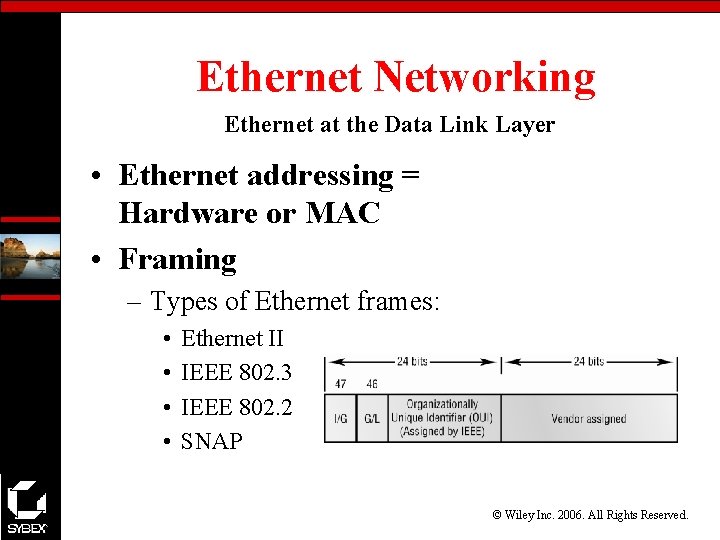
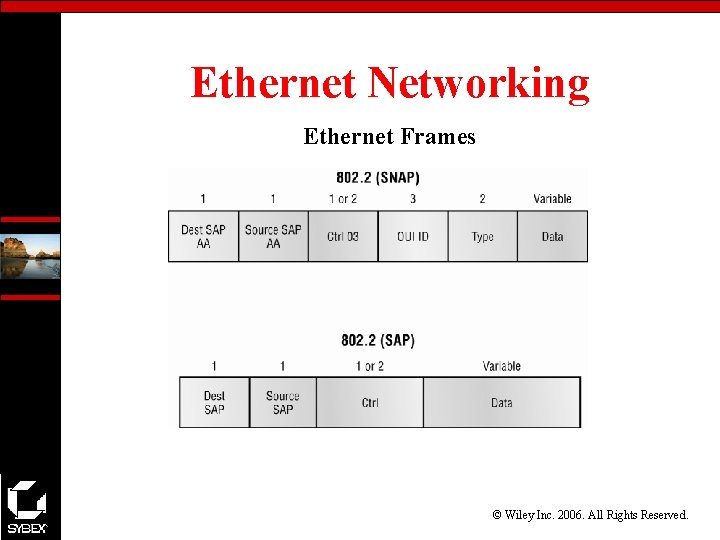
Ethernet Networking Ethernet at the Data Link Layer • Ethernet addressing = Hardware or MAC • Framing – Types of Ethernet frames: • • Ethernet II IEEE 802. 3 IEEE 802. 2 SNAP © Wiley Inc. 2006. All Rights Reserved.
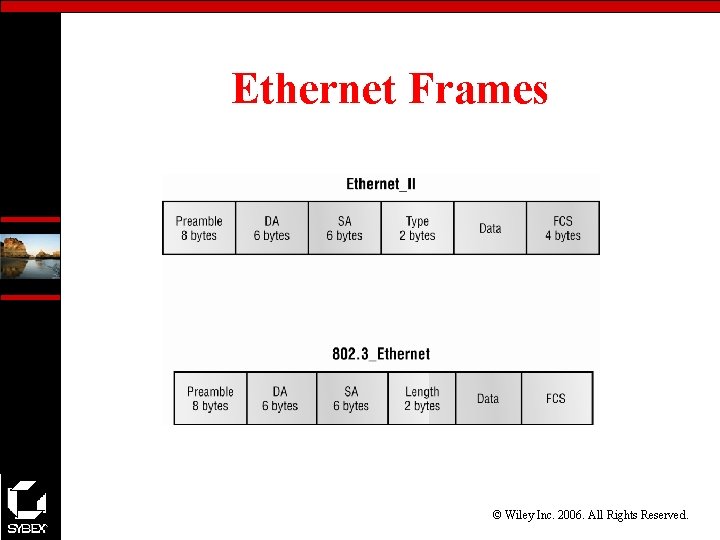
Ethernet Frames © Wiley Inc. 2006. All Rights Reserved.
Ethernet Networking Ethernet Frames © Wiley Inc. 2006. All Rights Reserved.
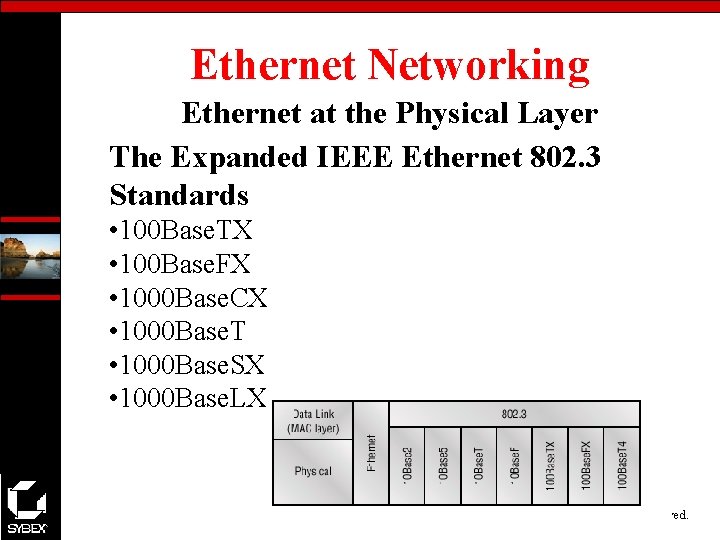
Ethernet Networking Ethernet at the Physical Layer The Expanded IEEE Ethernet 802. 3 Standards • 100 Base. TX • 100 Base. FX • 1000 Base. CX • 1000 Base. T • 1000 Base. SX • 1000 Base. LX © Wiley Inc. 2006. All Rights Reserved.
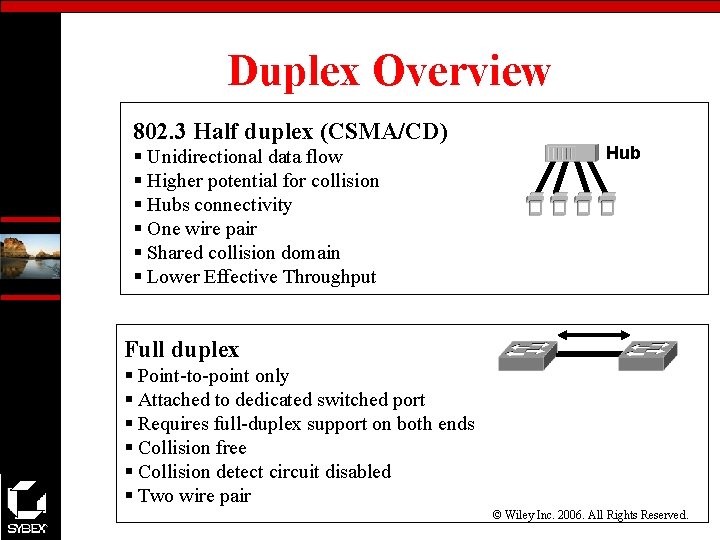
Duplex Overview 802. 3 Half duplex (CSMA/CD) § Unidirectional data flow § Higher potential for collision § Hubs connectivity § One wire pair § Shared collision domain § Lower Effective Throughput Hub Full duplex § Point-to-point only § Attached to dedicated switched port § Requires full-duplex support on both ends § Collision free § Collision detect circuit disabled § Two wire pair © Wiley Inc. 2006. All Rights Reserved.
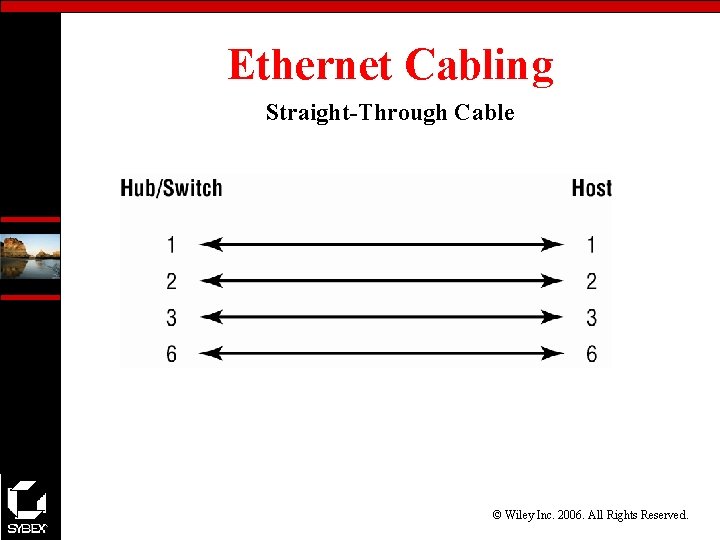
Ethernet Cabling Straight-Through Cable © Wiley Inc. 2006. All Rights Reserved.
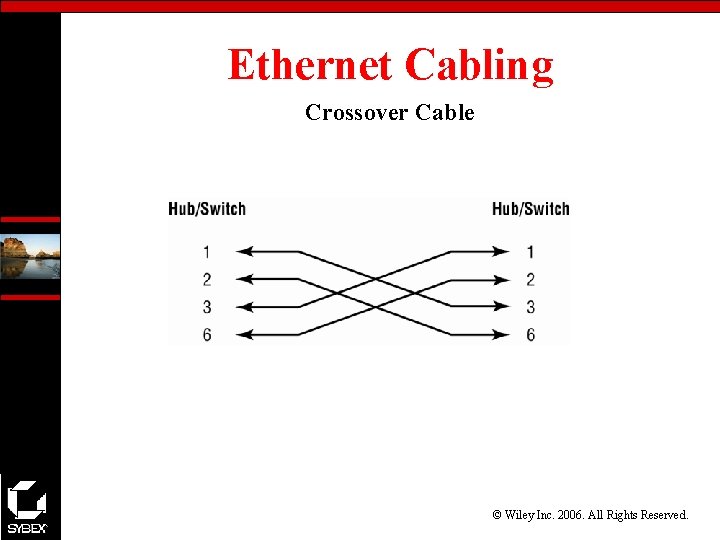
Ethernet Cabling Crossover Cable © Wiley Inc. 2006. All Rights Reserved.
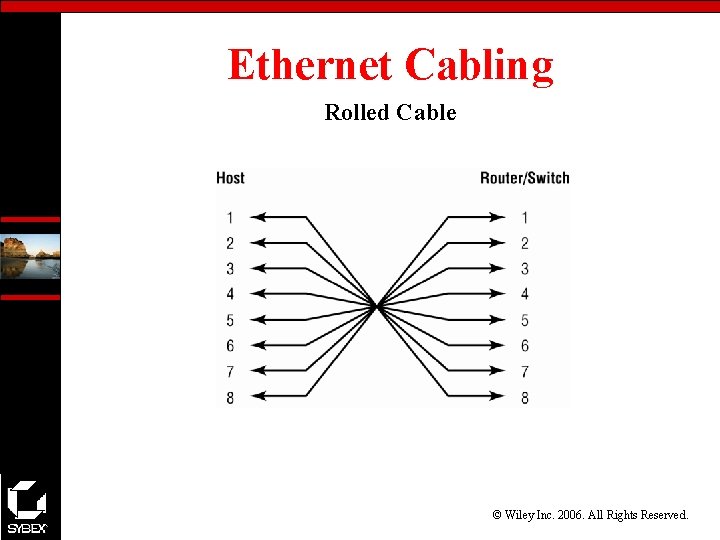
Ethernet Cabling Rolled Cable © Wiley Inc. 2006. All Rights Reserved.
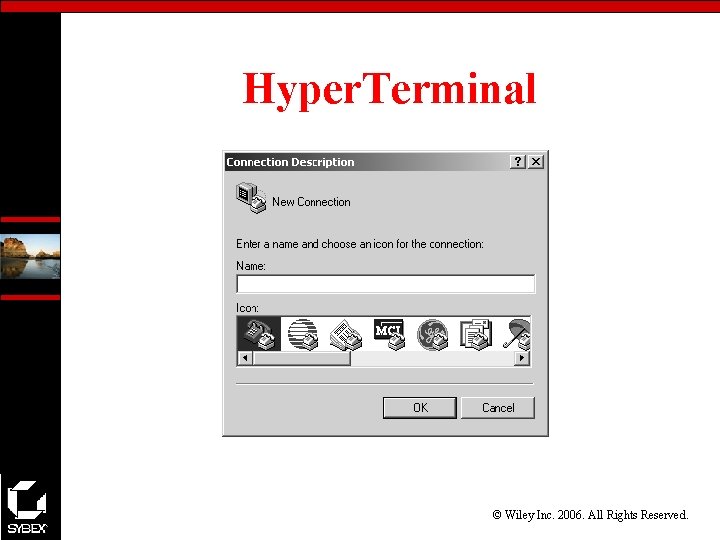
Hyper. Terminal © Wiley Inc. 2006. All Rights Reserved.
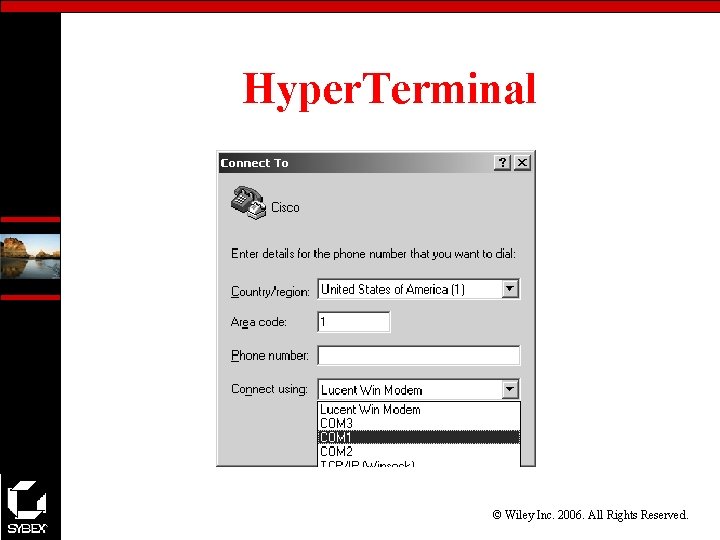
Hyper. Terminal © Wiley Inc. 2006. All Rights Reserved.
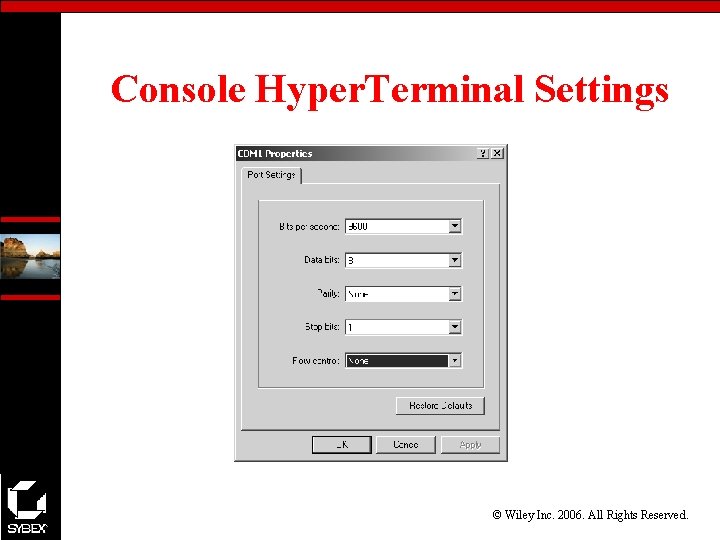
Console Hyper. Terminal Settings © Wiley Inc. 2006. All Rights Reserved.
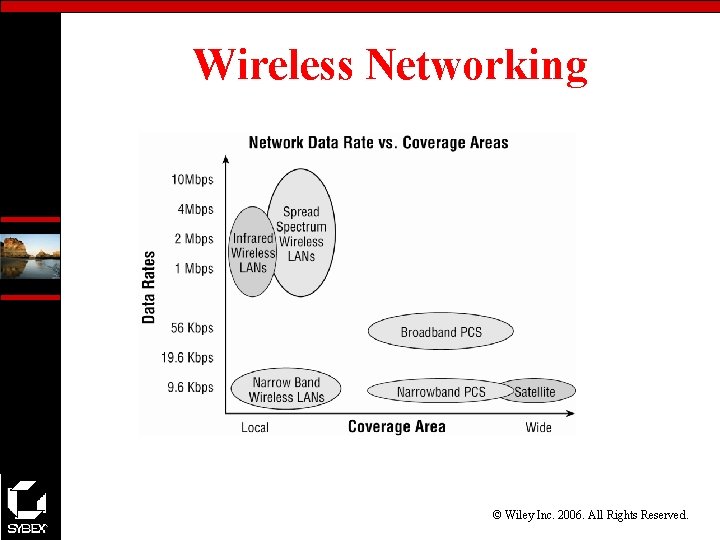
Wireless Networking © Wiley Inc. 2006. All Rights Reserved.
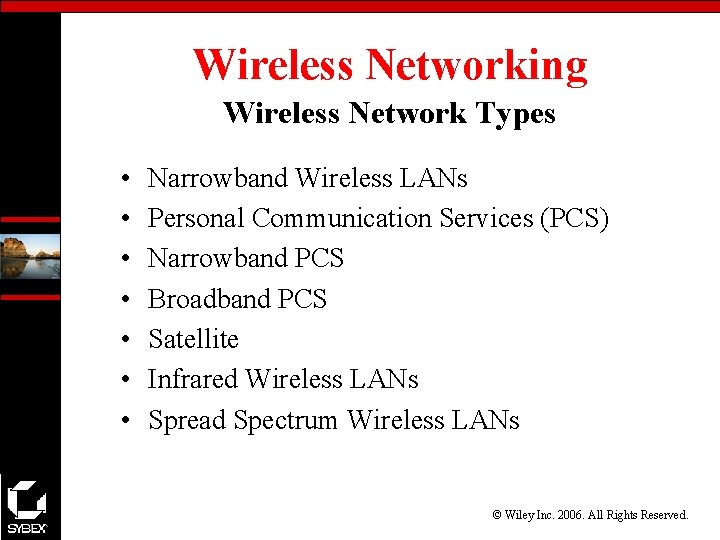
Wireless Networking Wireless Network Types • • Narrowband Wireless LANs Personal Communication Services (PCS) Narrowband PCS Broadband PCS Satellite Infrared Wireless LANs Spread Spectrum Wireless LANs © Wiley Inc. 2006. All Rights Reserved.
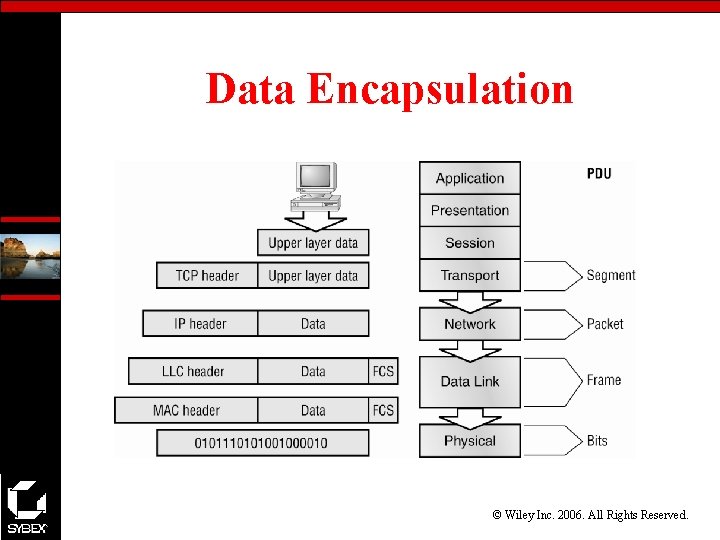
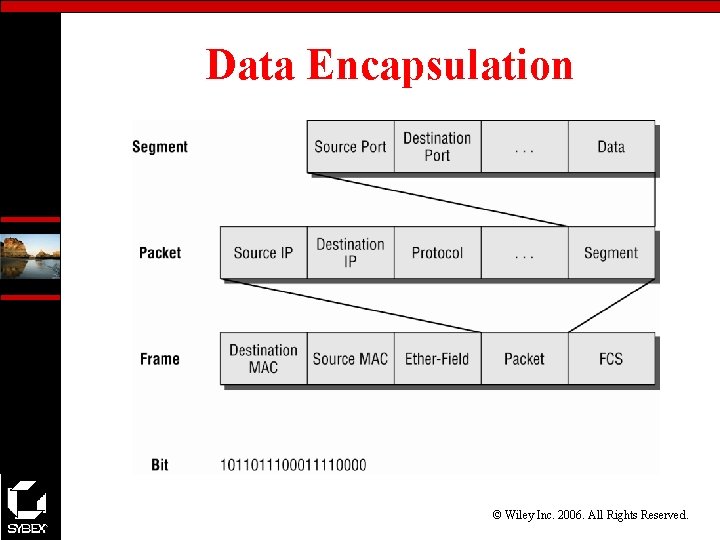
Data Encapsulation © Wiley Inc. 2006. All Rights Reserved.
Data Encapsulation © Wiley Inc. 2006. All Rights Reserved.
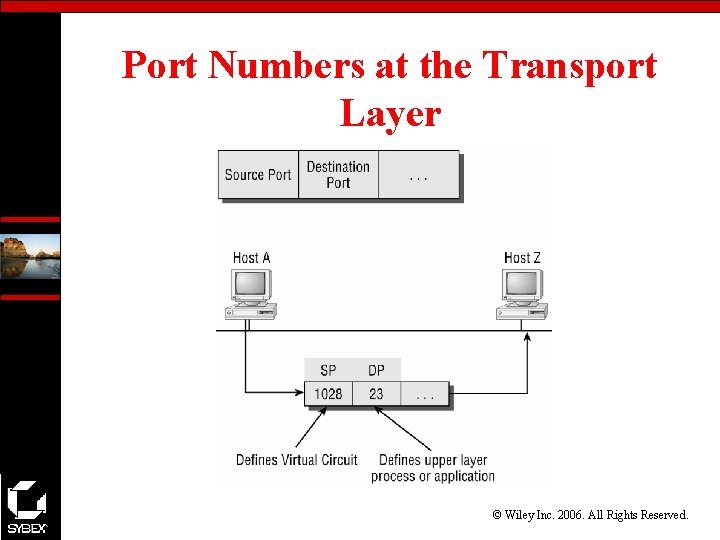
Port Numbers at the Transport Layer © Wiley Inc. 2006. All Rights Reserved.
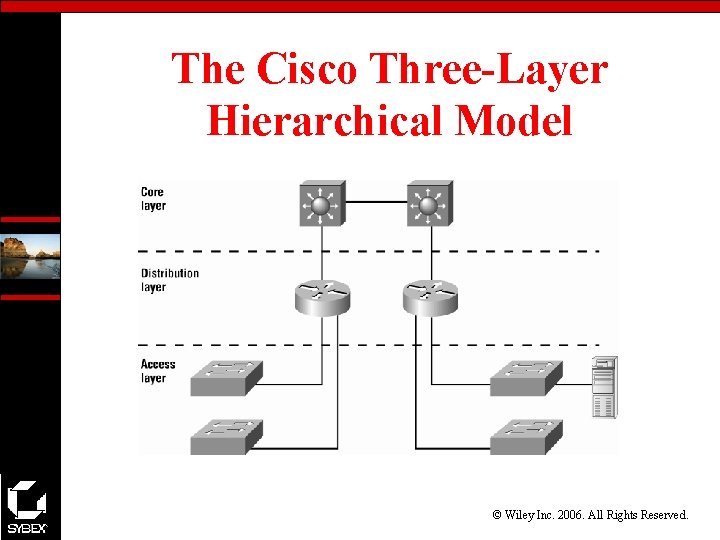
The Cisco Three-Layer Hierarchical Model © Wiley Inc. 2006. All Rights Reserved.
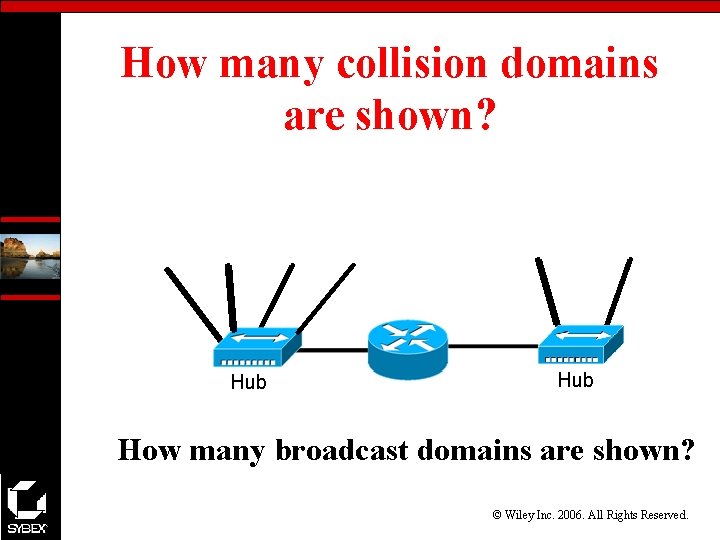
How many collision domains are shown? Hub How many broadcast domains are shown? © Wiley Inc. 2006. All Rights Reserved.
How many broadcast domains are shown? Switch Hub Hub Hub How many collision domains are shown? © Wiley Inc. 2006. All Rights Reserved.
Which of the hosts can transmit simultaneously without causing collisions? Switch A B Hub C D E F How many collision and broadcast domains are show? © Wiley Inc. 2006. All Rights Reserved.