
CCNA 3 v 3 0 Module 5 Switches
- Slides: 29
CCNA 3 v 3. 0 Module 5 Switches © 2003, Cisco Systems, Inc. All rights reserved. 1
Purpose of This Power. Point • This Power. Point primarily consists of the Target Indicators (TIs) of this module in CCNA version 3. 0. • It was created to give instructors a Power. Point to take and modify as their own. • This Power. Point is: NOT a study guide for the module final assessment. NOT a study guide for the CCNA certification exam. • Please report any mistakes you find in this Power. Point by using the Academy Connection Help link. © 2003, Cisco Systems, Inc. All rights reserved. 2
To Locate Instructional Resource Materials on Academy Connection: • Go to the Community FTP Center to locate materials created by the instructor community • Go to the Tools section • Go to the Alpha Preview section • Go to the Community link under Resources • See the resources available on the Class home page for classes you are offering • Search http: //www. cisco. com • Contact your parent academy! © 2003, Cisco Systems, Inc. All rights reserved. 3
Objectives • LAN design • LAN switches © 2003, Cisco Systems, Inc. All rights reserved. 4
LAN Design Goals • Functionality • Scalability • Adaptability • Manageability © 2003, Cisco Systems, Inc. All rights reserved. 5
LAN Design Considerations • The function and placement of servers • Collision-detection issues • Segmentation issues • Broadcast domain issues © 2003, Cisco Systems, Inc. All rights reserved. 6
LAN Design Methodology • Gather requirements and expectations • Analyze requirements and data • Design the Layer 1, 2, and 3 LAN structure, or topology • Document the logical and physical network implementation © 2003, Cisco Systems, Inc. All rights reserved. 7
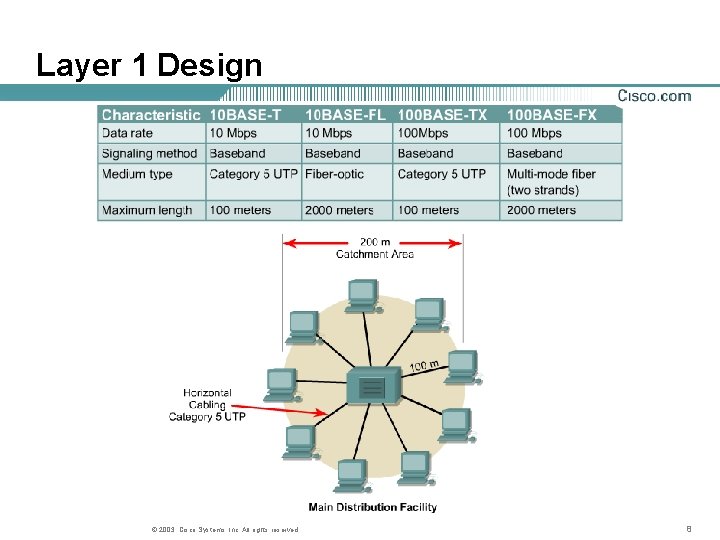
Layer 1 Design © 2003, Cisco Systems, Inc. All rights reserved. 8
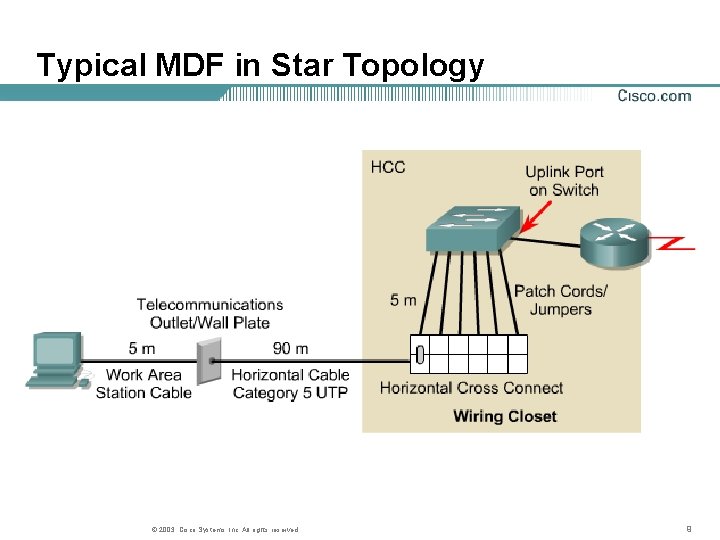
Typical MDF in Star Topology © 2003, Cisco Systems, Inc. All rights reserved. 9
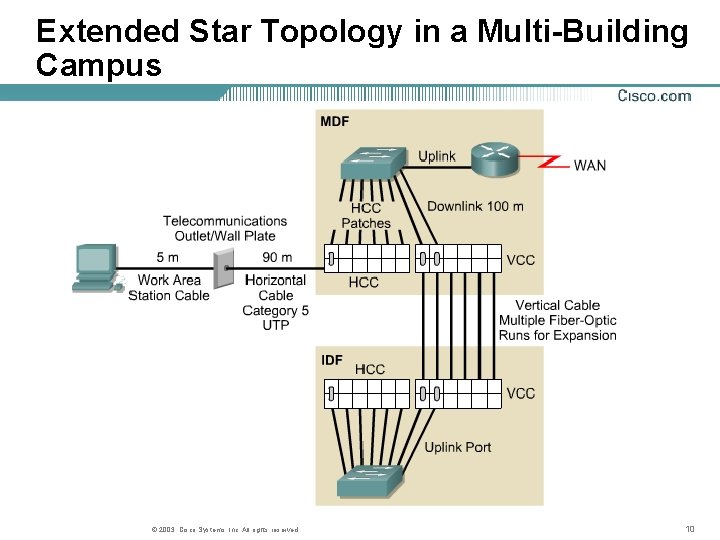
Extended Star Topology in a Multi-Building Campus © 2003, Cisco Systems, Inc. All rights reserved. 10
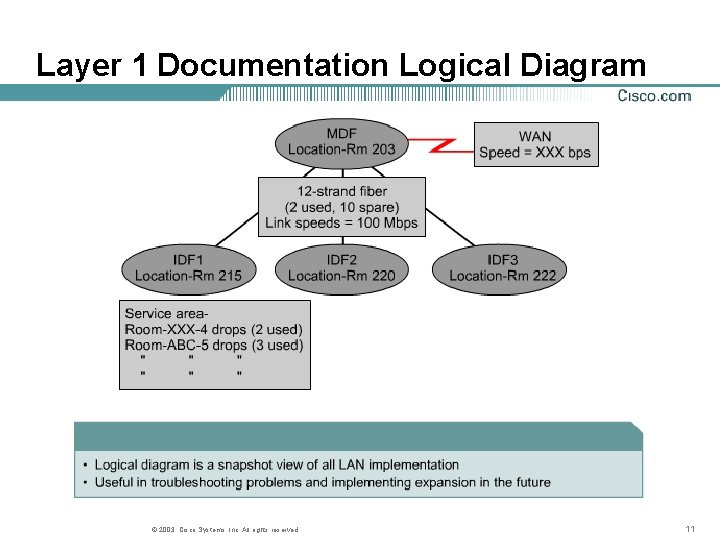
Layer 1 Documentation Logical Diagram © 2003, Cisco Systems, Inc. All rights reserved. 11
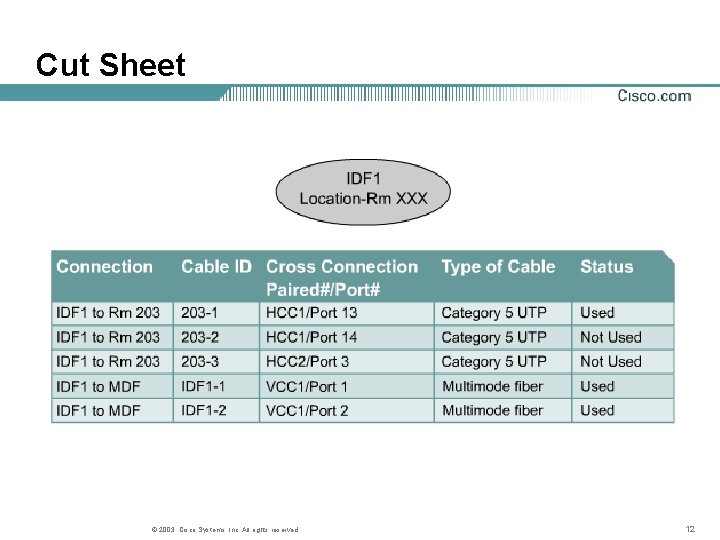
Cut Sheet © 2003, Cisco Systems, Inc. All rights reserved. 12
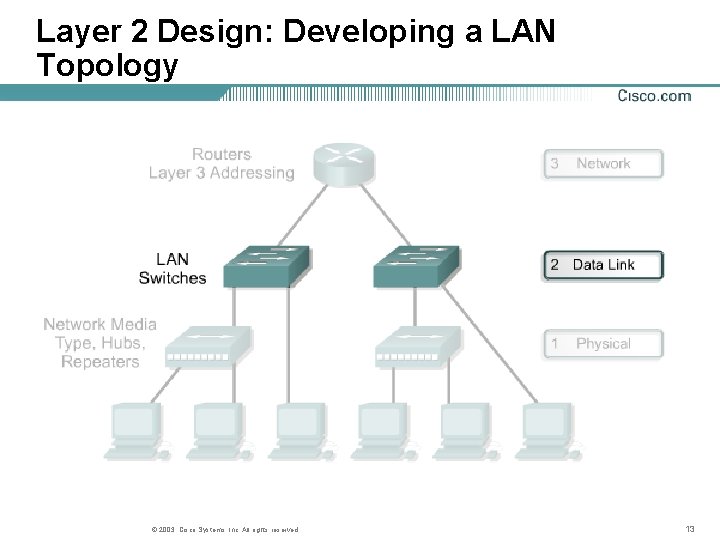
Layer 2 Design: Developing a LAN Topology © 2003, Cisco Systems, Inc. All rights reserved. 13
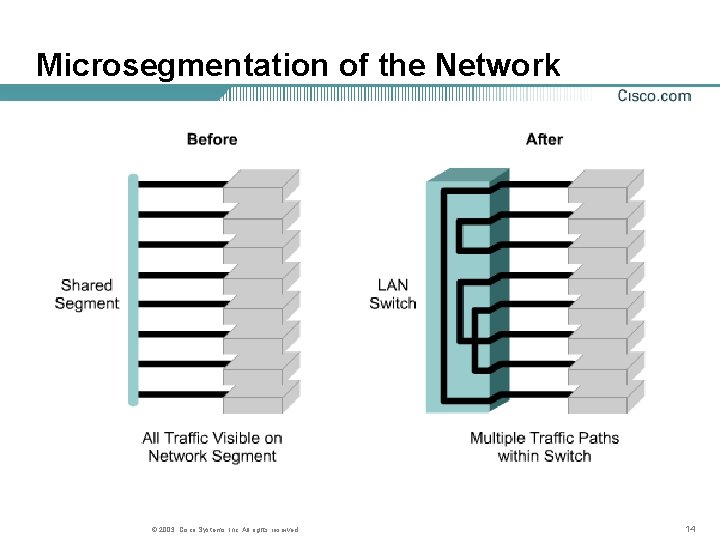
Microsegmentation of the Network © 2003, Cisco Systems, Inc. All rights reserved. 14
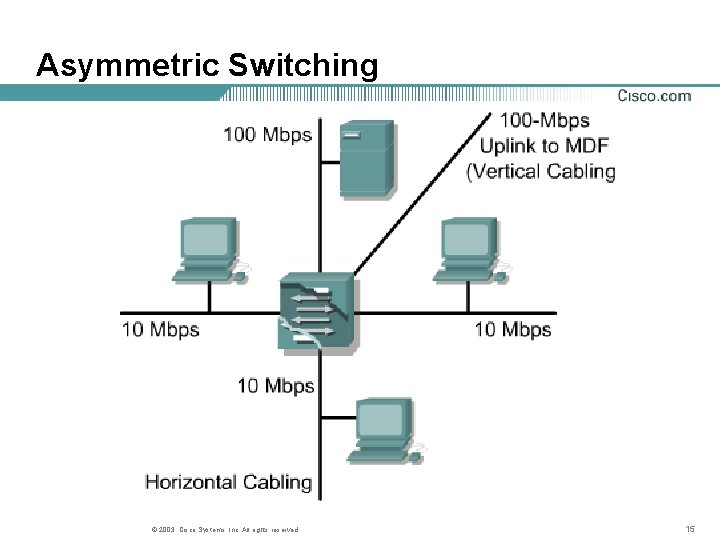
Asymmetric Switching © 2003, Cisco Systems, Inc. All rights reserved. 15
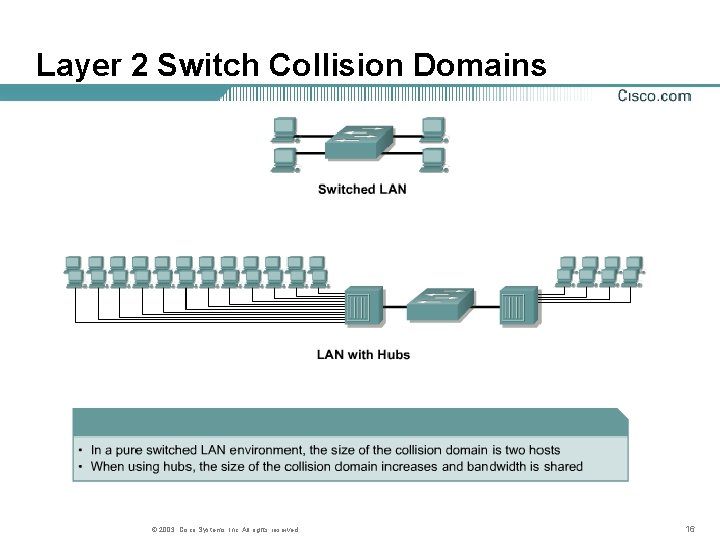
Layer 2 Switch Collision Domains © 2003, Cisco Systems, Inc. All rights reserved. 16
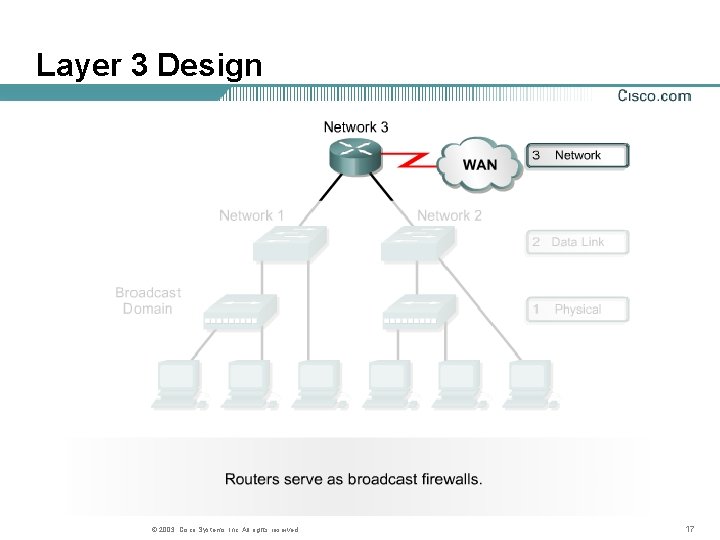
Layer 3 Design © 2003, Cisco Systems, Inc. All rights reserved. 17
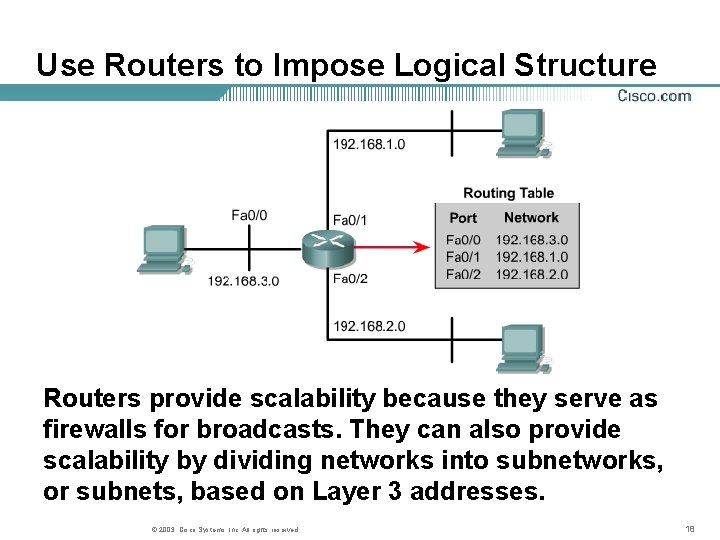
Use Routers to Impose Logical Structure Routers provide scalability because they serve as firewalls for broadcasts. They can also provide scalability by dividing networks into subnetworks, or subnets, based on Layer 3 addresses. © 2003, Cisco Systems, Inc. All rights reserved. 18
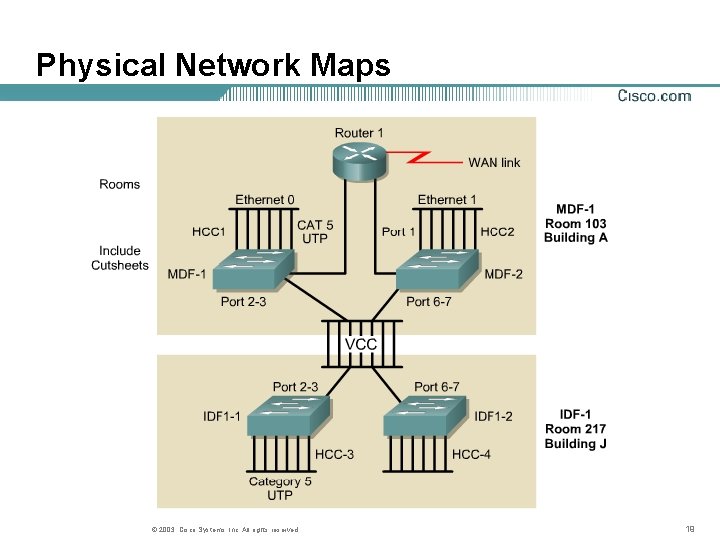
Physical Network Maps © 2003, Cisco Systems, Inc. All rights reserved. 19
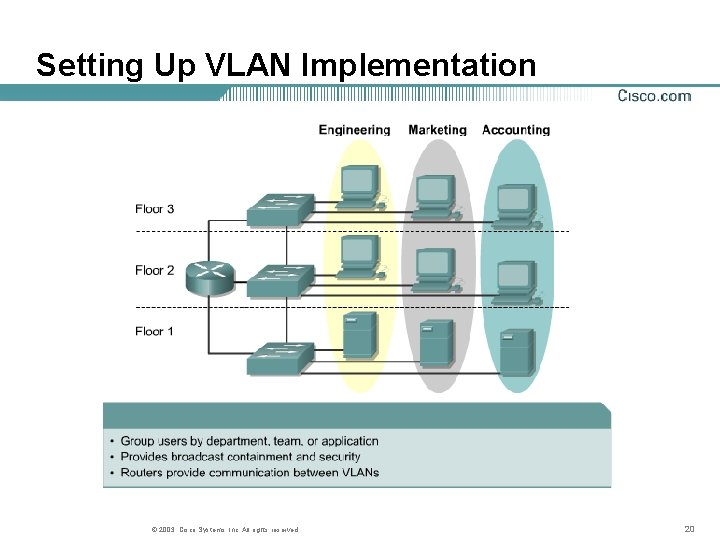
Setting Up VLAN Implementation © 2003, Cisco Systems, Inc. All rights reserved. 20
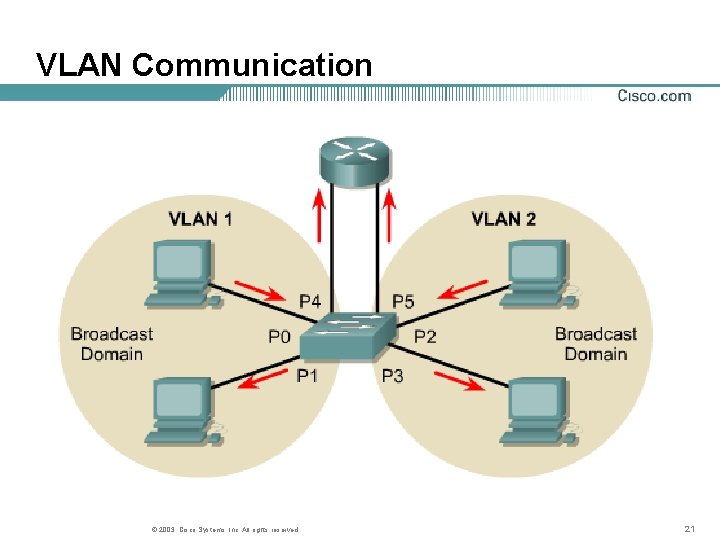
VLAN Communication © 2003, Cisco Systems, Inc. All rights reserved. 21
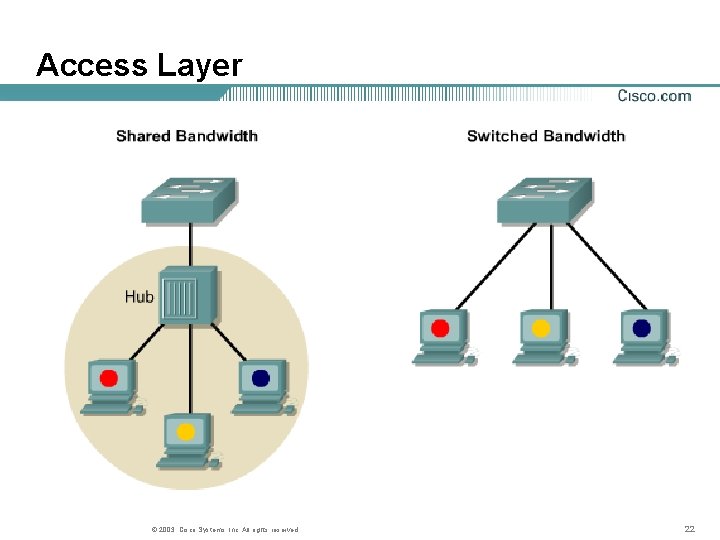
Access Layer © 2003, Cisco Systems, Inc. All rights reserved. 22
Access Layer • Functions of the Access Layer: Shared Bandwidth Switched Bandwidth MAC Layer Bandwidth Microsegmentation © 2003, Cisco Systems, Inc. All rights reserved. 23
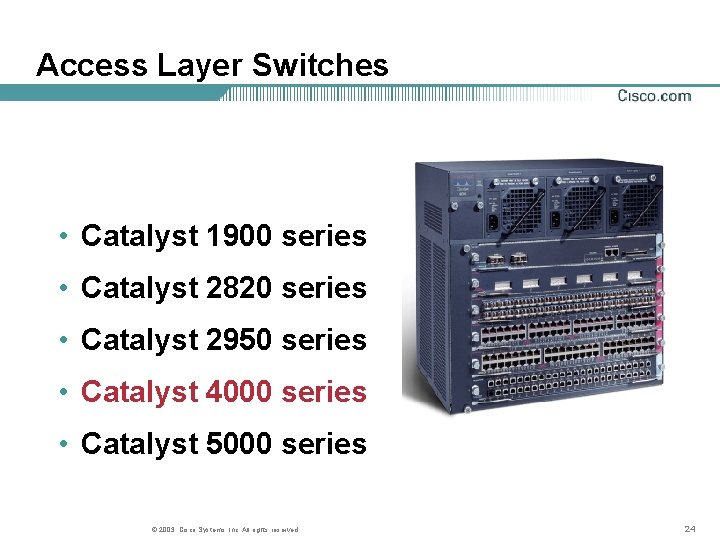
Access Layer Switches • Catalyst 1900 series • Catalyst 2820 series • Catalyst 2950 series • Catalyst 4000 series • Catalyst 5000 series © 2003, Cisco Systems, Inc. All rights reserved. 24
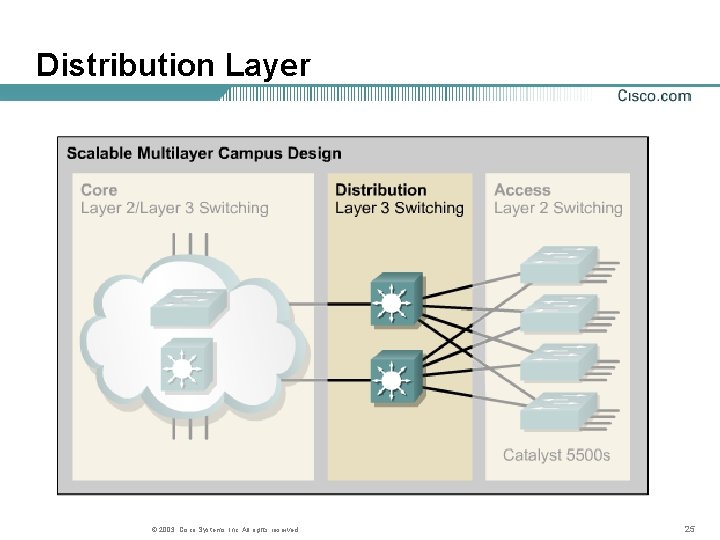
Distribution Layer © 2003, Cisco Systems, Inc. All rights reserved. 25
Distribution Layer • In a switched network, the distribution layer includes several functions such as the following: Aggregation of the wiring-closet connections Broadcast/multicast domain definition VLAN routing Any media transitions that need to occur Security © 2003, Cisco Systems, Inc. All rights reserved. 26
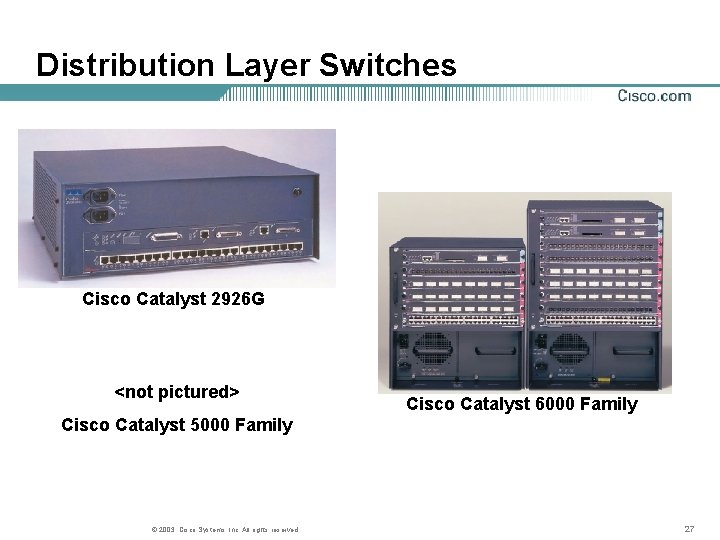
Distribution Layer Switches Cisco Catalyst 2926 G <not pictured> Cisco Catalyst 6000 Family Cisco Catalyst 5000 Family © 2003, Cisco Systems, Inc. All rights reserved. 27
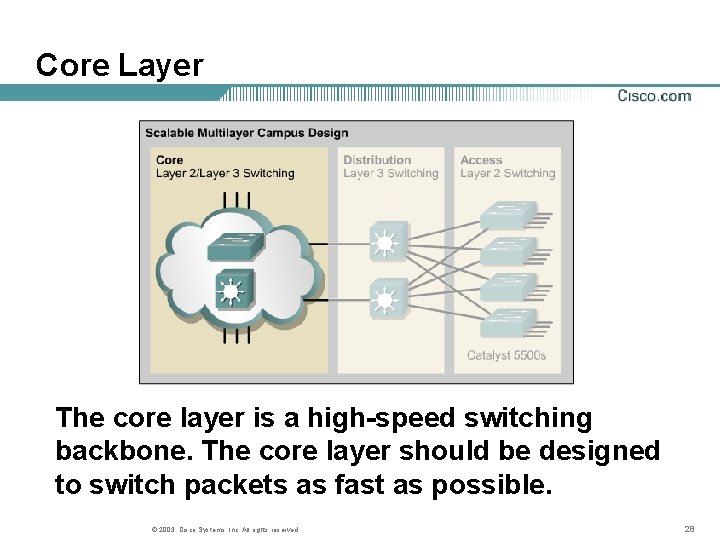
Core Layer The core layer is a high-speed switching backbone. The core layer should be designed to switch packets as fast as possible. © 2003, Cisco Systems, Inc. All rights reserved. 28
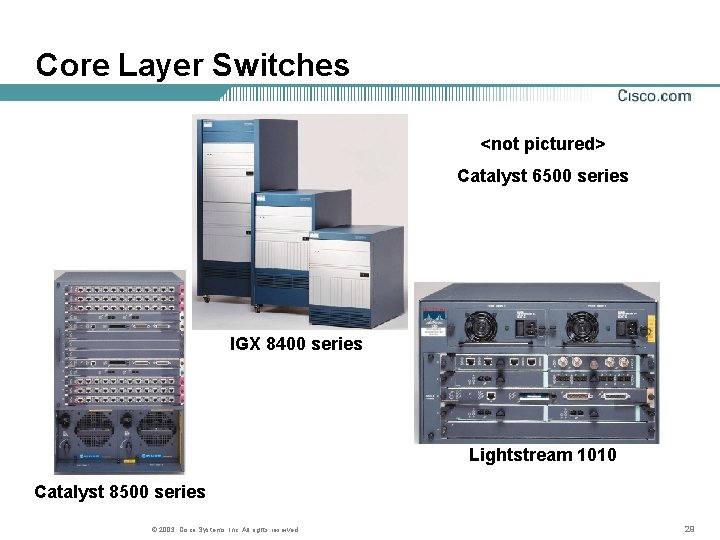
Core Layer Switches <not pictured> Catalyst 6500 series IGX 8400 series Lightstream 1010 Catalyst 8500 series © 2003, Cisco Systems, Inc. All rights reserved. 29