
CCNA 3 Chapter 1 Review The OSI Reference
- Slides: 52
CCNA 3 Chapter 1 Review: The OSI Reference Model and Routing By Your Name Copyright 2003 www. ciscopress. com
Objectives • Describe the overall function of the OSI reference model and the problems it solves • Describe the characteristics of the: – – OSI physical layer OSI data link layer OSI network layer OSI transport layer • Describe the function of routing in networks • Understand the different classes of routing protocols Copyright 2003 www. ciscopress. com
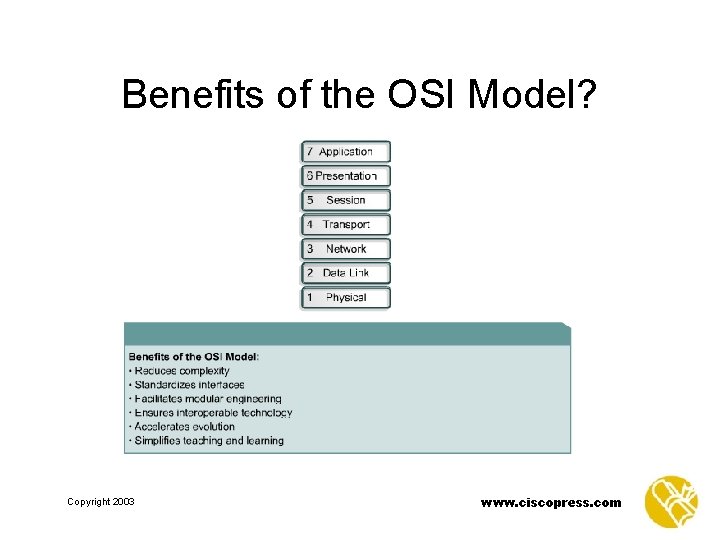
Benefits of the OSI Model? Copyright 2003 www. ciscopress. com
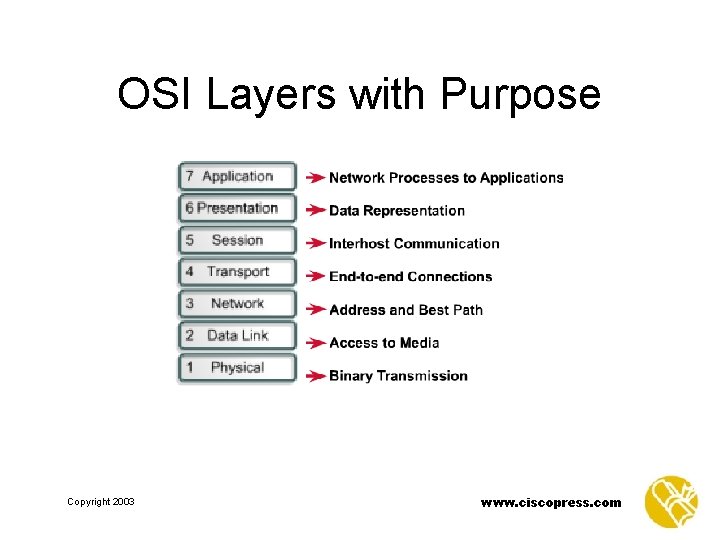
OSI Layers with Purpose Copyright 2003 www. ciscopress. com
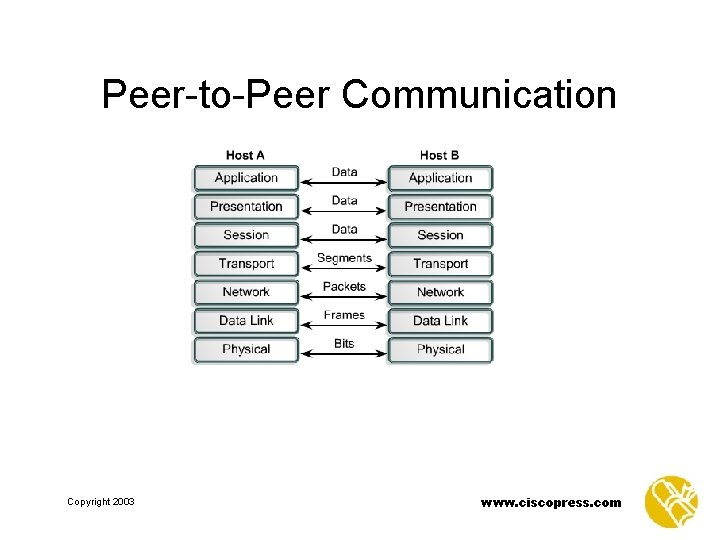
Peer-to-Peer Communication Copyright 2003 www. ciscopress. com
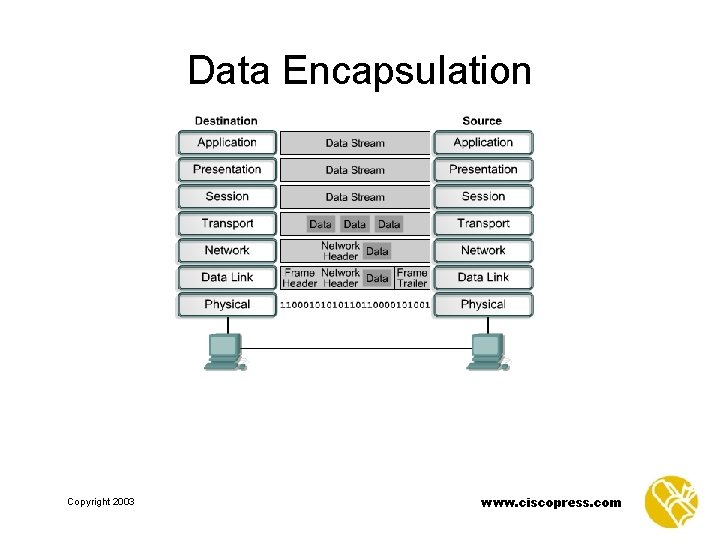
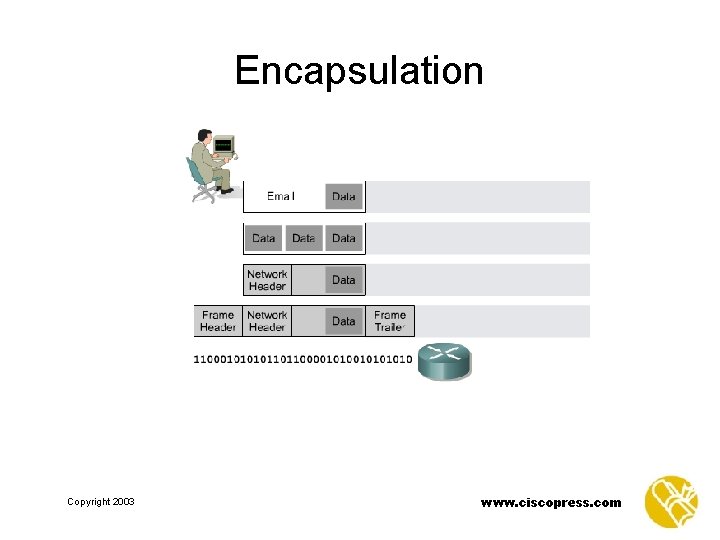
Data Encapsulation Copyright 2003 www. ciscopress. com
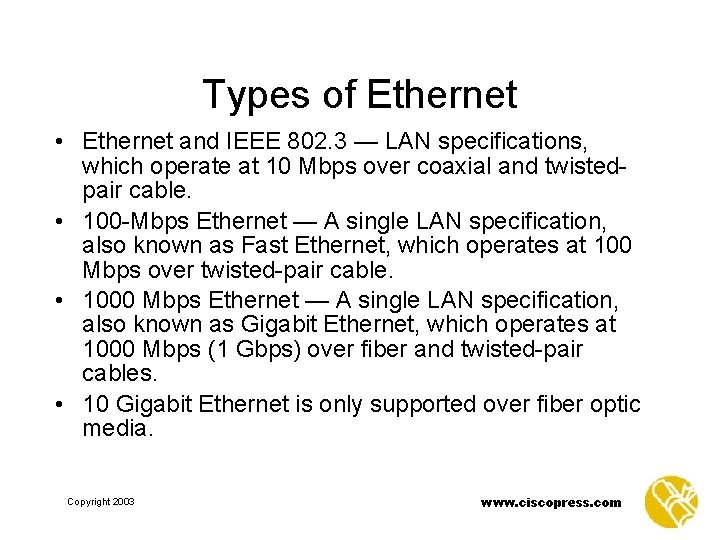
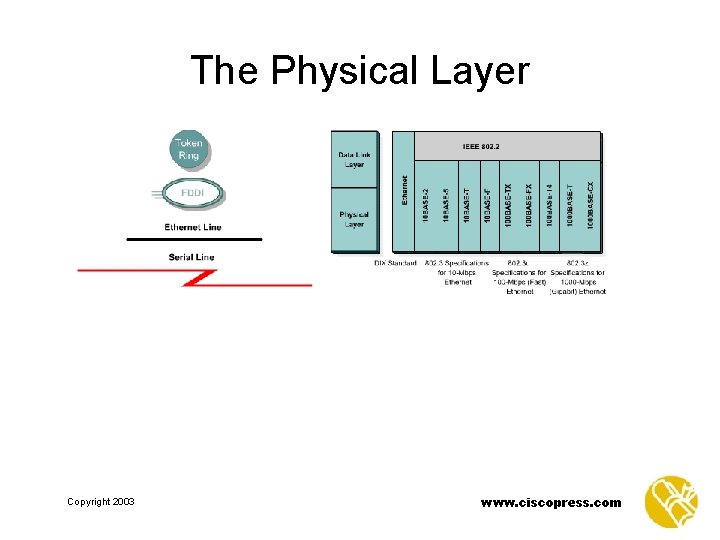
Types of Ethernet • Ethernet and IEEE 802. 3 — LAN specifications, which operate at 10 Mbps over coaxial and twistedpair cable. • 100 -Mbps Ethernet — A single LAN specification, also known as Fast Ethernet, which operates at 100 Mbps over twisted-pair cable. • 1000 Mbps Ethernet — A single LAN specification, also known as Gigabit Ethernet, which operates at 1000 Mbps (1 Gbps) over fiber and twisted-pair cables. • 10 Gigabit Ethernet is only supported over fiber optic media. Copyright 2003 www. ciscopress. com
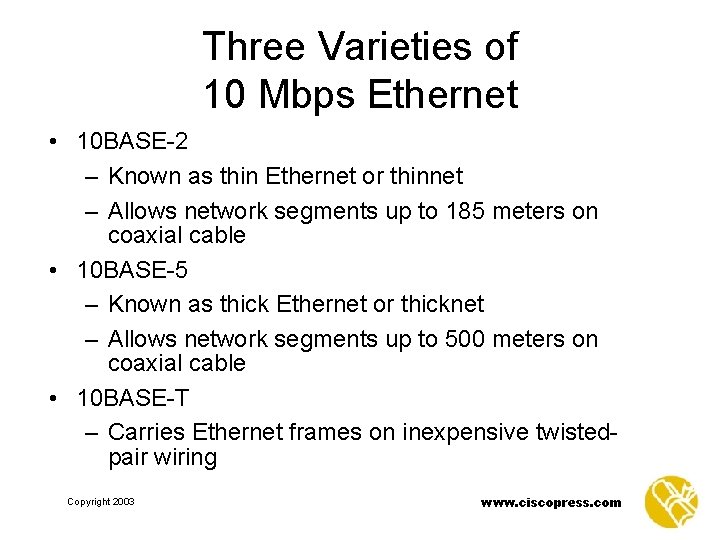
Three Varieties of 10 Mbps Ethernet • 10 BASE-2 – Known as thin Ethernet or thinnet – Allows network segments up to 185 meters on coaxial cable • 10 BASE-5 – Known as thick Ethernet or thicknet – Allows network segments up to 500 meters on coaxial cable • 10 BASE-T – Carries Ethernet frames on inexpensive twistedpair wiring Copyright 2003 www. ciscopress. com
Encapsulation Copyright 2003 www. ciscopress. com
The Physical Layer Copyright 2003 www. ciscopress. com
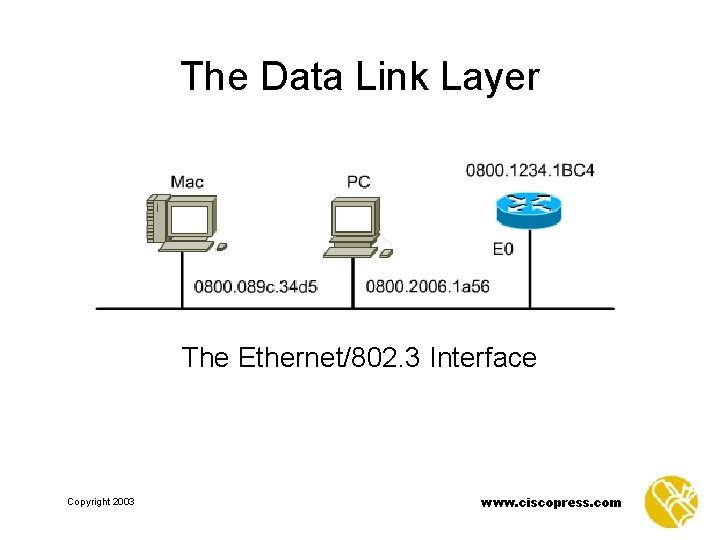
The Data Link Layer The Ethernet/802. 3 Interface Copyright 2003 www. ciscopress. com
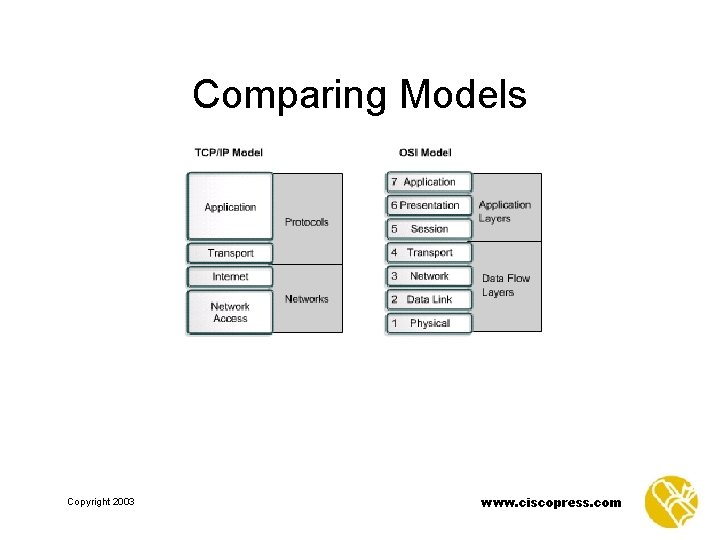
Comparing Models Copyright 2003 www. ciscopress. com
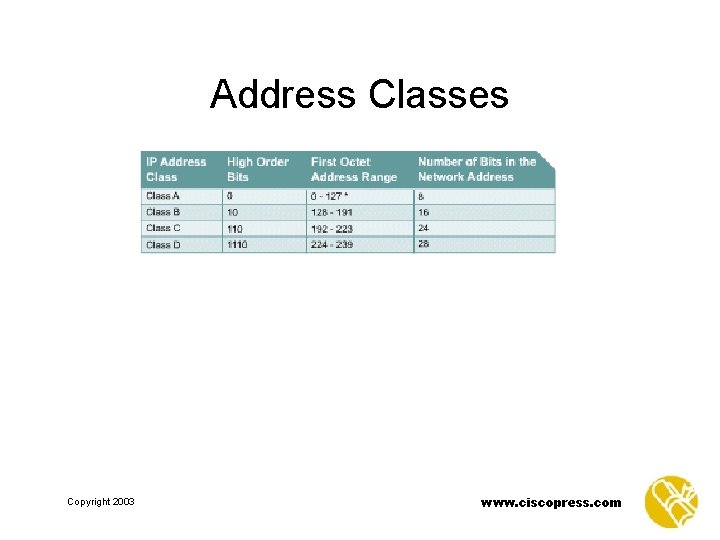
Address Classes Copyright 2003 www. ciscopress. com
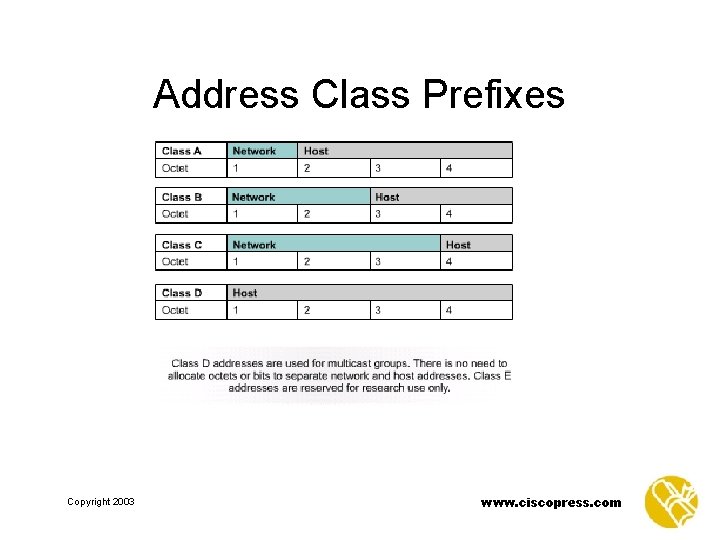
Address Class Prefixes Copyright 2003 www. ciscopress. com
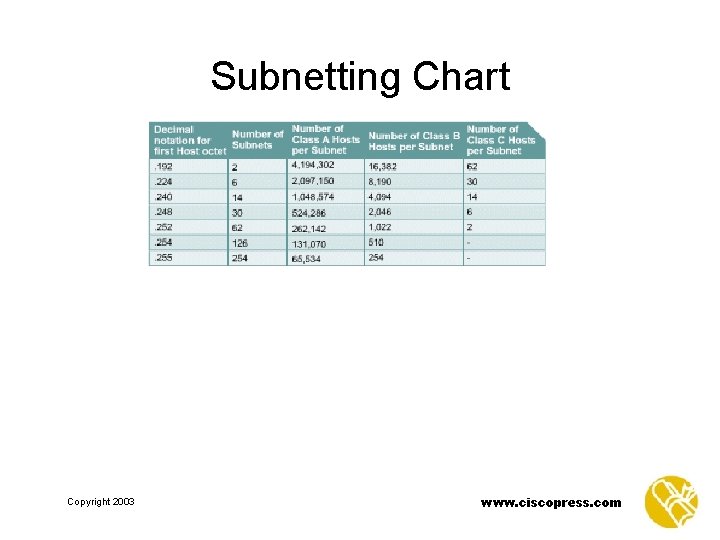
Subnetting Chart Copyright 2003 www. ciscopress. com
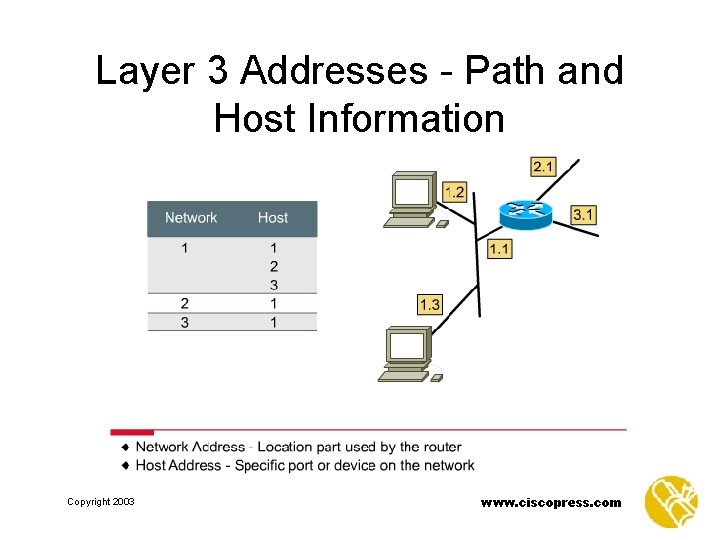
Layer 3 Addresses - Path and Host Information Copyright 2003 www. ciscopress. com
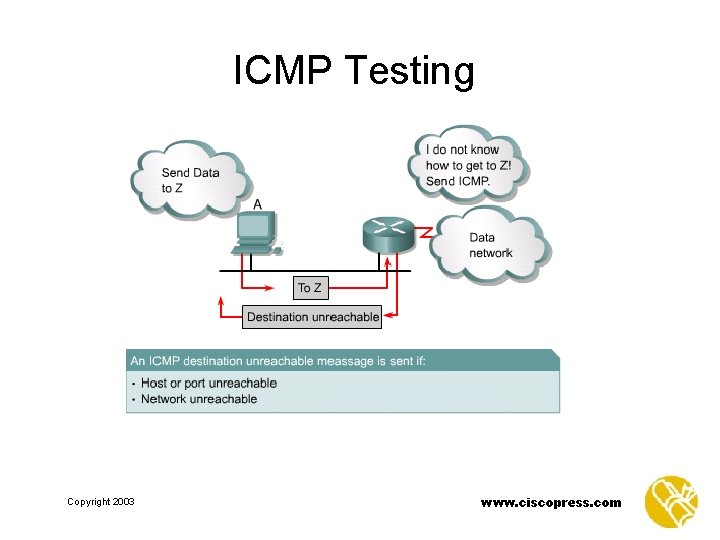
ICMP Testing Copyright 2003 www. ciscopress. com
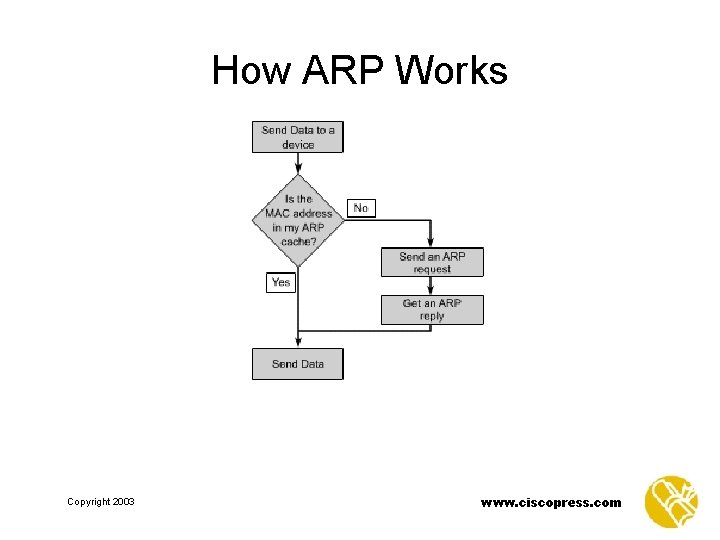
How ARP Works Copyright 2003 www. ciscopress. com
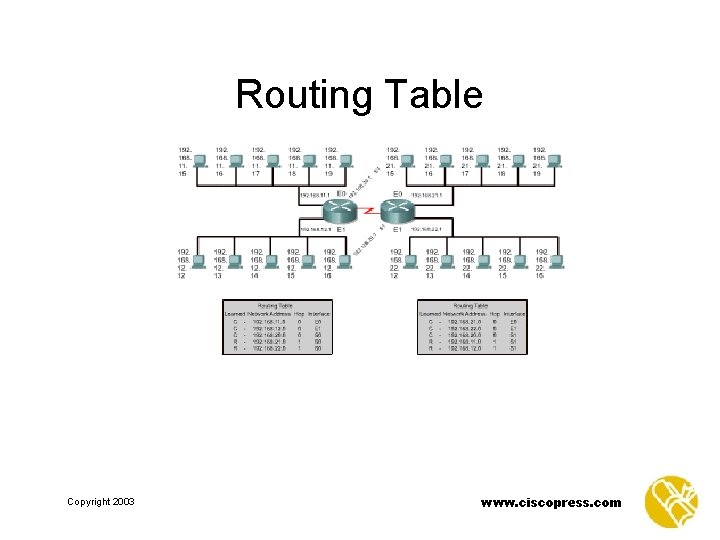
Routing Table Copyright 2003 www. ciscopress. com
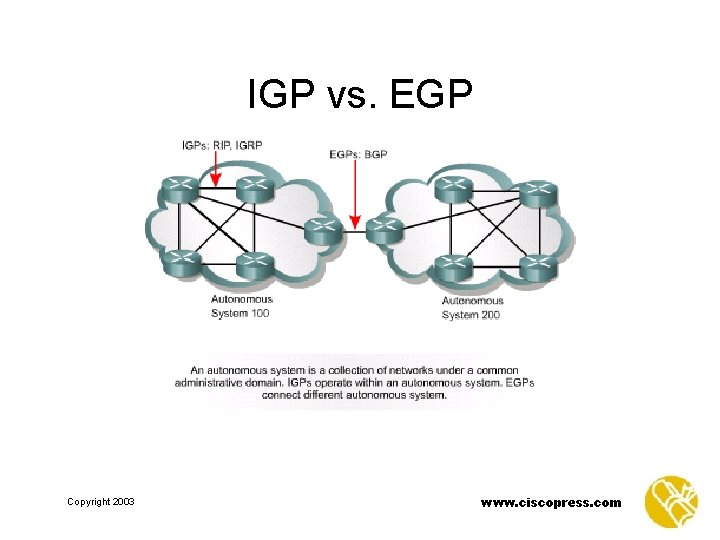
IGP vs. EGP Copyright 2003 www. ciscopress. com
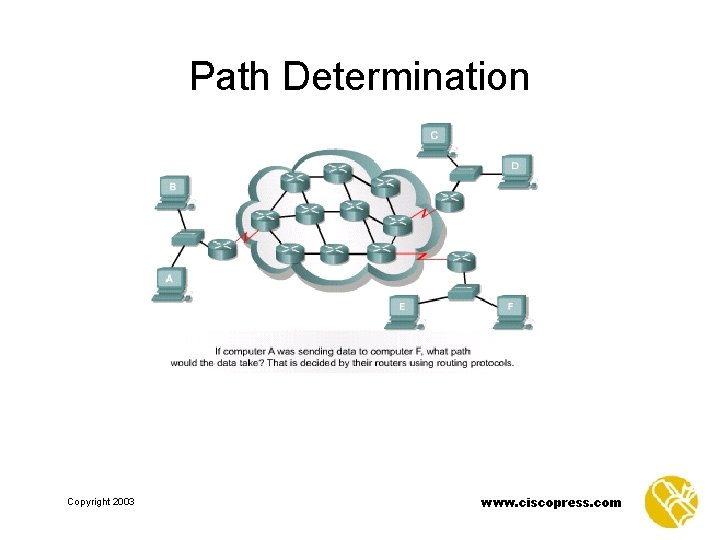
Path Determination Copyright 2003 www. ciscopress. com
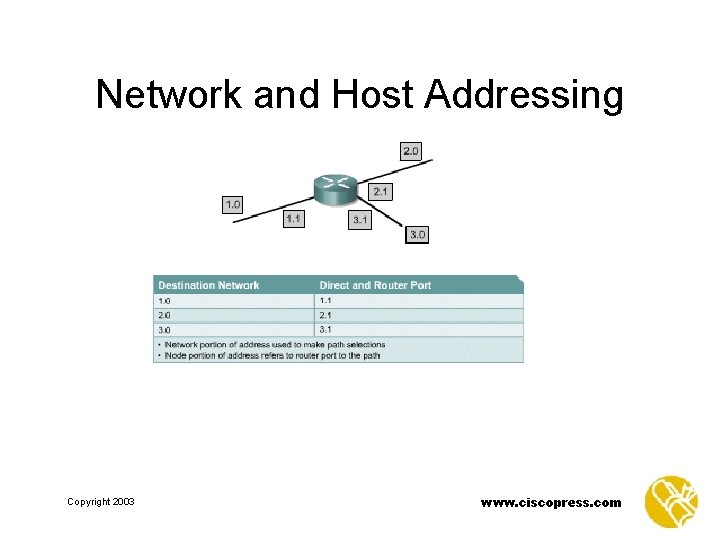
Network and Host Addressing Copyright 2003 www. ciscopress. com
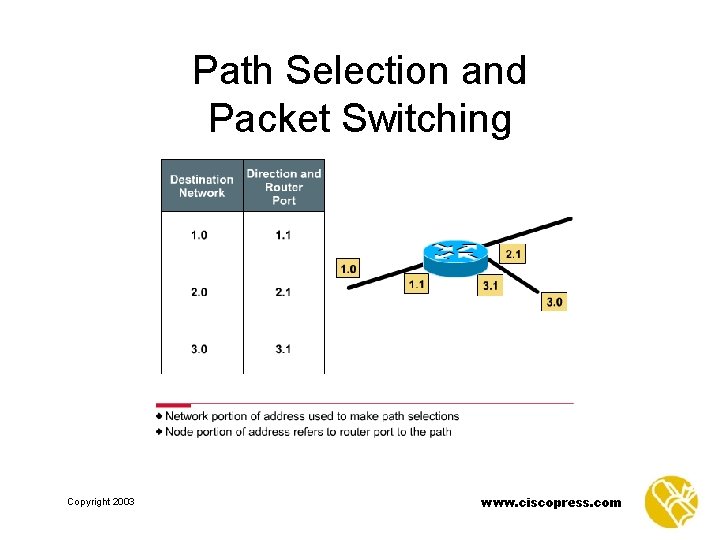
Path Selection and Packet Switching Copyright 2003 www. ciscopress. com
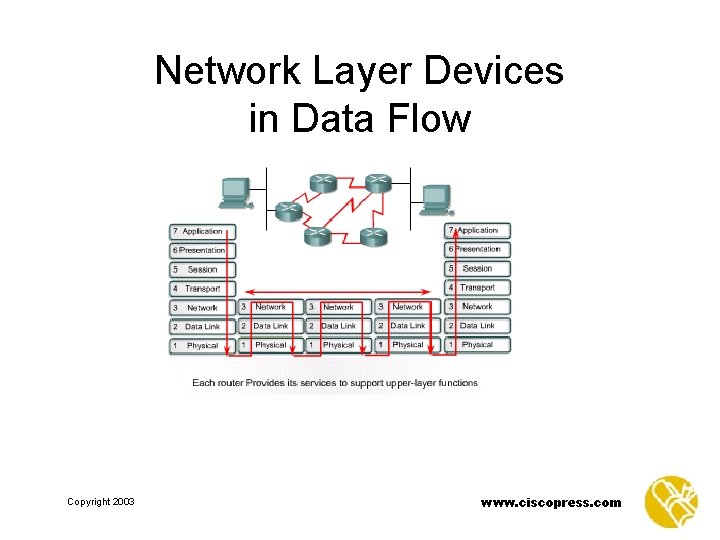
Network Layer Devices in Data Flow Copyright 2003 www. ciscopress. com
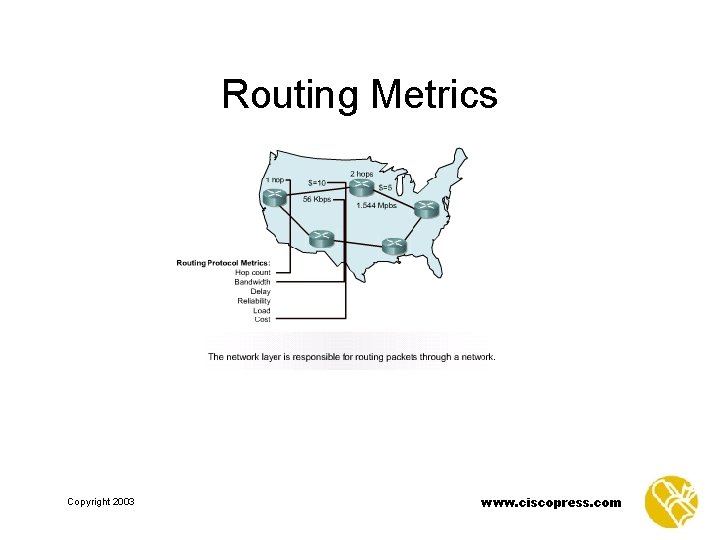
Routing Metrics Copyright 2003 www. ciscopress. com
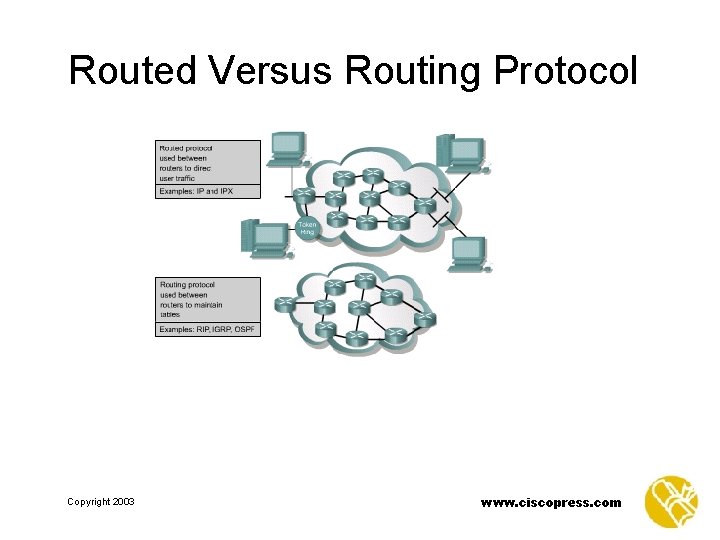
Routed Versus Routing Protocol Copyright 2003 www. ciscopress. com
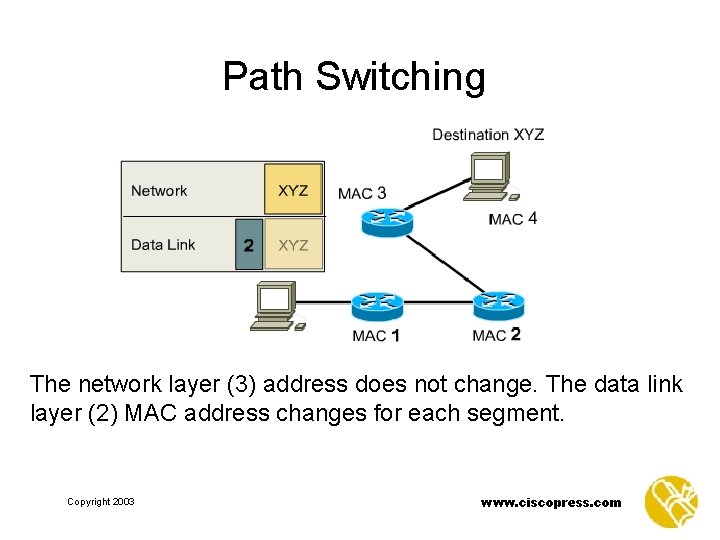
Path Switching The network layer (3) address does not change. The data link layer (2) MAC address changes for each segment. Copyright 2003 www. ciscopress. com
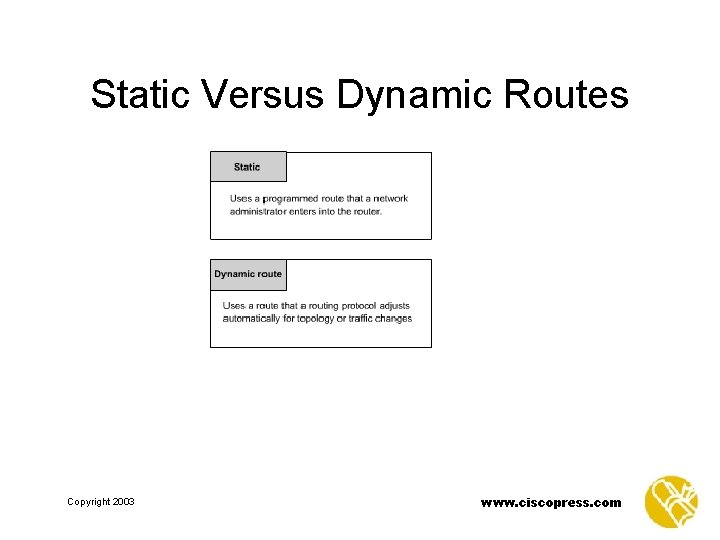
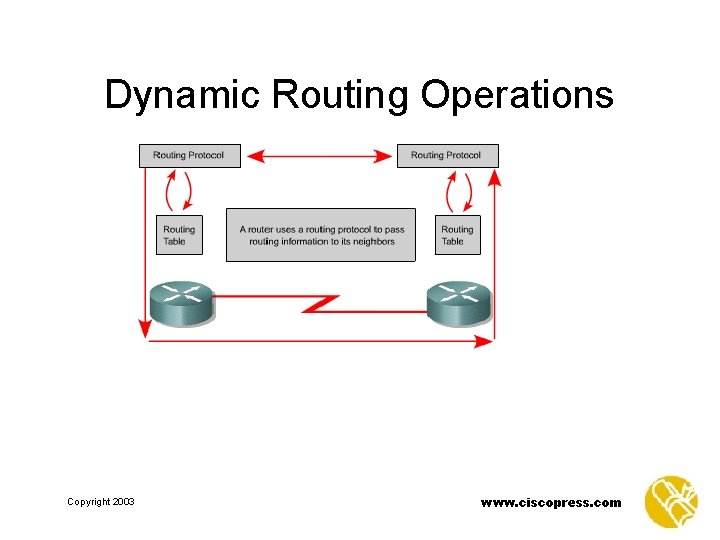
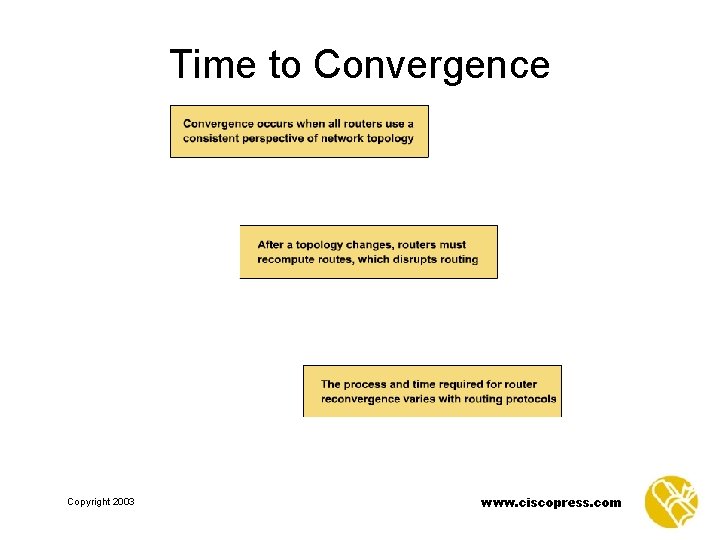
Static Versus Dynamic Routes • • The purpose of a static route Why dynamic routing is necessary Dynamic routing operations How distances on network paths are determined by various metrics • Classes of routing protocols • Time for convergence Copyright 2003 www. ciscopress. com
Static Versus Dynamic Routes Copyright 2003 www. ciscopress. com
Dynamic Routing Operations Copyright 2003 www. ciscopress. com
Routing Protocols • A routing protocol defines the set of rules used by a router when it communicates with neighboring routers, including the following: – – How to send updates What knowledge these updates contain When to send this knowledge How to locate recipients of the updates Copyright 2003 www. ciscopress. com
Time to Convergence Copyright 2003 www. ciscopress. com
Distance Vector Routing Basics • • • Routing updates explained The problem of routing loops The problem of counting to infinity Link-state routing basics How link-state protocols exchange routing information • How topology changes propagate through the network of routers Copyright 2003 www. ciscopress. com
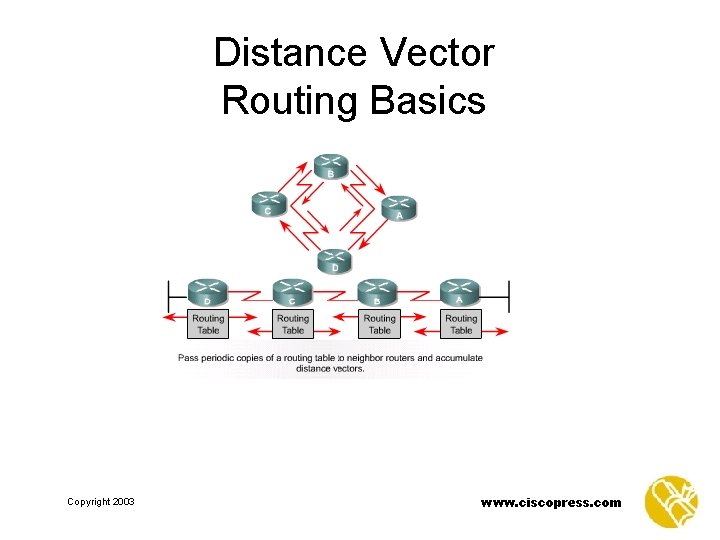
Distance Vector Routing Basics Copyright 2003 www. ciscopress. com
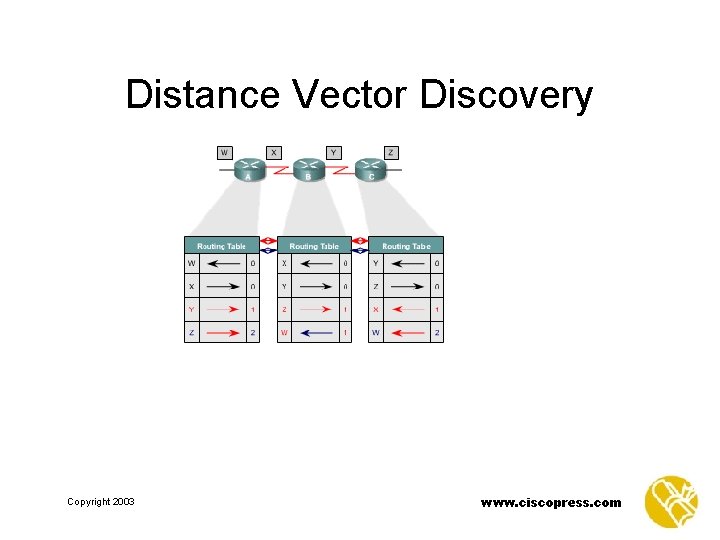
Distance Vector Discovery Copyright 2003 www. ciscopress. com
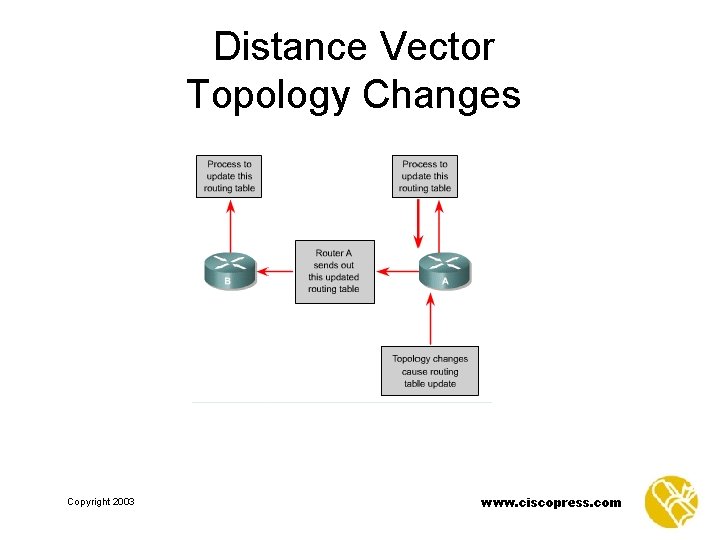
Distance Vector Topology Changes Copyright 2003 www. ciscopress. com
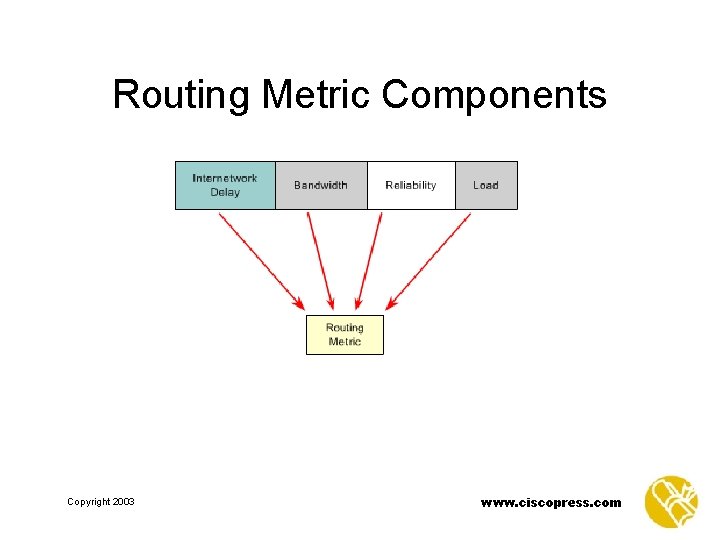
Routing Metric Components Copyright 2003 www. ciscopress. com
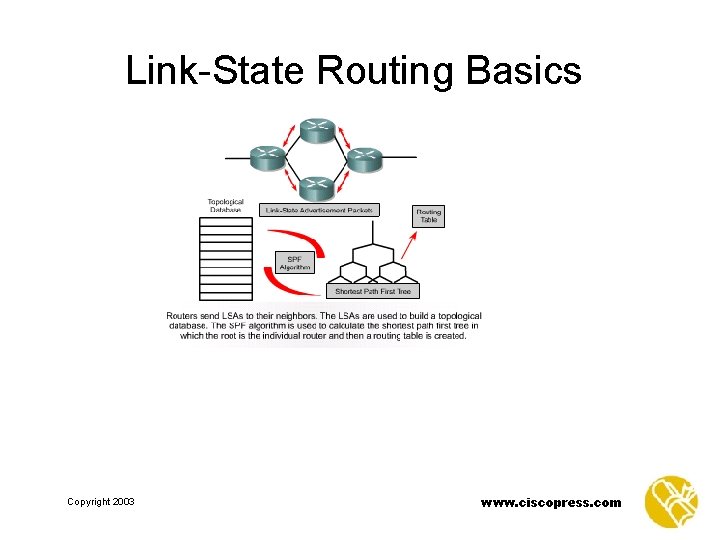
Link-State Routing Basics Copyright 2003 www. ciscopress. com
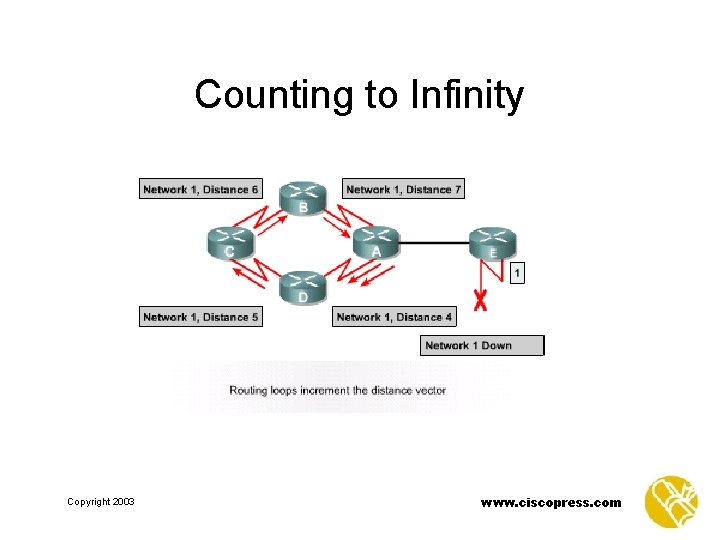
Counting to Infinity Copyright 2003 www. ciscopress. com
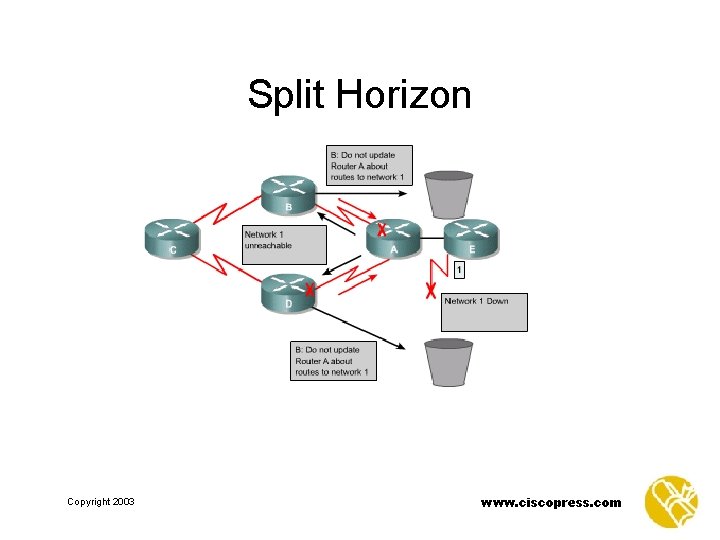
Split Horizon Copyright 2003 www. ciscopress. com
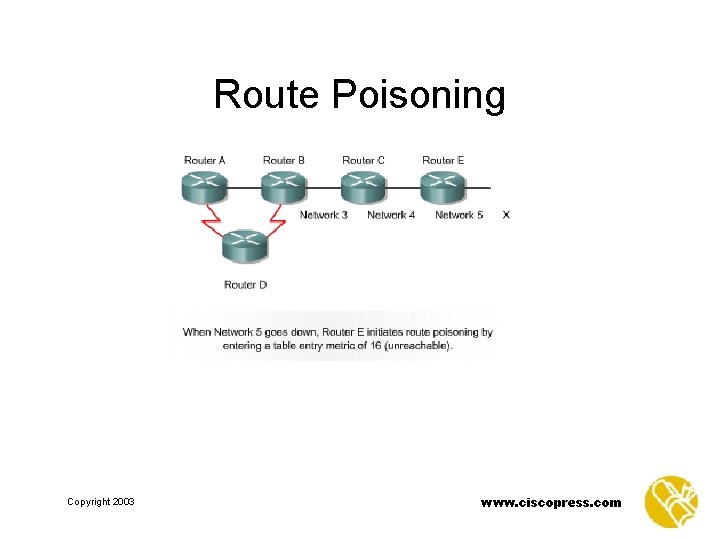
Route Poisoning Copyright 2003 www. ciscopress. com
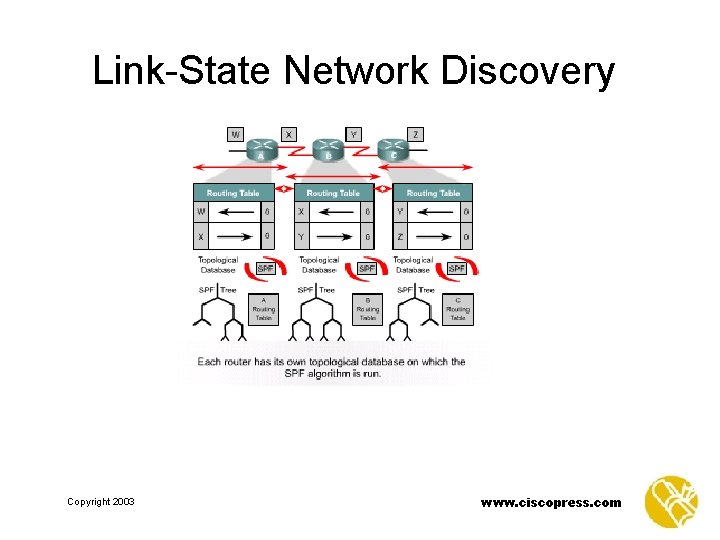
Link-State Network Discovery Copyright 2003 www. ciscopress. com
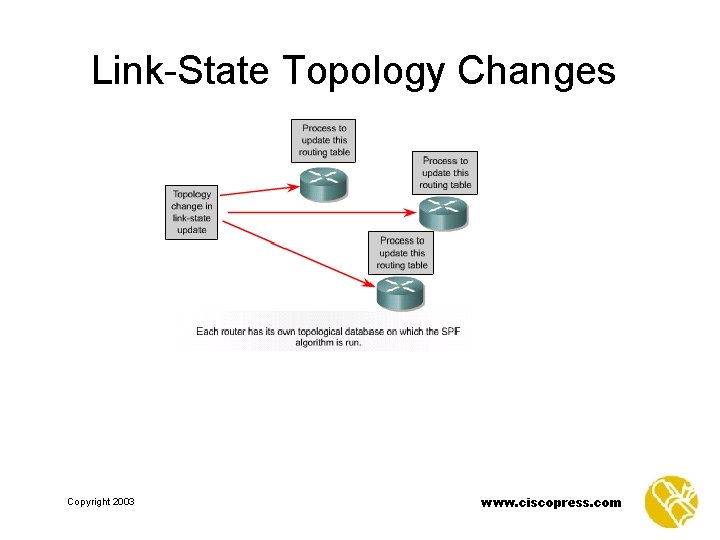
Link-State Topology Changes Copyright 2003 www. ciscopress. com
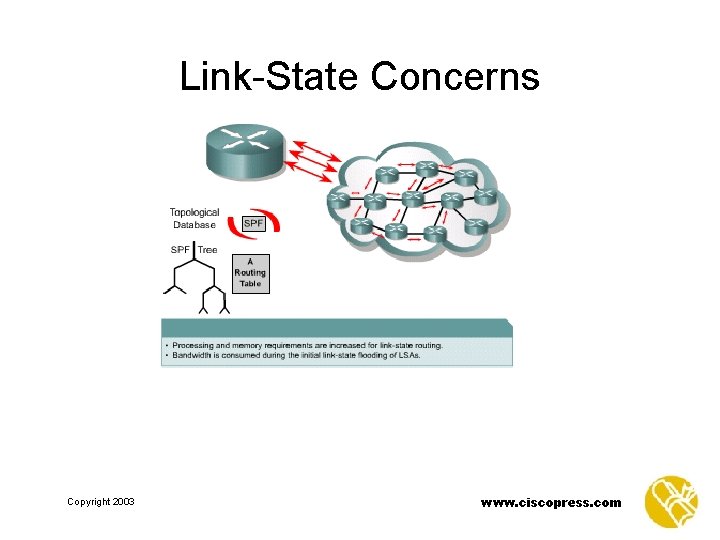
Link-State Concerns Copyright 2003 www. ciscopress. com
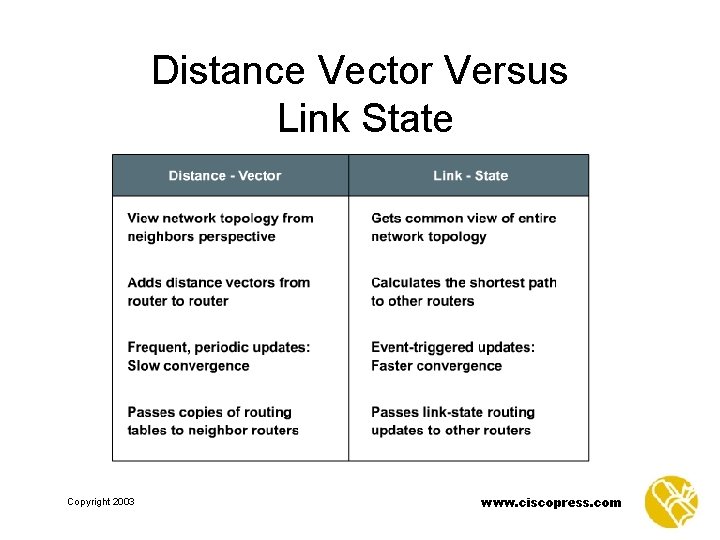
Distance Vector Versus Link State Copyright 2003 www. ciscopress. com
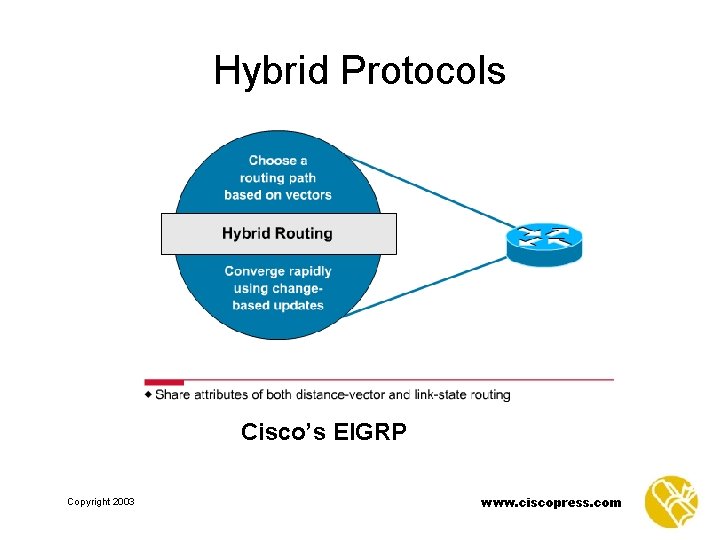
Hybrid Protocols Cisco’s EIGRP Copyright 2003 www. ciscopress. com
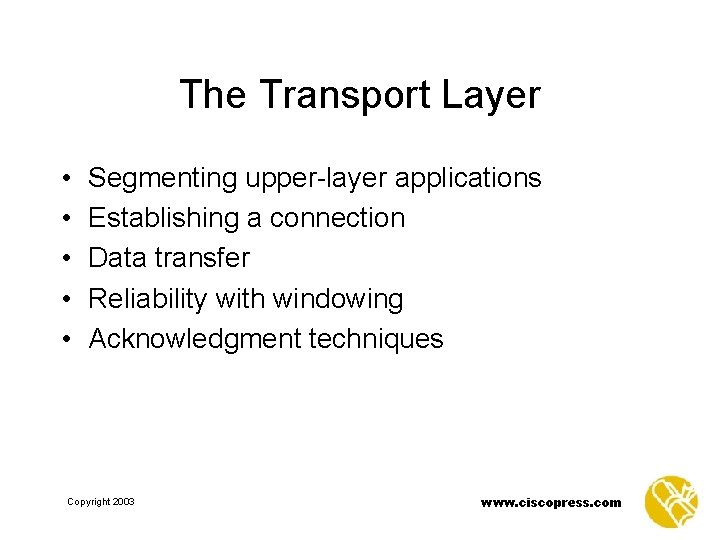
The Transport Layer • • • Segmenting upper-layer applications Establishing a connection Data transfer Reliability with windowing Acknowledgment techniques Copyright 2003 www. ciscopress. com
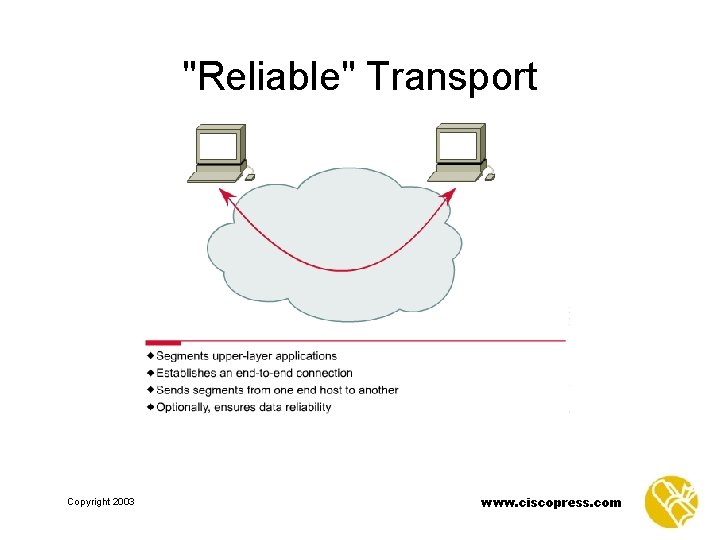
"Reliable" Transport Copyright 2003 www. ciscopress. com
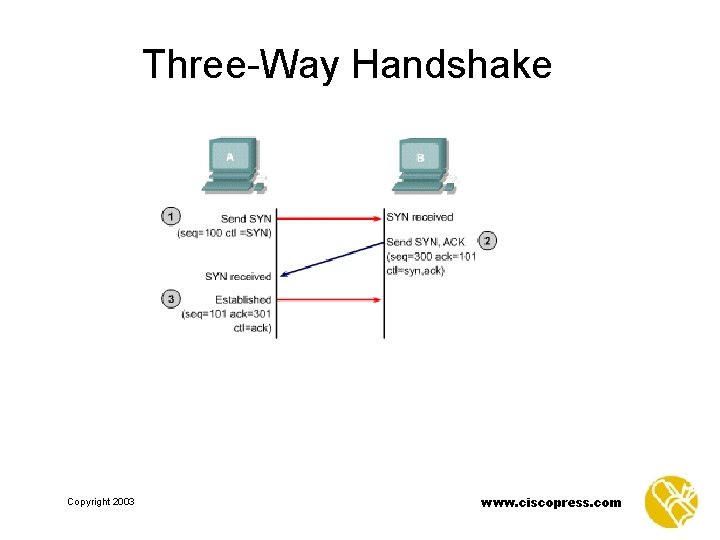
Three-Way Handshake Copyright 2003 www. ciscopress. com
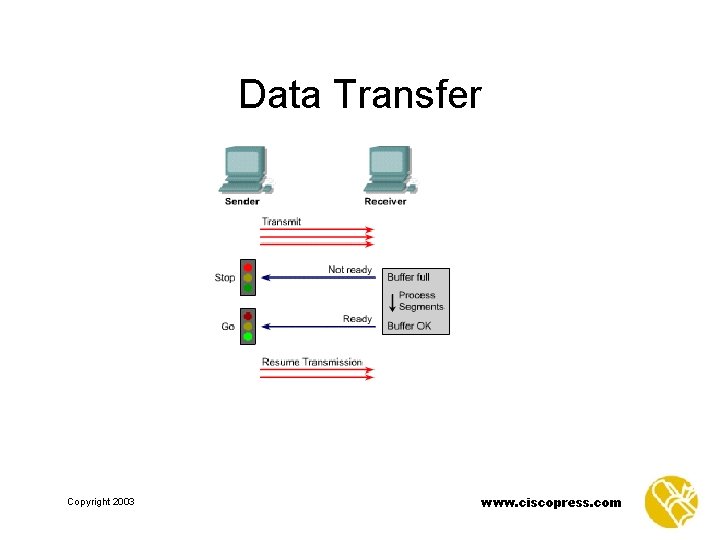
Data Transfer Copyright 2003 www. ciscopress. com
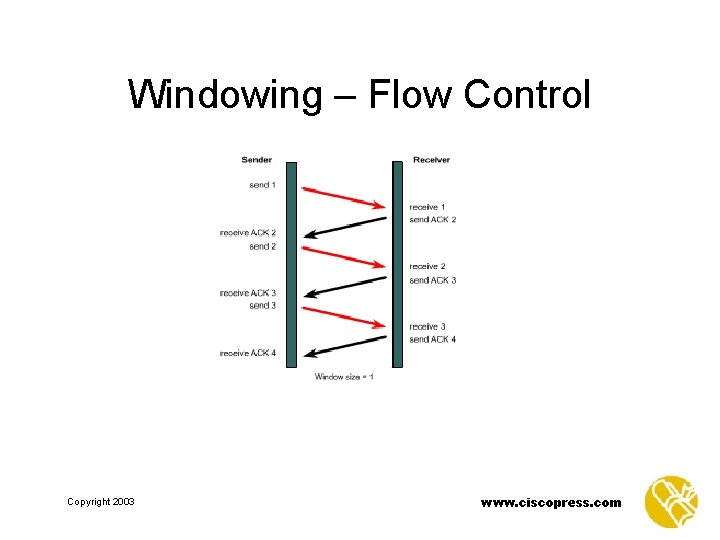
Windowing – Flow Control Copyright 2003 www. ciscopress. com
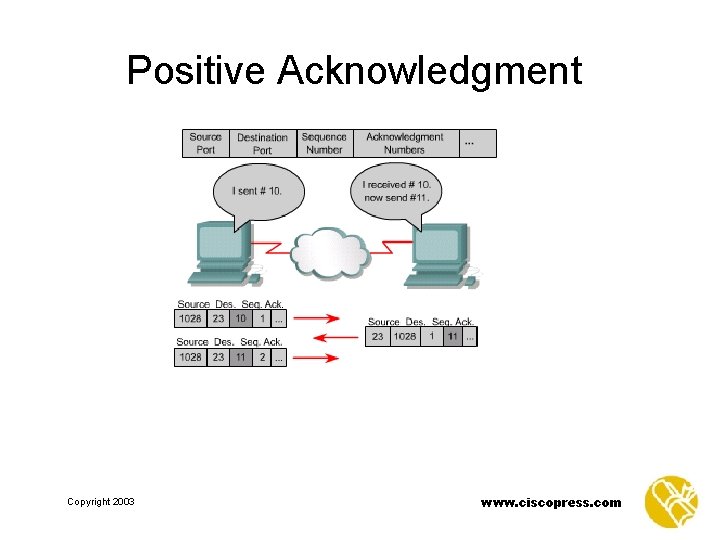
Positive Acknowledgment Copyright 2003 www. ciscopress. com