
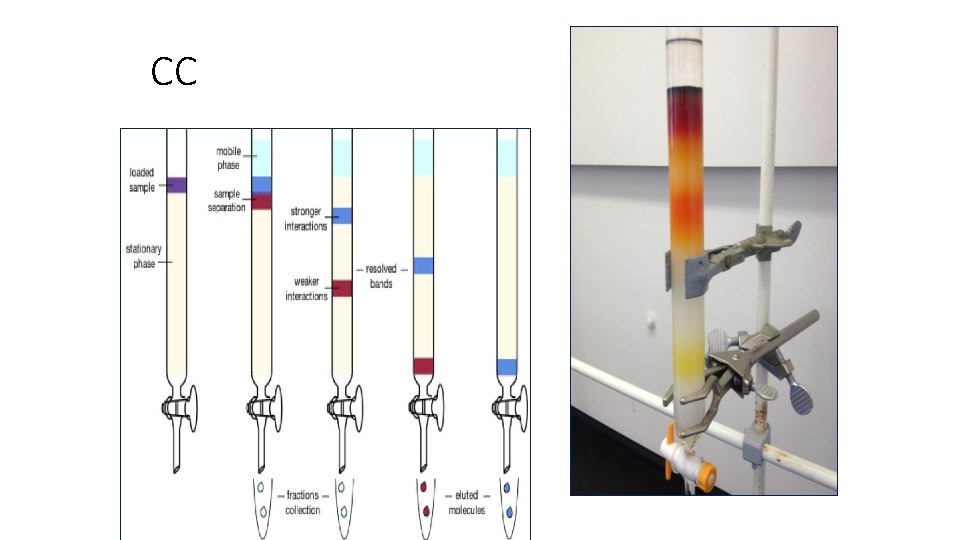
CC Classification according to the force of separation
- Slides: 10
CC
Classification according to the force of separation: 1 - Adsorption chromatography. 2 - Partition chromatography. 3 - Ion exchange chromatography. 4 - Gel filtration chromatography. 5 - Affinity chromatography.
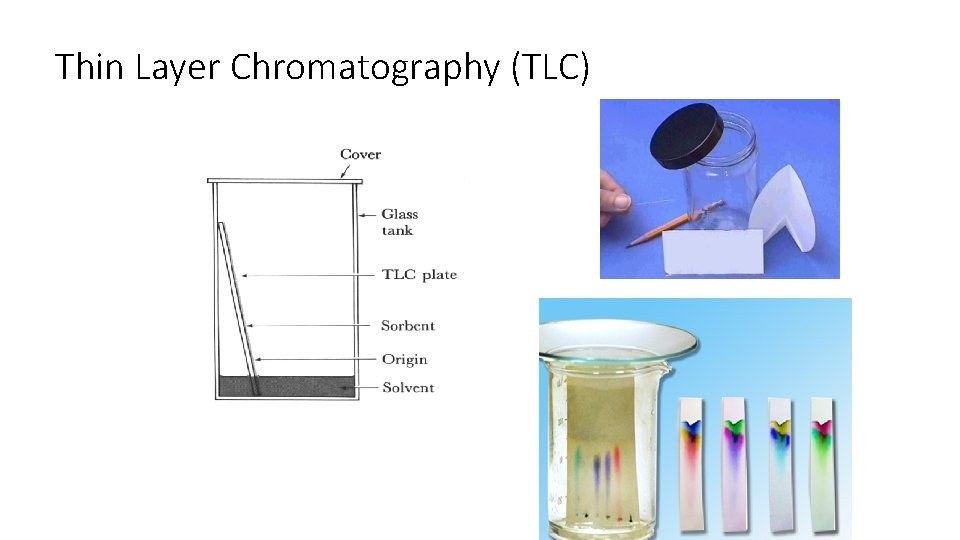
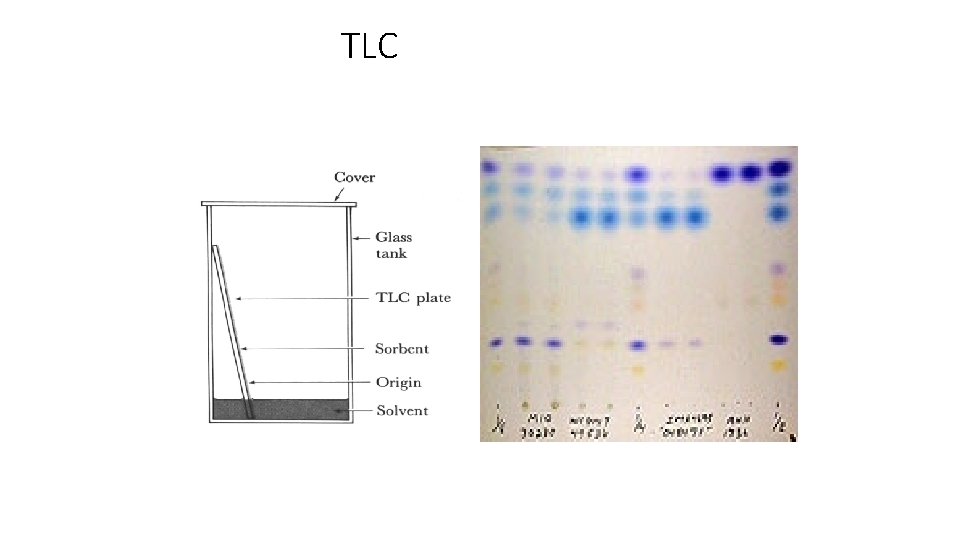
Thin layer chromatography (TLC) is a method for identifying substances and testing the purity of compounds. TLC is a useful technique because it is relatively quick and requires small quantities of material.
Separations in TLC involve distributing a mixture of two or more substances between a stationary phase and a mobile phase. The stationary phase: is a thin layer of adsorbent (usually silica gel or alumina) coated on a plate. The mobile phase: is a developing liquid which travels up the stationary phase, carrying the samples with it. Components of the samples will separate on the stationary phase according to how much they adsorb on the stationary phase versus how much they dissolve in the mobile phase.
Thin Layer Chromatography (TLC)
TLC
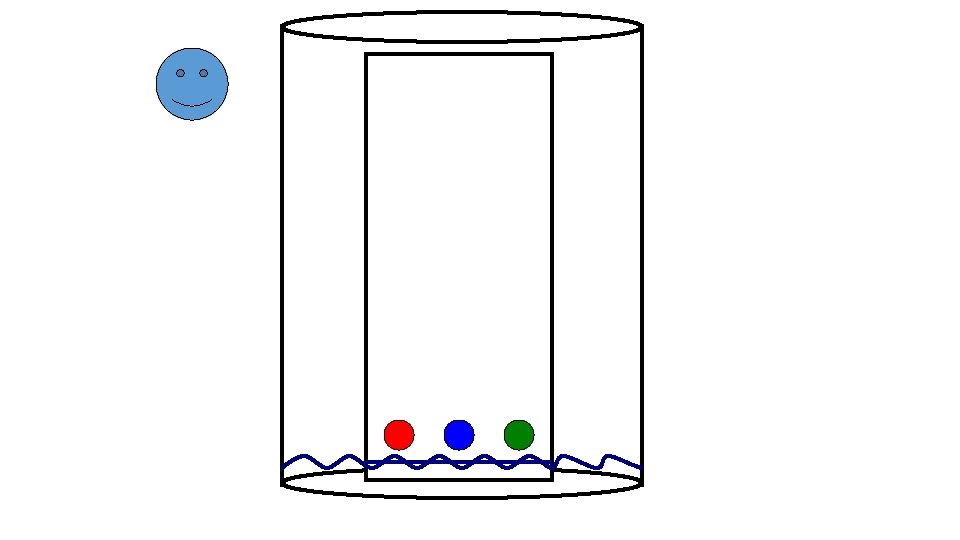
Preparing the Chamber To a jar with a tight-fitting lid add enough of the appropriate developing liquid so that it is 0. 5 to 1 cm deep in the bottom of the jar. Close the jar tightly, and let it stand for about 30 minutes so that the atmosphere in the jar becomes saturated with solvent.
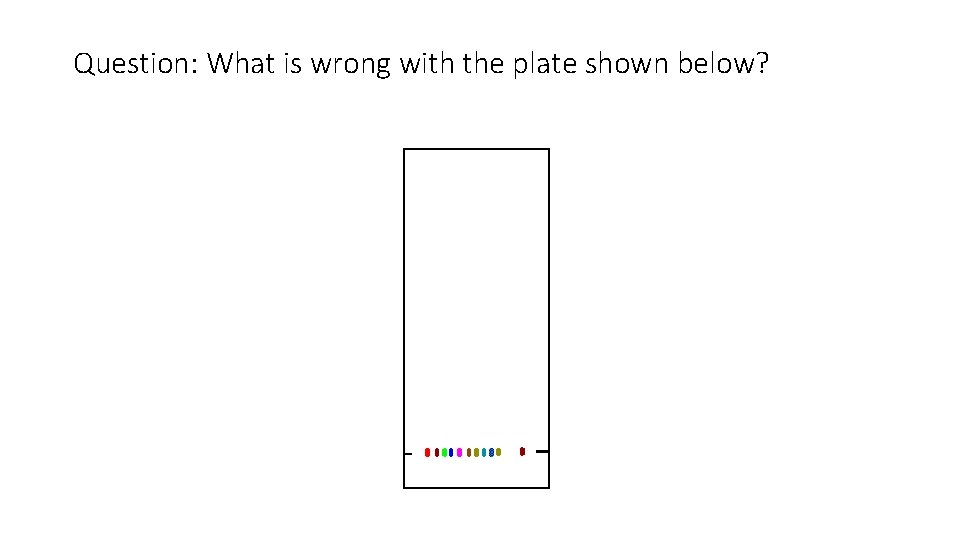
Preparing the Plates for Development With a pencil, etch two small notches into the adsorbent about 2 cm from the bottom of the plate. The notches should be on the edges of the plate, and each notch should be the same distance up from the bottom of the plate. The notches must be farther from the bottom of the plate than the depth of the solvent in the jar. Using a drawn-out capillary tube, spot the samples on the plate so that they line up with the notches you etched.
Question: What is wrong with the plate shown below?