
CC 5212 1 PROCESAMIENTO MASIVO DE DATOS OTOO


- Slides: 65
CC 5212 -1 PROCESAMIENTO MASIVO DE DATOS OTOÑO 2018 Lecture 7 Information Retrieval: Ranking Aidan Hogan aidhog@gmail. com
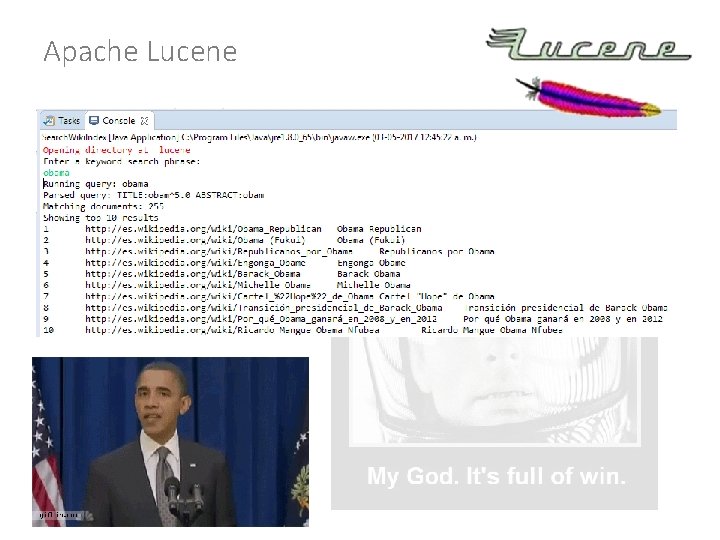
Apache Lucene • Inverted Index – They built one so you don’t have to! – Open Source in Java
Apache Lucene • Inverted Index – They built one so you don’t have to! – Open Source in Java
INFORMATION RETRIEVAL: RANKING
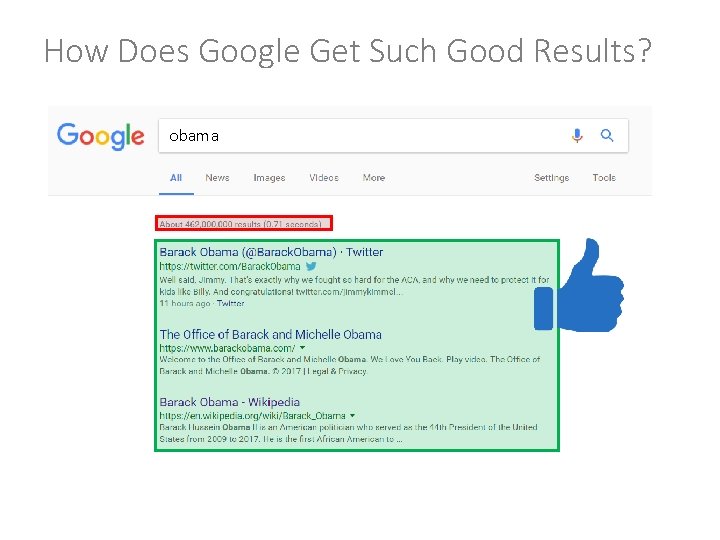
How Does Google Get Such Good Results? obama
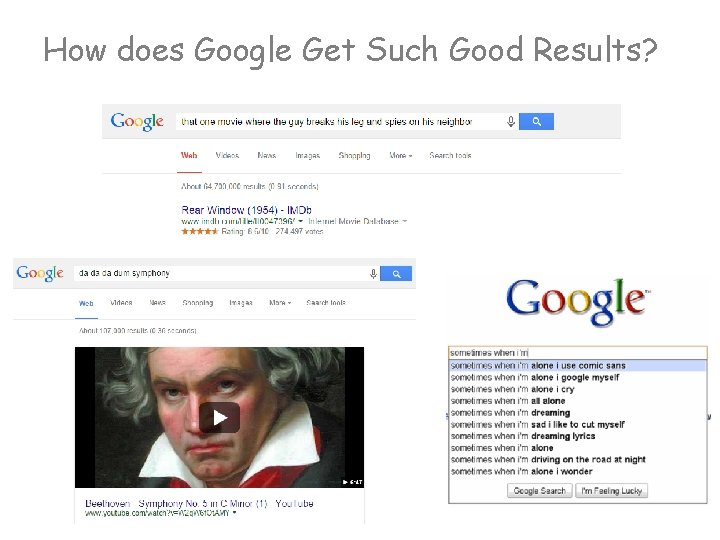
How does Google Get Such Good Results?
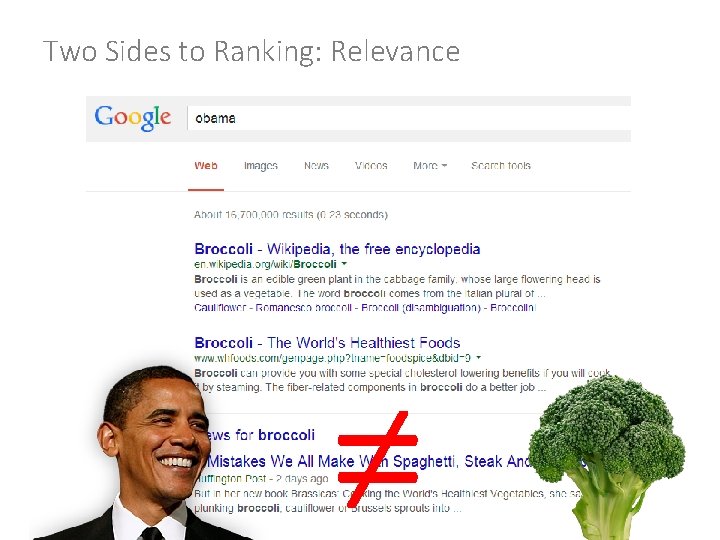
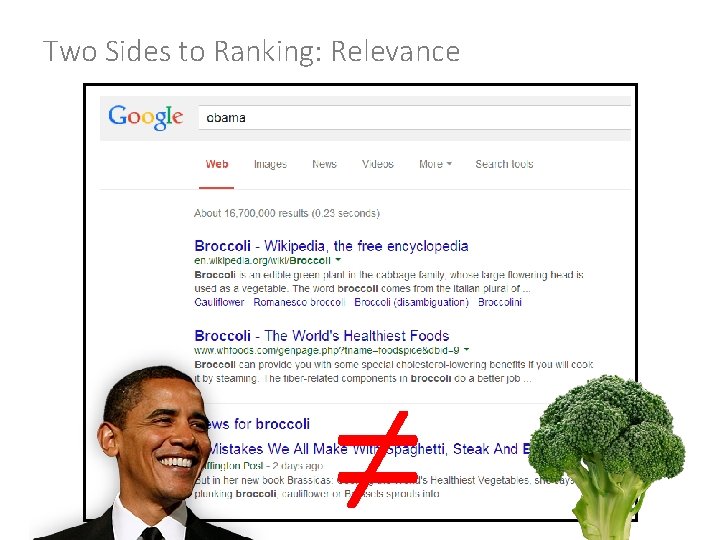
Two Sides to Ranking: Relevance ≠
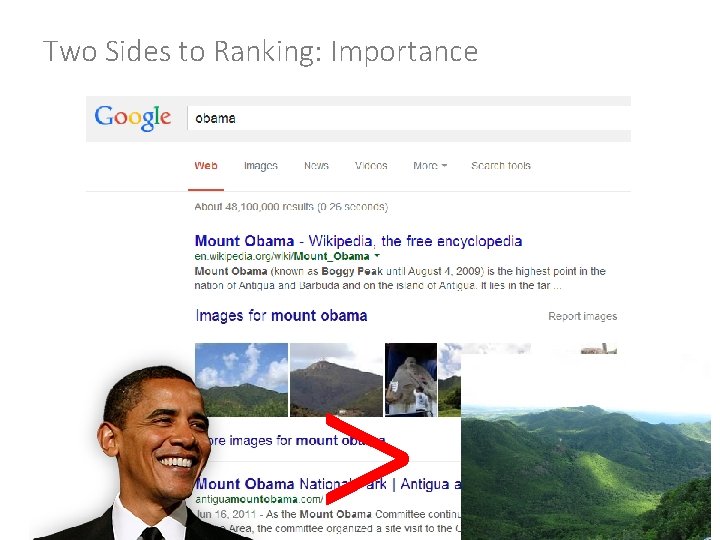
Two Sides to Ranking: Importance >
RANKING: RELEVANCE
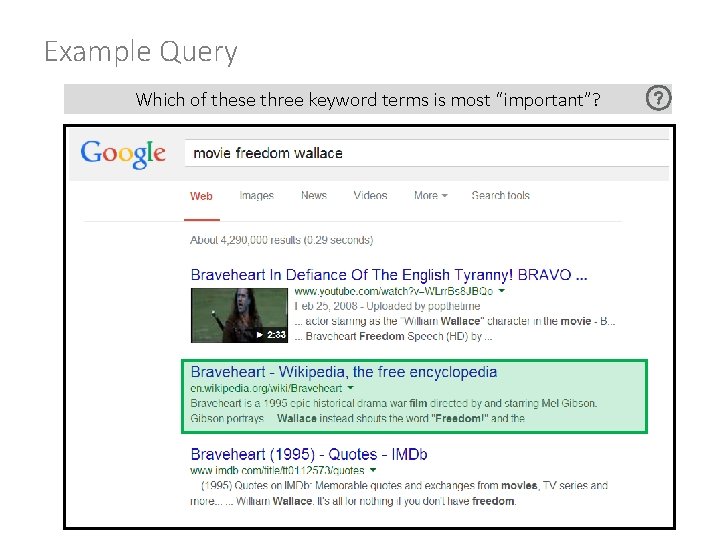
Example Query Which of these three keyword terms is most “important”?
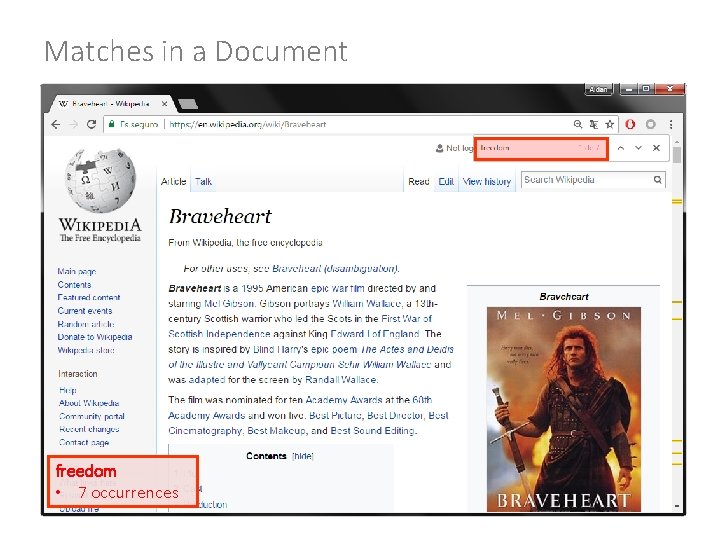
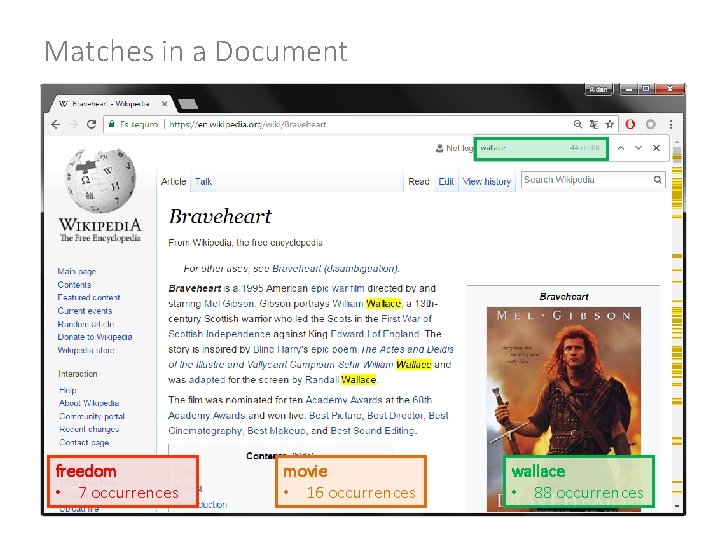
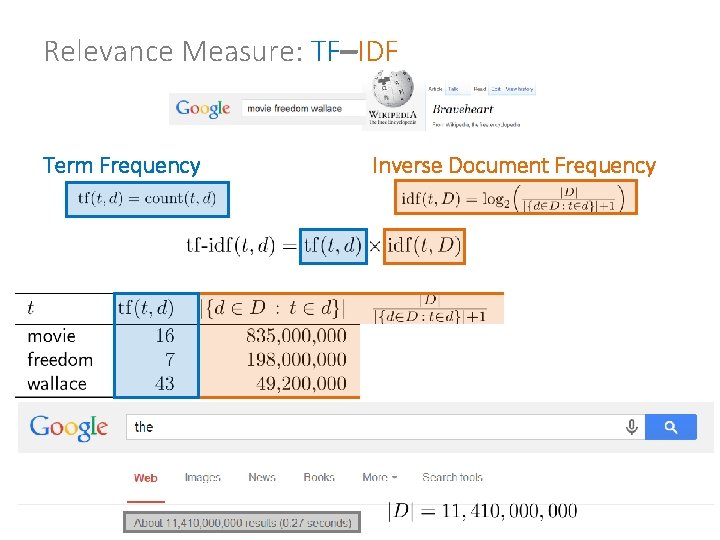
Matches in a Document freedom • 7 occurrences
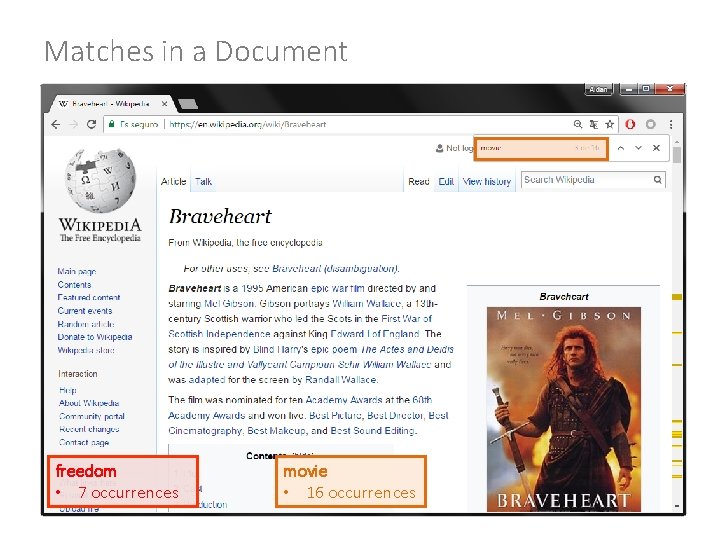
Matches in a Document freedom • 7 occurrences movie • 16 occurrences
Matches in a Document freedom • 7 occurrences movie • 16 occurrences wallace • 88 occurrences
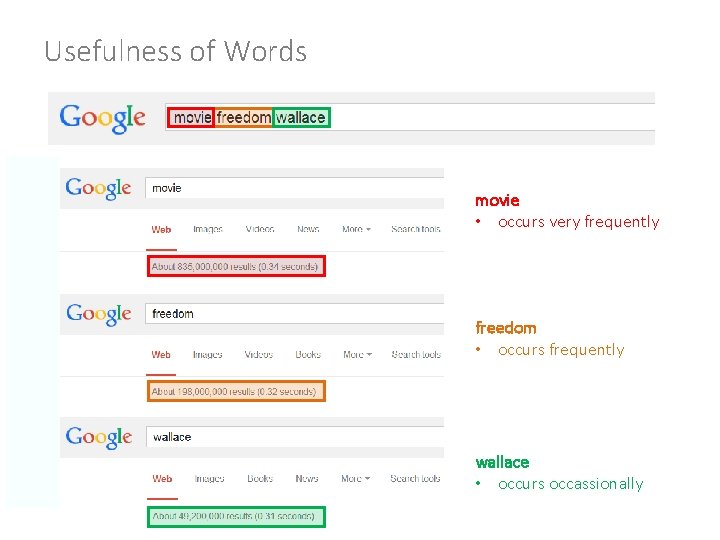
Usefulness of Words movie • occurs very frequently freedom • occurs frequently wallace • occurs occassionally
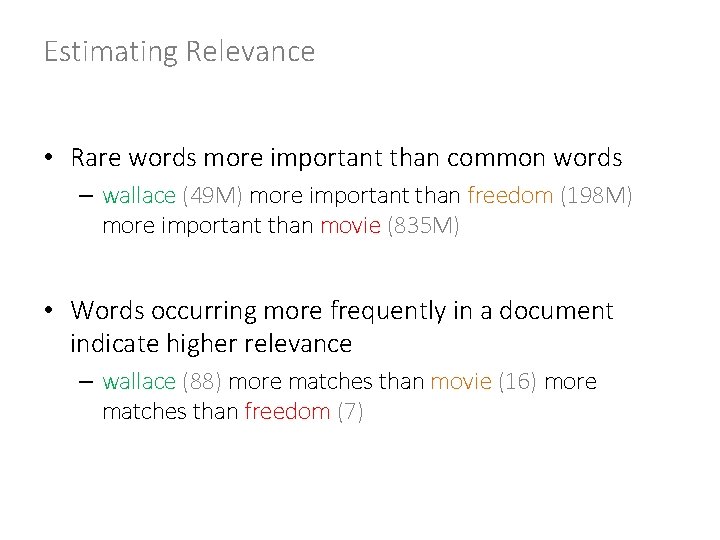
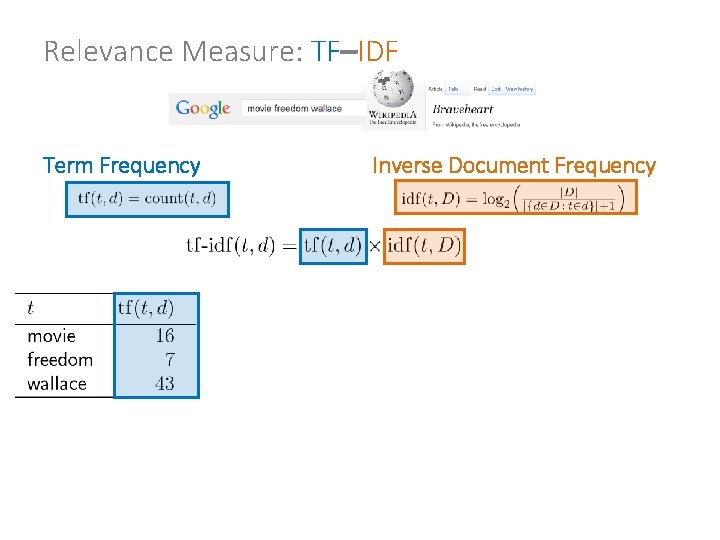
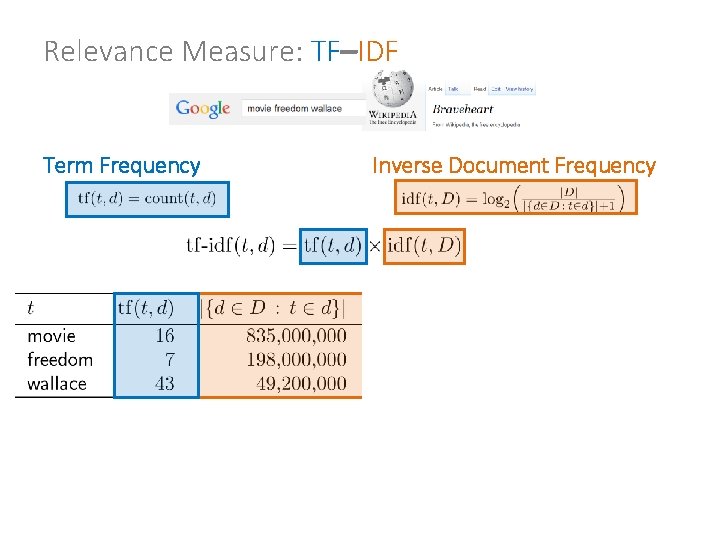
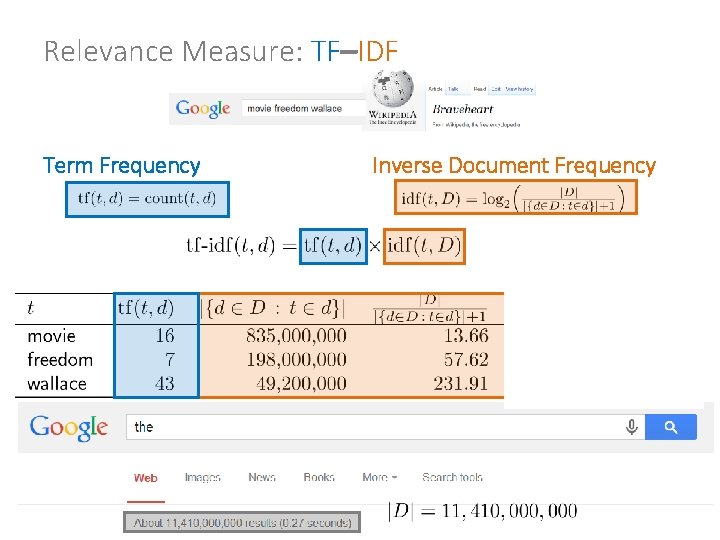
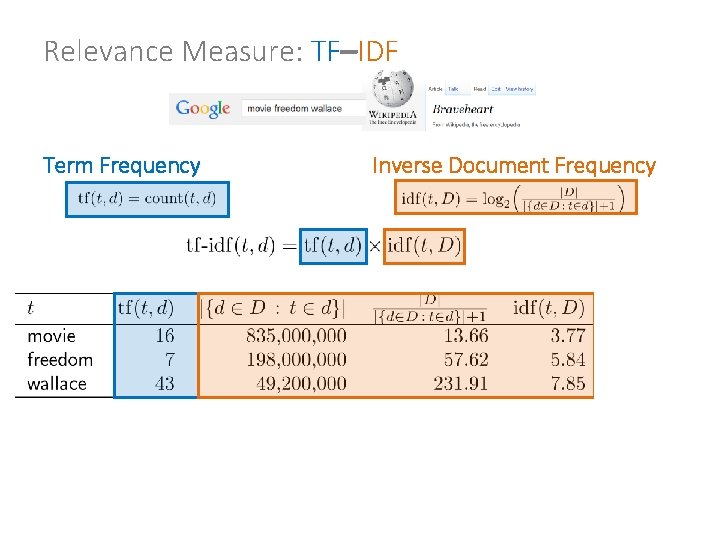
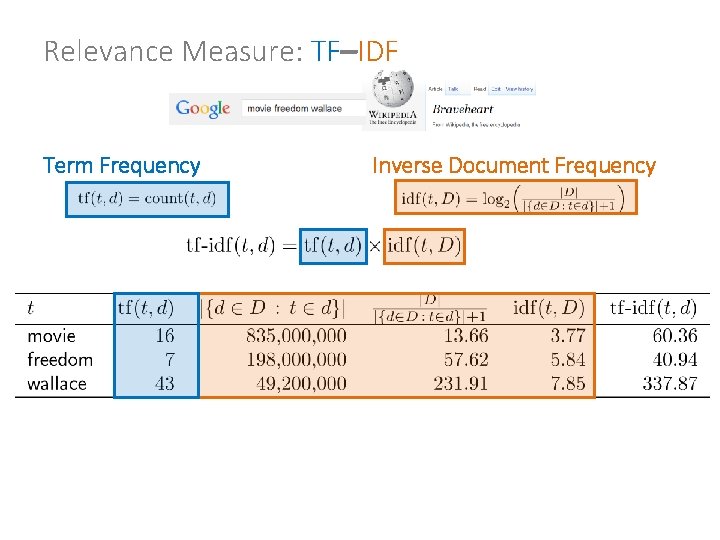
Estimating Relevance • Rare words more important than common words – wallace (49 M) more important than freedom (198 M) more important than movie (835 M) • Words occurring more frequently in a document indicate higher relevance – wallace (88) more matches than movie (16) more matches than freedom (7)
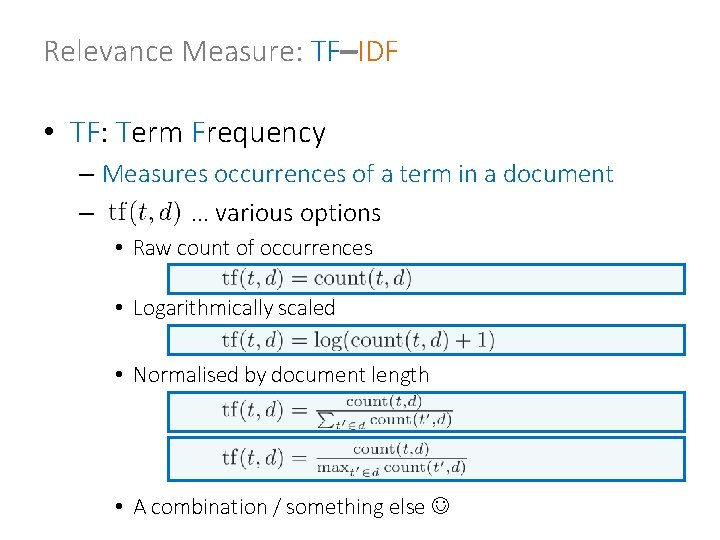
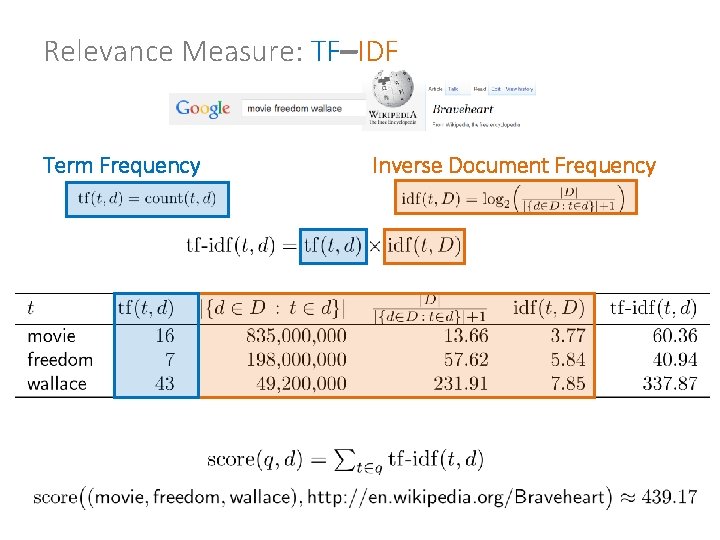
Relevance Measure: TF–IDF • TF: Term Frequency – Measures occurrences of a term in a document – … various options • Raw count of occurrences • Logarithmically scaled • Normalised by document length • A combination / something else
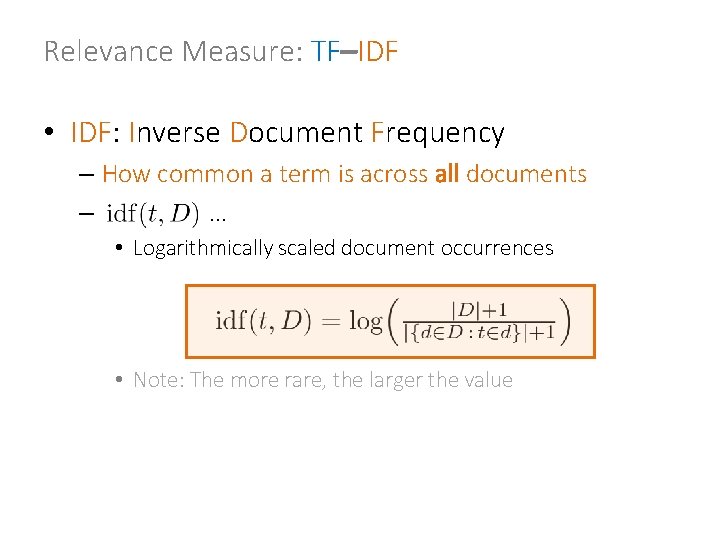
Relevance Measure: TF–IDF • IDF: Inverse Document Frequency – How common a term is across all documents – … • Logarithmically scaled document occurrences • Note: The more rare, the larger the value
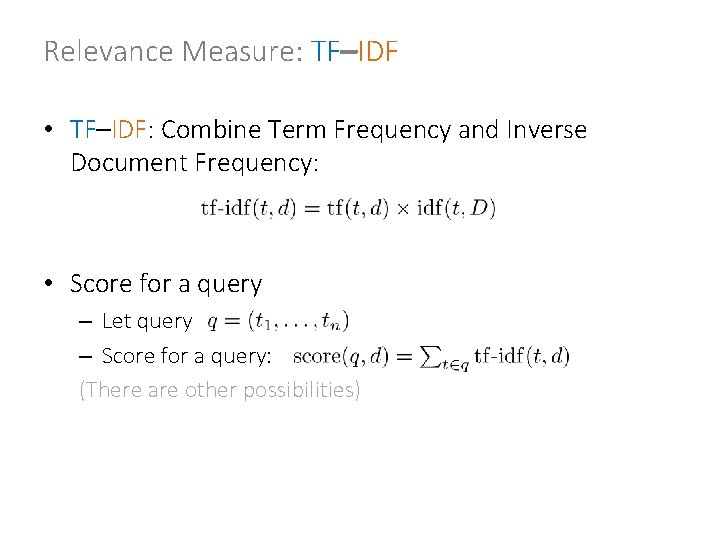
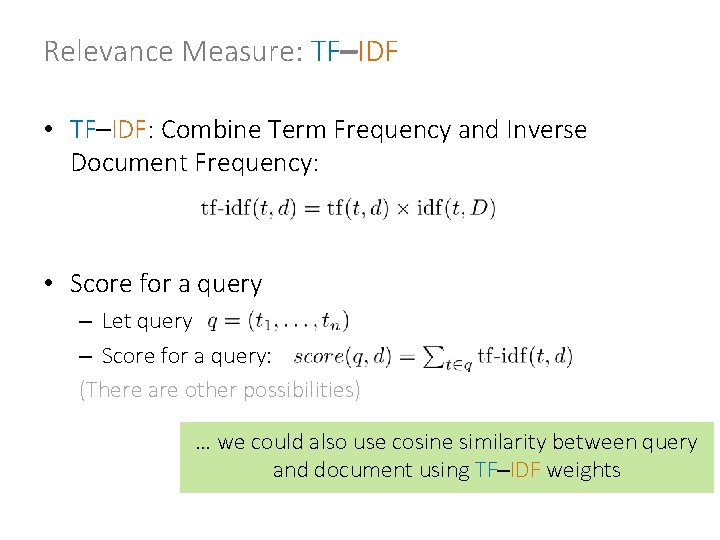
Relevance Measure: TF–IDF • TF–IDF: Combine Term Frequency and Inverse Document Frequency: • Score for a query – Let query – Score for a query: (There are other possibilities)
Relevance Measure: TF–IDF Term Frequency Inverse Document Frequency
Relevance Measure: TF–IDF Term Frequency Inverse Document Frequency
Relevance Measure: TF–IDF Term Frequency Inverse Document Frequency
Relevance Measure: TF–IDF Term Frequency Inverse Document Frequency
Relevance Measure: TF–IDF Term Frequency Inverse Document Frequency
Relevance Measure: TF–IDF Term Frequency Inverse Document Frequency
Relevance Measure: TF–IDF Term Frequency Inverse Document Frequency
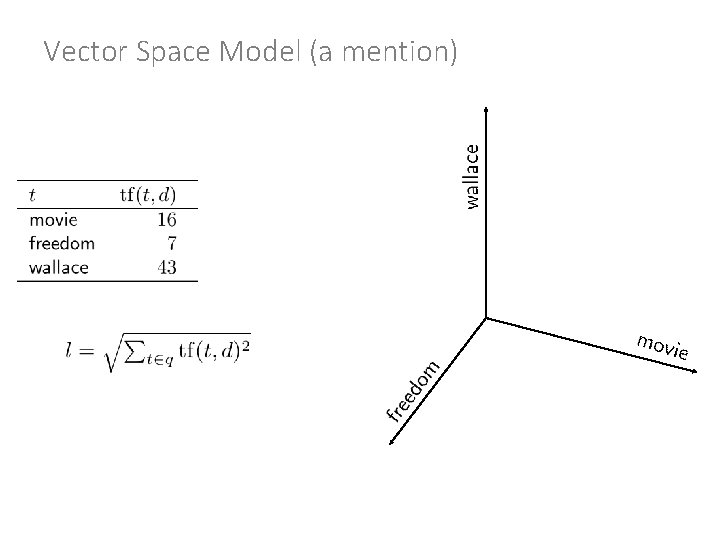
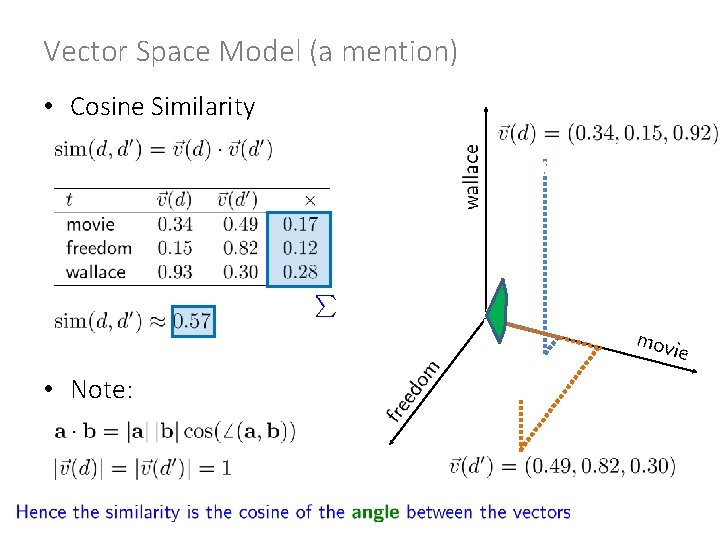
Vector Space Model (a mention)
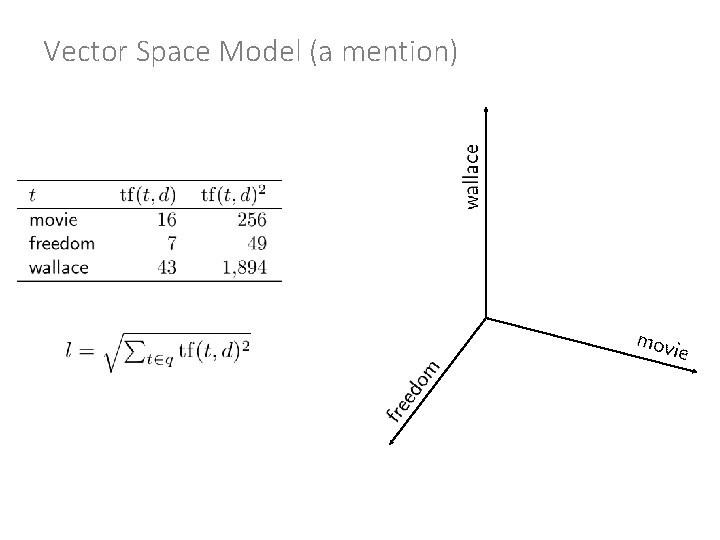
Vector Space Model (a mention)
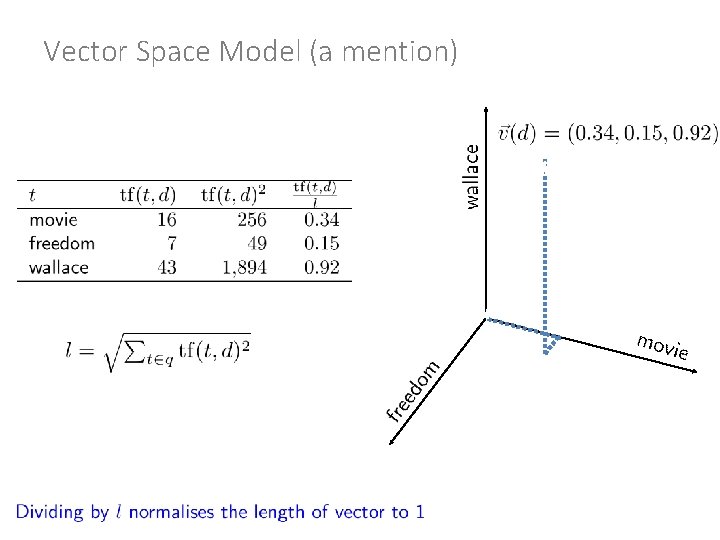
Vector Space Model (a mention)
Vector Space Model (a mention) • Cosine Similarity • Note:
Relevance Measure: TF–IDF • TF–IDF: Combine Term Frequency and Inverse Document Frequency: • Score for a query – Let query – Score for a query: (There are other possibilities) … we could also use cosine similarity between query and document using TF–IDF weights
Two Sides to Ranking: Relevance ≠
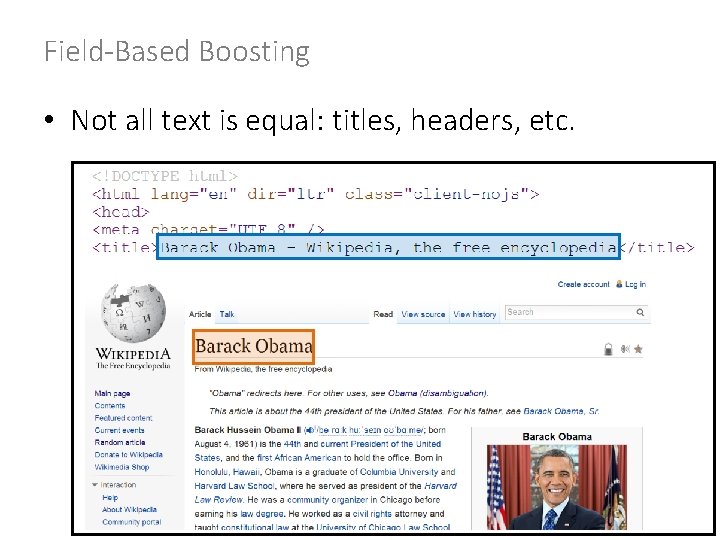
Field-Based Boosting • Not all text is equal: titles, headers, etc.
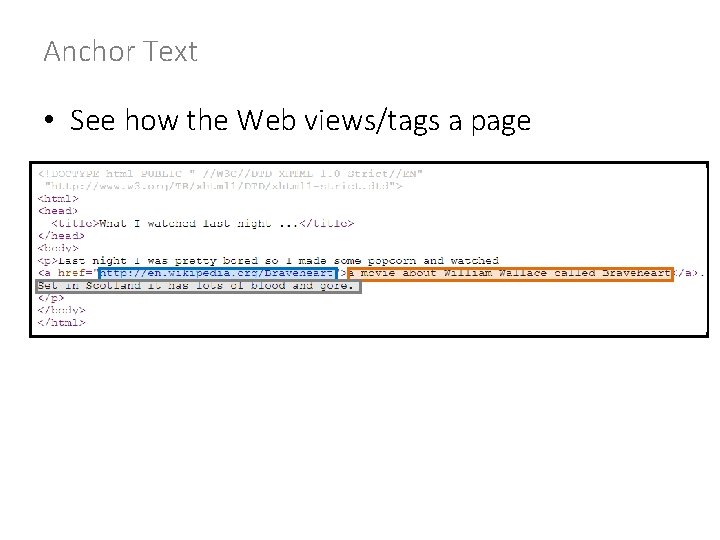
Anchor Text • See how the Web views/tags a page
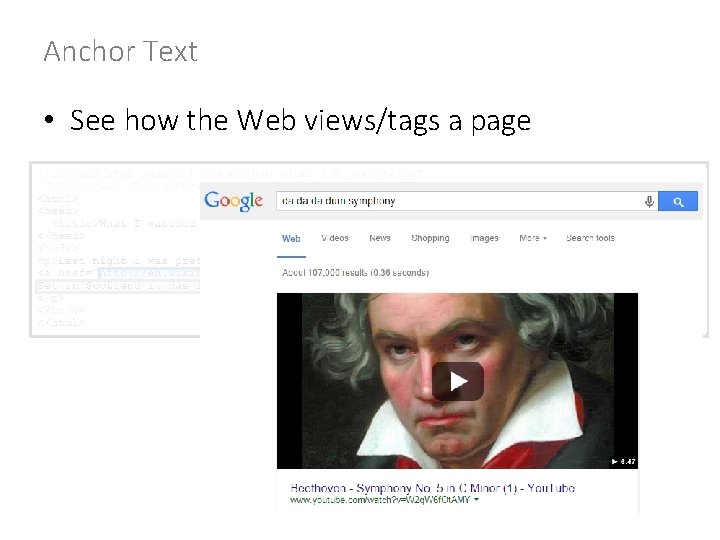
Anchor Text • See how the Web views/tags a page
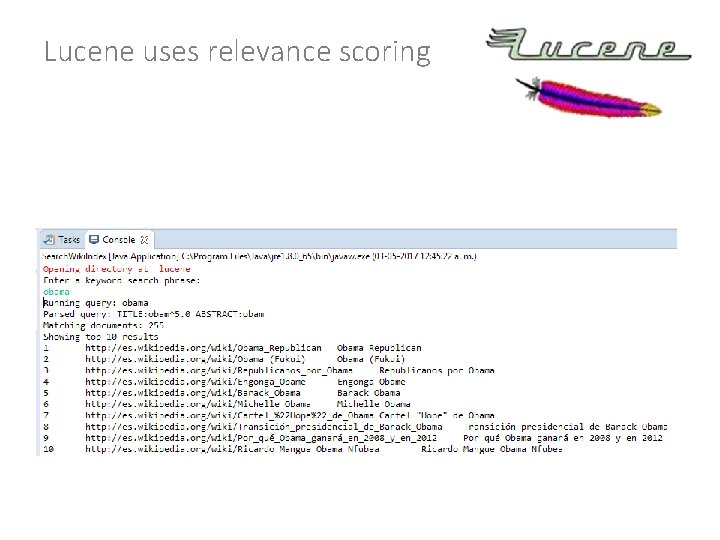
Lucene uses relevance scoring
RANKING: IMPORTANCE
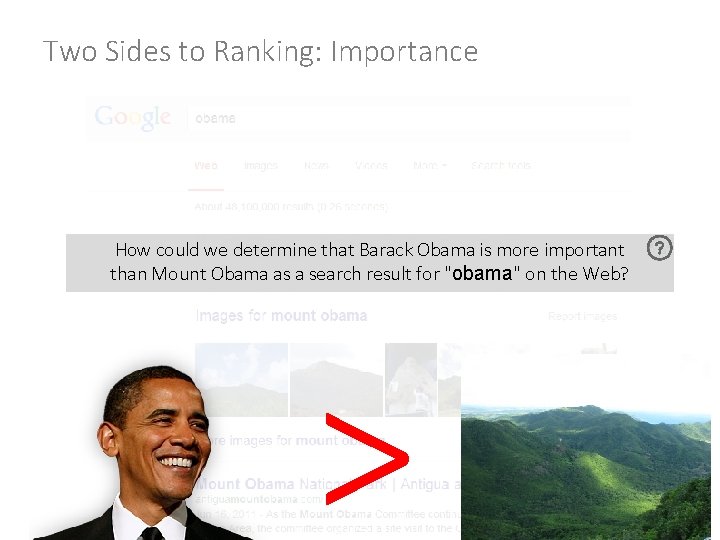
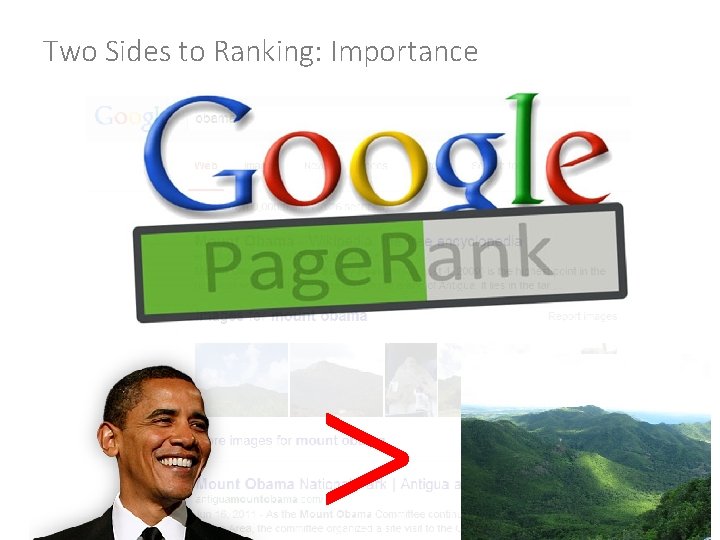
Two Sides to Ranking: Importance How could we determine that Barack Obama is more important than Mount Obama as a search result for "obama" on the Web? >
Link Analysis Which will have more links from other pages? The Wikipedia article for Mount Obama? The Wikipedia article for Barack Obama?
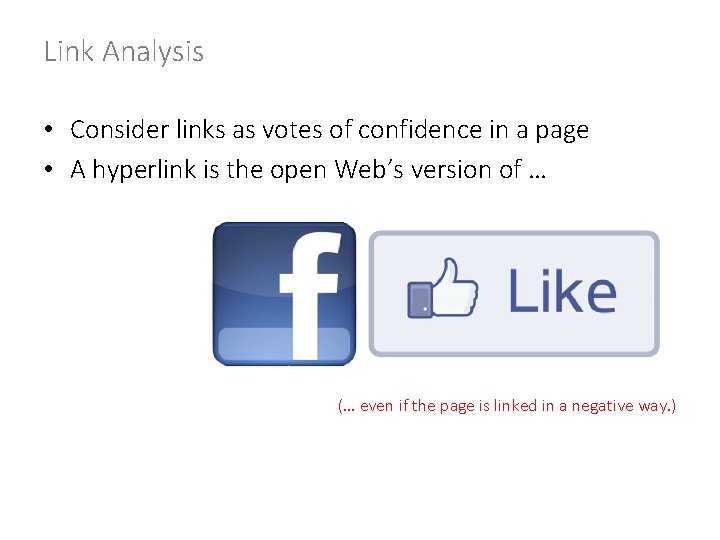
Link Analysis • Consider links as votes of confidence in a page • A hyperlink is the open Web’s version of … (… even if the page is linked in a negative way. )
Link Analysis So if we just count links to a page we can determine its importance and we are done?
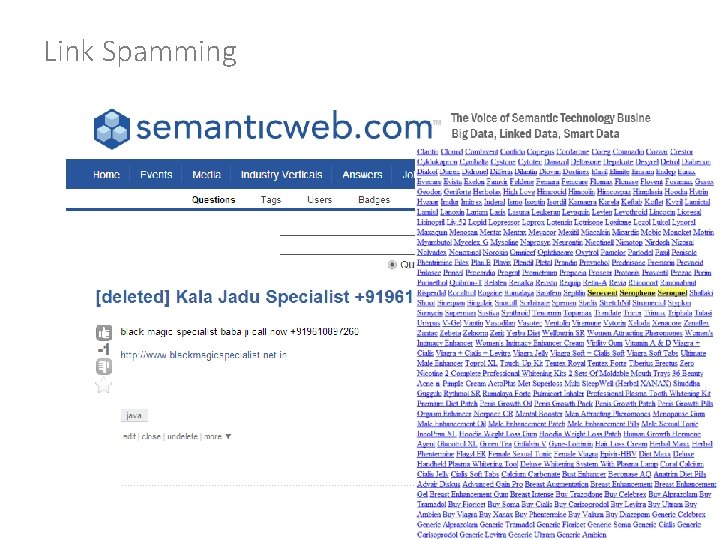
Link Spamming
Link Importance So which should count for more? A link from http: //en. wikipedia. org/wiki/Barack_Obama? Or a link from http: //freev 1 agra. com/shop. html?
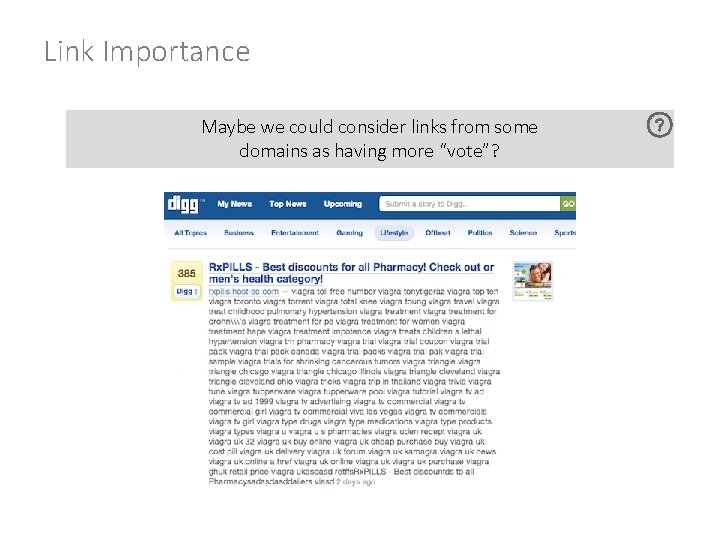
Link Importance Maybe we could consider links from some domains as having more “vote”?
Page. Rank
Page. Rank • Not just a count of inlinks – A link from a more important page is more important – A link from a page with fewer links is more important ∴ A page with lots of inlinks from important pages (which have few outlinks) is more important
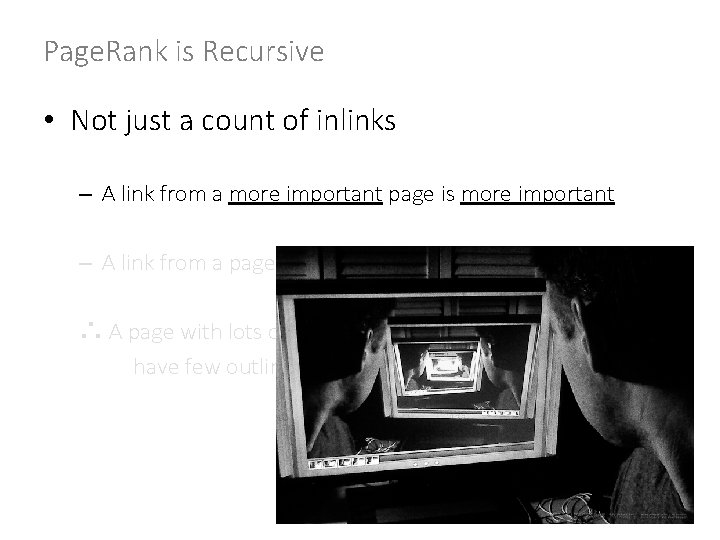
Page. Rank is Recursive • Not just a count of inlinks – A link from a more important page is more important – A link from a page with fewer links is more important ∴ A page with lots of inlinks from important pages (which have few outlinks) is more important
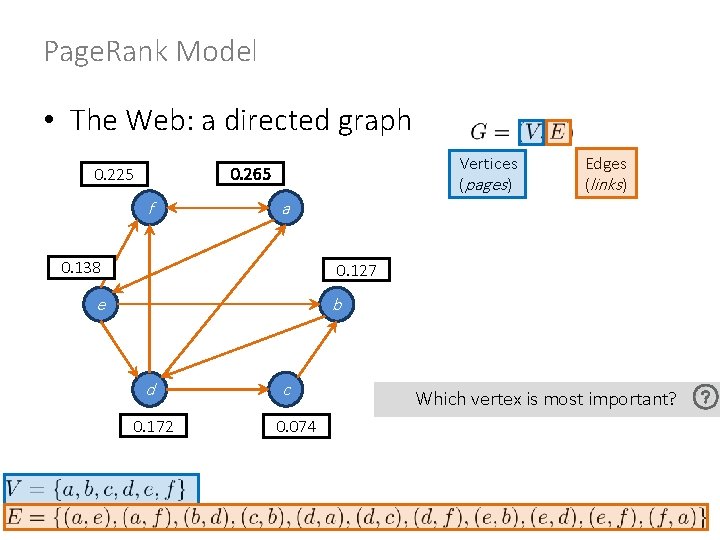
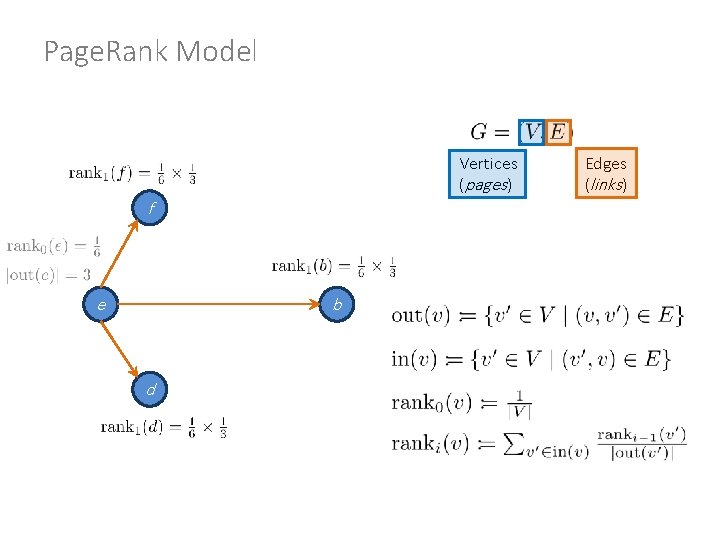
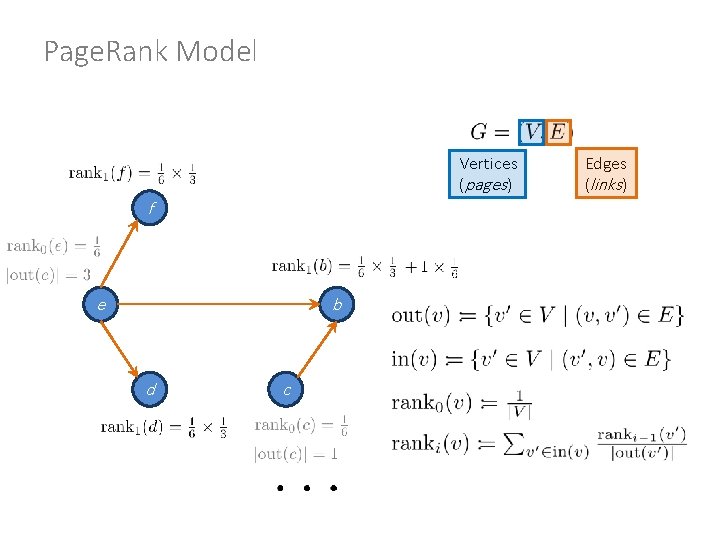
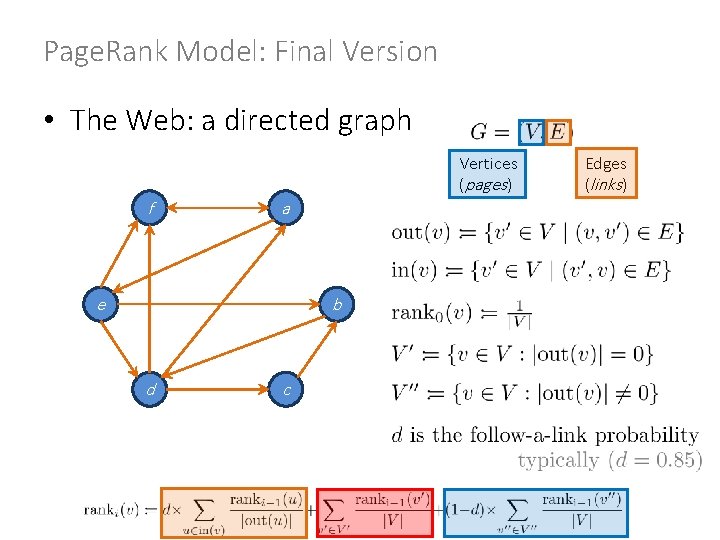
Page. Rank Model • The Web: a directed graph Vertices (pages ) 0. 265 0. 225 f Edges (links) a 0. 138 0. 127 e b d 0. 172 c 0. 074 Which vertex is most important?
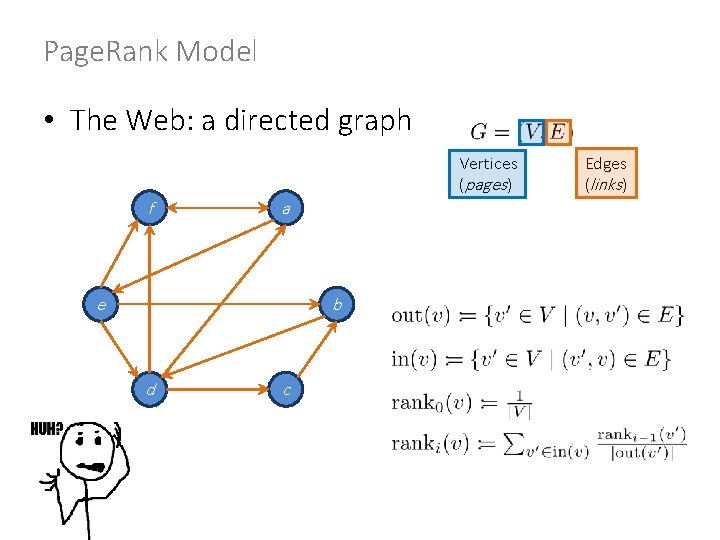
Page. Rank Model • The Web: a directed graph Vertices (pages ) f a e b d c Edges (links)
Page. Rank Model Vertices (pages ) f e b d Edges (links)
Page. Rank Model Vertices (pages ) f e b d c Edges (links)
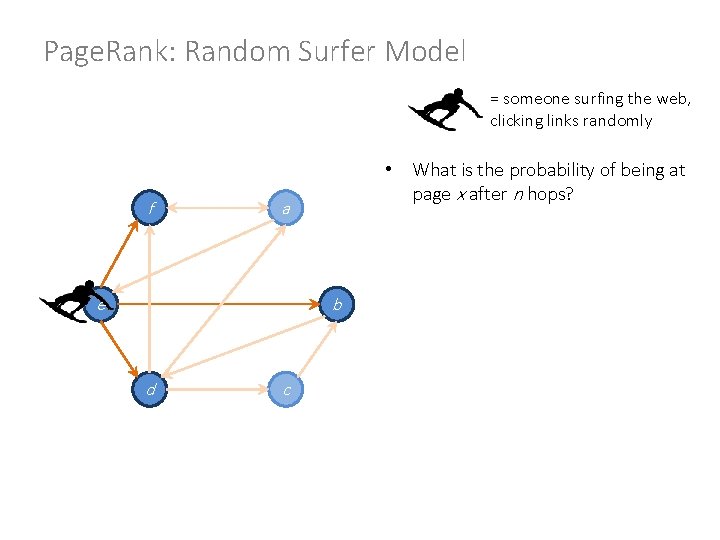
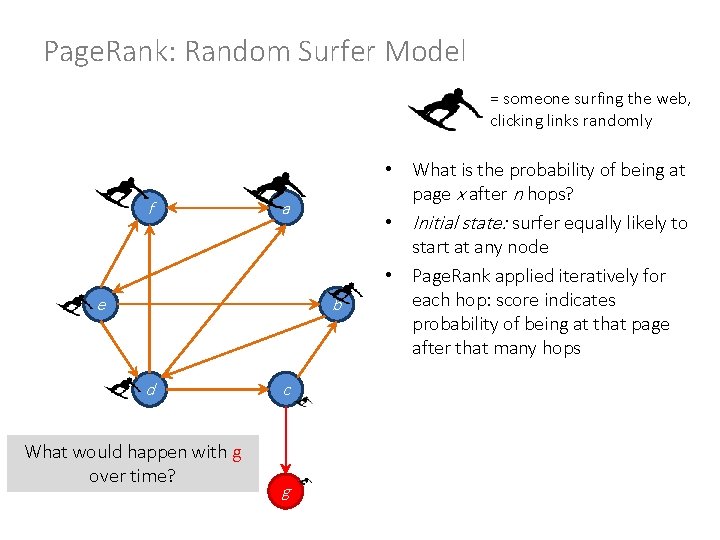
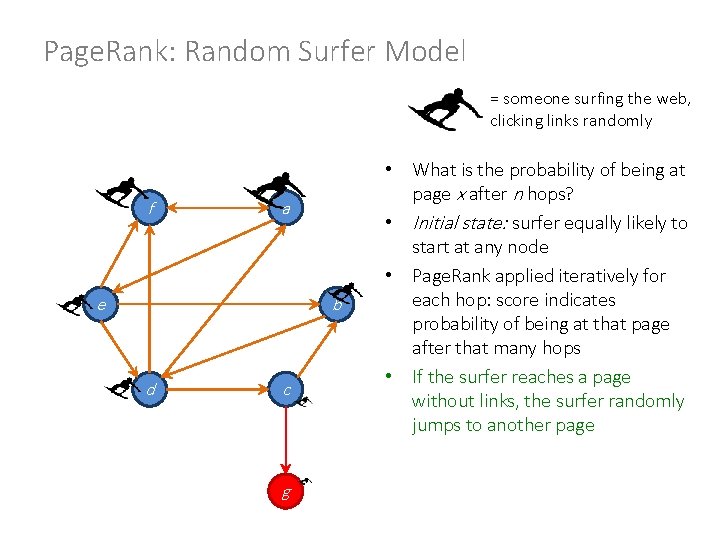
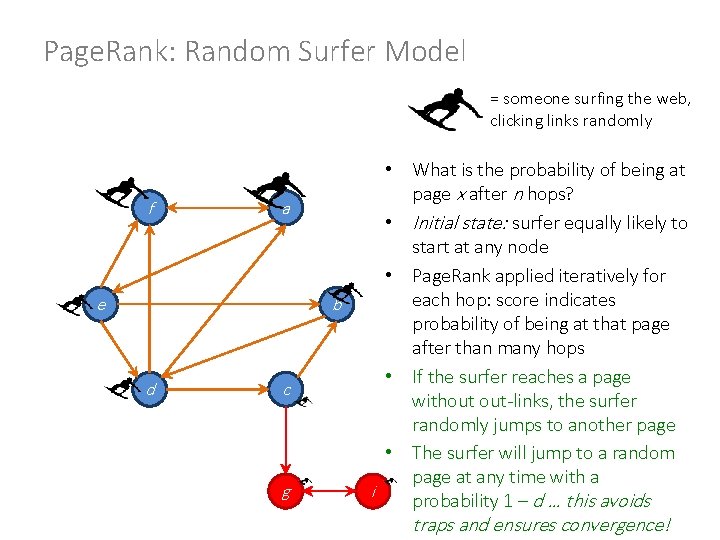
Page. Rank: Random Surfer Model = someone surfing the web, clicking links randomly f • What is the probability of being at page x after n hops? a e b d c
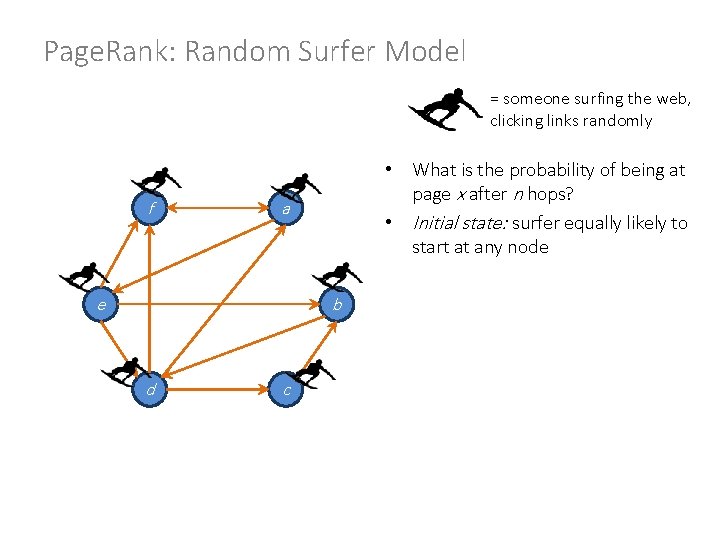
Page. Rank: Random Surfer Model = someone surfing the web, clicking links randomly f • What is the probability of being at page x after n hops? • Initial state: surfer equally likely to start at any node a e b d c
Page. Rank: Random Surfer Model = someone surfing the web, clicking links randomly f a e b d What would happen with g over time? c g • What is the probability of being at page x after n hops? • Initial state: surfer equally likely to start at any node • Page. Rank applied iteratively for each hop: score indicates probability of being at that page after that many hops
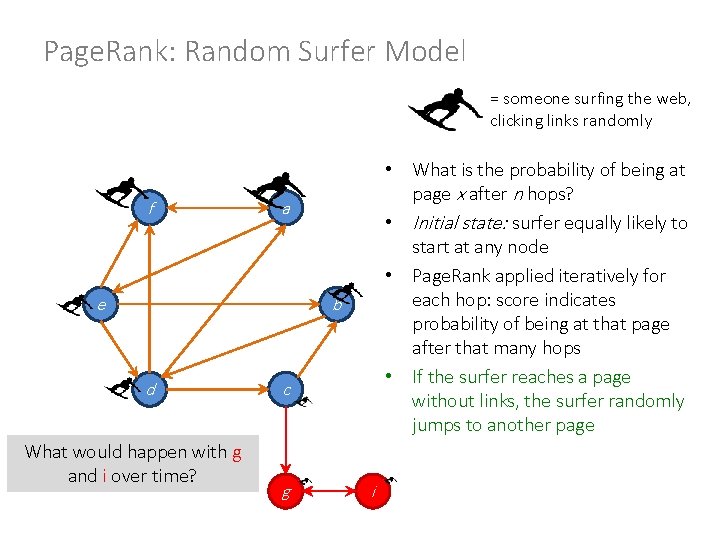
Page. Rank: Random Surfer Model = someone surfing the web, clicking links randomly f a e b d c g • What is the probability of being at page x after n hops? • Initial state: surfer equally likely to start at any node • Page. Rank applied iteratively for each hop: score indicates probability of being at that page after that many hops • If the surfer reaches a page without links, the surfer randomly jumps to another page
Page. Rank: Random Surfer Model = someone surfing the web, clicking links randomly f • What is the probability of being at page x after n hops? • Initial state: surfer equally likely to start at any node • Page. Rank applied iteratively for each hop: score indicates probability of being at that page after that many hops • If the surfer reaches a page without links, the surfer randomly jumps to another page a e b d What would happen with g and i over time? c g i
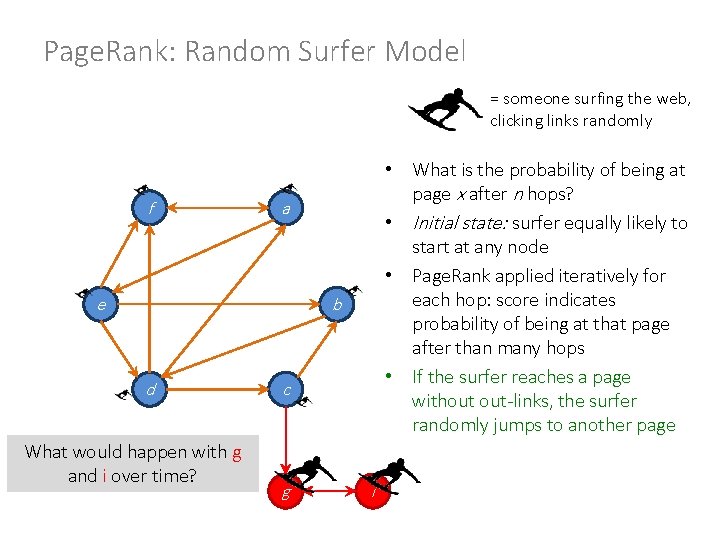
Page. Rank: Random Surfer Model = someone surfing the web, clicking links randomly f • What is the probability of being at page x after n hops? • Initial state: surfer equally likely to start at any node • Page. Rank applied iteratively for each hop: score indicates probability of being at that page after than many hops • If the surfer reaches a page without out-links, the surfer randomly jumps to another page a e b d What would happen with g and i over time? c g i
Page. Rank: Random Surfer Model = someone surfing the web, clicking links randomly f a e b d c g • What is the probability of being at page x after n hops? • Initial state: surfer equally likely to start at any node • Page. Rank applied iteratively for each hop: score indicates probability of being at that page after than many hops • If the surfer reaches a page without out-links, the surfer randomly jumps to another page • The surfer will jump to a random page at any time with a i probability 1 – d … this avoids traps and ensures convergence!
Page. Rank Model: Final Version • The Web: a directed graph Vertices (pages ) f a e b d c Edges (links)
Page. Rank: Benefits ü ü More robust than a simple link count Fewer ties than link counting Scalable to approximate (for sparse graphs) Convergence guaranteed
Two Sides to Ranking: Importance >
HOW DOES GOOGLE REALLY RANK? AN EDUCATED GUESS
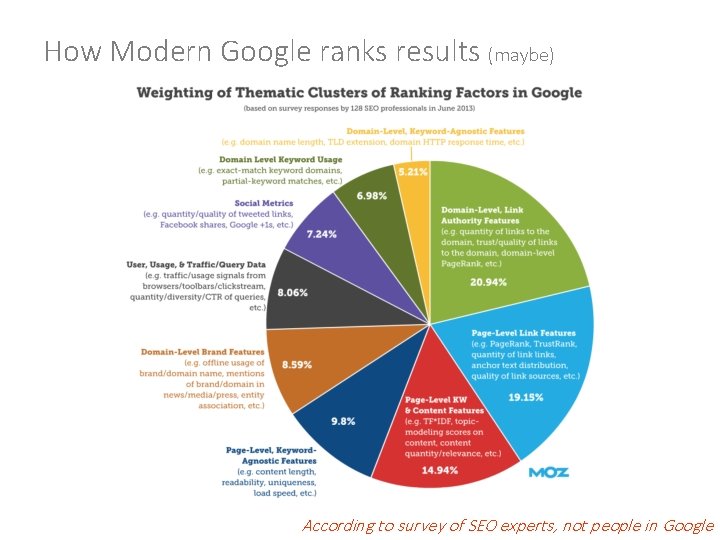
How Modern Google ranks results (maybe) According to survey of SEO experts, not people in Google
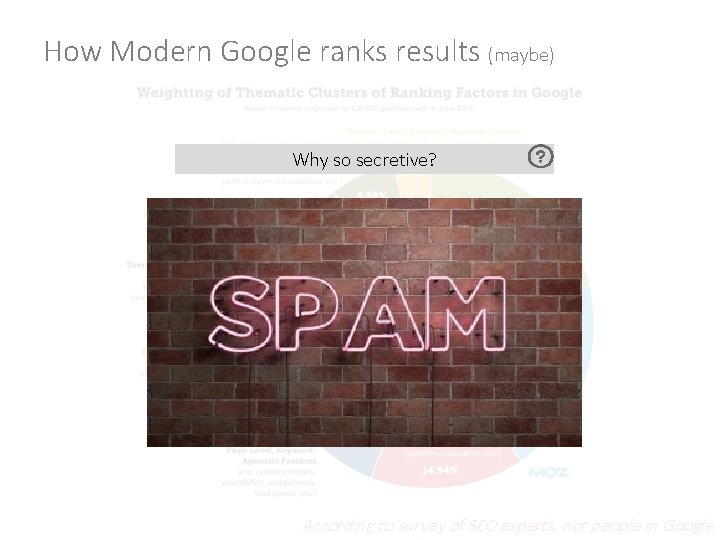
How Modern Google ranks results (maybe) Why so secretive? According to survey of SEO experts, not people in Google
Ranking: Science or Art?
Questions?