
CBS deficiency clinical guidelines Andrew Morris Central Manchester
CBS deficiency: clinical guidelines Andrew Morris Central Manchester University Hospitals
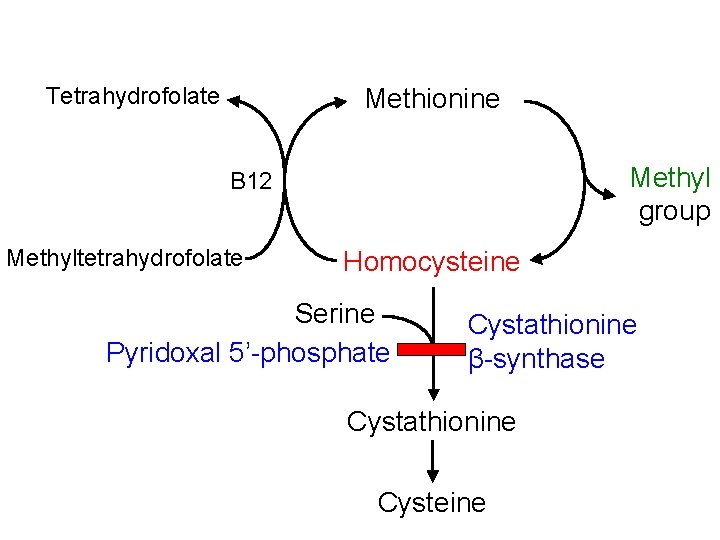
Tetrahydrofolate Methionine Methyl group B 12 Methyltetrahydrofolate Homocysteine Serine Pyridoxal 5’-phosphate Cystathionine β-synthase Cystathionine Cysteine

CBS deficiency Adverse effects • Brain • Eye • Skeleton Complete deficiency causes early-onset multisystem disease • Blood clotting B 6 -responsive cases may be asymptomatic or only suffer adult-onset thromboembolism
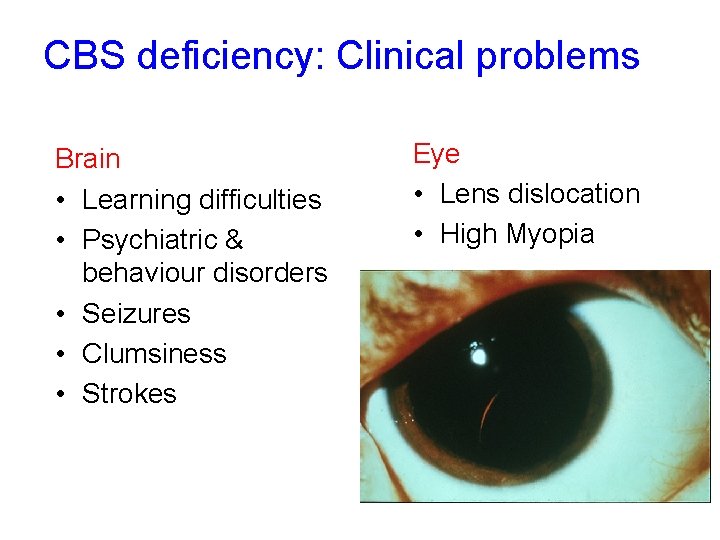
CBS deficiency: Clinical problems Brain • Learning difficulties • Psychiatric & behaviour disorders • Seizures • Clumsiness • Strokes Eye • Lens dislocation • High Myopia

CBS deficiency: Skeleton • • Tall Pigeon chest Knock knees Osteoporosis – Scoliosis
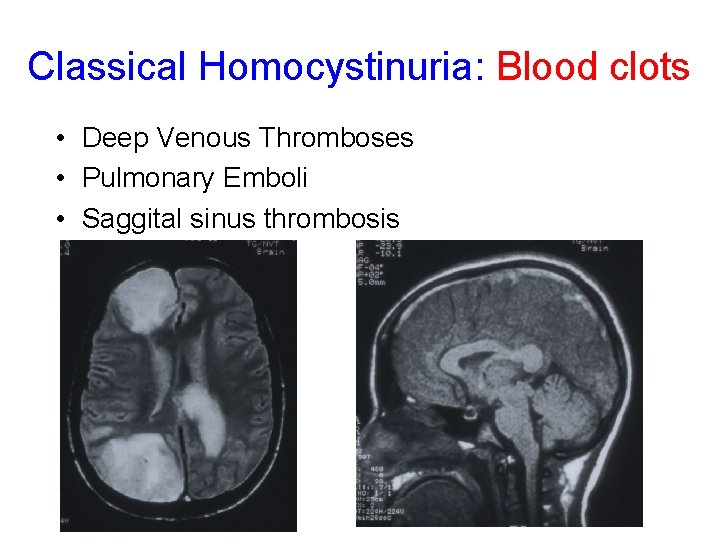
Classical Homocystinuria: Blood clots • Deep Venous Thromboses • Pulmonary Emboli • Saggital sinus thrombosis
Presentation • Paediatricians, including those working with learning disorders • Paediatric & adult neurologists • Ophthalmologists • Orthopedic surgeons • Haematologists
CBS deficiency Prevalence • Unknown, maybe 1/300, 000 diagnosed globally • Approx 50% cases said to respond to vit B 6 BUT based on frequency of carriers • 1/10, 000 probably have a mild B 6 -responsive form • Many asymptomatic or only have DVTs as adults
CBS deficiency Problems • Rare • Awareness is low • Still many uncertainties about diagnosis & management Need evidence-based guidelines • To help doctors with limited experience • To highlight uncertainties & stimulate research
Evidence-based Guideline • Team of paediatricians, adult physicians, biochemists, dietitians, geneticist, statistician • Kimberly Chapman identified several hundred relevant medical articles • Key questions agreed & allocated (2 people each) • Answers prepared with supporting evidence (often expert opinion) & discussed with team • Guideline written, circulated to team & reviewers & revised – nearly finalised
Diagnosis of homocystinuria • Plasma total homocysteine (t. Hcy) • Free homocystine (in plasma or urine) unreliable • t. Hcy may be normal in B 6 -responsive patients if taking multivitamins containing B 6 • Plasma should be separated promptly
Other causes of high homocysteine • • Vitamin B 12 or folate deficiencies Renal failure Remethylation defects Methylation defects • CBS deficiency confirmed by mutation analysis or CBS assay (in plasma or fibroblasts)
CBS deficiency: Newborn screening • Blood methionine Outcomes • Normal if good compliance Problem • Some cases not detected
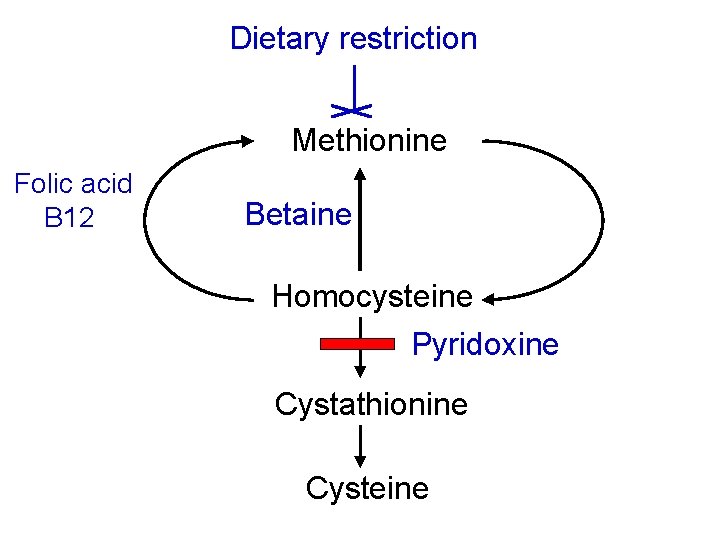
Dietary restriction Methionine Folic acid B 12 Betaine Homocysteine Pyridoxine Cystathionine Cysteine
Treatment with Pyridoxine • Presumed to stabilise the mutant CBS enzyme • Normal homocysteine on low doses in some pts • Partial response even on high doses in other pts Side effects • Peripheral neuropathy with high doses (>900 mg/d) Recommended dose • Lowest effective • Up to 10 mg/kg/d, max. 500 mg/d
Testing for B 6 responsiveness We propose • Test when pt is stable, on normal protein intake • Give folate & correct B 12 if deficient • Pyridoxine 10 mg/kg/d up to 500 mg/d • Continue for 6 weeks with at least 2 t. Hcy measurements before & on pyridoxine • Response: >20% fall in t. Hcy If detected by newborn screening, response very rare • Pyridoxine 100 mg/d for 2 weeks
Low methionine diet • Small, measured amounts of food containing methionine • Methionine-free amino acid mixture • Adequate energy from low protein foods – most fruit & vegetables – synthetic e. g. LP bread, biscuits, pasta • Vitamin & mineral supplements
Monitoring • Total Homocysteine Methionine • Frequency depends on severity, treatment, age • Blood spots can be used but most labs require liquid blood, separated promptly • Also B 12, folate Nutrition Bone density
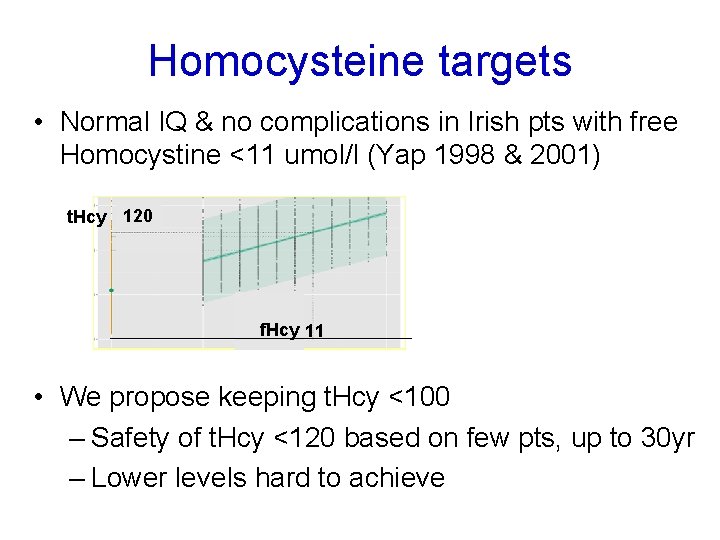
Homocysteine targets • Normal IQ & no complications in Irish pts with free Homocystine <11 umol/l (Yap 1998 & 2001) t. Hcy 120 f. Hcy 11 • We propose keeping t. Hcy <100 – Safety of t. Hcy <120 based on few pts, up to 30 yr – Lower levels hard to achieve
Low methionine diet Problems • • • Diet & supplements relatively unpalatable Restrictions unpopular Expert dietetians required Introduction of diet harder after infancy Diet needed throughout life but compliance deteriorates
Betaine Dimethylglycine Betaine Methionine Homocysteine Roles • Add to diet if homocysteine above targets – Deteriorating compliance with age – Poor compliance in late diagnosed patients Side effects • Taste, Fishy odour at high doses • Methionine rises, seldom toxic but brain swelling in few patients with methionine >1000 umol/l
Minimise risk of thromboses During travel, surgery, infections & pregnancy • Good hydration • Compression stockings • Early mobilisation • Anticoagulants Contraceptives • Avoid oestrogens (combined pill)
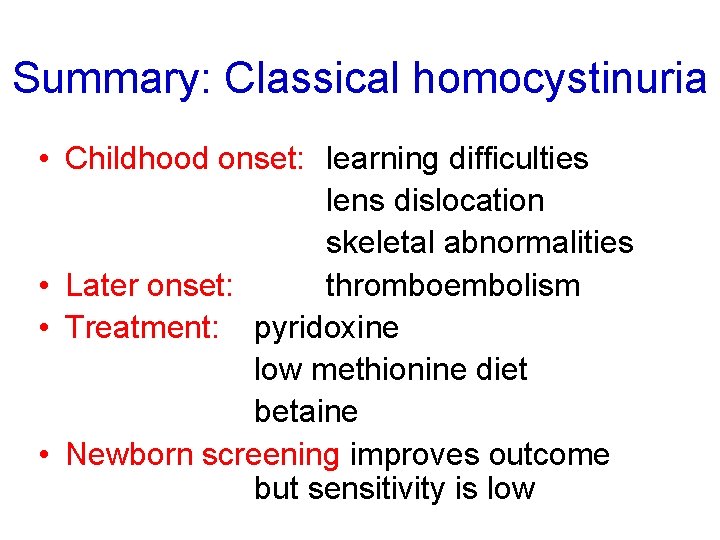
Summary: Classical homocystinuria • Childhood onset: learning difficulties lens dislocation skeletal abnormalities • Later onset: thromboembolism • Treatment: pyridoxine low methionine diet betaine • Newborn screening improves outcome but sensitivity is low
- Slides: 23