
CBM MVD Detector and 3 D Integration Processes
CBM MVD Detector and 3 D Integration Processes Review of the 15 th CBM Collaboration Meeting and the VIPS 2010 Workshop Shiming Yang 06. 05. 2010
Outline p MVD Detector of CBM experiment n n n p 3 D Integration technology n p Introduction Development of 3 D Integrated pixel sensors n n p Brief introduction, specifications Request for the 3 D integrated CMOS pixel sensor Nowaday status of MVD Industry Activities Designs for high energy physics Conclusion 2
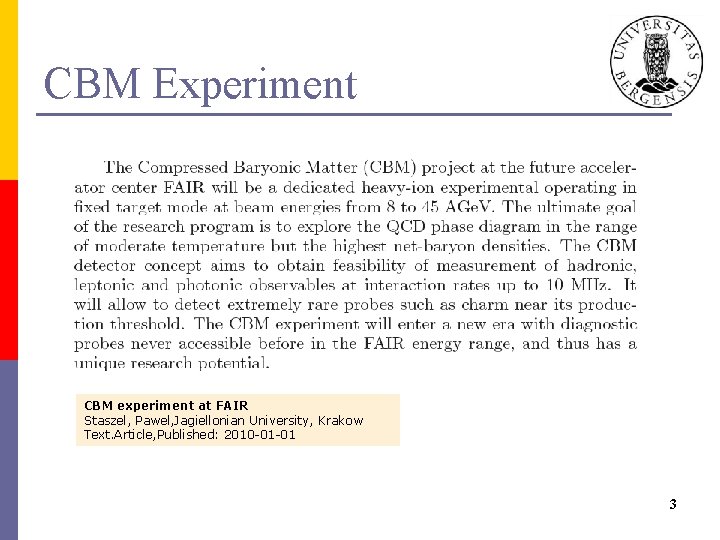
CBM Experiment CBM experiment at FAIR Staszel, Pawel, Jagiellonian University, Krakow Text. Article, Published: 2010 -01 -01 3
CBM Experiment 4
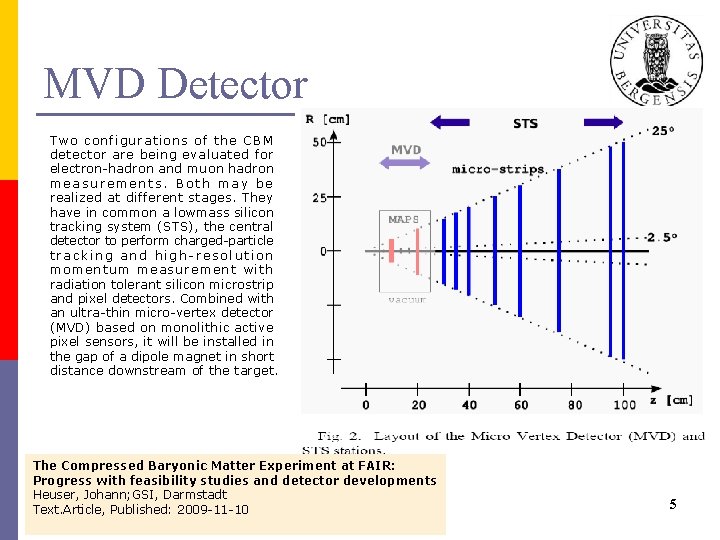
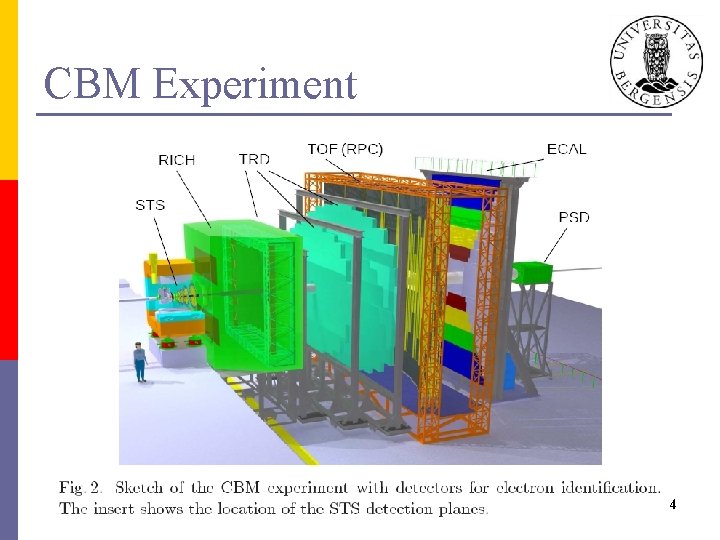
MVD Detector Two configurations of the CBM detector are being evaluated for electron-hadron and muon hadron measurements. Both may be realized at different stages. They have in common a lowmass silicon tracking system (STS), the central detector to perform charged-particle tracking and high-resolution momentum measurement with radiation tolerant silicon microstrip and pixel detectors. Combined with an ultra-thin micro-vertex detector (MVD) based on monolithic active pixel sensors, it will be installed in the gap of a dipole magnet in short distance downstream of the target. The Compressed Baryonic Matter Experiment at FAIR: Progress with feasibility studies and detector developments Heuser, Johann; GSI, Darmstadt Text. Article, Published: 2009 -11 -10 5
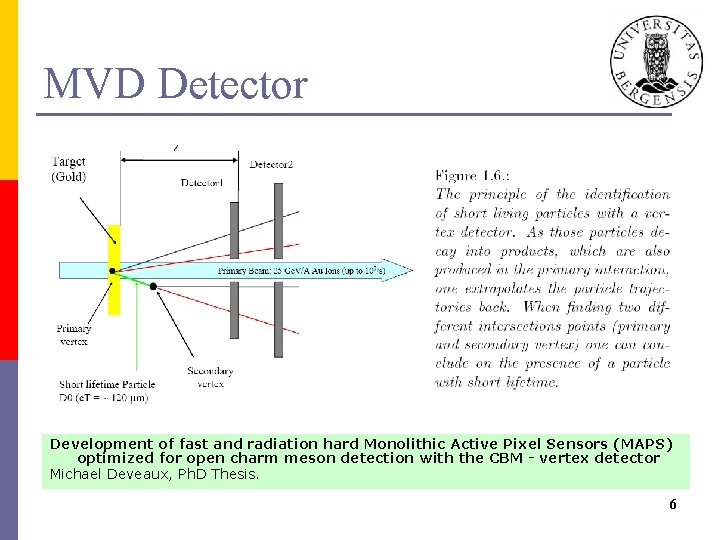
MVD Detector Development of fast and radiation hard Monolithic Active Pixel Sensors (MAPS) optimized for open charm meson detection with the CBM - vertex detector Michael Deveaux, Ph. D Thesis. 6
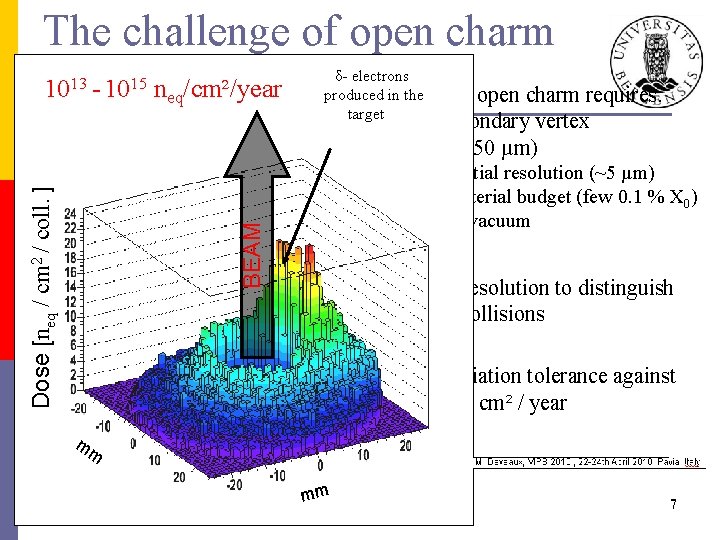
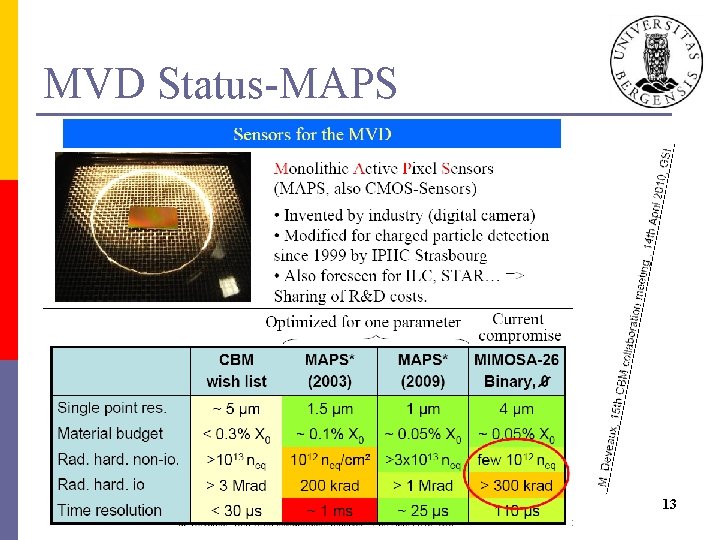
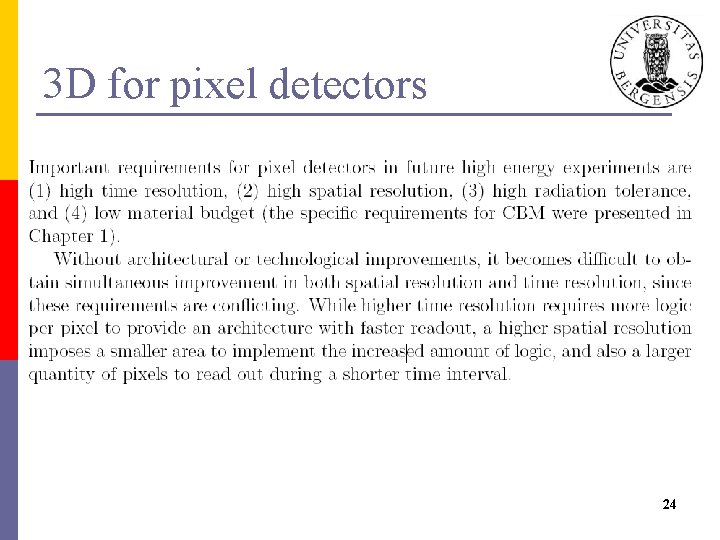
The challenge of open charm z 10 - 10 n /cm²/year detection Reconstructing open charm requires: 13 eq Detector 1 δ- electrons produced in the Detector 2 target • Excellent secondary vertex resolution (~ 50 µm) => Excellent spatial resolution (~5 µm) => Very low material budget (few 0. 1 % X 0) Primary Beam: 25 AGe. V Au Ions (up to 10 /s) => Detectors in vacuum 9 Primary vertex BEAM Dose [neq / cm 2 / coll. ] Target (Gold) 15 • A good time resolution to distinguish the individual collisions Secondary vertex Short lived particle D 0 (ct = ~ 120 µm) • Very good radiation tolerance against Reconstruction concept for open charm >> 1013 neq / cm² / year mm mm 7
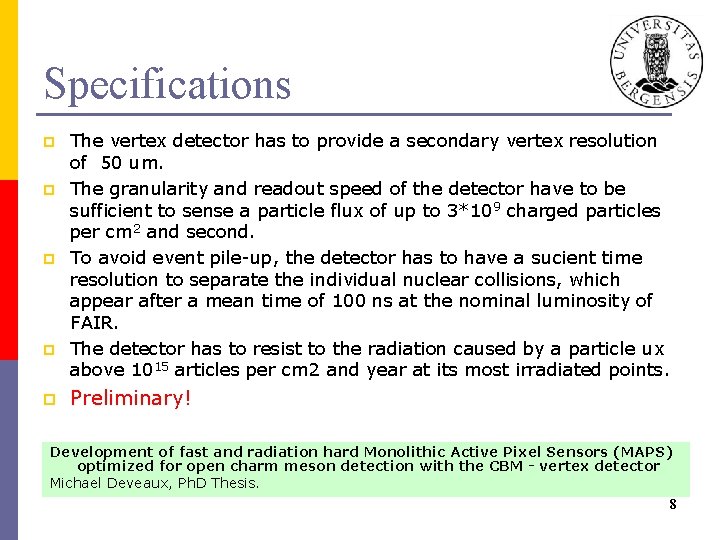
Specifications p p p The vertex detector has to provide a secondary vertex resolution of 50 um. The granularity and readout speed of the detector have to be sufficient to sense a particle flux of up to 3*109 charged particles per cm 2 and second. To avoid event pile-up, the detector has to have a sucient time resolution to separate the individual nuclear collisions, which appear after a mean time of 100 ns at the nominal luminosity of FAIR. The detector has to resist to the radiation caused by a particle ux above 1015 articles per cm 2 and year at its most irradiated points. Preliminary! Development of fast and radiation hard Monolithic Active Pixel Sensors (MAPS) optimized for open charm meson detection with the CBM - vertex detector Michael Deveaux, Ph. D Thesis. 8
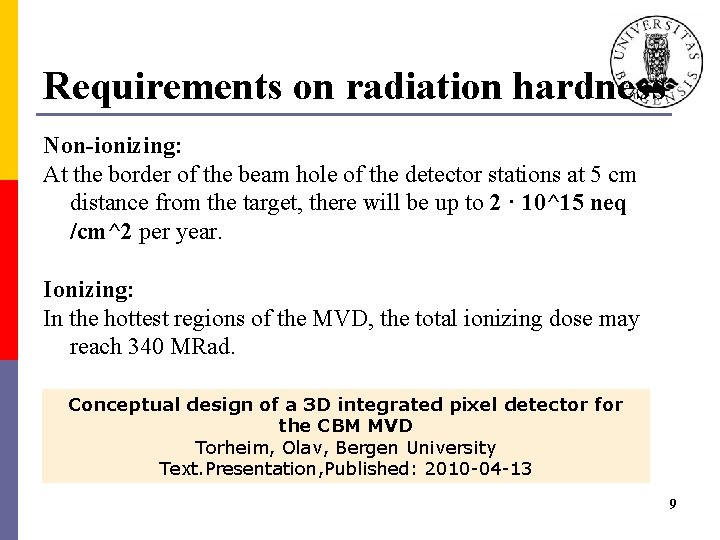
Requirements on radiation hardness Non-ionizing: At the border of the beam hole of the detector stations at 5 cm distance from the target, there will be up to 2 · 10^15 neq /cm^2 per year. Ionizing: In the hottest regions of the MVD, the total ionizing dose may reach 340 MRad. Conceptual design of a 3 D integrated pixel detector for the CBM MVD Torheim, Olav, Bergen University Text. Presentation, Published: 2010 -04 -13 9
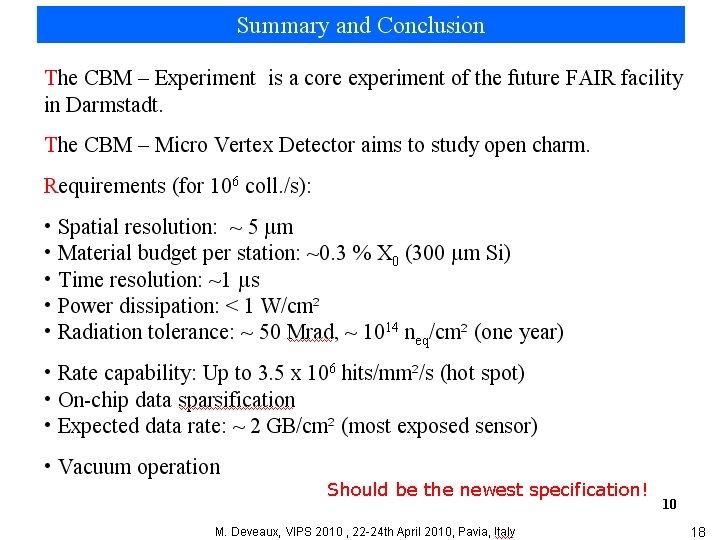
Should be the newest specification! 10
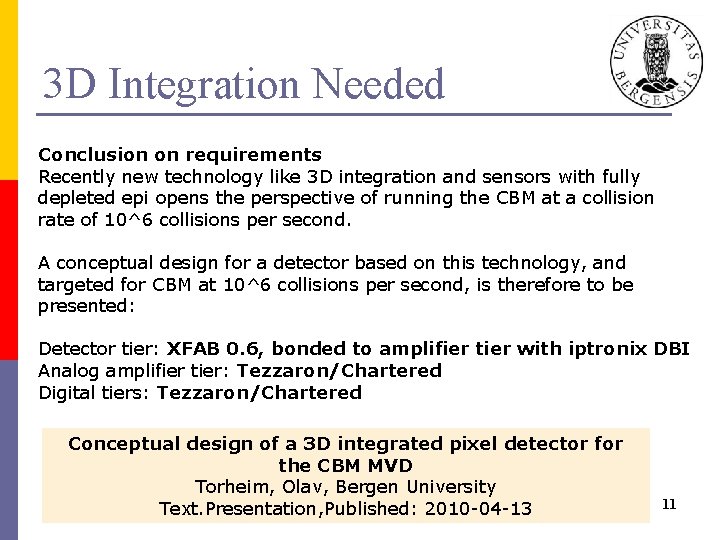
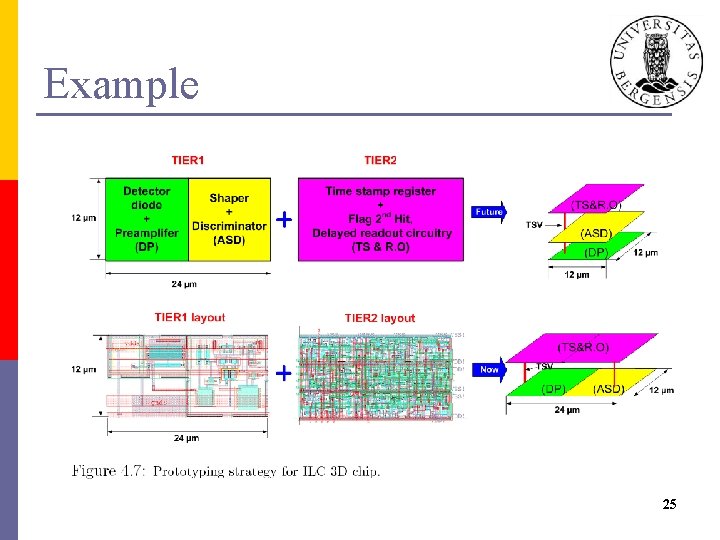
3 D Integration Needed Conclusion on requirements Recently new technology like 3 D integration and sensors with fully depleted epi opens the perspective of running the CBM at a collision rate of 10^6 collisions per second. A conceptual design for a detector based on this technology, and targeted for CBM at 10^6 collisions per second, is therefore to be presented: Detector tier: XFAB 0. 6, bonded to amplifier tier with iptronix DBI Analog amplifier tier: Tezzaron/Chartered Digital tiers: Tezzaron/Chartered Conceptual design of a 3 D integrated pixel detector for the CBM MVD Torheim, Olav, Bergen University Text. Presentation, Published: 2010 -04 -13 11
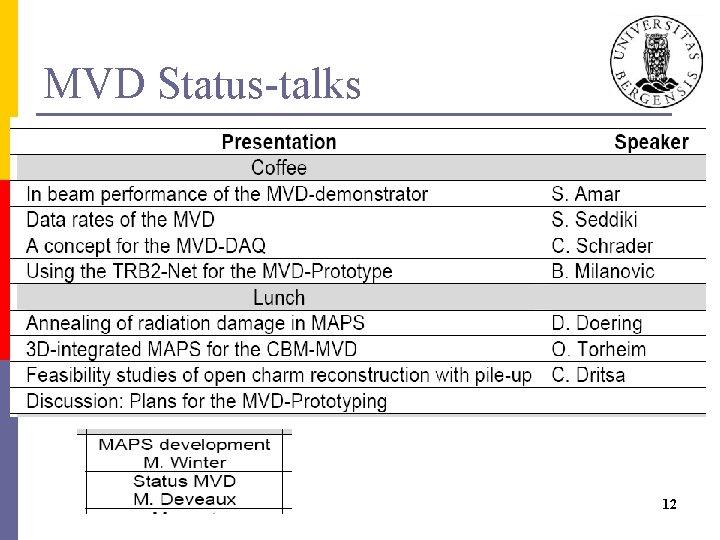
MVD Status-talks 12
MVD Status-MAPS 13
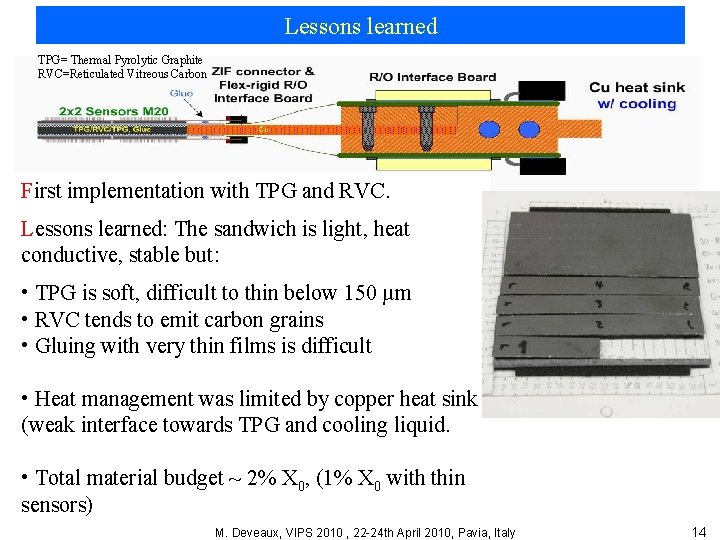
Lessons learned TPG= Thermal Pyrolytic Graphite RVC=Reticulated Vitreous Carbon First implementation with TPG and RVC. Lessons learned: The sandwich is light, heat conductive, stable but: • TPG is soft, difficult to thin below 150 µm • RVC tends to emit carbon grains • Gluing with very thin films is difficult • Heat management was limited by copper heat sink (weak interface towards TPG and cooling liquid. • Total material budget ~ 2% X 0, (1% X 0 with thin sensors) M. Deveaux, VIPS 2010 , 22 -24 th April 2010, Pavia, Italy 14
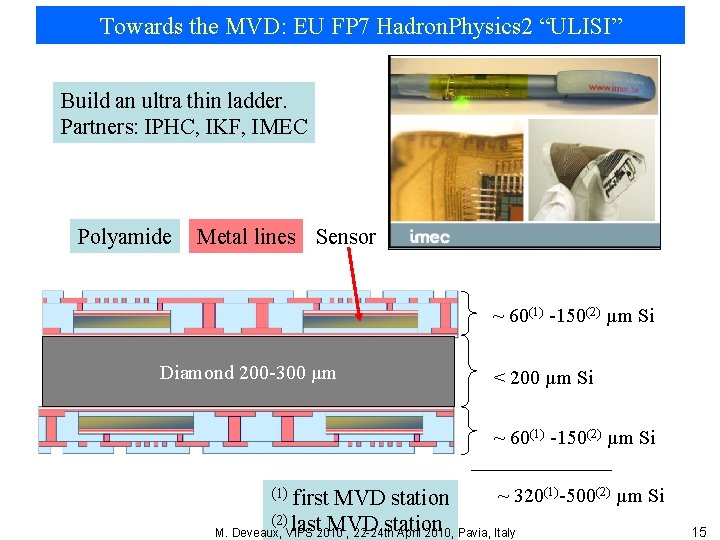
Towards the MVD: EU FP 7 Hadron. Physics 2 “ULISI” Build an ultra thin ladder. Partners: IPHC, IKF, IMEC Polyamide Metal lines Sensor ~ 60(1) -150(2) µm Si Diamond 200 -300 µm < 200 µm Si ~ 60(1) -150(2) µm Si ~ 320(1)-500(2) µm Si first MVD station (2) last MVD station M. Deveaux, VIPS 2010 , 22 -24 th April 2010, Pavia, Italy (1) 15
MVD Status-Summary 16
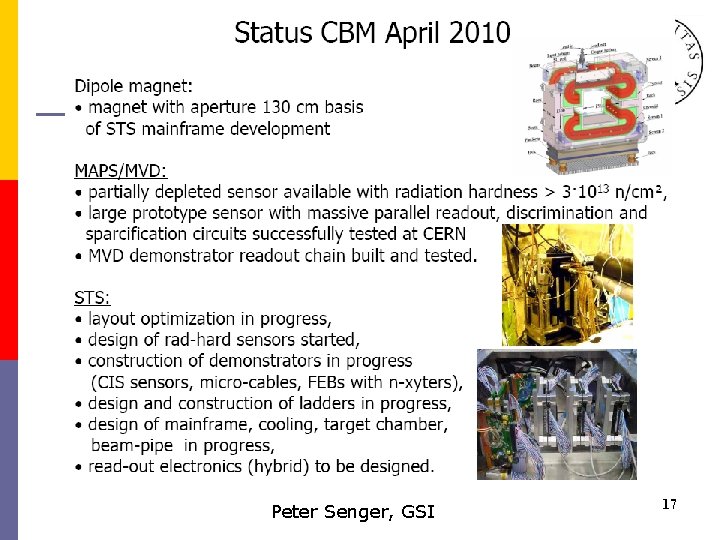
Peter Senger, GSI 17
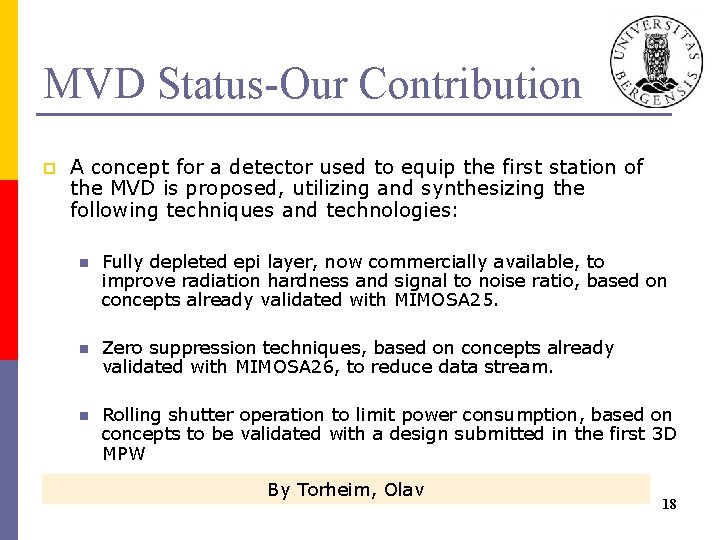
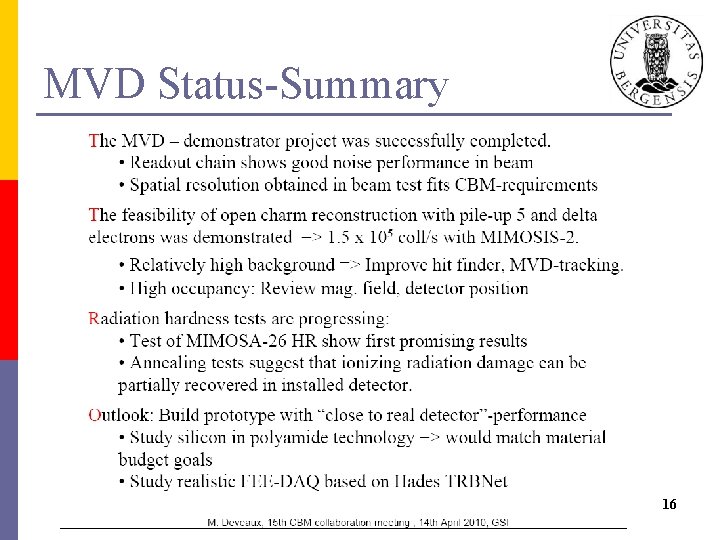
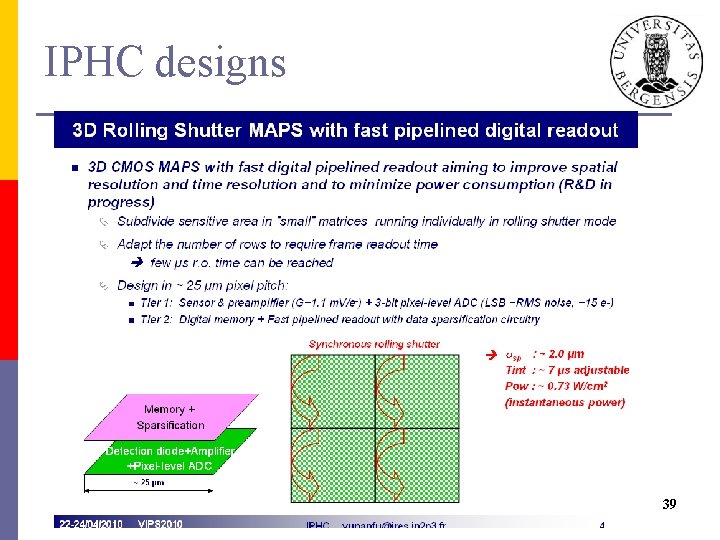
MVD Status-Our Contribution p A concept for a detector used to equip the first station of the MVD is proposed, utilizing and synthesizing the following techniques and technologies: n Fully depleted epi layer, now commercially available, to improve radiation hardness and signal to noise ratio, based on concepts already validated with MIMOSA 25. n Zero suppression techniques, based on concepts already validated with MIMOSA 26, to reduce data stream. n Rolling shutter operation to limit power consumption, based on concepts to be validated with a design submitted in the first 3 D MPW By Torheim, Olav 18
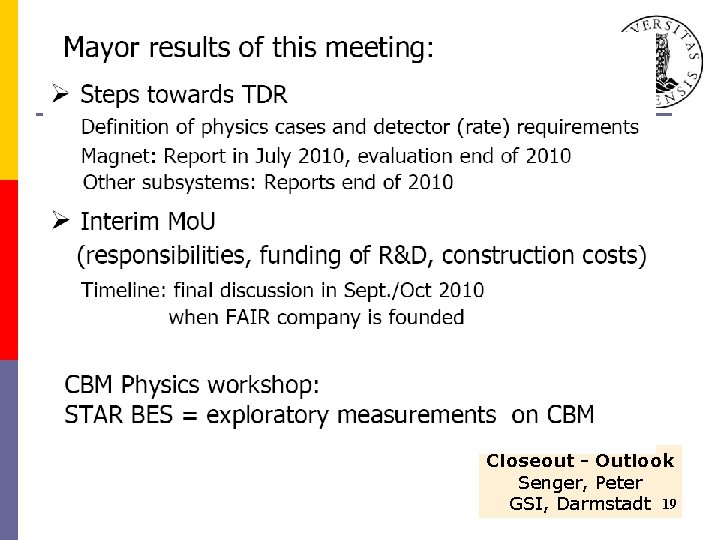
Closeout - Outlook Senger, Peter GSI, Darmstadt 19
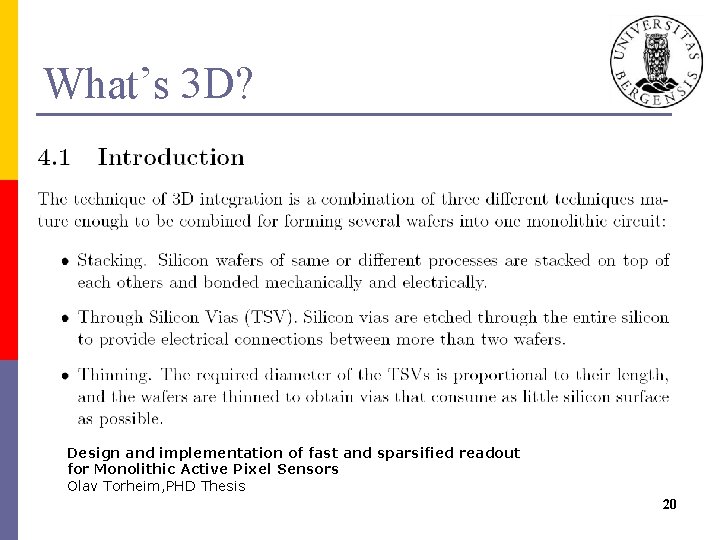
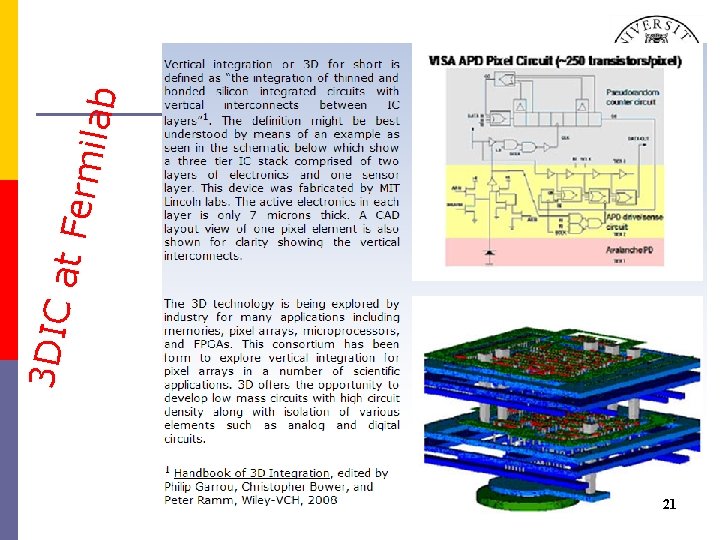
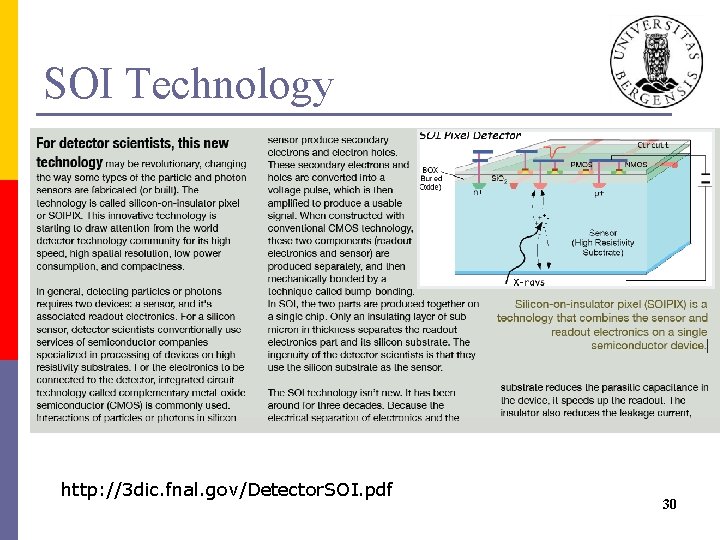
What’s 3 D? Design and implementation of fast and sparsified readout for Monolithic Active Pixel Sensors Olav Torheim, PHD Thesis 20
21 3 DI C at Fe r m ila b
Why 3 D? Continuing Moore Law 22
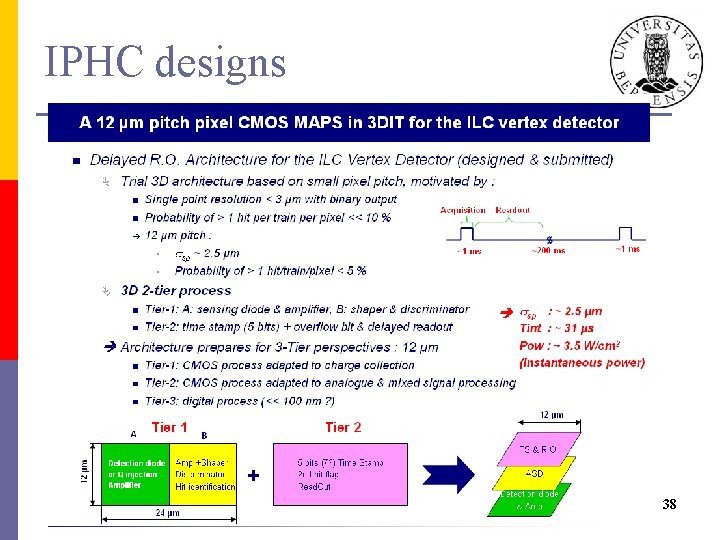
Who wants 3 D? p Applications of particular interest to industry includes small form factor and high capacity memories for portable devices like mobile phones. Memories with low activity - and hence, low power dissipation - are ideal 3 D integrated applications, Another example is stacking of memory and processor on top of each other in order to bridge the processor-memory performance gap. p For high energy physics, 3 D integration provides opportunities of designing detectors where the pixel cell is composed as a 3 D stack with separate detector tier 1, analog signal conditioning and processing tier, and one or more digital tiers for storage and readout. Each function can be manufactured in the most optimal process, and with the increasing amount of logic per pixel, fast readout architectures with data sparsication can be developed. p Physicist’s Dream. 23
3 D for pixel detectors 24
Example 25
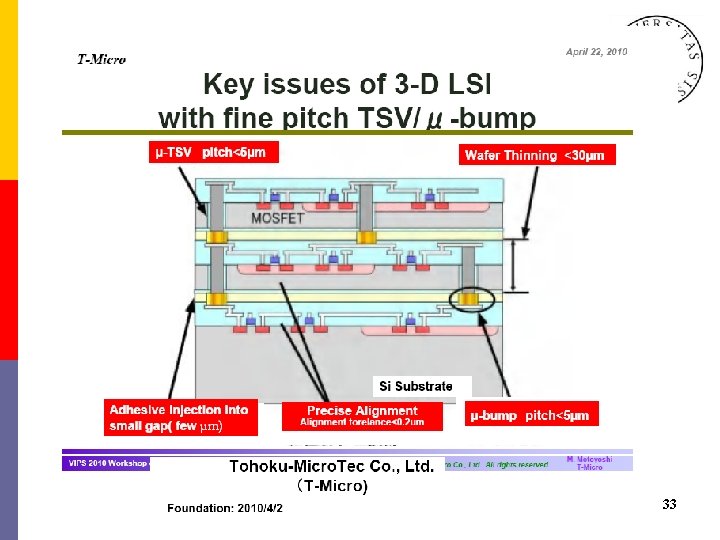
How to 3 D? _key factors p Wafers from different processes p TSV fabrication p Alignment p Interconnect, Binding p Thinning 26
Who offers 3 D? p p At the present time there are three known vendors that can provide all of the steps needed for fabrication of 3 D integrated circuits. More information on these organizations can be found on the following pages. Other vendors such as RTI and IZM can provide a few of the steps and might be considered for some applications. MIT Lincoln Labs Tezzaron Ziptronix T-Micro (SOI) 27
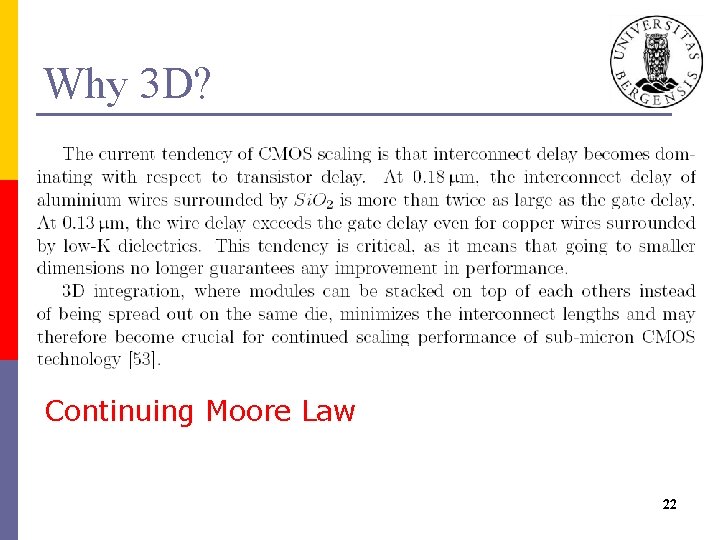
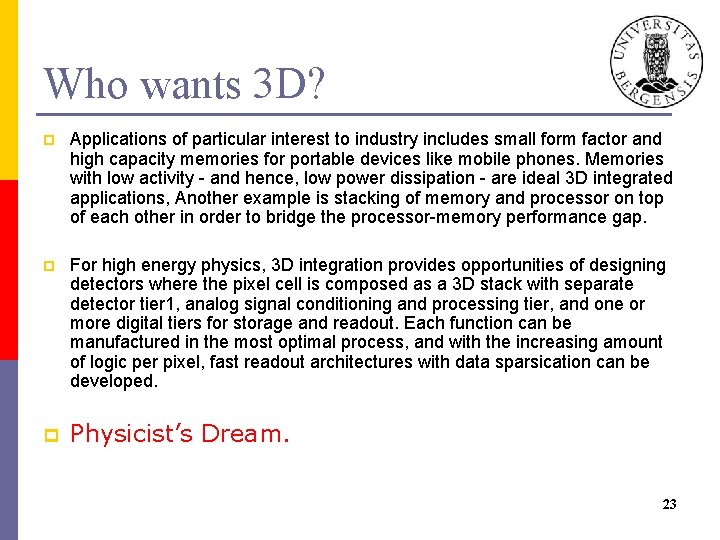
VIPS 2010 Vertical integration (3 D for short) processes and vertical interconnect techniques are being explored by industry for several applications, such as memories, pixel sensor arrays, microprocessors and FPGAs. They are deemed capable to make up for some important performance limitation facing CMOS feature size scaling. Digital circuits, in particular, may greatly benefit from interconnect length reduction both in terms of power dissipation and logical span of control. In the case of a heterogeneous integration approach, separate parts of the design can be manufactured using the process that best suits specific needs, then assembled in a vertical stack. In general, the 3 D approach enables the design of low mass, high density circuits with the possibility of isolating the various building blocks, for instance analog from digital parts. The workshop aims to bring together physicists and engineers working on the development of vertically integrated pixel sensors. Particular attention is paid to detector design for high energy physics (HEP) experiments at the future high luminosity colliders and for photon science applications. The main purpose of the workshop is to provide a place for the people working in the field to exchange ideas and share knowledge, and to make the community aware of the different options available to access vertical integration technologies. 28
VIPS 2010 -talks 3 D activities in the microelectronic industry and application perspectives p R&D activities in Europe p Activities in the 3 DIC Consortium p 3 D activity in SOI technology p Latest developments involving vertical integration processes, 3 D electronics, mechanics, optics, interposers p 29
SOI Technology http: //3 dic. fnal. gov/Detector. SOI. pdf 30
SOI-Back gate problem 31
SOI-Micro-bump 32
33
3 DIC Consortium 34
Fermilab Activities 35
36
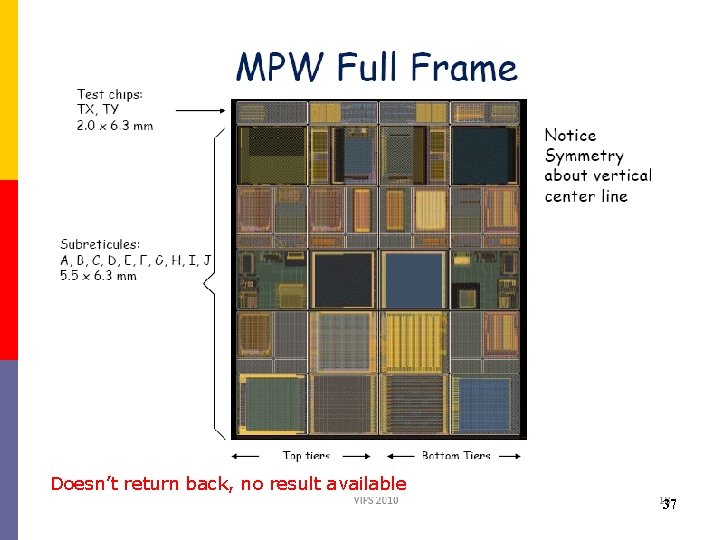
Doesn’t return back, no result available 37
IPHC designs 38
IPHC designs 39

Can’t fully Cover p For details, please refer to the original documents…… p 40
Documents and References p p p Can’t fully Cover all For details, please refer to the original document. 15 th CBM Collaboration Meeting n n p VIPS 2010 - Workshop on Vertically Integrated Pixel Sensors n p http: //www-aix. gsi. de/conferences/CBM 2010_Apr/ https: //www. gsi. de/gds/? sessionid=1272976685&folder=98712 69661485&mod=adminbrowse http: //eil. unipv. it/Ma. Ka. C/conference. Display. py? conf. Id=0 3 DIC at Fermilab n http: //3 dic. fnal. gov/ 41
Conclusion 3 D is a fairly new technologies, we are not familiar, interest from HEP. p Many processes, need to be investigated further more by industry and scientific groups. p A new design for high speed readout MAPS for CBM, which we will contribute the digital part. p 42

p Attributions belong to the original contributors. All mistakes are mine! p Thanks for your attention! p If questions, I will try to answer ^^. 43
- Slides: 43