
CBC Fundamentals Lecture is based on material from
CBC Fundamentals Lecture is based on material from Robotic Explorations: A Hands-on Introduction to Engineering, Fred Martin, Prentice Hall, 2001.
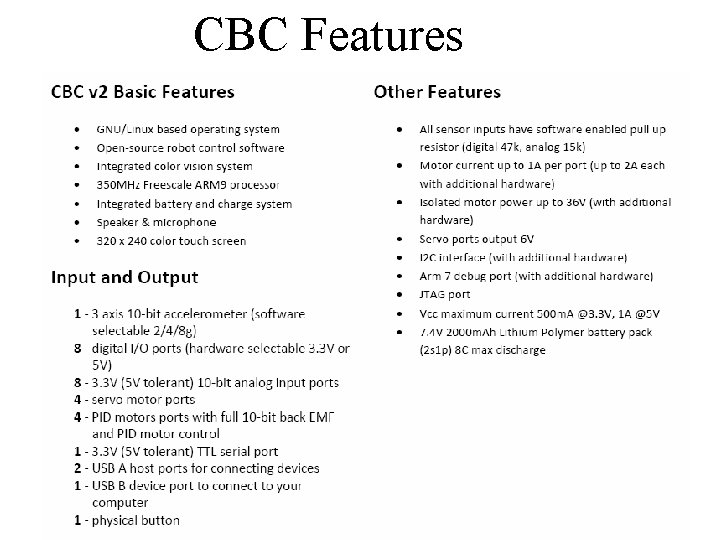
CBC Features Copyright Prentice Hall, 2001 2
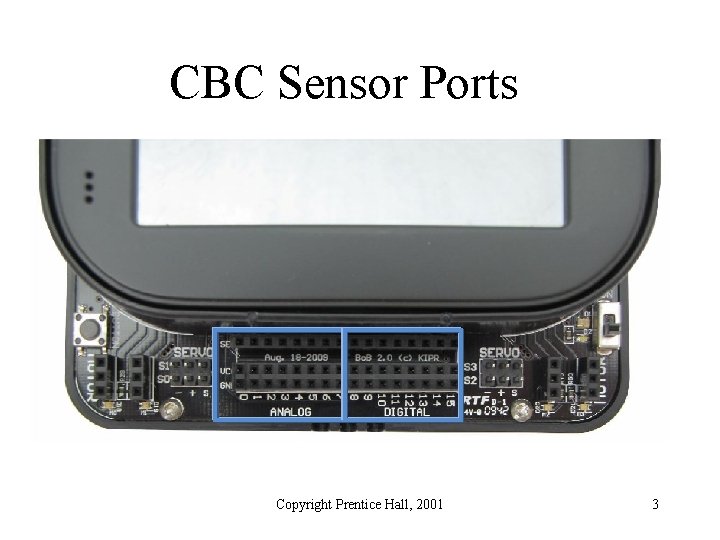
CBC Sensor Ports Copyright Prentice Hall, 2001 3
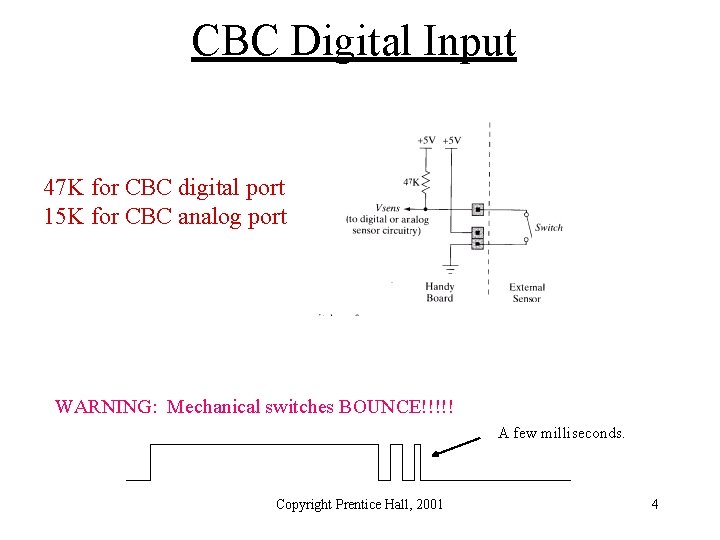
CBC Digital Input 47 K for CBC digital port 15 K for CBC analog port WARNING: Mechanical switches BOUNCE!!!!! A few milliseconds. Copyright Prentice Hall, 2001 4

Digital Function Call Copyright Prentice Hall, 2001 5
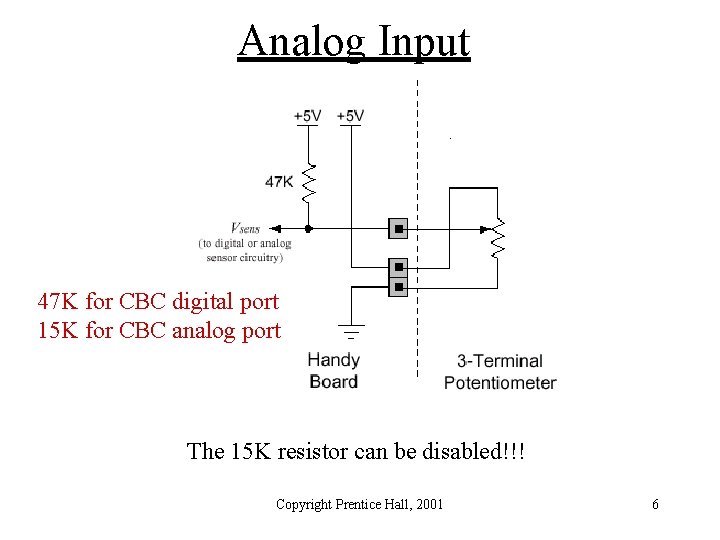
Analog Input 47 K for CBC digital port 15 K for CBC analog port The 15 K resistor can be disabled!!! Copyright Prentice Hall, 2001 6
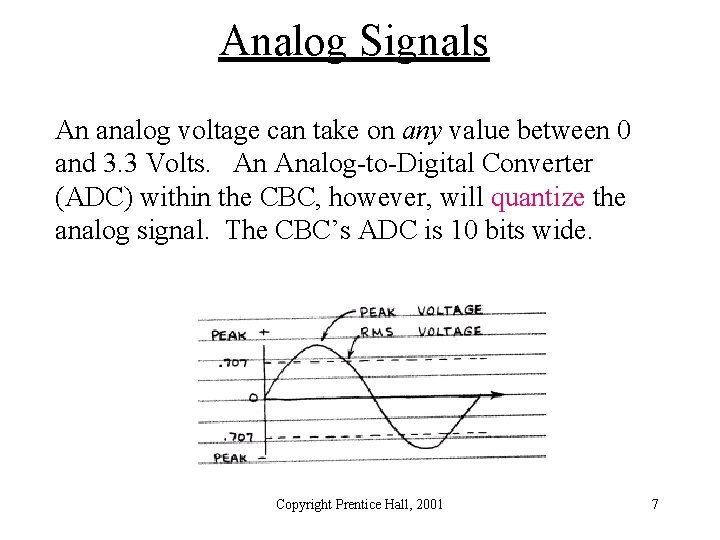
Analog Signals An analog voltage can take on any value between 0 and 3. 3 Volts. An Analog-to-Digital Converter (ADC) within the CBC, however, will quantize the analog signal. The CBC’s ADC is 10 bits wide. Copyright Prentice Hall, 2001 7
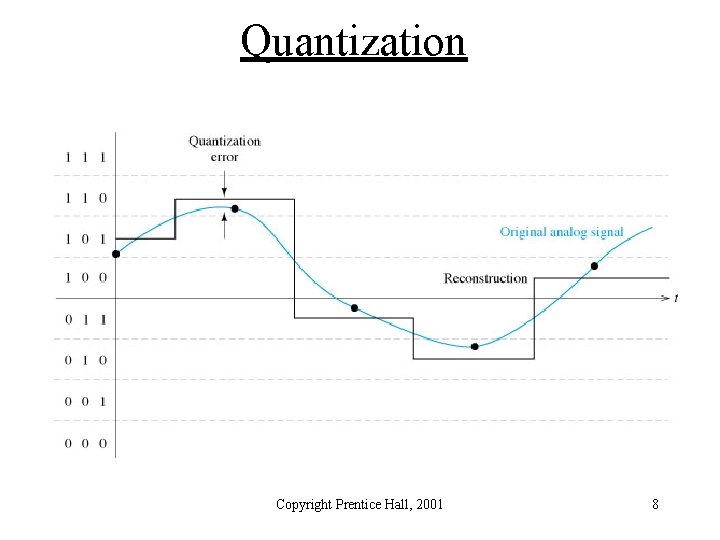
Quantization Copyright Prentice Hall, 2001 8
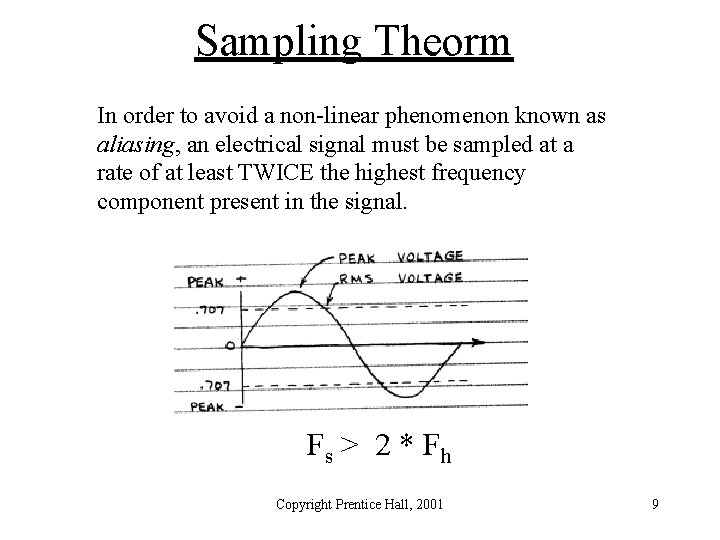
Sampling Theorm In order to avoid a non-linear phenomenon known as aliasing, an electrical signal must be sampled at a rate of at least TWICE the highest frequency component present in the signal. Fs > 2 * F h Copyright Prentice Hall, 2001 9
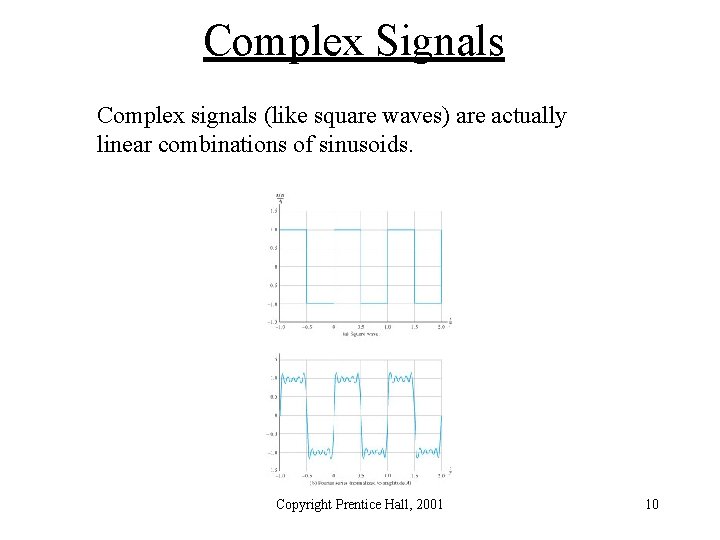
Complex Signals Complex signals (like square waves) are actually linear combinations of sinusoids. Copyright Prentice Hall, 2001 10
Bandlimiting Once a sampling rate has been determined, the input must be bandlimited. This means that the incoming electrical signal is filtered so that all frequency components above one-half the sampling frequency are removed! Copyright Prentice Hall, 2001 11
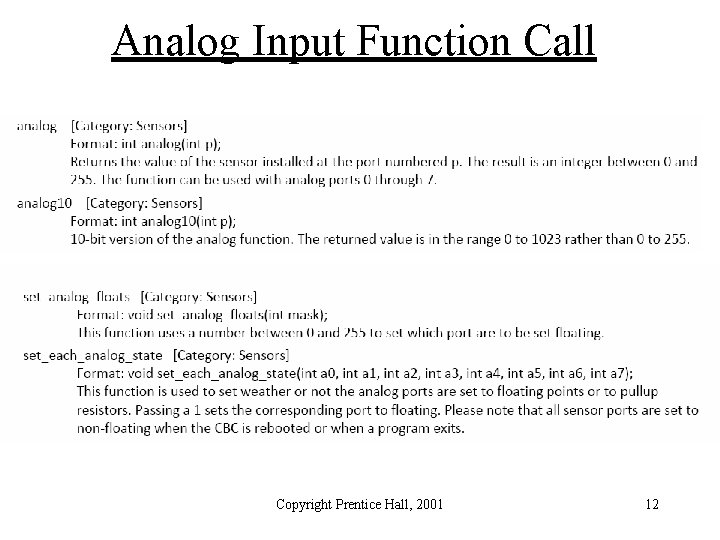
Analog Input Function Call Copyright Prentice Hall, 2001 12
Using Motors & Servos Copyright Prentice Hall, 2001 13
How do you connect motors to computers? • Computers operate at constant voltage and very low current • Motors draw high current and their speed and direction depends on the voltage • Robot controllers use: – H-Bridge circuit to handle current and direction – PWM to control speed Copyright Prentice Hall, 2001 14
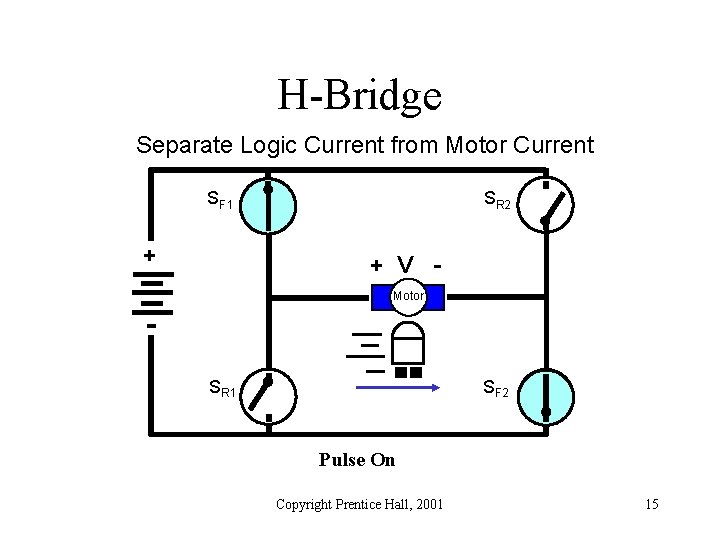
H-Bridge Separate Logic Current from Motor Current SF 1 + SR 2 + V Motor SF 2 SR 1 Pulse On Copyright Prentice Hall, 2001 15
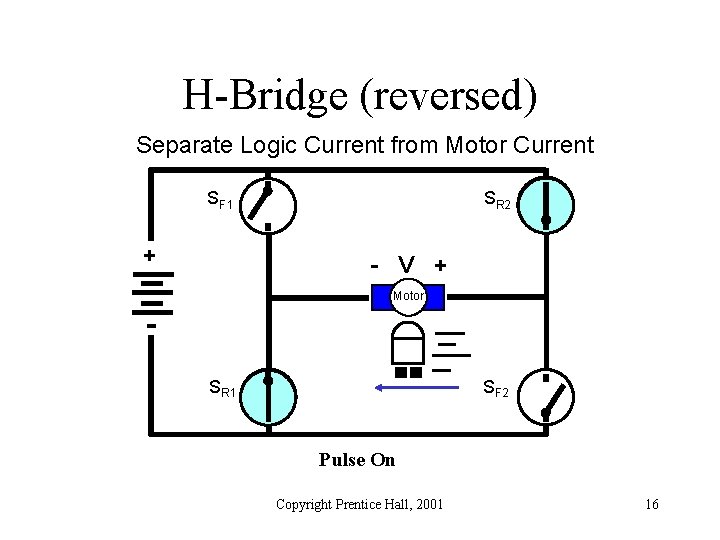
H-Bridge (reversed) Separate Logic Current from Motor Current SF 1 + SR 2 - V + Motor SF 2 SR 1 Pulse On Copyright Prentice Hall, 2001 16
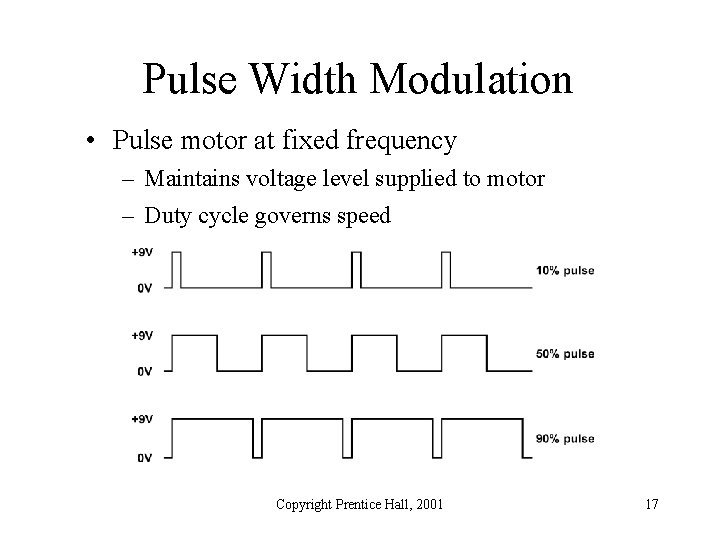
Pulse Width Modulation • Pulse motor at fixed frequency – Maintains voltage level supplied to motor – Duty cycle governs speed Copyright Prentice Hall, 2001 17
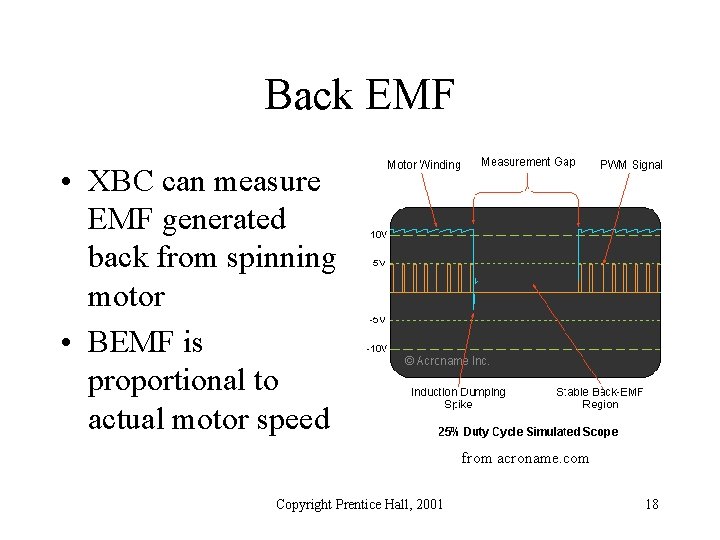
Back EMF • XBC can measure EMF generated back from spinning motor • BEMF is proportional to actual motor speed from acroname. com Copyright Prentice Hall, 2001 18
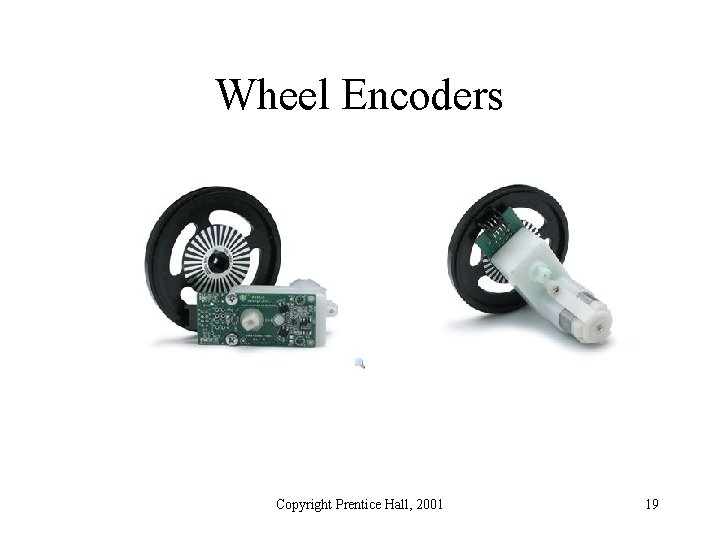
Wheel Encoders Copyright Prentice Hall, 2001 19
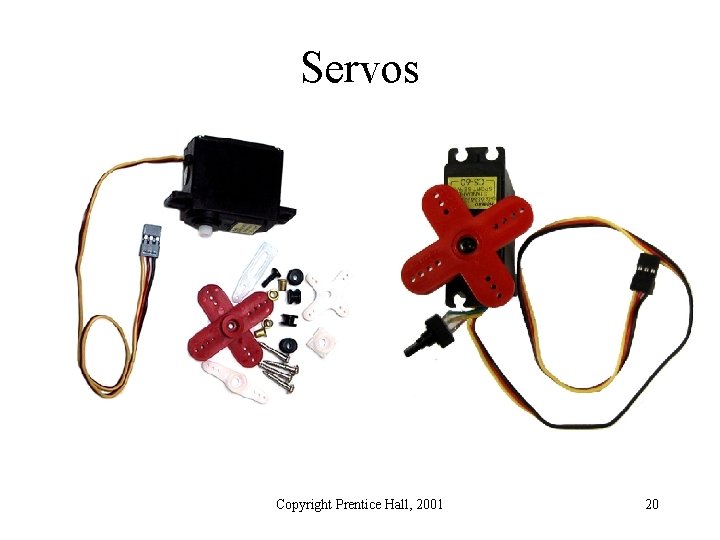
Servos Copyright Prentice Hall, 2001 20
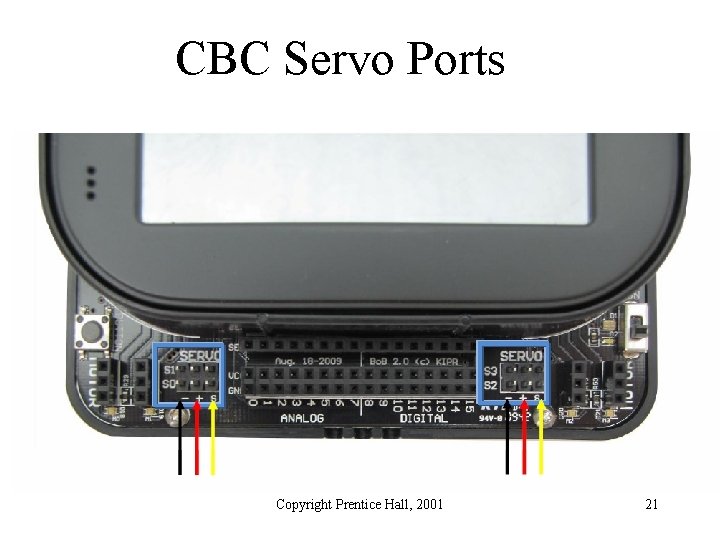
CBC Servo Ports Copyright Prentice Hall, 2001 21
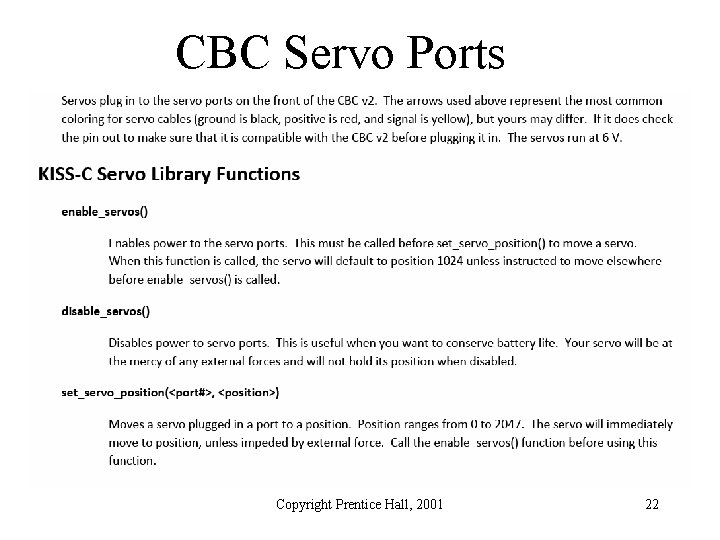
CBC Servo Ports Copyright Prentice Hall, 2001 22
- Slides: 22