
CavityEnhanced Direct Frequency Comb Velocity Modulation Spectroscopy Laura
Cavity-Enhanced Direct Frequency Comb Velocity Modulation Spectroscopy Laura Sinclair William Ames, Tyler Coffey, Kevin Cossel Jun Ye and Eric Cornell Funding: NSF and the W. M. Keck Foundation
Advantages of Combining Cavity-Enhanced Direct Frequency Comb Spectroscopy with Velocity Modulation Spectroscopy Ø Broad Simultaneous Bandwidth -- Massively Parallel Data Collection Ø Spectral resolution limited by width of single comb tooth Ø Absolute frequency accuracy of better than 30 MHz Ø Sensitivity to 1 ppm fractional absorption and suppression of neutral signals For more on CE-DFCS, see F. Adler, M. J. Thorpe, K. C. Cossel, J. Ye, Annu. Rev. Anal. Chem. 3 175 (2010) For more on VMS, see S. K. Stephenson, R. J. Saykally, Chem. Rev. 105 3220 (2005)
Survey Spectroscopy of Molecular Ions Necessary for the JILA electron Electric Dipole Moment (e. EDM) experiment explain e. EDM v v Molecular Ions are important for astrochemistry and tests of fundamental physics
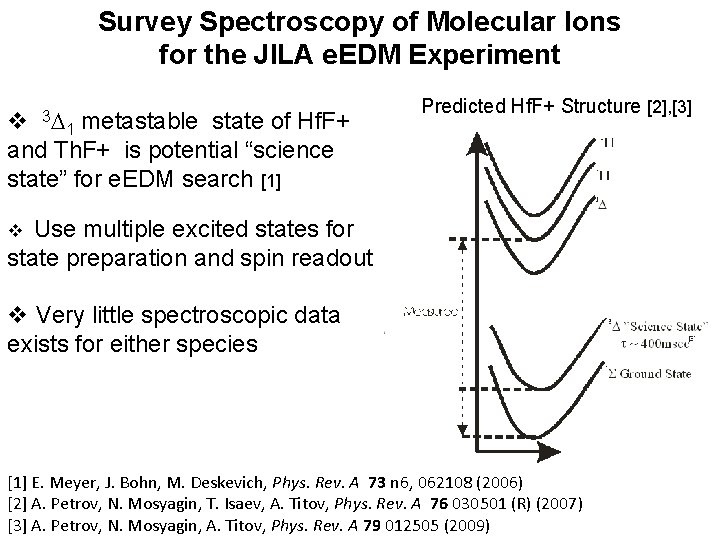
Survey Spectroscopy of Molecular Ions for the JILA e. EDM Experiment 3 D v 1 metastable state of Hf. F+ and Th. F+ is potential “science state” for e. EDM search [1] Predicted Hf. F+ Structure [2], [3] Use multiple excited states for state preparation and spin readout v v Very little spectroscopic data exists for either species [1] E. Meyer, J. Bohn, M. Deskevich, Phys. Rev. A 73 n 6, 062108 (2006) [2] A. Petrov, N. Mosyagin, T. Isaev, A. Titov, Phys. Rev. A 76 030501 (R) (2007) [3] A. Petrov, N. Mosyagin, A. Titov, Phys. Rev. A 79 012505 (2009)
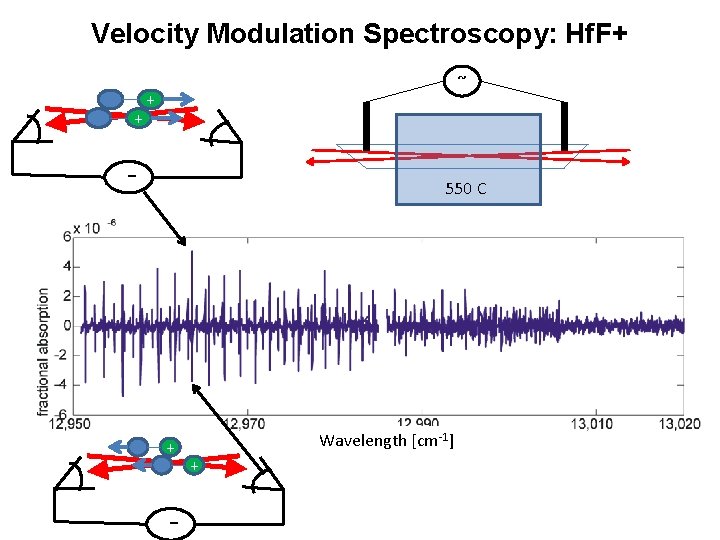
Velocity Modulation Spectroscopy: Hf. F+ + ~ + - 550 C + - Wavelength [cm-1] +

Velocity Modulation Spectroscopy: Hf. F+ + + - +
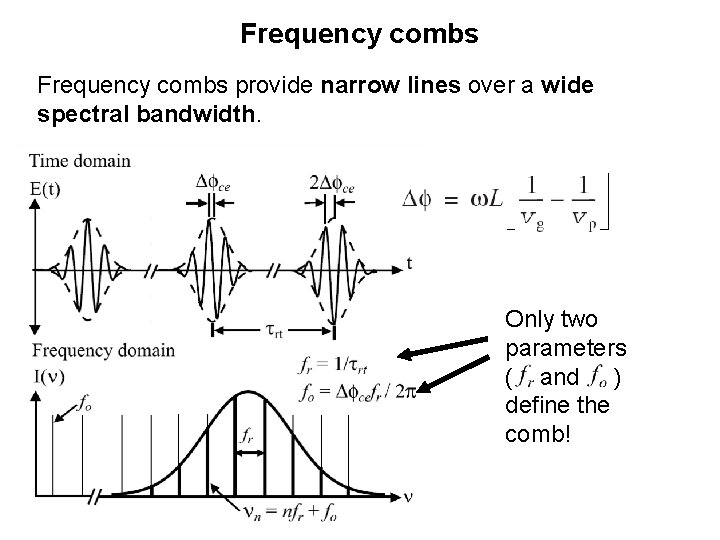
Frequency combs provide narrow lines over a wide spectral bandwidth. Only two parameters ( and ) define the comb!
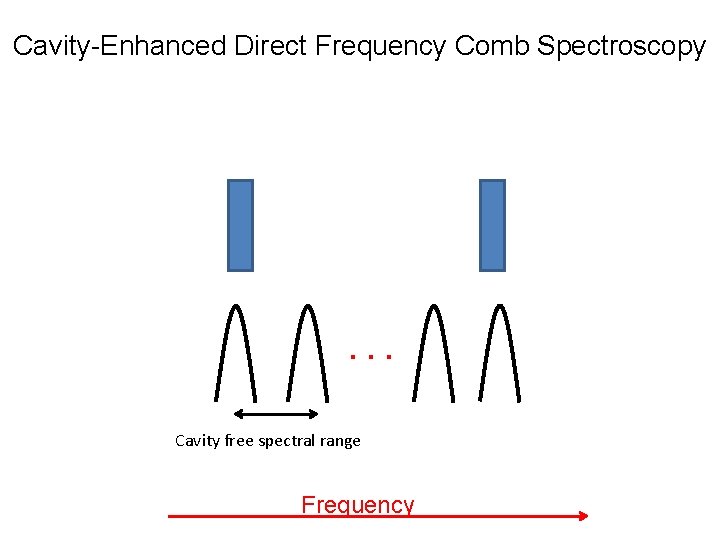
Cavity-Enhanced Direct Frequency Comb Spectroscopy . . . Cavity free spectral range Frequency
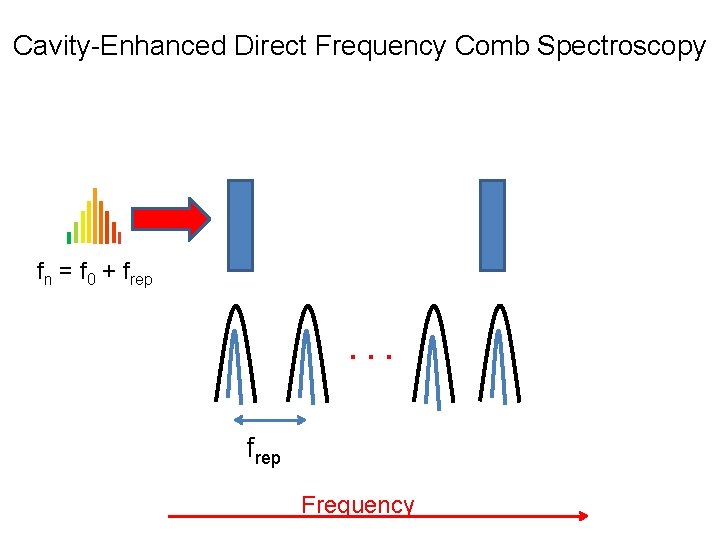
Cavity-Enhanced Direct Frequency Comb Spectroscopy fn = f 0 + frep . . . frep Frequency
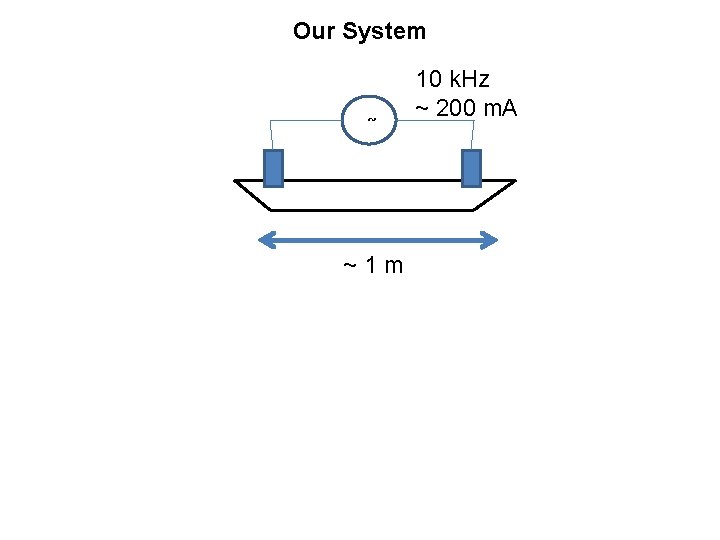
Our System ~~ ~1 m 10 k. Hz ~ 200 m. A
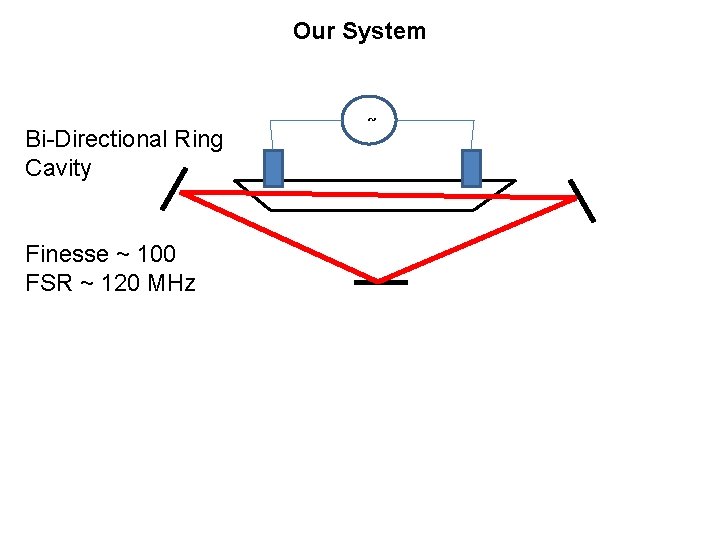
Our System Bi-Directional Ring Cavity Finesse ~ 100 FSR ~ 120 MHz ~~
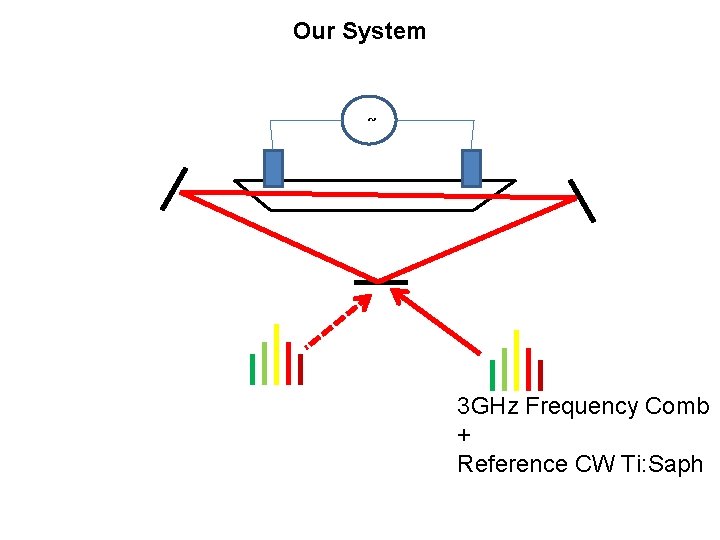
Our System ~~ 3 GHz Frequency Comb + Reference CW Ti: Saph
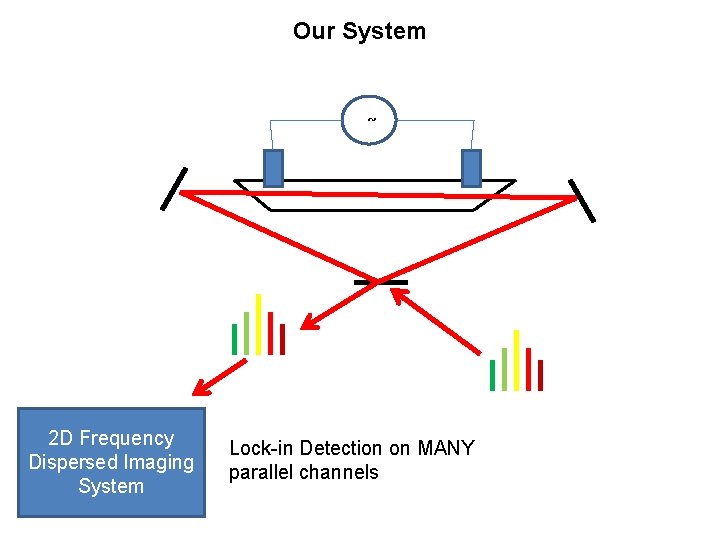
Our System ~~ 2 D Frequency Dispersed Imaging System Lock-in Detection on MANY parallel channels
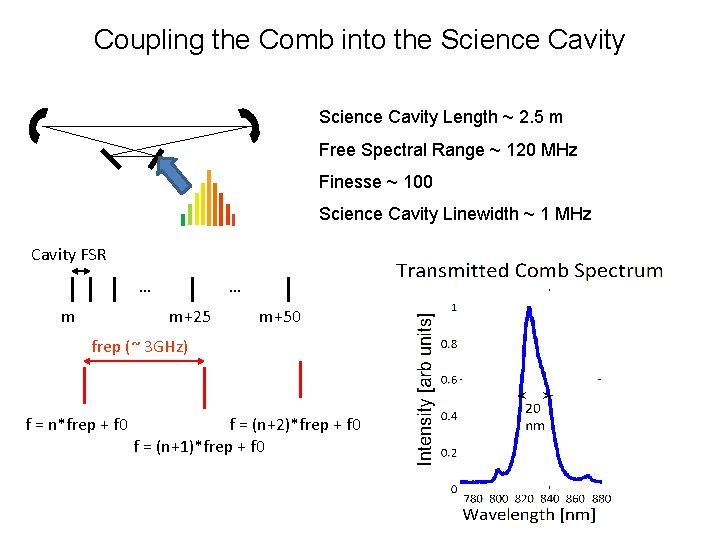
Coupling the Comb into the Science Cavity Length ~ 2. 5 m Free Spectral Range ~ 120 MHz Finesse ~ 100 Science Cavity Linewidth ~ 1 MHz Cavity FSR … m+25 m+50 frep (~ 3 GHz) f = n*frep + f 0 f = (n+2)*frep + f 0 f = (n+1)*frep + f 0
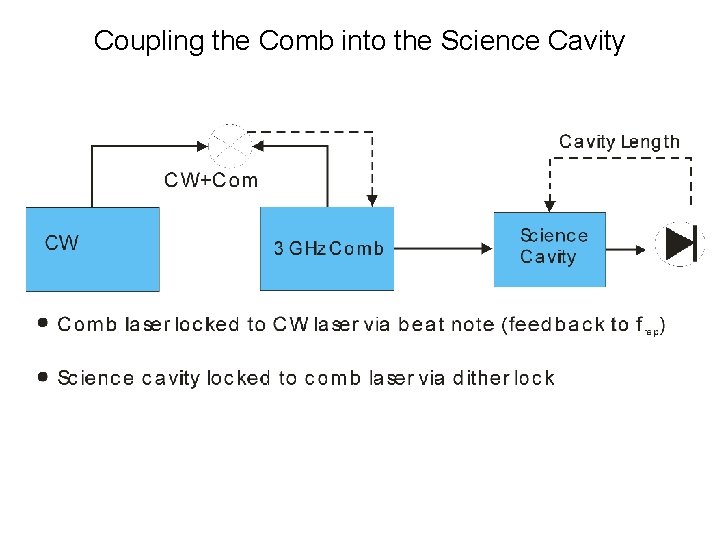
Coupling the Comb into the Science Cavity
![2 D-Frequency Dispersed Lock-in Imaging Heliotis [1] S. Beer, P. Seitz, Research in Microelectronics](http://slidetodoc.com/presentation_image_h2/1dc567994a59c764130560fe8440e98d/image-16.jpg "2 D-Frequency Dispersed Lock-in Imaging Heliotis [1] S. Beer, P. Seitz, Research in Microelectronics")
2 D-Frequency Dispersed Lock-in Imaging Heliotis [1] S. Beer, P. Seitz, Research in Microelectronics and Electronics, 2005 Ph. D, 2 135 (2005)
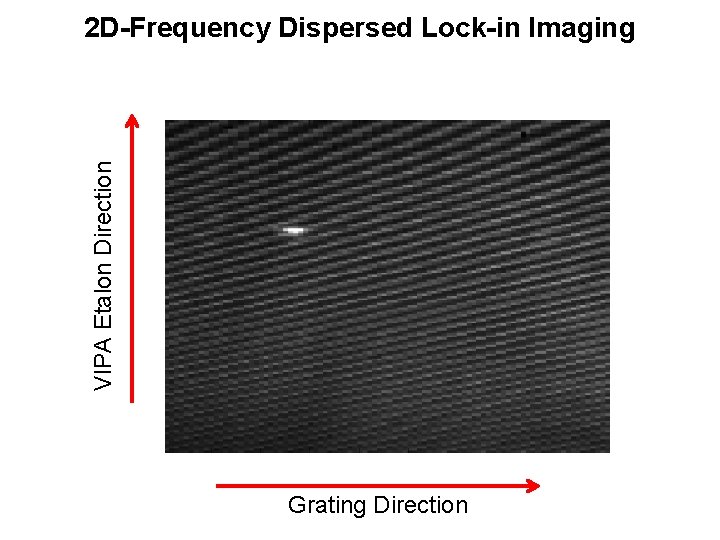
VIPA Etalon Direction 2 D-Frequency Dispersed Lock-in Imaging Grating Direction
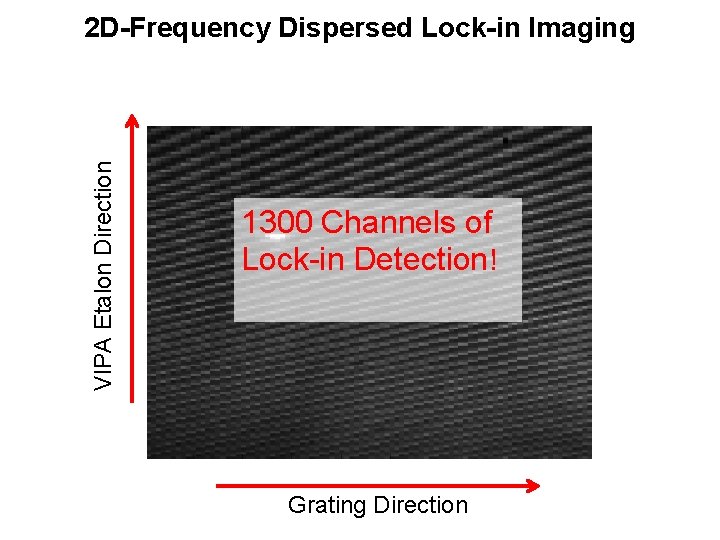
VIPA Etalon Direction 2 D-Frequency Dispersed Lock-in Imaging 1300 Channels of Lock-in Detection! Grating Direction
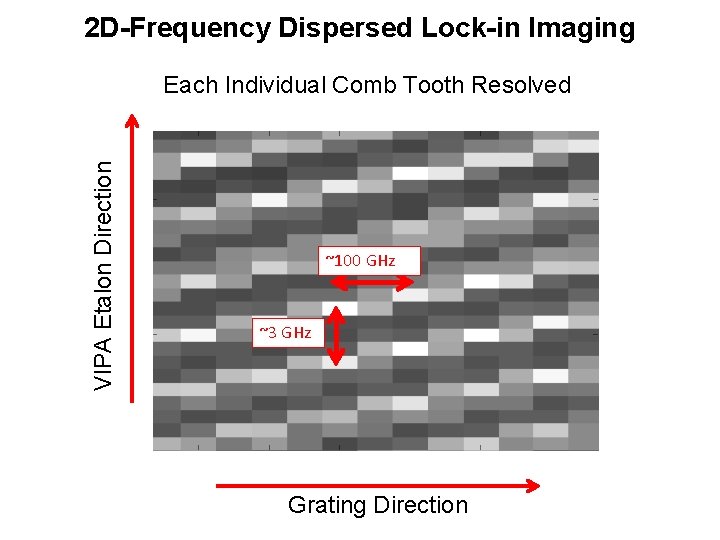
2 D-Frequency Dispersed Lock-in Imaging VIPA Etalon Direction Each Individual Comb Tooth Resolved ~100 GHz ~3 GHz Grating Direction

Test of Technique with N 2+ and CW Ti: Saph Or PBS “Single Comb Tooth”
![Test of Technique with N 2+ and CW Ti: Saph [1] A 2 P](http://slidetodoc.com/presentation_image_h2/1dc567994a59c764130560fe8440e98d/image-21.jpg "Test of Technique with N 2+ and CW Ti: Saph [1] A 2 P")
Test of Technique with N 2+ and CW Ti: Saph [1] A 2 P -> X 2 S (4, 2) band molecular constants given by D. Collet et al. Chem. Phys. , 286 311 (1998)
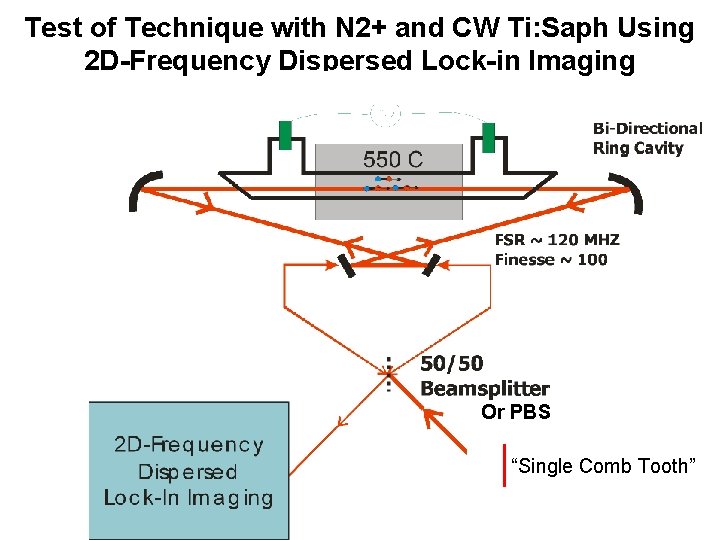
Test of Technique with N 2+ and CW Ti: Saph Using 2 D-Frequency Dispersed Lock-in Imaging Or PBS “Single Comb Tooth”
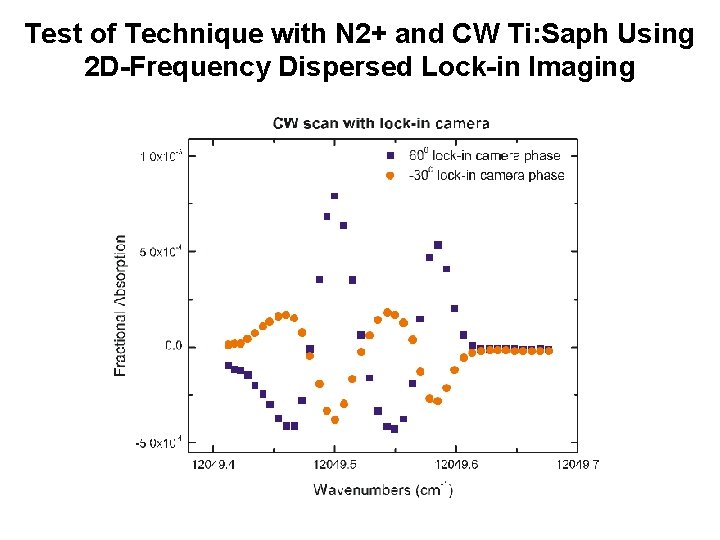
Test of Technique with N 2+ and CW Ti: Saph Using 2 D-Frequency Dispersed Lock-in Imaging
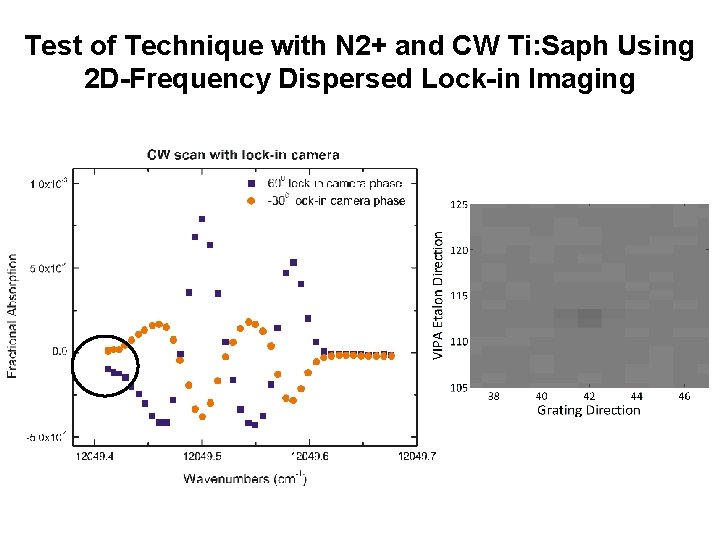
Test of Technique with N 2+ and CW Ti: Saph Using 2 D-Frequency Dispersed Lock-in Imaging
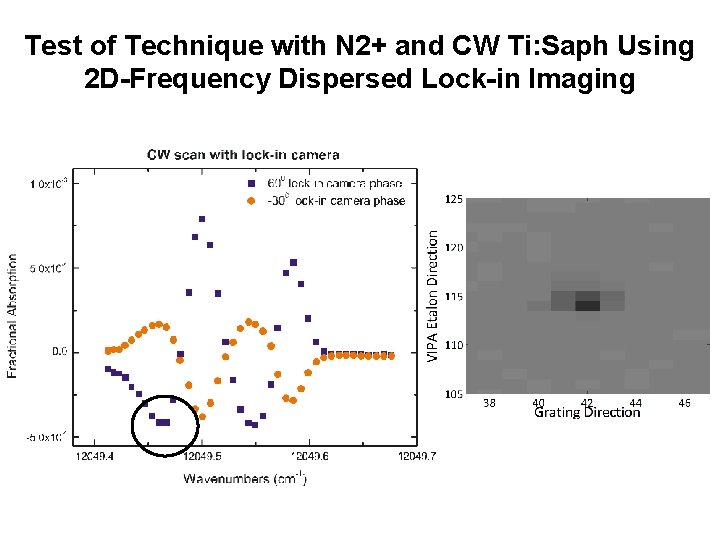
Test of Technique with N 2+ and CW Ti: Saph Using 2 D-Frequency Dispersed Lock-in Imaging
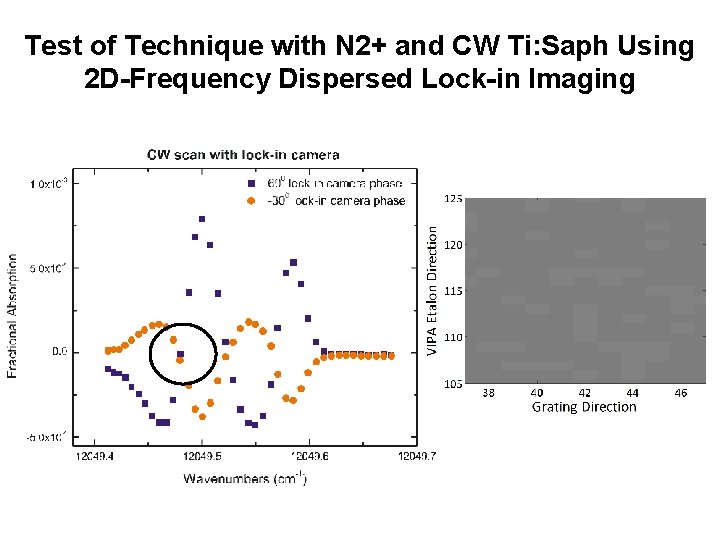
Test of Technique with N 2+ and CW Ti: Saph Using 2 D-Frequency Dispersed Lock-in Imaging
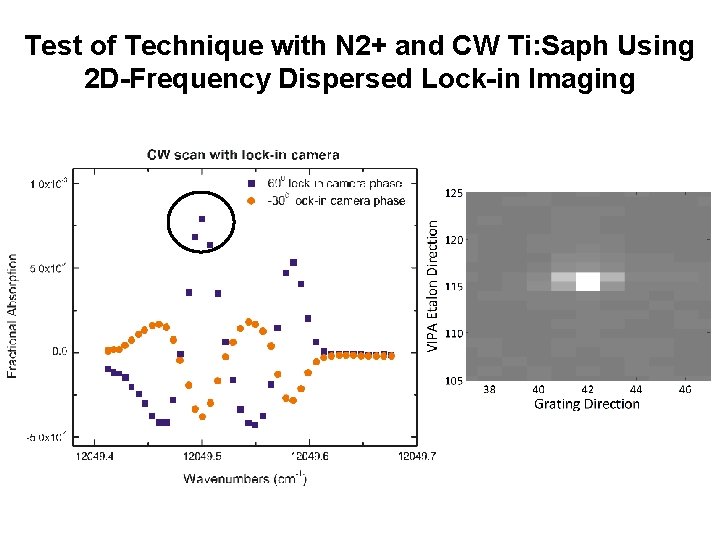
Test of Technique with N 2+ and CW Ti: Saph Using 2 D-Frequency Dispersed Lock-in Imaging
Conclusions v. Cavity-Enhanced Direct Frequency Comb Velocity Modulation Spectroscopy provides ion sensitive detection with broad simultaneous bandwidth and high spectral resolution v 2 D lock-in imaging system allows for 1300 channels of lock-in detection v. High absolute frequency accuracy across the full bandwidth v. Cavity enhancement increases sensitivity and subtraction of counter-propagating beams reduces common mode noise and increases rejection of neutrals v. Technique tested with A 2 Pu –X 2 S+g (4, 2) N 2+ band

Extra slides follow
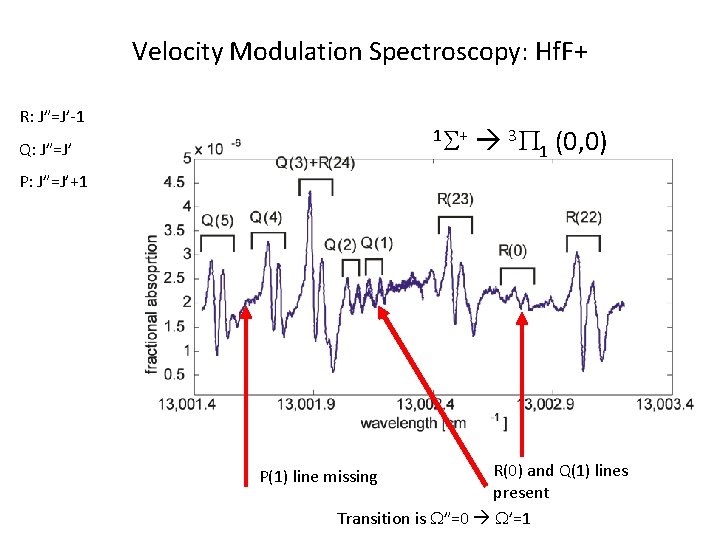
Velocity Modulation Spectroscopy: Hf. F+ R: J”=J’-1 1 S + Q: J”=J’ 3 P 1 (0, 0) P: J”=J’+1 R(0) and Q(1) lines present Transition is W”=0 W’=1 P(1) line missing
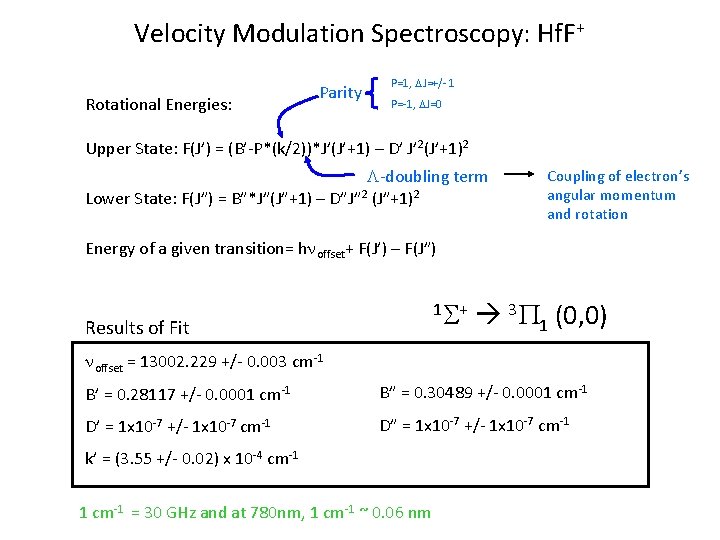
Velocity Modulation Spectroscopy: Hf. F+ Rotational Energies: Parity P=1, DJ=+/- 1 P=-1, DJ=0 Upper State: F(J’) = (B’-P*(k/2))*J’(J’+1) – D’ J’ 2(J’+1)2 L-doubling term Lower State: F(J”) = B”*J”(J”+1) – D”J” 2 (J”+1)2 Coupling of electron’s angular momentum and rotation Energy of a given transition= hnoffset+ F(J’) – F(J”) 1 S + Results of Fit 3 P 1 (0, 0) noffset = 13002. 229 +/- 0. 003 cm-1 B’ = 0. 28117 +/- 0. 0001 cm-1 B” = 0. 30489 +/- 0. 0001 cm-1 D’ = 1 x 10 -7 +/- 1 x 10 -7 cm-1 D” = 1 x 10 -7 +/- 1 x 10 -7 cm-1 k’ = (3. 55 +/- 0. 02) x 10 -4 cm-1 1 cm-1 = 30 GHz and at 780 nm, 1 cm-1 ~ 0. 06 nm
- Slides: 31