
Causes of World War II Causes of WWII
- Slides: 49
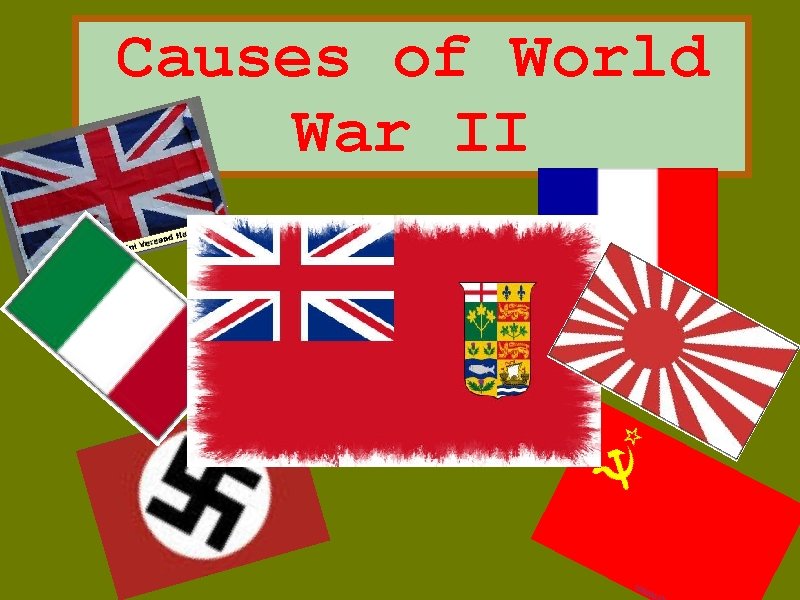
Causes of World War II
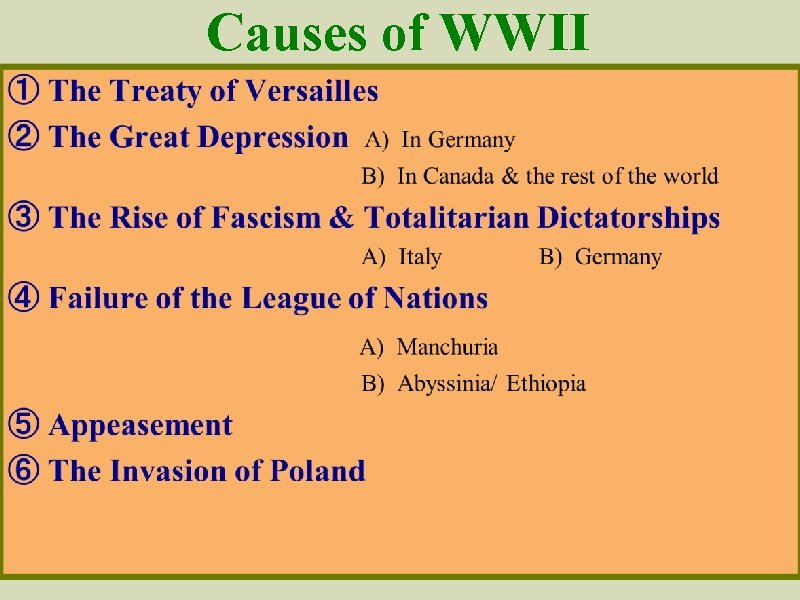
Causes of WWII
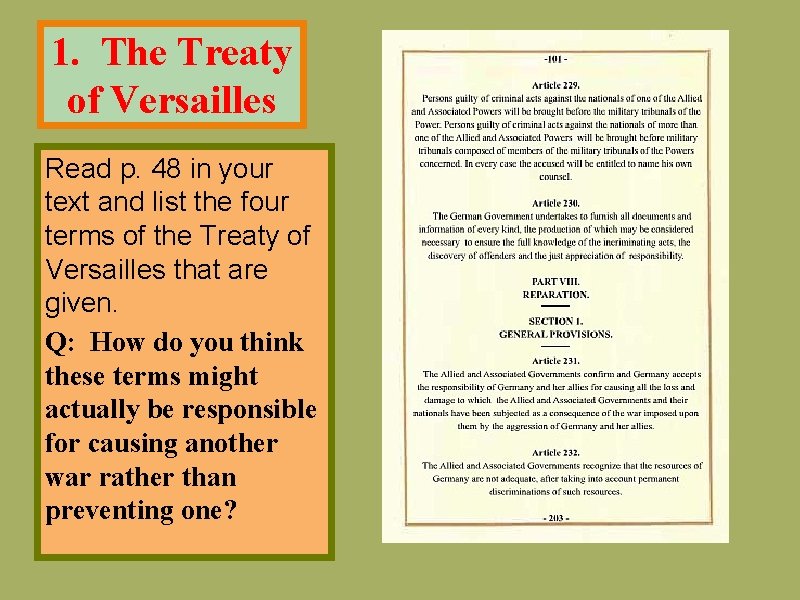
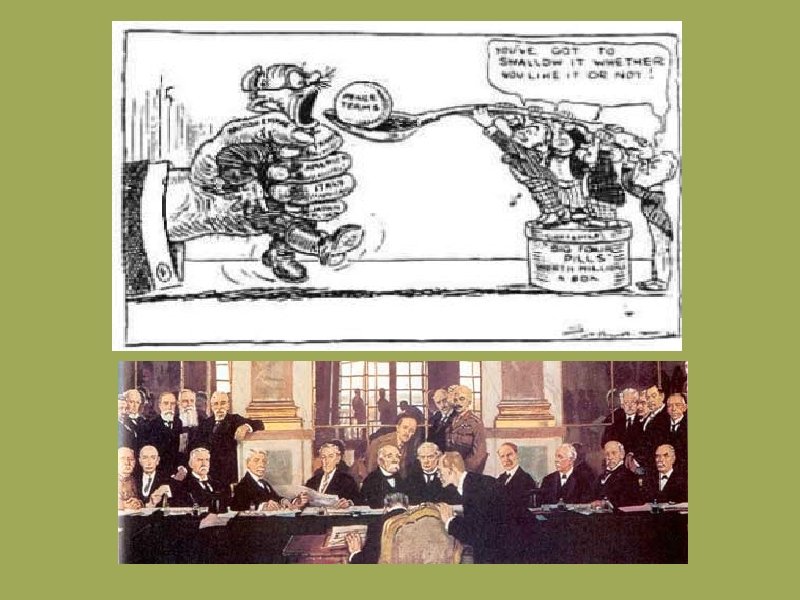
1. The Treaty of Versailles Read p. 48 in your text and list the four terms of the Treaty of Versailles that are given. Q: How do you think these terms might actually be responsible for causing another war rather than preventing one?
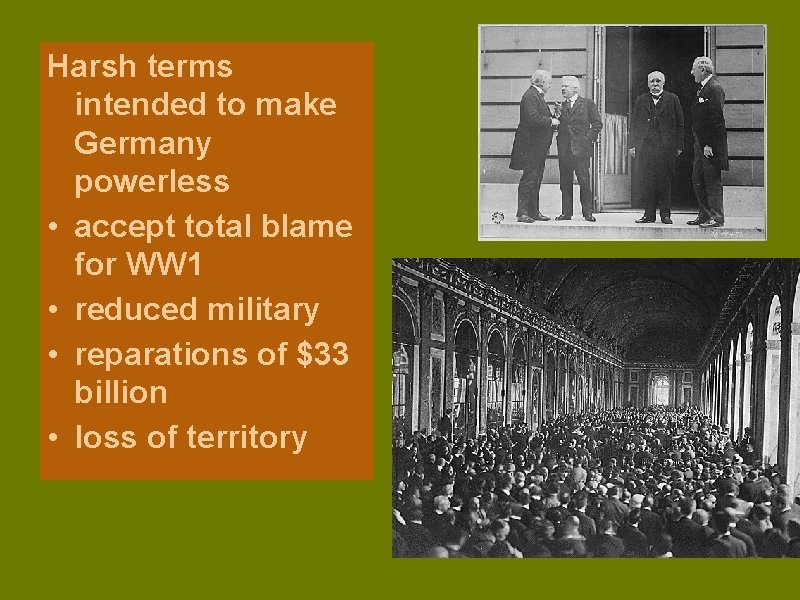
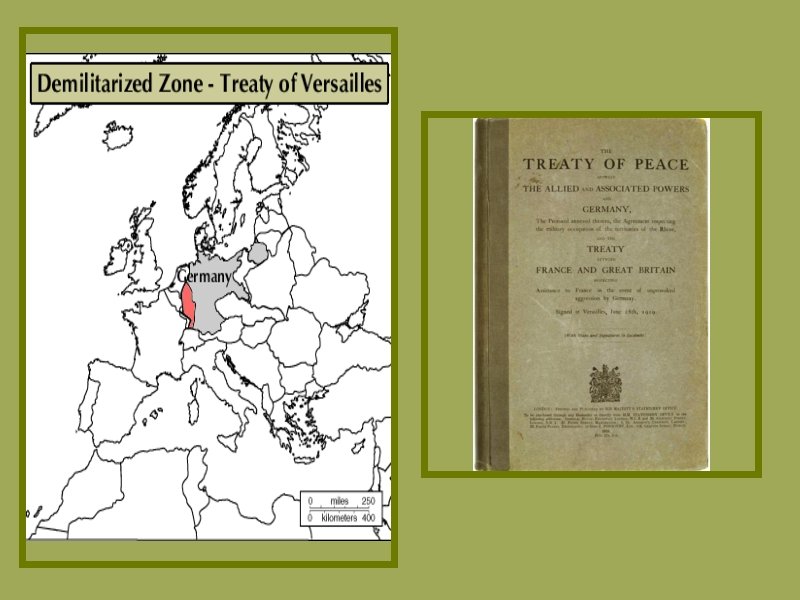
Harsh terms intended to make Germany powerless • accept total blame for WW 1 • reduced military • reparations of $33 billion • loss of territory
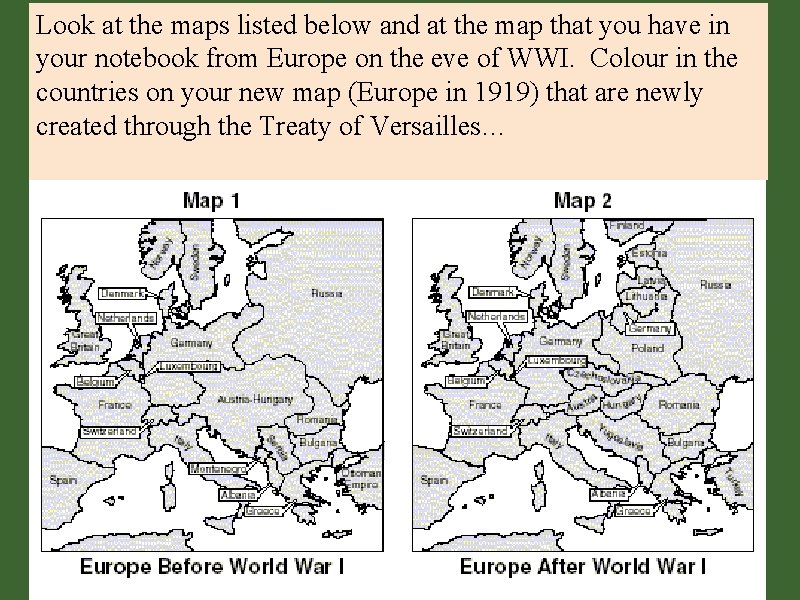
Look at the maps listed below and at the map that you have in your notebook from Europe on the eve of WWI. Colour in the countries on your new map (Europe in 1919) that are newly created through the Treaty of Versailles…
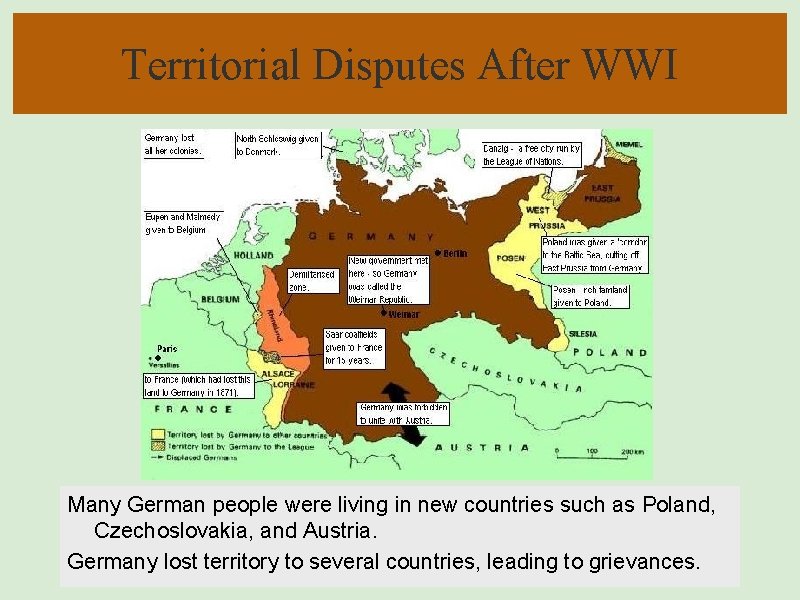
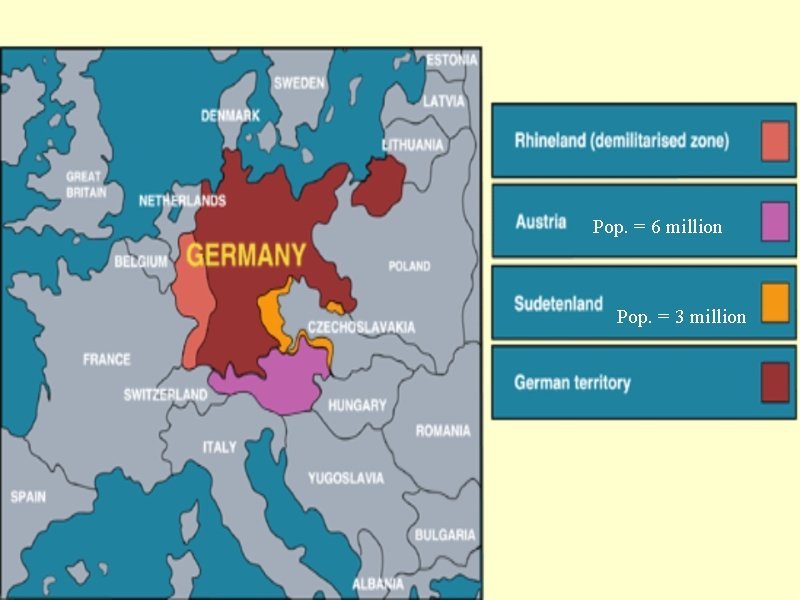
Territorial Disputes After WWI Many German people were living in new countries such as Poland, Czechoslovakia, and Austria. Germany lost territory to several countries, leading to grievances.
“These points have been burned into the brain and emotion of this people, until finally in sixty million heads, a common sense of shame and a common hatred would become a single fiery sea of flame, from whose heat a will as hard as steel would have risen and a cry burst forth: ‘Give us arms again. ’” Who said this?
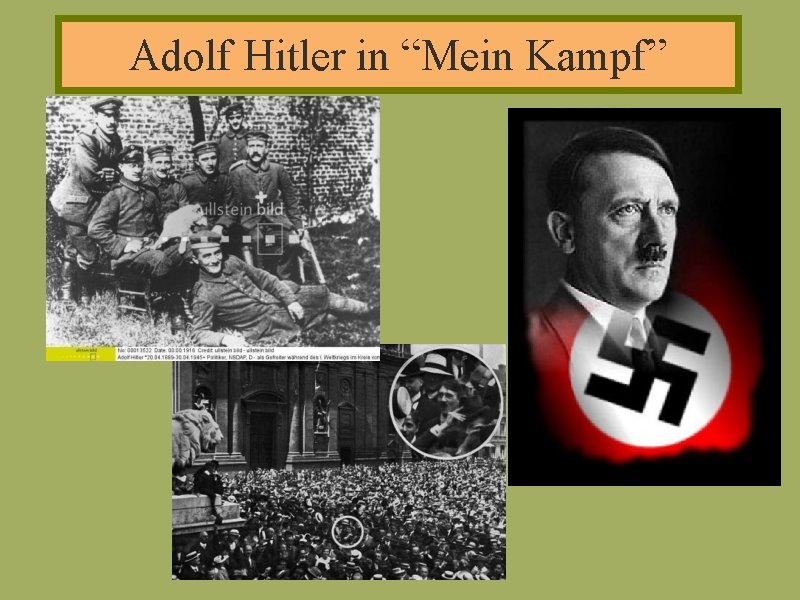
Adolf Hitler in “Mein Kampf”
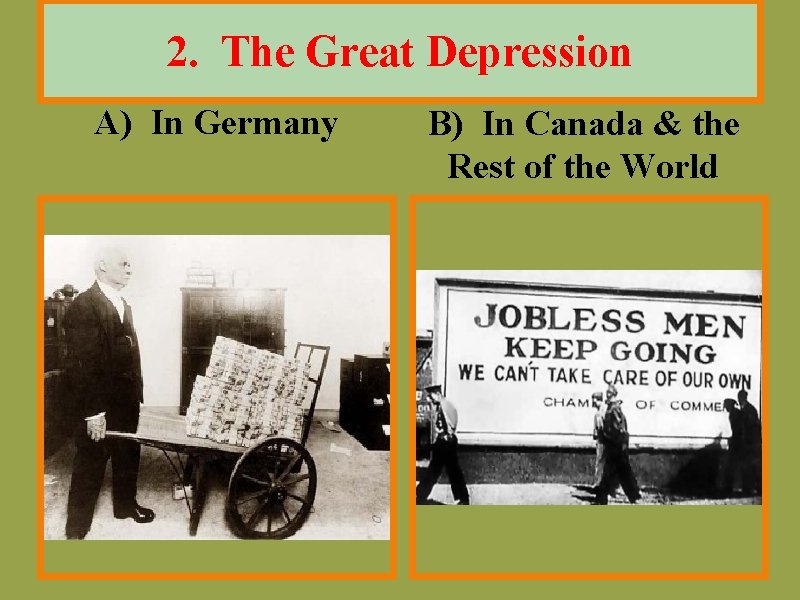
2. The Great Depression A) In Germany B) In Canada & the Rest of the World
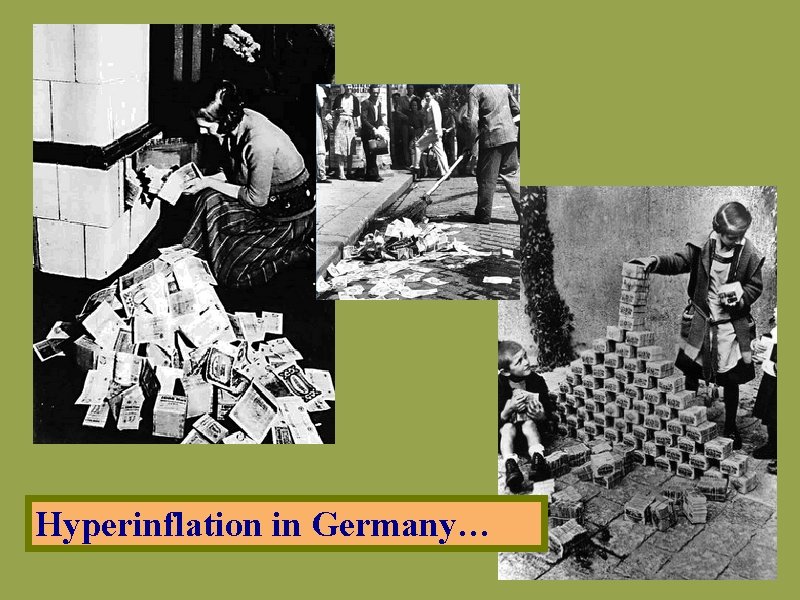
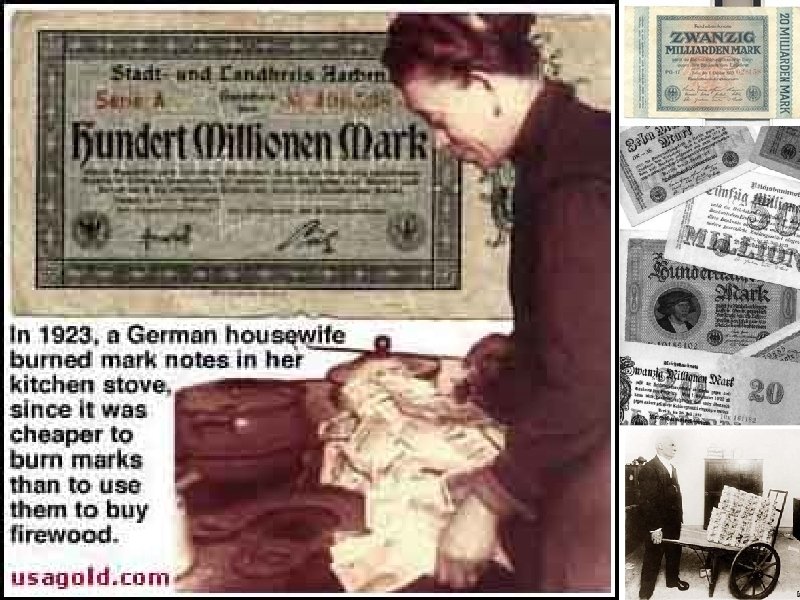
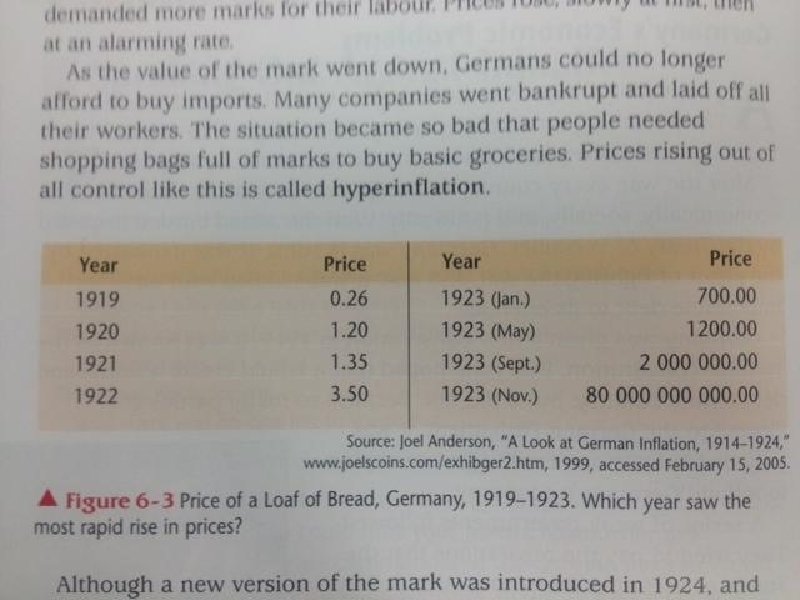
A) In Germany: ✦ The country was in ruins after WWI ✦ 1919 = a new constitutional government ✦ MANY political parties all vying for power = the country was very divided ✦ The government had made some bad decisions in paying the reparations of the Treaty of Versailles (borrowed money from the U. S. and then printed more money to pay off their loans) HYPERINFLATION = PRICES BEGAN RISING OUT OF CONTROL
Hyperinflation in Germany…
B) In Canada and the Rest of the World: ✦ Why would people in Canada (and other countries) be less willing to worry about problems in other nations during the Depression? ISOLATIONISM = A DEEPER CONCERN FOR OUR OWN PROBLEMS (NO TIME FOR THE PROBLEMS OF OTHERS) Q: 1. How do you think that economic hard times can influence politics? Explain. 2. Do you think that the war might have been avoided if the Depression had not happened?
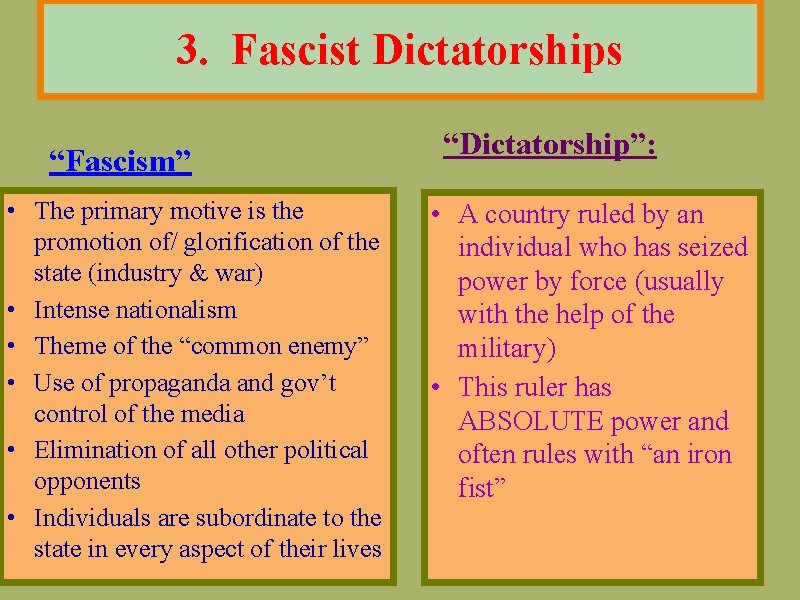
3. Fascist Dictatorships “Fascism” • The primary motive is the promotion of/ glorification of the state (industry & war) • Intense nationalism • Theme of the “common enemy” • Use of propaganda and gov’t control of the media • Elimination of all other political opponents • Individuals are subordinate to the state in every aspect of their lives “Dictatorship”: • A country ruled by an individual who has seized power by force (usually with the help of the military) • This ruler has ABSOLUTE power and often rules with “an iron fist”
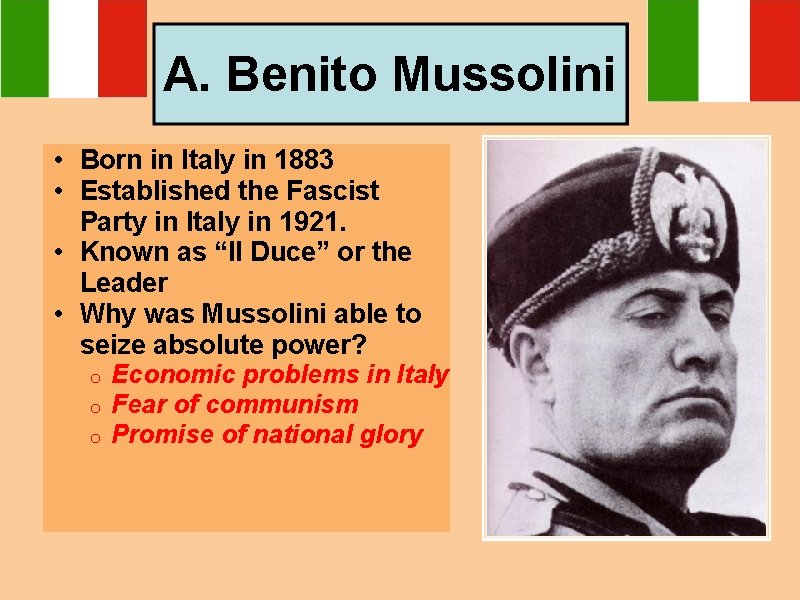
A. Benito Mussolini • Born in Italy in 1883 • Established the Fascist Party in Italy in 1921. • Known as “Il Duce” or the Leader • Why was Mussolini able to seize absolute power? o o o Economic problems in Italy Fear of communism Promise of national glory
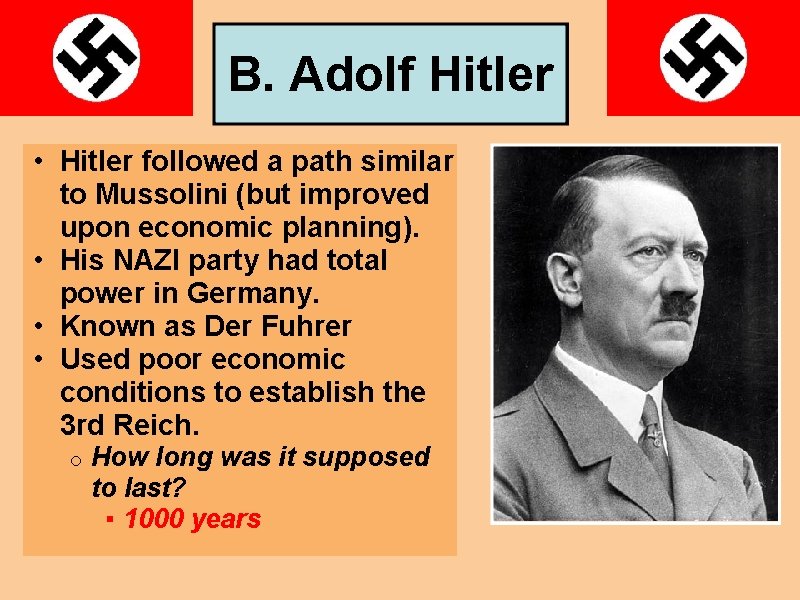
B. Adolf Hitler • Hitler followed a path similar to Mussolini (but improved upon economic planning). • His NAZI party had total power in Germany. • Known as Der Fuhrer • Used poor economic conditions to establish the 3 rd Reich. o How long was it supposed to last? ▪ 1000 years
Watch the following video “Mein Kampf: The Story of Adolf Hitler” (History Channel Documentary): https: //www. youtube. com/watch? v=3 f. WXr. SQt. Tio Respond to the questions on the worksheet that corresponds to this video. Group Discussion: Make a mind-map of all of the words that you could use to describe Hitler’s rise to power. If you could use one word to describe Hitler’s rise to power, what would it be? Explain.
Mr. King Goes to Berlin
Watch the video clips from CBC “Canada A People’s History: Hard Times” Mr King Goes to Berlin & Our Only Hope is Canada… Class Discussion: 1. How would you describe Germany under Nazi control? 1. How did world leaders (including PM King) feel about Hitler in the years before the war? 1. What do you think of Carine Wilson? Do you think she was a good choice for the position of the first female senator in Canada? 1. What do you think Mackenzie King would have felt about his choice of Wilson for an appointment to the senate?
Our Only Hope is Canada
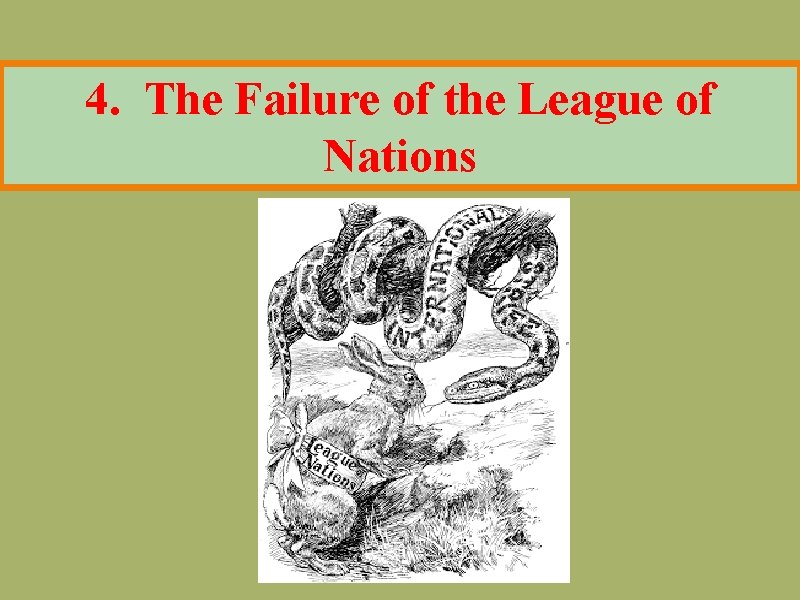
4. The Failure of the League of Nations
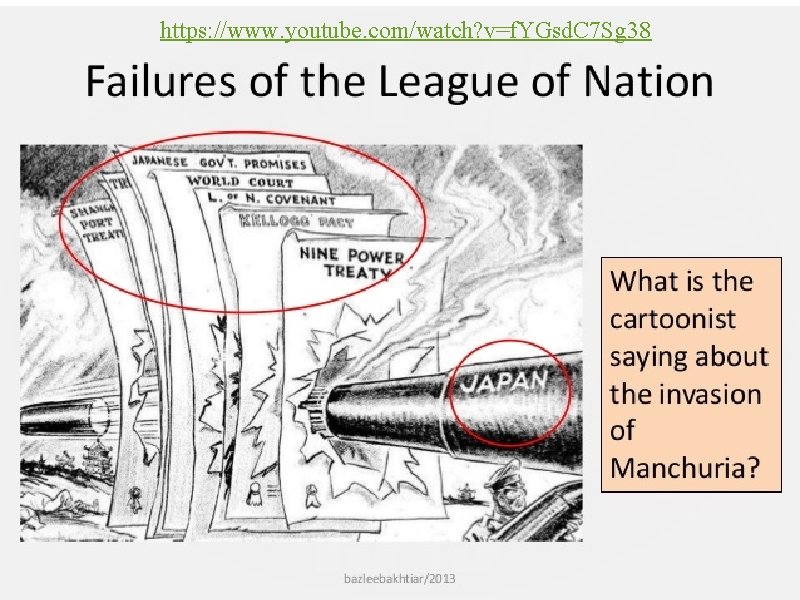
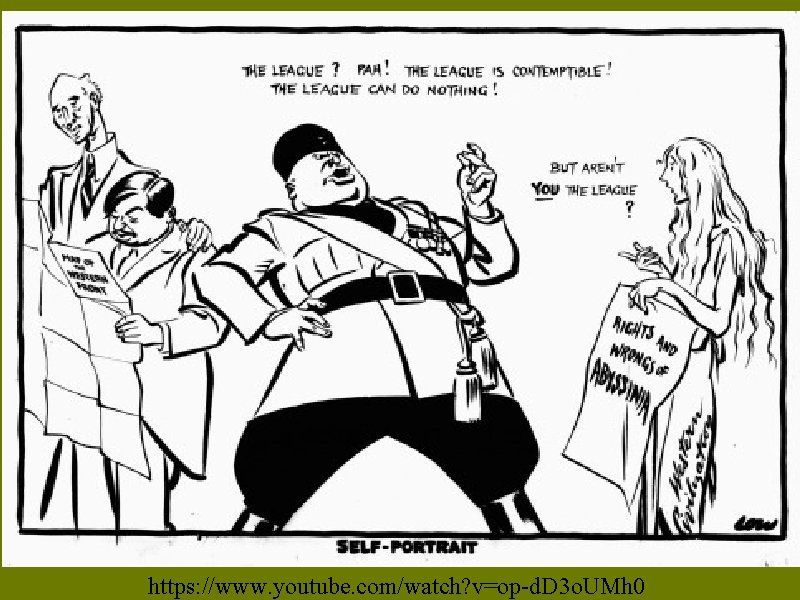
The Failure of the League of Nations • Read your handout on this topic and make notes on the following: A. What happened in Manchuria? Why? How did the League react? What was the result/ outcome? B. What happened in Abyssinia? Why? How did the League react? What was the result/ outcome?
https: //www. youtube. com/watch? v=f. YGsd. C 7 Sg 38
https: //www. youtube. com/watch? v=op-d. D 3 o. UMh 0
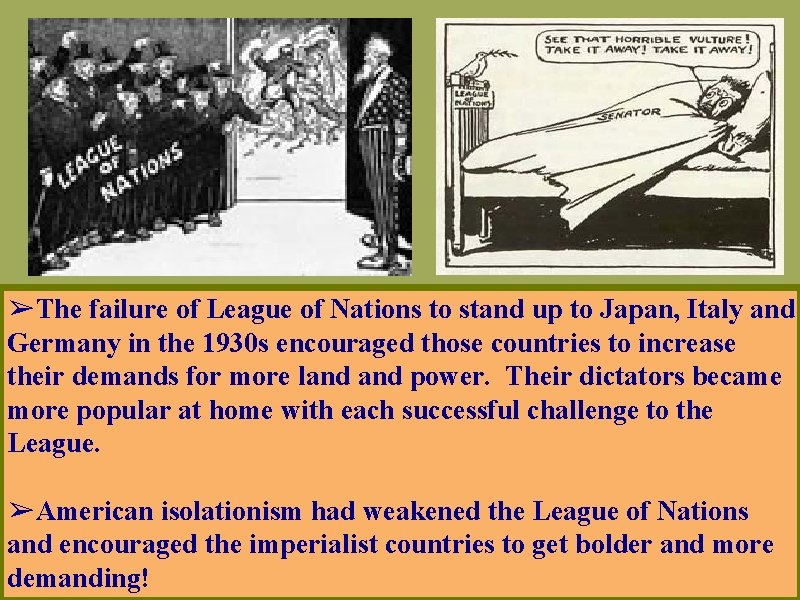
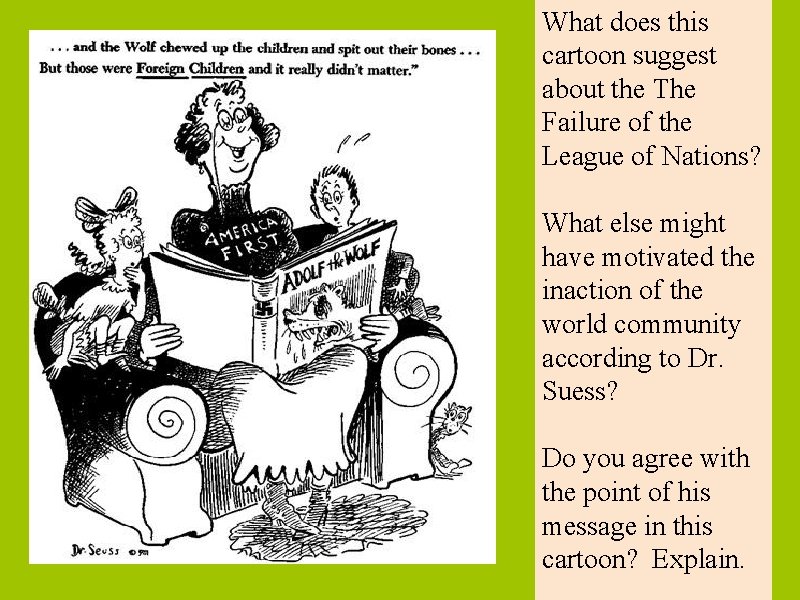
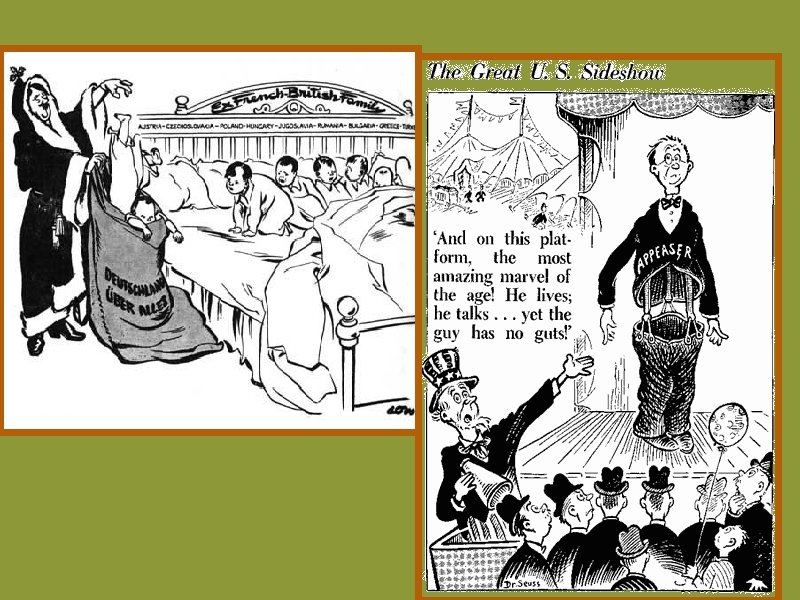
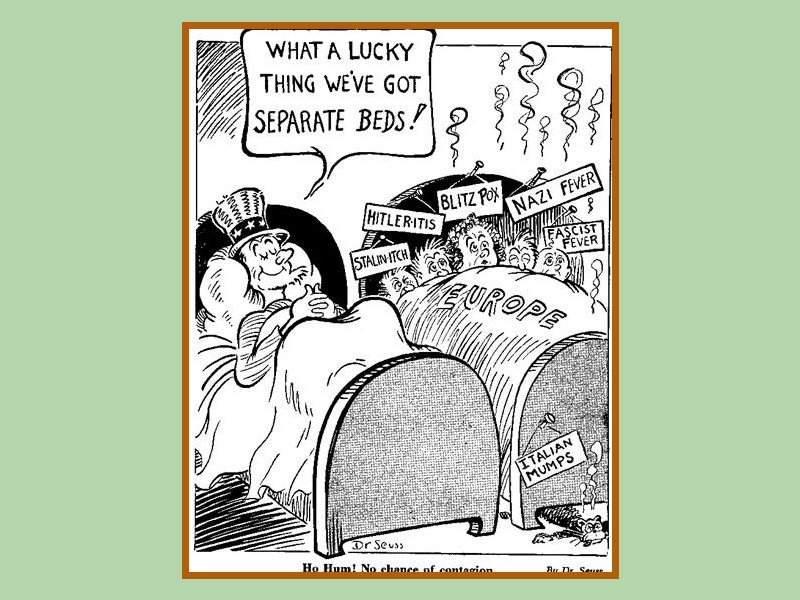
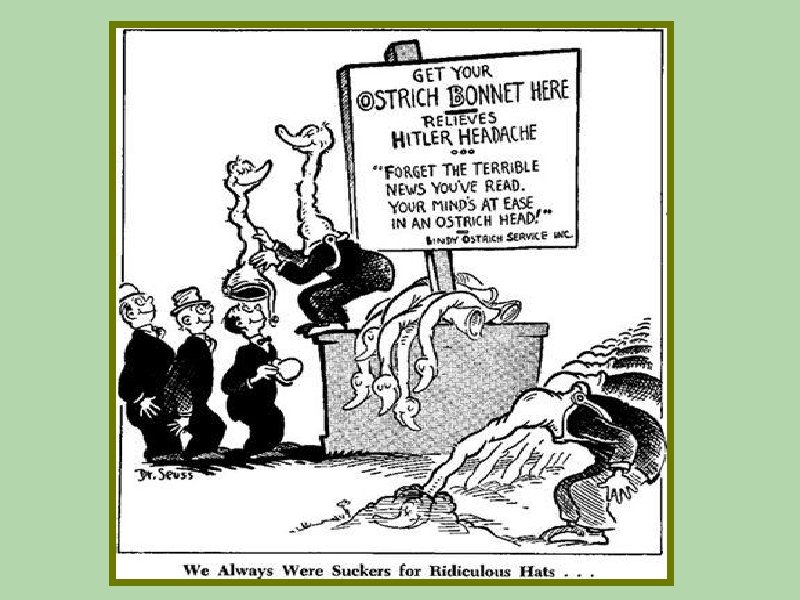
➢The failure of League of Nations to stand up to Japan, Italy and Germany in the 1930 s encouraged those countries to increase their demands for more land power. Their dictators became more popular at home with each successful challenge to the League. ➢American isolationism had weakened the League of Nations and encouraged the imperialist countries to get bolder and more demanding!
What does this cartoon suggest about the The Failure of the League of Nations? What else might have motivated the inaction of the world community according to Dr. Suess? Do you agree with the point of his message in this cartoon? Explain.
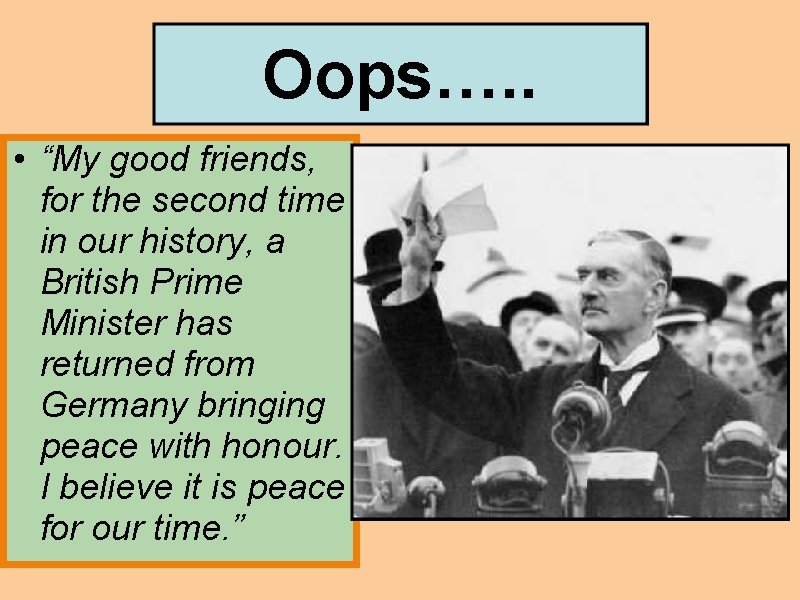
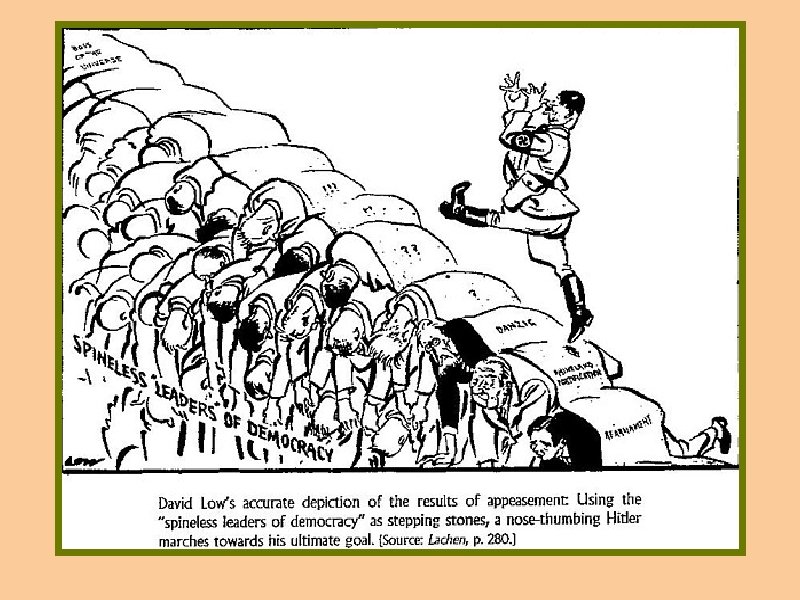
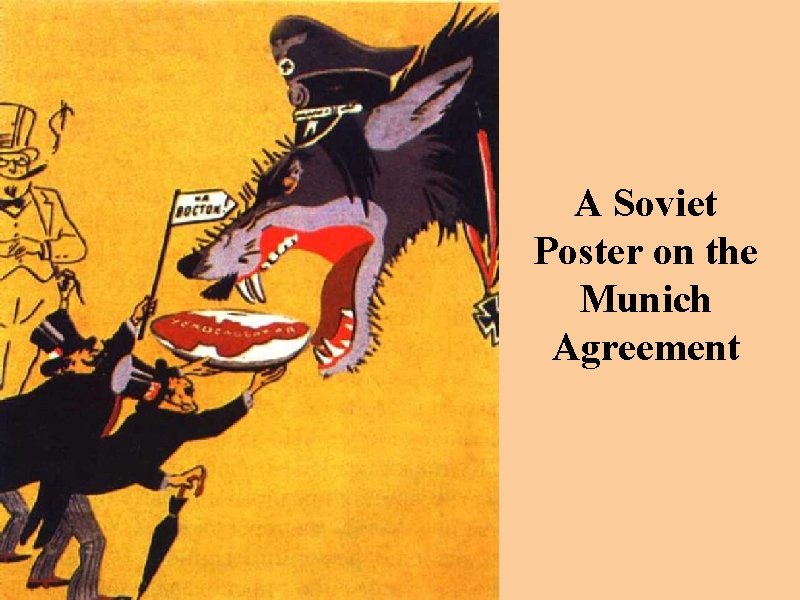
5. Appeasement: ➢A popular policy in the 1930 s ➢Giving in to the demands of an aggressor in order to maintain peace ➢Eg. Hitler & the Munich Pact
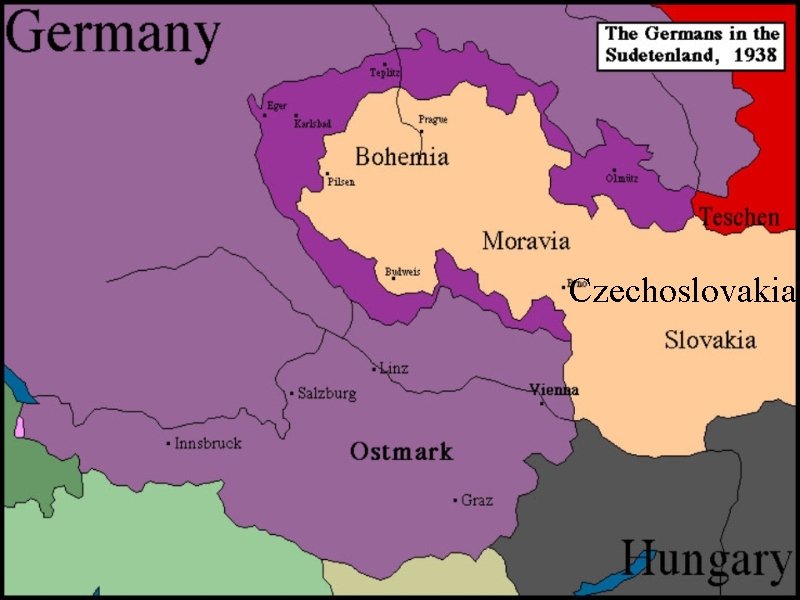
Read the information provided on pg. 125 of your text and respond to the following in your notes: 1. What did Hitler do in March of 1936 that was in direct violation of the terms outlined in the Treaty of Versailles? 2. What territory did Hitler “annex” into Germany in March of 1938? 3. How did the leaders of Britain, France and Italy appease Hitler in Munich in October of 1938? 4. Are you surprised that Hitler decided to take the rest of Czechoslovakia? Explain.
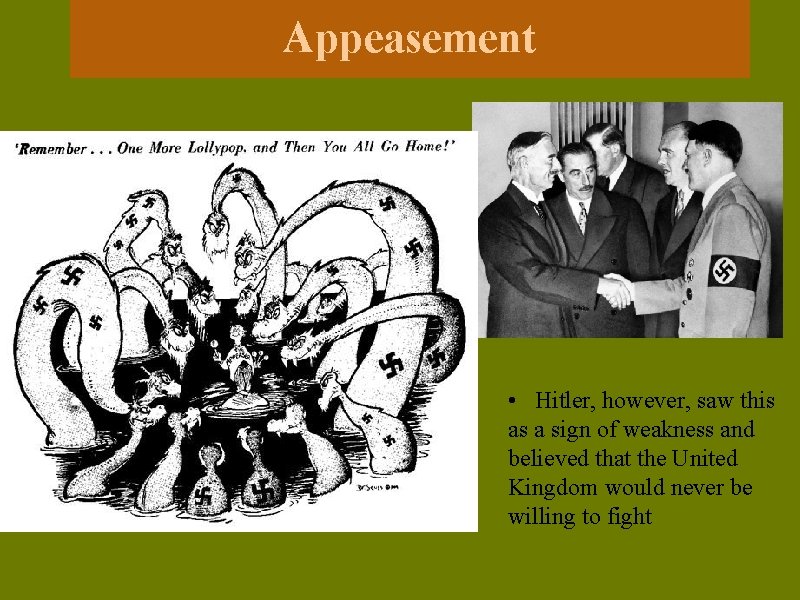
Appeasement • Hitler, however, saw this as a sign of weakness and believed that the United Kingdom would never be willing to fight
Pop. = 6 million Pop. = 3 million
Czechoslovakia
Oops…. . • “My good friends, for the second time in our history, a British Prime Minister has returned from Germany bringing peace with honour. I believe it is peace for our time. ”
A Soviet Poster on the Munich Agreement
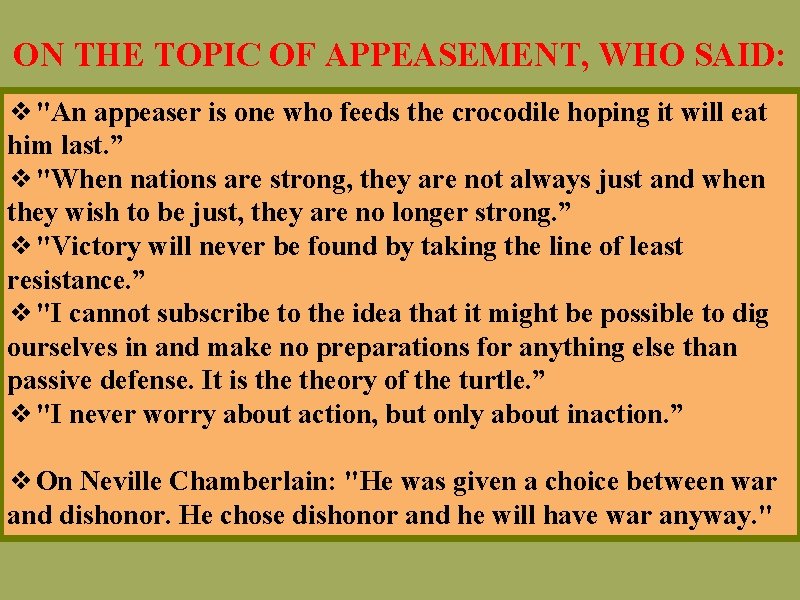
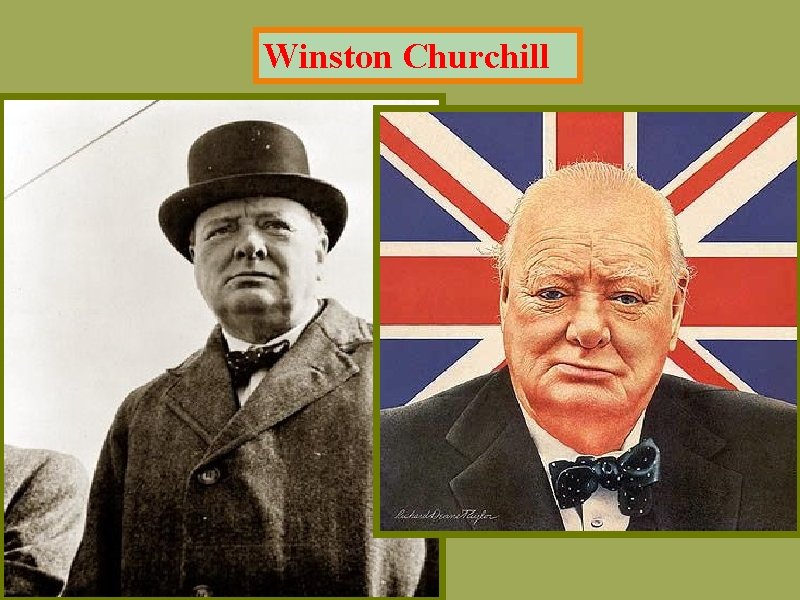
ON THE TOPIC OF APPEASEMENT, WHO SAID: ❖"An appeaser is one who feeds the crocodile hoping it will eat him last. ” ❖"When nations are strong, they are not always just and when they wish to be just, they are no longer strong. ” ❖"Victory will never be found by taking the line of least resistance. ” ❖"I cannot subscribe to the idea that it might be possible to dig ourselves in and make no preparations for anything else than passive defense. It is theory of the turtle. ” ❖"I never worry about action, but only about inaction. ” ❖On Neville Chamberlain: "He was given a choice between war and dishonor. He chose dishonor and he will have war anyway. "
Winston Churchill
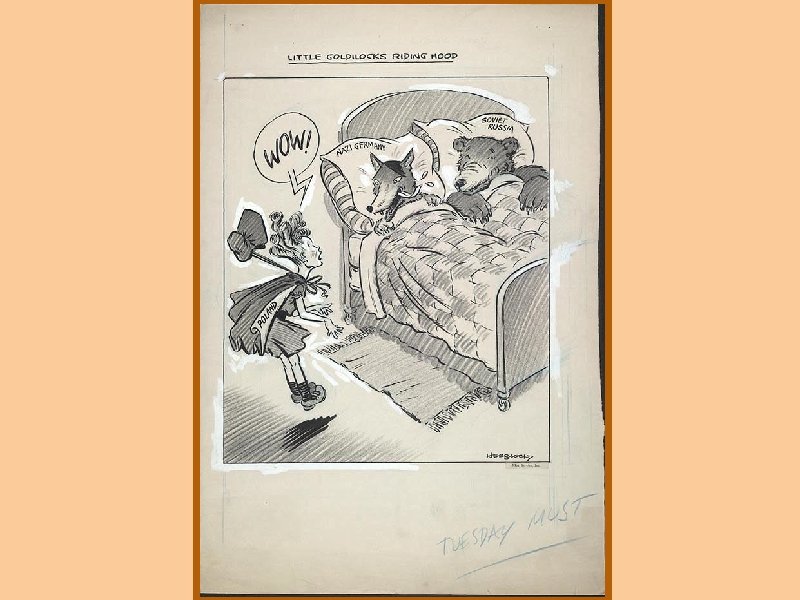
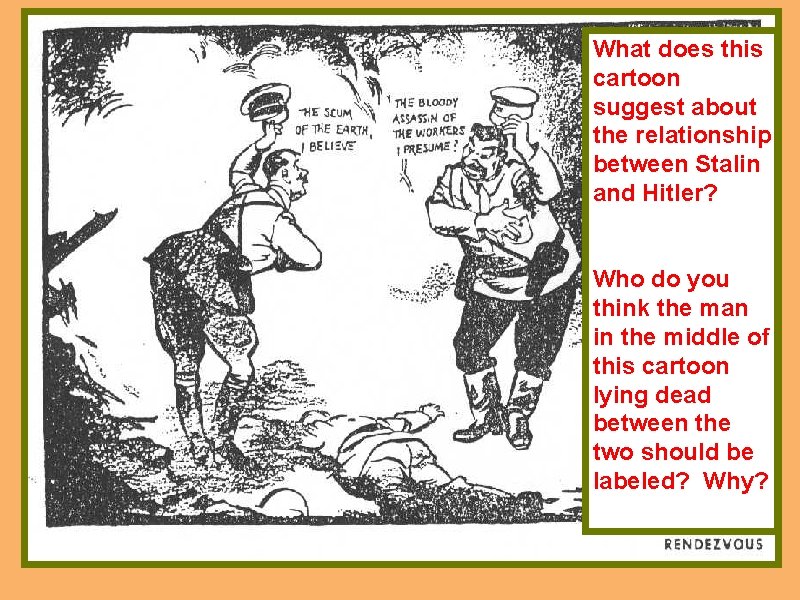
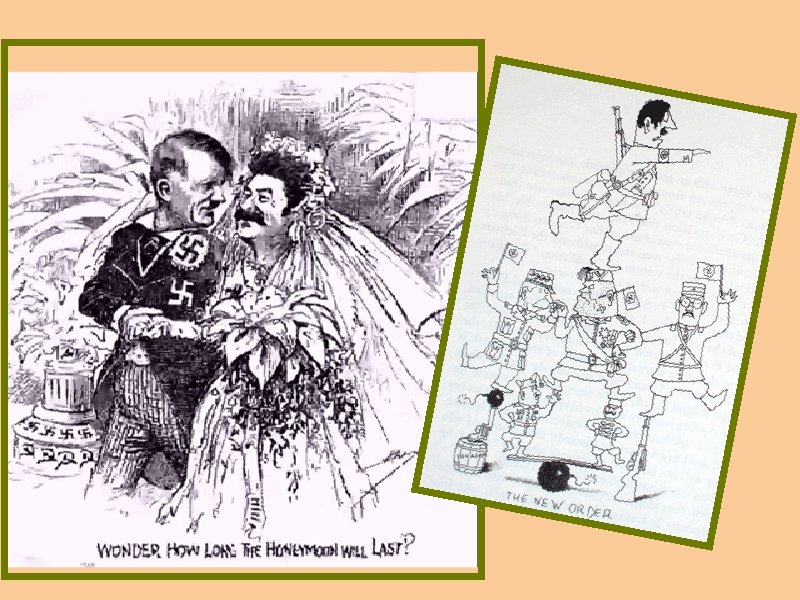
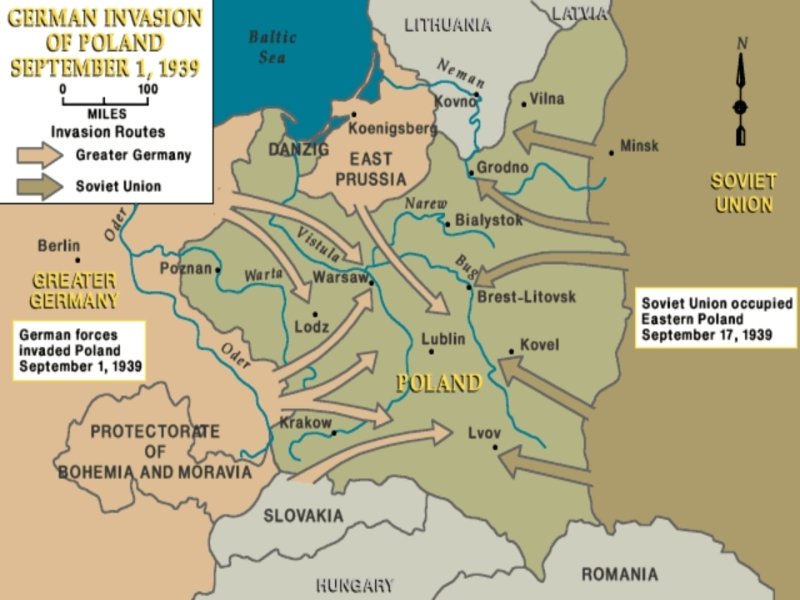
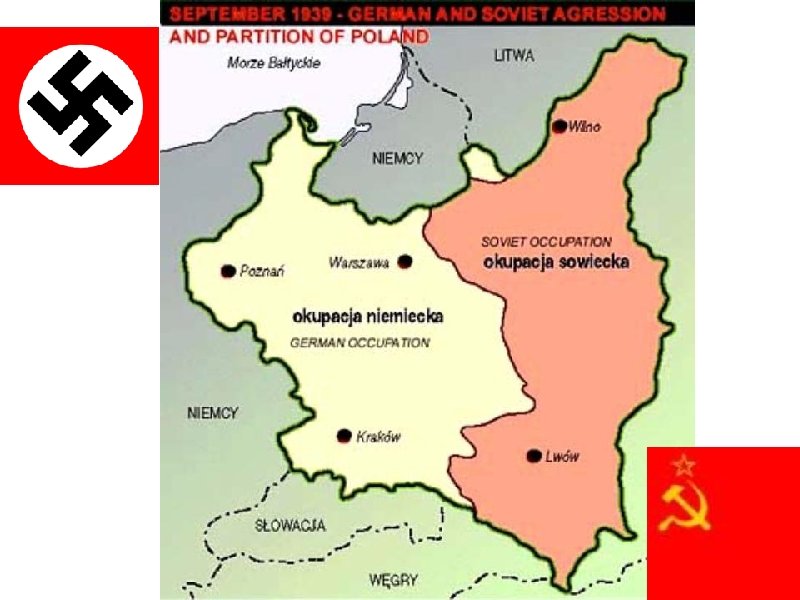
6. The Invasion of Poland The Nazi-Soviet Pact: ➢A Pact between Stalin (Soviet Union) and Hitler (Germany) ➢A promise of non-aggression between these two enemies that allowed each leader time to prepare to fight each other ➢Allowed for the invasion of Poland division of territories conquered between the Soviet Union and Germany
What does this cartoon suggest about the relationship between Stalin and Hitler? Who do you think the man in the middle of this cartoon lying dead between the two should be labeled? Why?
The Concept of Blitzkrieg “Lightening War” • An intense military attack designed to bring quick victory using all offensive elements in quick succession. • Luftwaffe (German airforce) • Panzers (German tanks) • Wehrmacht (German army) • defenders preventing them from establishing defensive positions. https: //www. youtube. com/watch? v=Ks. BG 34 TSJJ 4