
Causes of the Great Depression tariffs and war
- Slides: 33
Causes of the Great Depression • tariffs and war debt policies that cut down the foreign market for American goods • a crisis in the farm sector • the availability of easy credit • an unequal distribution of income Question 1 Worksheet 2
Buying on Margin • Many began buying on margin—paying a small percentage of a stock’s price as a down payment and borrowing the rest. Question 2 worksheet 2
Fighting the Great Depression with The New Deal
World Timeline 1933 Hitler and the Nazis come to power 1933 FDR becomes President of the US 1936 FDR gets reelected 1937 the Hindenburg explodes 1938 Route 66 is completed: links Chicago to LA • 1939 the Wizard of Oz is released in movie theaters • 1939 Germany invades Poland (starts WWII) • 1940 FDR is reelected for a 3 rd time • • •
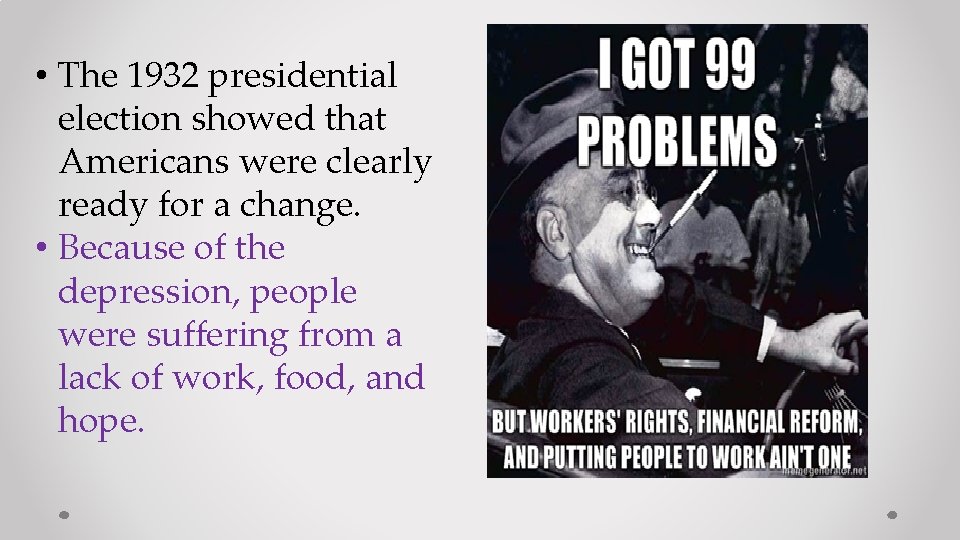
• The 1932 presidential election showed that Americans were clearly ready for a change. • Because of the depression, people were suffering from a lack of work, food, and hope.
• 1933 -the height of the Great Depression, thousands of banks and businesses have failed. • 25% of the adult population is out of work. • A new president takes office, promising to bring relief to the ailing economy.
• The 4 -month period between from FDR’s victory in November to his inauguration in March, he worked endlessly on a program that was designed to alleviate the problems of the Great Depression.
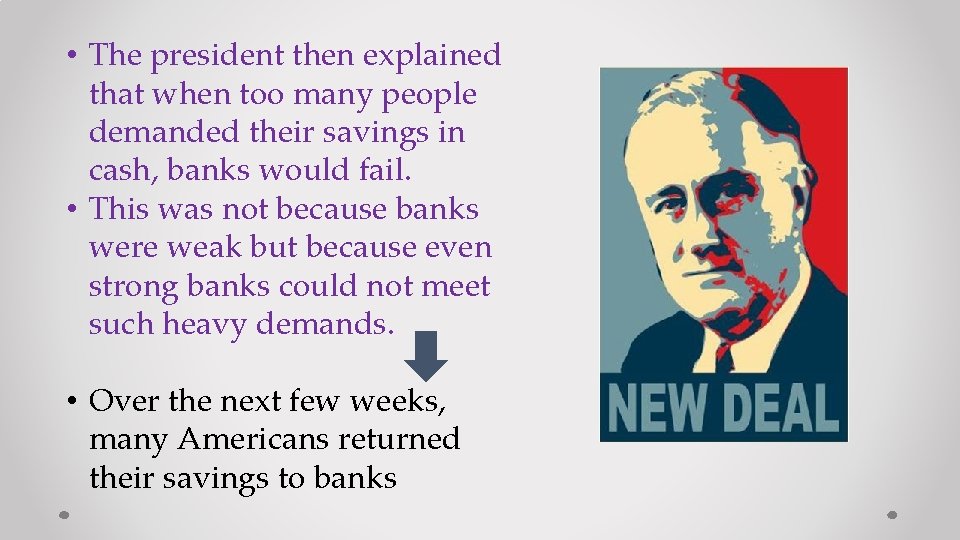
The New Deal • the New Deal, a phrase taken from a campaign speech in which Roosevelt had promised “a new deal for the American people. ” • New Deal policies focused on three general goals: relief for the needy, economic recovery, and financial reform.
The Hundred Days • On taking office, the Roosevelt administration launched a period of intense activity known as the Hundred Days, lasting from March 9 to June 16, 1933. • During this period, Congress passed more than 15 major pieces of New Deal legislation. • These laws, and others that followed, significantly expanded the federal government’s role in the nation’s economy.
• Roosevelt’s first step as president was to carry out reforms in banking and finance. • By 1933, widespread bank failures had caused most Americans to lose faith in the banking system. • On March 5, one day after taking office, Roosevelt declared a bank holiday and closed all banks to prevent further withdrawals. Question 5 Worksheet 1
• He persuaded Congress to pass the Emergency Banking Relief Act, which authorized the Treasury Department to inspect the country’s banks. • Those that were sound could reopen at once; those that were insolvent— unable to pay their debts— would remain closed
• Those that needed help could receive loans. • This measure revived public confidence in banks, since customers now had greater faith that the open banks were in good financial shape.
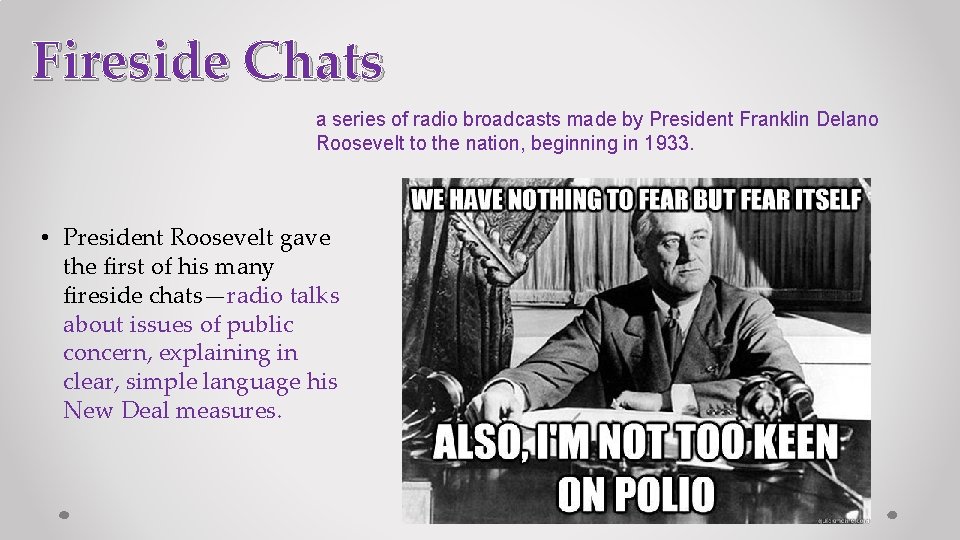
Fireside Chats a series of radio broadcasts made by President Franklin Delano Roosevelt to the nation, beginning in 1933. • President Roosevelt gave the first of his many fireside chats—radio talks about issues of public concern, explaining in clear, simple language his New Deal measures.
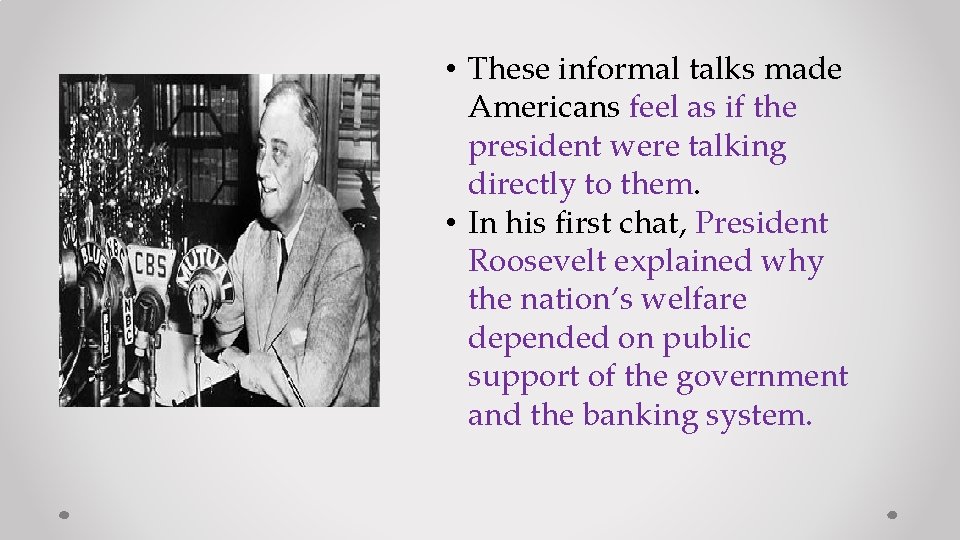
• These informal talks made Americans feel as if the president were talking directly to them. • In his first chat, President Roosevelt explained why the nation’s welfare depended on public support of the government and the banking system.
• The president then explained that when too many people demanded their savings in cash, banks would fail. • This was not because banks were weak but because even strong banks could not meet such heavy demands. • Over the next few weeks, many Americans returned their savings to banks
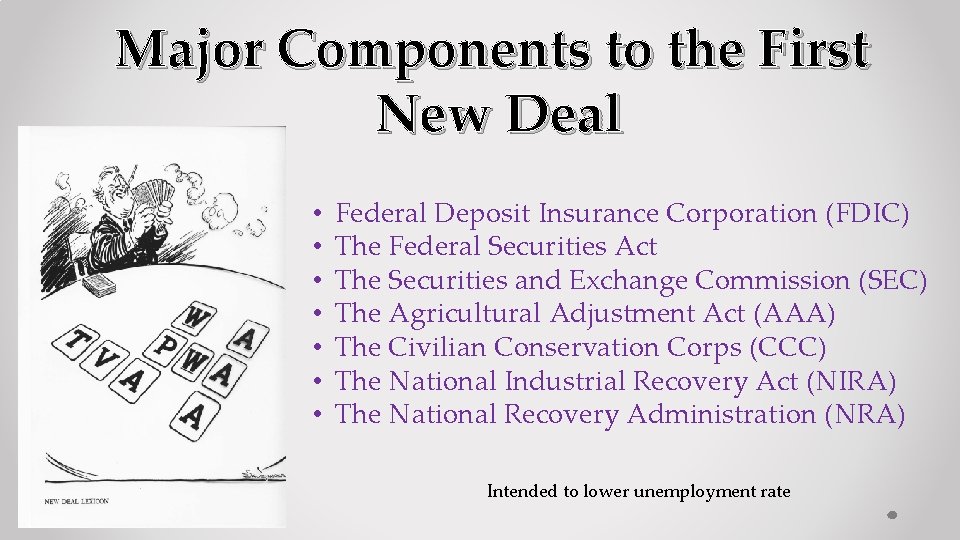
Major Components to the First New Deal • • Federal Deposit Insurance Corporation (FDIC) The Federal Securities Act The Securities and Exchange Commission (SEC) The Agricultural Adjustment Act (AAA) The Civilian Conservation Corps (CCC) The National Industrial Recovery Act (NIRA) The National Recovery Administration (NRA) Intended to lower unemployment rate
• Congress under FDR’s presidency took steps to reorganize the banking system. • They pass the Glass. Steagall Act which established the (FDIC) Federal Deposit Insurance Corporation. • The FDIC provided federal insurance for individual bank accounts of up to $5000.
• The FDIC reassured millions of bank customers that their money was safe. • It also required banks to act cautiously with their customers’ money.
Federal Securities Act • Congress and the president also worked to regulate the stock market, in which people had lost faith because of the crash of 1929. • The Federal Securities Act, passed in May 1933, required corporations to provide complete information on all stock offerings and made them liable for any misrepresentations.
Securities and Exchange Commission (SEC) Question 4 Worksheet 2 • In June of 1934, Congress created the Securities and Exchange Commission (SEC) to regulate the stock market. • One goal of this commission was to prevent people with inside information about companies from “rigging” the stock market for their own profit
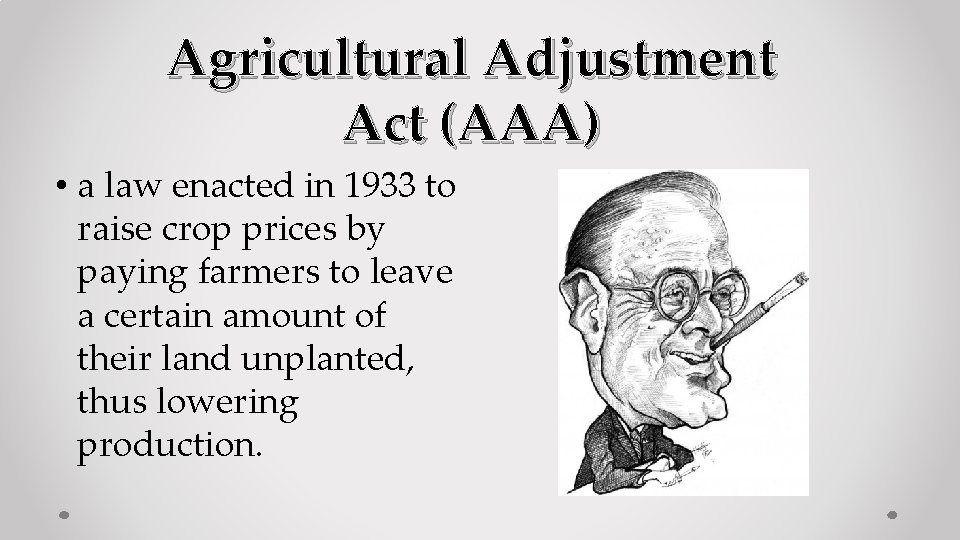
Agricultural Adjustment Act (AAA) • a law enacted in 1933 to raise crop prices by paying farmers to leave a certain amount of their land unplanted, thus lowering production.
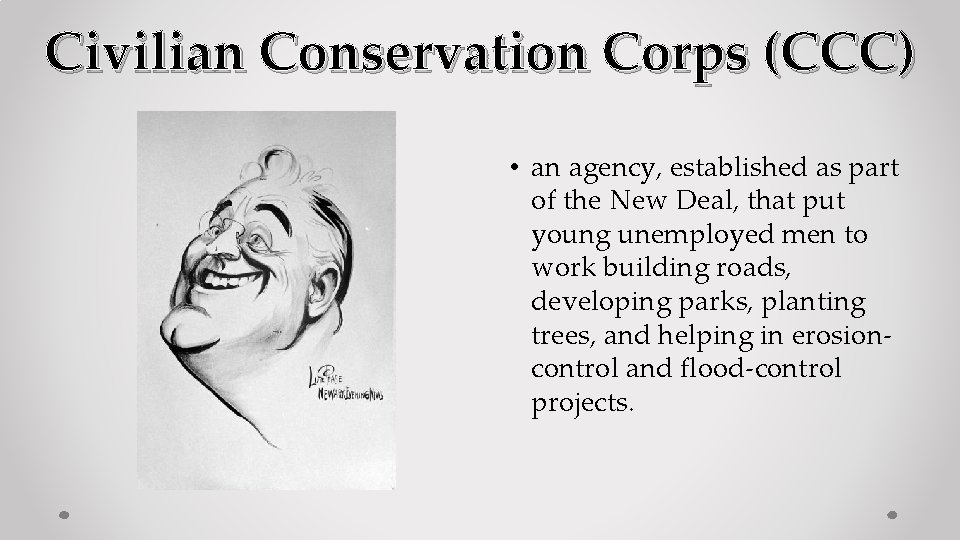
Civilian Conservation Corps (CCC) • an agency, established as part of the New Deal, that put young unemployed men to work building roads, developing parks, planting trees, and helping in erosioncontrol and flood-control projects.
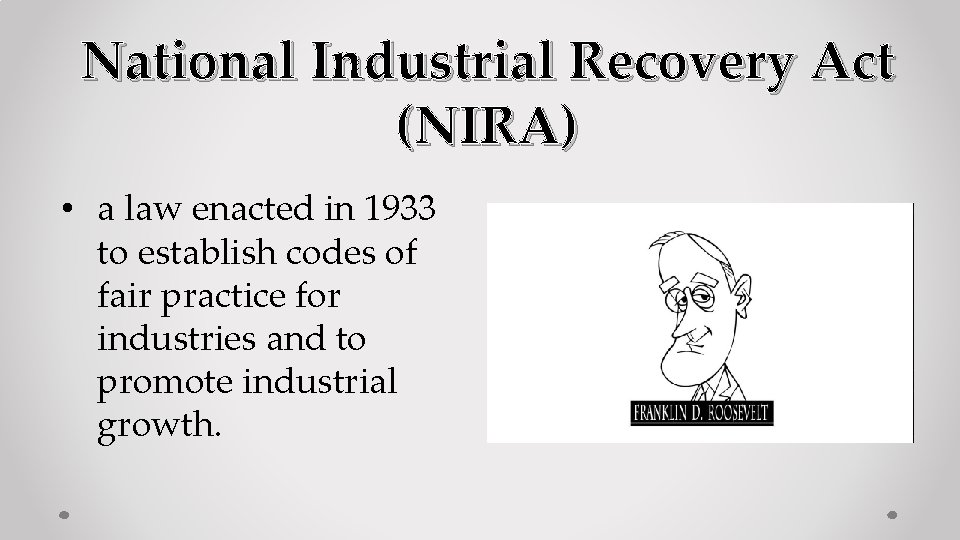
National Industrial Recovery Act (NIRA) • a law enacted in 1933 to establish codes of fair practice for industries and to promote industrial growth.
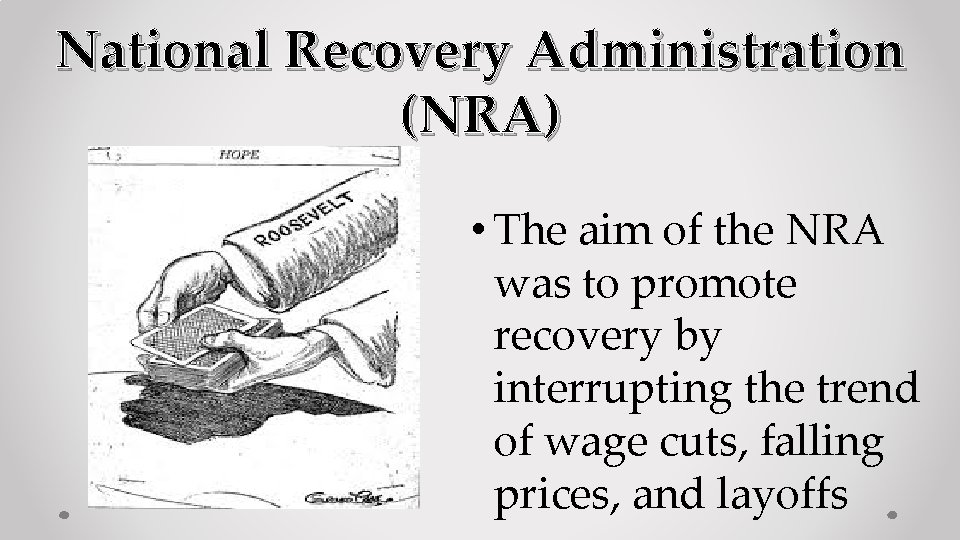
National Recovery Administration (NRA) • The aim of the NRA was to promote recovery by interrupting the trend of wage cuts, falling prices, and layoffs
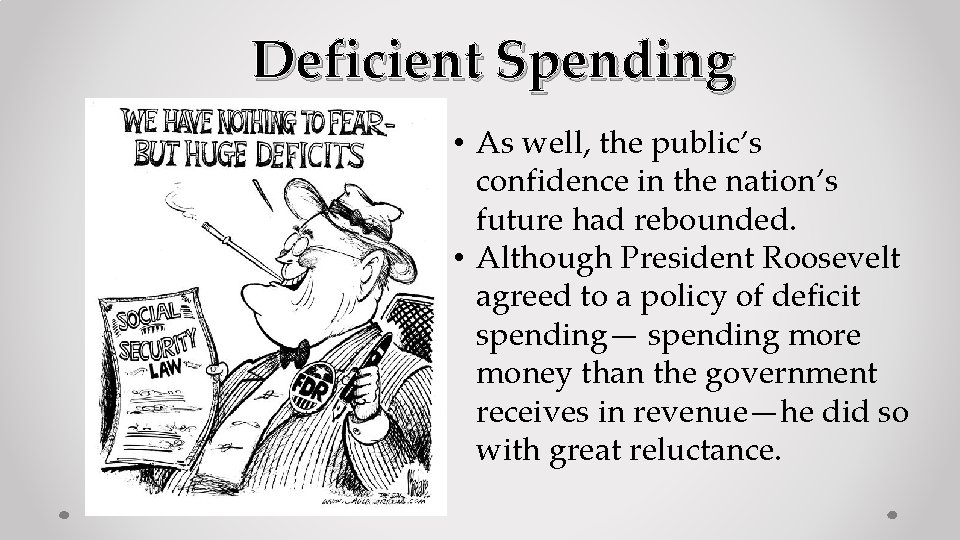
Deficient Spending • As well, the public’s confidence in the nation’s future had rebounded. • Although President Roosevelt agreed to a policy of deficit spending— spending more money than the government receives in revenue—he did so with great reluctance.
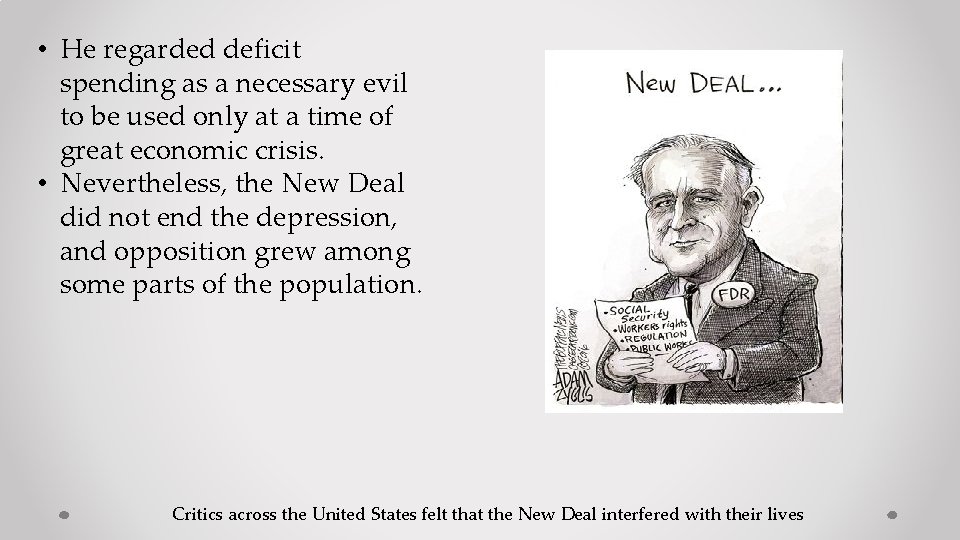
• He regarded deficit spending as a necessary evil to be used only at a time of great economic crisis. • Nevertheless, the New Deal did not end the depression, and opposition grew among some parts of the population. Critics across the United States felt that the New Deal interfered with their lives
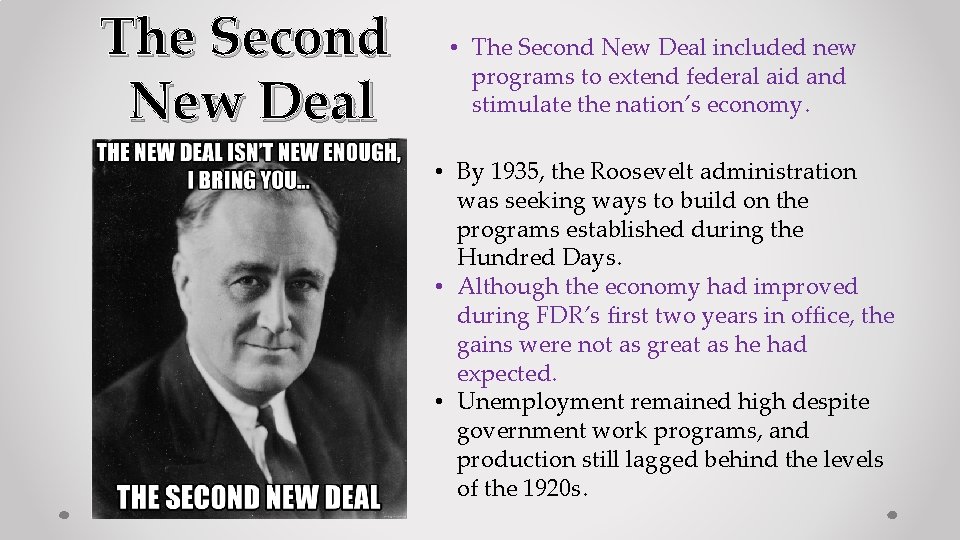
The Second New Deal • The Second New Deal included new programs to extend federal aid and stimulate the nation’s economy. • By 1935, the Roosevelt administration was seeking ways to build on the programs established during the Hundred Days. • Although the economy had improved during FDR’s first two years in office, the gains were not as great as he had expected. • Unemployment remained high despite government work programs, and production still lagged behind the levels of the 1920 s.
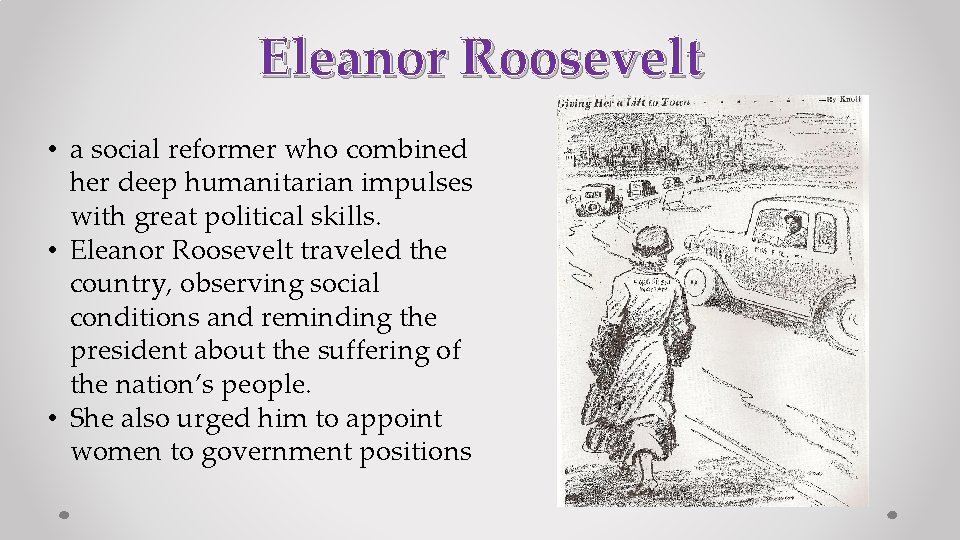
Eleanor Roosevelt • a social reformer who combined her deep humanitarian impulses with great political skills. • Eleanor Roosevelt traveled the country, observing social conditions and reminding the president about the suffering of the nation’s people. • She also urged him to appoint women to government positions
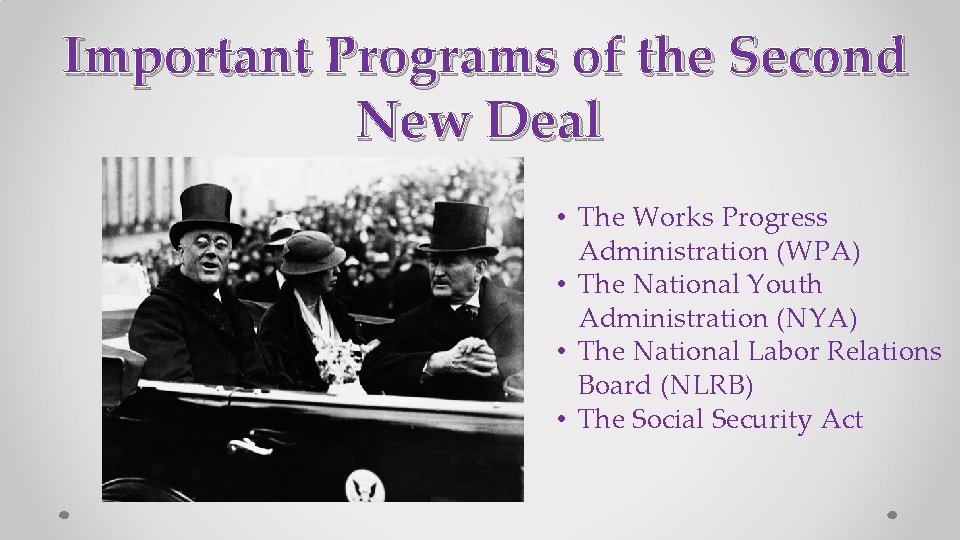
Important Programs of the Second New Deal • The Works Progress Administration (WPA) • The National Youth Administration (NYA) • The National Labor Relations Board (NLRB) • The Social Security Act
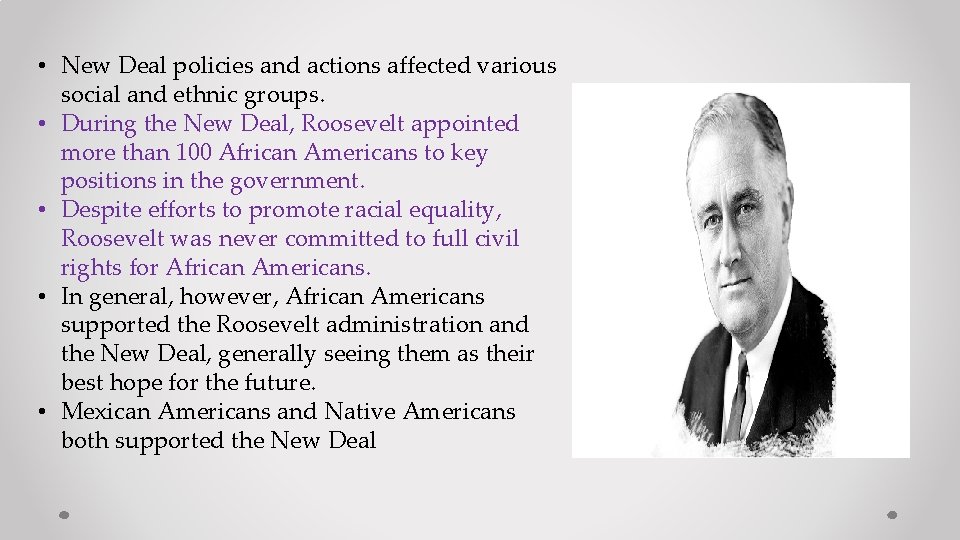
• New Deal policies and actions affected various social and ethnic groups. • During the New Deal, Roosevelt appointed more than 100 African Americans to key positions in the government. • Despite efforts to promote racial equality, Roosevelt was never committed to full civil rights for African Americans. • In general, however, African Americans supported the Roosevelt administration and the New Deal, generally seeing them as their best hope for the future. • Mexican Americans and Native Americans both supported the New Deal
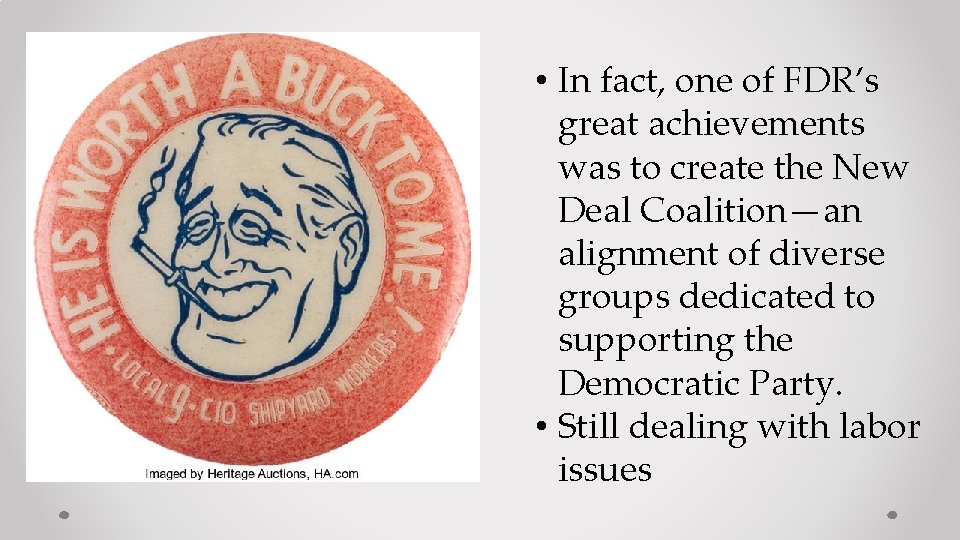
• In fact, one of FDR’s great achievements was to create the New Deal Coalition—an alignment of diverse groups dedicated to supporting the Democratic Party. • Still dealing with labor issues
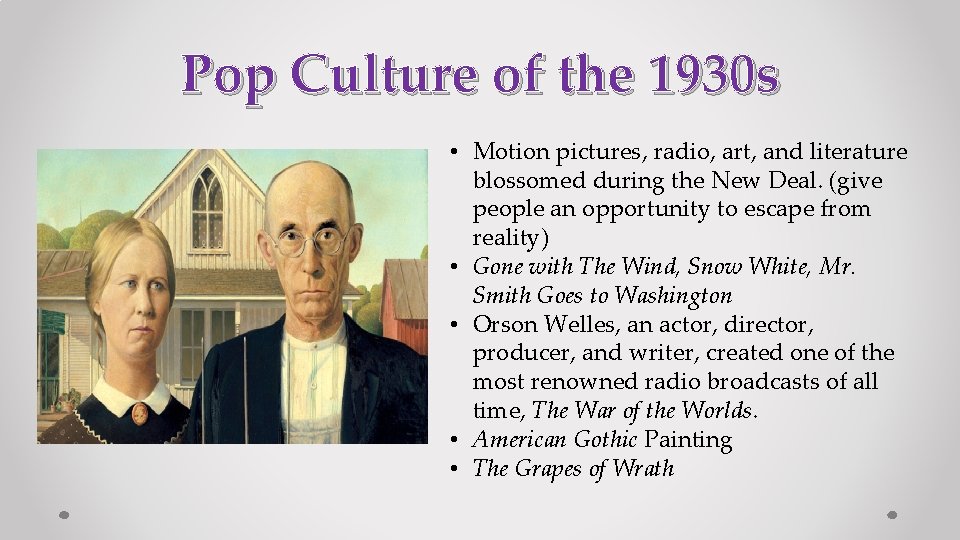
Pop Culture of the 1930 s • Motion pictures, radio, art, and literature blossomed during the New Deal. (give people an opportunity to escape from reality) • Gone with The Wind, Snow White, Mr. Smith Goes to Washington • Orson Welles, an actor, director, producer, and writer, created one of the most renowned radio broadcasts of all time, The War of the Worlds. • American Gothic Painting • The Grapes of Wrath
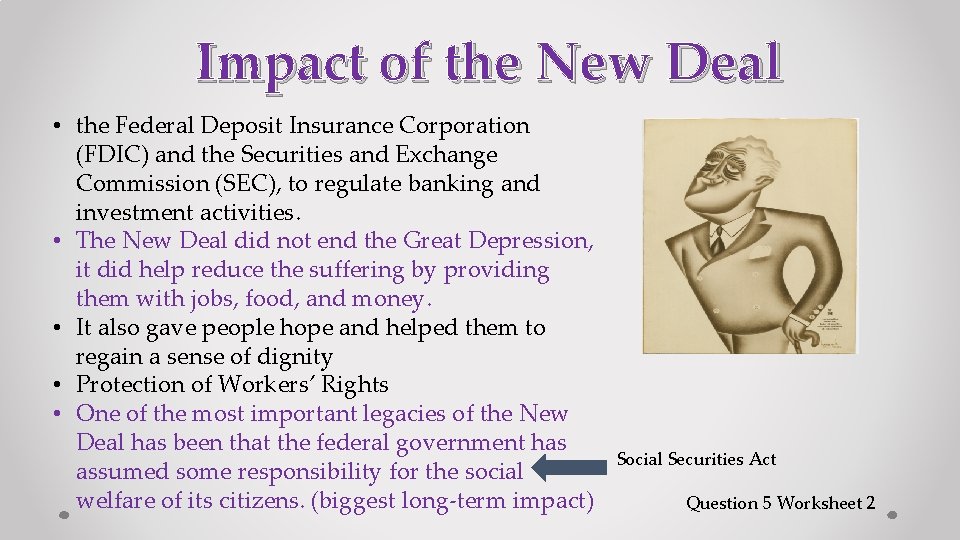
Impact of the New Deal • the Federal Deposit Insurance Corporation (FDIC) and the Securities and Exchange Commission (SEC), to regulate banking and investment activities. • The New Deal did not end the Great Depression, it did help reduce the suffering by providing them with jobs, food, and money. • It also gave people hope and helped them to regain a sense of dignity • Protection of Workers’ Rights • One of the most important legacies of the New Deal has been that the federal government has assumed some responsibility for the social welfare of its citizens. (biggest long-term impact) Social Securities Act Question 5 Worksheet 2