
Causes of the Great Depression Basic Economic Principles
Causes of the Great Depression Basic Economic Principles Overproduction Dependence on Exports Tariffs and US Protectionism WWI Debt Stock Market Speculation
Market vs Mixed Market Economy Mixed Economy - free enterprise system - Means of production owned by Individuals - Products, services and prices determined by individuals - The government has some involvement - Government-owned industries - Limitations on worker’s right to strike - Subsidies to support certain industries
Supply and Demand Prices are determined by Supply and demand • Supply - how much of a product is available • Demand – how much people want the product • When supply is low demand is high and visa versa - Ex Wheat during WWI

Economic Cycles • A regular cycle of Prosperity , Recession and Recovery - Expansion in economic activities results in a period of prosperity - followed by a slowdown in the economy called a recession - Recovery is when the economy begins to grow again
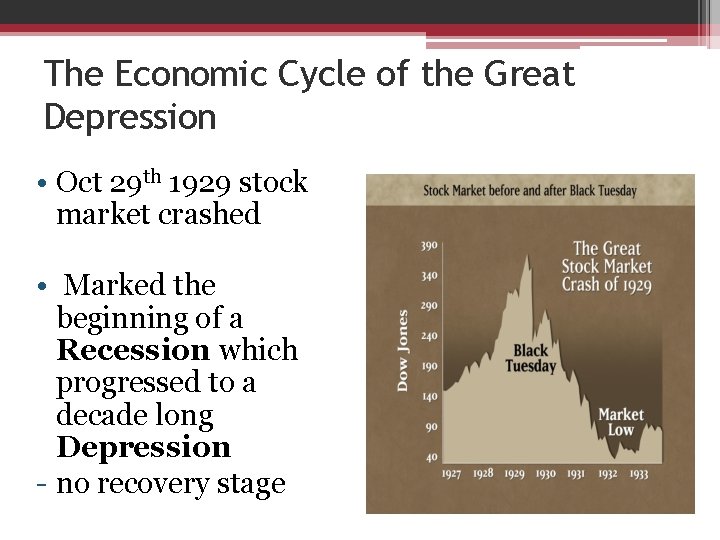
The Economic Cycle of the Great Depression • Oct 29 th 1929 stock market crashed • Marked the beginning of a Recession which progressed to a decade long Depression - no recovery stage
Causes of the Great Depression
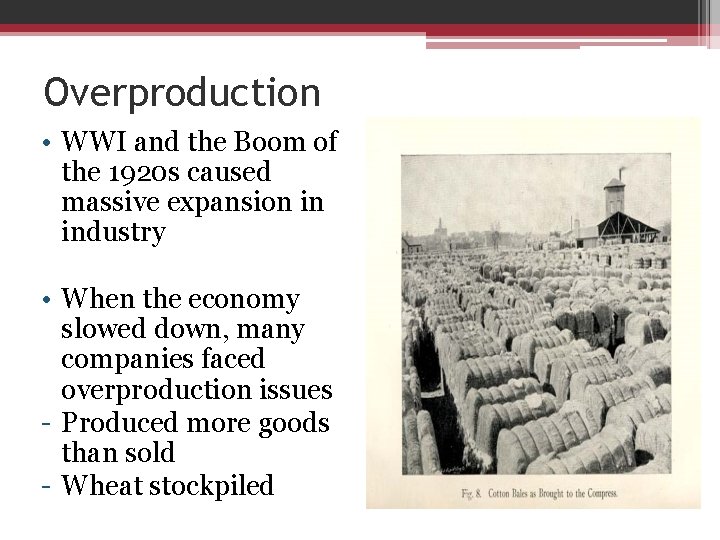
Overproduction • WWI and the Boom of the 1920 s caused massive expansion in industry • When the economy slowed down, many companies faced overproduction issues - Produced more goods than sold - Wheat stockpiled
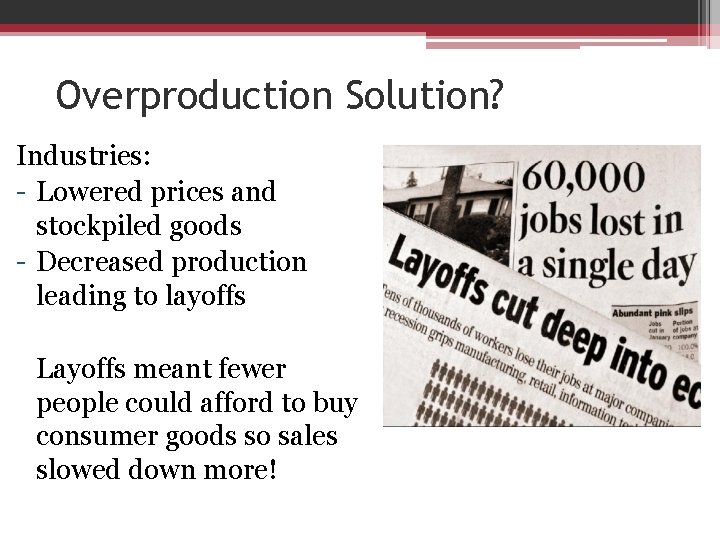
Overproduction Solution? Industries: - Lowered prices and stockpiled goods - Decreased production leading to layoffs Layoffs meant fewer people could afford to buy consumer goods so sales slowed down more!
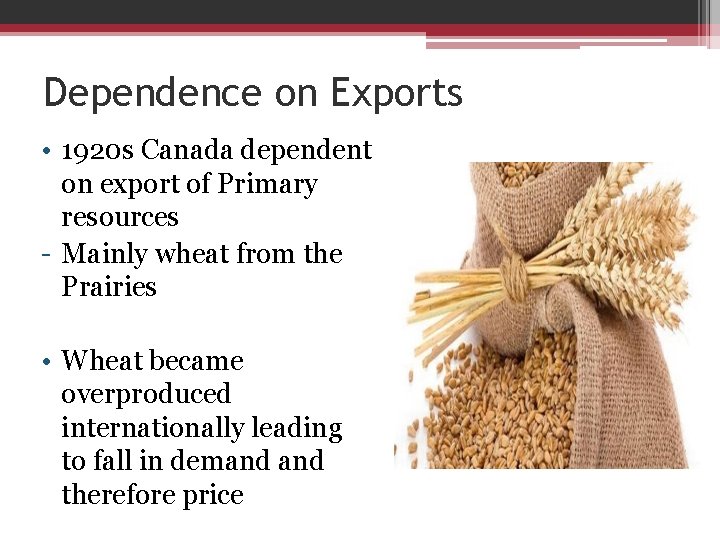
Dependence on Exports • 1920 s Canada dependent on export of Primary resources - Mainly wheat from the Prairies • Wheat became overproduced internationally leading to fall in demand therefore price
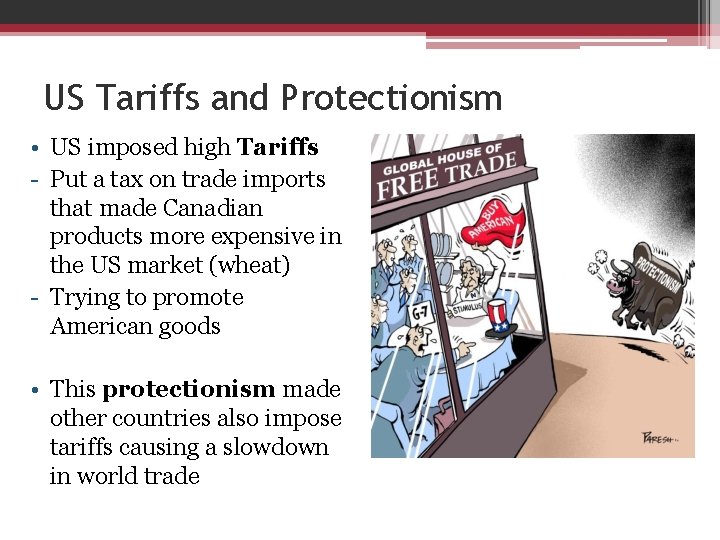
US Tariffs and Protectionism • US imposed high Tariffs - Put a tax on trade imports that made Canadian products more expensive in the US market (wheat) - Trying to promote American goods • This protectionism made other countries also impose tariffs causing a slowdown in world trade
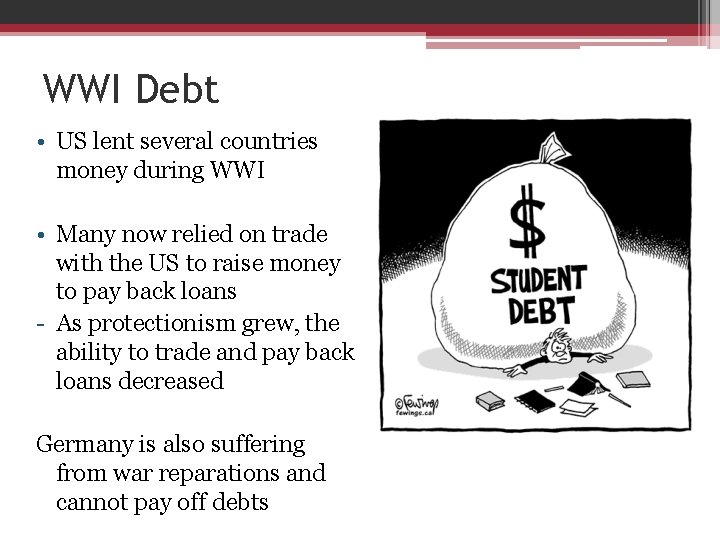
WWI Debt • US lent several countries money during WWI • Many now relied on trade with the US to raise money to pay back loans - As protectionism grew, the ability to trade and pay back loans decreased Germany is also suffering from war reparations and cannot pay off debts
Stock Speculation Process • 1920 s Companies want to expand so they sell stocks • Many investors bought “on margin” - Pay 10% of the stock price assuming that when the price of the stocks increased the remaining 90% debt would get paid from the profits - Loans easy to get, demand drove up price of stock beyond real value
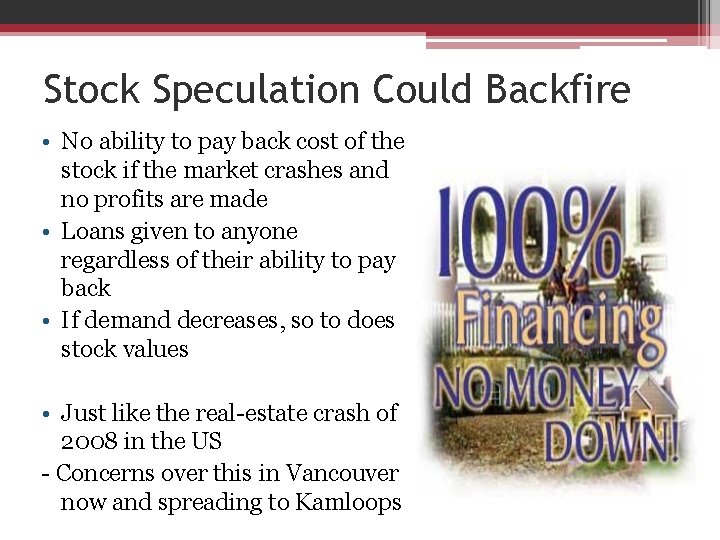
Stock Speculation Could Backfire • No ability to pay back cost of the stock if the market crashes and no profits are made • Loans given to anyone regardless of their ability to pay back • If demand decreases, so to does stock values • Just like the real-estate crash of 2008 in the US - Concerns over this in Vancouver now and spreading to Kamloops
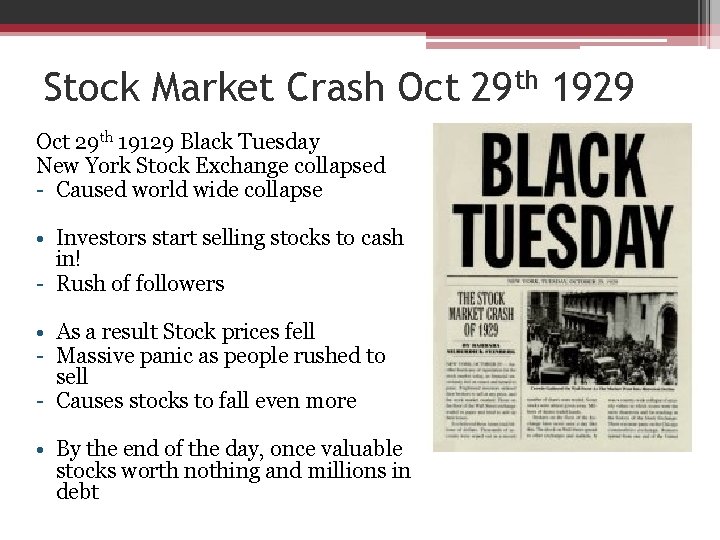
Stock Market Crash Oct 29 th 1929 Oct 29 th 19129 Black Tuesday New York Stock Exchange collapsed - Caused world wide collapse • Investors start selling stocks to cash in! - Rush of followers • As a result Stock prices fell - Massive panic as people rushed to sell - Causes stocks to fall even more • By the end of the day, once valuable stocks worth nothing and millions in debt
The Dust Bowl • Prairie land during the 1920 s-Alberta, Saskatchewan • WWI and the 1920 s many farmers planted only wheat due to high demand prices - One crop farming is very hard on the soil • 8 year Drought on the Prairies - High winds blew away top soil • Plague of Grasshoppers - Wiped out any crops that managed to survive
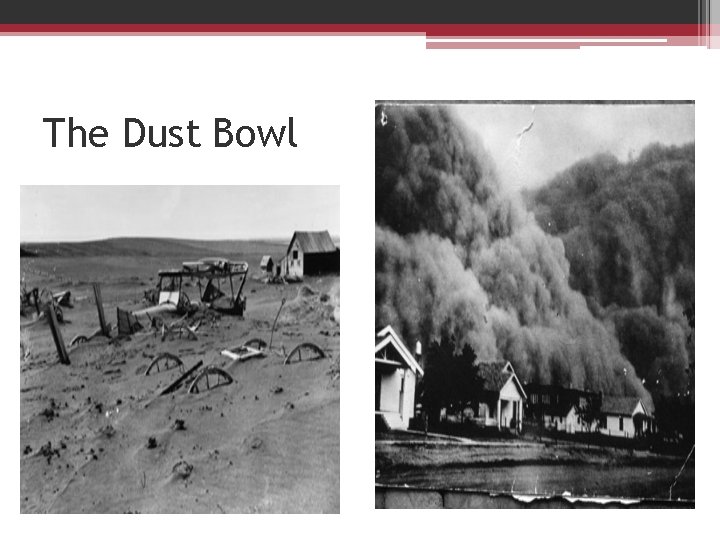
The Dust Bowl
5 Causes of the Great Depression 1. 2. 3. 4. Overproduction Layoffs Protectionism and tariffs Stock speculation leading to the Stock Market Crash of 1929 5. The Dust Bowl
- Slides: 17