
Causes of the Civil War Explain the importance
![“The new [Confederate] Constitution has set at rest for ever all agitating questions relating](https://slidetodoc.com/presentation_image_h2/5453c67ec6a81d796aaff11c48a9961b/image-40.jpg "“The new [Confederate] Constitution has set at rest for ever all agitating questions relating")
- Slides: 44
Causes of the Civil War? Explain the importance of key issues and events that led to the Civil War; include slavery, states’ rights, nullification, Compromise of 1850 and the Georgia Platform, Dred Scott case, election of 1860, the debate over secession in Georgia and the role of Alexander Stephens.
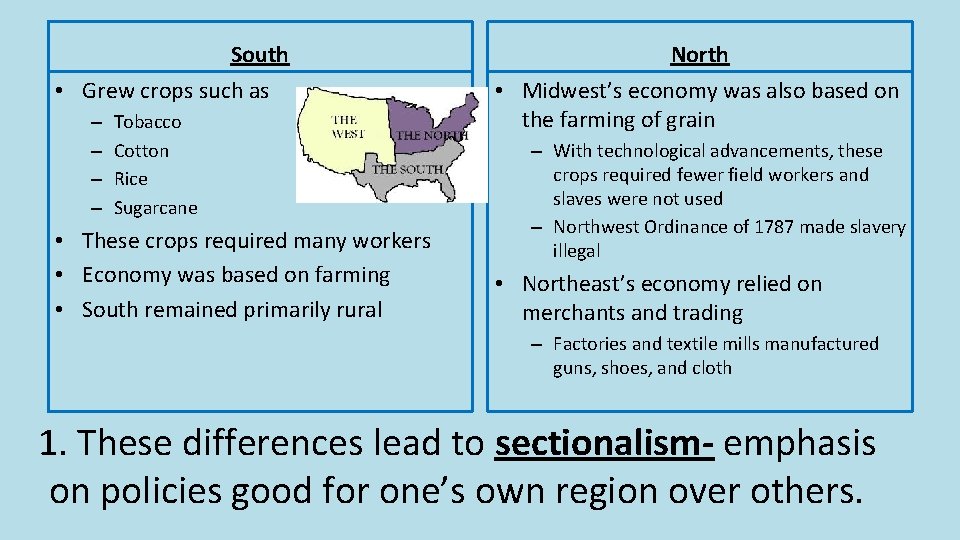
South • Grew crops such as – – Tobacco Cotton Rice Sugarcane • These crops required many workers • Economy was based on farming • South remained primarily rural North • Midwest’s economy was also based on the farming of grain – With technological advancements, these crops required fewer field workers and slaves were not used – Northwest Ordinance of 1787 made slavery illegal • Northeast’s economy relied on merchants and trading – Factories and textile mills manufactured guns, shoes, and cloth 1. These differences lead to sectionalism- emphasis on policies good for one’s own region over others.
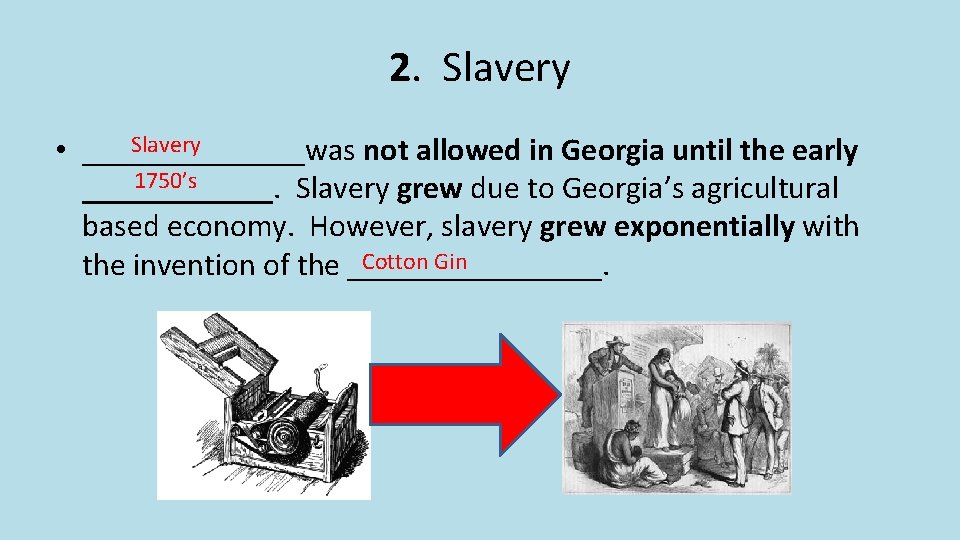
2. Slavery • _______was not allowed in Georgia until the early 1750’s ______. Slavery grew due to Georgia’s agricultural based economy. However, slavery grew exponentially with Cotton Gin the invention of the ________.
Philosophical shift • Southern Perspectives: – Slavery was a vital to their lifestyle (necessary evil)- GREED – Partaking in their Christianly duty/Act of Charity • African Americans were racially inferior and were better off in slavery • “We would remind those who condemn and sympathize with slavery, that this slavery relieves him from far crueler slavery in Africa…. . and Christianizes, protects, supports, and civilizes him. ”~ Fitzhugh – Abolitionists • Northern Perspectives: – Pro- slavery • “We find it no inconvenience at all to be waited upon. I have one and sometimes two to attend me. And find them sufficient employment. ” ~ A. Hale – Abolitionists • “…. remorseless tyrants of the South that there conditions…. . are inhumane and wicked, and we cannot carry them out for the sake of their evil company. ” ~ W. L. Garrison – Free Soil philosophy: slavery should NOT be interfered with where it already exists and the In the 1820’s, the government had the right to keep it from spreading Great Awakening, a religious revival, increased support of abolitionist.
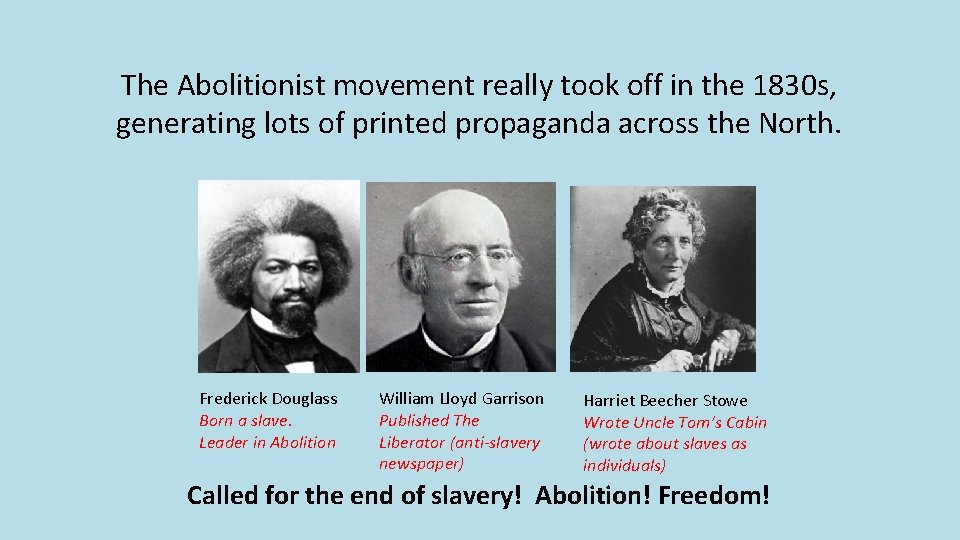
The Abolitionist movement really took off in the 1830 s, generating lots of printed propaganda across the North. Frederick Douglass Born a slave. Leader in Abolition William Lloyd Garrison Published The Liberator (anti-slavery newspaper) Harriet Beecher Stowe Wrote Uncle Tom’s Cabin (wrote about slaves as individuals) Called for the end of slavery! Abolition! Freedom!
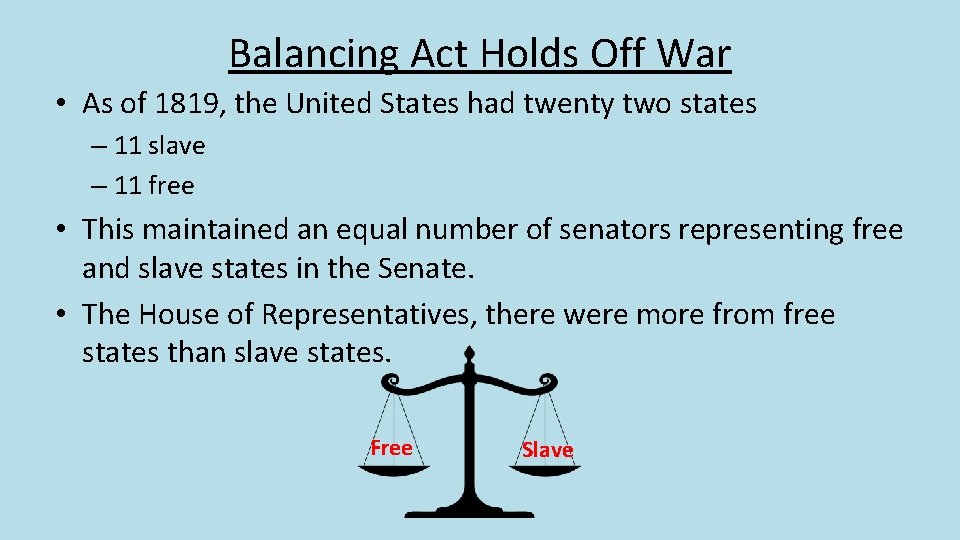
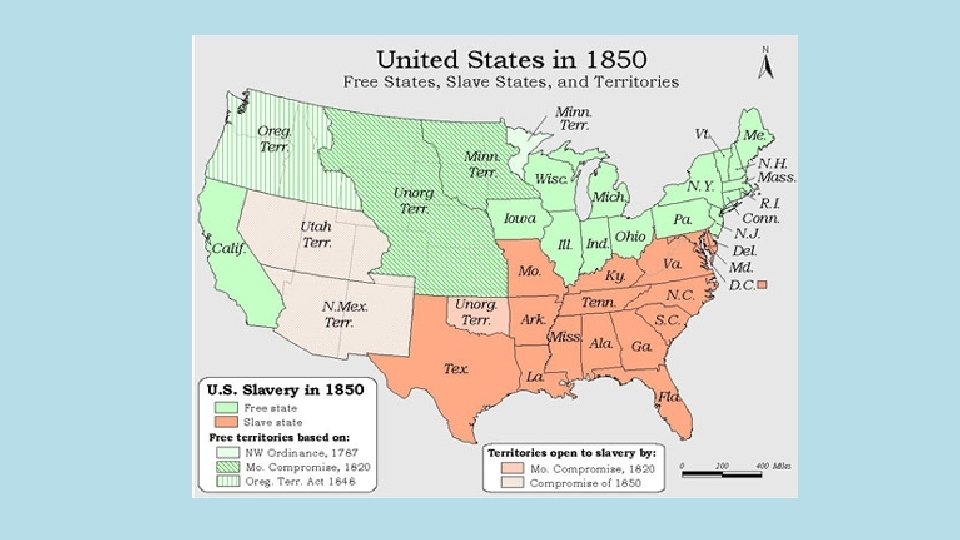
Balancing Act Holds Off War • As of 1819, the United States had twenty two states – 11 slave – 11 free • This maintained an equal number of senators representing free and slave states in the Senate. • The House of Representatives, there were more from free states than slave states. Free Slave
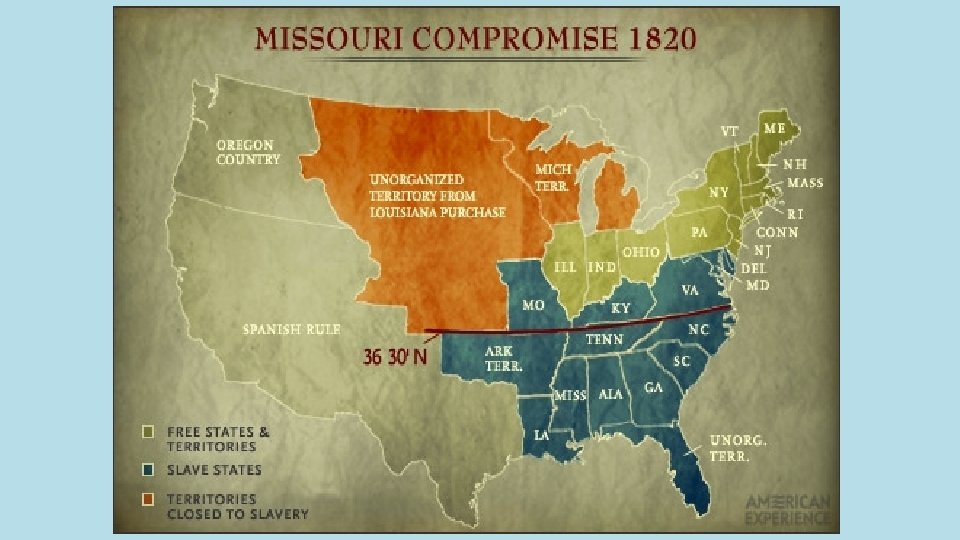
1820 - Missouri compromise Missouri wanted to enter the union as a slave state which would change the balance of power to the South (slave states). Compromise: So Maine is allowed to enter as a free state. PLUS, Congress forbids slavery north of the 36/30 parallel (which is the southern border of Missouri) Missouri Compromise serves as band aid solution for almost 30 years, with states being admitted into the Union in free and slave pairings.
3. States’ rights of power a state government • States’ rights refers to the amount _______________________________in making decisions. has in relation to the amount of power held by federal government • Flashback: – Early in U. S. history, the Articles of Confederation gave the individual states too much power and the nation could not even tax the states for revenue. Once the Constitution was ratified, the nation continued to experience issues that challenged this balance of power. And we still have this struggle today!
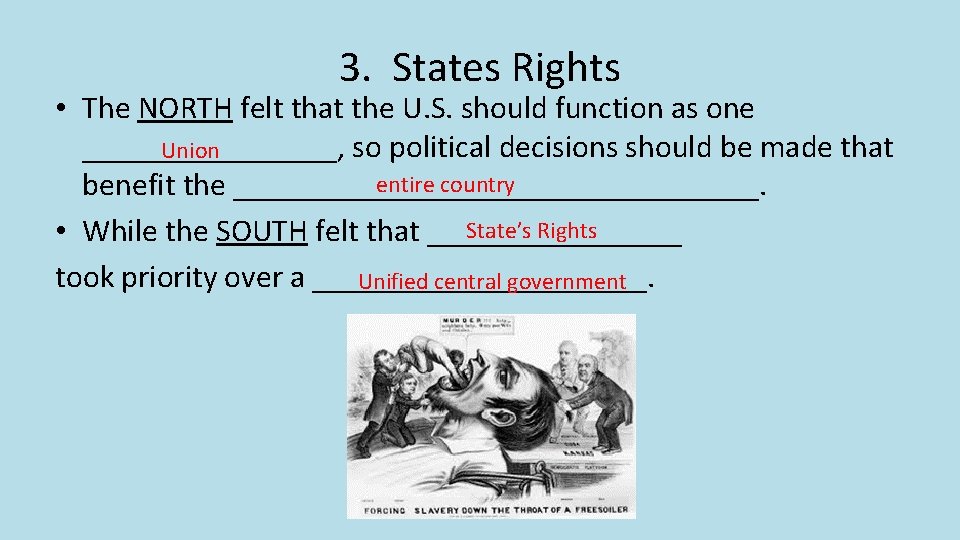
3. States Rights • The NORTH felt that the U. S. should function as one ________, so political decisions should be made that Union entire country benefit the _________________. State’s Rights • While the SOUTH felt that ________ took priority over a ___________. Unified central government
States’ Rights Examples • Georgia LOST the Worcester vs Georgia case BUT Georgia refused to release the missionaries or stop pushing for Cherokee removal. This test of states’ rights proved that a state could do as it pleased if there was not a unified attempt by the federal government OR other states to stop them. • Today state’s rights issues include decisions such as: – death penalty – assisted suicide – gay marriage – Legalization of marijuana
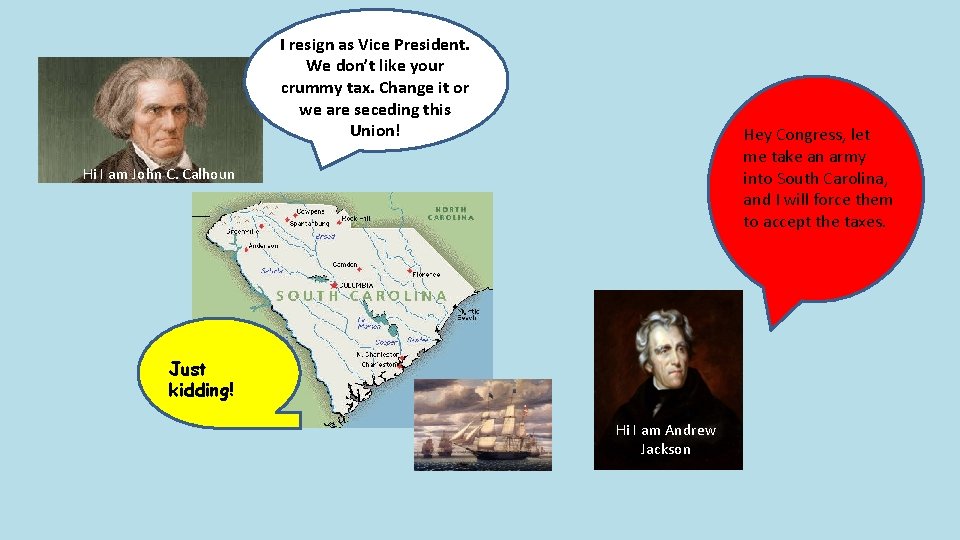
4. Nullification Crisis/Tariffs • The North supported high tariffs on goods imported from Great Britain. This made items made in the North cheaper than imported ones. • The South opposed this tariff because they bought many manufactured goods and they did not want to pay higher prices. • The Northern states dominated the House of Representatives in the 1830 s and voted to renew the tariff. South Carolina threatened to nullify the tariff or even secede from the union. * Nullification – Legal theory that states have a right to nullify, or invalidate, a law which that state viewed as unconstitutional.
I resign as Vice President. We don’t like your crummy tax. Change it or we are seceding this Union! Hey Congress, let me take an army into South Carolina, and I will force them to accept the taxes. Hi I am John C. Calhoun Just kidding! Hi I am Andrew Jackson
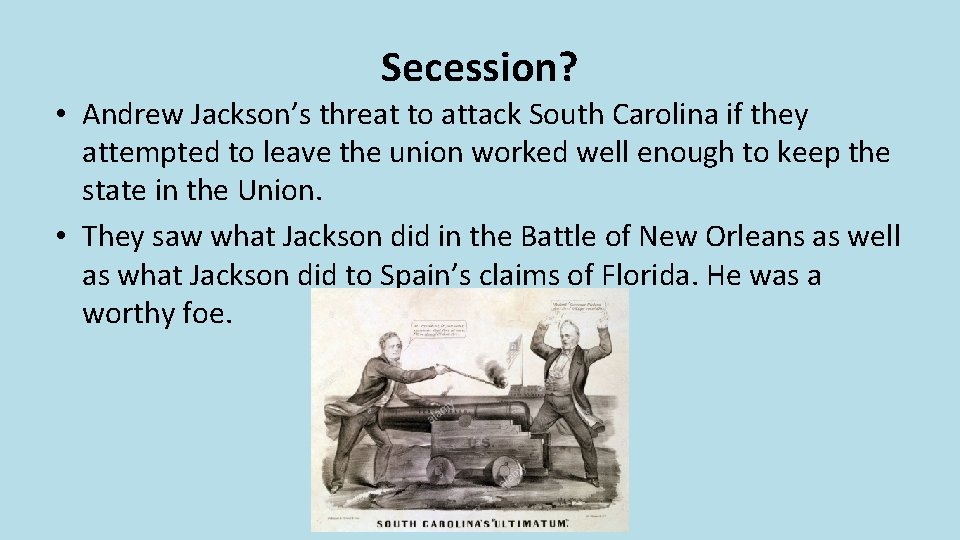
Secession? • Andrew Jackson’s threat to attack South Carolina if they attempted to leave the union worked well enough to keep the state in the Union. • They saw what Jackson did in the Battle of New Orleans as well as what Jackson did to Spain’s claims of Florida. He was a worthy foe.
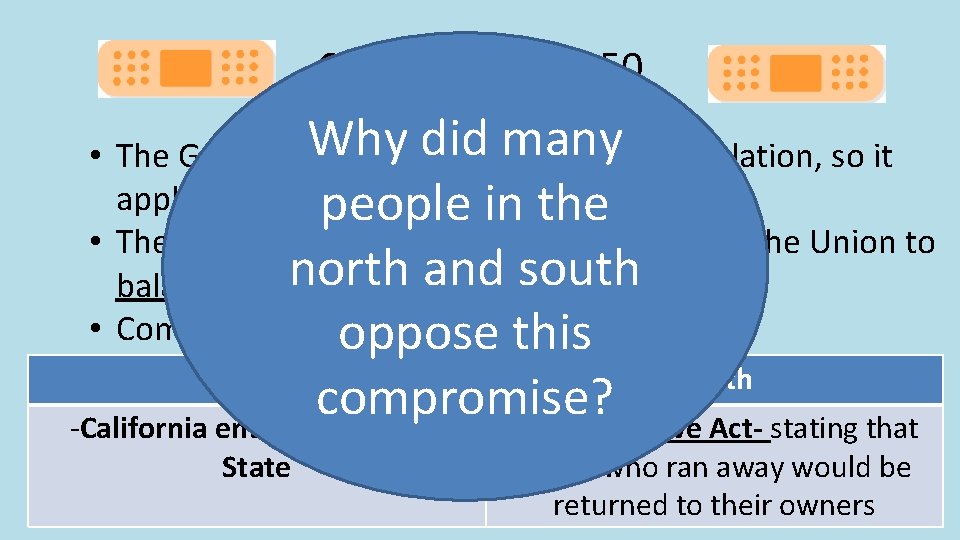
Compromise 1850 Why did. California’s many population, so it • The Gold Rush increased applied for statehood as ain free state. people the • There was no slave state available entering the Union to balance the north power ofand free vssouth slave states. • Compromise: oppose this North South State slaves who ran away would be returned to their owners compromise? -California entered as a Free -Fugitive Slave Act- stating that
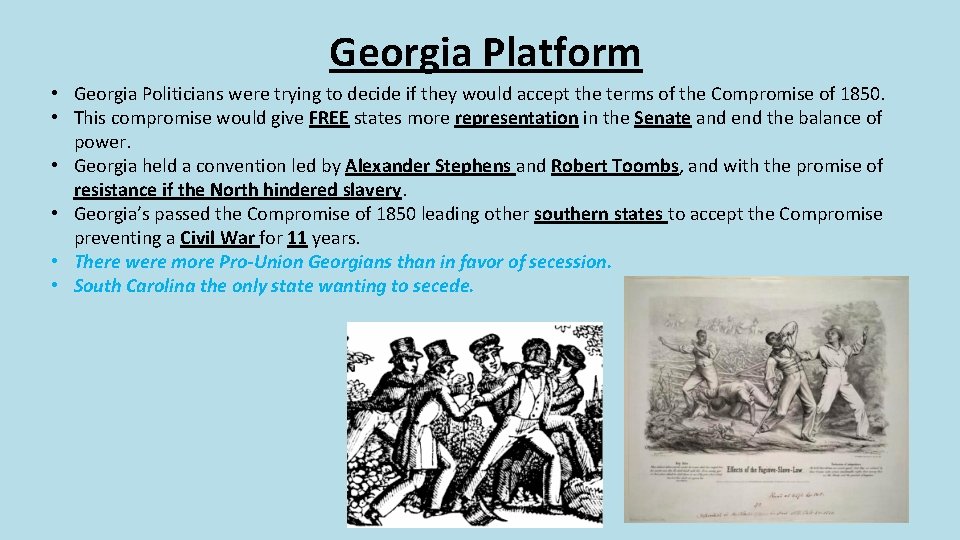
Georgia Platform • Georgia Politicians were trying to decide if they would accept the terms of the Compromise of 1850. • This compromise would give FREE states more representation in the Senate and end the balance of power. • Georgia held a convention led by Alexander Stephens and Robert Toombs, and with the promise of resistance if the North hindered slavery. • Georgia’s passed the Compromise of 1850 leading other southern states to accept the Compromise preventing a Civil War for 11 years. • There were more Pro-Union Georgians than in favor of secession. • South Carolina the only state wanting to secede.
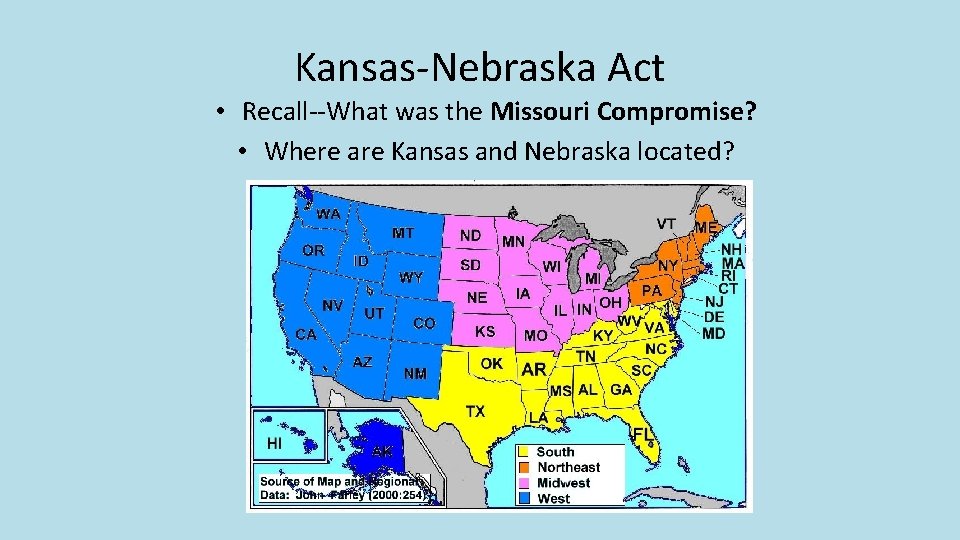
Kansas-Nebraska Act • Recall--What was the Missouri Compromise? • Where are Kansas and Nebraska located?
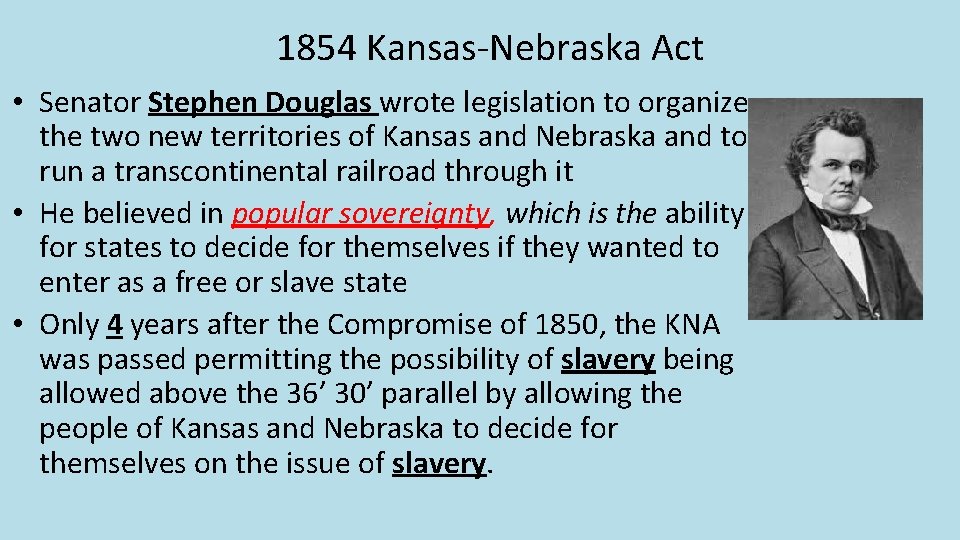
1854 Kansas-Nebraska Act • Senator Stephen Douglas wrote legislation to organize the two new territories of Kansas and Nebraska and to run a transcontinental railroad through it • He believed in popular sovereignty, which is the ability for states to decide for themselves if they wanted to enter as a free or slave state • Only 4 years after the Compromise of 1850, the KNA was passed permitting the possibility of slavery being allowed above the 36’ 30’ parallel by allowing the people of Kansas and Nebraska to decide for themselves on the issue of slavery.
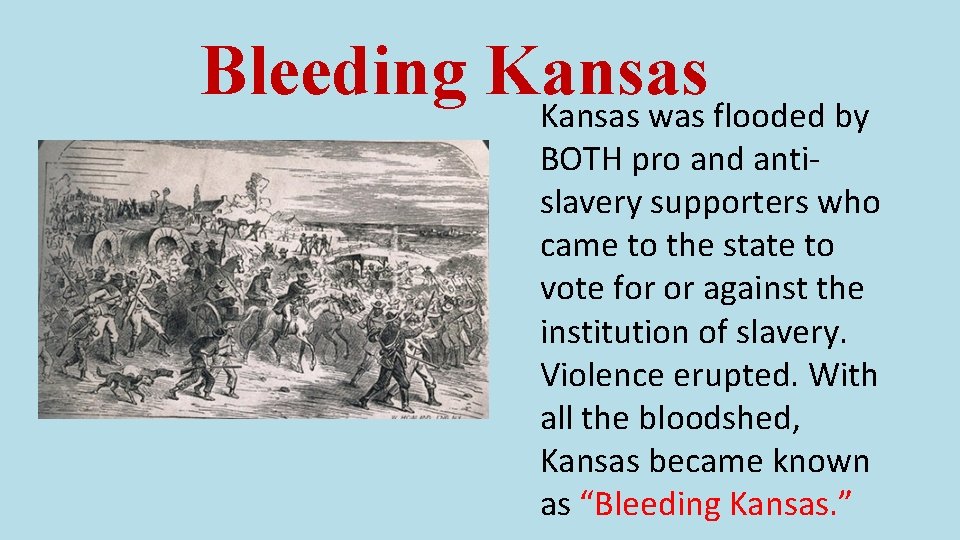
Bleeding Kansas was flooded by BOTH pro and antislavery supporters who came to the state to vote for or against the institution of slavery. Violence erupted. With all the bloodshed, Kansas became known as “Bleeding Kansas. ”
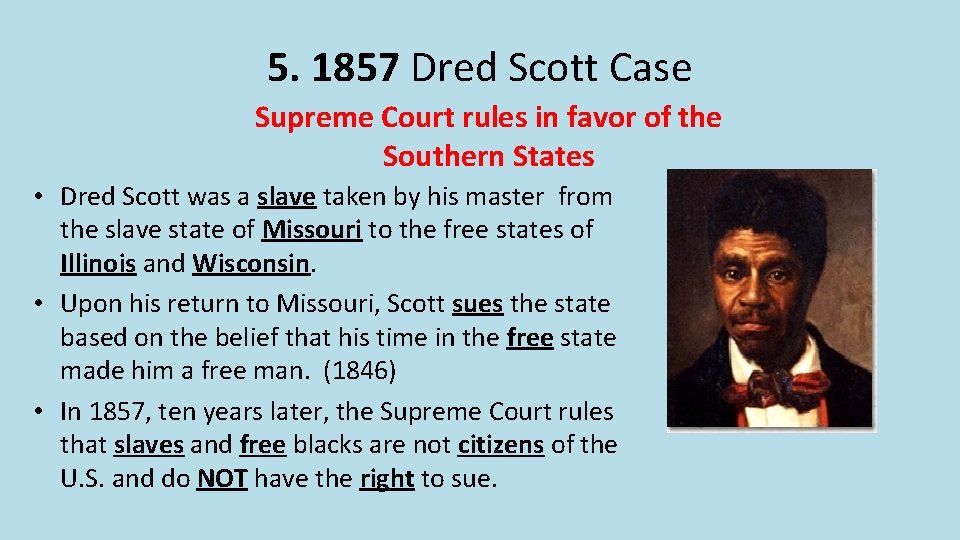
5. 1857 Dred Scott Case Supreme Court rules in favor of the Southern States • Dred Scott was a slave taken by his master from the slave state of Missouri to the free states of Illinois and Wisconsin. • Upon his return to Missouri, Scott sues the state based on the belief that his time in the free state made him a free man. (1846) • In 1857, ten years later, the Supreme Court rules that slaves and free blacks are not citizens of the U. S. and do NOT have the right to sue.
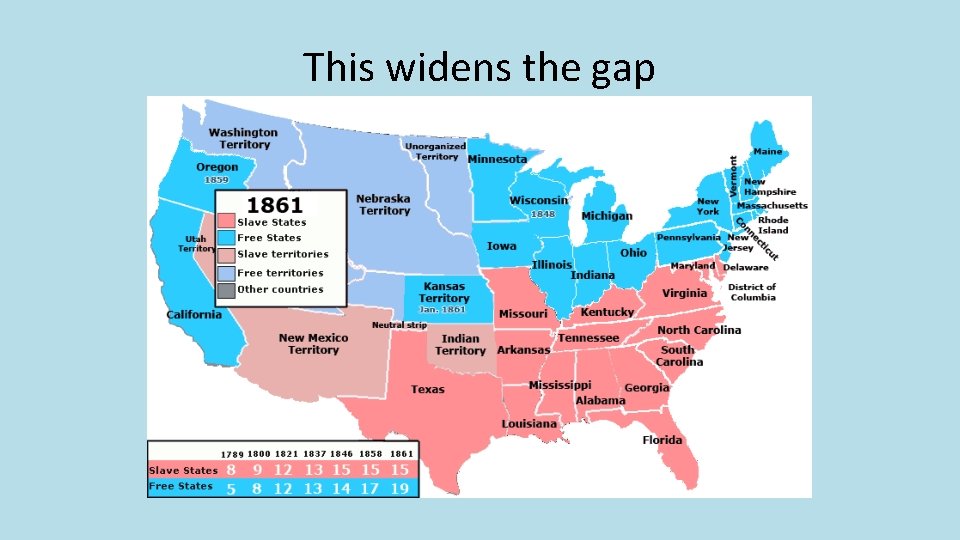
This widens the gap
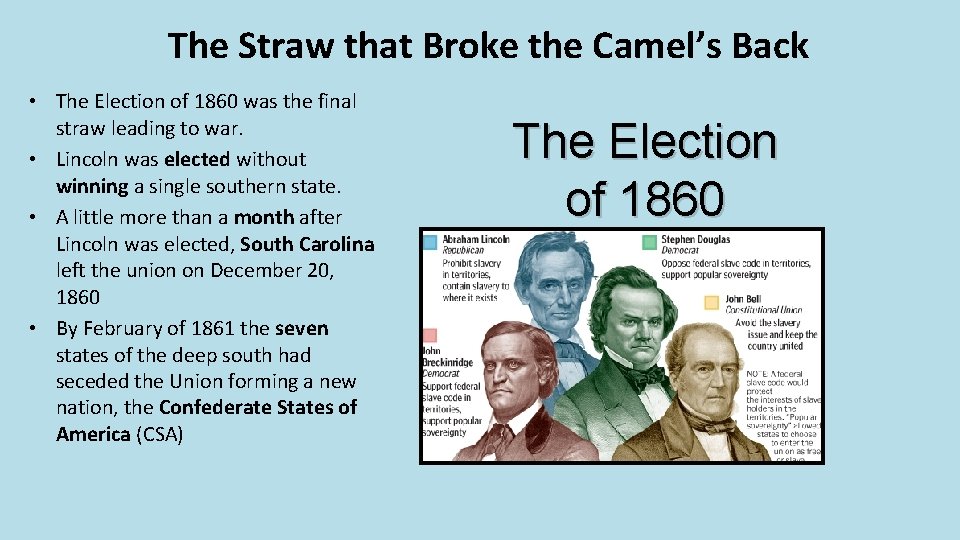
6. Election of 1860 • Due to the dramatic sectionalism tearing the country apart, four political parties emerged – Republican Party: free-soiler position – Northern Democratic Party: Popular Sovereignty – Southern Democratic Party: Extension of slavery into new territories – The Constitutional Union Party: Compromise to preserve the Union • This allowed for FOUR presidential candidates to run for office in 1860.
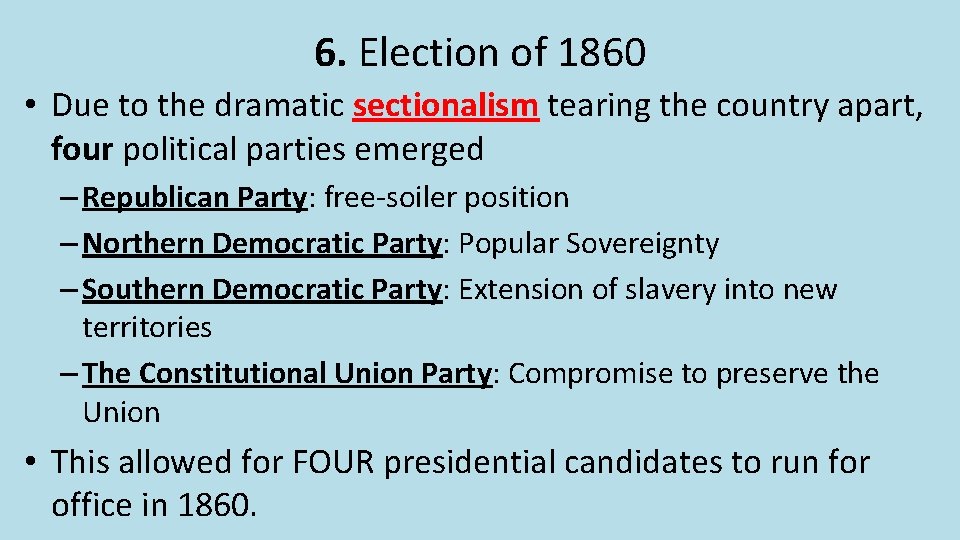
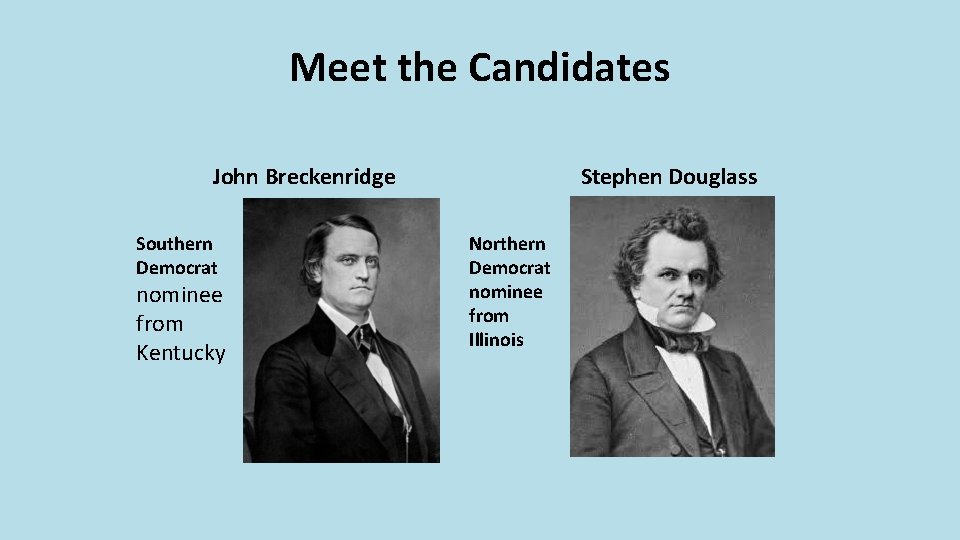
Meet the Candidates John Breckenridge Southern Democrat nominee from Kentucky Stephen Douglass Northern Democrat nominee from Illinois
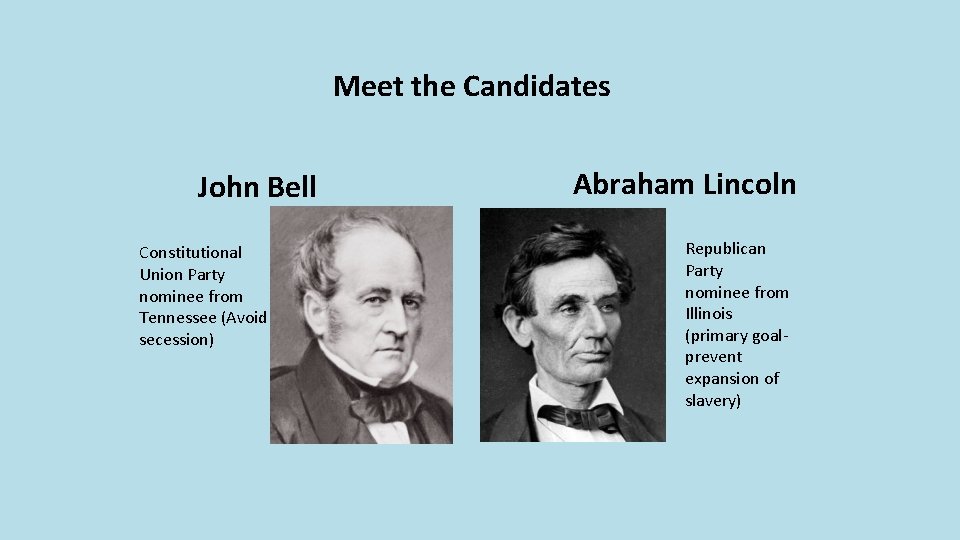
Meet the Candidates John Bell Constitutional Union Party nominee from Tennessee (Avoid secession) Abraham Lincoln Republican Party nominee from Illinois (primary goalprevent expansion of slavery)
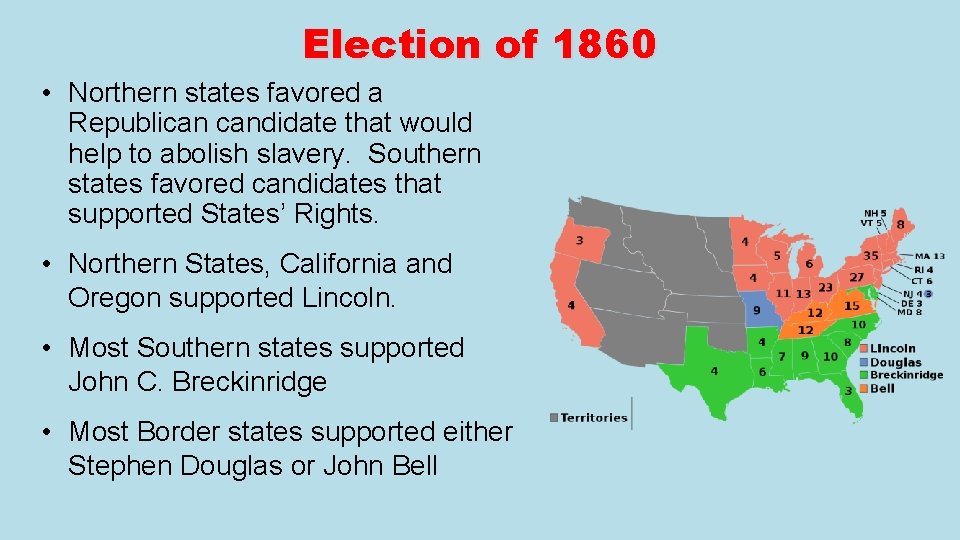
Election of 1860 • Northern states favored a Republican candidate that would help to abolish slavery. Southern states favored candidates that supported States’ Rights. • Northern States, California and Oregon supported Lincoln. • Most Southern states supported John C. Breckinridge • Most Border states supported either Stephen Douglas or John Bell
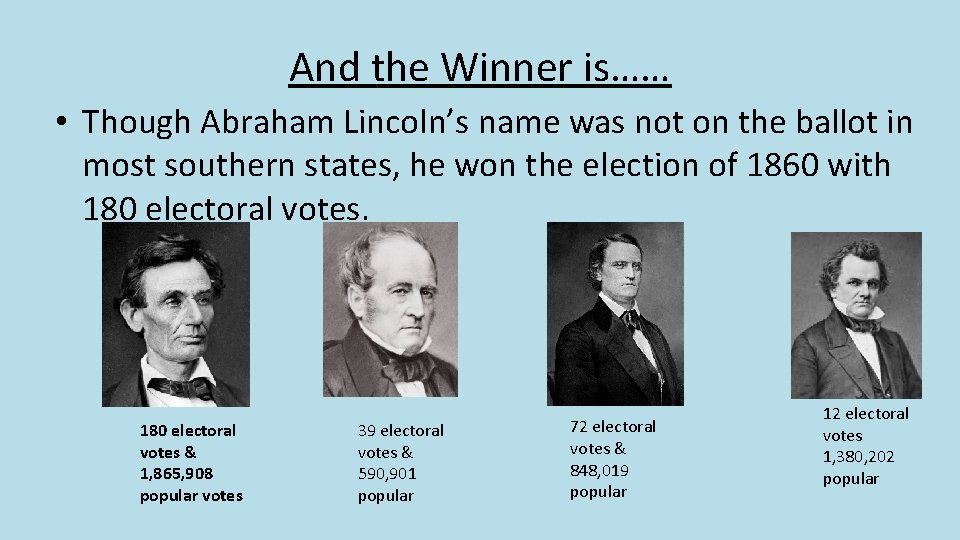
And the Winner is…… • Though Abraham Lincoln’s name was not on the ballot in most southern states, he won the election of 1860 with 180 electoral votes & 1, 865, 908 popular votes 39 electoral votes & 590, 901 popular 72 electoral votes & 848, 019 popular 12 electoral votes 1, 380, 202 popular
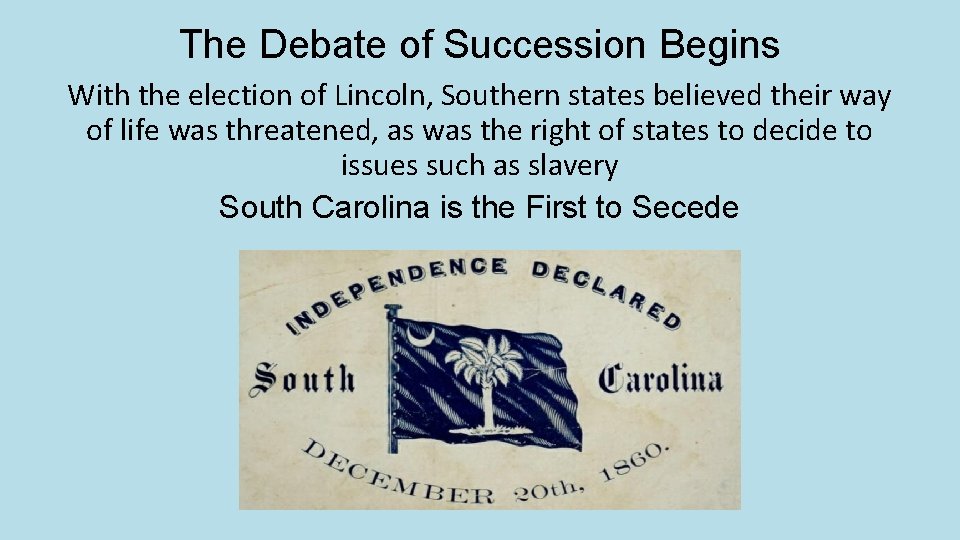
The Debate of Succession Begins With the election of Lincoln, Southern states believed their way of life was threatened, as was the right of states to decide to issues such as slavery South Carolina is the First to Secede
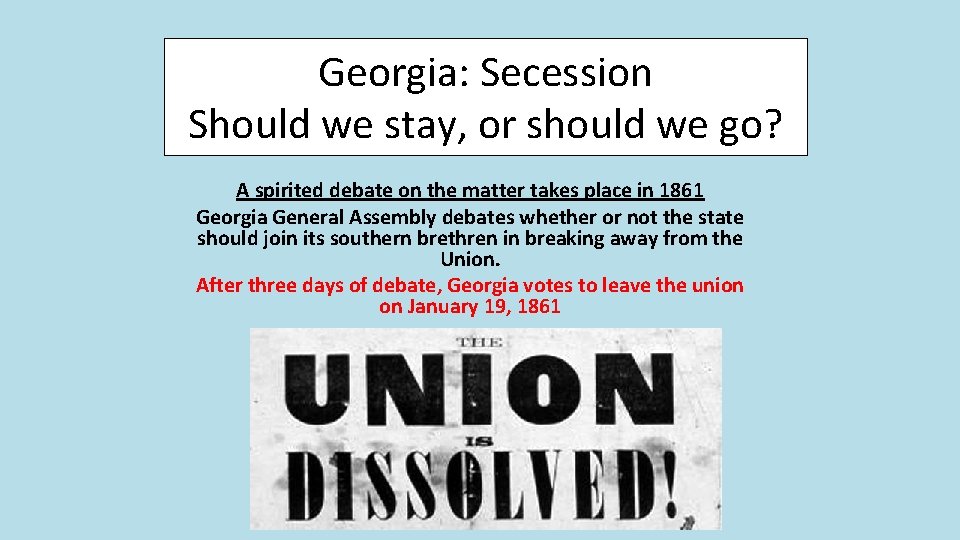
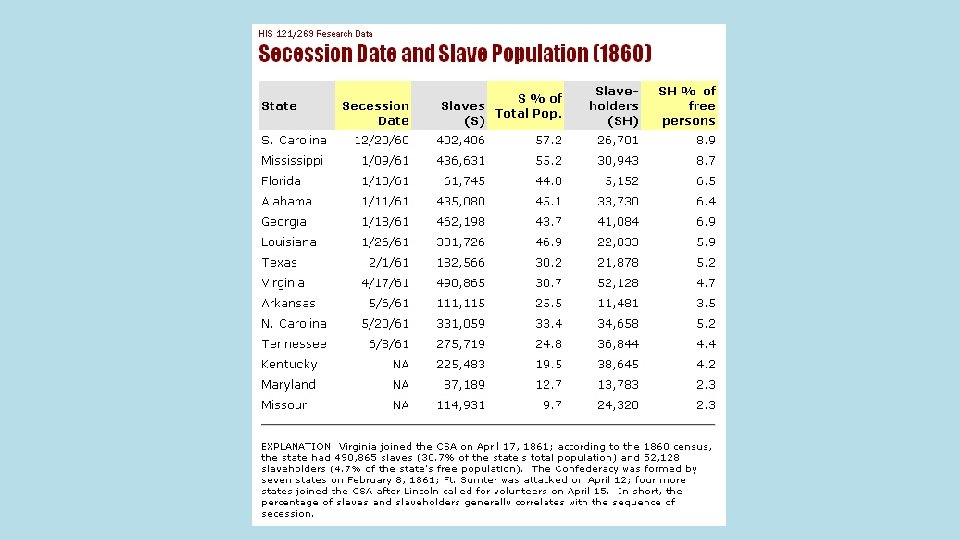
Georgia: Secession Should we stay, or should we go? A spirited debate on the matter takes place in 1861 Georgia General Assembly debates whether or not the state should join its southern brethren in breaking away from the Union. After three days of debate, Georgia votes to leave the union on January 19, 1861
Should I stay or should I go? Supporter of the Union Supporters of Secession! • Representatives from the northern counties • small farmers and non-slave holders wanted to stay. • Alexander Stephens gave an eloquent speech AGAINST secession. (89) • Those who had a social and economic stake in the institution of slavery , such as large farmers and slave holders, voted for secession. (208) • Gov. Joseph Brown • Robert Toombs (1 st Secretary of State) Secession wins the VOTE!!!! In the end the General Assembly voted 208 to 89 Georgia was part of the Confederacy from 1861 -1865.
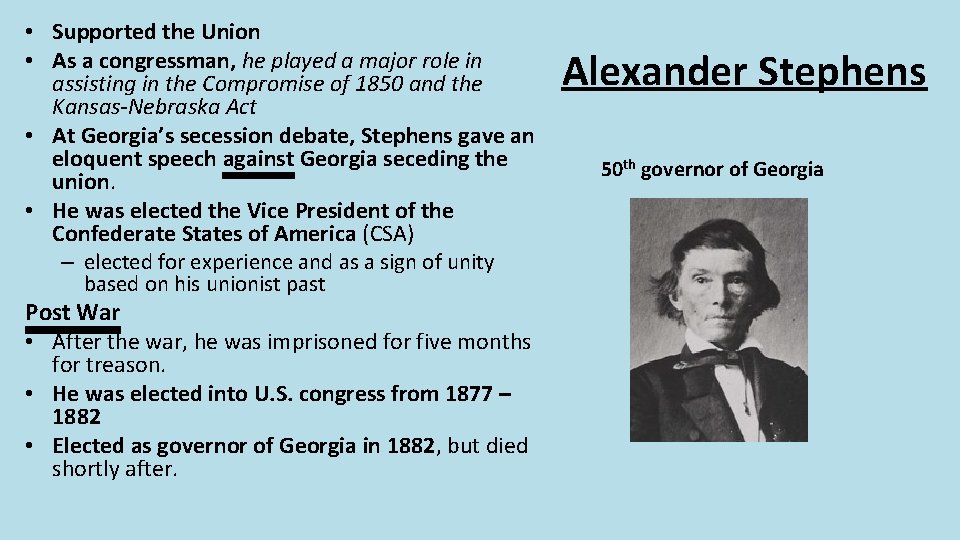
• Supported the Union • As a congressman, he played a major role in assisting in the Compromise of 1850 and the Kansas-Nebraska Act • At Georgia’s secession debate, Stephens gave an eloquent speech against Georgia seceding the union. • He was elected the Vice President of the Confederate States of America (CSA) – elected for experience and as a sign of unity based on his unionist past Post War • After the war, he was imprisoned for five months for treason. • He was elected into U. S. congress from 1877 – 1882 • Elected as governor of Georgia in 1882, but died shortly after. Alexander Stephens 50 th governor of Georgia
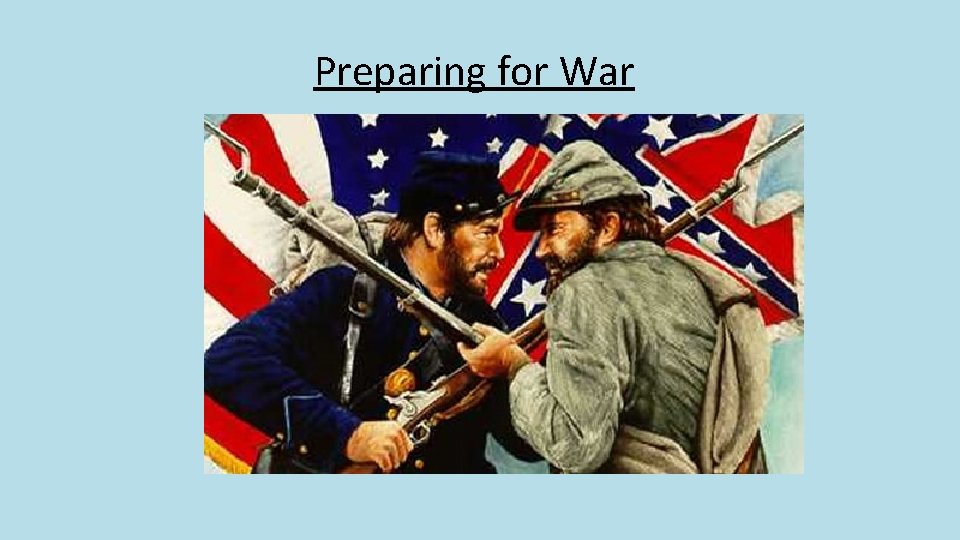
Preparing for War
The Straw that Broke the Camel’s Back • The Election of 1860 was the final straw leading to war. • Lincoln was elected without winning a single southern state. • A little more than a month after Lincoln was elected, South Carolina left the union on December 20, 1860 • By February of 1861 the seven states of the deep south had seceded the Union forming a new nation, the Confederate States of America (CSA) The Election of 1860
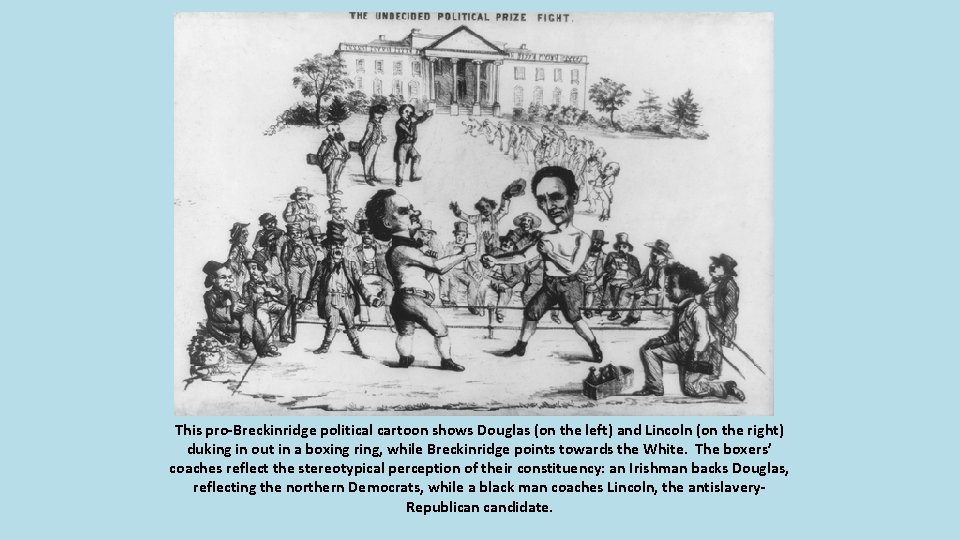
This pro-Breckinridge political cartoon shows Douglas (on the left) and Lincoln (on the right) duking in out in a boxing ring, while Breckinridge points towards the White. The boxers’ coaches reflect the stereotypical perception of their constituency: an Irishman backs Douglas, reflecting the northern Democrats, while a black man coaches Lincoln, the antislavery. Republican candidate.
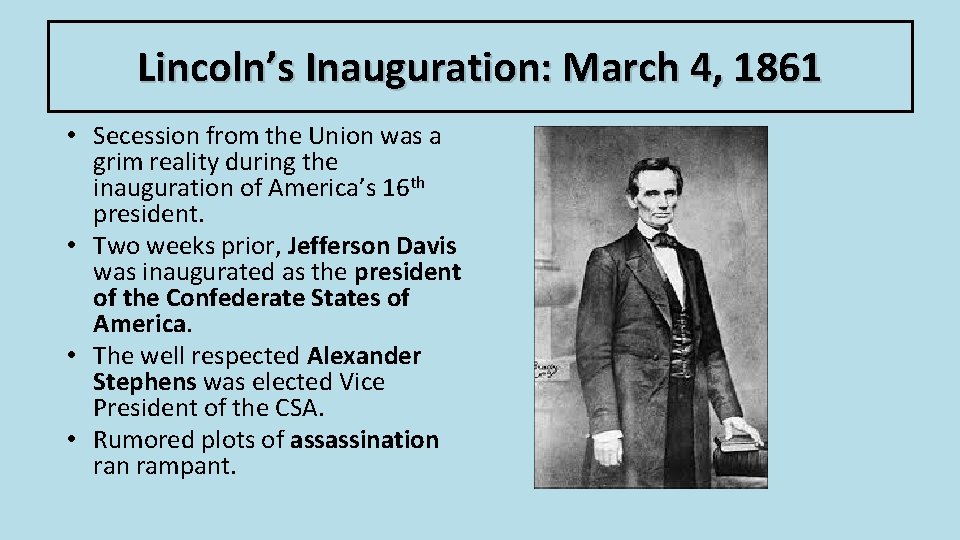
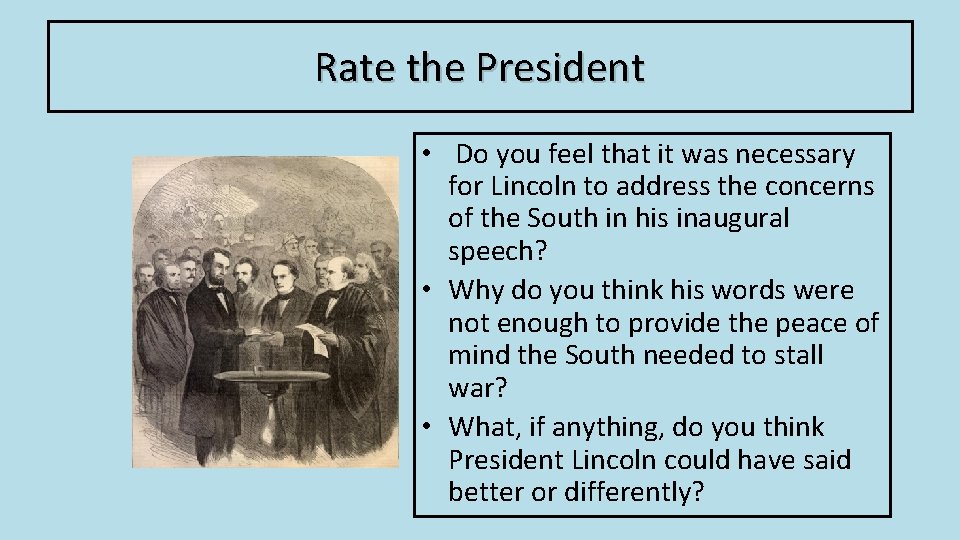
Lincoln’s Inauguration: March 4, 1861 • Secession from the Union was a grim reality during the inauguration of America’s 16 th president. • Two weeks prior, Jefferson Davis was inaugurated as the president of the Confederate States of America. • The well respected Alexander Stephens was elected Vice President of the CSA. • Rumored plots of assassination rampant.
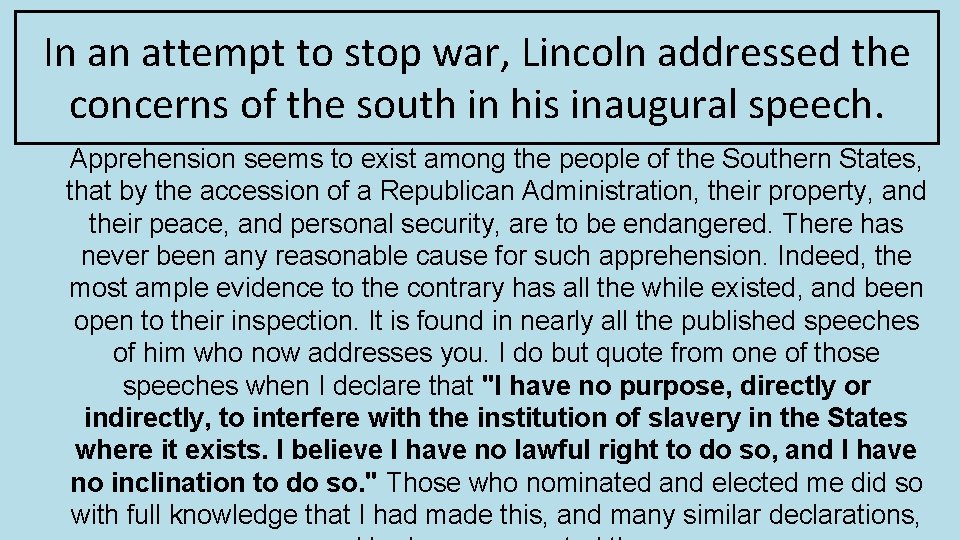
In an attempt to stop war, Lincoln addressed the concerns of the south in his inaugural speech. Apprehension seems to exist among the people of the Southern States, that by the accession of a Republican Administration, their property, and their peace, and personal security, are to be endangered. There has never been any reasonable cause for such apprehension. Indeed, the most ample evidence to the contrary has all the while existed, and been open to their inspection. It is found in nearly all the published speeches of him who now addresses you. I do but quote from one of those speeches when I declare that "I have no purpose, directly or indirectly, to interfere with the institution of slavery in the States where it exists. I believe I have no lawful right to do so, and I have no inclination to do so. " Those who nominated and elected me did so with full knowledge that I had made this, and many similar declarations,
Rate the President • Do you feel that it was necessary for Lincoln to address the concerns of the South in his inaugural speech? • Why do you think his words were not enough to provide the peace of mind the South needed to stall war? • What, if anything, do you think President Lincoln could have said better or differently?
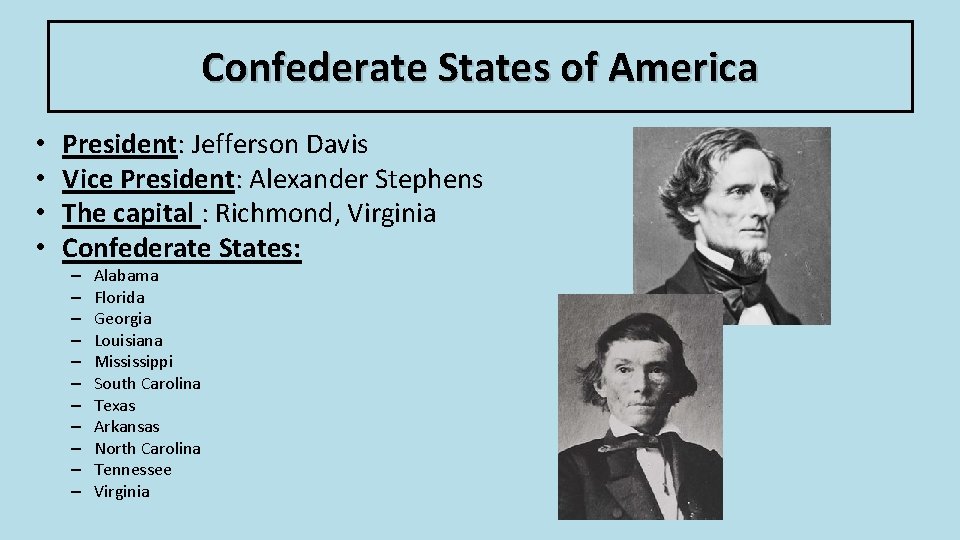
Confederate States of America • • President: Jefferson Davis Vice President: Alexander Stephens The capital : Richmond, Virginia Confederate States: – – – Alabama Florida Georgia Louisiana Mississippi South Carolina Texas Arkansas North Carolina Tennessee Virginia
“The new [Confederate] Constitution has set at rest for ever all agitating questions relating to our peculiar institution—African slavery as it exists among us—the proper state of the negro in our form of civilization. ” Alexander Stephens Quit as U. S. Senator, Became Vice-President, Confederate States of America March 21, 1861
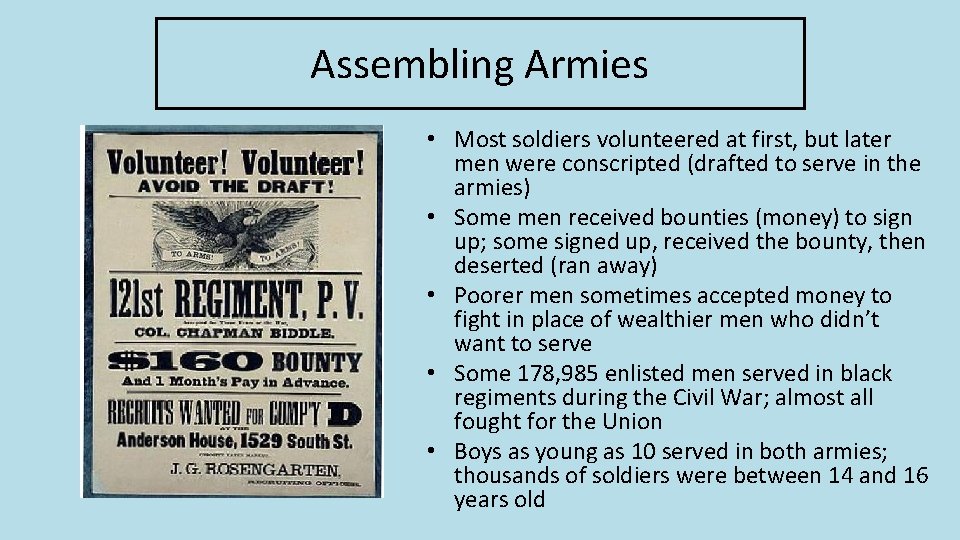
Assembling Armies • Most soldiers volunteered at first, but later men were conscripted (drafted to serve in the armies) • Some men received bounties (money) to sign up; some signed up, received the bounty, then deserted (ran away) • Poorer men sometimes accepted money to fight in place of wealthier men who didn’t want to serve • Some 178, 985 enlisted men served in black regiments during the Civil War; almost all fought for the Union • Boys as young as 10 served in both armies; thousands of soldiers were between 14 and 16 years old
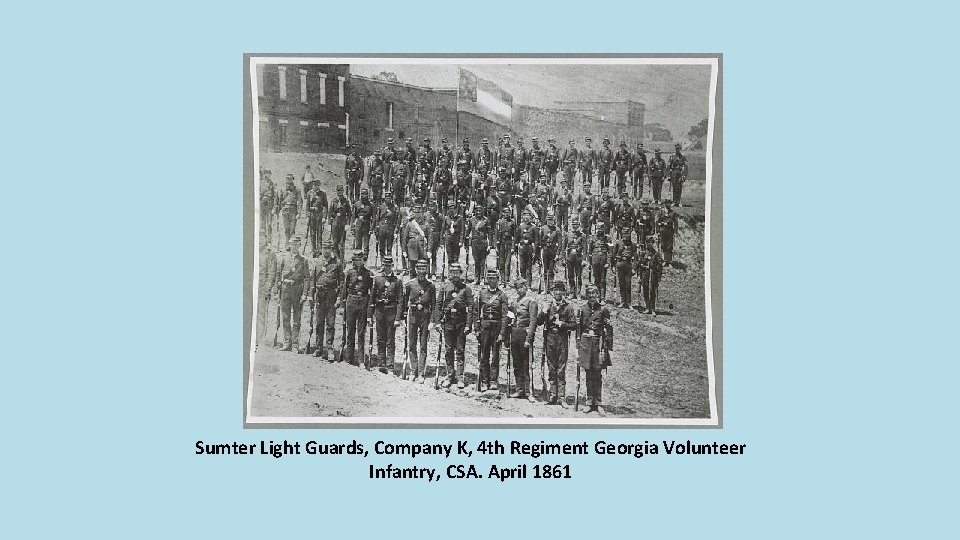
Sumter Light Guards, Company K, 4 th Regiment Georgia Volunteer Infantry, CSA. April 1861
Advantages of Each Side Northern Advantages Southern Advantages • North had more people from which to create and resupply armies • more factories • better railroad system • most of the nation’s food growing farms • wealth • South had more experienced military leaders • highly motivated to defend their homeland • Wanted to win independence. • Most Southern farms were used to grow cash crops (cotton, etc. ), so trade (cotton for weapons/supplies) was very important to the South
Southern War Tactics • Wear down the Union armies, which would hasten the northerners’ desire to end the war • Use swift raiders (small, fast ships) to help break the Union blockade • King Cotton Diplomacy: Convince France and England to help the Confederacy by stopping the export of Cotton to these countries. • (Britain and France were able to buying cotton from Egypt)