
Causes of the American Revolution Montesquieu John Locke
- Slides: 43
Causes of the American Revolution
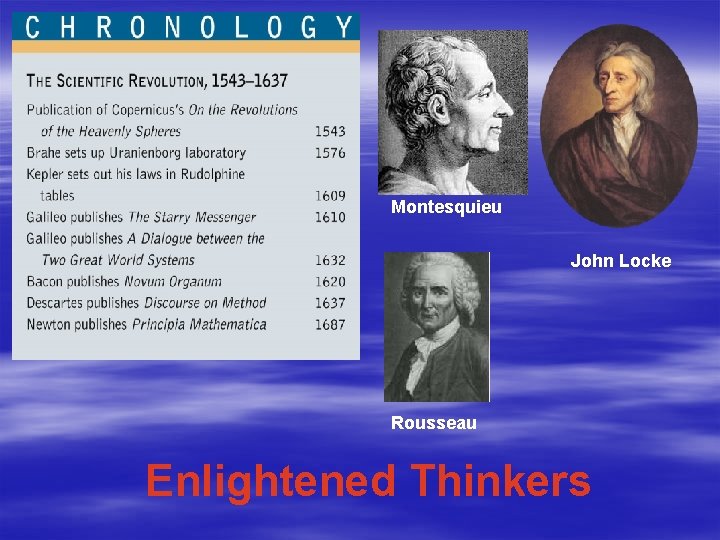
Montesquieu John Locke Rousseau Enlightened Thinkers
Salutary Neglect § Period of neglect ØQueen Anne died in 1714—no children, or brothers or sisters ØGeorge I (German) nearest relative ØKnows nothing of England ØAccepts kingship & lets Parliament run country ØThey lined their own pockets (neglected their job) ØGeorge I dies 1732 ØGeorge II dies 1760
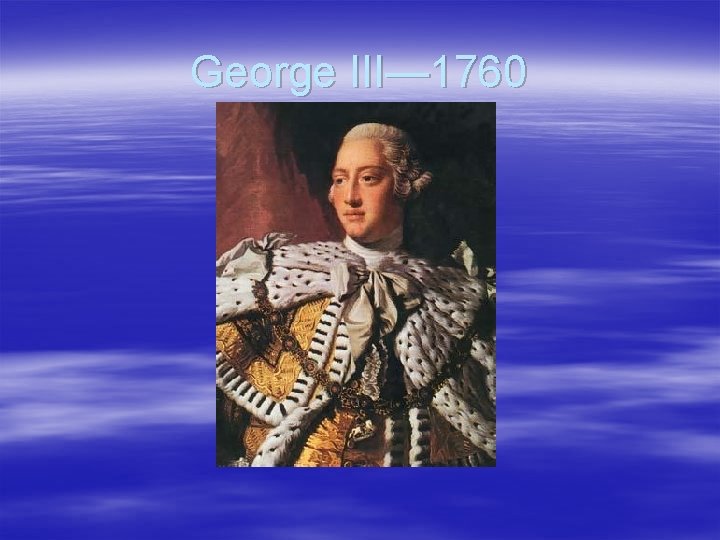
George III— 1760
George III— 1760 § § Prepared, sat in on Parliament, Strong King 1 st duty—End war W/ France King will run affairs not Parliament By 1763 all political power comes from king
French & Indian War Seven Years War § Who will control Ohio Valley § Albany Conference 1754 Iroquois Nation remains neutral in conflict § 1763—War ends, English victory § Treaty does NOT allow English colonists past Appalachian mountains—Proclamation Line of 1763 § Sound decision—colonists had NO protection
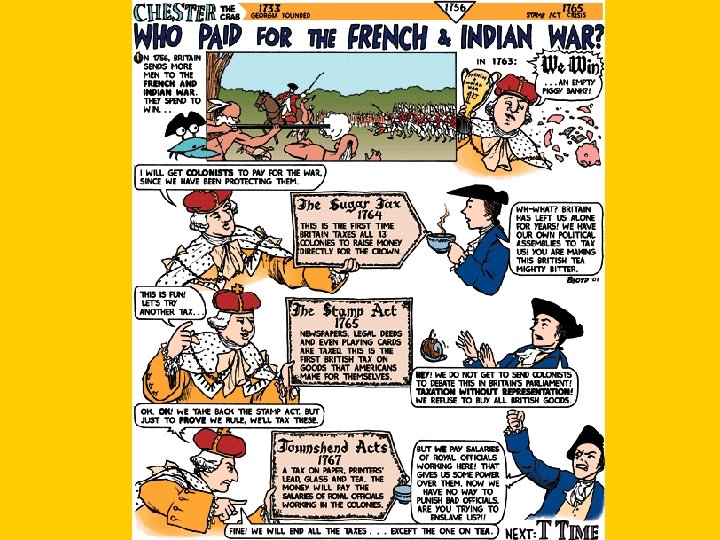
Sugar Act of 1764 Tax on sugar and coffee which caused much protest since the colonists did not have the opportunity to vote on these new taxes. .
Stamp Act of 1765 § Tax on all printed items – newspapers, licenses, building permits, documents, ect.
Stamp Act Congress. October 1765 § The first time that the colonists’ (not all colonies sent representatives) came together to protest England’s taxes was at the Stamp Act Congress. October 1765 § 1. ) Main idea was to demand that King George should repeal taxes imposed since French and Indian War. 2. ) Also, complaint of taxation without representation is born here.
Stirrings in the House of Burgesses § Patrick Henry was the American orator who urged colonists to take up arms against the British, proclaiming, "I know not what course others may take; but as for me. . . give me liberty or give me death!" - In the House of Burgesses
Who Said it first? § Patrick Henry's resolutions in the Virginia legislature implied that Americans possessed all the rights of Englishmen; that the principle of no taxation without representation was an essential part of the British Constitution; and that Virginia alone enjoyed the right to tax Virginians.
Or, was it James Otis who said it first? § By 1765 the term "no taxation without representation" was in use in Boston, but no one is sure who first used it. Boston politician James Otis was most famously associated with the phrase, "taxation without representation is tyranny. "
Declaratory Act of 1766 § Repealed Stamp Act but said that Parliament could pass laws because colonies were subordinate to England. § This was done because of all of the protest by the colonists. The king just wanted to end the controversy and set himself up for success under the next round of taxes.
Townshend Acts of 1767 § Taxes on lead, glass, paint, paper, tea, building supplies and other products. § The King will repeal most of these taxes as well.
Sons of Liberty § Revolutionary Organization who drill in military units for “home defense. ” § Sam Adams & James Otis leaders § Masters of propaganda § Use violence to get your point across § Tar and feathered tax collectors § Set up boycotts of taxable goods
What’s going on!!!! § § § Who has authority to make tax law? Popular sovereignty vs. Royal sovereignty Stamp & Townsend Acts—Colonists not opposed to taxation—just want a say in it § George III repealed both—he did not have to do so, but he did because it was the right thing to do under the English Bill of Rights.
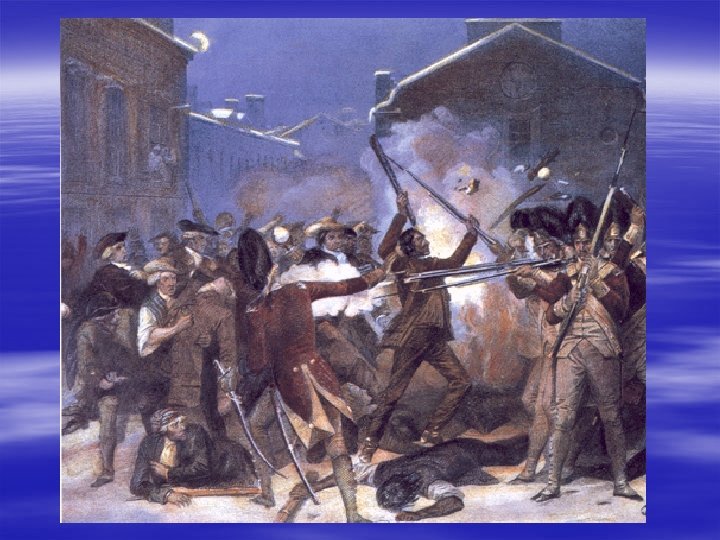
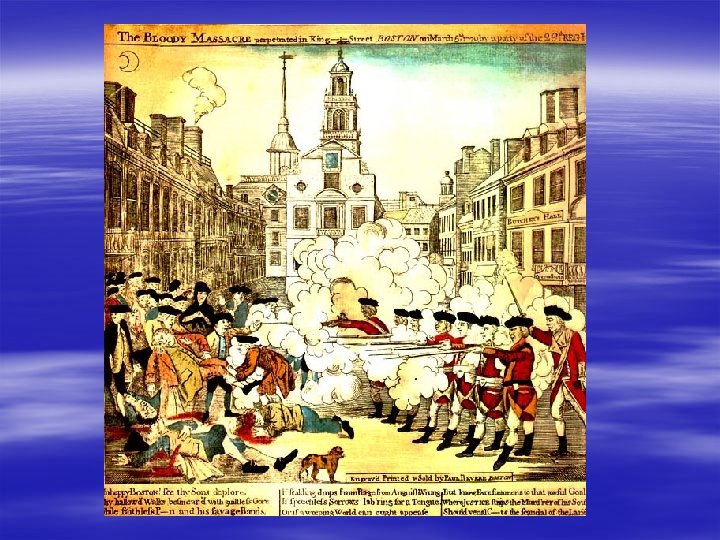
Boston Massacre § March 1770—British troops stationed in Boston § Crowd gathers around army § Snowballs w/rocks thrown at soldiers § Shots fired— 5 civilians dead, 8 wounded § Crispus Attucks 1 st to die
Boston Massacre § Citizens of Boston furious. Sons of Liberty fuel the flames § English repeal Townshend Acts (except tax on tea) § Soldiers go on trial § John Adams represents British soldiers § Wins case § Boston quiet for next 3 years
A new tax on tea § Tea Act of 1773 - East India Company was the only company that had the right to sell tea in the colonies. § This act led to a rise of coffee drinking in the colonies.
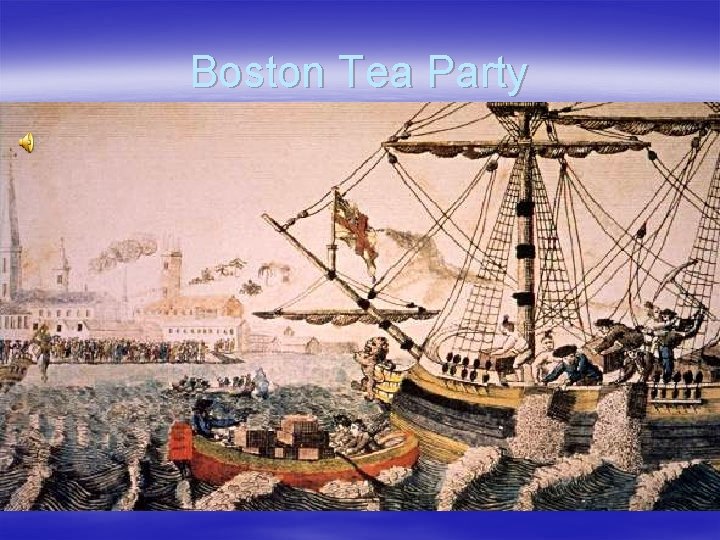
Boston Tea Party
Boston Tea Party: 1773 § § § § Tax has to be paid on tea prior to it being sold Any tea not sold in 20 days, becomes property of British gov’t Ship arrives in Boston port, Sons of Liberty will not let it unload Sons of Liberty, dressed as Indians, decides to destroy tea rather than allow it to become British property The ships captain has insurance; no loss to him No property other than tea damaged Other tea parties took place in other colonies. Charles Town, for example, confiscated tea rather than dump it.
Coercive Acts Intolerable Acts § Enforce British will, punish colonies § June 1 st 1774—Boston closed until tea paid for § Raise troop strength to 10, 000 § Troops quartered in private homes until barracks can be built (at towns expense) § All trials would be held in England
Burning of the HMS Gaspee § British tax collecting ship burned in Rhode Island by colonists protesting taxes and the intolerable Acts.
First Continental Congress – September 1774. § Representatives from several colonies (not all colonies sent representation) came together in Philadelphia to: 1. ) Discuss aid and support for the people of Boston and 2. ) To demand that the king and Parliament repeal all taxes imposed since the French and Indian War.
Lexington & Concord § On April 15, 1775, The royal governor of Massachusetts, General Thomas Gage, ordered 700 British soldiers, to seize the colonists' military stores in Concord § Troops led by Lieutenant Colonel Francis Smith and Marine Major John Pitcairn
Paul Revere § § § Sons of Liberty prepared for British offensive Posted guards along route to Concord “ 1 if by land, 2 by sea” Boston steeple April 17, signal in steeple Paul Revere & William Dawes warn the town “British are coming” § Revere gets arrested § Dr. Samuel Prescott makes it all the way to Concord
The first day of the war § § § Major Pitcairn leads his men to Lexington 3 dozen Minutemen are waiting Shots fired!!!!!!!— 8 killed Minutemen fall back British march to Concord—no weapons found March back to Boston—minutemen hit and run tactics— 250 British killed, 90 colonists § WAR HAS BEGUN
2 nd Continental Congress § Began to meet in May 1775, in Philadelphia § Became the official government of colonies 1. Seek military alliances—Ben Franklin 2. Build army 3. Select military leader—Washington or Horatio Gates 4. Fight for Dominion Status
Common Sense § Written by Thomas Paine and published in Jan. 1776 while delegates were gathered in Philadelphia as the Second Continental Congress. § Sold 100, 000 copies § Attacked King George III (Tyrant) § Urged colonists to declare Independence
Second Continental Congress § The best known and wealthiest men from all the colonies came together – George Washington, Thomas Jefferson, Benjamin Franklin, John Adams, Samuel Adams, John Hancock and others to demand repeal of taxes. § Named Geo. Washington to General and sent him to Massachusetts § After a few battles and skirmishes around Boston, many representatives changed idea from repeal of taxes to revolution. § Committee is formed to draft a declaration of causes – J. Adams, B. Franklin, T. Jefferson, Roger Sherman and Robert Livingston § The Declaration of Independence was primarily written by Thomas Jefferson. Heavily influenced by Thomas Paine – Common Sense – it was ratified – approved of on July 2, officially approved on July 4, 1776. § Final copy was signed on parchment paper August 2, 1776.
Declaration of Independence An Enlightened Document § Ben Franklin, Thomas Jefferson, John Adams § Purpose—We want the rest of the world to accept U. S. § 1 st sentence lays out the case for Independence § 2 nd section—Preamble—What is government’s job —All men are created equal § 3 rd section—Indictments—what the King of England did against natural rights § 4 th section—Separation dissolves the bond with England
Americans § § 3 million people living in N. America 1/3 rd pro-British Loyalists (Tories) 1/3 rd apathetic-did not care 1/3 rd Patriots
Reasons why some people were against the American Revolution § Fear of the most powerful nation on the Earth § Loyalty to England § Monetary consequences § Fear that we needed England for protection § Some people felt that England’s taxes were justifiable
War § Saratoga Oct. 1777, Turning Point in War § Generals: Major General John Burgoyne commanded the British and German force. Major General Horatio Gates and Brigadier Benedict Arnold commanded the American army § 2, 000 American soldiers at Saratoga § British pincher movement—Phil. , Buffalo, Canada—trap Americans § British plan falls apart § Battle begins— Gates retreats--Col. Benedict Arnold leads troops to victory—HERO § Turning point of war § 1 st major victory § Franklin in France—Alliance
§ § § § British move war to the South—Tories Start in Georgia head north VICTORIES ALONG COAST Lord Cornwallis—British commander Take Savannah, Charleston, moves inland takes Camden Horatio Gates—American leader in south, FIRED Nathaniel Green sets up army in Western SC Francis Marion, Daniel Morgan, Sharpshooters America controls the west, Cowpens, Kings Mountain, Guilford Courthouse (reading)
§ British on the run, headed north § Cornwallis heads to coast—Yorktown, wait for ships to pick up his men § Nate Green from south, Washington from north, France at sea § TRAPPED § October, 1781 British Surrender § Treaty of Paris—September 3, 1783
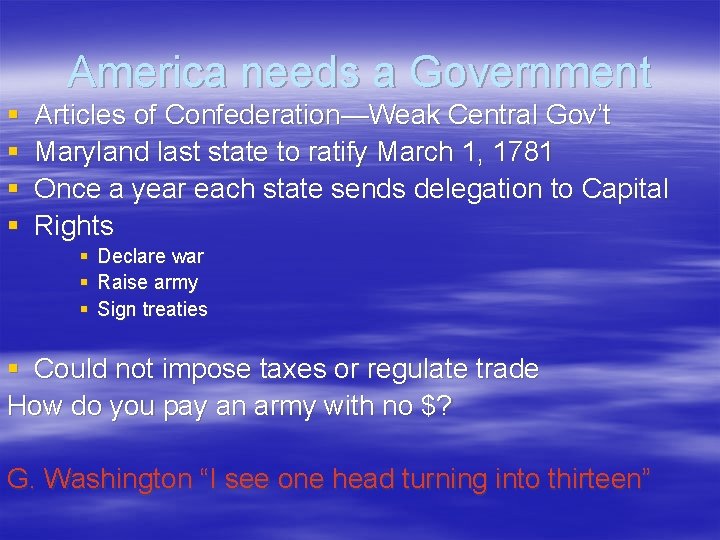
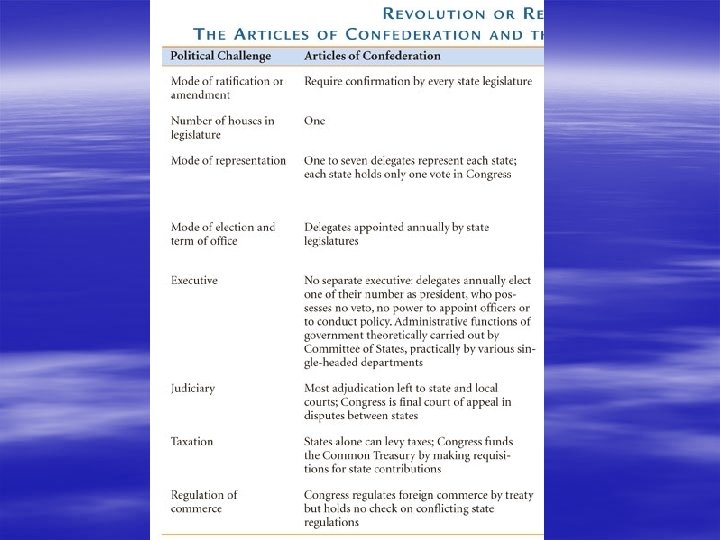
America needs a Government § § Articles of Confederation—Weak Central Gov’t Maryland last state to ratify March 1, 1781 Once a year each state sends delegation to Capital Rights § § § Declare war Raise army Sign treaties § Could not impose taxes or regulate trade How do you pay an army with no $? G. Washington “I see one head turning into thirteen”
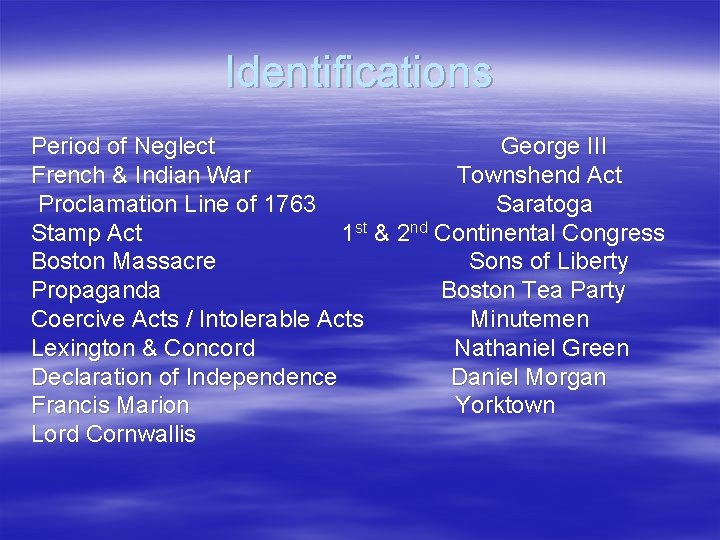
Identifications Period of Neglect George III French & Indian War Townshend Act Proclamation Line of 1763 Saratoga Stamp Act 1 st & 2 nd Continental Congress Boston Massacre Sons of Liberty Propaganda Boston Tea Party Coercive Acts / Intolerable Acts Minutemen Lexington & Concord Nathaniel Green Declaration of Independence Daniel Morgan Francis Marion Yorktown Lord Cornwallis