
Causes of the American Revolution Key Concept 3
- Slides: 11
Causes of the American Revolution
Key Concept 3. 1 British attempts to assert tighter control over its North American colonies and the colonial resolve to pursue selfgovernment led to a colonial independence movement and the Revolutionary War.
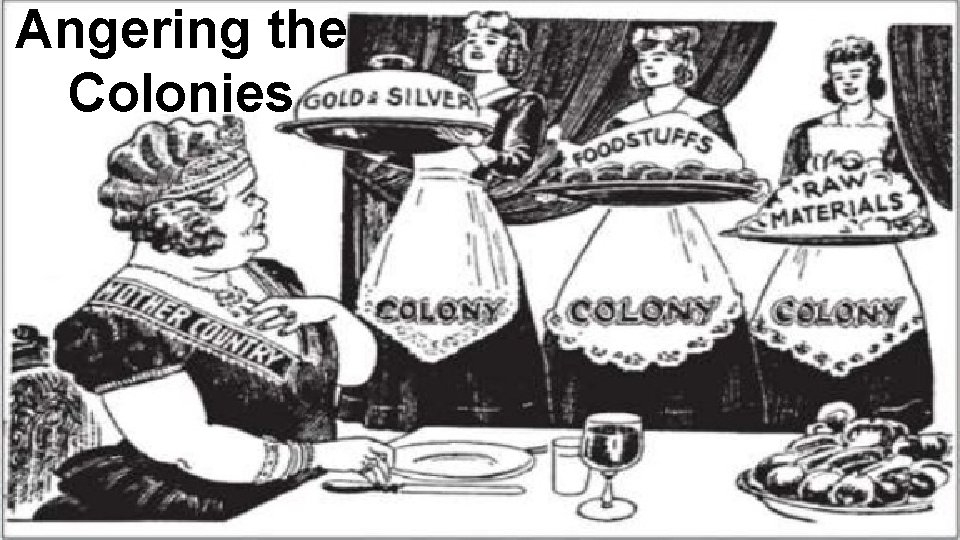
Angering the Colonies
Navigation Acts The Navigation Acts were a series of laws that required the colonies to only trade with Britain The British government practiced salutary neglect, turning a blind eye towards the colonies going against the Navigation Acts to allow them to economically grow Salutary neglect was practiced for many years, suddenly reinforced due to growing tensions with France Writs of Assistance – Gave customs agents permission to search American vessels for smuggled goods
Britain’s Multiple Acts The British government imposed multiple taxes on the colonies through the following acts: Sugar Act – Tax on sugar Stamp Act – Tax on paper goods Townshend Act – Tax on building goods Tea Act – Lowered tax on tea, but the colonists could only purchase British tea The British passed other laws that angered the colonists Molasses Act – Required colonists to buy sugar and molasses from the British, not the French Declaratory Act – Repealed Sugar Act and reaffirms power of the British king Intolerable Acts – Closes the port of Boston and allowed the French to not pay taxes that would go to the Church of England, not their church
Separation America was very separated from the mother country Physical separation led to support for republicanism and self rule Economically: Felt used under mercantilism England was benefiting from the colonies’ labor Colonial money wasn’t accepted for taxes – Not good enough for Britain Philosophy: The ideals of Enlightenment
“Representation” Stamp Act Congress – First intercolonial conference to discuss actions that should be taken against the king “No taxation without representation” Virtual Representation – The Colonies were represented by parliament members who “had the colonies’ interests in mind”
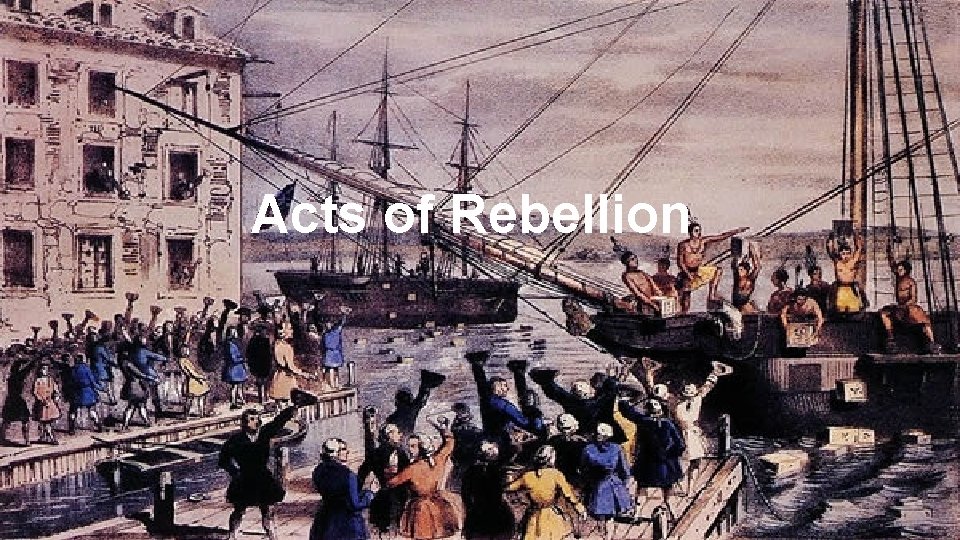
Acts of Rebellion
Proclamation of 1763 Drew the line across the Appalachian Mountains which was not to be passed by the colonists Angered colonists because: They were being unallowed to gain the land they had just fought for The British government was favoring the Indians over the colonists Colonists ignored this and traversed the Appalachian Mountains; First act of rebellion against the British government
Children of Liberty The Sons of Liberty was a group lead by Samuel Adams that used violently enforced boycotts Massachusetts Circular Letter and Committees of Correspondence were both created in order to organize acts of resistance Massachusetts Circular Letter was founded by Samuel Adams The Daughters of Liberty encouraged domestic forms of boycotting (using home-made goods to avoid British taxes)
Boston Tea Party Sons of Liberty disguised themselves as an Indian tribe They boarded a trade vessel and dumped large amounts of tea in to the ocean Resulted in the closing of the Boston Port and martial law to be enacted