
Causes of sudden and unexpected death Cardiovascular system
- Slides: 36
Causes of sudden and unexpected death • • Cardiovascular system • Respiratory system • Gastrointestinal system • Gynaecological conditions • Deaths from asthma and epilepsy • • In England Wales, doctors should only issue a • death certificate if they are satisfied that they know the cause of death and that it is definitely due to natural causes;
The World Health Organization (WHO) • definition of a sudden death is within 24 hours of the onset of symptoms, but in forensic practice most sudden deaths occur within minutes or even seconds of the onset of symptoms. It is crucial to remember that a sudden death • is not necessarily unexpected an unexpected death is not necessarily sudden, but these two facets are often combined. •
CAUSES OF SUDDEN AND UNEXPECTED DEATH • When a natural death is very rapid, the cause is almost • inevitably cardiovascular. • CARDIOVASCULAR SYSTEM • • CORONARY ARTERY DISEASE • Coronary stenosis from narrowing of the lumen by • atheroma may lead to chronic ischaemia of the muscle supplied by that coronary vessel. • If the myocardium becomes ischaemic, it may also become • electrically unstable and liable to develop arrhythmias. •
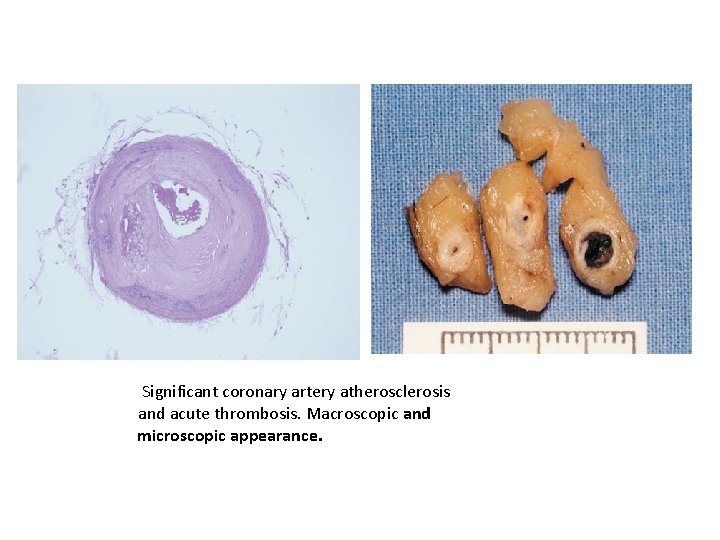
Significant coronary artery atherosclerosis and acute thrombosis. Macroscopic and microscopic appearance.
Complications of atheromatous plaques may worsen the • coronary stenosis and subsequent myocardial ischaemia. • Bleeding may occur into a plaque and this can be seen as • subintimal haemorrhage at autopsy. • Sudden expansion of the plaque may lead to rupture, • which may also occur if the plaque ulcerates • An atheromatous plaque is a site for the development of • mural thrombus, which will further reduce the vessel lumen without necessarily fully blocking the vessel. •
Coronary thrombosis is commonly over- • diagnosed by clinicians as a cause of sudden death, and less than one-third of sudden cardiac deaths reveal macroscopic or microscopic evidence of coronary thrombus at autopsy. The simple stenosis and the complications of • atheroma are both sufficient to cause death and much more common. • Myocardial infarction occurs when there is severe • stenosis or complete occlusion of a coronary artery so that the blood supply is insufficient to maintain the oxygenation of the myocardium.
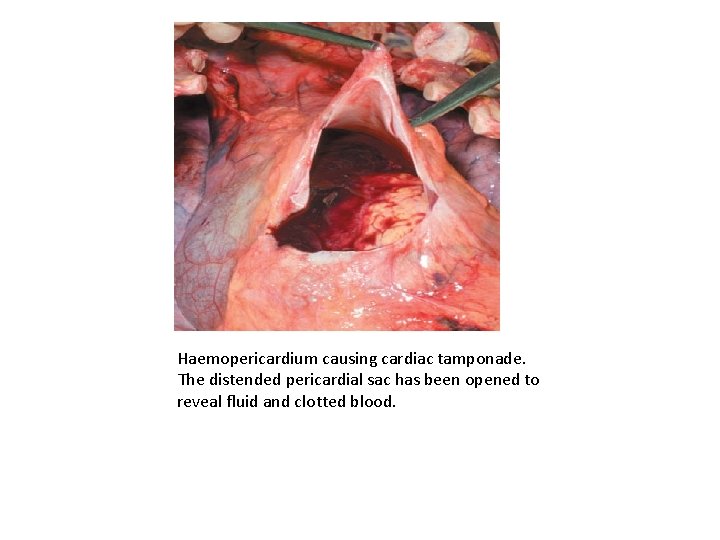
The area of the myocardial infarct is weakest between • 3 days and 1 week after the clinical onset of the infarct and it is at this time that the weakened area of myocardium may rupture and cause sudden death from a haemopericardium and cardiac tamponade. • The rupture occasionally occurs through the • interventricular septum, resulting in a left–right shunt. • An infarct heals by fibrosis, and fibrotic plaques in the • wall of the ventricle or septum may interfere with physical or electrical cardiac function. •
Cardiac aneurysms may form at sites of • infarction; they may calcify and they may rupture. • Physical lesions in the cardiac conducting system • have been studied intensively in recent years, especially in relation to sudden death. • Many different abnormalities have been found, • varying from extensive fibrosis to haemorrhage, tumours and infective lesions. •
Haemopericardium causing cardiac tamponade. The distended pericardial sac has been opened to reveal fluid and clotted blood.
• HYPERTENSIVE HEART DISEASE • This condition may lead to sudden cardiac death from left • ventricular hypertrophy. • The upper limit of normal heart weight is about 400 g and • this may increase to 600 g or more, reflecting the increased thickness of the left ventricle. • Atheroma is often associated with hypertension so that the • enlarged heart may also be deprived of a normal blood flow in the major coronary vessels by the presence of atheromatous plaques and their complications. •
AORTIC STENOSIS • Aortic stenosis is a disease that classically • affects males over the age of 60 years with tricuspid aortic valves, but which may also be seen in younger people who have a congenital bicuspid aortic valve. Sudden death is common in these patients. •
SENILE MYOCARDIAL DEGENERATION • The cause of a sudden death in these elderly • individuals can be very difficult to determine. The senile heart is small, the surface vessels • are tortuous and the myocardium is soft and brown due to accumulated lipofuscins in the cells. •
PRIMARY MYOCARDIAL DISEASE • These are much less common than the degenerative • conditions described above and they commonly affect a significantly younger age group. Myocarditis occurs in many infective diseases, such as • diphtheria and virus infections, including influenza, but the clinical complications and sudden death associated with the infection may occur some days or even weeks after the main clinical symptoms.
A more definite group of intrinsic cardiac diseases • is the ‘cardiomyopathies’. The initial descriptions referred to cardiomegaly with huge hearts of over 1000 g and asymmetric thickening of the ventricular walls in the hypertrophic, obstructive type of cardiomyopathy • (HOCM) or dilatation of the chambers in • congestive cardiomyopathy. Both types of the disease are usually associated with areas of disordered myocardial fibres. •
Extensive research has now shown that the • cardiomyopathies are a much more complex group of primary myocardial diseases, commonly with a genetic background, cardiomyopathy is now described and is associated with fatty infiltration of the wall of the right ventricle. The autopsy in these cases will be entirely negative • but, as DNA techniques improve, diagnosis will be made in the laboratory rather than the mortuary
Diseases of the arteries • The most common lesion of the arteries themselves • that is associated with sudden death is the aneurysm. Several varieties must be considered as they are very commonly found in autopsies on SUDs. ATHEROMATOUS ANEURYSM OF THE AORTA • These aneurysms are most commonly found in elderly • males in the abdominal region of the aorta. Many aneurysms remain intact and are found as an incidental finding at autopsy, but others eventually rupture.
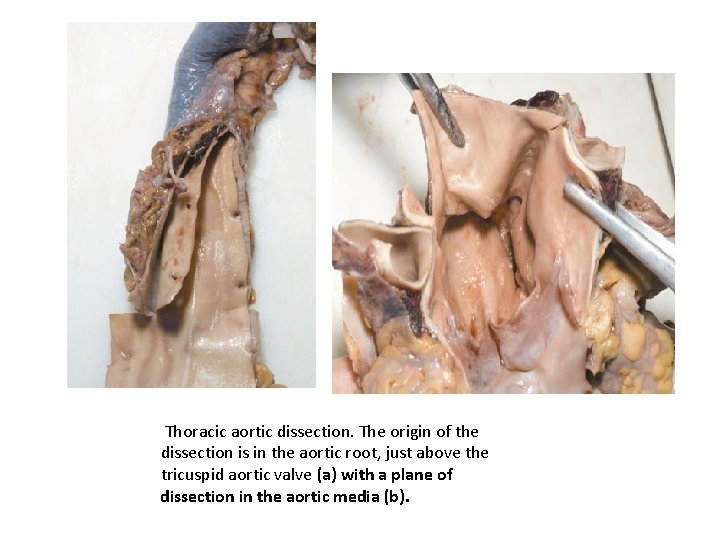
DISSECTING ANEURYSM OF THE AORTA • The damage caused by an atheromatous plaque • can also result in the weakening of the aortic media, and a defect in the intima, usually also associated with the plaque, allows blood from the lumen to dissect into this weakened area of media. The commonest site aorta and especially in the • arch. •
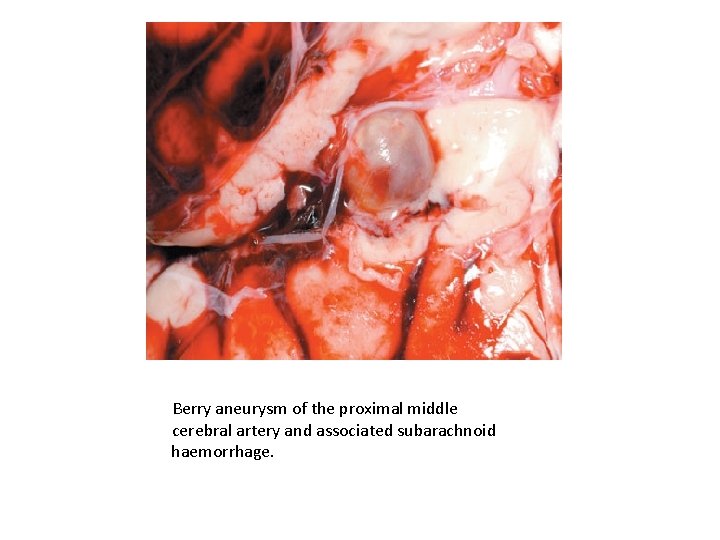
Intracranial vascular lesions • Several types of intracranial vascular lesions are important in sudden or unexpected death. • RUPTURED BERRY ANEURYSM • A relatively common cause of sudden collapse and often rapid • death of young to middle-aged men and women is a subarachnoid haemorrhage resulting from rupture of a ‘congenital’ (berry) aneurysm of the basal cerebral arteries either in the circle of. Willis itself or in the arteries which supply it There is another cause for subarachnoid haemorrhage that is well known to be associated with trauma to the head and neck •
Berry aneurysm of the proximal middle cerebral artery and associated subarachnoid haemorrhage.
SYPHILITIC ANEURYSMS • These are now relatively rare in Western countries due to the • effective treatment of primary and secondary syphilis, but they are still encountered in routine autopsies on old people and in individuals from areas without an established health care system. they are most common in the thoracic Cerebral haemorrhage • Sudden bleeding into the brain substance is common, usually in old age and in those with significan hypertension. CEREBRAL THROMBOSIS AND INFARCTION • Cerebral thrombosis rarely causes sudden death, as the process of infarction is relatively slow, although the neurological symptoms and signs may have a very rapid onset and be severe • •
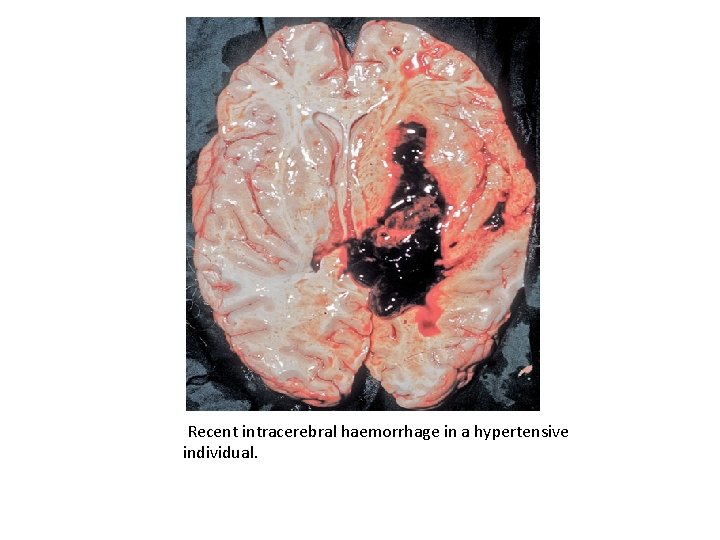
Recent intracerebral haemorrhage in a hypertensive individual.
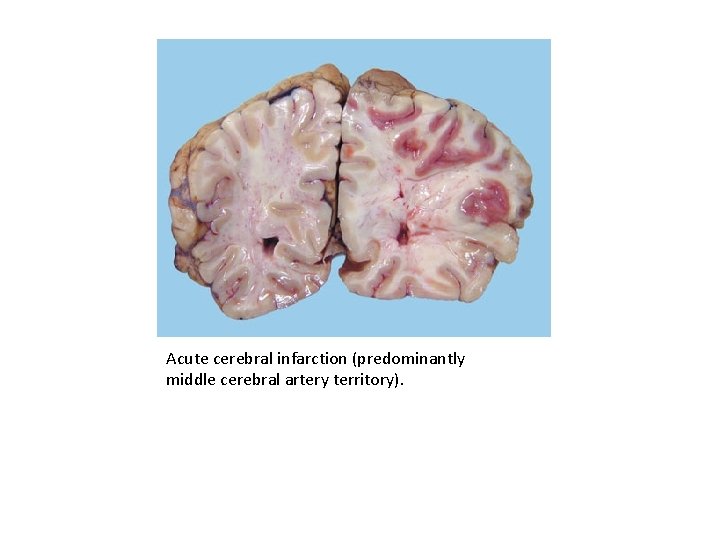
Acute cerebral infarction (predominantly middle cerebral artery territory).
Thoracic aortic dissection. The origin of the dissection is in the aortic root, just above the tricuspid aortic valve (a) with a plane of dissection in the aortic media (b).
RESPIRATORY SYSTEM • The major cause of sudden death within the respiratory organs is again vascular. Pulmonary embolism is very common and, in fact, is the most clinically underdiagnosed cause of death. • In almost every case, the source of the emboli is in the leg veins. • • About 80 per cent of pulmonary embolism deaths have a predisposing cause such as fractures, tissue trauma, surgical operation, bed rest, forced immobility it is much harder to relate fatal pulmonary emboli to the trauma. • • Other rare causes of sudden death in the respiratory system include a massive • haemoptysis from cavitating pulmonary tuberculosis or from a malignant tumour. Rapid (but not sudden) deaths can also occur from fulminating chest infections, especially virulent forms of influenza. •
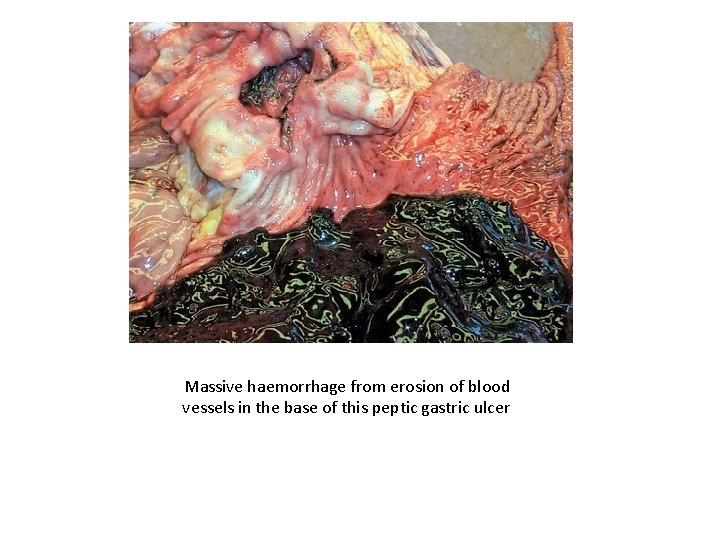
GASTROINTESTINAL SYSTEM • Once again, the causes of sudden death have a • vascular component in that very severe bleeding from a gastric or duodenal peptic ulcer can be fatal in a short time, but, more commonly, the bleeding is less torrential and is therefore amenable to medical or surgical treatment. Mesenteric thrombosis and embolism, usually • related to aortic or more generalized atheroma, may result in infarction of the gut, but, once again, a rapid, but not sudden death is expected if the infarction remains undiagnosed
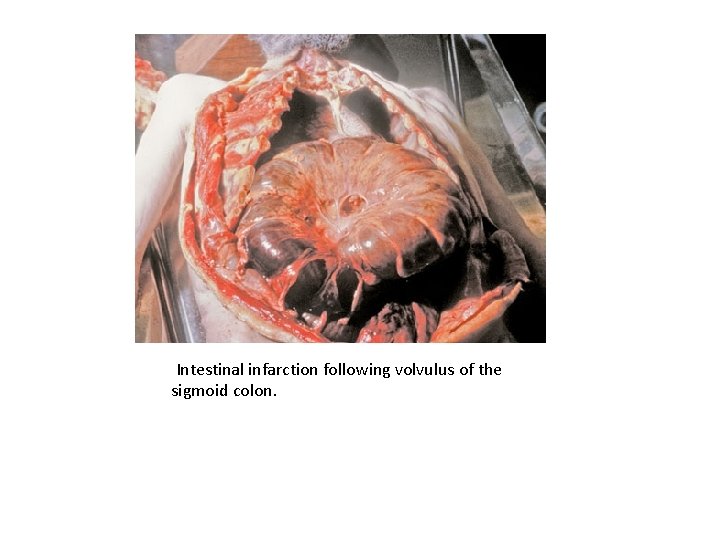
Intestinal infarction following volvulus of the sigmoid colon.
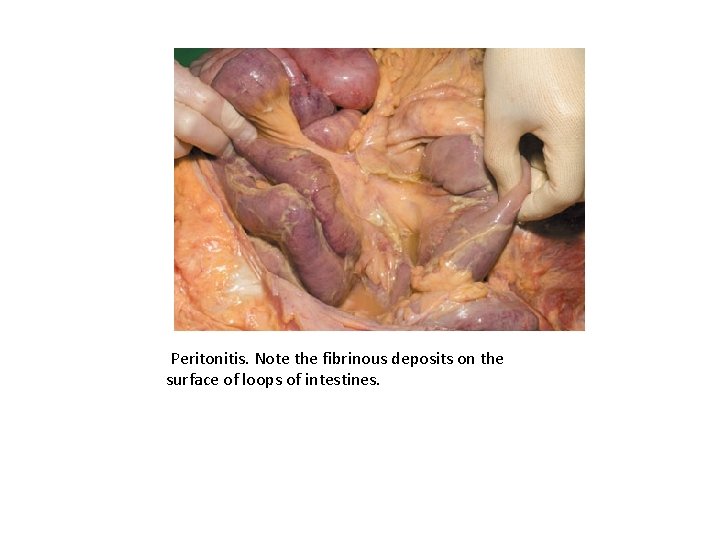
Peritonitis. Note the fibrinous deposits on the surface of loops of intestines.
Massive haemorrhage from erosion of blood vessels in the base of this peptic gastric ulcer
GYNAECOLOGICAL CONDITIONS • As a ‘rule of thumb’, the three commonest causes of • death in a woman of reproductive age are: 1 a natural complication of pregnancy such as ruptured • ectopic gestation or an induced complication such as an abortion; 2 pulmonary embolism from leg vein thrombosis; • 3 ruptured cerebral aneurysm. • •
DEATHS FROM ASTHMA AND EPILEPSY • In both conditions, death may occur during an attack and the autopsy will reveal • specific features to enable a positive diagnosis to be made. • However, both of these conditions are also associated with a few sudden and • unexpected deaths each year where the specific features of an attack are absent and for which no obvious cause of death can be identified at autopsy. • Even well-controlled epileptic patients may die rapidly and inexplicably; • Epileptics are also at risk from the hazards of all types of accidents during a pre-fit • aura • Bronchial asthma is also associated with rare unexplained sudden and unexpected • deaths, even where there is no evidence of status asthmaticus or even of an unusually severe or prolonged asthmatic episode. • Several decades ago, an increase in sudden deaths in asthmatics was traced to the • over-use of adrenergic drugs – especially the self-administered dose given by inhaler – but awareness amongst doctors soon reduced
SUDDEN INFANT DEATH SYNDROME Sudden infant death syndrome (SIDS) is also • known as ‘cot death’ or ‘crib death’. The decline in SIDS deaths began in 1991 and has accelerated since the introduction in 1994 of the worldwide ‘Back to Sleep’ campaign, which encouraged mothers to place babies on their back to sleep rather than face down or on their side. SIDS still forms the most common cause of death in the post-perinatal period in countries with a relatively low infant mortality rate.
A definition of SIDS may be stated as ‘the • sudden death of an infant which is unexpected by history and by examination of the scene and in whom a thorough autopsy fails to reveal an adequate cause of death’.
The following are the main features of the syndrome. • • • The accepted age range is between 2 weeks and 2 • years, but most deaths takes place between 1 and 7 months, with a peak at 2– 3 months. • • There is little sex difference, although there is a slight • preponderance of males similar to that seen in many types of death. • • The incidence is markedly greater in multiple births •
SIDS is far more common in the colder and wetter months • • • There apparent social, racial and ethnic differences, but these are explained by fundamental underlying socio-economic factors • The history is usually typical: a perfectly well child – or one with • only trivial symptoms – is put in the sleeping place at night only to be found dead in the morning. At autopsy, nothing specific is found in the true SIDS death, although in about 70 per cent of cases the autopsy reveals intrathoracic petechiae on the pleura, epicardium and thymus, which formerly gave rise to the misapprehension that SIDS was due to mechanical suffocation. •
The true aetiology of SIDS is unknown, but it is likely • that there are many different causes, often multifactorial, which act via a final common pathway of cardiorespiratory failure. Theories about possible ‘causes’ of SIDS abound and • include allergy to cows’ milk or house-mites, botulism, prolonged sleep apnoea, spinal haemorrhages, deficiencies of liver enzymes, selenium or vitamin E, various metabolic defects, vaccinations, hyperthermia, hypothermia, carbon monoxide or dioxide poisoning, viral bronchiolitis, muscle hypotonia, and many others.