
CAUSES OF ROAD ACCIDENTS Accidents are unexpected undesired
- Slides: 12
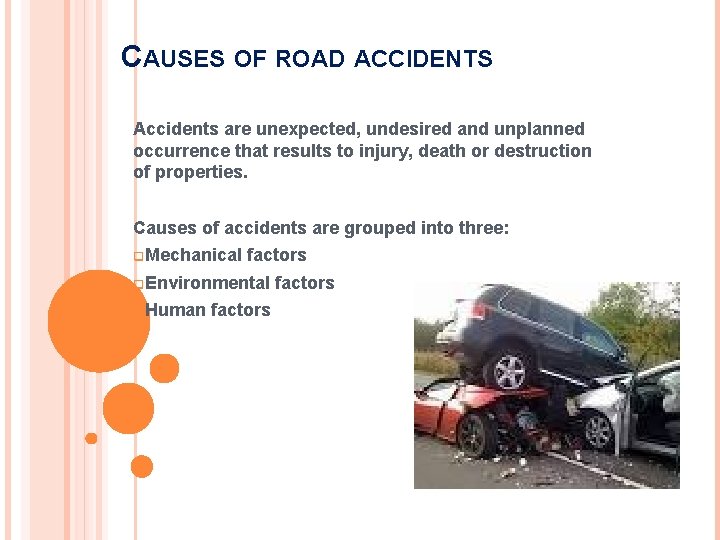
CAUSES OF ROAD ACCIDENTS Accidents are unexpected, undesired and unplanned occurrence that results to injury, death or destruction of properties. Causes of accidents are grouped into three: q. Mechanical factors q. Environmental q. Human factors
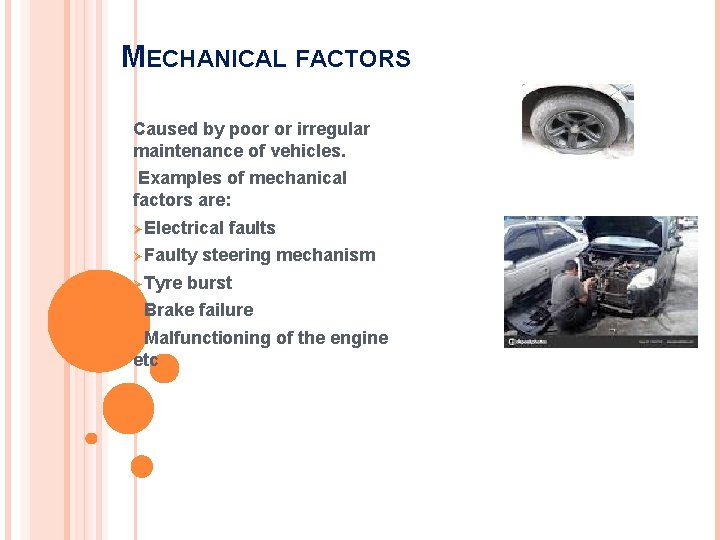
MECHANICAL FACTORS Caused by poor or irregular maintenance of vehicles. Examples of mechanical factors are: ØElectrical ØFaulty ØTyre faults steering mechanism burst ØBrake failure ØMalfunctioning etc of the engine
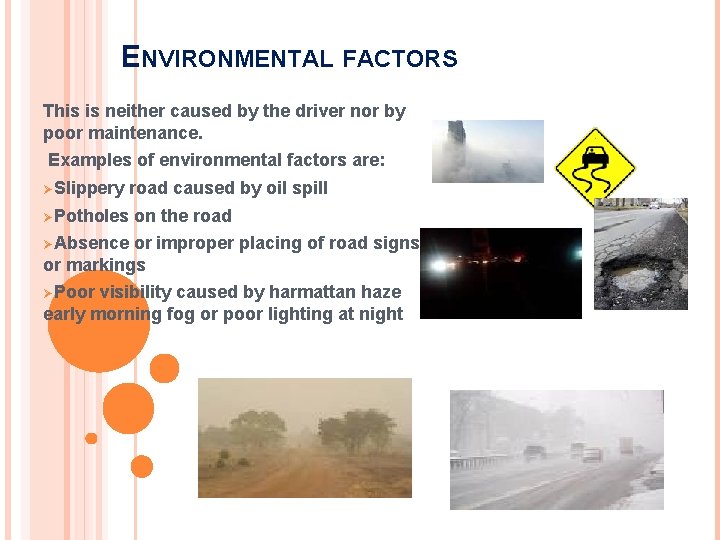
ENVIRONMENTAL FACTORS This is neither caused by the driver nor by poor maintenance. Examples of environmental factors are: ØSlippery ØPotholes road caused by oil spill on the road ØAbsence or improper placing of road signs or markings ØPoor visibility caused by harmattan haze early morning fog or poor lighting at night
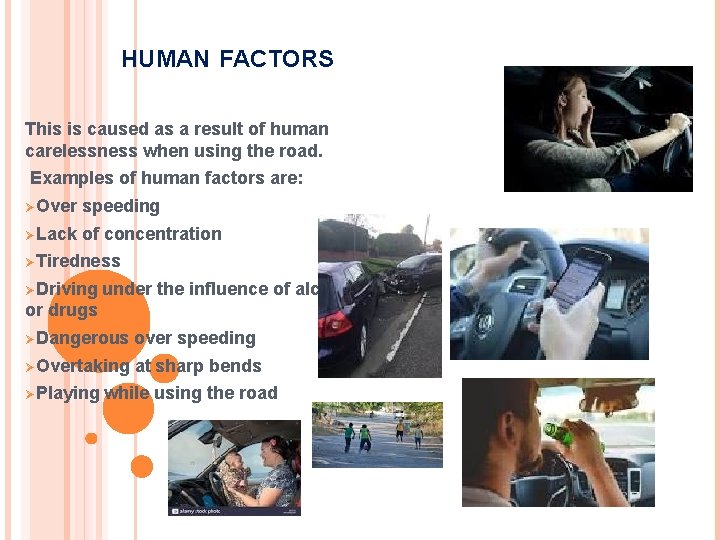
HUMAN FACTORS This is caused as a result of human carelessness when using the road. Examples of human factors are: ØOver speeding ØLack of concentration ØTiredness ØDriving under the influence of alcohol or drugs ØDangerous over speeding ØOvertaking at sharp bends ØPlaying while using the road
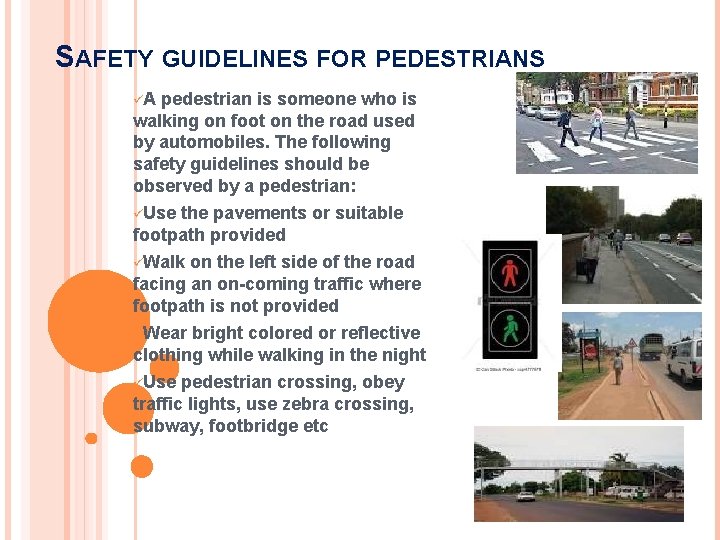
SAFETY GUIDELINES FOR PEDESTRIANS üA pedestrian is someone who is walking on foot on the road used by automobiles. The following safety guidelines should be observed by a pedestrian: üUse the pavements or suitable footpath provided üWalk on the left side of the road facing an on-coming traffic where footpath is not provided üWear bright colored or reflective clothing while walking in the night üUse pedestrian crossing, obey traffic lights, use zebra crossing, subway, footbridge etc
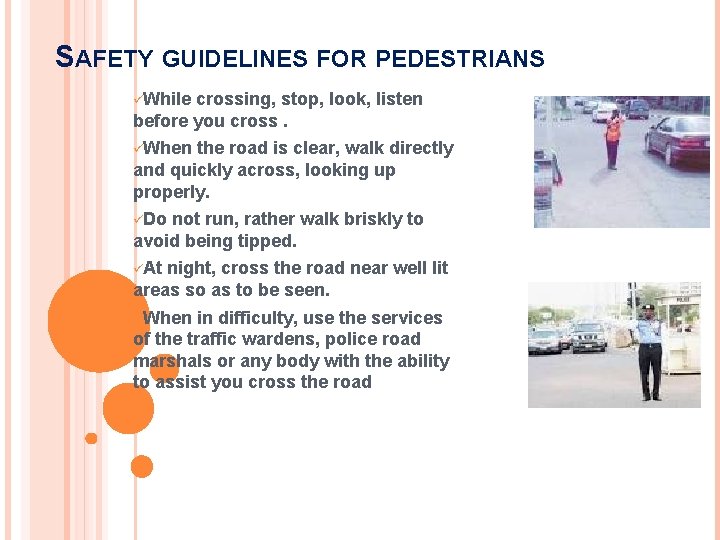
SAFETY GUIDELINES FOR PEDESTRIANS üWhile crossing, stop, look, listen before you cross. üWhen the road is clear, walk directly and quickly across, looking up properly. üDo not run, rather walk briskly to avoid being tipped. üAt night, cross the road near well lit areas so as to be seen. üWhen in difficulty, use the services of the traffic wardens, police road marshals or any body with the ability to assist you cross the road
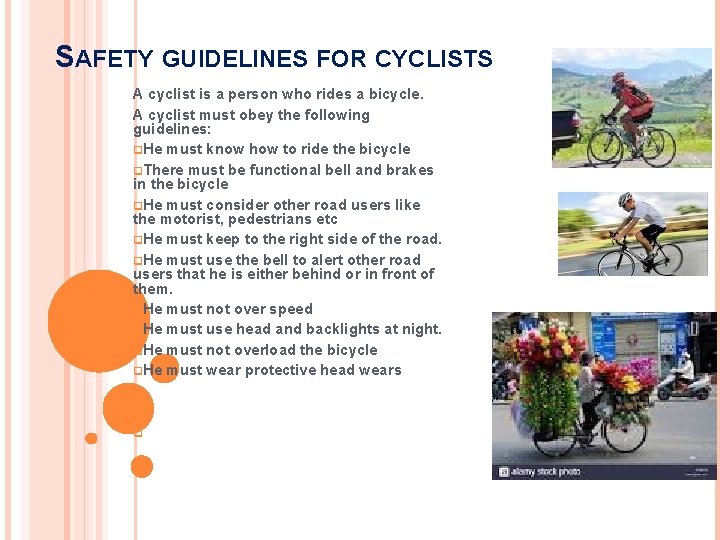
SAFETY GUIDELINES FOR CYCLISTS A cyclist is a person who rides a bicycle. A cyclist must obey the following guidelines: q. He must know how to ride the bicycle q. There must be functional bell and brakes in the bicycle q. He must consider other road users like the motorist, pedestrians etc q. He must keep to the right side of the road. q. He must use the bell to alert other road users that he is either behind or in front of them. q. He must not over speed q. He must use head and backlights at night. q. He must not overload the bicycle q. He must wear protective head wears q
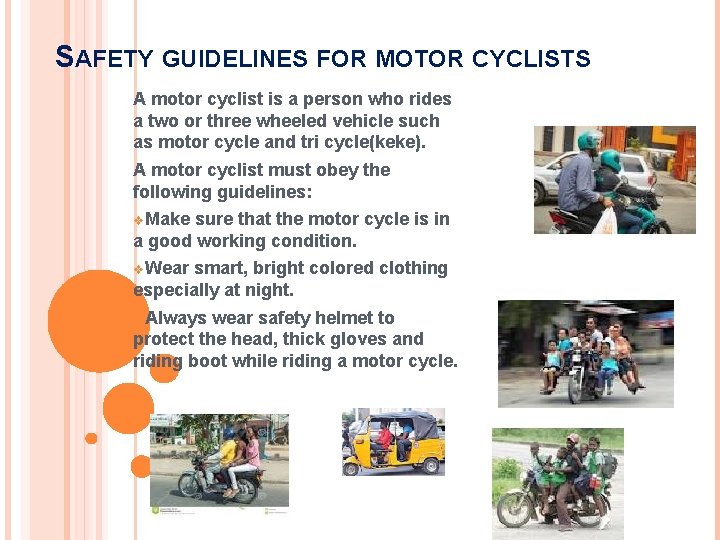
SAFETY GUIDELINES FOR MOTOR CYCLISTS A motor cyclist is a person who rides a two or three wheeled vehicle such as motor cycle and tri cycle(keke). A motor cyclist must obey the following guidelines: v. Make sure that the motor cycle is in a good working condition. v. Wear smart, bright colored clothing especially at night. v. Always wear safety helmet to protect the head, thick gloves and riding boot while riding a motor cycle.
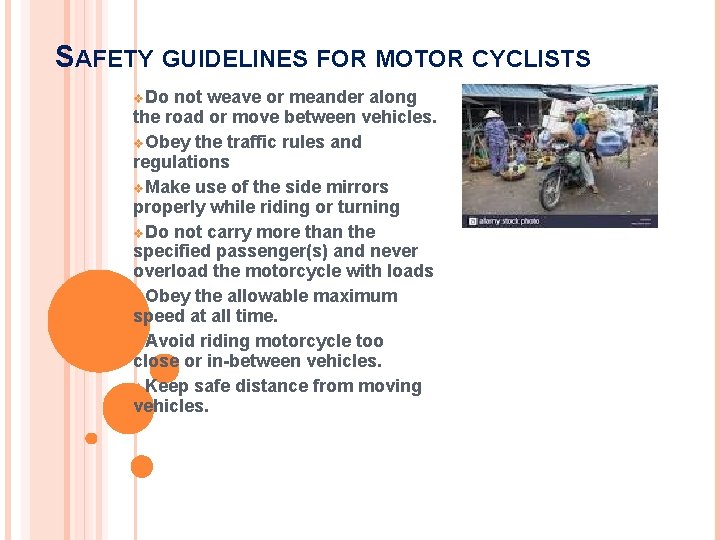
SAFETY GUIDELINES FOR MOTOR CYCLISTS v. Do not weave or meander along the road or move between vehicles. v. Obey the traffic rules and regulations v. Make use of the side mirrors properly while riding or turning v. Do not carry more than the specified passenger(s) and never overload the motorcycle with loads v. Obey the allowable maximum speed at all time. v. Avoid riding motorcycle too close or in-between vehicles. v. Keep safe distance from moving vehicles.
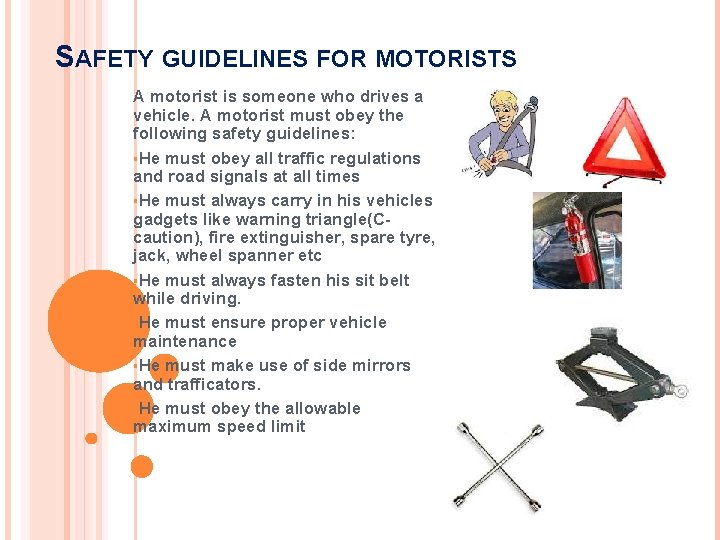
SAFETY GUIDELINES FOR MOTORISTS A motorist is someone who drives a vehicle. A motorist must obey the following safety guidelines: §He must obey all traffic regulations and road signals at all times §He must always carry in his vehicles gadgets like warning triangle(Ccaution), fire extinguisher, spare tyre, jack, wheel spanner etc §He must always fasten his sit belt while driving. §He must ensure proper vehicle maintenance §He must make use of side mirrors and trafficators. §He must obey the allowable maximum speed limit
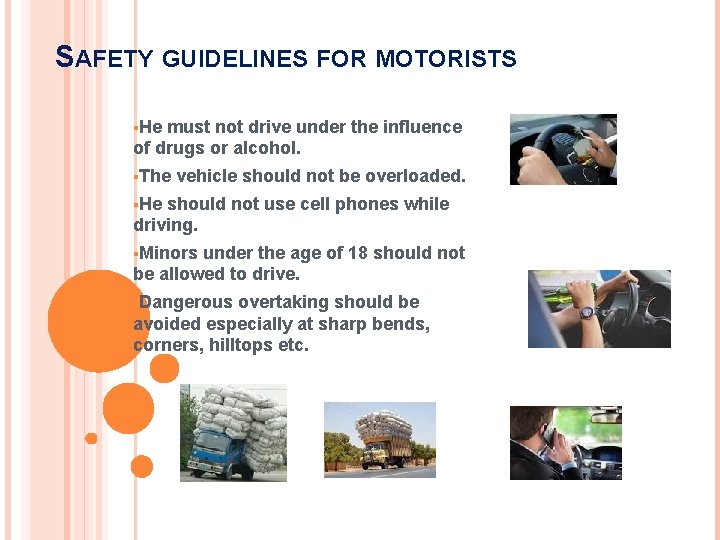
SAFETY GUIDELINES FOR MOTORISTS §He must not drive under the influence of drugs or alcohol. §The vehicle should not be overloaded. §He should not use cell phones while driving. §Minors under the age of 18 should not be allowed to drive. §Dangerous overtaking should be avoided especially at sharp bends, corners, hilltops etc.
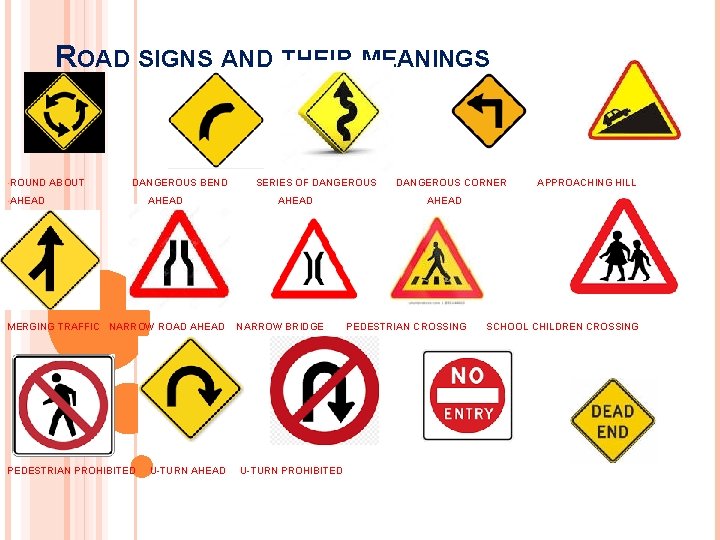
ROAD SIGNS AND THEIR MEANINGS • ROUND ABOUT DANGEROUS BEND • AHEAD MERGING TRAFFIC NARROW ROAD AHEAD PEDESTRIAN PROHIBITED U-TURN AHEAD SERIES OF DANGEROUS AHEAD NARROW BRIDGE U-TURN PROHIBITED DANGEROUS CORNER APPROACHING HILL AHEAD PEDESTRIAN CROSSING SCHOOL CHILDREN CROSSING