
Causes of Respiratory Failure I Lung tissue Pneumonia
- Slides: 52
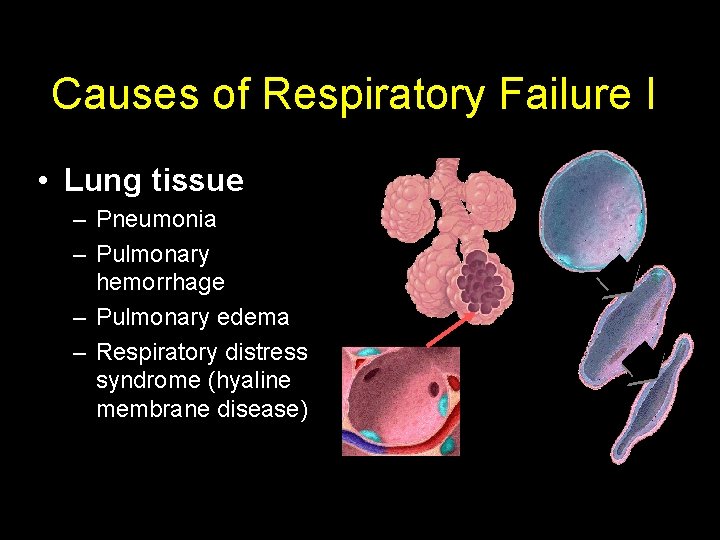
Causes of Respiratory Failure I • Lung tissue – Pneumonia – Pulmonary hemorrhage – Pulmonary edema – Respiratory distress syndrome (hyaline membrane disease)
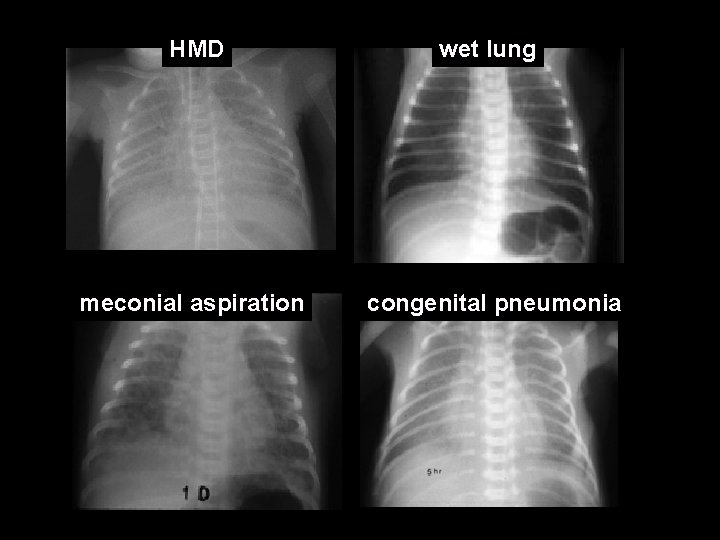
HMD wet lung meconial aspiration congenital pneumonia
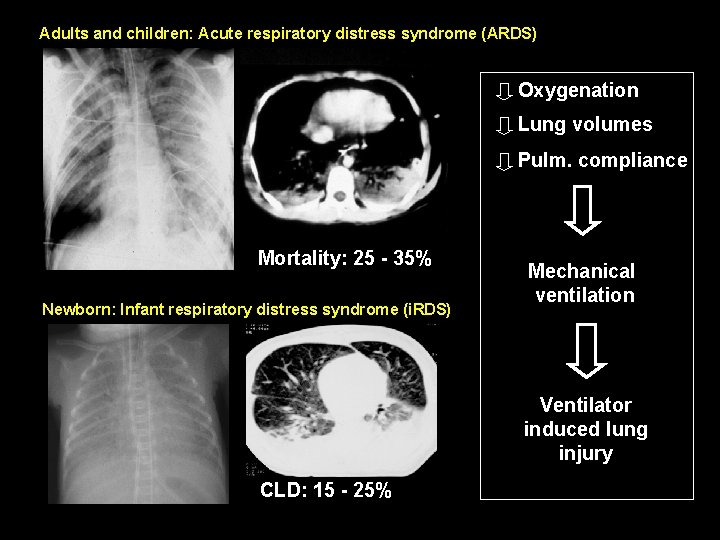
Adults and children: Acute respiratory distress syndrome (ARDS) Oxygenation Lung volumes Pulm. compliance Mortality: 25 - 35% Newborn: Infant respiratory distress syndrome (i. RDS) Mechanical ventilation Ventilator induced lung injury CLD: 15 - 25%
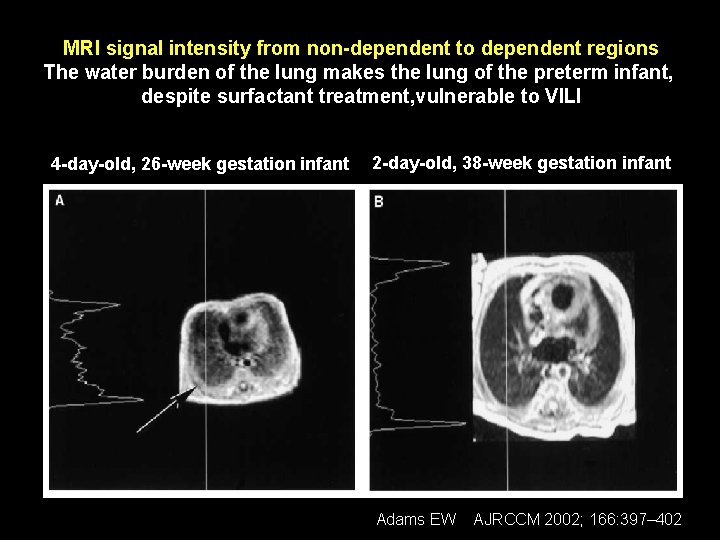
MRI signal intensity from non-dependent to dependent regions The water burden of the lung makes the lung of the preterm infant, despite surfactant treatment, vulnerable to VILI 4 -day-old, 26 -week gestation infant 2 -day-old, 38 -week gestation infant Adams EW AJRCCM 2002; 166: 397– 402
Nonhomogeneous Lung Disease The pathophysiology shared by these diseases is nonuniform lung involvement where certain lung units are nearly normal while other areas are markedly abnormal. A strategy that is effective in opening damaged areas may result in overinflation and trauma to more normal areas of the lung.
Diffuse “Homogeneous” Lung Disease The goals of assisted ventilation in this group of patients are to improve lung inflation, compliance and ventilation/perfusion matching while avoiding barotrauma or compromise of cardiac output.
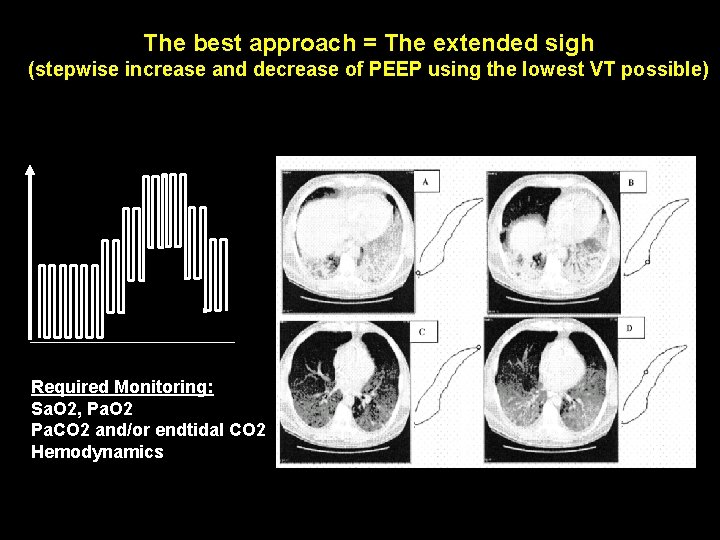
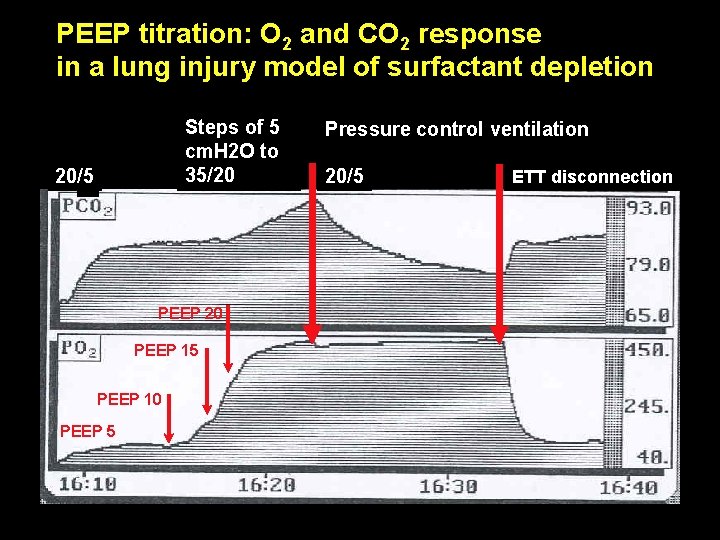
The best approach = The extended sigh (stepwise increase and decrease of PEEP using the lowest VT possible) Required Monitoring: Sa. O 2, Pa. O 2 Pa. CO 2 and/or endtidal CO 2 Hemodynamics
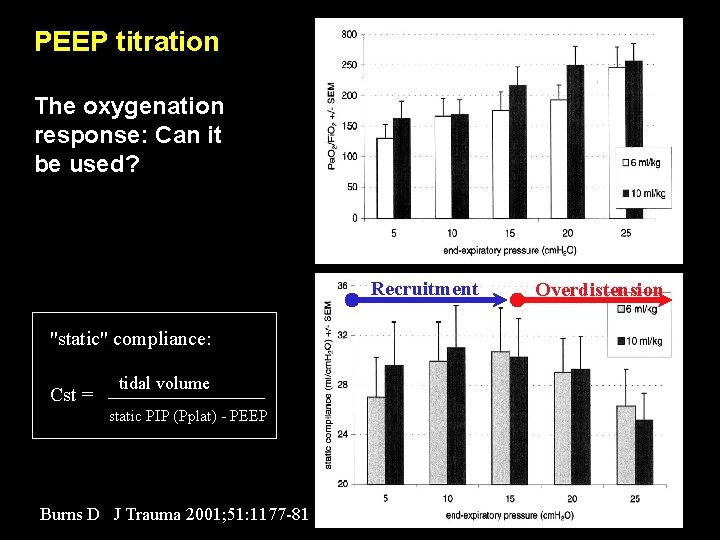
PEEP titration The oxygenation response: Can it be used? Recruitment "static" compliance: Cst = tidal volume static PIP (Pplat) - PEEP Burns D J Trauma 2001; 51: 1177 -81 Overdistension
PEEP titration: O 2 and CO 2 response in a lung injury model of surfactant depletion Steps of 5 cm. H 2 O to 35/20 20/5 PEEP 20 PEEP 15 PEEP 10 PEEP 5 Pressure control ventilation 20/5 ETT disconnection
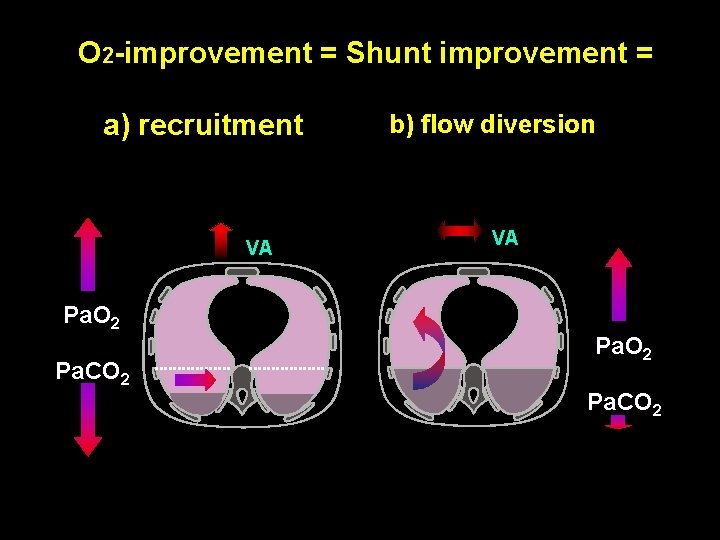
O 2 -improvement = Shunt improvement = a) recruitment VA Pa. O 2 Pa. CO 2 b) flow diversion VA Pa. O 2 Pa. CO 2
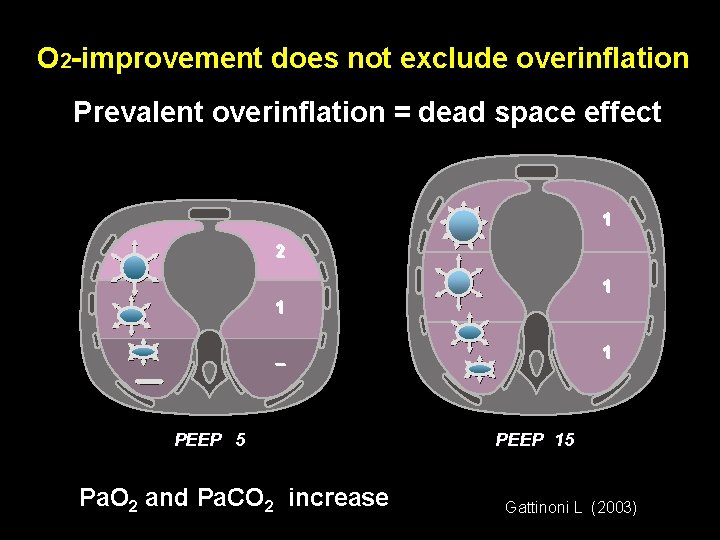
O 2 -improvement does not exclude overinflation Prevalent overinflation = dead space effect 1 2 1 1 1 – PEEP 5 Pa. O 2 and Pa. CO 2 increase PEEP 15 Gattinoni L (2003)
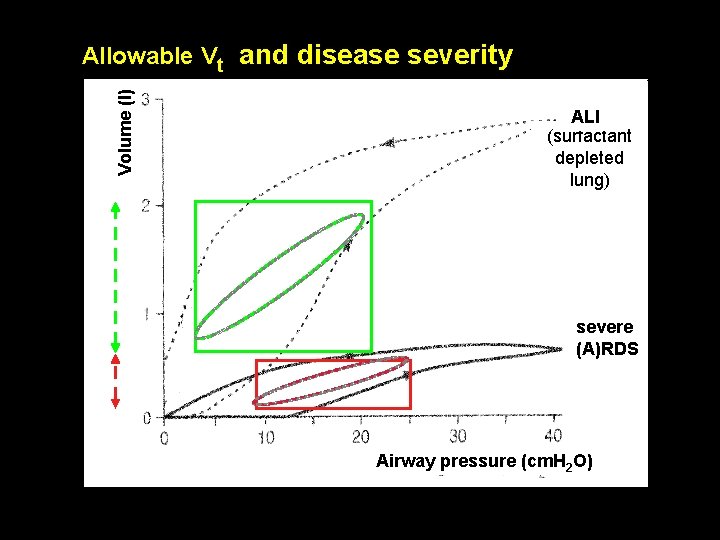
Volume (l) Allowable Vt and disease severity ALI (surfactant depleted lung) severe (A)RDS Airway pressure (cm. H 2 O)
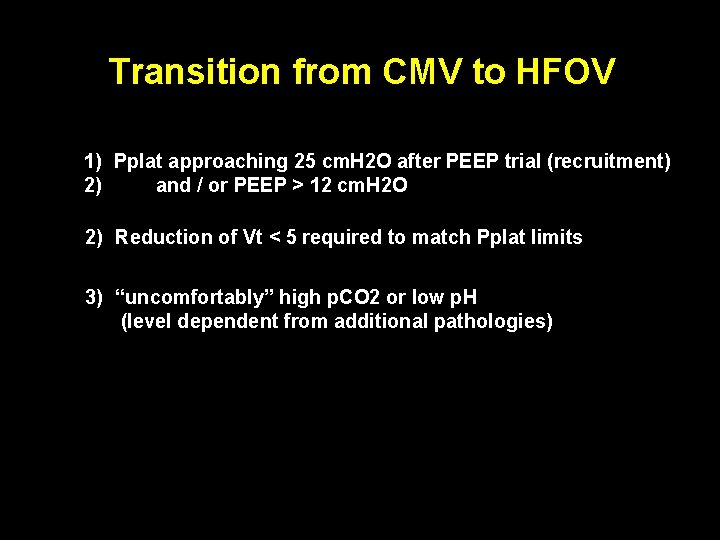
Transition from CMV to HFOV 1) Pplat approaching 25 cm. H 2 O after PEEP trial (recruitment) 2) and / or PEEP > 12 cm. H 2 O 2) Reduction of Vt < 5 required to match Pplat limits 3) “uncomfortably” high p. CO 2 or low p. H (level dependent from additional pathologies)
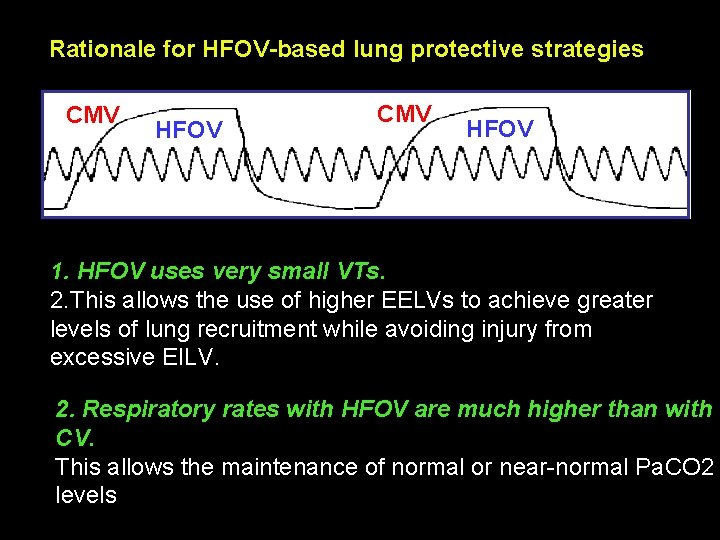
Rationale for HFOV-based lung protective strategies CMV HFOV 1. HFOV uses very small VTs. 2. This allows the use of higher EELVs to achieve greater levels of lung recruitment while avoiding injury from excessive EILV. 2. Respiratory rates with HFOV are much higher than with CV. This allows the maintenance of normal or near-normal Pa. CO 2 levels, even with very small Vts.
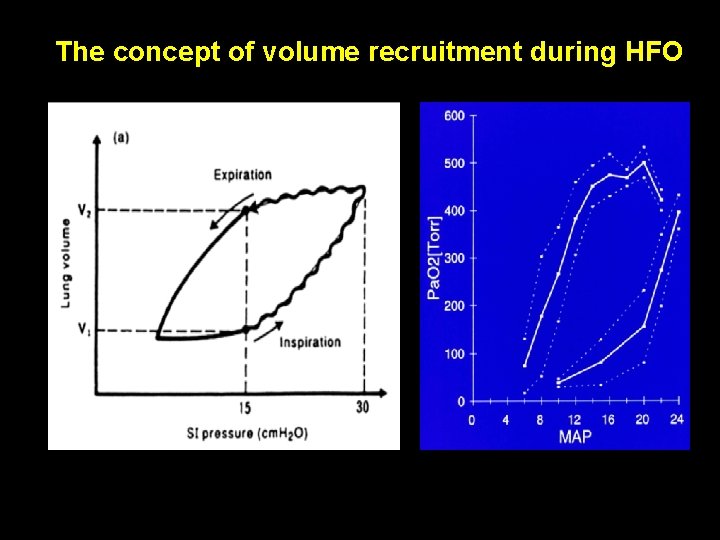
The concept of volume recruitment during HFO Suzuki H Acta Pediatr Japan 1992; 34: 494 -500
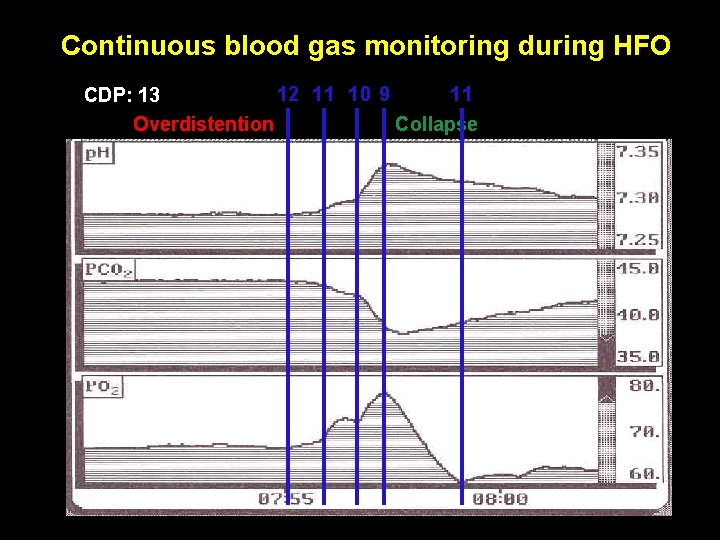
Continuous blood gas monitoring during HFO 12 11 10 9 11 CDP: 13 Overdistention Collapse
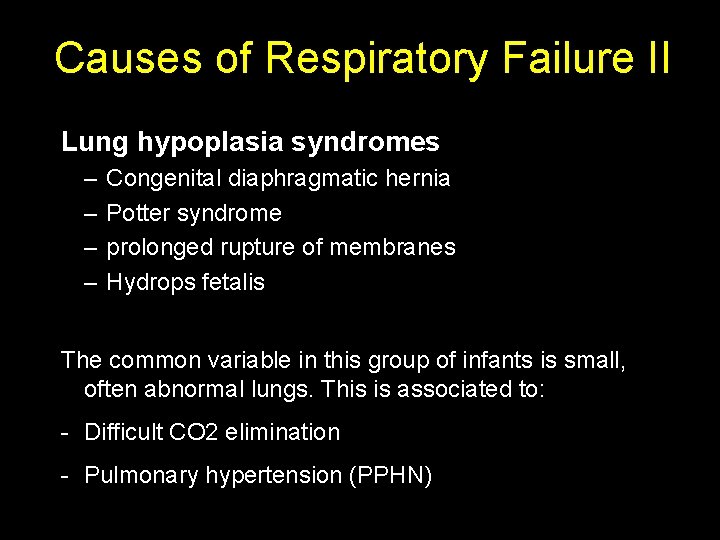
Causes of Respiratory Failure II Lung hypoplasia syndromes – – Congenital diaphragmatic hernia Potter syndrome prolonged rupture of membranes Hydrops fetalis The common variable in this group of infants is small, often abnormal lungs. This is associated to: - Difficult CO 2 elimination - Pulmonary hypertension (PPHN)
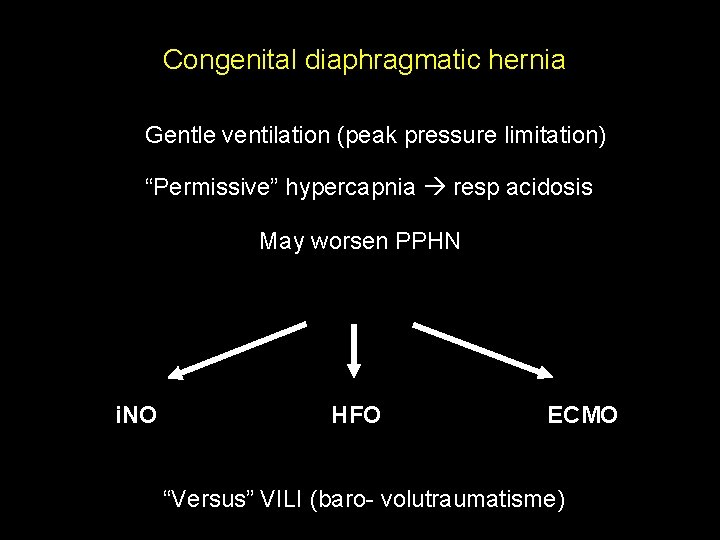
Congenital diaphragmatic hernia Gentle ventilation (peak pressure limitation) “Permissive” hypercapnia resp acidosis May worsen PPHN i. NO HFO ECMO “Versus” VILI (baro- volutraumatisme)
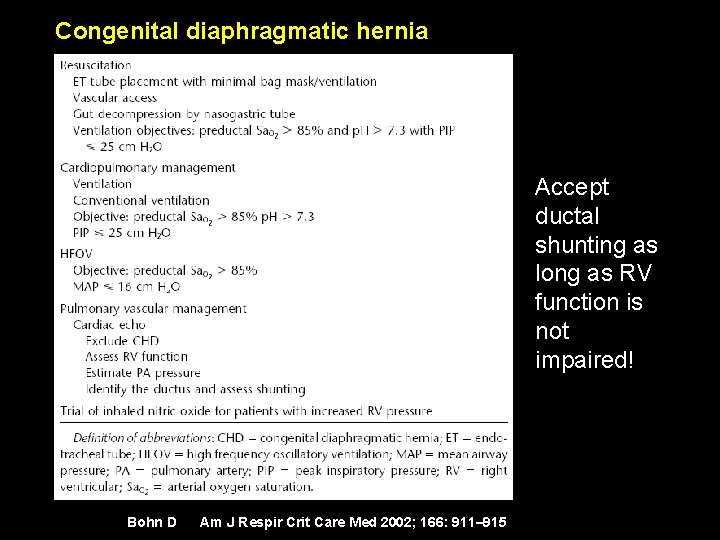
Congenital diaphragmatic hernia Accept ductal shunting as long as RV function is not impaired! Bohn D Am J Respir Crit Care Med 2002; 166: 911– 915
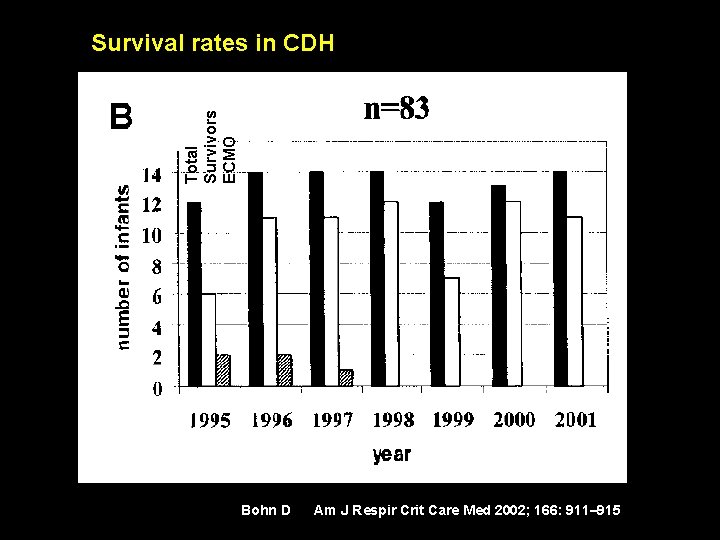
Total Survivors ECMO Survival rates in CDH Bohn D Am J Respir Crit Care Med 2002; 166: 911– 915
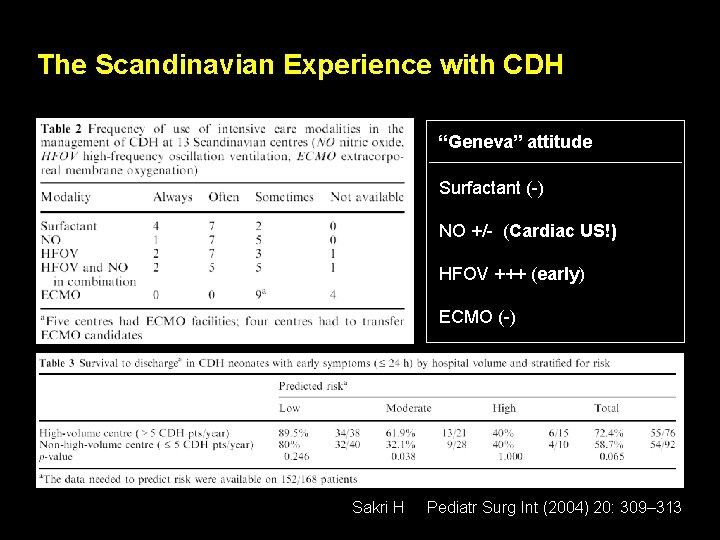
The Scandinavian Experience with CDH “Geneva” attitude Surfactant (-) NO +/- (Cardiac US!) HFOV +++ (early) ECMO (-) Sakri H Pediatr Surg Int (2004) 20: 309– 313
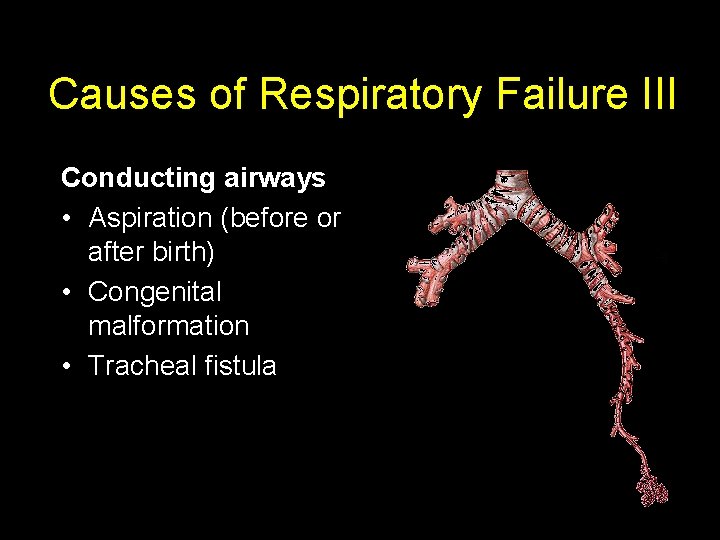
Causes of Respiratory Failure III Conducting airways • Aspiration (before or after birth) • Congenital malformation • Tracheal fistula
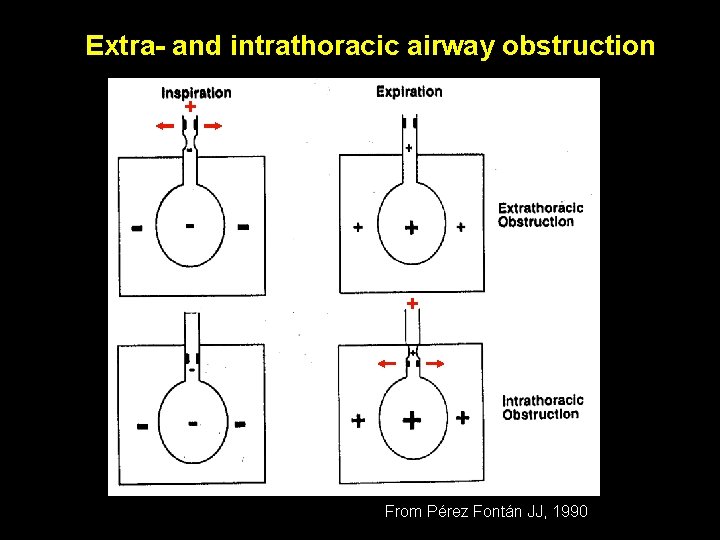
Extra- and intrathoracic airway obstruction + Stridor + From Pérez Fontán JJ, 1990
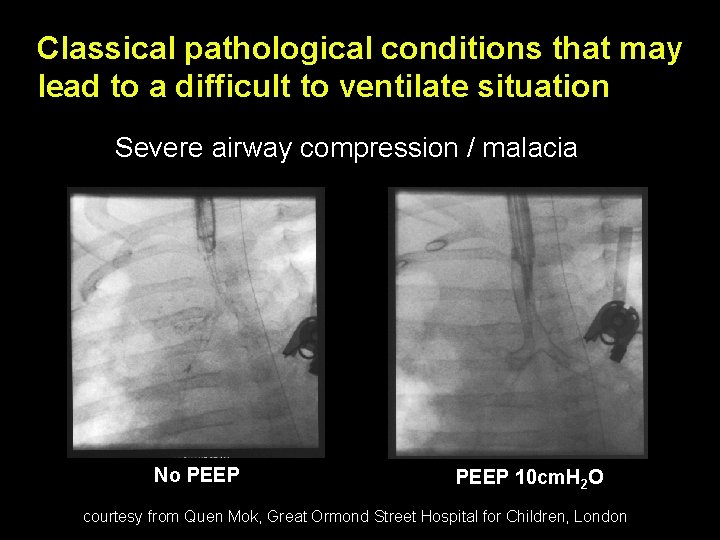
Classical pathological conditions that may lead to a difficult to ventilate situation Severe airway compression / malacia No PEEP 10 cm. H 2 O courtesy from Quen Mok, Great Ormond Street Hospital for Children, London
Severe airway compression Once you can ventilate these patients (with high PEEP) they are usually difficult to extubate My advice: Keep a high PEEP on spontaneous ventilation, reduce pressure support and extubate from a high PEEP (ev. to CPAP or NIV)
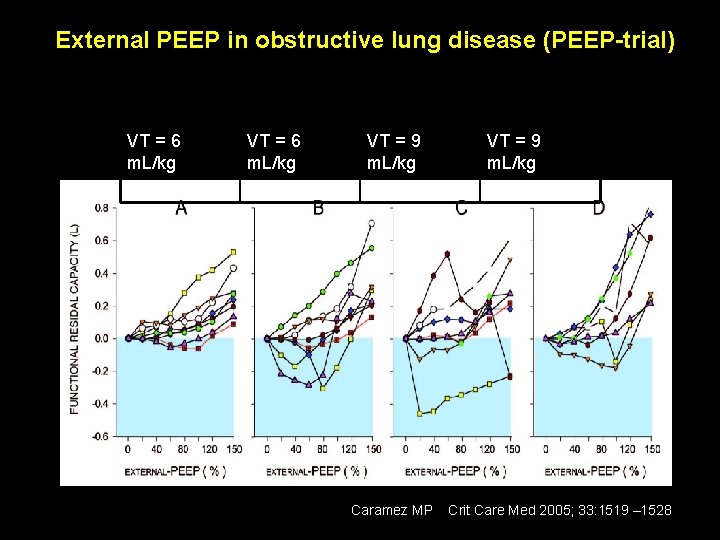
External PEEP in obstructive lung disease (PEEP-trial) VT = 6 m. L/kg RR = 6/min VT = 6 m. L/kg RR = 9/min VT = 9 m. L/kg RR = 6/min Caramez MP VT = 9 m. L/kg RR = 9/min Crit Care Med 2005; 33: 1519 – 1528
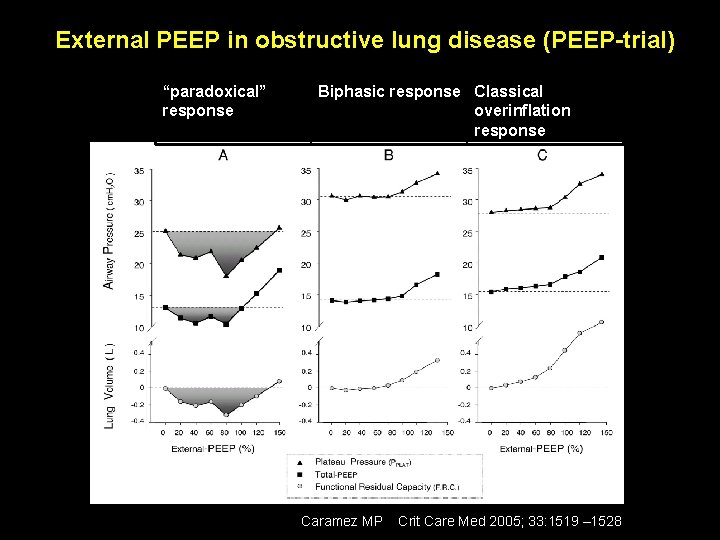
External PEEP in obstructive lung disease (PEEP-trial) “paradoxical” response Biphasic response Classical overinflation response Caramez MP Crit Care Med 2005; 33: 1519 – 1528
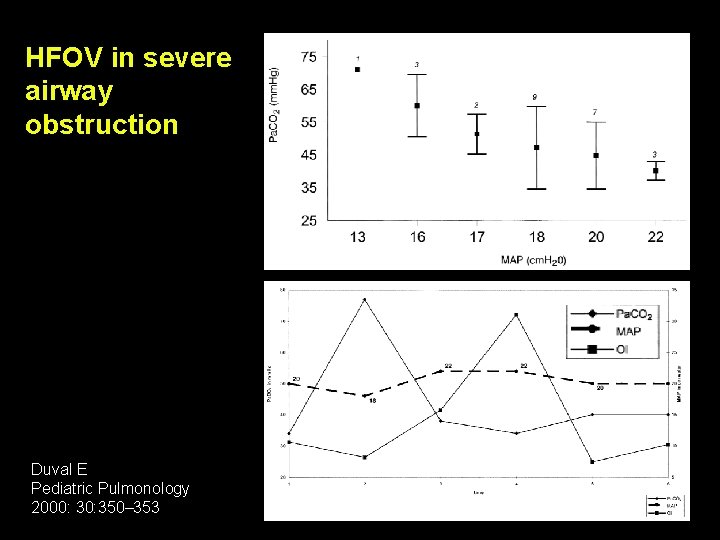
HFOV in severe airway obstruction Duval E Pediatric Pulmonology 2000: 350– 353
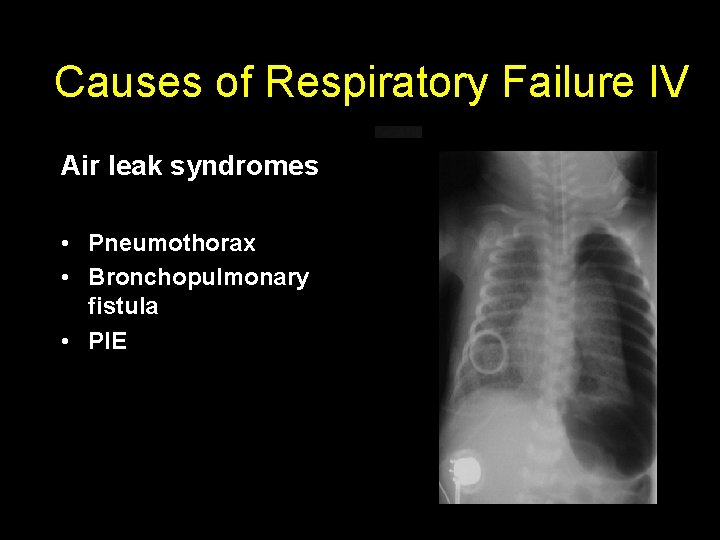
Causes of Respiratory Failure IV Air leak syndromes • Pneumothorax • Bronchopulmonary fistula • PIE
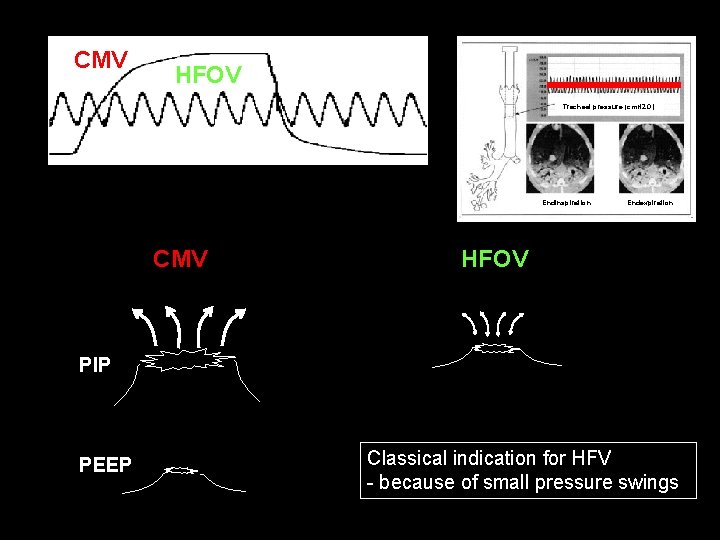
CMV HFOV Tracheal pressure (cm. H 2 O) Endinspiration CMV Endexpiration HFOV PIP PEEP Classical indication for HFV - because of small pressure swings
PIE, bronchopleural fistula, pneumothroax Recruit to improve oxygenation and in order to lower the Fi. O 2 needed – then reduce the airway pressures to the lowest level needed (air leak will often cease) References: Shen Chest 2002; 121; 284 -6 Mayes Chest. 1991; 100: 263 -4 Rubio Intensive Care Med. 1986; 12: 161 -3 One sided intubation or airway blocking by inserted balloon catheters is almost never required even in severe airleak (this was just a nice idea to get a case report)
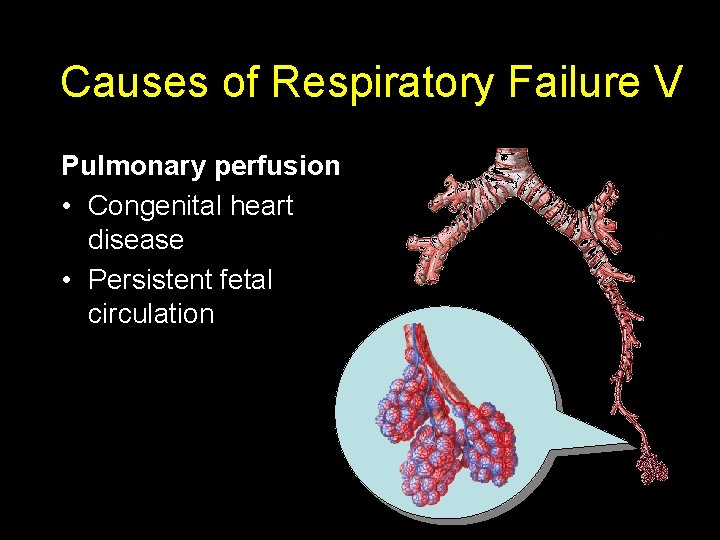
Causes of Respiratory Failure V Pulmonary perfusion • Congenital heart disease • Persistent fetal circulation
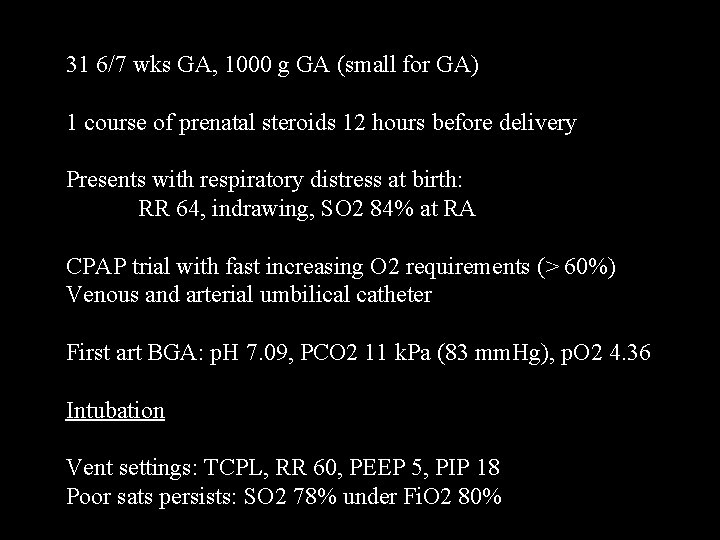
31 6/7 wks GA, 1000 g GA (small for GA) 1 course of prenatal steroids 12 hours before delivery Presents with respiratory distress at birth: RR 64, indrawing, SO 2 84% at RA CPAP trial with fast increasing O 2 requirements (> 60%) Venous and arterial umbilical catheter First art BGA: p. H 7. 09, PCO 2 11 k. Pa (83 mm. Hg), p. O 2 4. 36 Intubation Vent settings: TCPL, RR 60, PEEP 5, PIP 18 Poor sats persists: SO 2 78% under Fi. O 2 80%
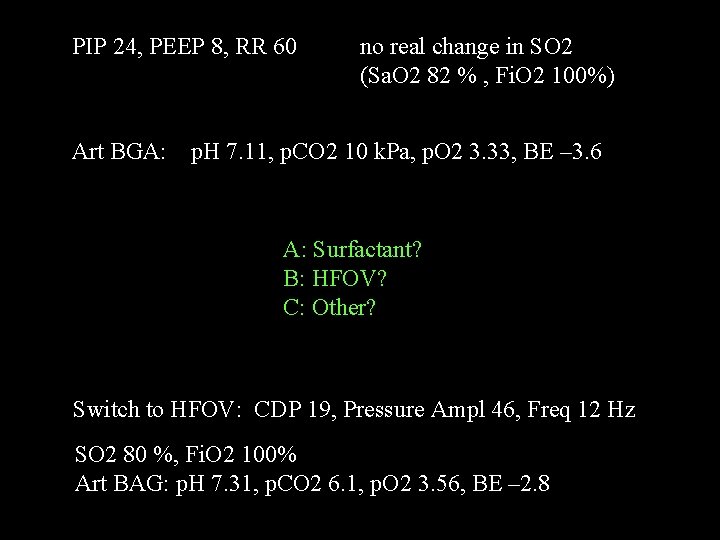
PIP 24, PEEP 8, RR 60 no real change in SO 2 (Sa. O 2 82 % , Fi. O 2 100%) Art BGA: p. H 7. 11, p. CO 2 10 k. Pa, p. O 2 3. 33, BE – 3. 6 A: Surfactant? B: HFOV? C: Other? Switch to HFOV: CDP 19, Pressure Ampl 46, Freq 12 Hz SO 2 80 %, Fi. O 2 100% Art BAG: p. H 7. 31, p. CO 2 6. 1, p. O 2 3. 56, BE – 2. 8
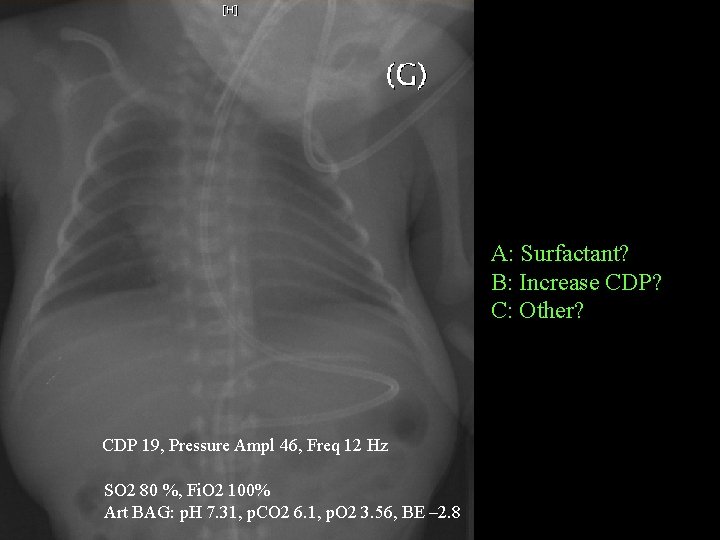
A: Surfactant? B: Increase CDP? C: Other? CDP 19, Pressure Ampl 46, Freq 12 Hz SO 2 80 %, Fi. O 2 100% Art BAG: p. H 7. 31, p. CO 2 6. 1, p. O 2 3. 56, BE – 2. 8
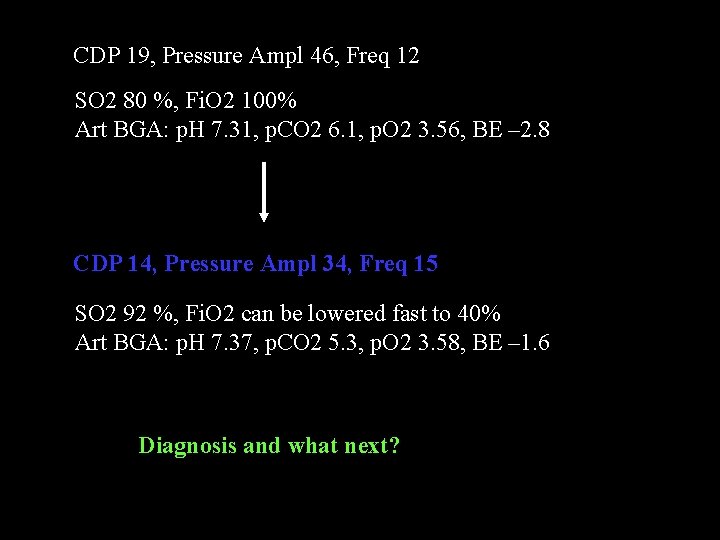
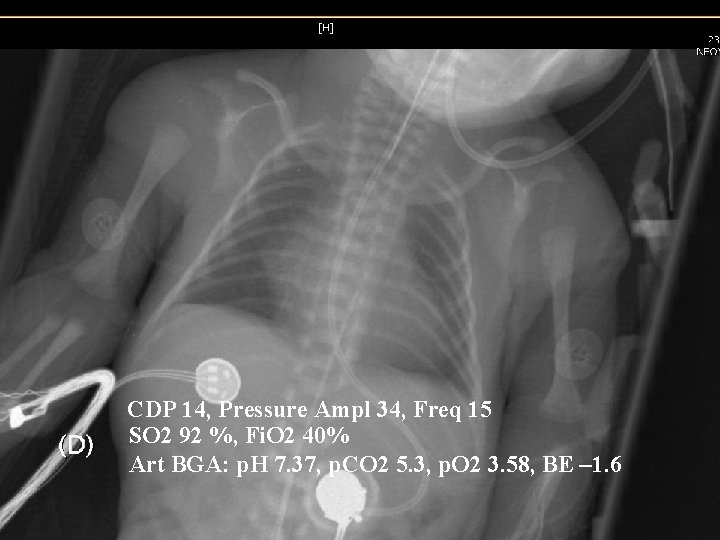
CDP 19, Pressure Ampl 46, Freq 12 SO 2 80 %, Fi. O 2 100% Art BGA: p. H 7. 31, p. CO 2 6. 1, p. O 2 3. 56, BE – 2. 8 CDP 14, Pressure Ampl 34, Freq 15 SO 2 92 %, Fi. O 2 can be lowered fast to 40% Art BGA: p. H 7. 37, p. CO 2 5. 3, p. O 2 3. 58, BE – 1. 6 Diagnosis and what next?
CDP 14, Pressure Ampl 34, Freq 15 SO 2 92 %, Fi. O 2 40% Art BGA: p. H 7. 37, p. CO 2 5. 3, p. O 2 3. 58, BE – 1. 6
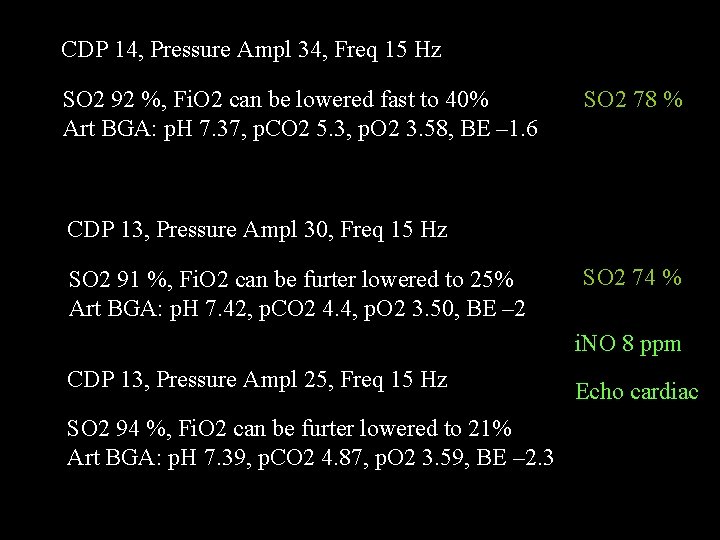
CDP 14, Pressure Ampl 34, Freq 15 Hz SO 2 92 %, Fi. O 2 can be lowered fast to 40% Art BGA: p. H 7. 37, p. CO 2 5. 3, p. O 2 3. 58, BE – 1. 6 SO 2 78 % CDP 13, Pressure Ampl 30, Freq 15 Hz SO 2 91 %, Fi. O 2 can be furter lowered to 25% Art BGA: p. H 7. 42, p. CO 2 4. 4, p. O 2 3. 50, BE – 2 SO 2 74 % i. NO 8 ppm CDP 13, Pressure Ampl 25, Freq 15 Hz SO 2 94 %, Fi. O 2 can be furter lowered to 21% Art BGA: p. H 7. 39, p. CO 2 4. 87, p. O 2 3. 59, BE – 2. 3 Echo cardiac
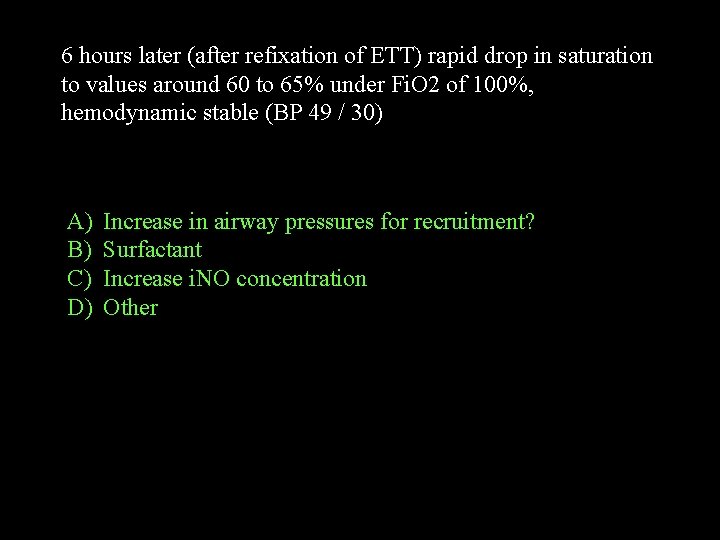
6 hours later (after refixation of ETT) rapid drop in saturation to values around 60 to 65% under Fi. O 2 of 100%, hemodynamic stable (BP 49 / 30) A) Increase in airway pressures for recruitment? BGA: B) Surfactant C) Increase i. NO concentration D) Other
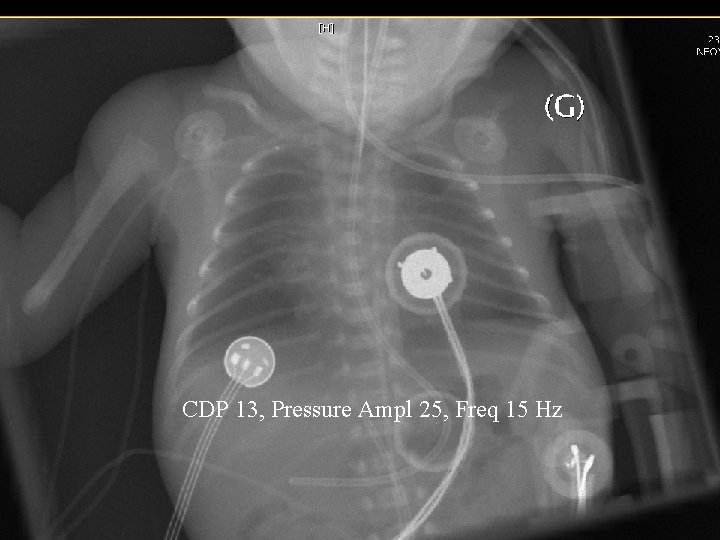
CDP 13, Pressure Ampl 25, Freq 15 Hz
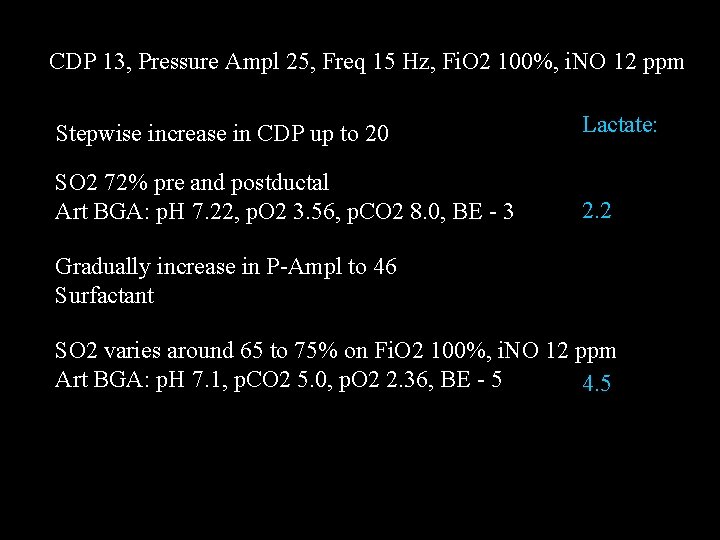
CDP 13, Pressure Ampl 25, Freq 15 Hz, Fi. O 2 100%, i. NO 12 ppm Stepwise increase in CDP up to 20 Lactate: SO 2 72% pre and postductal Art BGA: p. H 7. 22, p. O 2 3. 56, p. CO 2 8. 0, BE - 3 2. 2 Gradually increase in P-Ampl to 46 Surfactant SO 2 varies around 65 to 75% on Fi. O 2 100%, i. NO 12 ppm Art BGA: p. H 7. 1, p. CO 2 5. 0, p. O 2 2. 36, BE - 5 4. 5
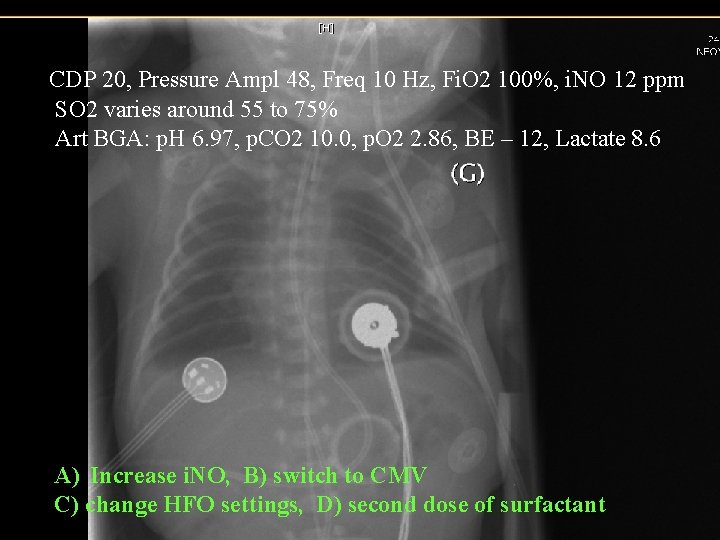
CDP 20, Pressure Ampl 48, Freq 10 Hz, Fi. O 2 100%, i. NO 12 ppm SO 2 varies around 55 to 75% Art BGA: p. H 6. 97, p. CO 2 10. 0, p. O 2 2. 86, BE – 12, Lactate 8. 6 A) Increase i. NO, B) switch to CMV C) change HFO settings, D) second dose of surfactant
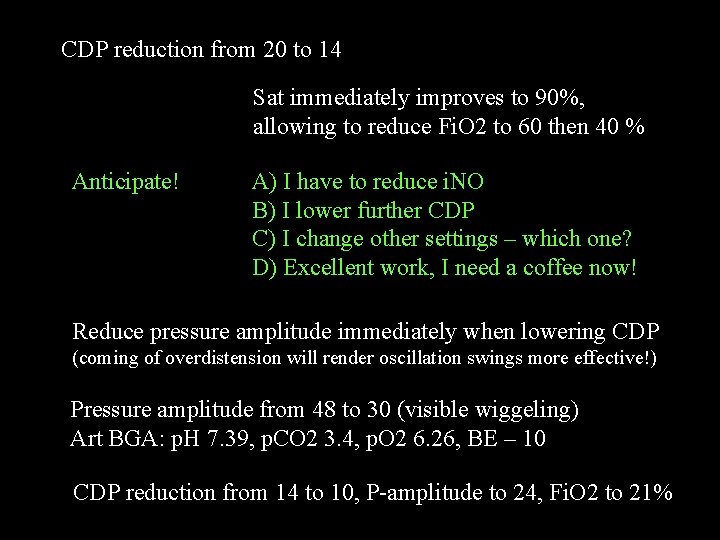
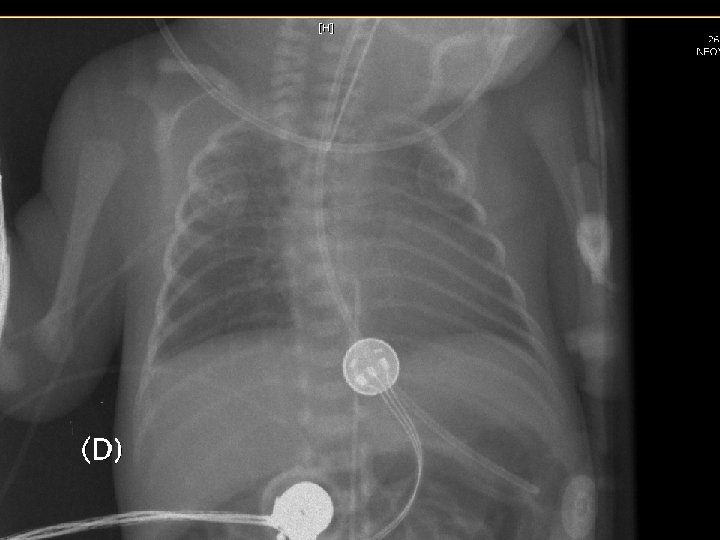
CDP reduction from 20 to 14 Sat immediately improves to 90%, allowing to reduce Fi. O 2 to 60 then 40 % Anticipate! A) I have to reduce i. NO B) I lower further CDP C) I change other settings – which one? D) Excellent work, I need a coffee now! Reduce pressure amplitude immediately when lowering CDP (coming of overdistension will render oscillation swings more effective!) Pressure amplitude from 48 to 30 (visible wiggeling) Art BGA: p. H 7. 39, p. CO 2 3. 4, p. O 2 6. 26, BE – 10 CDP reduction from 14 to 10, P-amplitude to 24, Fi. O 2 to 21%
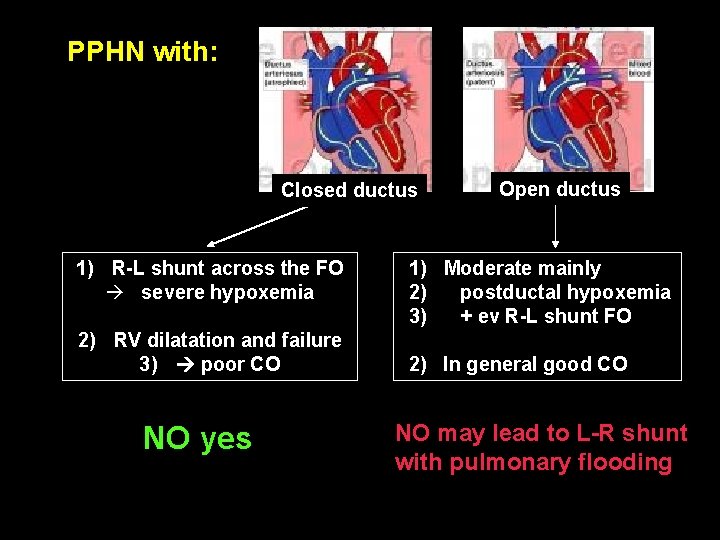
PPHN with: Closed ductus 1) R-L shunt across the FO severe hypoxemia 2) RV dilatation and failure 3) poor CO NO yes Open ductus 1) Moderate mainly 2) postductal hypoxemia 3) + ev R-L shunt FO 2) In general good CO NO may lead to L-R shunt with pulmonary flooding
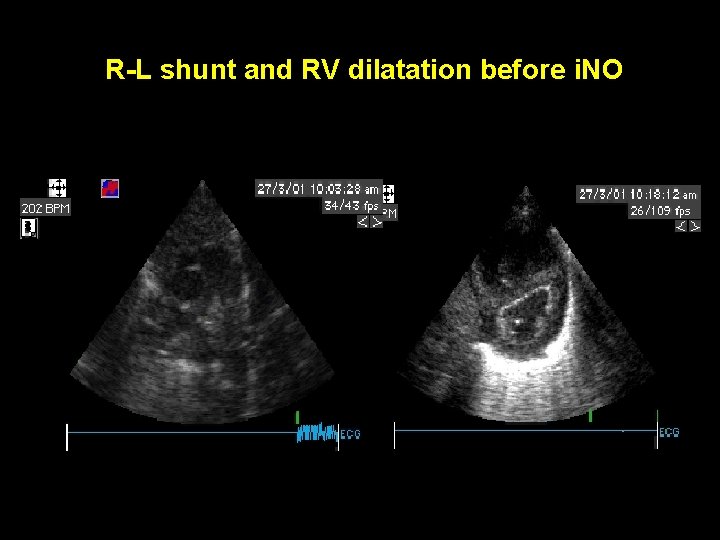
R-L shunt and RV dilatation before i. NO
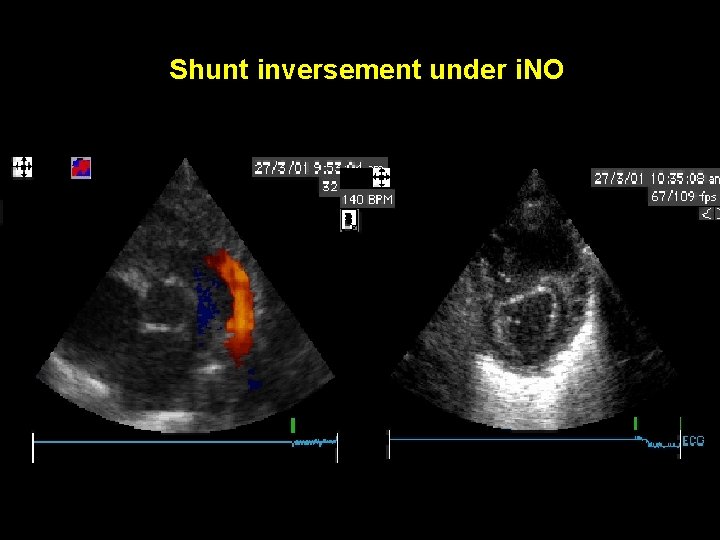
Shunt inversement under i. NO
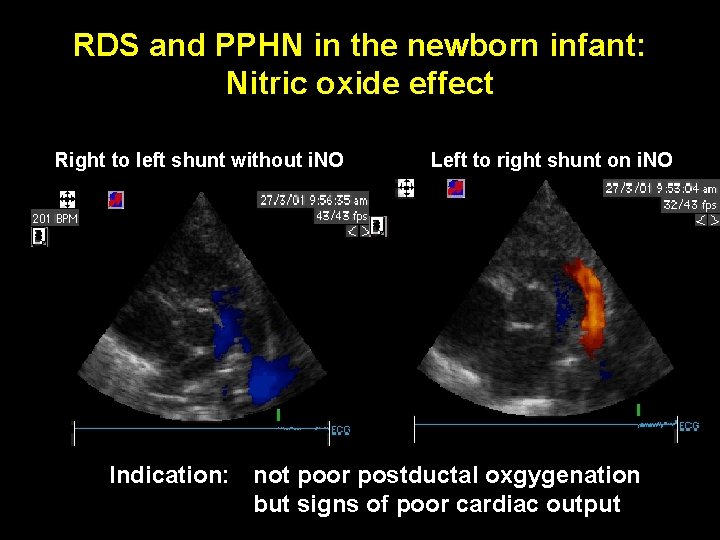
RDS and PPHN in the newborn infant: Nitric oxide effect Right to left shunt without i. NO PA Duct Ao Left to right shunt on i. NO PA Duct Ao Indication: not poor postductal oxgygenation but signs of poor cardiac output
Take home messages It is not always i. RDS that causes hypoxemia in the preterm infant If you don’t know what to do next with your ventilator settings reduce your airway pressures first Try to anticipate changes in respiratory mechanics and gas exchange before turning knobs on your ventilator
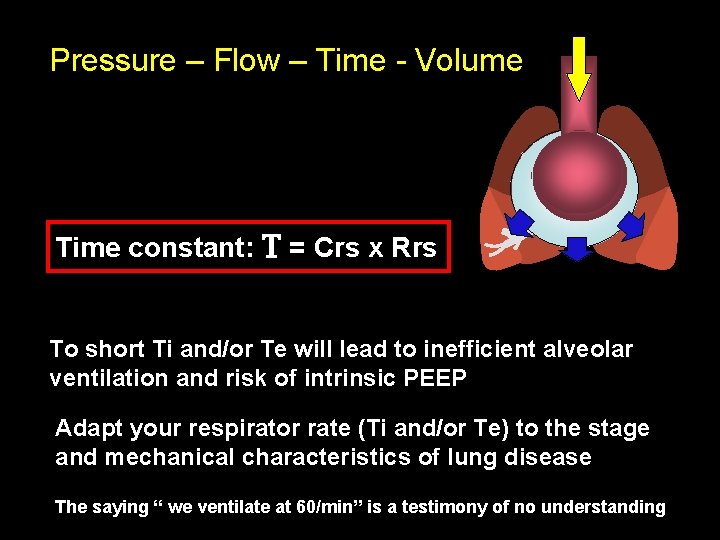
Pressure – Flow – Time - Volume Time constant: T = Crs x Rrs To short Ti and/or Te will lead to inefficient alveolar ventilation and risk of intrinsic PEEP Adapt your respirator rate (Ti and/or Te) to the stage and mechanical characteristics of lung disease The saying “ we ventilate at 60/min” is a testimony of no understanding
Take home messages In pulmonary disease lung volumes (functional for gas exchange) are usually reduced – the “need” for smaller VT than physiological VT is a logical consequence of this When you try to recruit a lung you need to have appropriate monitoring (CO 2!) If you don’t know what to do next with your ventilator settings reduce your airway pressures first Try to anticipate changes in respiratory mechanics and gas exchange before turning knobs on your ventilator
In situations of difficult ventilation an analytical approach is required 1) What are the characteristics of airway or lung disease? - type (etiology) of disease - stage of disease, history - mechanical behaviour 2) Is the problem “physician”-induced? 3) Which bedside method (monitoring) might be helpful during a PEEP trial?