
CAUSES OF GLOBAL CLIMATE CHANGE The Atmospheric Energy
CAUSES OF GLOBAL CLIMATE CHANGE
The Atmospheric Energy Balance • The Atmosphere is an OPEN ENERGY SYSTEM • Receives energy from both the sun and earth • Incoming solar radiation is referred to insolation • Most weather systems and climates run on solar energy • Some redistribution to the poles via wind and ocean currents
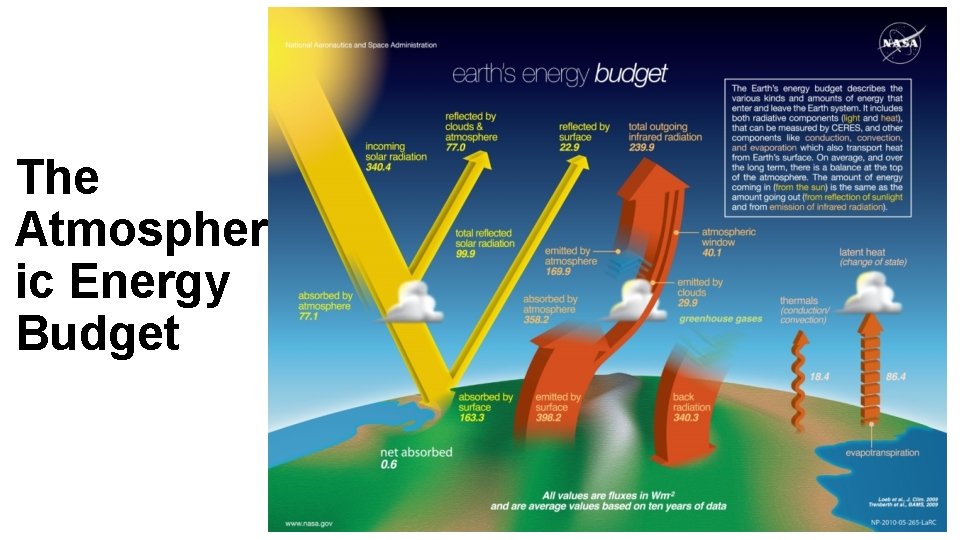
The Atmospher ic Energy Budget
• The atmosphere is always getting solar energy • But the temp of earth (at least until recently) didn’t get any hotter • BALANCE between inputs (insolation) and outputs (reradiation) • The recent heating (aka global warming) is linked with human activities • Land use • Fossil fuels • Under natural conditions balance is achieved in 3 main ways: 1. Radiation – from the sun 2. Convection – the transfer of heat by movement of a gas or liquid 3. Conduction – the transfer of heat by contact
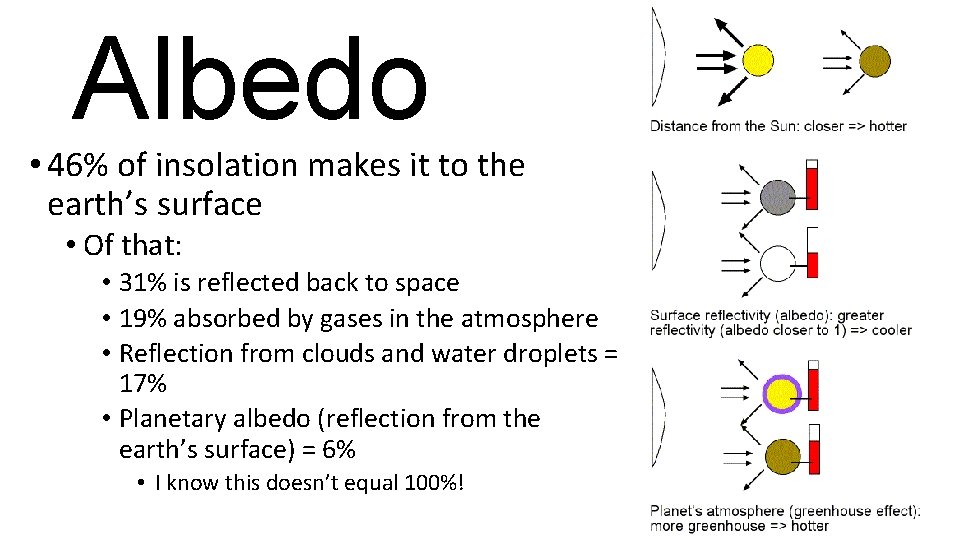
Albedo • 46% of insolation makes it to the earth’s surface • Of that: • 31% is reflected back to space • 19% absorbed by gases in the atmosphere • Reflection from clouds and water droplets = 17% • Planetary albedo (reflection from the earth’s surface) = 6% • I know this doesn’t equal 100%!
Radiation and the Energy Budget • Energy from the sun is SHORT WAVE radiation • Main input • Affected by latitude, season, cloud cover • Mostly in the visible wavelengths • Not absorbed by the Earth’s atmosphere – they heat the earth • Then admits long-wave radiation • Energy re-radiated from the earth is LONG WAVE • This long wave radiation is what heats the atmosphere • Most incoming (short wave) radiation is let through • CO 2 traps outgoing (long wave) radiation = warming the atmosphere
More on Long Wave Radiation • Again, this is energy from the Earth (a cold body) into the atmosphere • There is a bit of downward movement from particles in the atmosphere • The difference between the two is known as net radiation balance • During the day outgoing long-wave radiation is greater that means there is a net loss of energy from the earths surface • BUT clouds make a difference • At night if there are no / few clouds there will be a large loss of long wave radiation • If there are clouds they return some of the energy which reduces the overall loss • Think of the desert • Hot days but also really cold nights
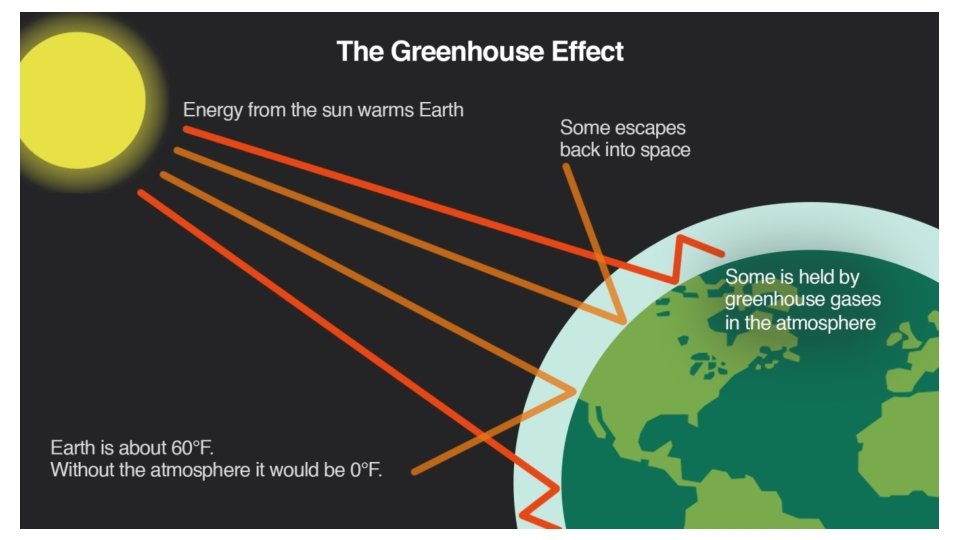
The Greenhouse Effect • The process by which certain gases (Water vapor, CO 2, methane, CFCs) allow short wave radiation from the sun to pass through the atmosphere • But trap an increasing proportion of outgoing long wave radiation from the earth • This is actually a good thing • It’s what allows there to be life on Earth
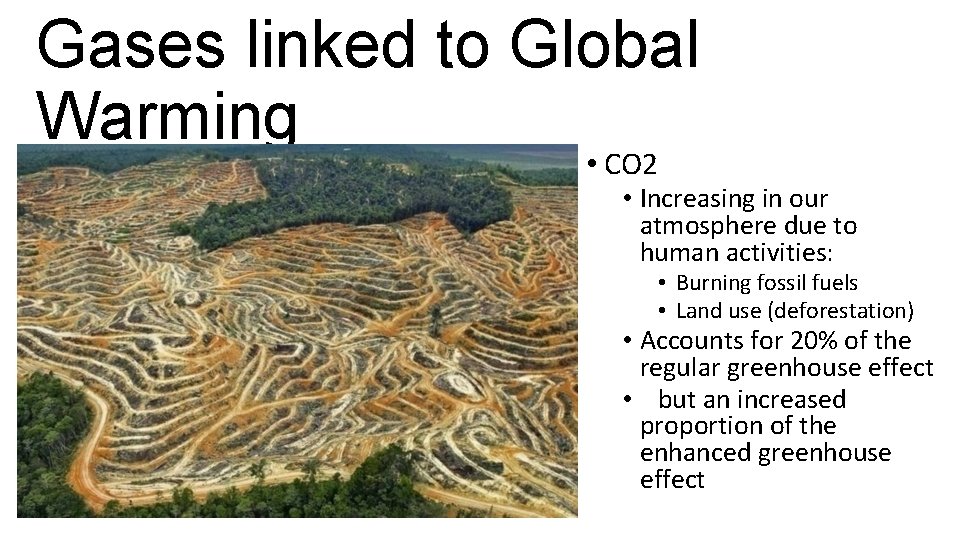
Gases linked to Global Warming • CO 2 • Increasing in our atmosphere due to human activities: • Burning fossil fuels • Land use (deforestation) • Accounts for 20% of the regular greenhouse effect • but an increased proportion of the enhanced greenhouse effect
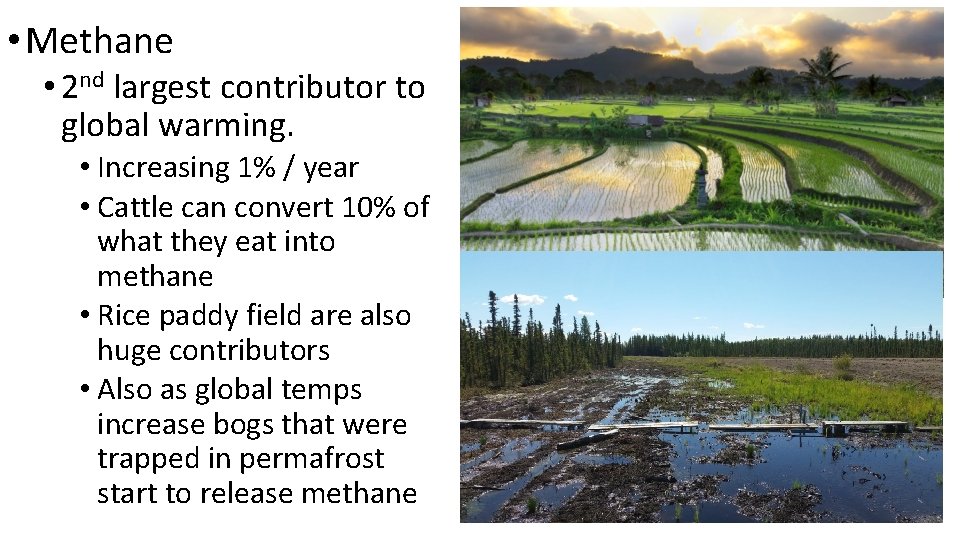
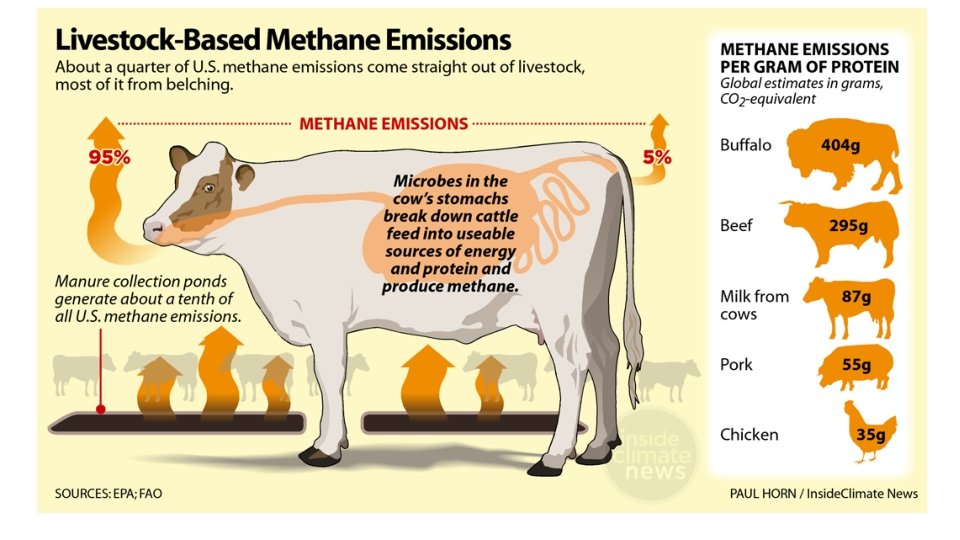
• Methane • 2 nd largest contributor to global warming. • Increasing 1% / year • Cattle can convert 10% of what they eat into methane • Rice paddy field are also huge contributors • Also as global temps increase bogs that were trapped in permafrost start to release methane
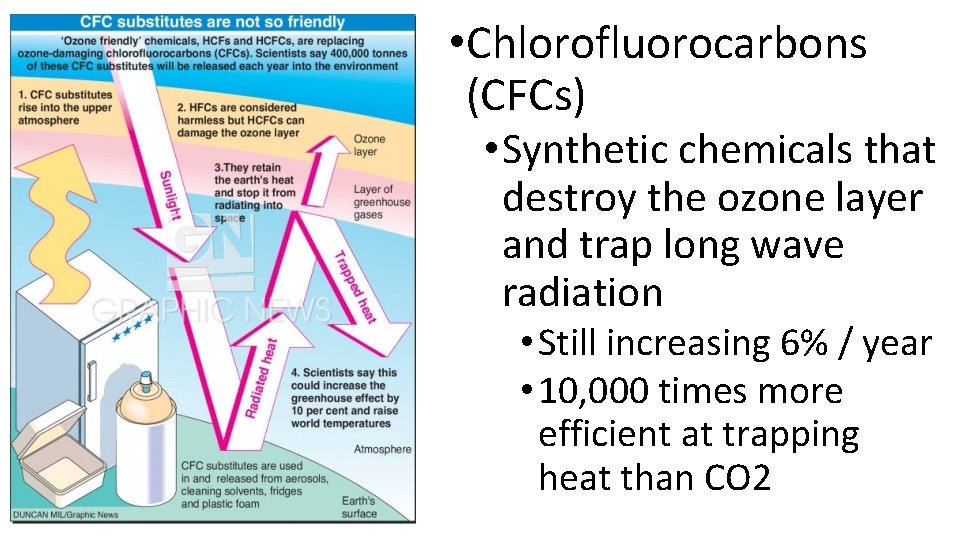
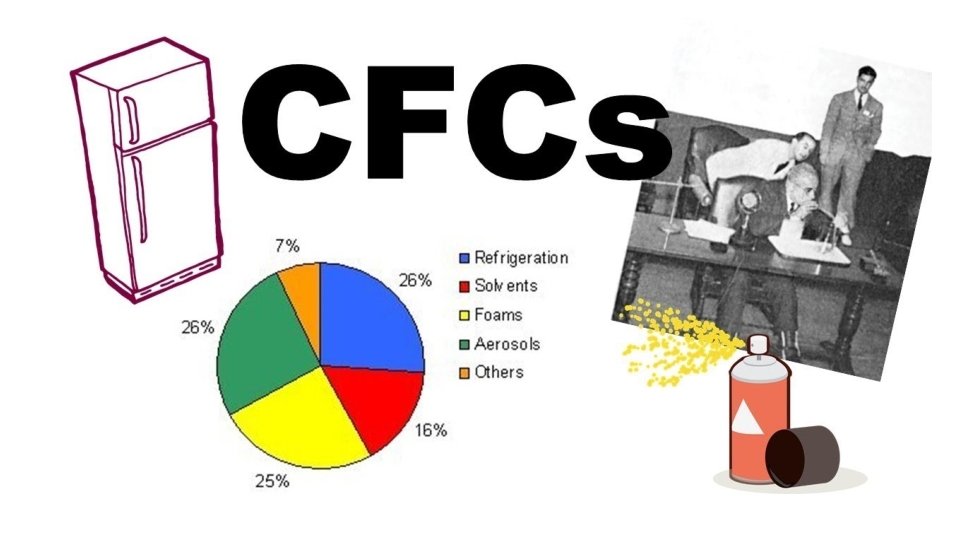
• Chlorofluorocarbons (CFCs) • Synthetic chemicals that destroy the ozone layer and trap long wave radiation • Still increasing 6% / year • 10, 000 times more efficient at trapping heat than CO 2
Wrapping Things Up • What is the ozone layer? • What is albedo? • Explain the difference between the natural and enhanced greenhouse effect.
- Slides: 15