
Cause of Erosion Flipbook Notes The most severe
Cause of Erosion Flipbook Notes

§ The most severe type of rainfall erosion is gully erosion. § This takes place when rapid flows of water create narrow channels. Rainfall § It may take place after heavy rains or from melting snow.
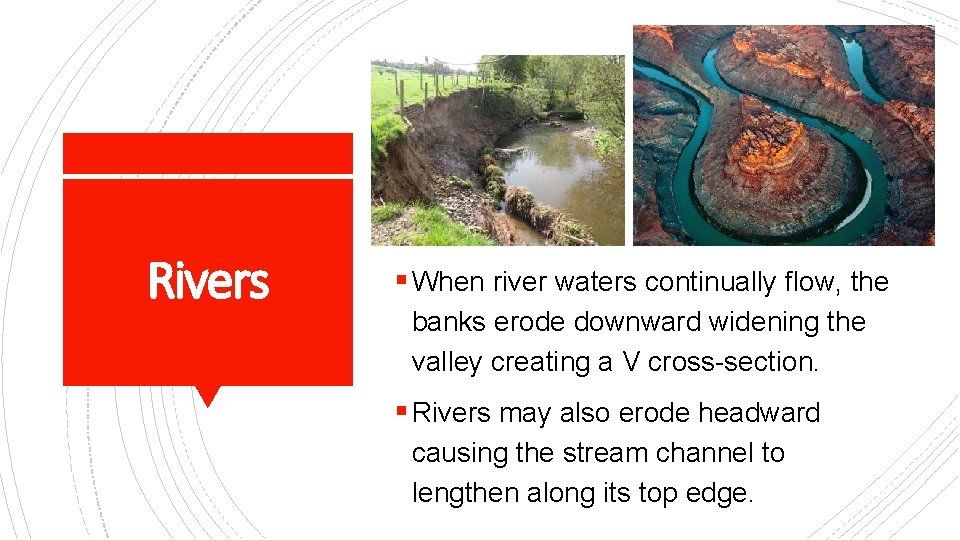
Rivers § When river waters continually flow, the banks erode downward widening the valley creating a V cross-section. § Rivers may also erode headward causing the stream channel to lengthen along its top edge.

§ Coastal erosion occurs through the action of waves and tidal changes. § Wave pounding and abrasion are caused from the energy of the sea hitting the shoreline. Coastal § Carbonic acid in sea water may also cause corrosion.
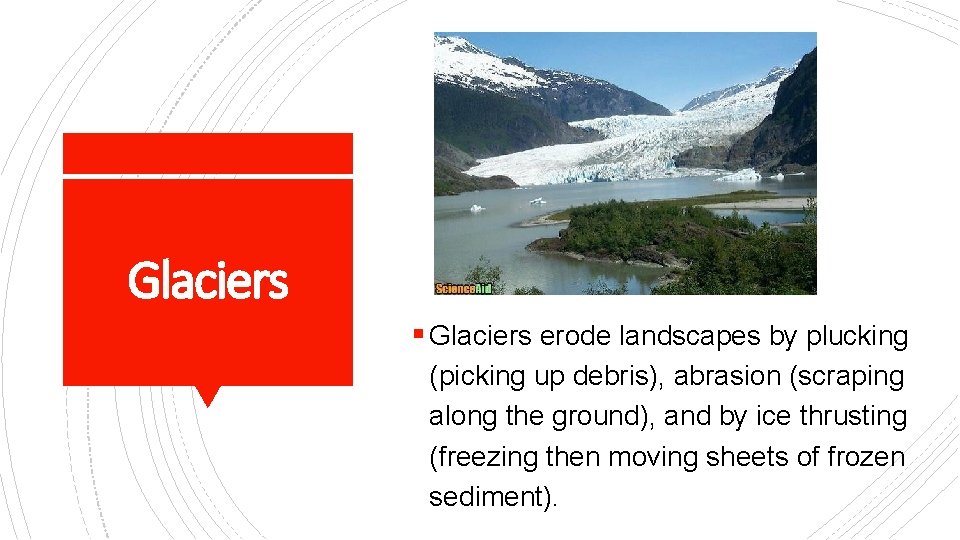
Glaciers § Glaciers erode landscapes by plucking (picking up debris), abrasion (scraping along the ground), and by ice thrusting (freezing then moving sheets of frozen sediment).
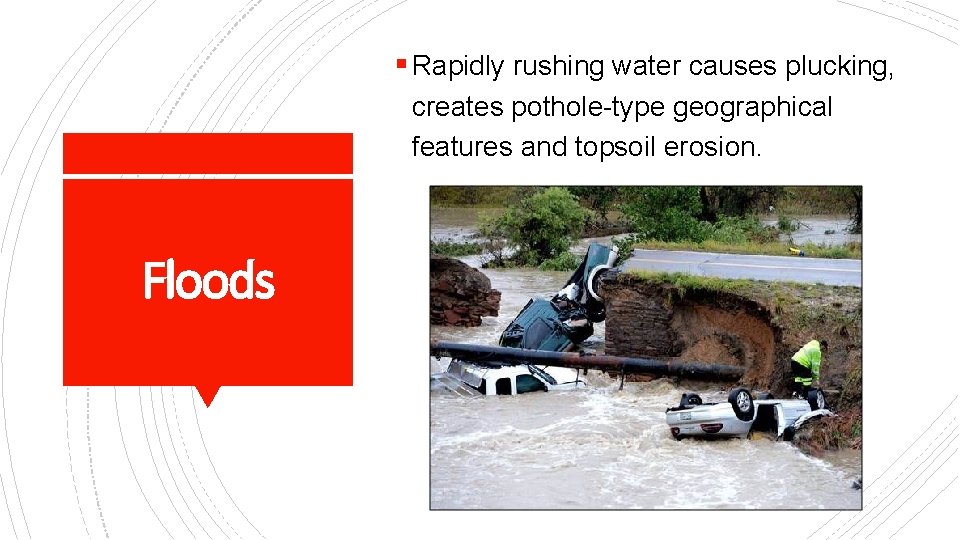
§ Rapidly rushing water causes plucking, creates pothole-type geographical features and topsoil erosion. Floods

§ Cold weather causes trapped water to freeze and expand causing rocks to break into pieces. Freezing and Thawing § When this occurs on mountainsides, gravity can pull the broken rock fragments down causing hazards.
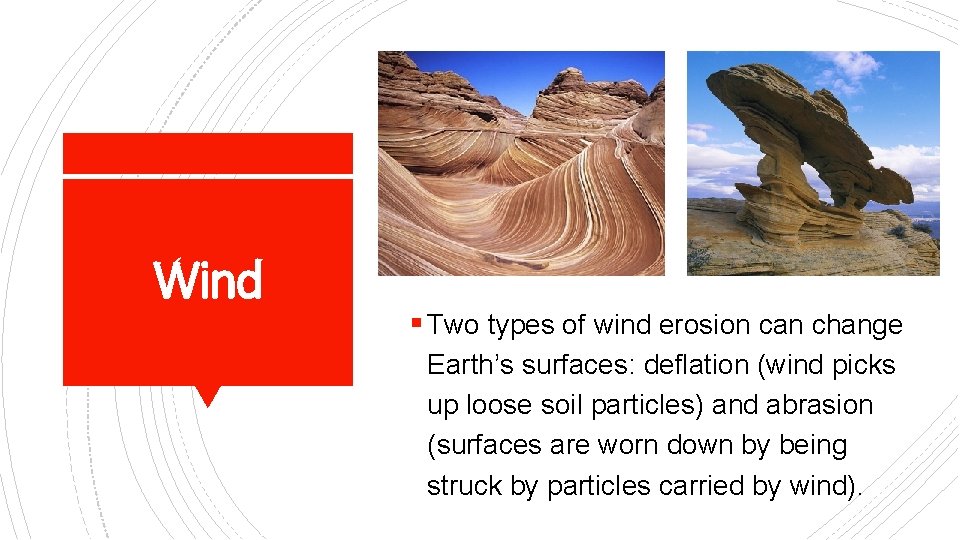
Wind § Two types of wind erosion can change Earth’s surfaces: deflation (wind picks up loose soil particles) and abrasion (surfaces are worn down by being struck by particles carried by wind).
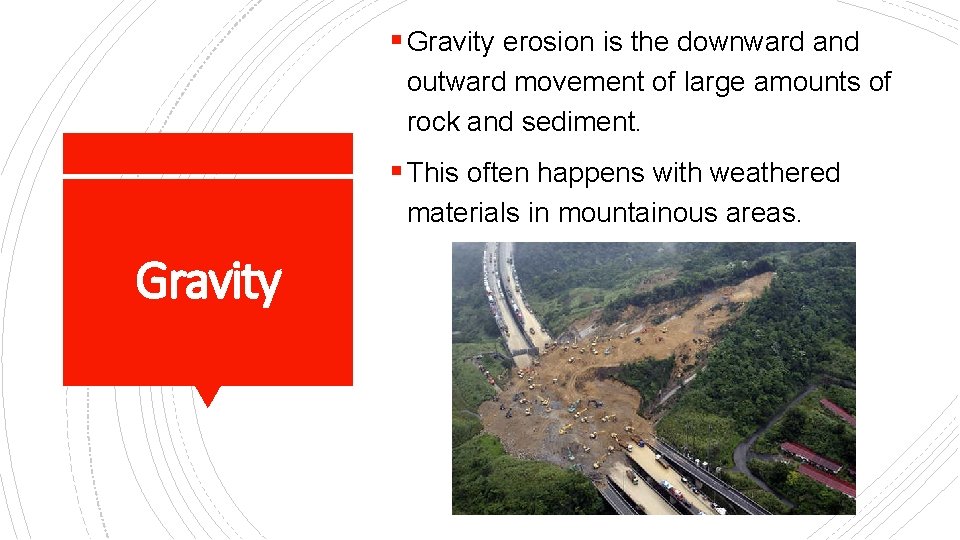
§ Gravity erosion is the downward and outward movement of large amounts of rock and sediment. § This often happens with weathered materials in mountainous areas. Gravity
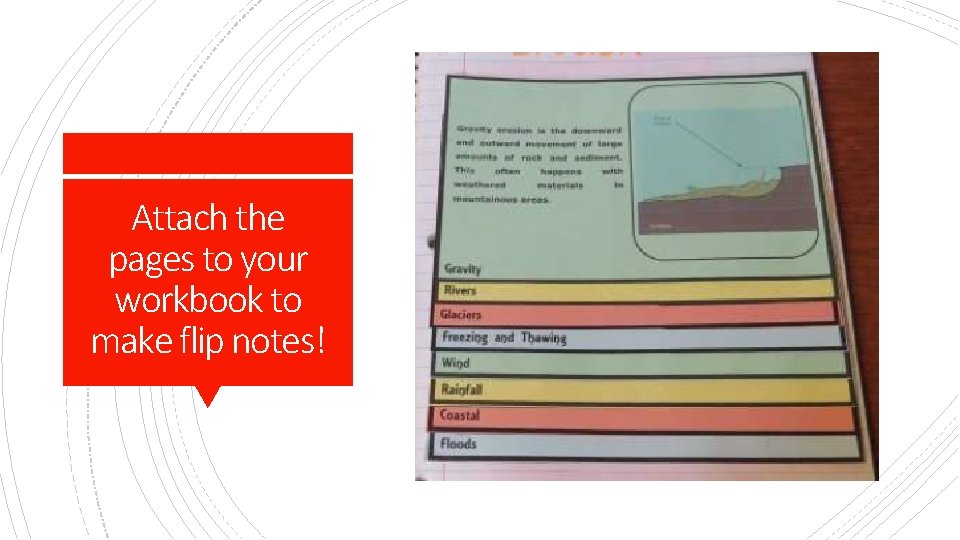
Attach the pages to your workbook to make flip notes!
- Slides: 10