
Cause and Effect Relationships of the Ecological Systems

- Slides: 37
Cause and Effect Relationships of the Ecological Systems Prepared by: NOROLAIN D. GURO Msi. Ed-Math
Key Concepts • Ecology • Energy Flow • Ecosystem Diversity • Natural Ecosystem Changes
Ecology a science that deals with the relationships between groups of living things and their environments.
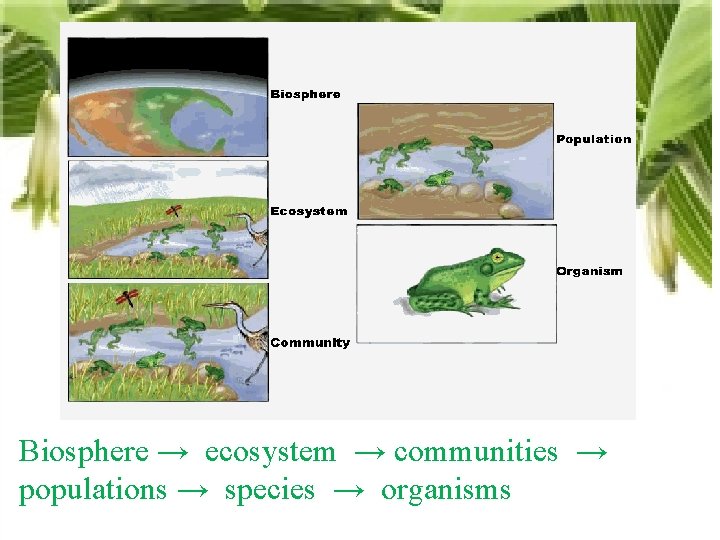
Biological Populations and Communities • Intraspecific – same species that • • interact with each other and occupy a specific area creates population Interspecific – different species living and interacting in same area form community Ecosystem – system formed by the interelation of a community with their environment.
Biosphere → ecosystem → communities → populations → species → organisms
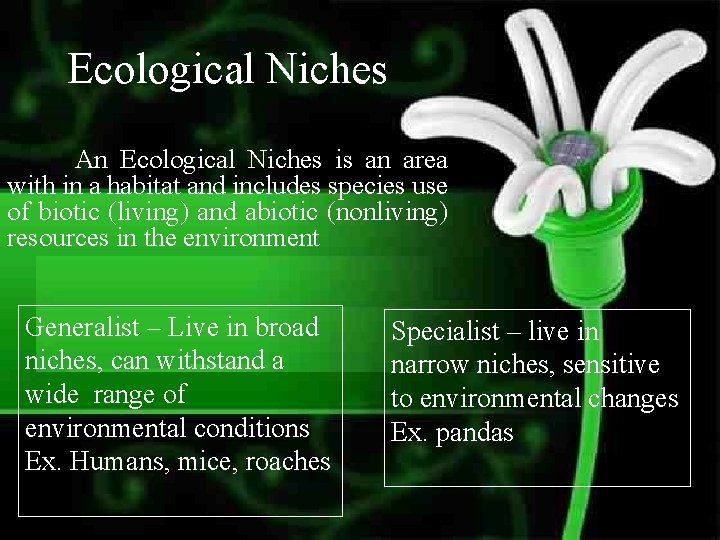
Ecological Niches An Ecological Niches is an area with in a habitat and includes species use of biotic (living) and abiotic (nonliving) resources in the environment Generalist – Live in broad niches, can withstand a wide range of environmental conditions Ex. Humans, mice, roaches Specialist – live in narrow niches, sensitive to environmental changes Ex. pandas
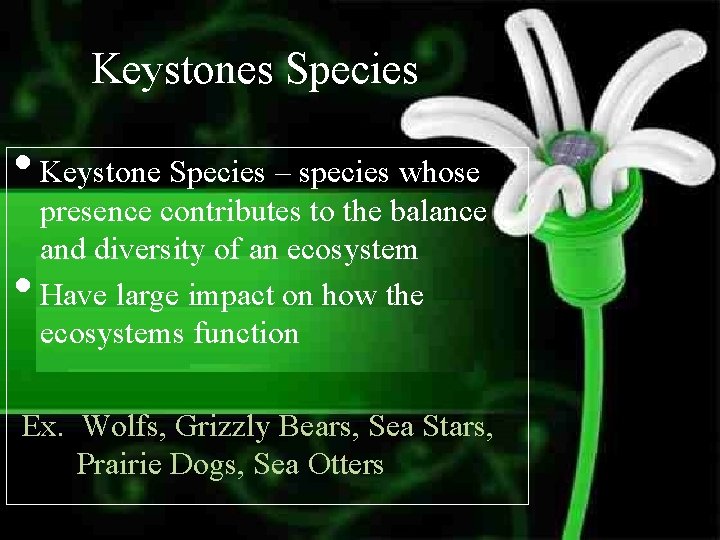
Keystones Species • Keystone Species – species whose • presence contributes to the balance and diversity of an ecosystem Have large impact on how the ecosystems function Ex. Wolfs, Grizzly Bears, Sea Stars, Prairie Dogs, Sea Otters
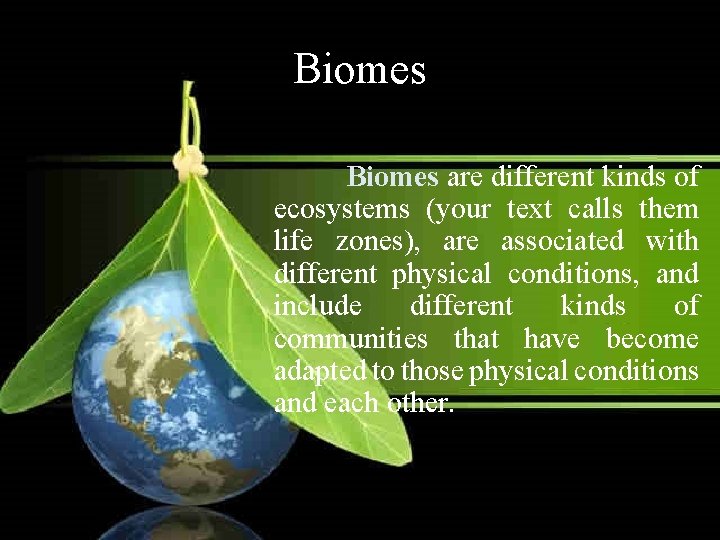
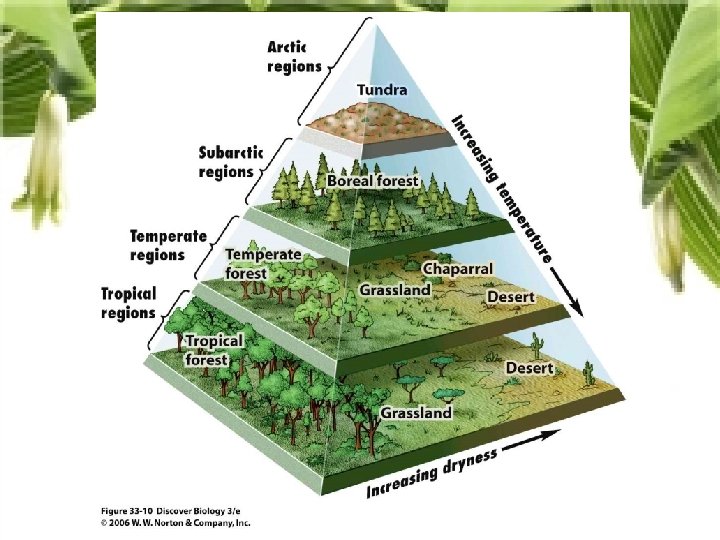
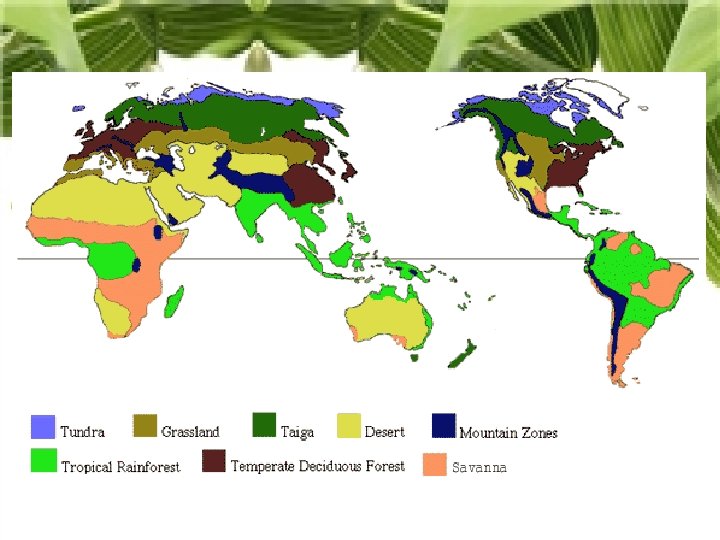
Biomes are different kinds of ecosystems (your text calls them life zones), are associated with different physical conditions, and include different kinds of communities that have become adapted to those physical conditions and each other.
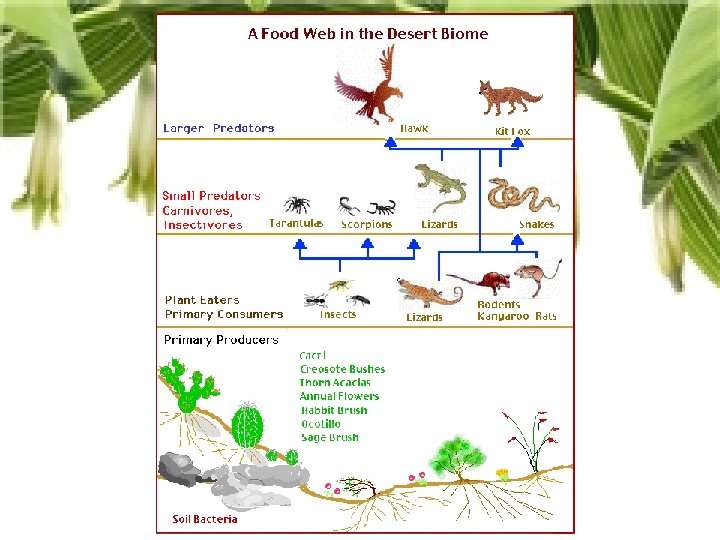
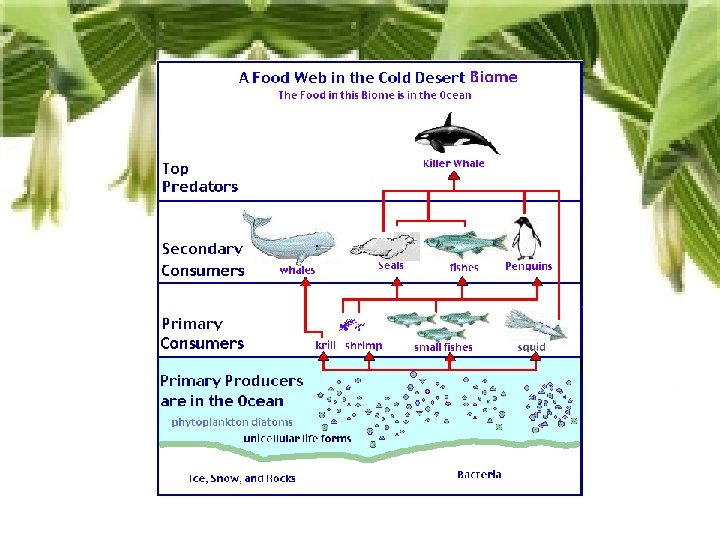
Biomes • Freshwater ecosystems are: ponds and lakes; streams and • • rivers and wetlands. Wetlands include bogs, swamps and marshes and contain the most species of any of the planet's ecosystems. Marine ecosystems are: oceans, coral reefs and estuaries. The oceans are the world's largest ecosystems and are considered to cover the shore as far as tidal waters come in. Desert ecosystems are: hot and dry deserts, semi-arid, coastal and cold. While we often think of deserts and heats as synonymous,
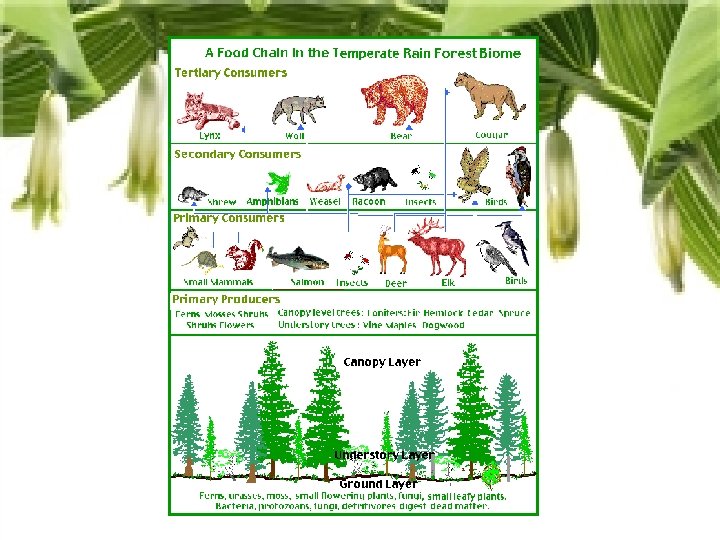
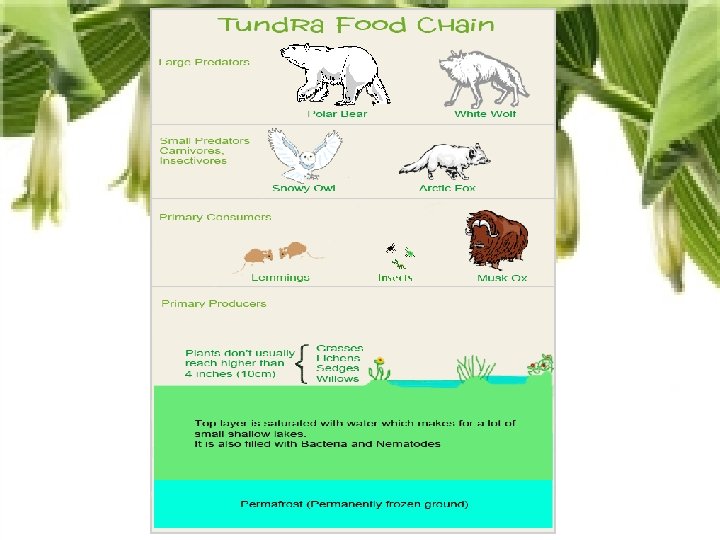
• • • parts of the Arctic and Antarctic are classified as deserts because of their low rainfall. Forest ecosystems are: tropical, temperate and boreal. Tropical forests include the great rainforests, which, with their incredible diversity of species and importance as carbon sinks are a focus for environmentalists. Boreal forests, also called taiga, are the largest biome on land. Grasslands are: tropical (or savannas) and temperate. Temperate grasslands include the great American prairies and the Russian steppe. Tundra ecosystems are: arctic and alpine.
Species Diversity Organisms that live in different environments are specifically adapted to their biome. The main types are: • Aquatic organism • Desert Organism • Grassland Organism • Forest Organism • Tundra Organisms • Temperatures scrub forest land Organisms
Edge Effects – How the local environment changes along some type of boundary or edge. An example is forest edge created when trees are clear cut, some species survive well while other animals do not do well in this edge. Negative edge effects become most extreme when forest meets suburbs. Open community – edge effect is gradual or has indistinct boundaries Closed community – sharply divided from its neighbours • •
Energy Flow
Energy Flow The ultimate source of energy is the sun Photosynthesis – plants take in carbon dioxide, water and light energy to make carbohydrates and oxygen. Cellular Respiration – opposite of photosynthesis, glucose is oxidized by cells to produce carbon dioxide, water, and chemical energy. • •
Food Webs and Trophic Levels • Trophic Level – Each feeding in food chain • Primary Producers (autotrophs) – plants that use photosynthesis to create energy • Primary Consumers (heterotrophs) – herbivores (plant eaters), get energy by eating autotrophs. • Secondary Consumers (heterotrophs) – Obtain food energy by consuming other organisms, carnivores (meat eaters) or omnivores (eats both plants and animals)
Ecological Pyramids • • • Ecological pyramids begin with producers on the bottom (such as plants) and proceed through the various trophic levels (such as herbivores that eat plants, then carnivores that eat herbivores, then carnivores that eat those carnivores and so on). The highest level is the top of the food chain. Sunlight is the ultimate source of energy Potential energy is lost as you move up an energy pyramid. This is like the second law of thermodynamics, some energy is transferred to surroundings as heat as no process can be 100% effective An average of 90% energy loss as one moves to the next higher trophic level
Ecosystem Diversity
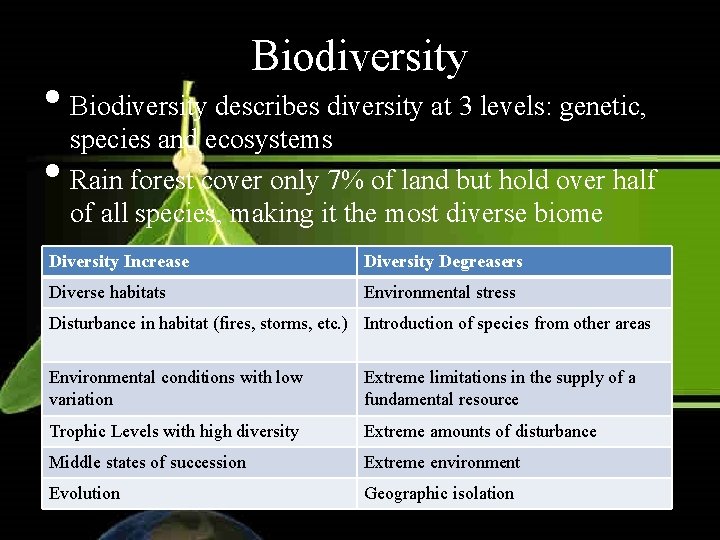
Biodiversity • Biodiversity describes diversity at 3 levels: genetic, species and ecosystems • Rain forest cover only 7% of land but hold over half of all species, making it the most diverse biome Diversity Increase Diversity Degreasers Diverse habitats Environmental stress Disturbance in habitat (fires, storms, etc. ) Introduction of species from other areas Environmental conditions with low variation Extreme limitations in the supply of a fundamental resource Trophic Levels with high diversity Extreme amounts of disturbance Middle states of succession Extreme environment Evolution Geographic isolation
Natural Selection Natural selection occurs by determining which traits organism have that help survive, reproduce, and pass those traits on. Natural selection leads to evolution, which describe how species attain genetic traits allow them to survive in changing environments. Natural selection operates in three ways: • Stabilizing • • – Most common, affects extremes of a population individual too far average are removed, decrease in diversity and no evolution Directional – Affects only one side of the extreme Disruptive – Acts against the average, favours individual at the extreme ends, population changes, evolution occurs.
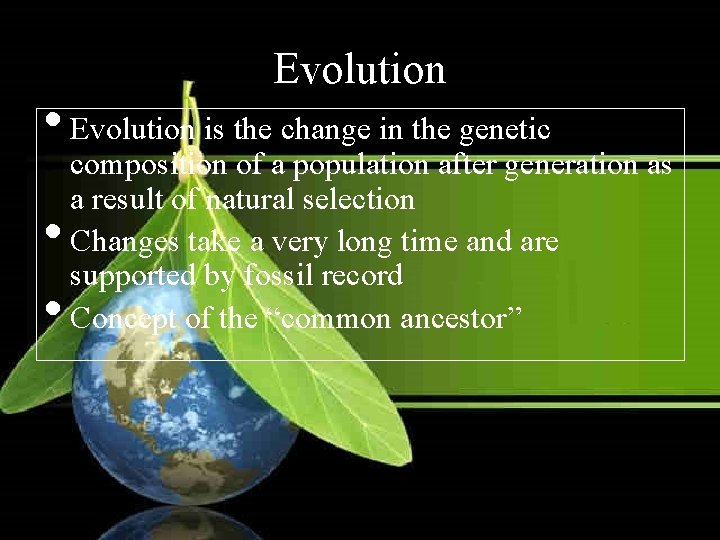
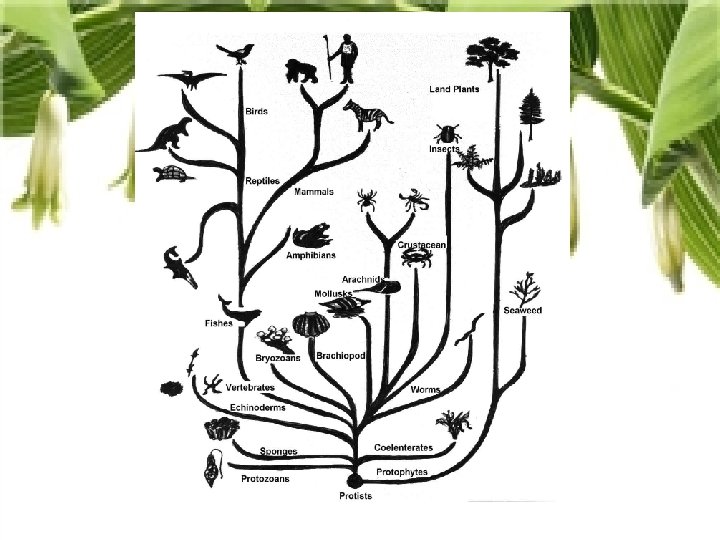
Evolution • Evolution is the change in the genetic • • composition of a population after generation as a result of natural selection Changes take a very long time and are supported by fossil record Concept of the “common ancestor”
Evolution Speciation – result when segment of a population become so isolated that gene flow stops. Adaptive radiation describes this. Convert evolution – process where organisms are not closely related to each other but acquire similar characteristics while in different ecosystems Ex. Wings on bird and bats Evolution Relay – when independent species acquire similar characteristics from their evolution in similar ecosystems but not at the same time.
Parallel Evolution – different species evolve together at same time in same ecosystem acquire similar characteristics Gradualism – views evolution as slow, over millions of years Punctuated Equilibrium – some species arose suddenly in short period of time (thousands of years) after long periods of stability
Ecosystem Services – processes by which the environment produces resources, like clean water, timber etc. Ecosystems provide the following services: Moderate weather extremes and their impacts Disperse seeds, Generate and preserve soils Mitigate droughts and floods • • •
• Cycle and move nutrients • Protects river channels and coastal shores from erosion • Detoxify and decompose waste • Control agricultural pests • Maintain biodiversity • Contribute to climate stability • Purify the air and water • Regulate disease-carrying organisms • Pollinate crops and natural vegetation
Natural Ecosystem Changes
Climate Shifts Earth’s climate has gone through many cycles of warming and cooling trends Factors that influence the climate: Albedo – reflectivity, the highest albedo is snow, ice and dust in atmosphere. High albedo cause cooling Carbon cycle – production of carbon dioxide (CO 2) results in warming Greenhouse effect – water, carbon dioxide, and methane, keeps earth warm but taken to far can over heat it • • •
• Landmass distribution – materials absorb and reflect solar radiation to different extents • Plate tectonics and Volcanoes – plates effects atmospheric CO and Volcanoes produces CO • Precession – the wobble of Earth on its axis and changes to its orientation in effect climate • Solar output – can change Earth’s temperature. 2 2
Species Movements • Movement is important for many organisms, • like birds flying large distances or plant seeds being moved by wind Organisms move to new habitats in order to reduce intraspecific competition
Ecological Succession – the gradual and orderly process of ecosystems development, describing changes in an ecosystem through time and disturbance. Types of Succession: Allogenic Primary Progressive Retrogressive Secondary • • •
References • Ecology. http: //www. merriamwebster. com/dictionary/ecology • Ecology. http: //www. csus. edu/indiv/l/loom/lect%203132%20 s 07. htm • AP Environmental Science Review: Ecological Systems. http: //youtu. be/Fd. QVW 1 o. TRG 0