
Causal Consistency COS 418 Distributed Systems Lecture 16
Causal Consistency COS 418: Distributed Systems Lecture 16 Michael Freedman
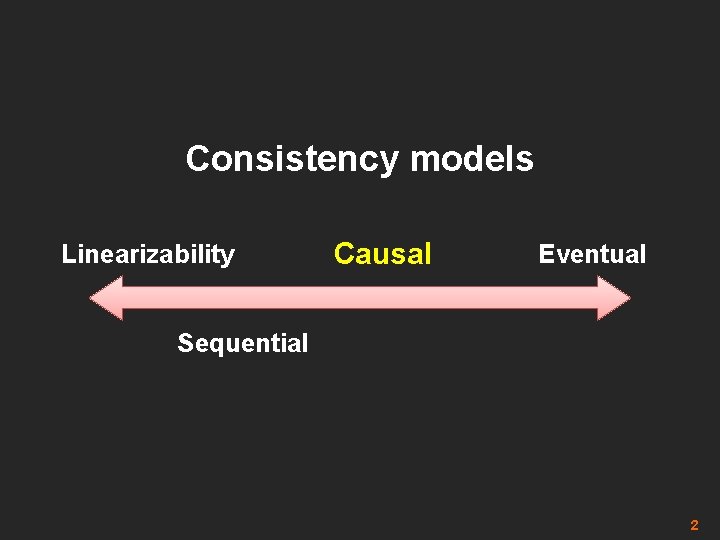
Consistency models Linearizability Causal Eventual Sequential 2
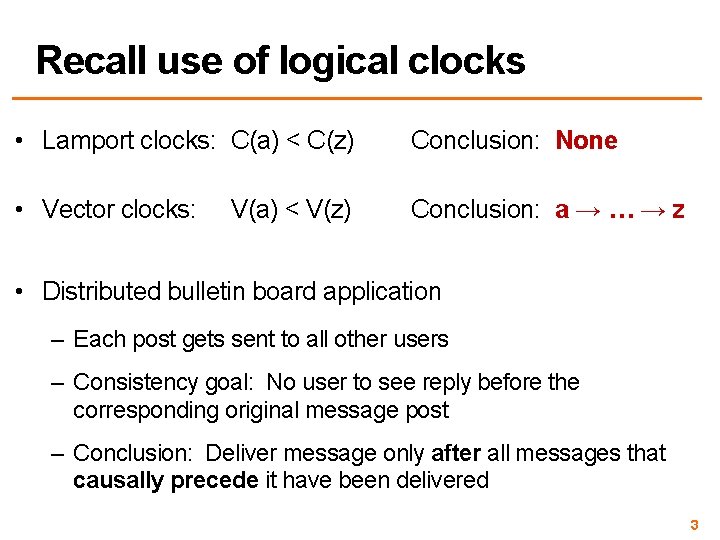
Recall use of logical clocks • Lamport clocks: C(a) < C(z) Conclusion: None • Vector clocks: Conclusion: a → … → z V(a) < V(z) • Distributed bulletin board application – Each post gets sent to all other users – Consistency goal: No user to see reply before the corresponding original message post – Conclusion: Deliver message only after all messages that causally precede it have been delivered 3
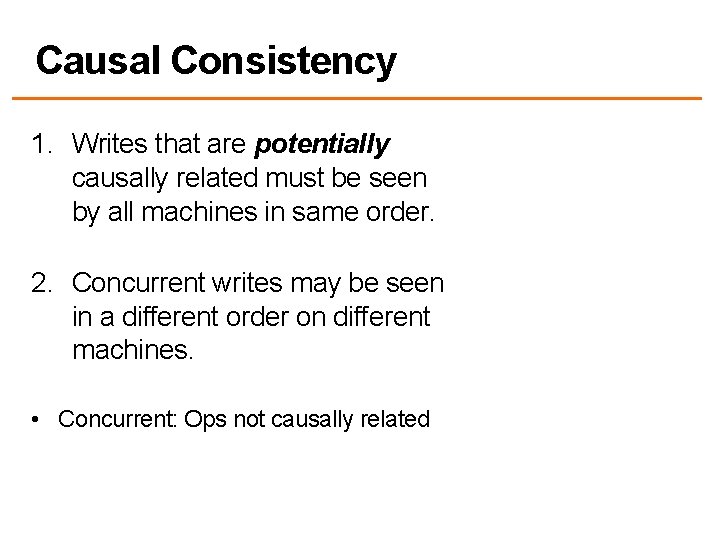
Causal Consistency 1. Writes that are potentially causally related must be seen by all machines in same order. 2. Concurrent writes may be seen in a different order on different machines. • Concurrent: Ops not causally related
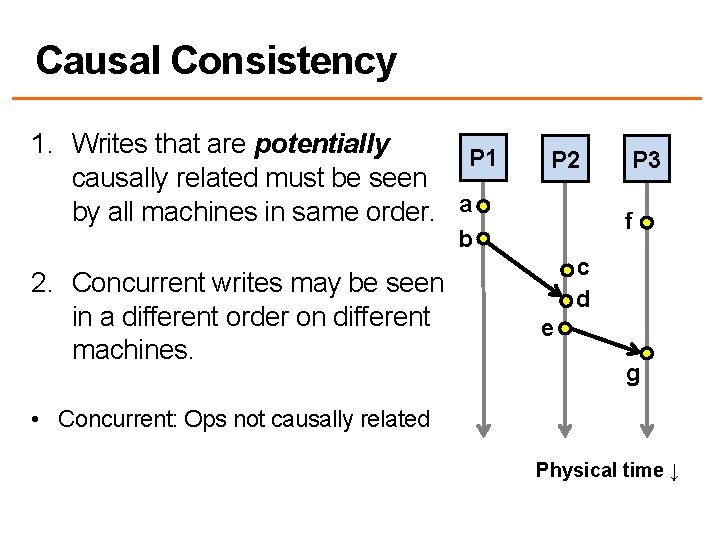
Causal Consistency 1. Writes that are potentially P 1 causally related must be seen by all machines in same order. a P 2 f b 2. Concurrent writes may be seen in a different order on different machines. P 3 c d e g • Concurrent: Ops not causally related Physical time ↓
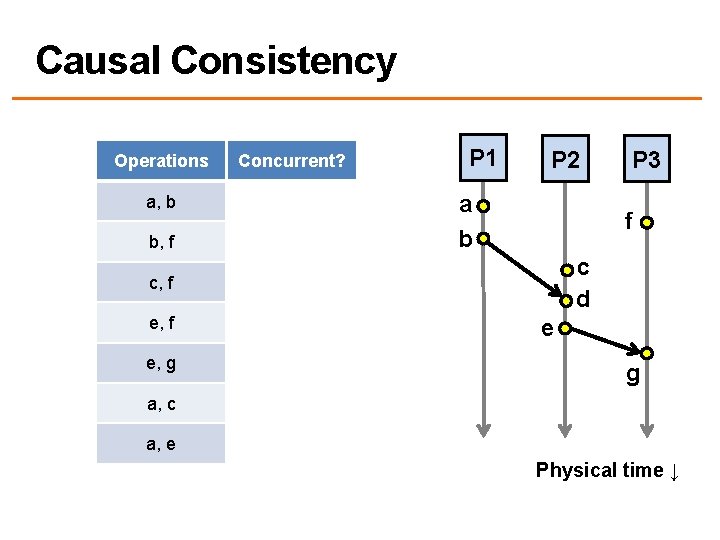
Causal Consistency Operations Concurrent? a, b N b, f Y c, f Y e, g N a, c Y a, e N P 1 P 2 a b P 3 f c d e g Physical time ↓
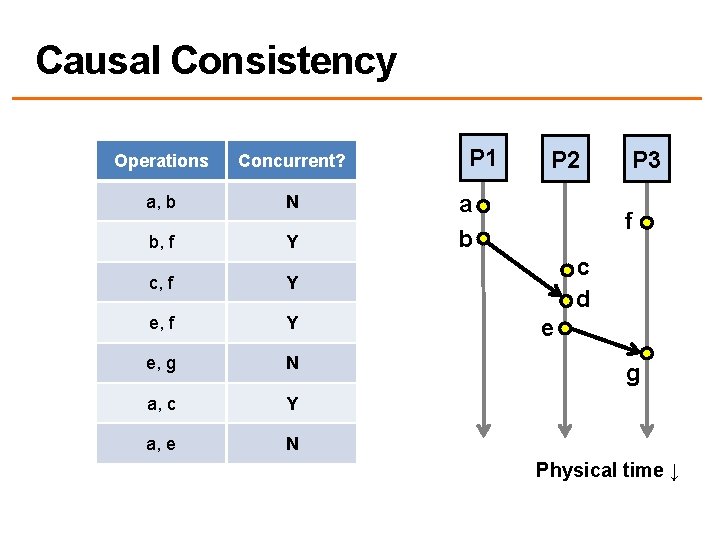
Causal Consistency Operations Concurrent? a, b N b, f Y c, f Y e, g N a, c Y a, e N P 1 P 2 a b P 3 f c d e g Physical time ↓
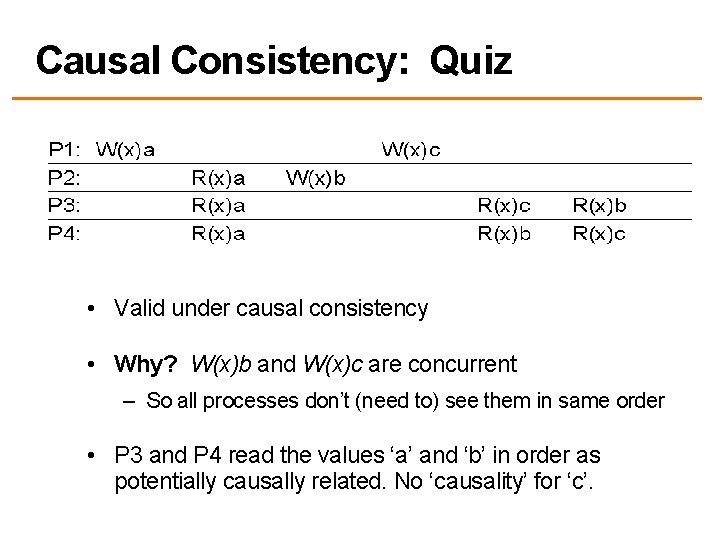
Causal Consistency: Quiz • Valid under causal consistency • Why? W(x)b and W(x)c are concurrent – So all processes don’t (need to) see them in same order • P 3 and P 4 read the values ‘a’ and ‘b’ in order as potentially causally related. No ‘causality’ for ‘c’.
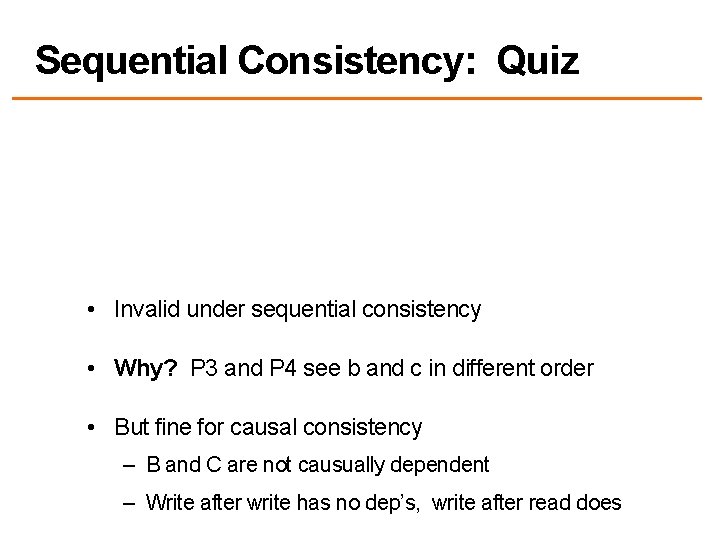
Sequential Consistency: Quiz • Invalid under sequential consistency • Why? P 3 and P 4 see b and c in different order • But fine for causal consistency – B and C are not causually dependent – Write after write has no dep’s, write after read does
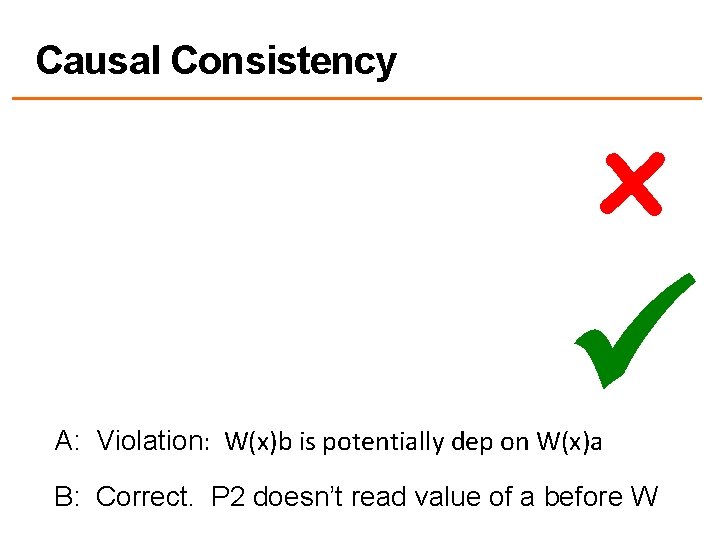
Causal Consistency x A: Violation: W(x)b is potentially dep on W(x)a B: Correct. P 2 doesn’t read value of a before W
Causal consistency within replication systems 11
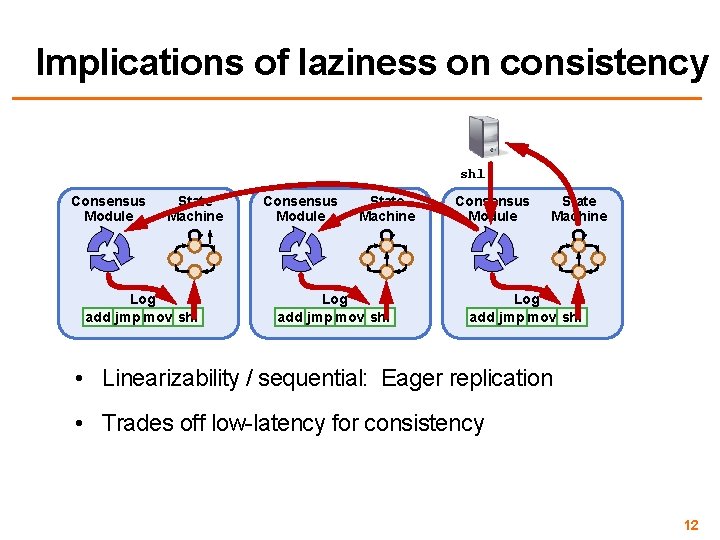
Implications of laziness on consistency shl Consensus Module State Machine Log add jmp mov shl • Linearizability / sequential: Eager replication • Trades off low-latency for consistency 12
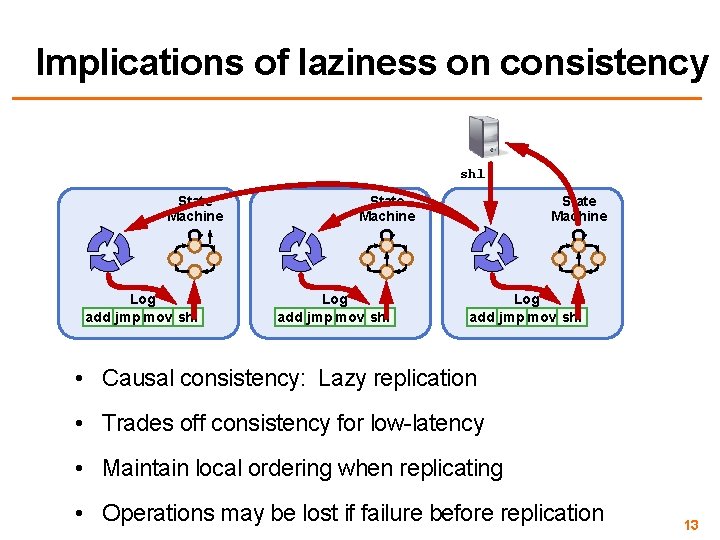
Implications of laziness on consistency shl State Machine Log add jmp mov shl • Causal consistency: Lazy replication • Trades off consistency for low-latency • Maintain local ordering when replicating • Operations may be lost if failure before replication 13
Don't Settle for Eventual: Scalable Causal Consistency for Wide-Area Storage with COPS W. Lloyd, M. Freedman, M. Kaminsky, D. Andersen SOSP 2011 14
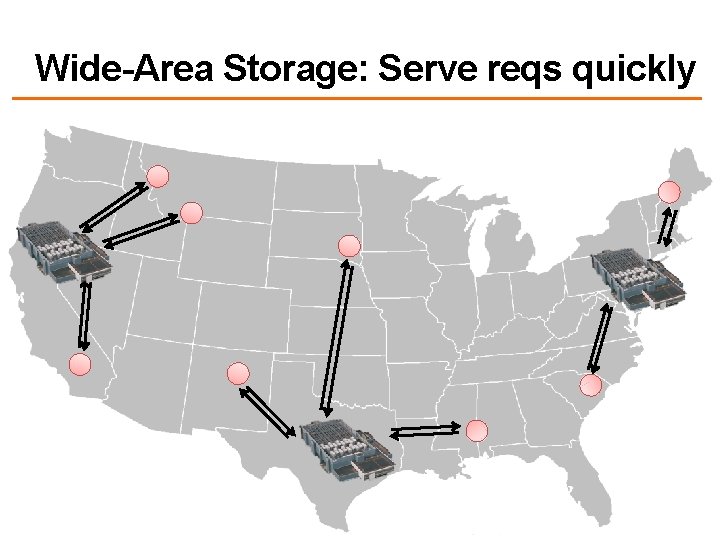
Wide-Area Storage: Serve reqs quickly
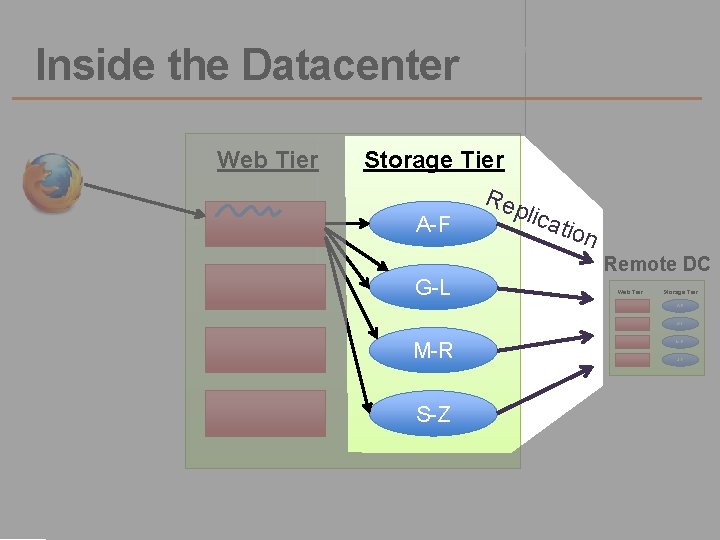
Inside the Datacenter Web Tier Storage Tier A-F Rep l icat ion Remote DC G-L Web Tier Storage Tier A-F G-L M-R S-Z
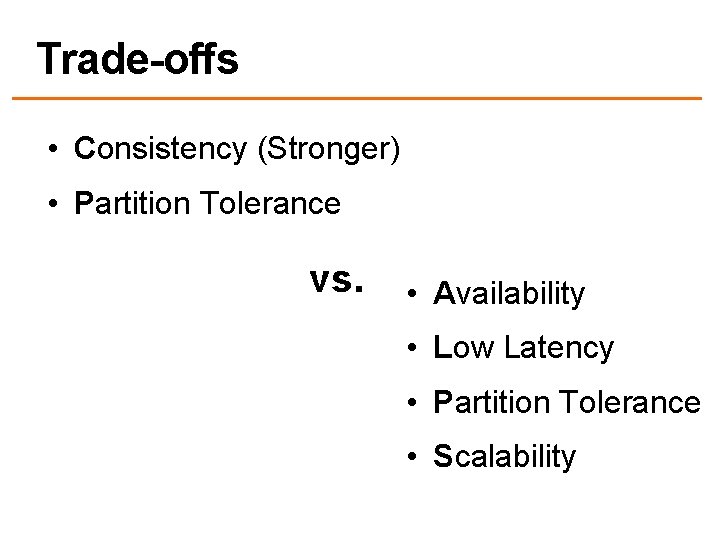
Trade-offs • Consistency (Stronger) • Partition Tolerance vs. • Availability • Low Latency • Partition Tolerance • Scalability
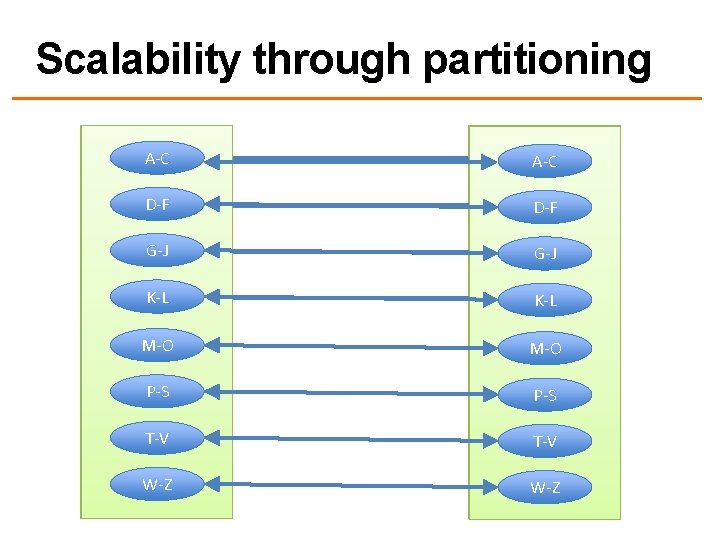
Scalability through partitioning A-C A-Z A-F A-L A-C D-F G-L M-Z D-F G-J M-R G-J K-L S-Z K-L M-O P-S T-V W-Z
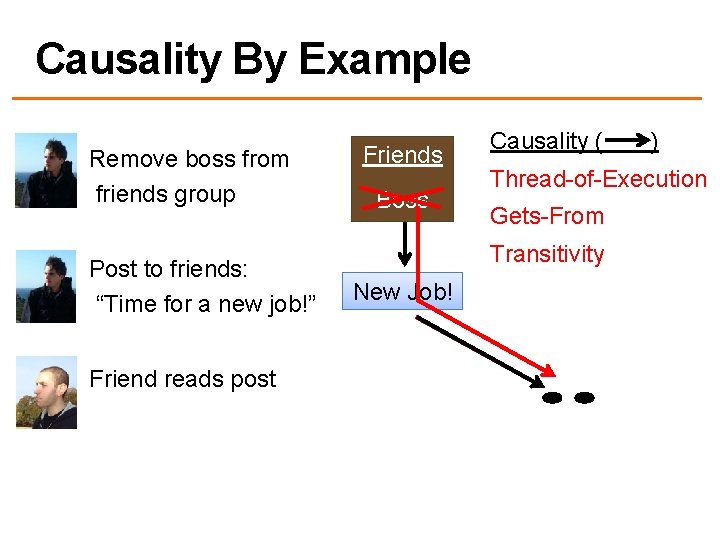
Causality By Example Remove boss from friends group Post to friends: “Time for a new job!” Friend reads post Friends Boss Causality ( Thread-of-Execution Gets-From Transitivity New Job! )
Previous Causal Systems • Bayou ‘ 94, TACT ‘ 00, PRACTI ‘ 06 – Log-exchange based • Log is single serialization point – Implicitly captures and enforces causal order – Limits scalability OR no cross-server causality
Scalability Key Idea • Dependency metadata explicitly captures causality • Distributed verifications replace single serialization – Delay exposing replicated puts until all dependencies are satisfied in the datacenter
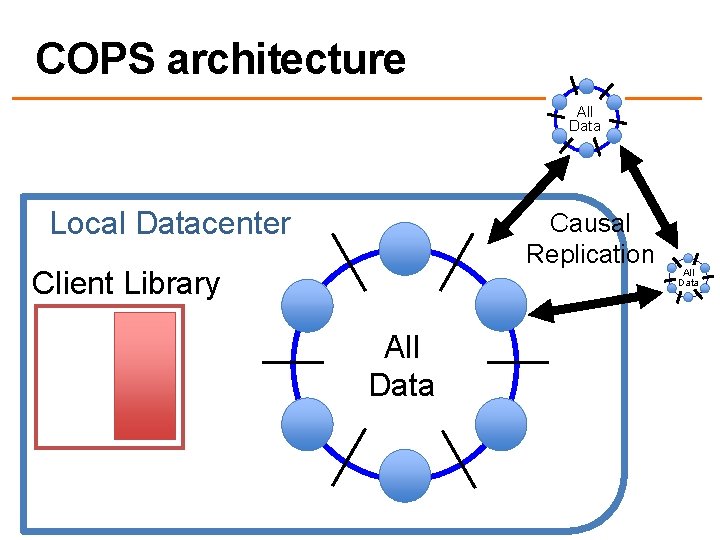
COPS architecture All Data Local Datacenter Causal Replication Client Library All Data
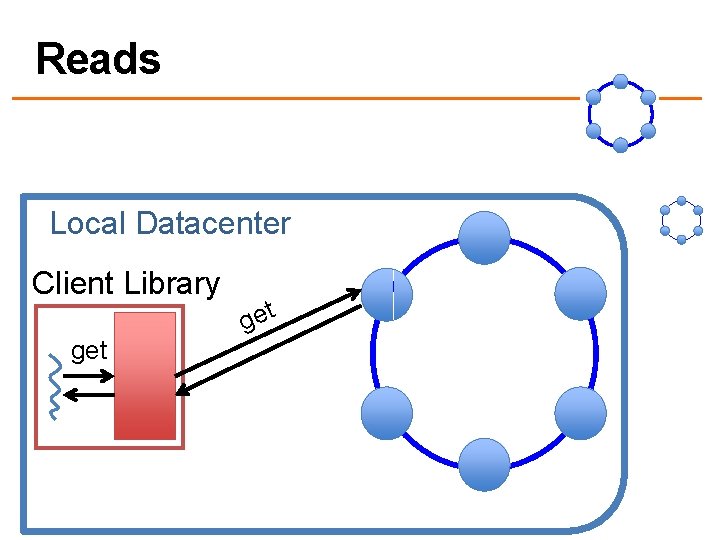
Reads Local Datacenter Client Library get
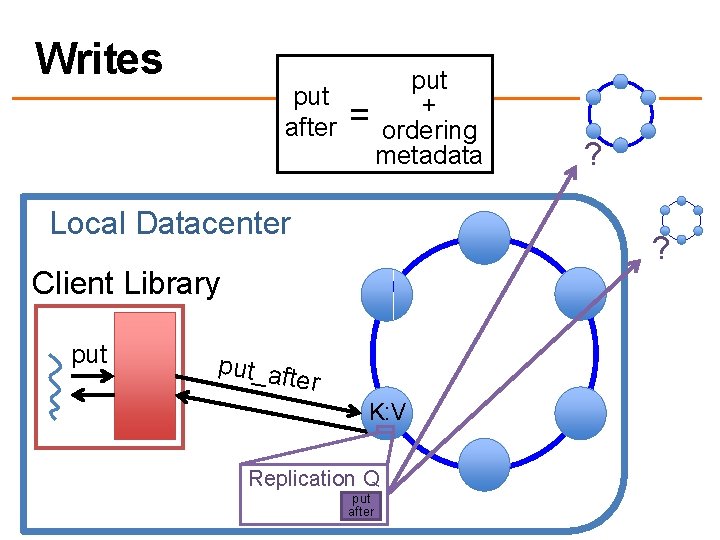
Writes put + = after ordering metadata Local Datacenter ? Client Library put ? put_af ter K: V Replication Q put after
Dependencies • Dependencies are explicit metadata on values • Library tracks and attaches them to put_afters
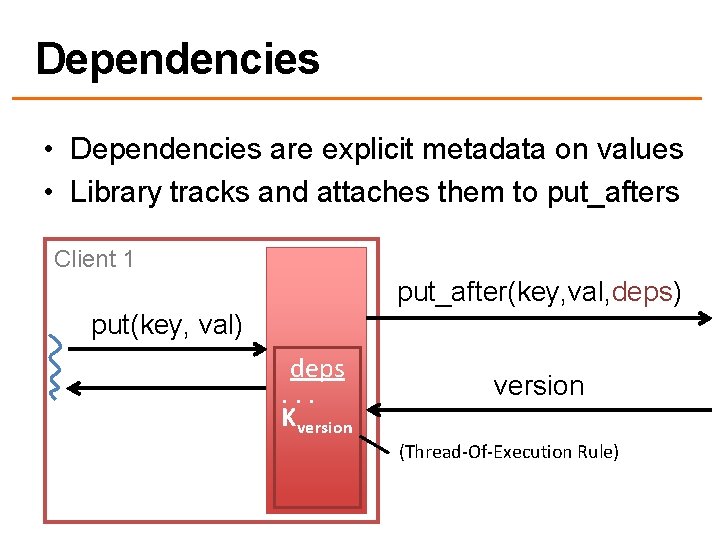
Dependencies • Dependencies are explicit metadata on values • Library tracks and attaches them to put_afters Client 1 put_after(key, val, deps) put(key, val) deps. . . Kversion (Thread-Of-Execution Rule)
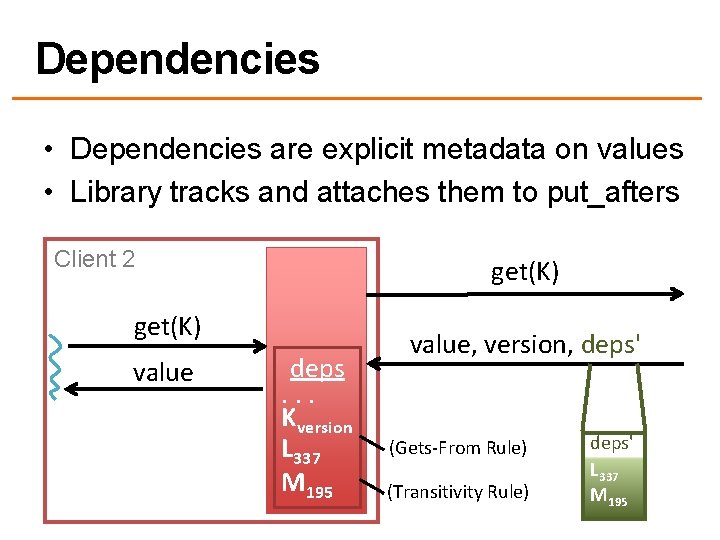
Dependencies • Dependencies are explicit metadata on values • Library tracks and attaches them to put_afters Client 2 get(K) value deps. . . Kversion L 337 M 195 value, version, deps' (Gets-From Rule) (Transitivity Rule) deps' L 337 M 195
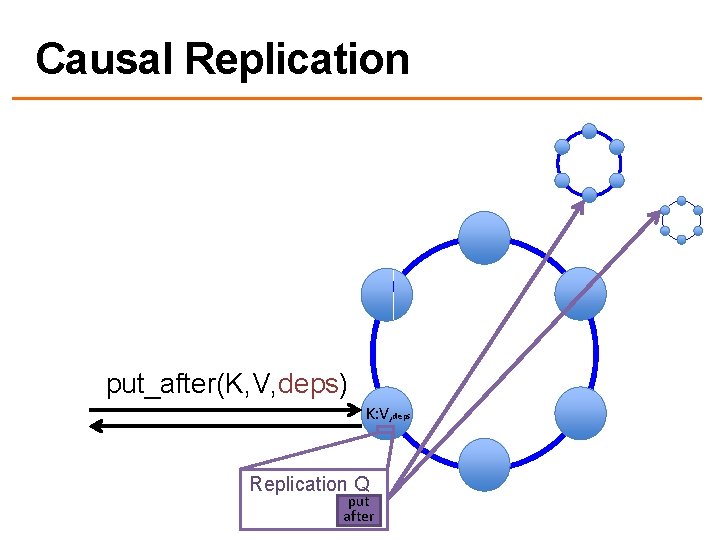
Causal Replication put_after(K, V, deps) K: V, deps Replication Q put after
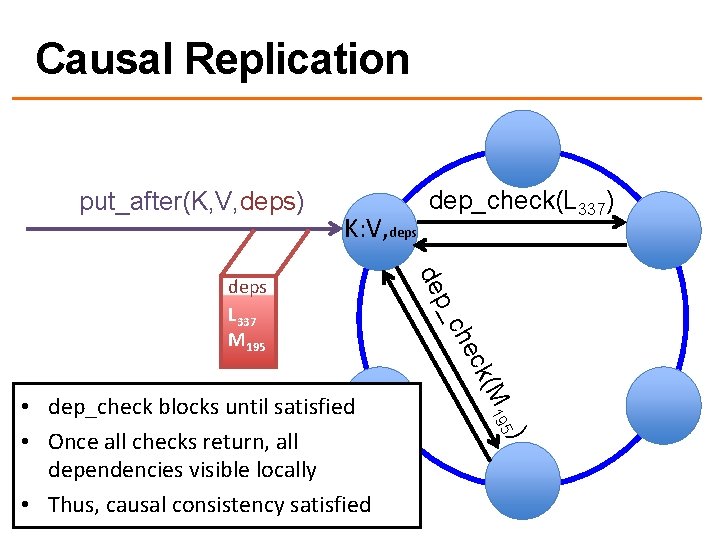
Causal Replication put_after(K, V, deps) K: V, deps ec ch p_ k(M ) 5 19 • dep_check blocks until satisfied • Once all checks return, all dependencies visible locally • Thus, causal consistency satisfied de deps L 337 M 195 dep_check(L 337)
System So Far • ALPS + Causal – Serve operations locally, replicate in background – Partition keyspace onto many nodes – Control replication with dependencies • Proliferation of dependencies reduces efficiency – Results in lots of metadata – Requires lots of verification • We need to reduce metadata and dep_checks – Nearest dependencies – Dependency garbage collection
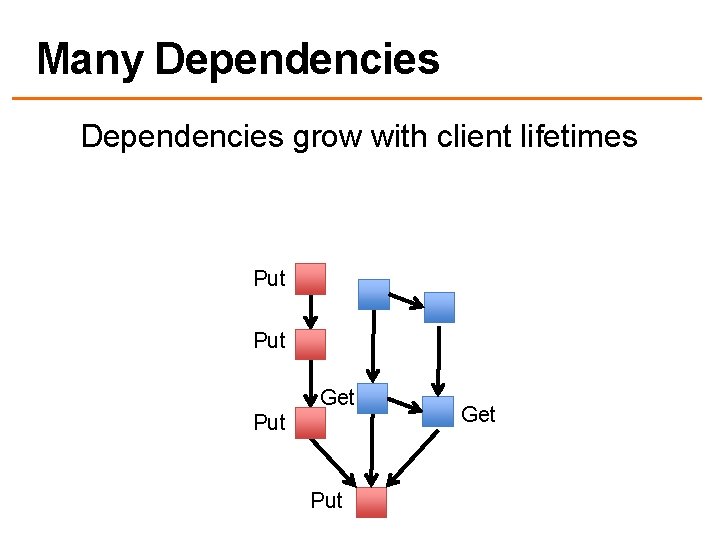
Many Dependencies grow with client lifetimes Put Put Get
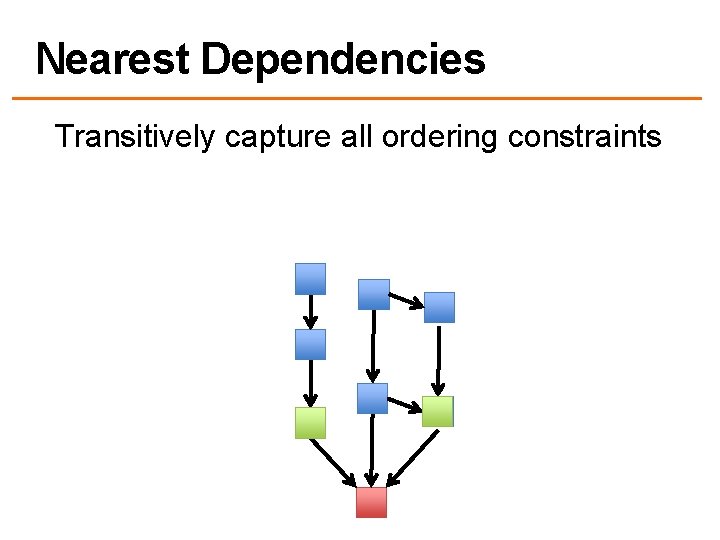
Nearest Dependencies Transitively capture all ordering constraints
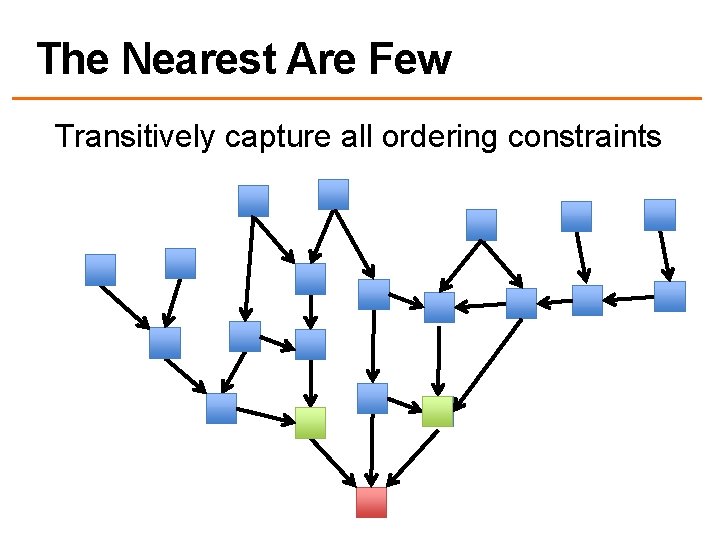
The Nearest Are Few Transitively capture all ordering constraints
The Nearest Are Few • Only check nearest when replicating • COPS only tracks nearest • COPS-GT (”with get transactions”) tracks nonnearest for read transactions • Dependency garbage collection tames metadata in COPS-GT
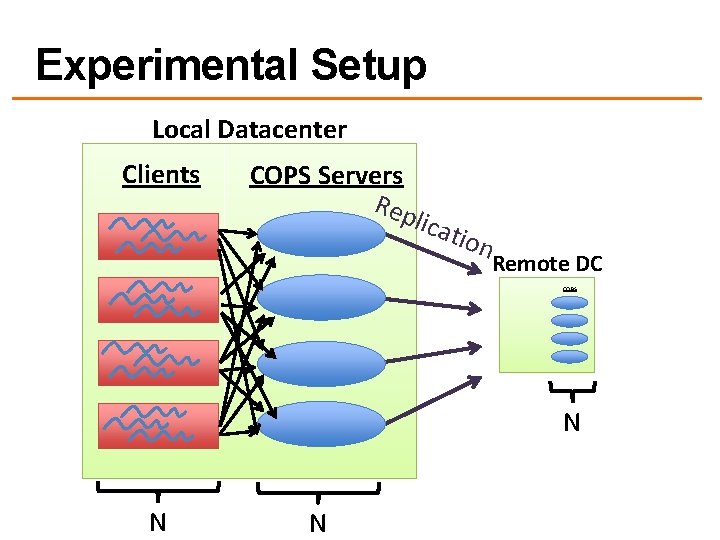
Experimental Setup Local Datacenter Clients COPS Servers Rep lic atio n Remote DC COPS N N N
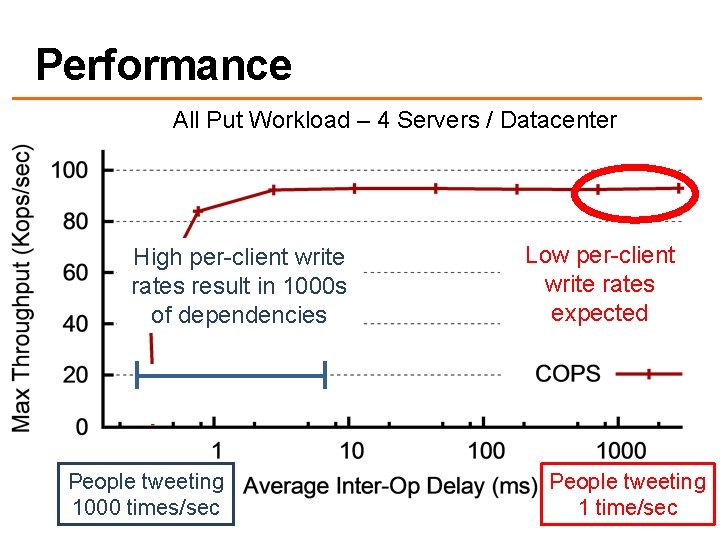
Performance All Put Workload – 4 Servers / Datacenter High per-client write rates result in 1000 s of dependencies People tweeting 1000 times/sec Low per-client write rates expected People tweeting 1 time/sec
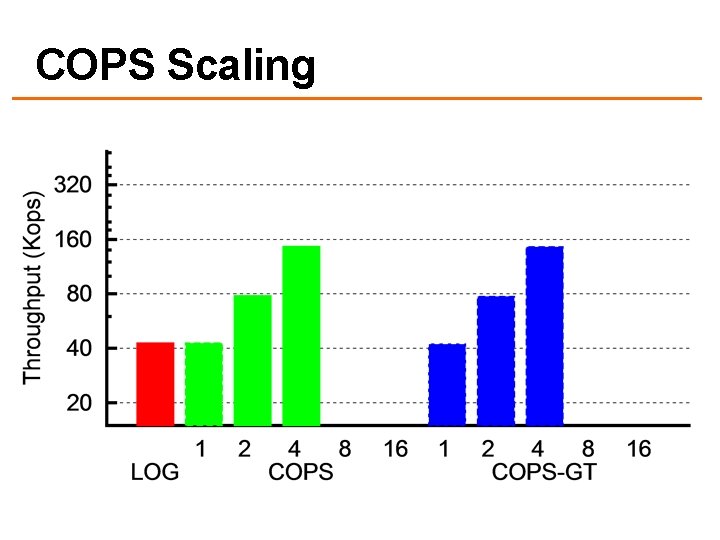
COPS Scaling
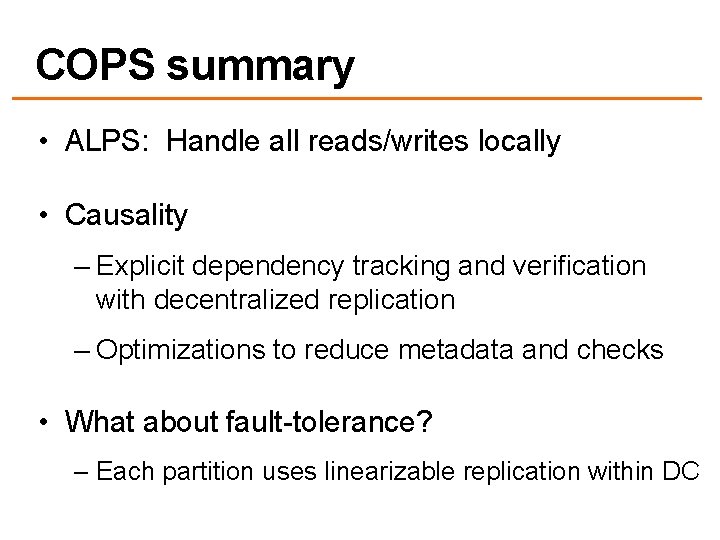
COPS summary • ALPS: Handle all reads/writes locally • Causality – Explicit dependency tracking and verification with decentralized replication – Optimizations to reduce metadata and checks • What about fault-tolerance? – Each partition uses linearizable replication within DC
Wednesday lecture Concurrency Control: Locking and Recovery 39
- Slides: 39