
Cattle Dip Vats CDVs Update 2018 Update to


- Slides: 12
Cattle Dip Vats (CDVs) Update 2018 Update to presentation given by Zoe Kulakowski on February 10, 2016 February 14, 2018 Presented by: Christi Whittington Christi. Whittington@dep. state. fl. us 850. 245. 8880
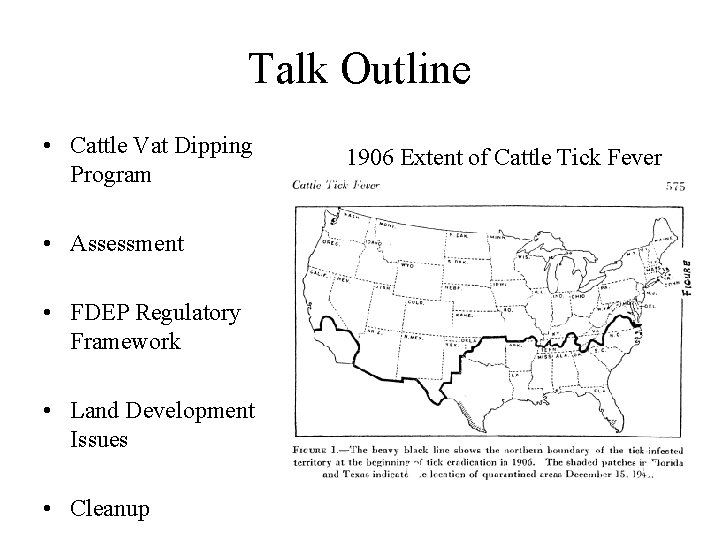
Talk Outline • Cattle Vat Dipping Program • Assessment • FDEP Regulatory Framework • Land Development Issues • Cleanup 1906 Extent of Cattle Tick Fever
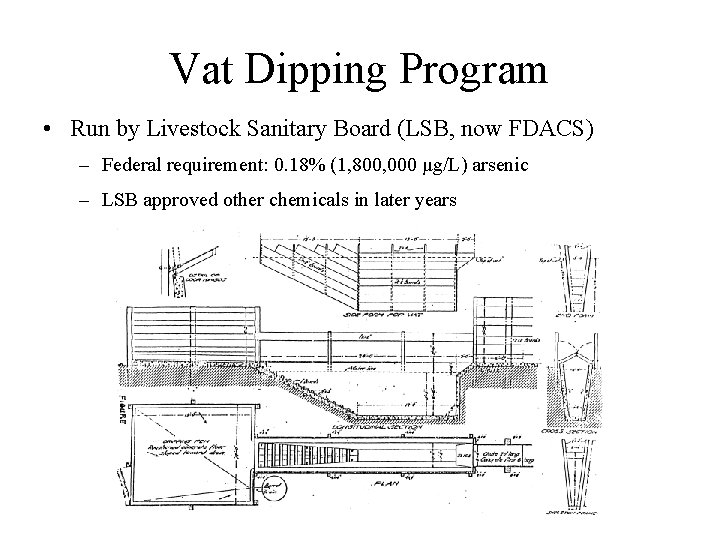
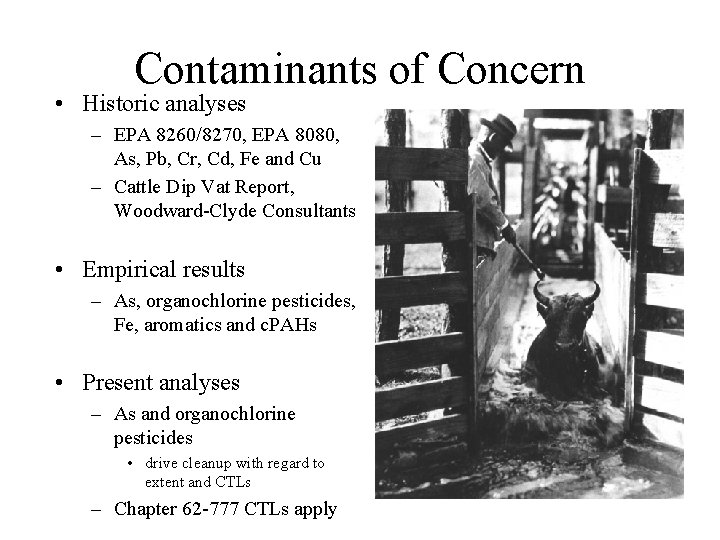
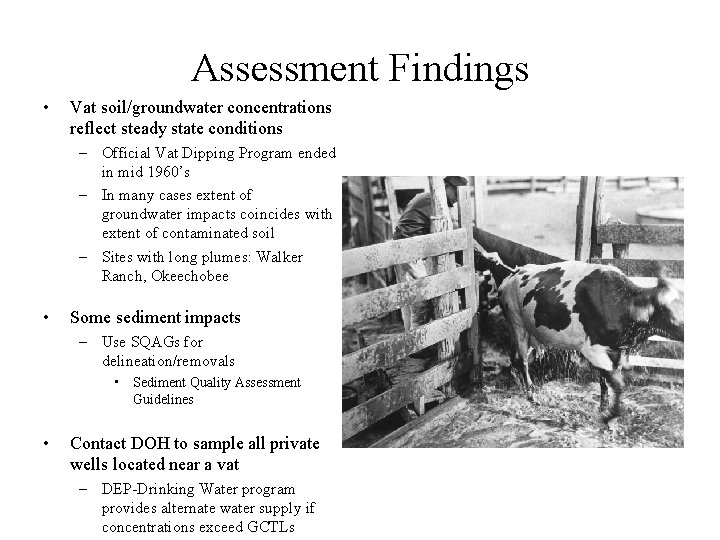
Vat Dipping Program • Run by Livestock Sanitary Board (LSB, now FDACS) – Federal requirement: 0. 18% (1, 800, 000 μg/L) arsenic – LSB approved other chemicals in later years
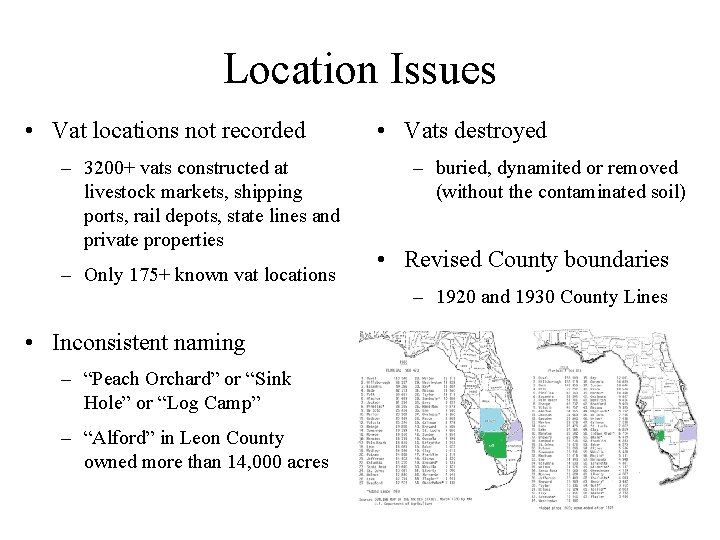
Location Issues • Vat locations not recorded – 3200+ vats constructed at livestock markets, shipping ports, rail depots, state lines and private properties – Only 175+ known vat locations • Inconsistent naming – “Peach Orchard” or “Sink Hole” or “Log Camp” – “Alford” in Leon County owned more than 14, 000 acres • Vats destroyed – buried, dynamited or removed (without the contaminated soil) • Revised County boundaries – 1920 and 1930 County Lines
Contaminants of Concern • Historic analyses – EPA 8260/8270, EPA 8080, As, Pb, Cr, Cd, Fe and Cu – Cattle Dip Vat Report, Woodward-Clyde Consultants • Empirical results – As, organochlorine pesticides, Fe, aromatics and c. PAHs • Present analyses – As and organochlorine pesticides • drive cleanup with regard to extent and CTLs – Chapter 62 -777 CTLs apply
Initial Phase Sampling Plan Sample water and sludge in the vat Entry side drip pad Drip pen 10 feet
Assessment Findings • Vat soil/groundwater concentrations reflect steady state conditions – Official Vat Dipping Program ended in mid 1960’s – In many cases extent of groundwater impacts coincides with extent of contaminated soil – Sites with long plumes: Walker Ranch, Okeechobee • Some sediment impacts – Use SQAGs for delineation/removals • Sediment Quality Assessment Guidelines • Contact DOH to sample all private wells located near a vat – DEP-Drinking Water program provides alternate water supply if concentrations exceed GCTLs
Examples of Vat Sites • Individual parcels to tracts of land proposed for development – Lake Weeks Subdivision • Citizens with a vat on or next to their property • Public ownership of land containing a vat – 9 Vats Within the Kissimmee River Restoration Project • Vats on State Properties – Cleanup through State Owned Lands Cleanup Program (SOLCP)
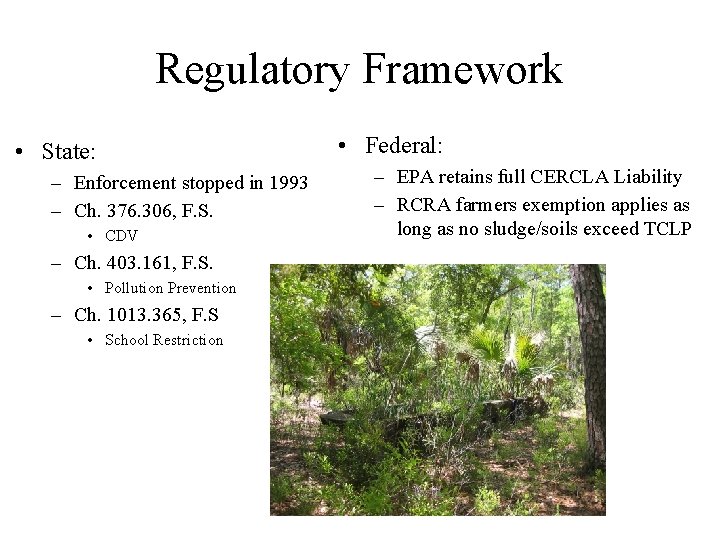
Regulatory Framework • State: – Enforcement stopped in 1993 – Ch. 376. 306, F. S. • CDV – Ch. 403. 161, F. S. • Pollution Prevention – Ch. 1013. 365, F. S • School Restriction • Federal: – EPA retains full CERCLA Liability – RCRA farmers exemption applies as long as no sludge/soils exceed TCLP
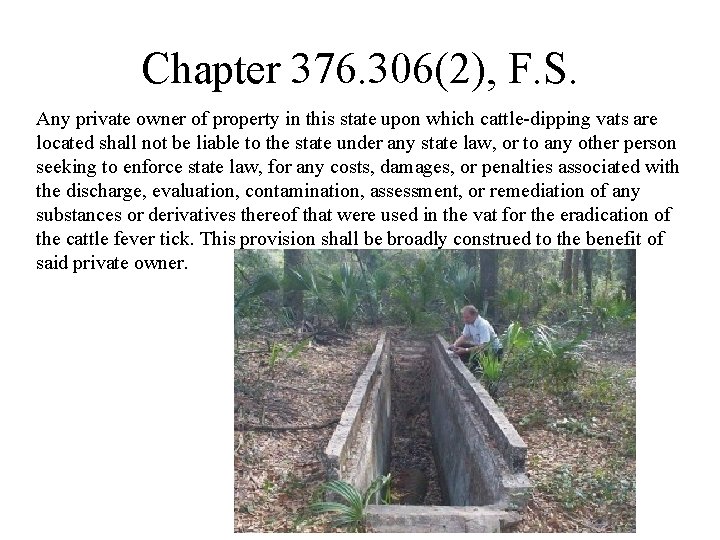
Chapter 376. 306(2), F. S. Any private owner of property in this state upon which cattle-dipping vats are located shall not be liable to the state under any state law, or to any other person seeking to enforce state law, for any costs, damages, or penalties associated with the discharge, evaluation, contamination, assessment, or remediation of any substances or derivatives thereof that were used in the vat for the eradication of the cattle fever tick. This provision shall be broadly construed to the benefit of said private owner.
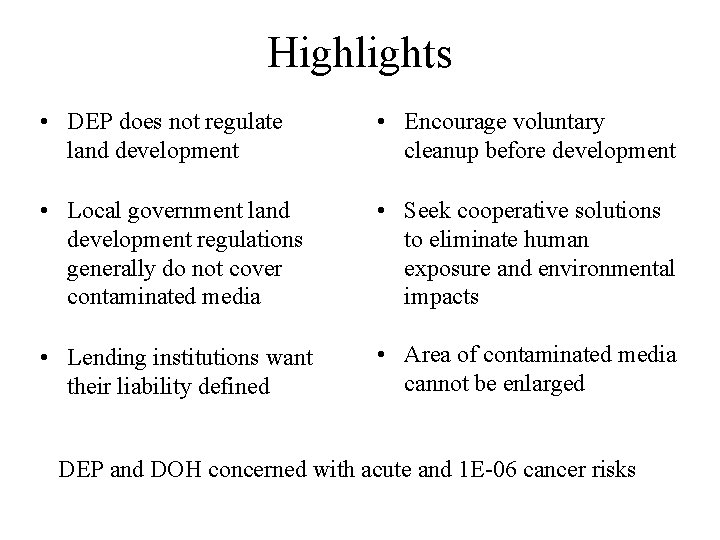
Highlights • DEP does not regulate land development • Encourage voluntary cleanup before development • Local government land development regulations generally do not cover contaminated media • Seek cooperative solutions to eliminate human exposure and environmental impacts • Lending institutions want their liability defined • Area of contaminated media cannot be enlarged DEP and DOH concerned with acute and 1 E-06 cancer risks
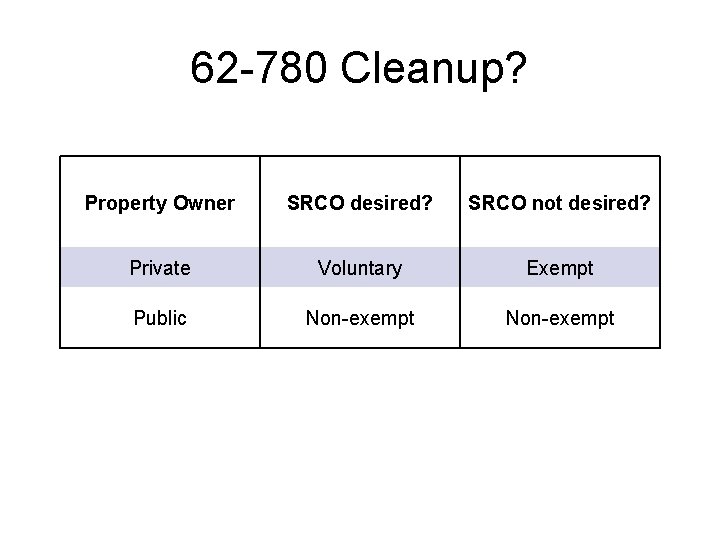
62 -780 Cleanup? Property Owner SRCO desired? SRCO not desired? Private Voluntary Exempt Public Non-exempt