
Cattle Cowboys and Settling the Great Plains 5
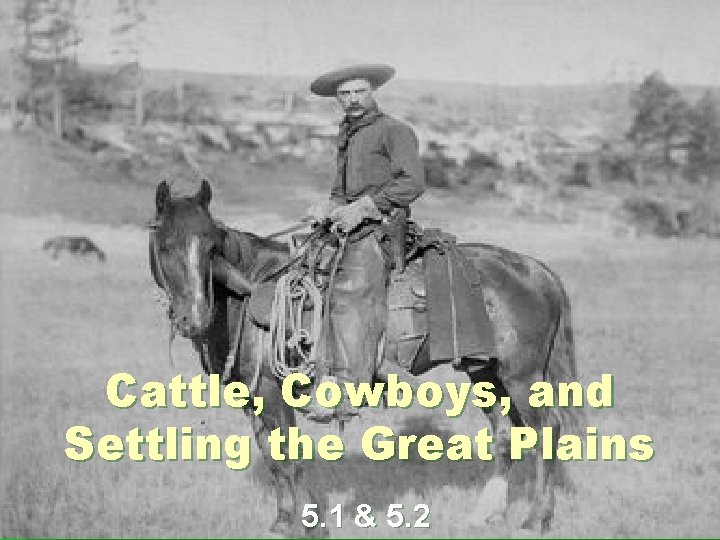
Cattle, Cowboys, and Settling the Great Plains 5. 1 & 5. 2
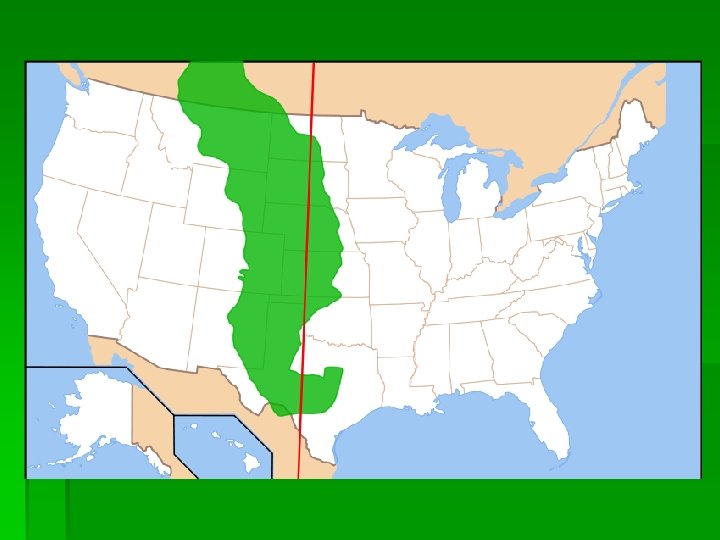
Settlers Push Westward § Great Plains area and beyond § Grassland extending through west-central portion of U. S. § Lure of gold and silver § 1849 – Gold Rush in CA § 1858 – discovered in Colorado § Culture clash w/ Native Americans § N. A. believed land could not be owned § Settlers believed rights to land were forfeited b/c they hadn’t settled and “improved” the land
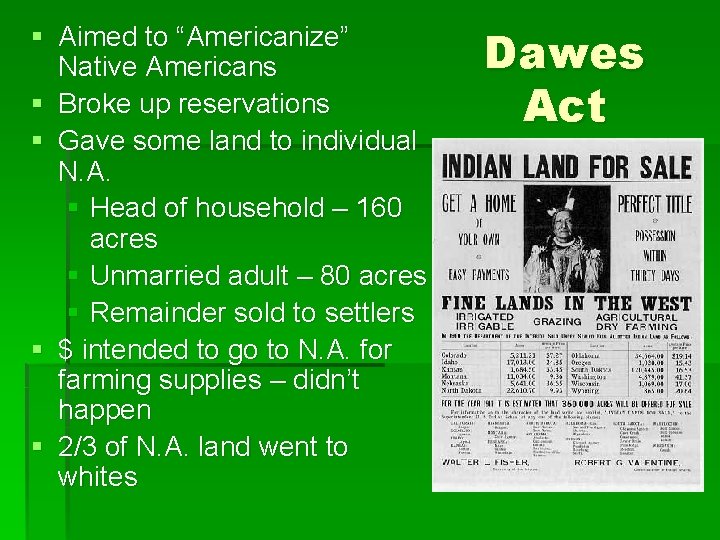
§ Aimed to “Americanize” Native Americans § Broke up reservations § Gave some land to individual N. A. § Head of household – 160 acres § Unmarried adult – 80 acres § Remainder sold to settlers § $ intended to go to N. A. for farming supplies – didn’t happen § 2/3 of N. A. land went to whites Dawes Act
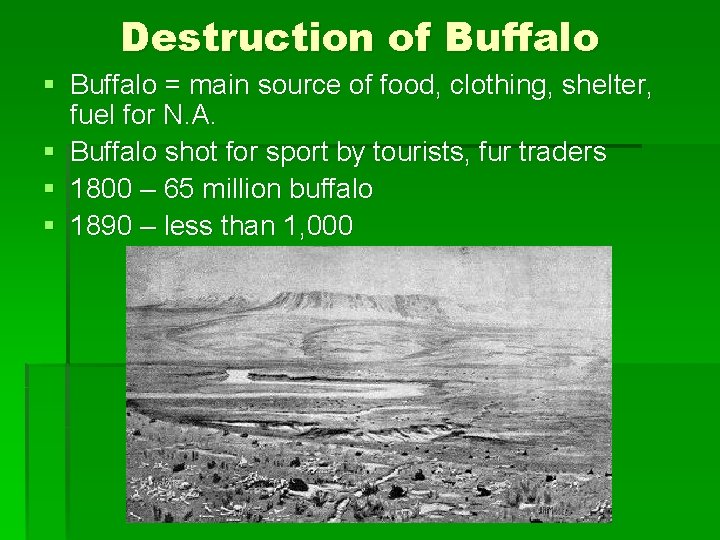
Destruction of Buffalo § Buffalo = main source of food, clothing, shelter, fuel for N. A. § Buffalo shot for sport by tourists, fur traders § 1800 – 65 million buffalo § 1890 – less than 1, 000
INDIAN USES OF THE BUFFALO Hide - Buckskin moccasin tops cradles winter robes bedding breechclouts shirts leggings lance covers belts dresses pipe bags pouches paint bags pouches dolls coup flag covers quivers tipi covers gun cases Hair headdresses saddle pad filler pillows rope ornaments halters medicine balls Tail medicine switch fly brush lodge exterior decorations whips Hoof & Feet glue rattles Horns cups fire carriers powder horn spoons ladles headdresses signals toys Meat (every part eaten) pemmican (converted) hump ribs-immediately jerky (converted) Skin Of Hind Leg moccasins or boots Rawhide containers clothing headdress food medicine bags shields buckets moccasin soles rattles drumsticks splints cinches ropes belts bullets pouches saddles horse masks lance cases armbands quirts bull boats knife cases stirrups thongs horse ornament
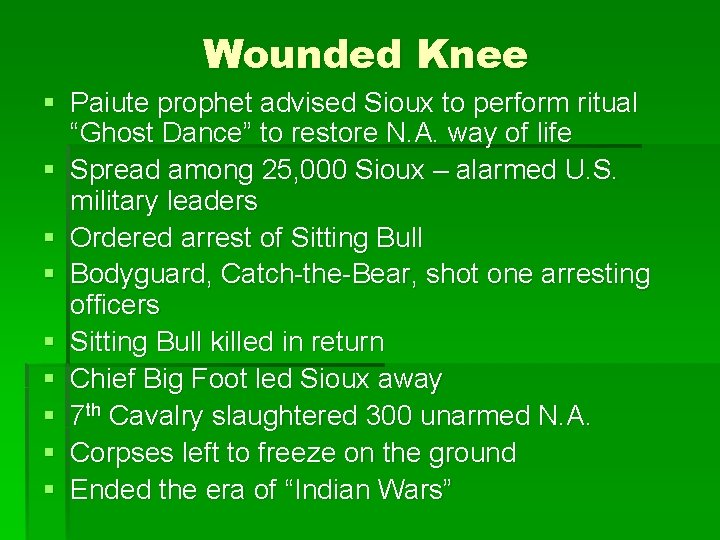
Wounded Knee § Paiute prophet advised Sioux to perform ritual “Ghost Dance” to restore N. A. way of life § Spread among 25, 000 Sioux – alarmed U. S. military leaders § Ordered arrest of Sitting Bull § Bodyguard, Catch-the-Bear, shot one arresting officers § Sitting Bull killed in return § Chief Big Foot led Sioux away § 7 th Cavalry slaughtered 300 unarmed N. A. § Corpses left to freeze on the ground § Ended the era of “Indian Wars”
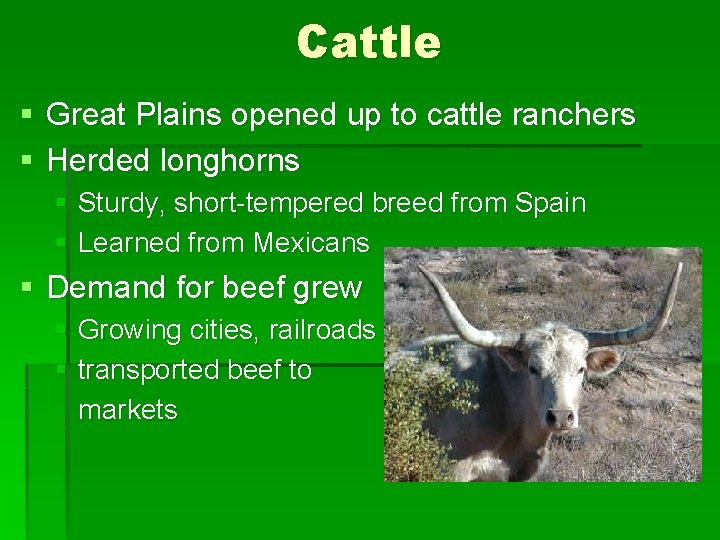
Cattle § Great Plains opened up to cattle ranchers § Herded longhorns § Sturdy, short-tempered breed from Spain § Learned from Mexicans § Demand for beef grew § Growing cities, railroads § transported beef to markets
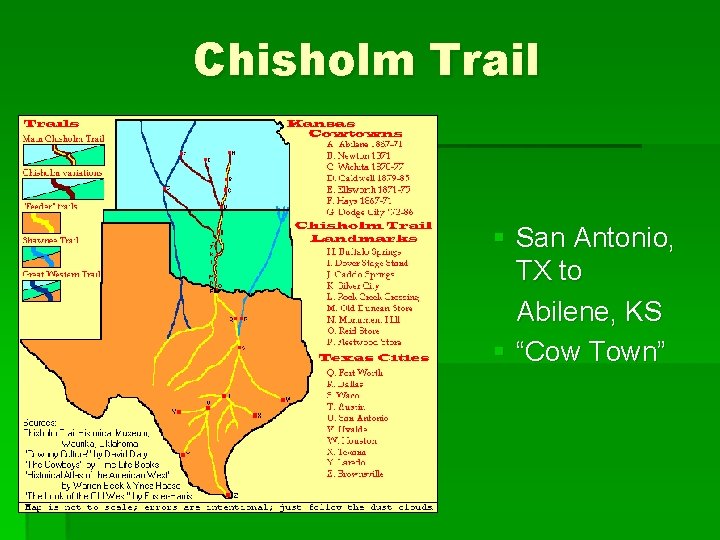
Chisholm Trail § San Antonio, TX to Abilene, KS § “Cow Town”
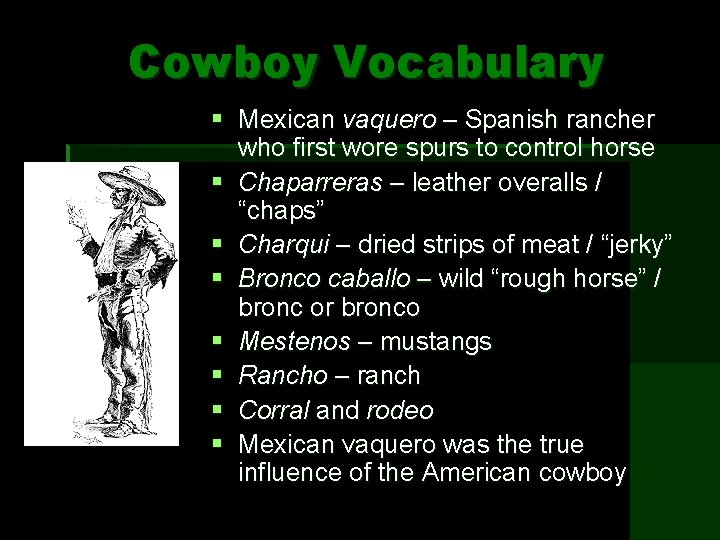
Cowboy Vocabulary § Mexican vaquero – Spanish rancher who first wore spurs to control horse § Chaparreras – leather overalls / “chaps” § Charqui – dried strips of meat / “jerky” § Bronco caballo – wild “rough horse” / bronc or bronco § Mestenos – mustangs § Rancho – ranch § Corral and rodeo § Mexican vaquero was the true influence of the American cowboy
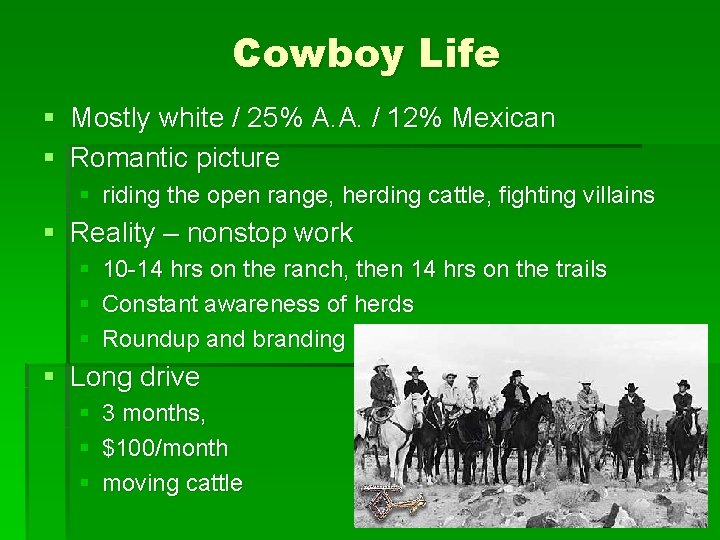
Cowboy Life § Mostly white / 25% A. A. / 12% Mexican § Romantic picture § riding the open range, herding cattle, fighting villains § Reality – nonstop work § 10 -14 hrs on the ranch, then 14 hrs on the trails § Constant awareness of herds § Roundup and branding § Long drive § 3 months, § $100/month § moving cattle
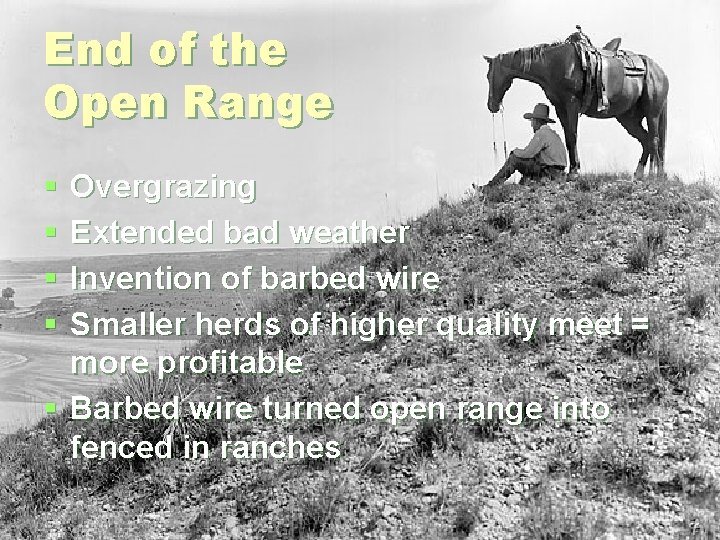
End of the Open Range § § Overgrazing Extended bad weather Invention of barbed wire Smaller herds of higher quality meet = more profitable § Barbed wire turned open range into fenced in ranches
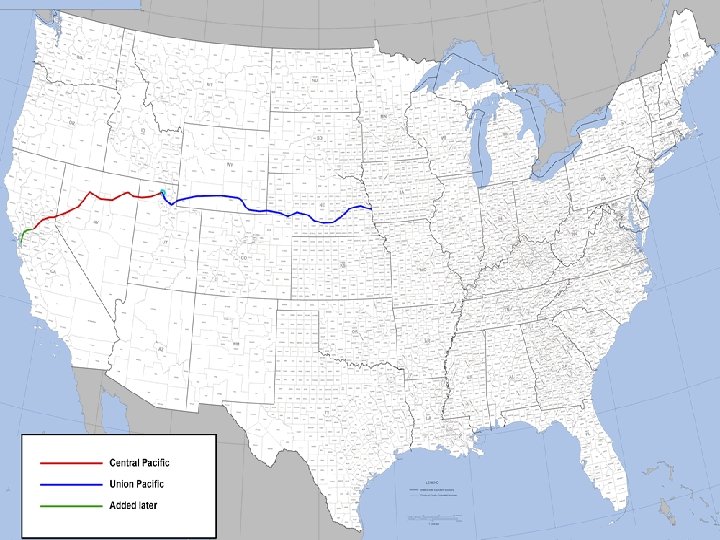
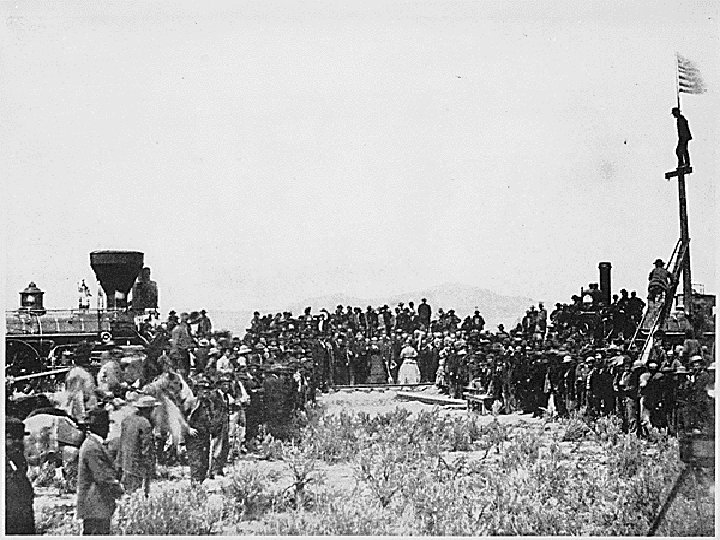
Land Grants for Railroads § 170 million acres worth $500 million to lay track § Union Pacific and Central Pacific § 10 miles of land for every mile of track § 20 miles in territory land § Immigrants did most of grueling labor § Two companies met in Utah – 1869 § First transcontinental railroad completed § Railroads sold some land for $10 -20
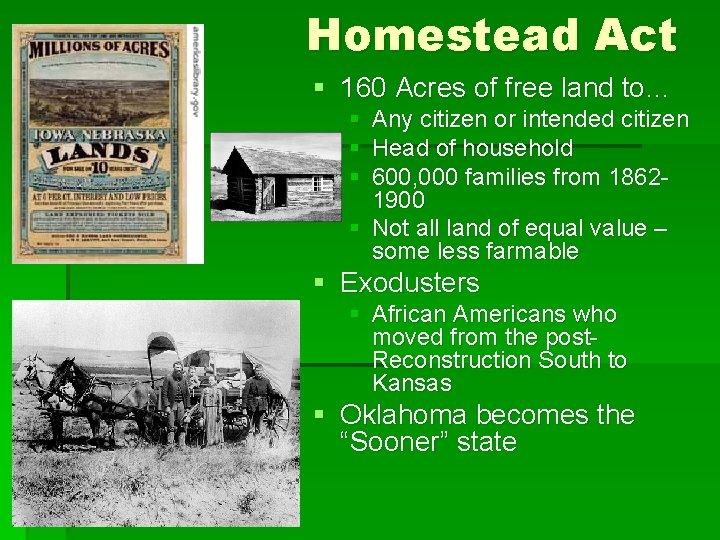
Homestead Act § 160 Acres of free land to… § § § Any citizen or intended citizen Head of household 600, 000 families from 18621900 § Not all land of equal value – some less farmable § Exodusters § African Americans who moved from the post. Reconstruction South to Kansas § Oklahoma becomes the “Sooner” state
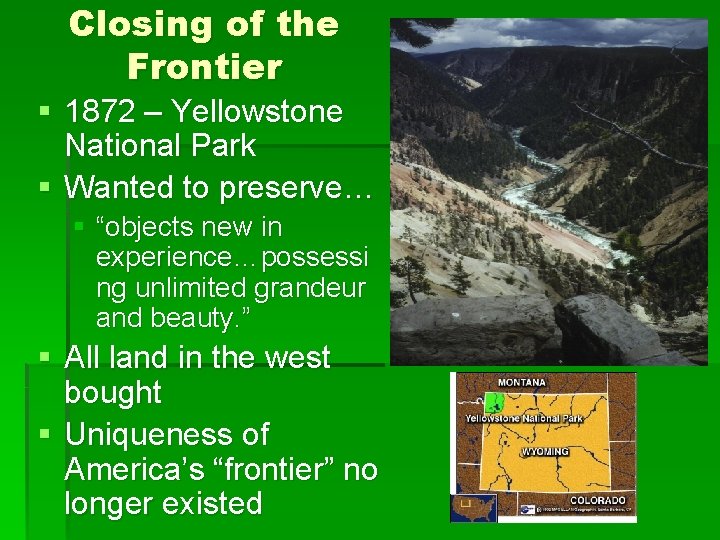
Closing of the Frontier § 1872 – Yellowstone National Park § Wanted to preserve… § “objects new in experience…possessi ng unlimited grandeur and beauty. ” § All land in the west bought § Uniqueness of America’s “frontier” no longer existed
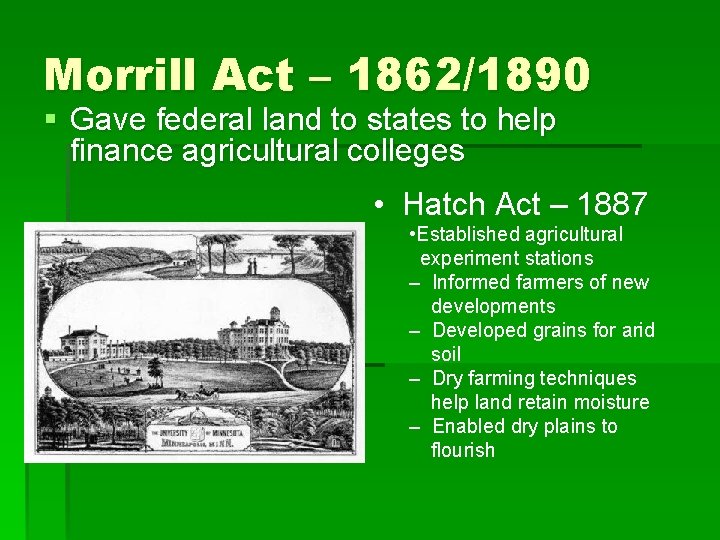
Morrill Act – 1862/1890 § Gave federal land to states to help finance agricultural colleges • Hatch Act – 1887 • Established agricultural experiment stations – Informed farmers of new developments – Developed grains for arid soil – Dry farming techniques help land retain moisture – Enabled dry plains to flourish
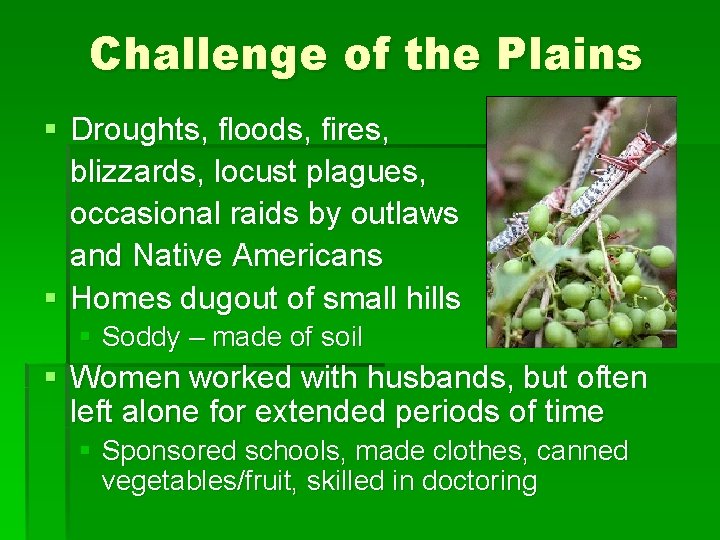
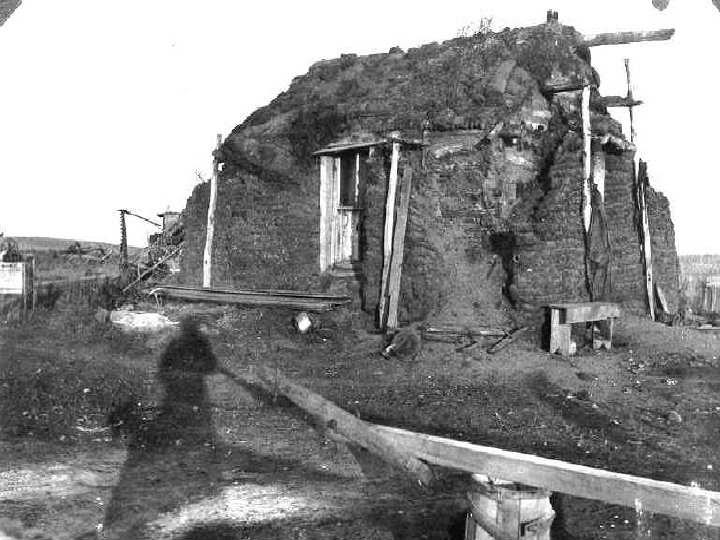
Challenge of the Plains § Droughts, floods, fires, blizzards, locust plagues, occasional raids by outlaws and Native Americans § Homes dugout of small hills § Soddy – made of soil § Women worked with husbands, but often left alone for extended periods of time § Sponsored schools, made clothes, canned vegetables/fruit, skilled in doctoring
- Slides: 21