
Cattle bought for 4 in Texas were driven
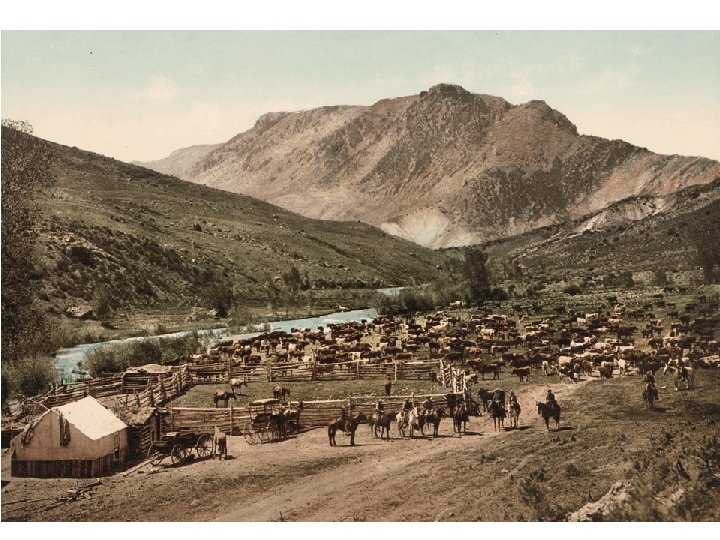
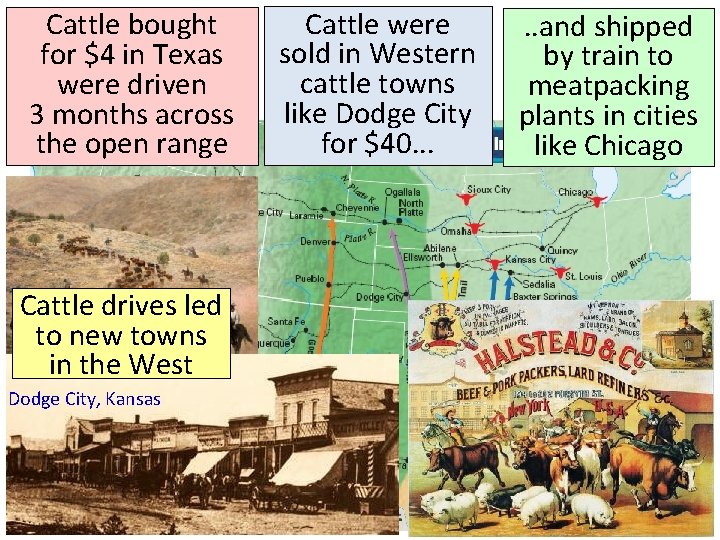
Cattle bought for $4 in Texas were driven 3 months across the open range Cattle drives led to new towns in the West Dodge City, Kansas Cattle were sold in Western cattle towns like Dodge City for $40. . . and shipped by train to meatpacking plants in cities like Chicago
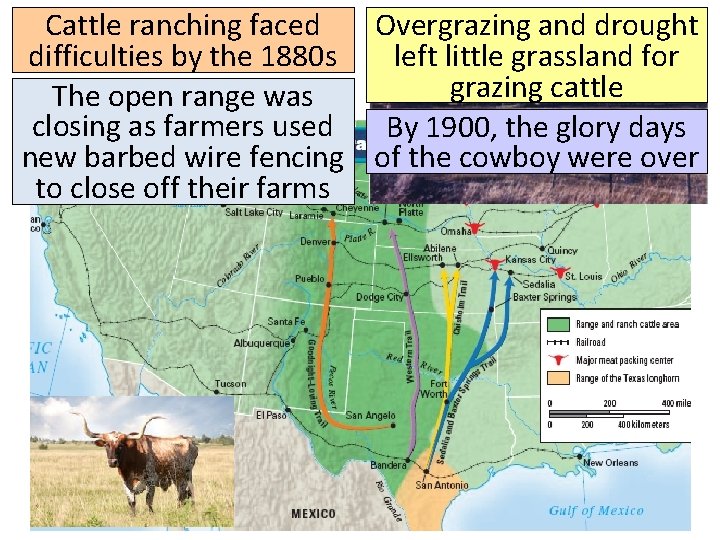
Overgrazing and drought Cattle ranching faced left little grassland for difficulties by the 1880 s grazing cattle The open range was closing as farmers used By 1900, the glory days new barbed wire fencing of the cowboy were over to close off their farms
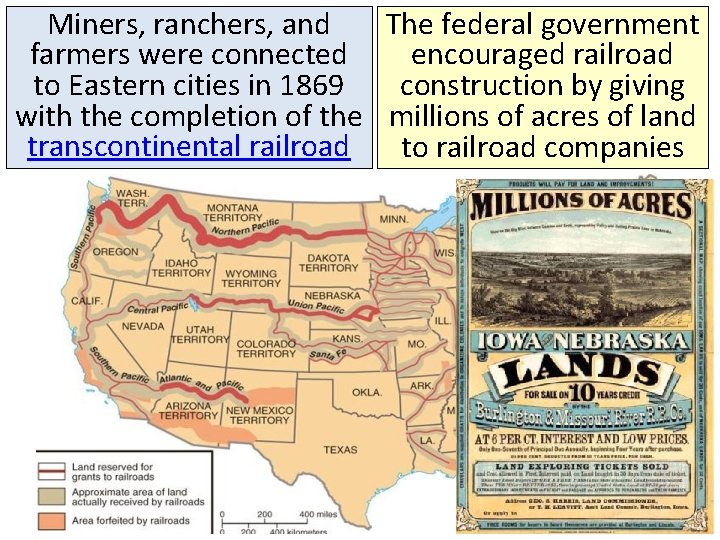
Miners, ranchers, and The federal government farmers were connected encouraged railroad to Eastern cities in 1869 construction by giving with the completion of the millions of acres of land transcontinental railroad to railroad companies
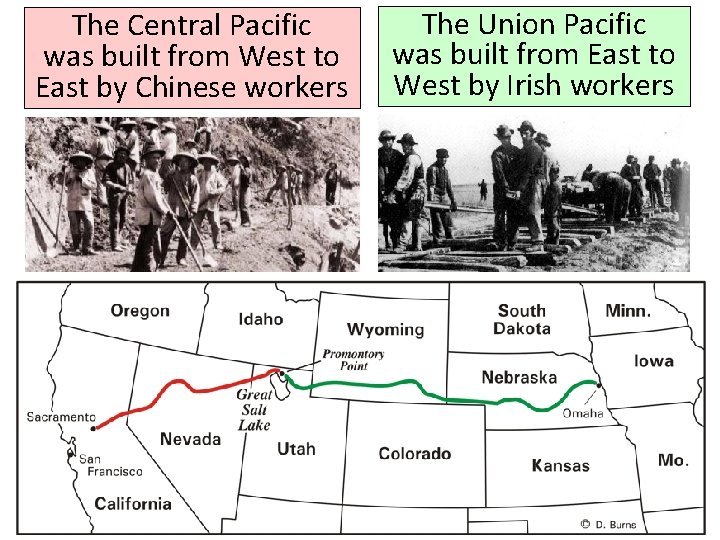
The Central Pacific was built from West to East by Chinese workers The Union Pacific was built from East to West by Irish workers
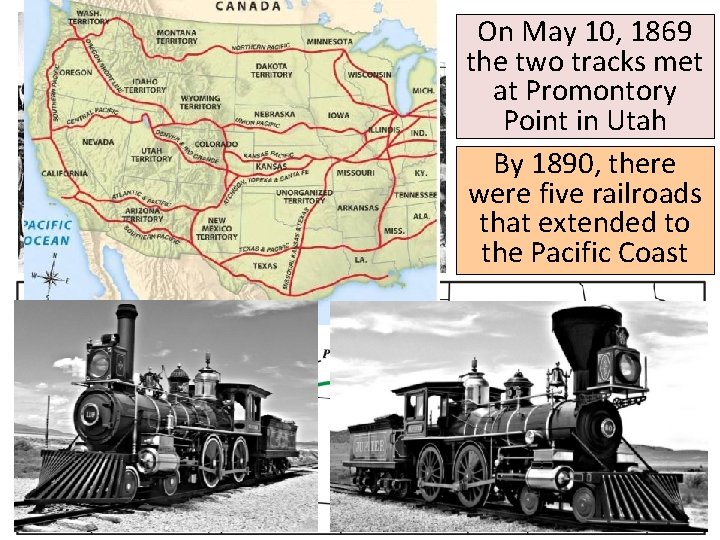
On May 10, 1869 the two tracks met at Promontory Point in Utah By 1890, there were five railroads that extended to the Pacific Coast
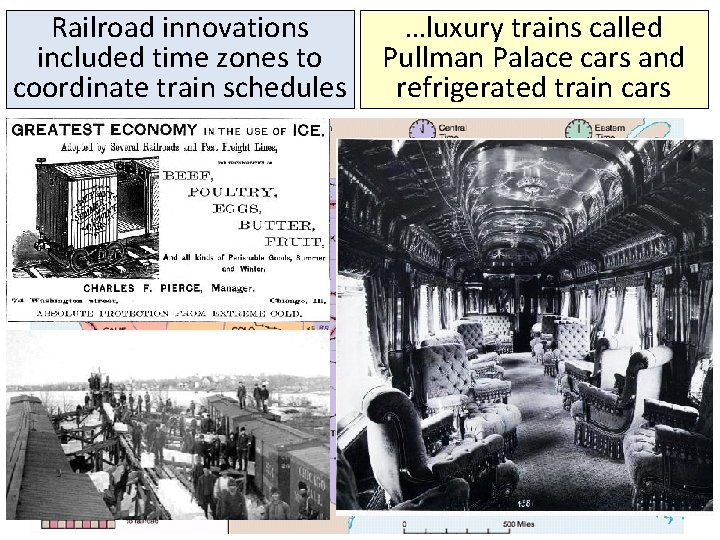
Railroad innovations included time zones to coordinate train schedules …luxury trains called Pullman Palace cars and refrigerated train cars
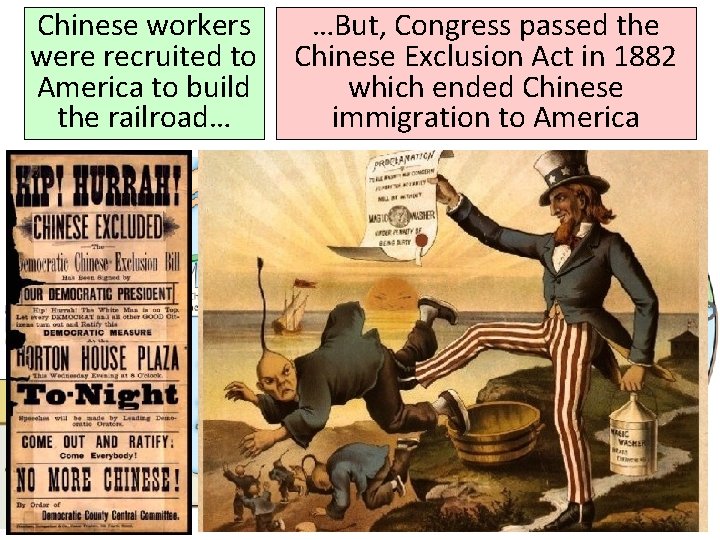
Chinese workers were recruited to America to build the railroad… …But, Congress passed the Chinese Exclusion Act in 1882 which ended Chinese immigration to America
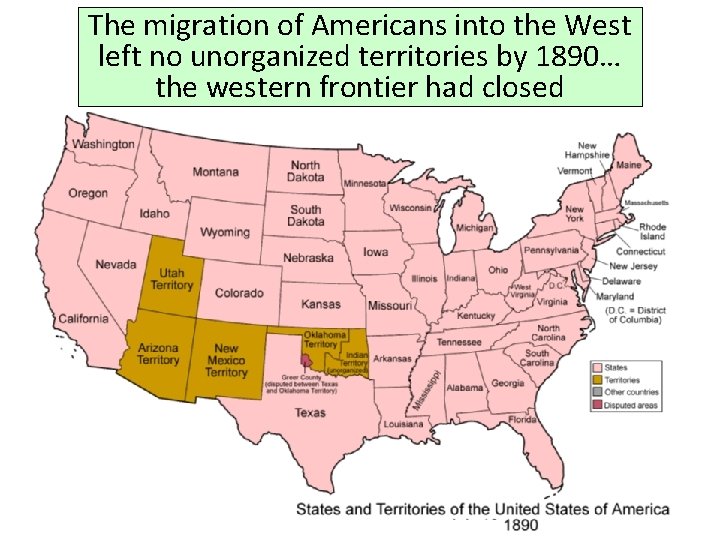
The migration of Americans into the West left no unorganized territories by 1890… the western frontier had closed Homestead Sales, 1870 -1940
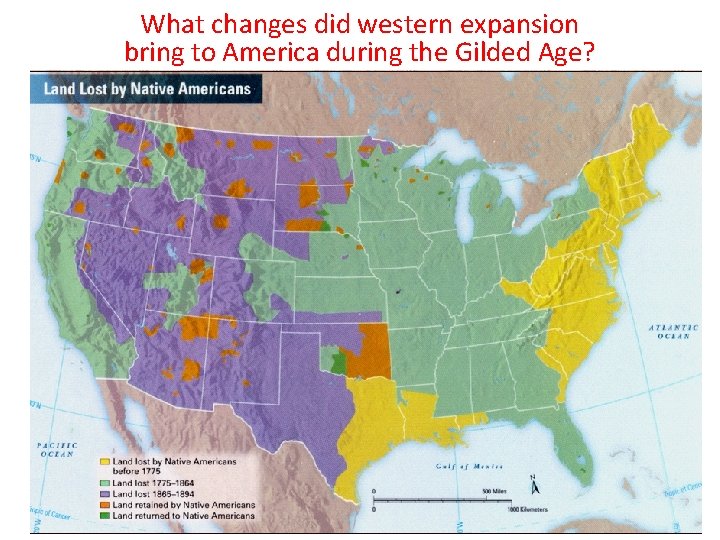
What changes did western expansion bring to America during the Gilded Age?
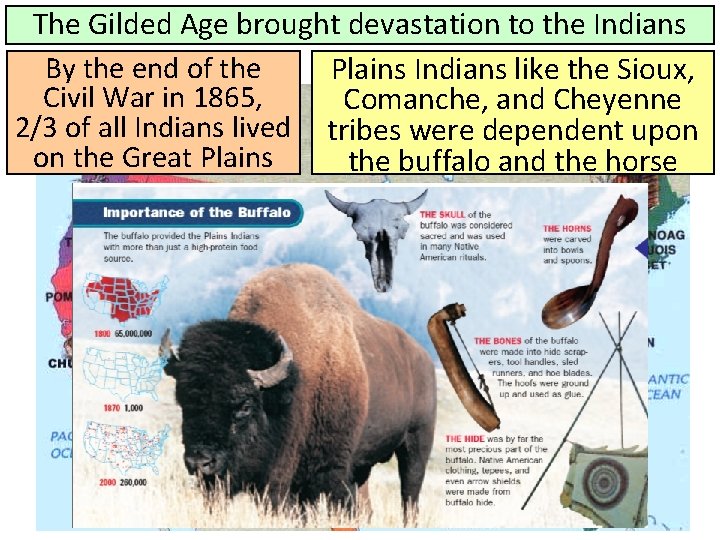
The Gilded Age brought devastation to the Indians By the end of the Plains Indians like the Sioux, Civil War in 1865, Comanche, and Cheyenne 2/3 of all Indians lived tribes were dependent upon on the Great Plains the buffalo and the horse
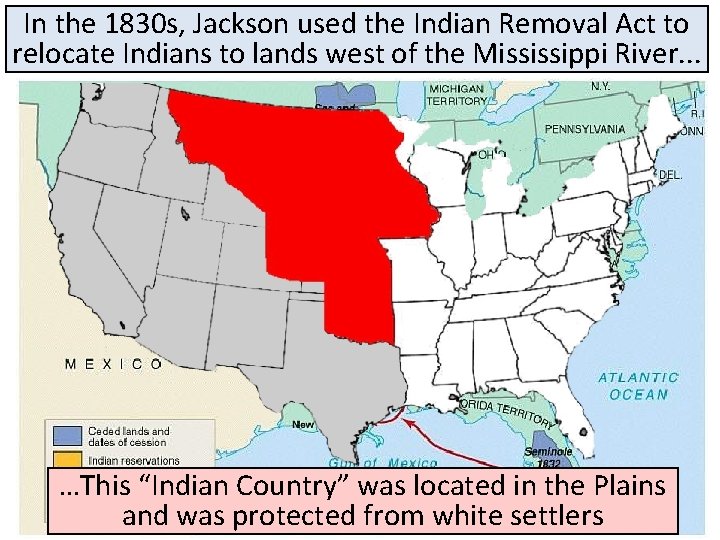
In the 1830 s, Jackson used the Indian Removal Act to relocate Indians to lands west of the Mississippi River. . . …This “Indian Country” was located in the Plains and was protected from white settlers
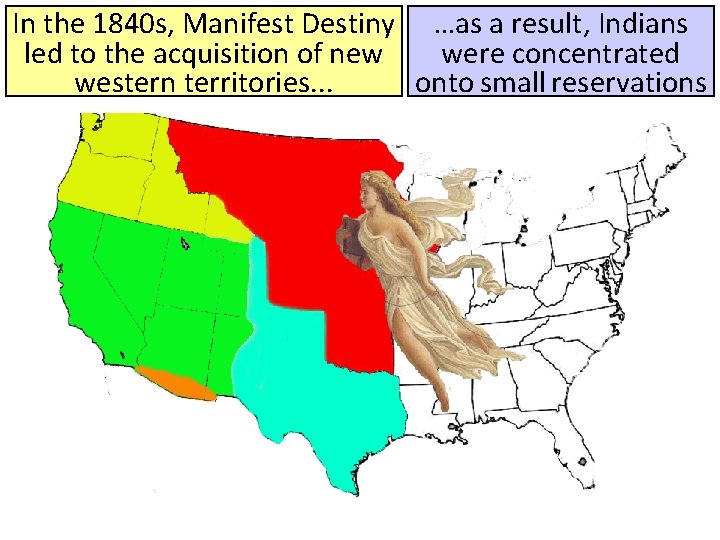
In the 1840 s, Manifest Destiny …as a result, Indians led to the acquisition of new were concentrated western territories. . . onto small reservations
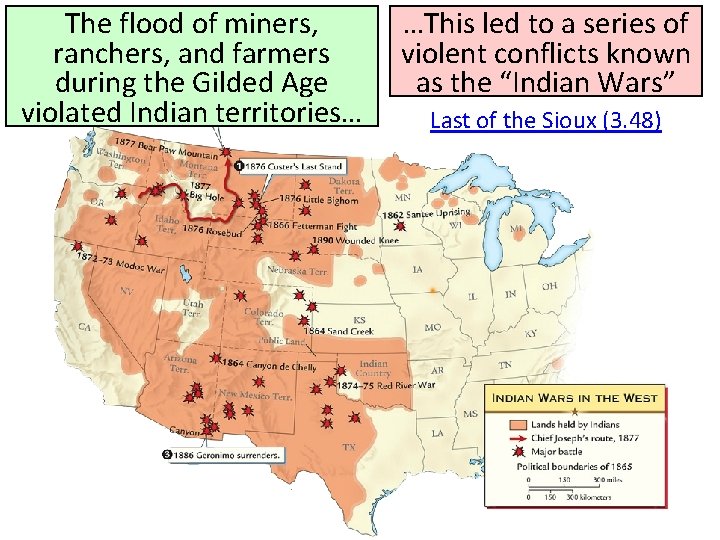
The flood of miners, ranchers, and farmers during the Gilded Age violated Indian territories… …This led to a series of violent conflicts known as the “Indian Wars” Last of the Sioux (3. 48)
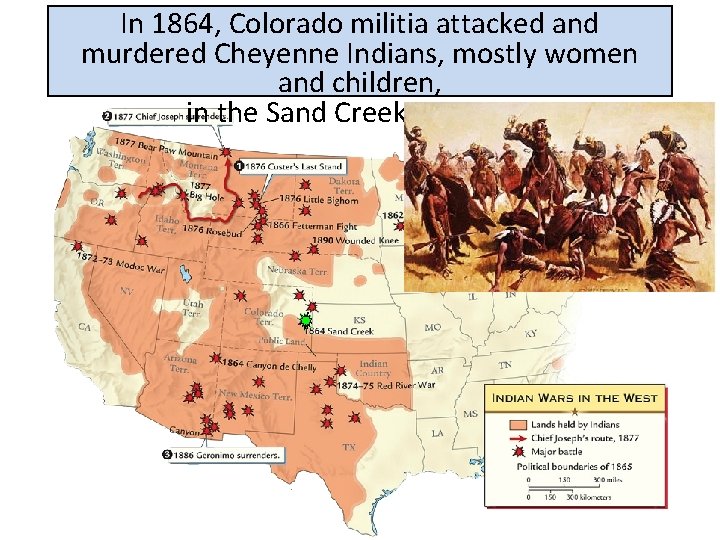
In 1864, Colorado militia attacked and murdered Cheyenne Indians, mostly women and children, in the Sand Creek Massacre
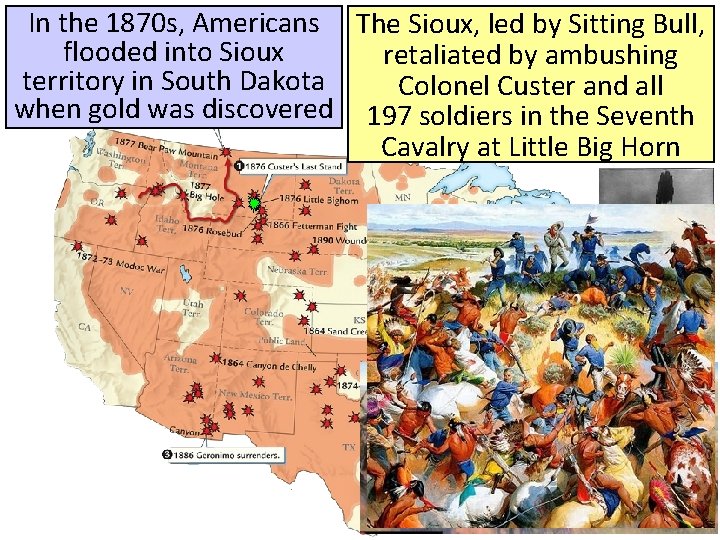
In the 1870 s, Americans The Sioux, led by Sitting Bull, flooded into Sioux retaliated by ambushing territory in South Dakota Colonel Custer and all when gold was discovered 197 soldiers in the Seventh Cavalry at Little Big Horn
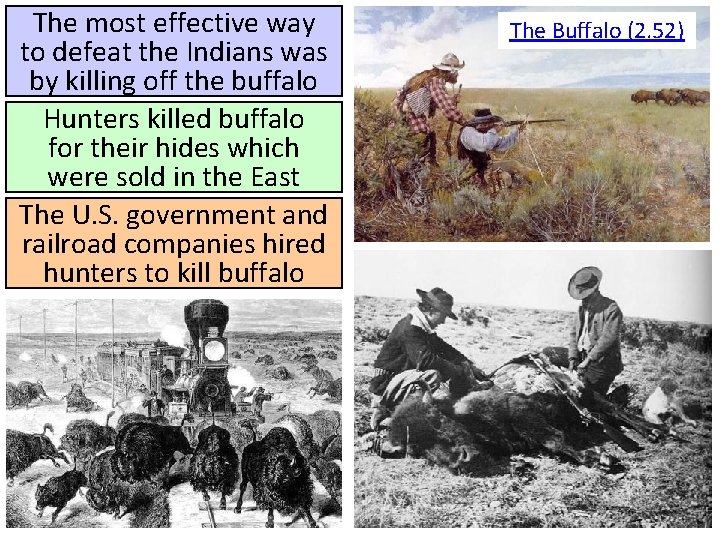
The most effective way to defeat the Indians was by killing off the buffalo Hunters killed buffalo for their hides which were sold in the East The U. S. government and railroad companies hired hunters to kill buffalo The Buffalo (2. 52)
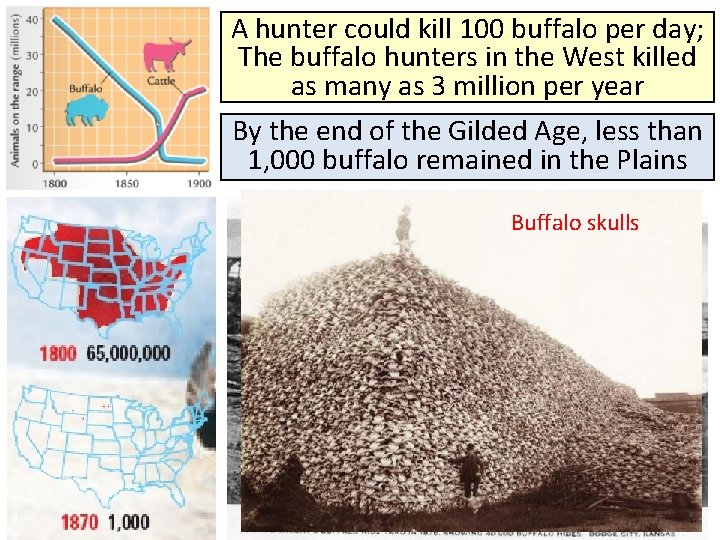
A hunter could kill 100 buffalo per day; The buffalo hunters in the West killed as many as 3 million per year By the end of the Gilded Age, less than 1, 000 buffalo remained in the Plains Buffalo skulls
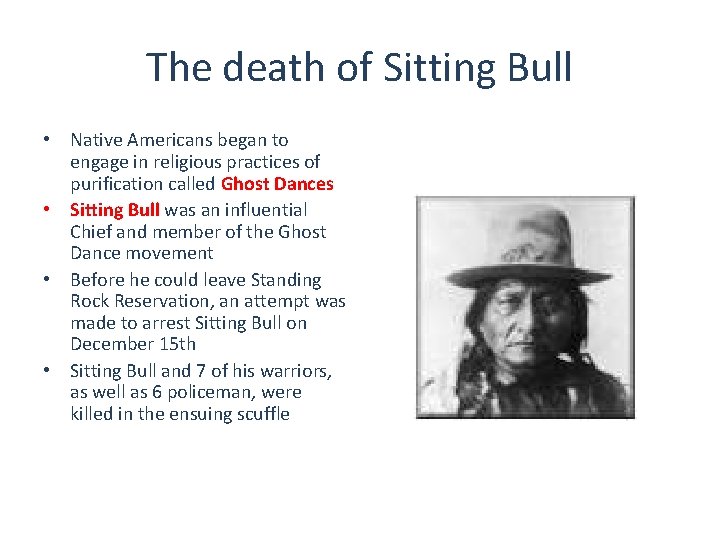
The death of Sitting Bull • Native Americans began to engage in religious practices of purification called Ghost Dances • Sitting Bull was an influential Chief and member of the Ghost Dance movement • Before he could leave Standing Rock Reservation, an attempt was made to arrest Sitting Bull on December 15 th • Sitting Bull and 7 of his warriors, as well as 6 policeman, were killed in the ensuing scuffle
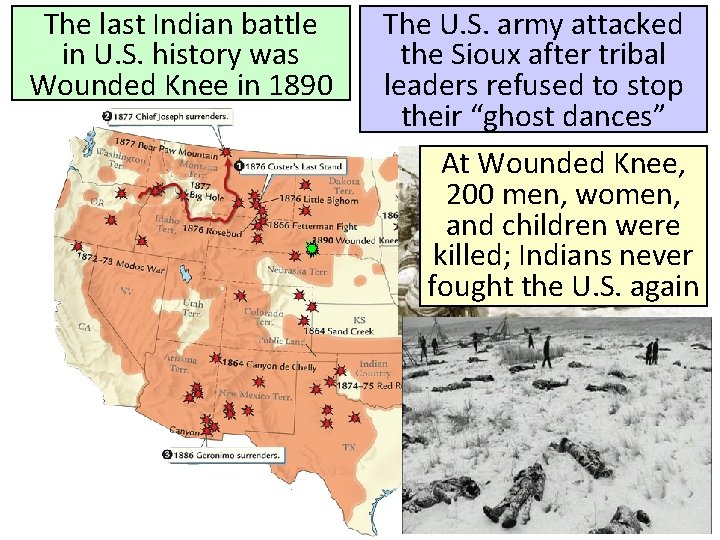
The last Indian battle in U. S. history was Wounded Knee in 1890 The U. S. army attacked the Sioux after tribal leaders refused to stop their “ghost dances” At Wounded Knee, 200 men, women, and children were killed; Indians never fought the U. S. again
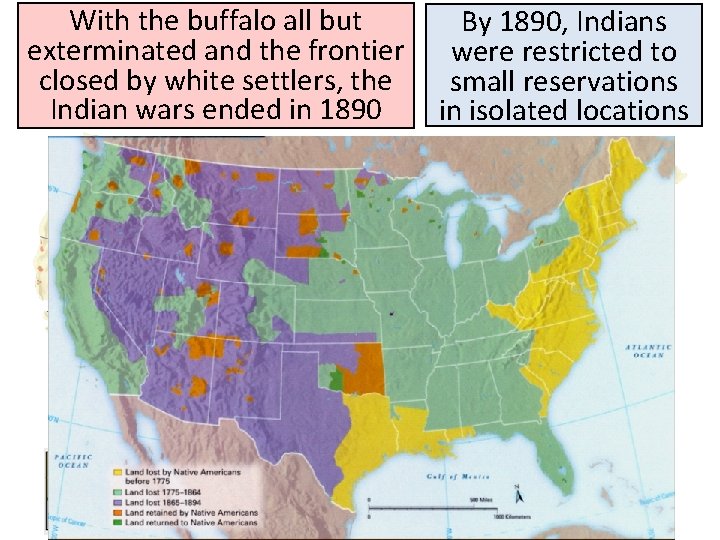
With the buffalo all but exterminated and the frontier closed by white settlers, the Indian wars ended in 1890 By 1890, Indians were restricted to small reservations in isolated locations
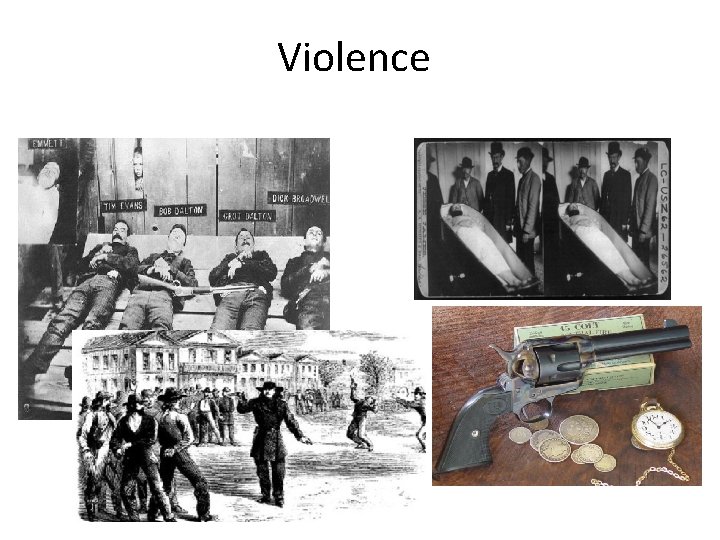
Violence
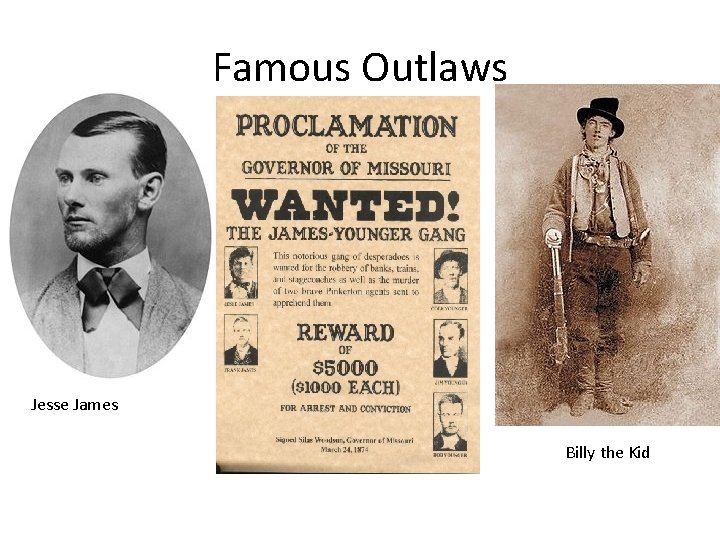
Famous Outlaws Jesse James Billy the Kid
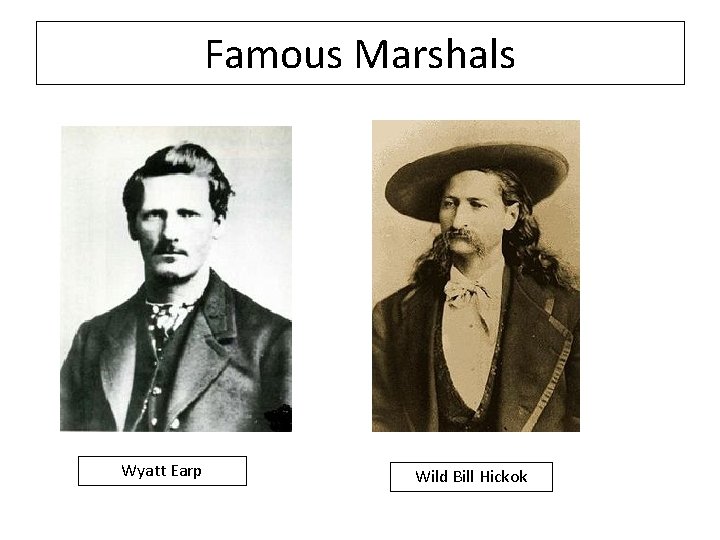
Famous Marshals Wyatt Earp Wild Bill Hickok
Wild West Fact vs. Myth • The myth of the wild west was spread by small books called dime novels that were widely read during the time. • One was a famous series of novels wrote by Edward Wheeler about a fictional character called Deadwood Dick. (thought to be a black cowboy Nat Love) • Another was the Western novel The Virginian by Owen Wister (father of western fiction) that romanticized the cowboy life. • William F. “Buffalo Bill” Cody also expanded the idea of the Wild West through his Wild West Shows featuring fighting cowboys and Indians, Chief Sitting Bull, and cowgirl Annie Oakley.
Wild West Fact vs. Myth • The Dime novels and the Wild West Shows developed the stereotype (exaggerated or oversimplified) story of the Western Frontier. • In 1893 historian Frederick Jackson Turner introduced the Turner Thesis stating that the American Frontier life had shaped and modeled the character of American people, but excluded the effect of various ethnic groups and business involvement. • He also said that the frontier acted as a safety valve for discontented city people as an opportunity for success and kept down uprisings in cities.
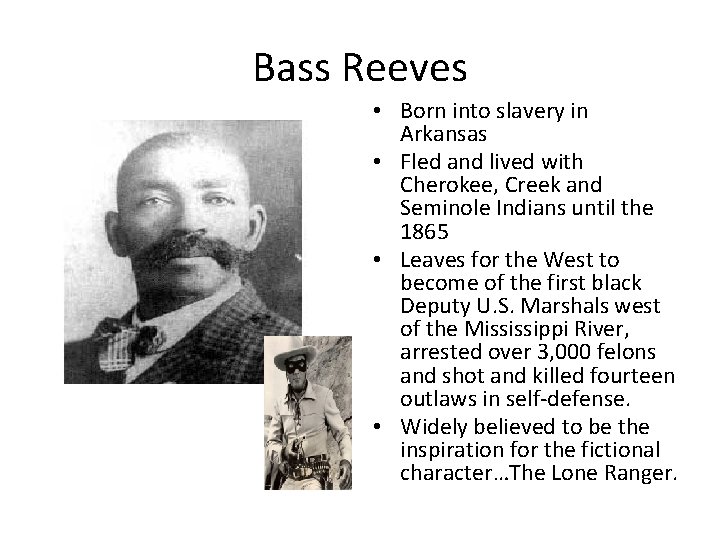
Bass Reeves • Born into slavery in Arkansas • Fled and lived with Cherokee, Creek and Seminole Indians until the 1865 • Leaves for the West to become of the first black Deputy U. S. Marshals west of the Mississippi River, arrested over 3, 000 felons and shot and killed fourteen outlaws in self-defense. • Widely believed to be the inspiration for the fictional character…The Lone Ranger.
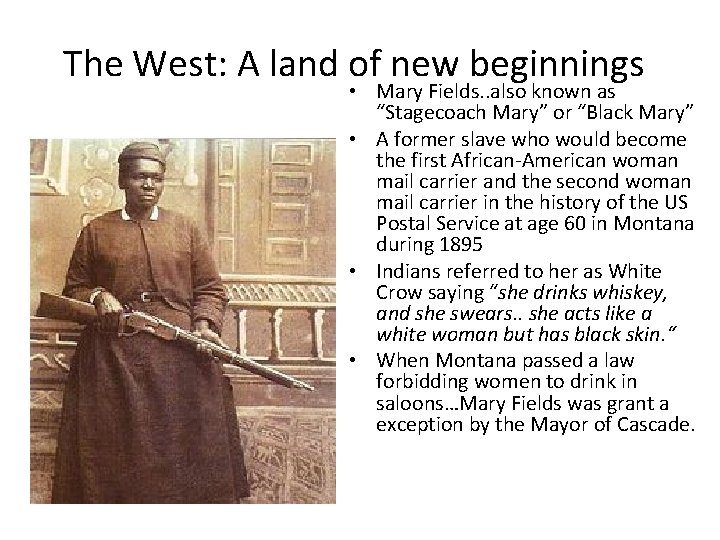
The West: A land of new beginnings • Mary Fields. . also known as “Stagecoach Mary” or “Black Mary” • A former slave who would become the first African-American woman mail carrier and the second woman mail carrier in the history of the US Postal Service at age 60 in Montana during 1895 • Indians referred to her as White Crow saying “she drinks whiskey, and she swears. . she acts like a white woman but has black skin. “ • When Montana passed a law forbidding women to drink in saloons…Mary Fields was grant a exception by the Mayor of Cascade.
- Slides: 28