
CATS WITH CLICKERS Using Learner Response Systems for




- Slides: 43
CATS WITH CLICKERS Using Learner Response Systems for Formative Assessments in the Classroom EDUCAUSE Learning Initiative Annual Meeting January 2010
We are. . . Charlotte Briggs, Ph. D. Director of the Office of Dental Education College of Dentistry University of Illinois at Chicago. . . Faculty development, teaching & learning Deborah Keyek-Franssen, Ph. D. Director of Academic Technology University of Colorado at Boulder. . . Faculty support, development opportunities, shape IT
Please… …return the clickers at the end of the session!
Who are you? A. B. C. D. E. Faculty, including deans, academic officers IT, including senior or support staff, CIOs Librarians Students Other
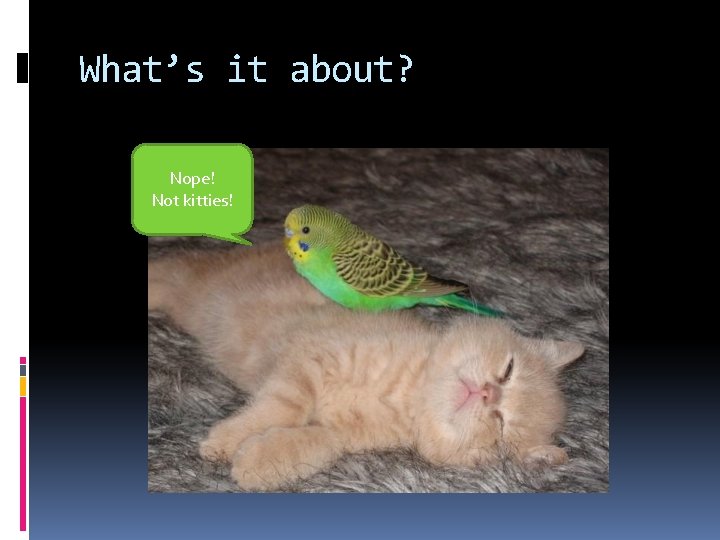
What’s it about? Nope! Not kitties!
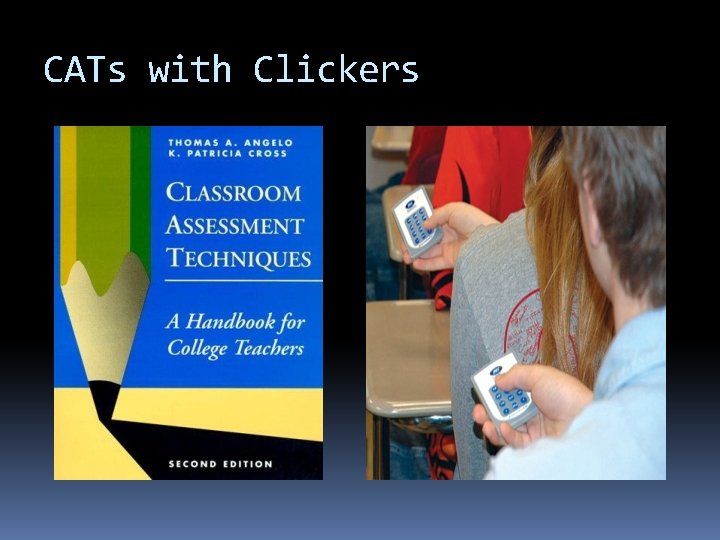
CATs with Clickers
How much do you know about CATs? A. Could have written the book myself B. Have used CATs in my own teaching C. Heard of them, but haven’t used them D. Never heard of them E. Actually, I know a lot about CATs: Garfield, Morris, Cheshire, Krazy…
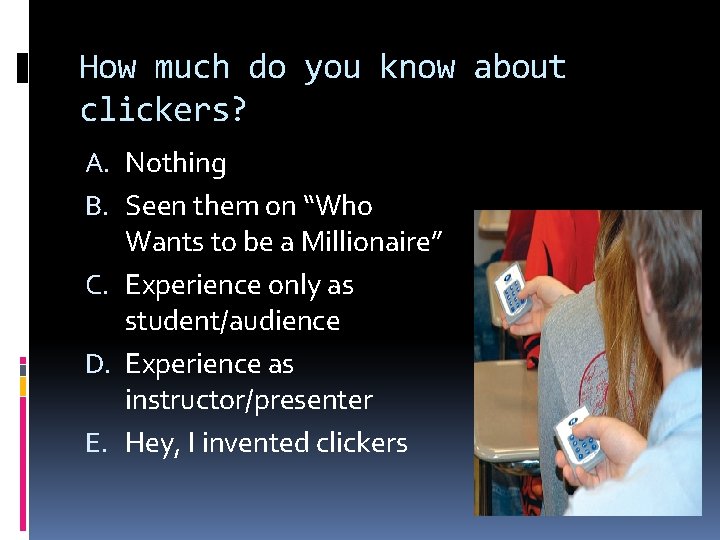
How much do you know about clickers? A. Nothing B. Seen them on “Who Wants to be a Millionaire” C. Experience only as student/audience D. Experience as instructor/presenter E. Hey, I invented clickers
Assumptions about our audience More familiar with clickers than with CATs Seek pedagogical understanding of clicker use more than technical skills Looking for faculty development ideas Want approaches that work and are educationally sound Understand the value of a good “cookbook”
Purpose Introduce CATs to instructional technology community as a pedagogy that is: extensively-tested educationally effective enhanced by technology (clickers)
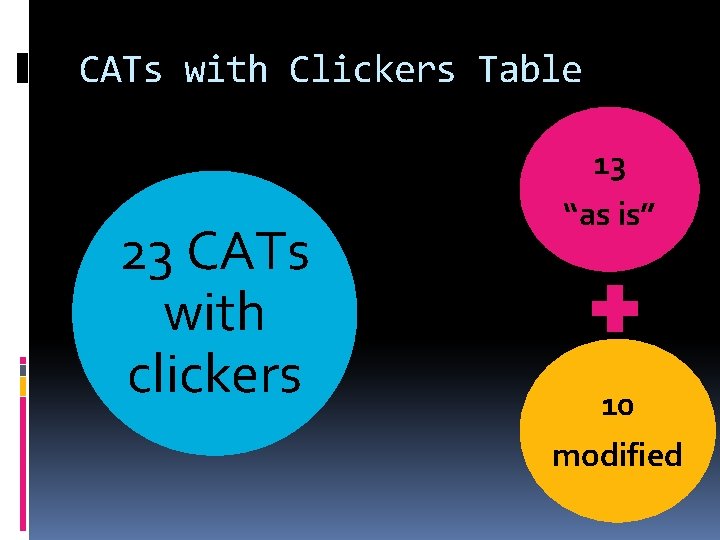
Objectives Introduce concept and practice of “classroom assessment techniques” (CATs) as a means of formative assessment Introduce Angelo and Cross’s Classroom Assessment Techniques Demonstrate how clickers can be used to conduct many of Angelo and Cross’s CATs. Provide a handout that lists 23 CATs that can be implemented with clickers
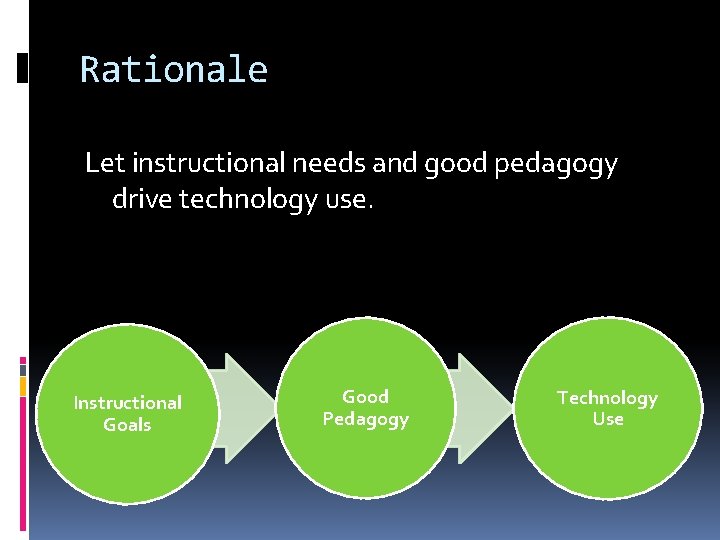
Rationale Let instructional needs and good pedagogy drive technology use. Instructional Goals Good Pedagogy Technology Use
So, really, what are CATs? Quick, easy ways to get feedback from students about: Prior knowledge Preconceptions/misconceptions Opinions Understanding Confusion Satisfaction
You might already know some CATs. . . Minute Paper Muddiest Point One Sentence Summary Reading Rating Sheets Chain Notes
A CAT starts with a teaching question Do I need to review basic concepts? Did students grasp the main points of lecture?
Let’s try some CATs! Background Knowledge Probe One Sentence Summary
Let’s try some CATs! Background Knowledge Probe
Let’s try some CATs! One Sentence Summary
Quick Debrief Background Knowledge Probe One Sentence Summary
WHY USE CATS?
Monitor what student think or understand. . .
. . . and what they can do
Formative
Challenge: We can seldom assess knowledge and needs before the course starts
Challenge: Getting a handle on what’s going on in large classes
CATs help faculty know their students and monitor their learning better
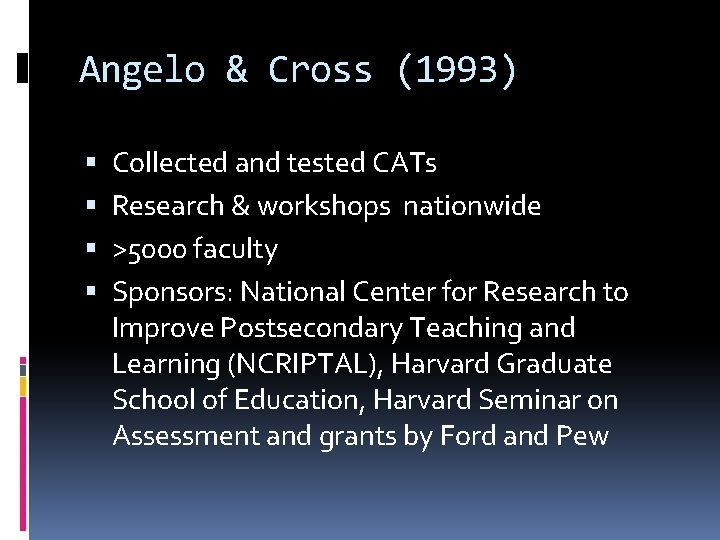
Angelo & Cross (1993) Collected and tested CATs Research & workshops nationwide >5000 faculty Sponsors: National Center for Research to Improve Postsecondary Teaching and Learning (NCRIPTAL), Harvard Graduate School of Education, Harvard Seminar on Assessment and grants by Ford and Pew
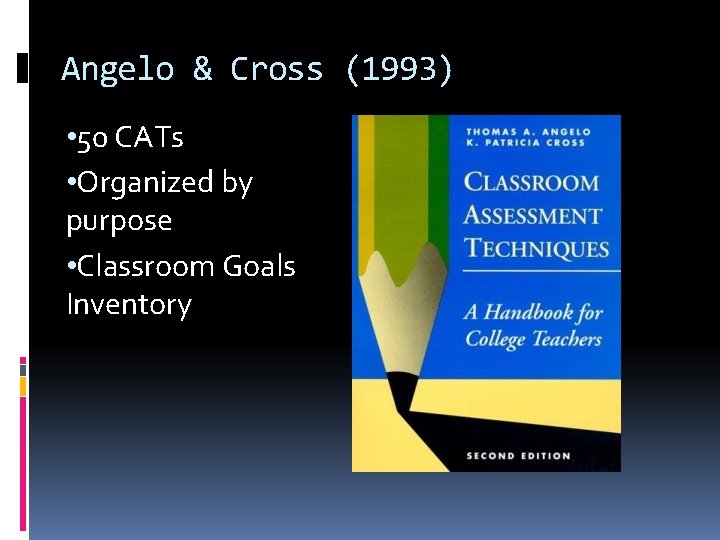
Angelo & Cross (1993) • 50 CATs • Organized by purpose • Classroom Goals Inventory
CATs w/ Clickers √ Quicker √ Easier
CATs with Clickers Table 23 CATs with clickers 13 “as is” 10 modified
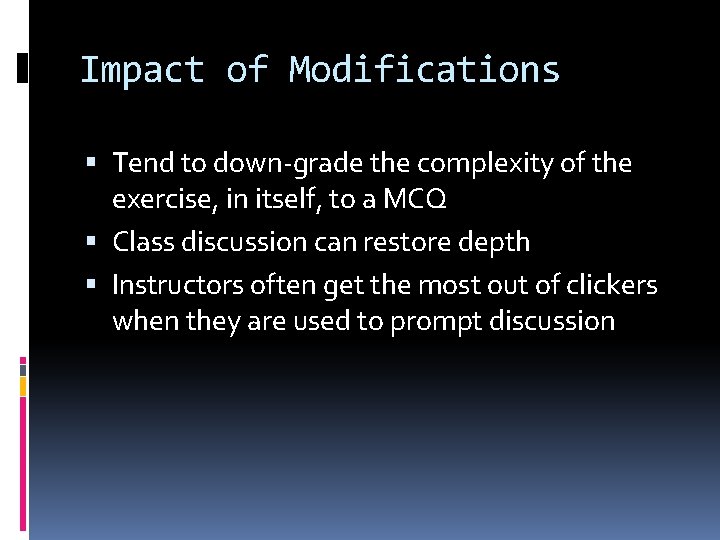
Impact of Modifications Tend to down-grade the complexity of the exercise, in itself, to a MCQ Class discussion can restore depth Instructors often get the most out of clickers when they are used to prompt discussion
CATs with clickers to try Background Knowledge Probe One Sentence Summary
Modified CAT with clickers Background Knowledge Probe
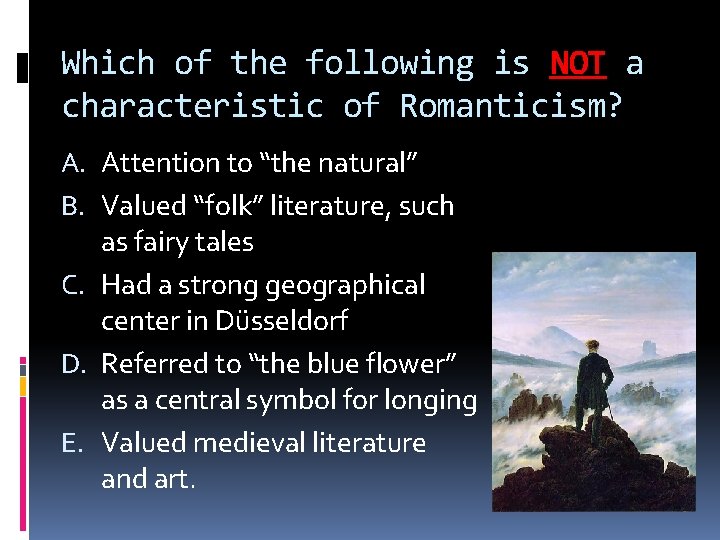
Which of the following is NOT a characteristic of Romanticism? A. Attention to “the natural” B. Valued “folk” literature, such as fairy tales C. Had a strong geographical center in Düsseldorf D. Referred to “the blue flower” as a central symbol for longing E. Valued medieval literature and art.
Modified CAT with clickers One Sentence Summary
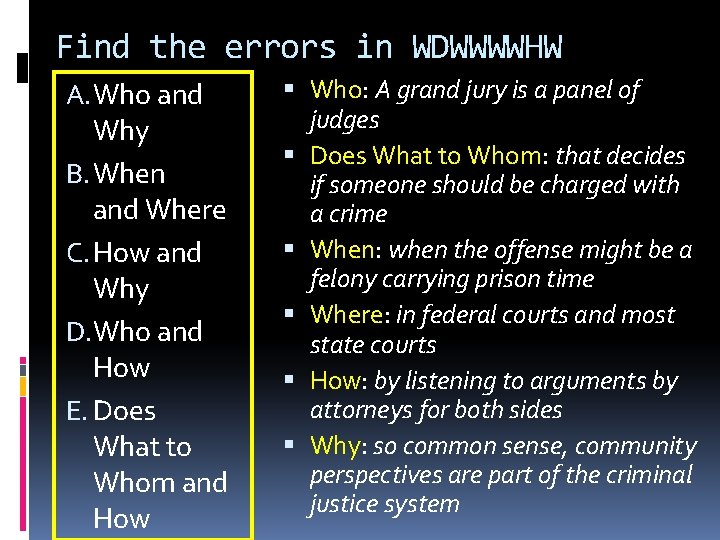
Find the errors in WDWWWWHW A. Who and Why B. When and Where C. How and Why D. Who and How E. Does What to Whom and How Who: A grand jury is a panel of judges Does What to Whom: that decides if someone should be charged with a crime When: when the offense might be a felony carrying prison time Where: in federal courts and most state courts How: by listening to arguments by attorneys for both sides Why: so common sense, community perspectives are part of the criminal justice system
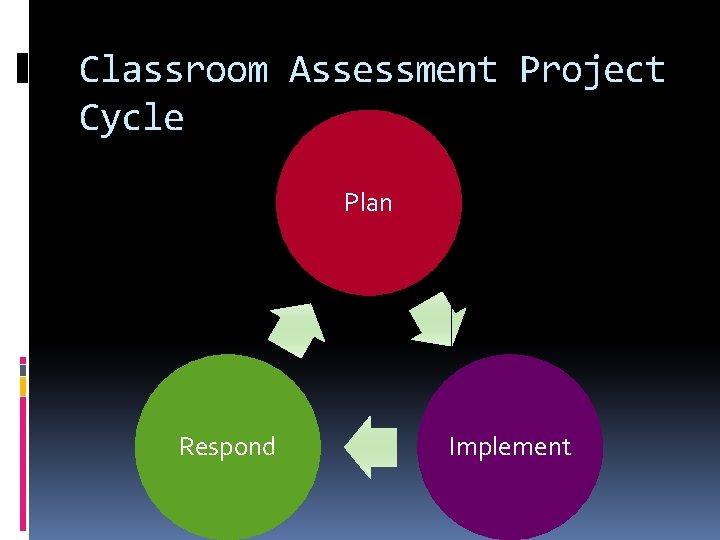
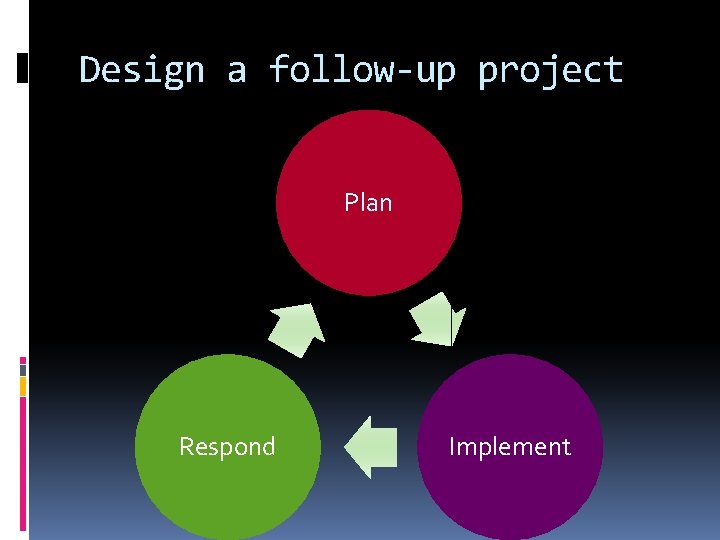
Classroom Assessment Project Cycle Plan Respond Implement
Classroom Assessment Project Cycle Plan: * Choose class * Focus on goal/question * Choose CAT
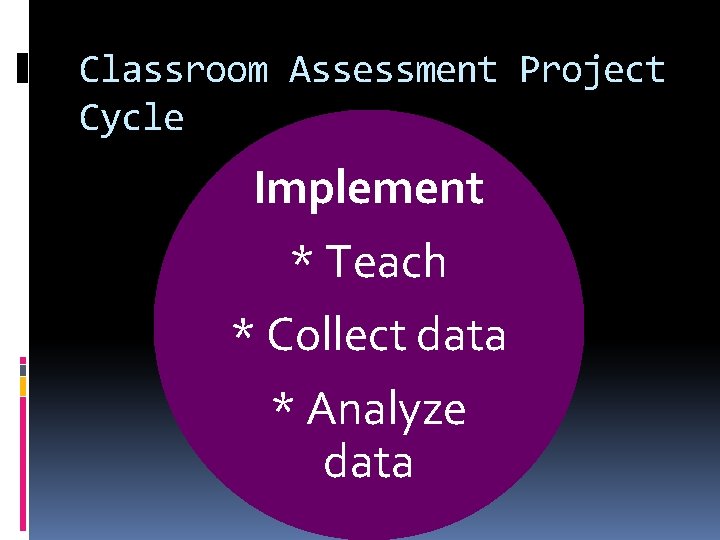
Classroom Assessment Project Cycle Implement * Teach * Collect data * Analyze data
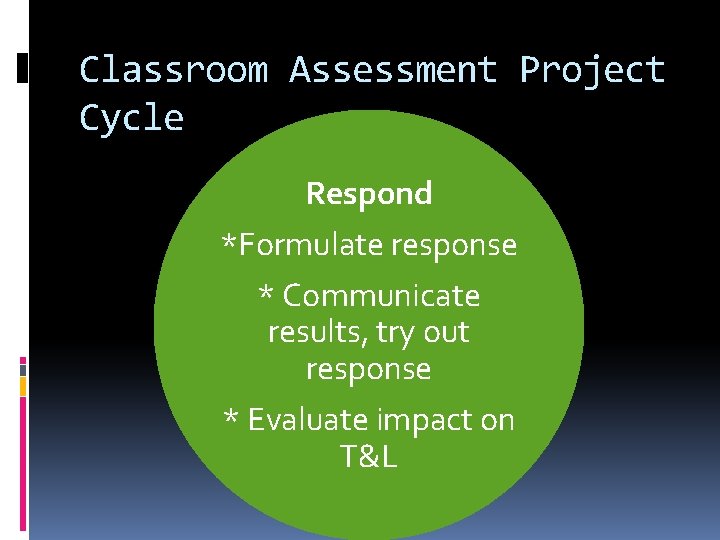
Classroom Assessment Project Cycle Respond *Formulate response * Communicate results, try out response * Evaluate impact on T&L
Design a follow-up project Plan Respond Implement
Resources Thomas Angelo and K. Patricia Cross, Classroom Assessment Techniques Derek Bruff, Teaching with Classroom Response Systems Doug Duncan, Clickers in the Classroom
Questions or Comments? Charlotte Briggs clbriggs@uic. edu Deborah Keyek-Franssen deblkf@colorado. edu