
Catheter Ablation versus Standard conventional Treatment in patients
Catheter Ablation versus Standard conventional Treatment in patients with LEft ventricular dysfunction and Atrial Fibrillation The CASTLE-AF trial Nassir F. Marrouche MD on behalf the CASTLE AF Investigators
Declaration of interest -Research contracts (Abbot; Boston Scientific; GE Healthcare; Siemens; Biotronik; Vytronus; Biosense Webster) - Consulting/Royalties/Owner/ Stockholder of a healthcare company (Abbott; Biotronik; Wavelet Health Cardiac Design; Medtronic ; Preventice Vytronus , Bio, sense Webster; Marrek Inc; Bos. ton Scientific)
Background • Atrial fibrillation (AF) and heart failure are well intertwined • Catheter ablation of AF in patients with heart failure has been shown feasible
CASTLE AF Rationale and Objective • Study the effectiveness of catheter ablation of atrial fibrillation in patients with heart failure in improving hard primary endpoints of mortality and heart failure progression when compared to conventional standard treatment
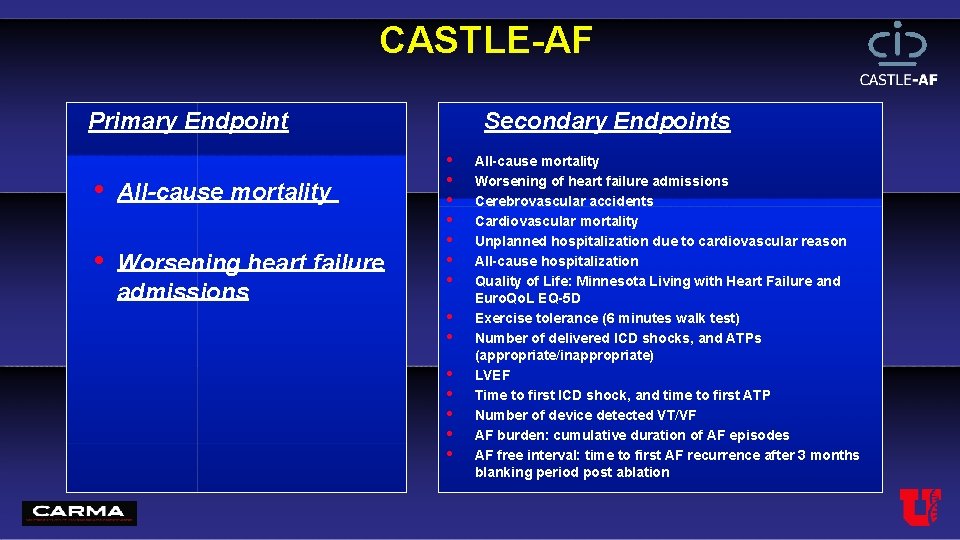
CASTLE AF Primary Endpoint • All-cause mortality • Worsening heart failure admissions Secondary Endpoints • • • • All cause mortality Worsening of heart failure admissions Cerebrovascular accidents Cardiovascular mortality Unplanned hospitalization due to cardiovascular reason All cause hospitalization Quality of Life: Minnesota Living with Heart Failure and Euro. Qo. L EQ 5 D Exercise tolerance (6 minutes walk test) Number of delivered ICD shocks, and ATPs (appropriate/inappropriate) LVEF Time to first ICD shock, and time to first ATP Number of device detected VT/VF AF burden: cumulative duration of AF episodes AF free interval: time to first AF recurrence after 3 months blanking period post ablation
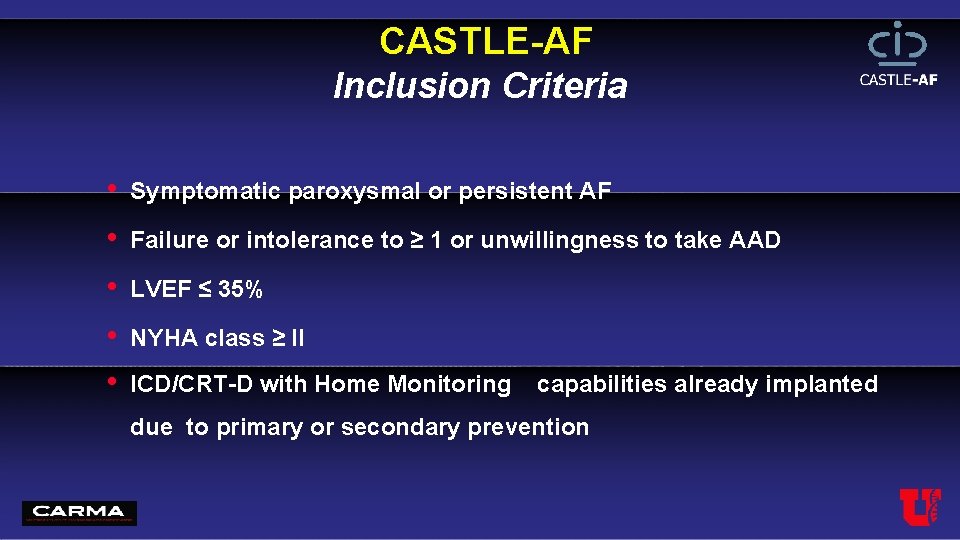
CASTLE AF Inclusion Criteria • Symptomatic paroxysmal or persistent AF • Failure or intolerance to ≥ 1 or unwillingness to take AAD • LVEF ≤ 35% • • NYHA class ≥ II ICD/CRT D with Home Monitoring capabilities already implanted due to primary or secondary prevention
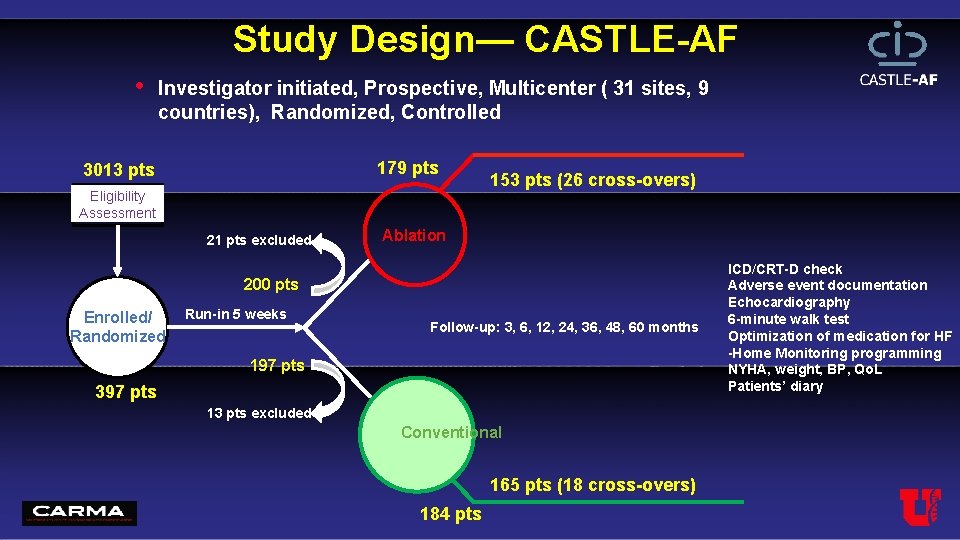
Study Design— CASTLE AF • Investigator initiated, Prospective, Multicenter ( 31 sites, 9 countries), Randomized, Controlled 179 pts 3013 pts Eligibility Assessment 21 pts excluded 153 pts (26 cross overs) Ablation 200 pts Enrolled/ Randomized Run in 5 weeks Follow up: 3, 6, 12, 24, 36, 48, 60 months 197 pts 397 pts 13 pts excluded Conventional 165 pts (18 cross overs) 184 pts ICD/CRT D check Adverse event documentation Echocardiography 6 minute walk test Optimization of medication for HF Home Monitoring programming NYHA, weight, BP, Qo. L Patients’ diary
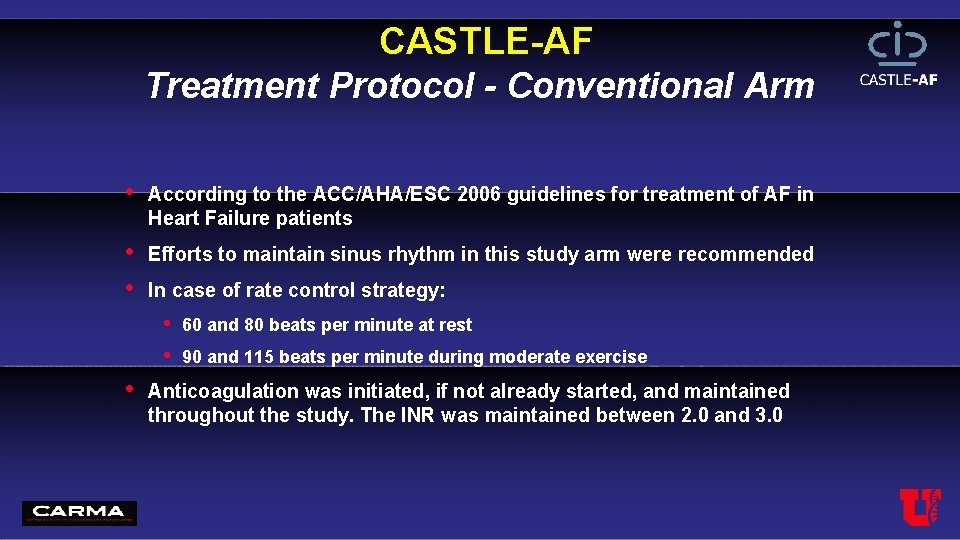
CASTLE AF Treatment Protocol - Conventional Arm • According to the ACC/AHA/ESC 2006 guidelines for treatment of AF in Heart Failure patients • • Efforts to maintain sinus rhythm in this study arm were recommended In case of rate control strategy: • • • 60 and 80 beats per minute at rest 90 and 115 beats per minute during moderate exercise Anticoagulation was initiated, if not already started, and maintained throughout the study. The INR was maintained between 2. 0 and 3. 0
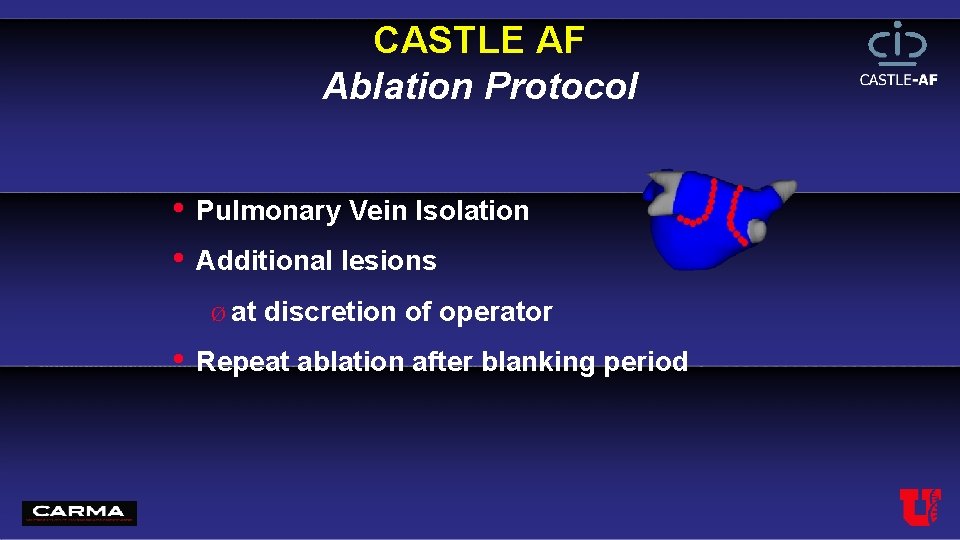
CASTLE AF Ablation Protocol • Pulmonary Vein Isolation • Additional lesions Ø at discretion of operator • Repeat ablation after blanking period
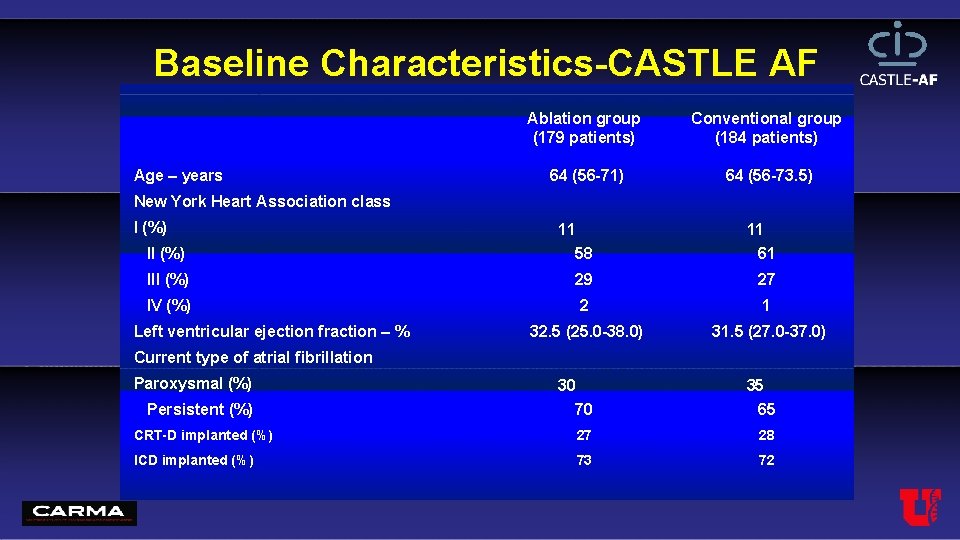
Baseline Characteristics CASTLE AF Age – years Ablation group (179 patients) Conventional group (184 patients) 64 (56 71) 64 (56 73. 5) New York Heart Association class I (%) 11 11 II (%) 58 61 III (%) 29 27 IV (%) 2 1 32. 5 (25. 0 38. 0) 31. 5 (27. 0 37. 0) Left ventricular ejection fraction – % Current type of atrial fibrillation Paroxysmal (%) 30 35 Persistent (%) 70 65 CRT D implanted (%) 27 28 ICD implanted (%) 73 72
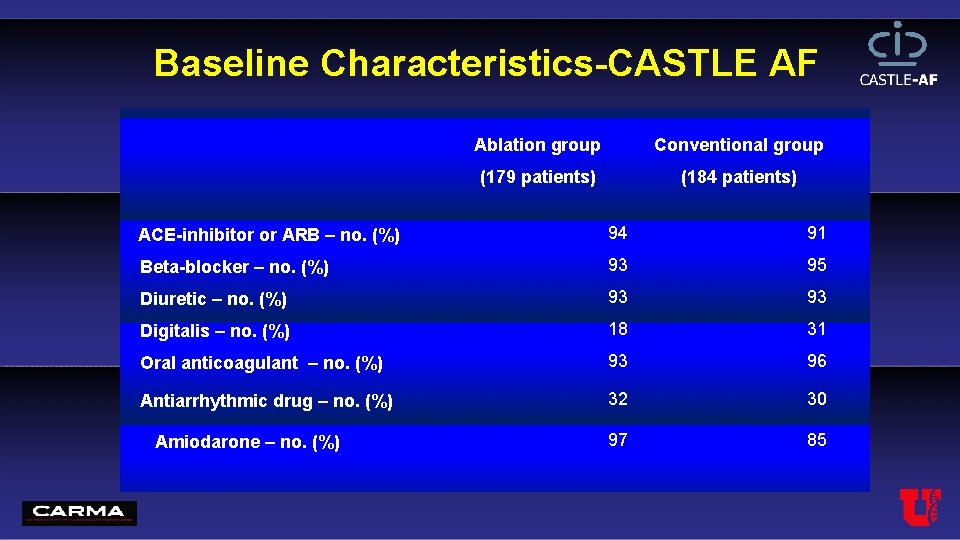
Baseline Characteristics CASTLE AF Ablation group Conventional group (179 patients) (184 patients) ACE inhibitor or ARB – no. (%) 94 91 Beta blocker – no. (%) 93 95 Diuretic – no. (%) 93 93 Digitalis – no. (%) 18 31 Oral anticoagulant – no. (%) 93 96 Antiarrhythmic drug – no. (%) 32 30 97 85 Amiodarone – no. (%)
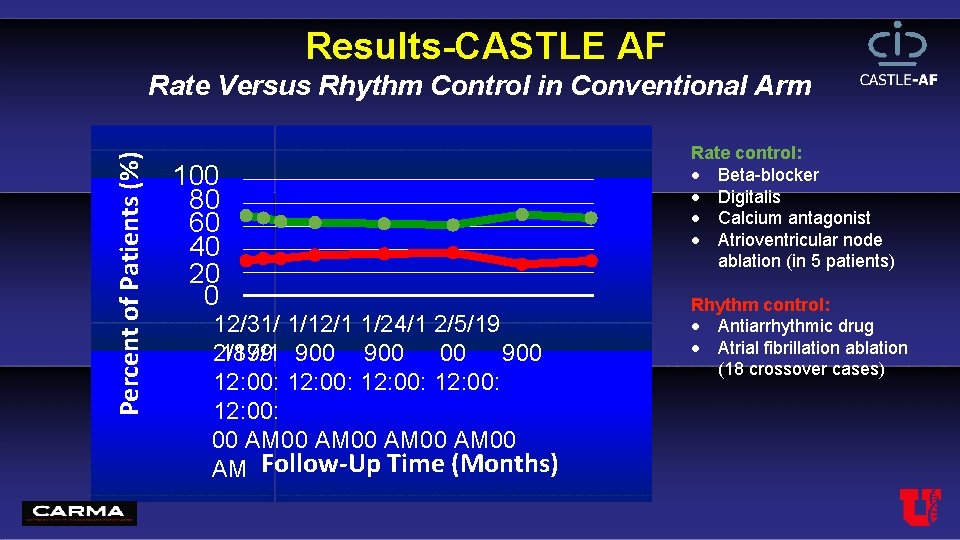
Results CASTLE AF Percent of Patients (%) Rate Versus Rhythm Control in Conventional Arm 100 80 60 40 20 0 12/31/ 1/12/1 1/24/1 2/5/19 1899 900 00 900 2/17/1 12: 00: 12: 00 AM 00 AM Follow-Up Time (Months) Rate control: Beta-blocker Digitalis Calcium antagonist Atrioventricular node ablation (in 5 patients) Rhythm control: Antiarrhythmic drug Atrial fibrillation ablation (18 crossover cases)
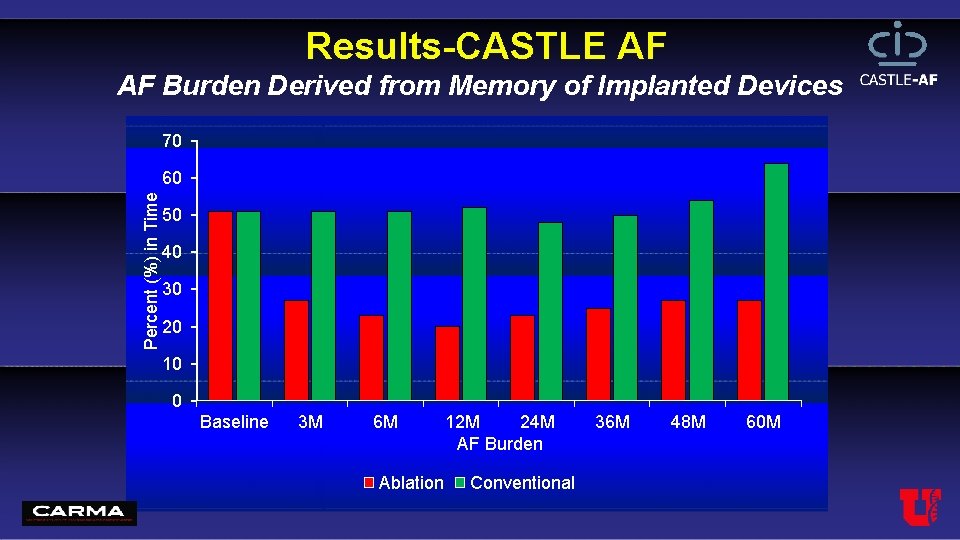
Results CASTLE AF AF Burden Derived from Memory of Implanted Devices 70 Percent (%) in Time 60 50 40 30 20 10 0 Baseline 3 M 6 M Ablation 12 M 24 M AF Burden Conventional 36 M 48 M 60 M
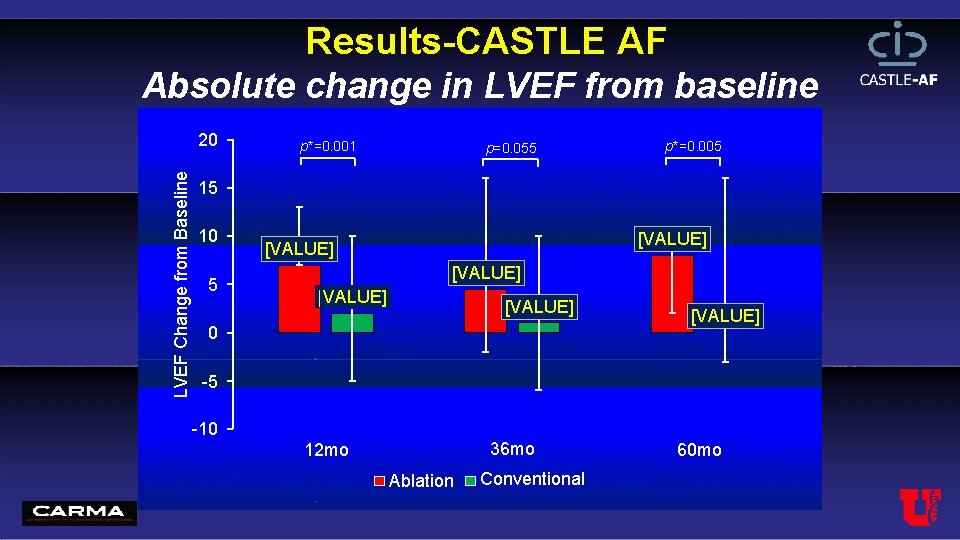
Results CASTLE AF Absolute change in LVEF from baseline LVEF Change from Baseline 20 p*=0. 001 p=0. 055 p*=0. 005 15 10 5 [VALUE] [VALUE] 0 [VALUE] -5 -10 36 mo 12 mo Ablation Conventional 60 mo
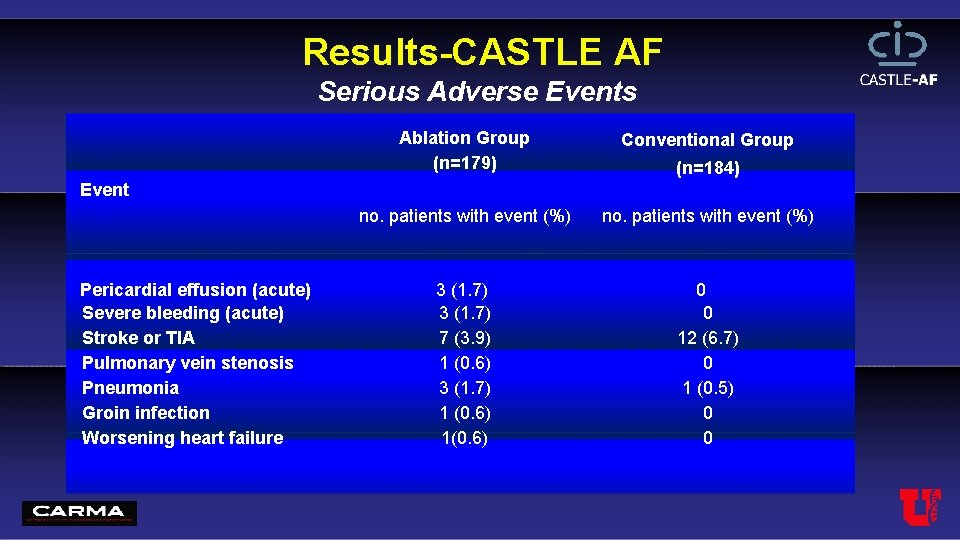
Results CASTLE AF Serious Adverse Events Ablation Group (n=179) Conventional Group no. patients with event (%) 3 (1. 7) 7 (3. 9) 1 (0. 6) 3 (1. 7) 1 (0. 6) 1(0. 6) 0 0 12 (6. 7) 0 1 (0. 5) 0 0 (n=184) Event Pericardial effusion (acute) Severe bleeding (acute) Stroke or TIA Pulmonary vein stenosis Pneumonia Groin infection Worsening heart failure
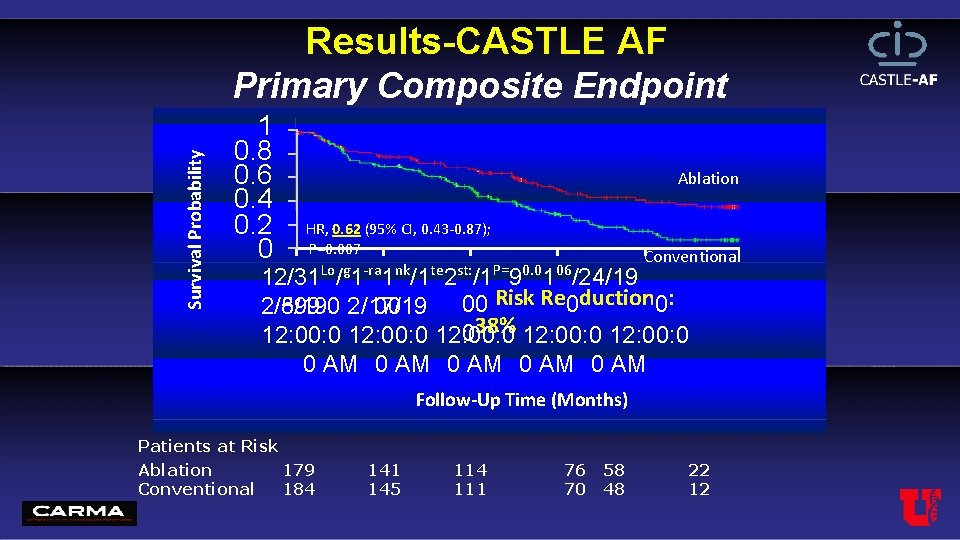
Results CASTLE AF Survival Probability Primary Composite Endpoint 1 0. 8 0. 6 0. 4 0. 2 0 Ablation HR, 0. 62 (95% CI, 0. 43 -0. 87); P=0. 007 Lo g -ra nk te st: P= 0. 0 06 Conventional 12/31 / 1 1 /1 2 /1 9 1 /24/19 00 Risk Re 0 duction 0: 899 2/17/19 00 2/5/190 038% 12: 00: 0 12: 00: 0 0 AM 0 AM Follow-Up Time (Months) Patients at Risk Ablation Conventional 179 184 141 145 114 111 76 70 58 48 22 12
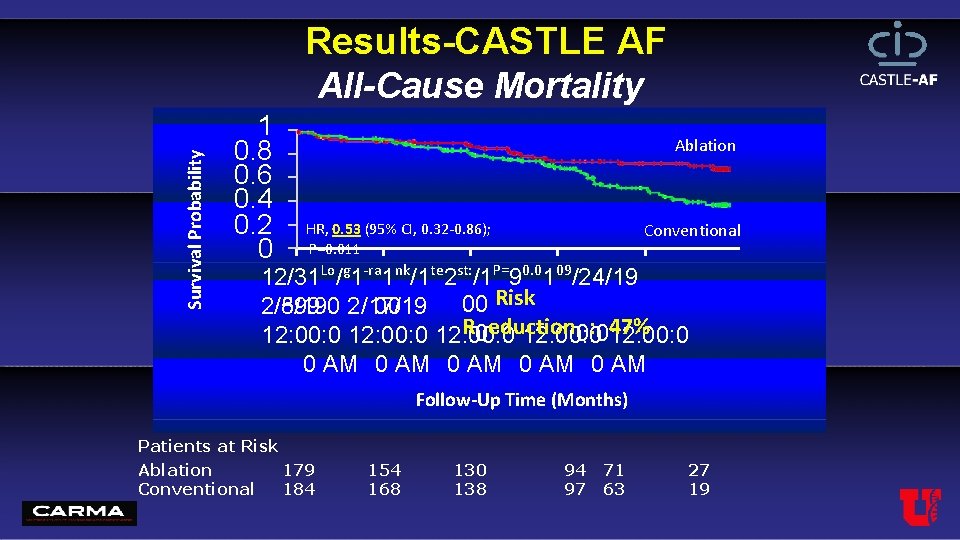
Results CASTLE AF Survival Probability All-Cause Mortality 1 0. 8 0. 6 0. 4 0. 2 0 Ablation Conventional HR, 0. 53 (95% CI, 0. 32 -0. 86); P=0. 011 Lo g -ra nk te st: P= 0. 0 09 12/31 / 1 1 /1 2 /1 9 1 /24/19 00 Risk 899 2/17/19 00 2/5/190 R 0 eduction 47% 0: 012: 00: 0 12: 00: 0 0 AM 0 AM Follow-Up Time (Months) Patients at Risk Ablation Conventional 179 184 154 168 130 138 94 97 71 63 27 19
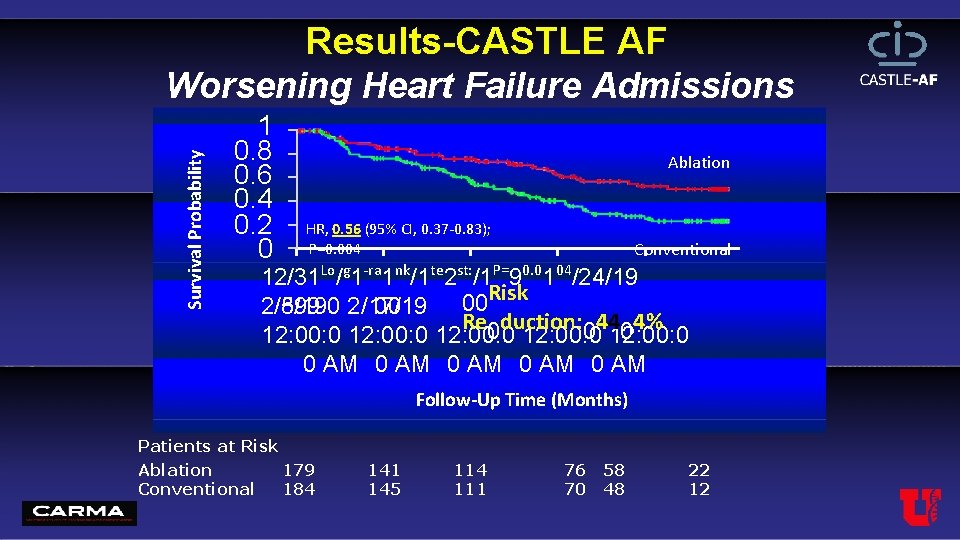
Results CASTLE AF Survival Probability Worsening Heart Failure Admissions 1 0. 8 0. 6 0. 4 0. 2 0 Ablation HR, 0. 56 (95% CI, 0. 37 -0. 83); P=0. 004 Lo g -ra nk te st: P= 0. 0 04 Conventional 12/31 / 1 1 /1 2 /1 9 1 /24/19 Risk 00 899 2/17/19 00 2/5/190 Re 0 duction: 04404% 12: 00: 0 12: 00: 0 0 AM 0 AM Follow-Up Time (Months) Patients at Risk Ablation Conventional 179 184 141 145 114 111 76 70 58 48 22 12
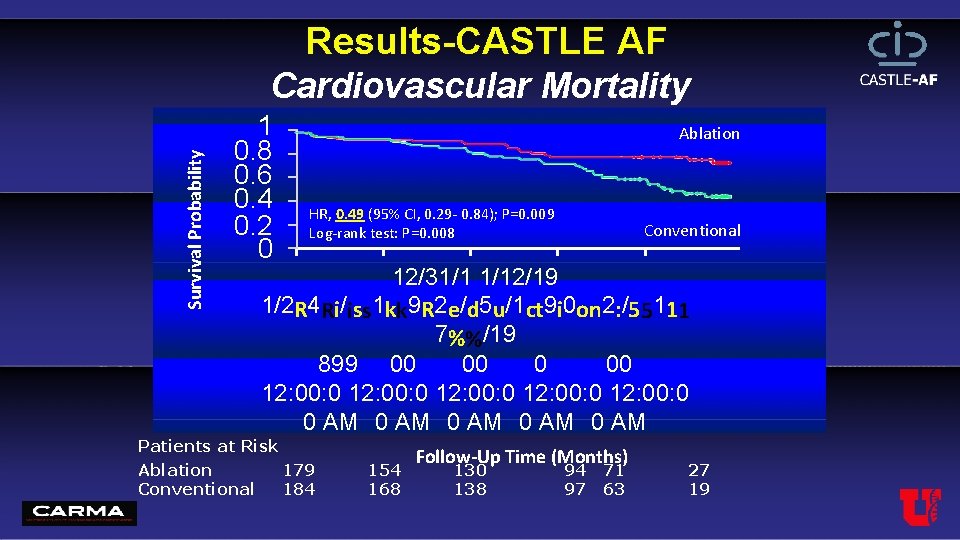
Results CASTLE AF Survival Probability Cardiovascular Mortality 1 0. 8 0. 6 0. 4 0. 2 0 Ablation HR, 0. 49 (95% CI, 0. 29 - 0. 84); P=0. 009 Log-rank test: P=0. 008 12/31/1 1/12/19 1/2 R 4 Ri/iss 1 kk 9 R 2 e/d 5 u/1 ct 9 i 0 on 2: /55111 7%%/19 899 00 00 12: 00: 0 12: 00: 0 0 AM 0 AM Patients at Risk Ablation Conventional 179 184 154 168 Follow-Up Time (Months) 130 138 94 97 71 63 27 19
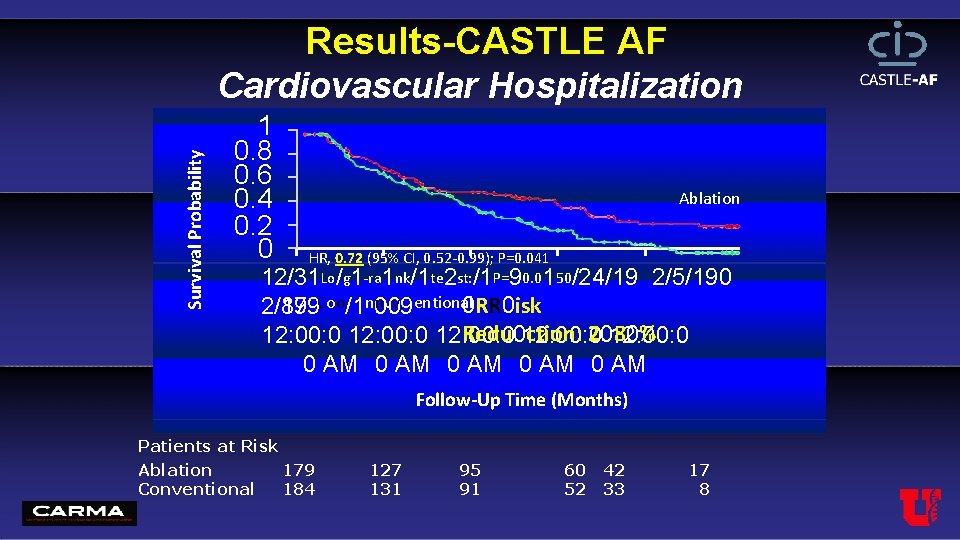
Results CASTLE AF Survival Probability Cardiovascular Hospitalization 1 0. 8 0. 6 0. 4 0. 2 0 Ablation HR, 0. 72 (95% CI, 0. 52 -0. 99); P=0. 041 12/31 Lo/g 1 -ra 1 nk/1 te 2 st: /1 P=90. 0150/24/19 2/5/190 CCoo/1 nnvv 899 009 entional 0 RR 0 isk 2/17 Redu 012: 00: 0 ction: 2012: 00: 0 8 0% 12: 00: 0 0 AM 0 AM Follow-Up Time (Months) Patients at Risk Ablation Conventional 179 184 127 131 95 91 60 52 42 33 17 8
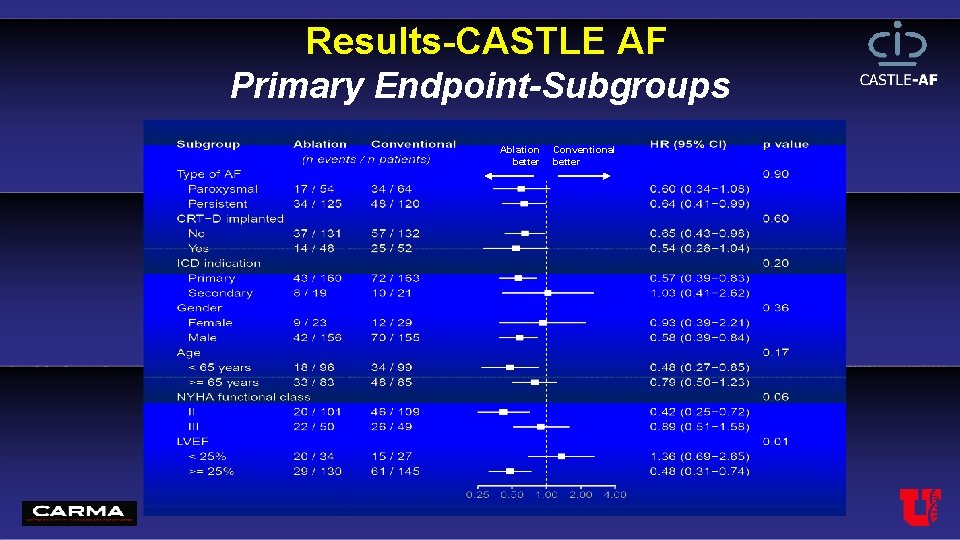
Results CASTLE AF Primary Endpoint-Subgroups Ablation better Conventional better
Conclusion CASTLE AF • Catheter ablation of atrial fibrillation in patients with heart failure is associated with improved all-cause mortality and fewer admissions for worsening heart failure when compared to conventional standard of care treatment • Catheter ablation of atrial fibrillation in patients with heart failure is also associated with improved cardiovascular mortality and hospitalization when compared to conventional standard of care treatment

Steering Committee Data and Safety Monitoring Board Nassir Marrouche John Camm Johannes Brachmann Etienne Aliot Dietrich Andresen Walter Lehmacher Dietmar Bänsch Lucas Boresma Endpoint Adverse Event Committee Luc Jordaens Heribert Schunkert Jürgen Siebels Juergen Vogt Heinrich Wieneke Frieder Braunschweig, Harriette F. Verwey The study was funded by BIOTRONIK Co Investigators Hüseyin Ince, Béla Merkely, Hüseyin Ince, Evgeny Pokushalov, Georg Nölker, Sergey Popov Prashanthan Sanders Lukasz Szumowski Dimitry Lebedev Tamàs Szili Török Paul Martin Eduard Ivanitskiy Bernhard Zrenner Anthony Chow Arif Elvan, MD Ivan Diaz Remirez Thomas Pezawas Mathias Busch Zoltán Csanádi Wilhelm Haverkamp Helmut Pürerfellner Andreas Schärtl Bernd Lemke Stefan Schlüter Isabel Deisenhofer Jens Günther Thorsten Lawrenz Ernst Günter Vester Michael Wiedemann
- Slides: 23