
CATEGORIES OF BIOLOGICAL CLASSIFICATION I Taxonomy the science
CATEGORIES OF BIOLOGICAL CLASSIFICATION I. Taxonomy – the science of naming and classifying organisms polynomial – “many” names, in the 1700’s descriptive phrases were used to name organisms resulting in many names that caused confusion
Carl Linnaeus – a Swedish biologist who developed the twoword Latin name for each species p binomial nomenclature – a two-word Latin system for naming organisms developed by Linnaeus
p scientific name – the two-part name for a species; the first word is the genus classification; the second word is the species classification ex: Homo sapiens (humans) Canis familiaris (dog) Canis lupus (wolf)
II. Rules for Naming Organisms p All scientific names must have 2 Latin words. p Two different types of organisms can not have the same scientific name. p The first letter of the genus name is capitalized; the first letter of the species name is lowercase. p Scientific names are italicized or underlined.
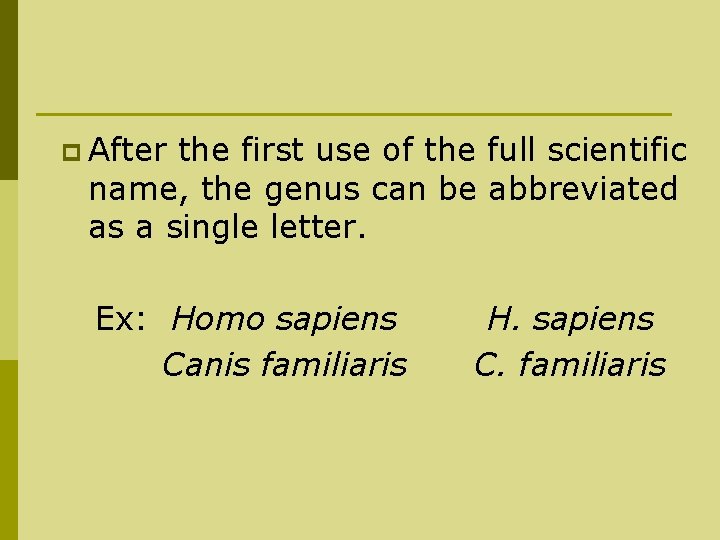
p After the first use of the full scientific name, the genus can be abbreviated as a single letter. Ex: Homo sapiens Canis familiaris H. sapiens C. familiaris

III. HOW BIOLOGIST CLASSIFY ORGANISMS *Biologist classify organisms based on appearance, structure, breeding patterns, and similarities in DNA sequence.
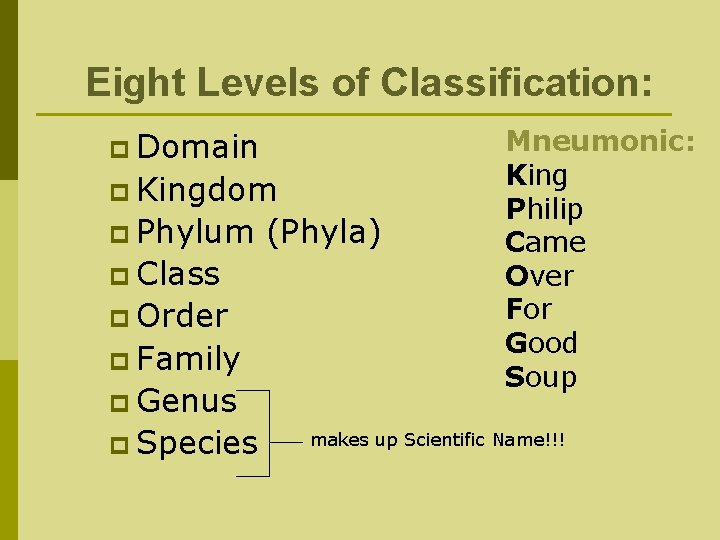
Eight Levels of Classification: p Domain p Kingdom p Phylum p Class p Order p Family p Genus p Species (Phyla) Mneumonic: King Philip Came Over For Good Soup makes up Scientific Name!!!
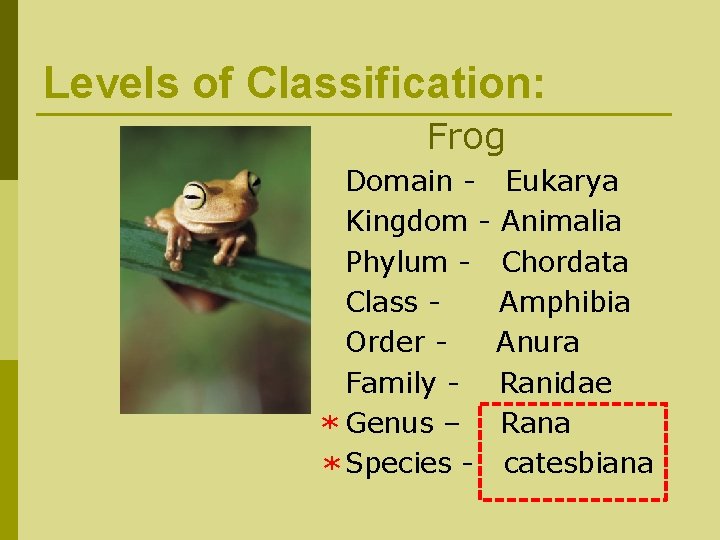
Levels of Classification: Frog Domain - Eukarya Kingdom - Animalia Phylum - Chordata Class Amphibia Order Anura Family - Ranidae * Genus – Rana * Species - catesbiana
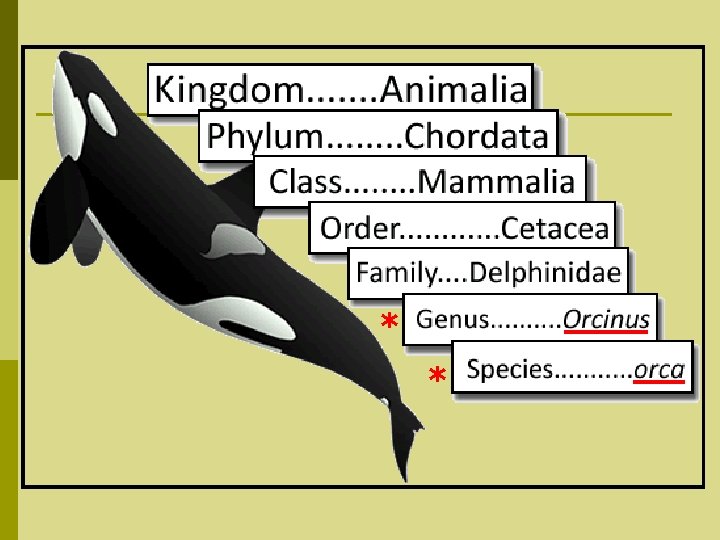
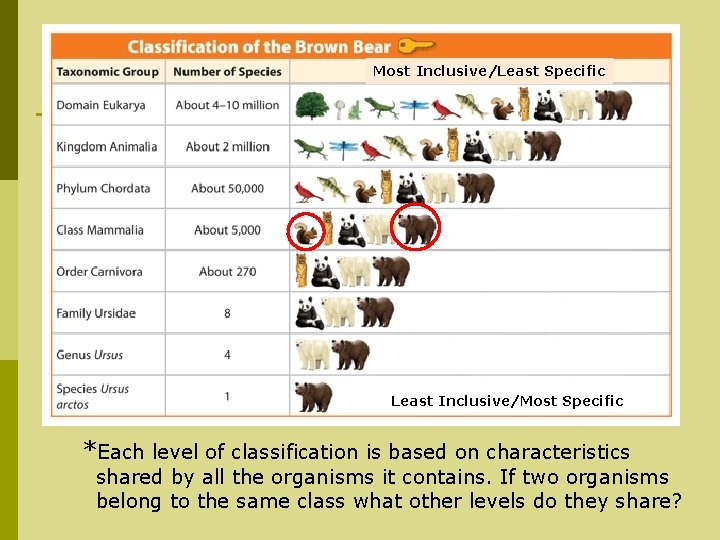
Most Inclusive/Least Specific Least Inclusive/Most Specific *Each level of classification is based on characteristics shared by all the organisms it contains. If two organisms belong to the same class what other levels do they share?
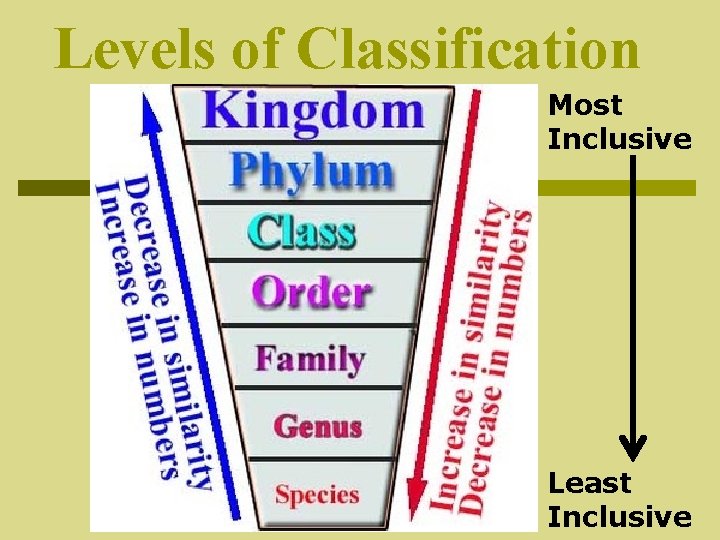
Levels of Classification Most Inclusive Least Inclusive
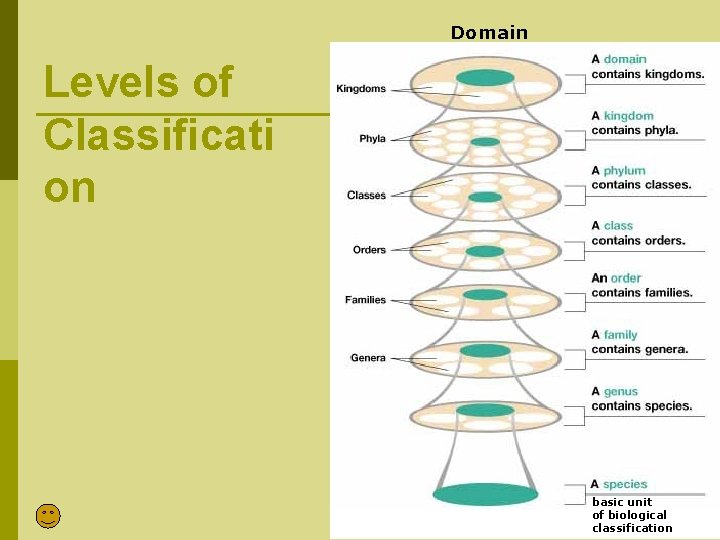
Domain Levels of Classificati on basic unit of biological classification
- Slides: 12