
Catecholamines dopamine DA norepinephrine NE epinephrine EPI 1
![Catecholamines (dopamine [DA], norepinephrine [NE], epinephrine [EPI]) 1. Basic Neurochemistry, Chap. 12 2. The](https://slidetodoc.com/presentation_image/1752775a52ffd39274eab6b1c98233a5/image-1.jpg "Catecholamines (dopamine [DA], norepinephrine [NE], epinephrine [EPI]) 1. Basic Neurochemistry, Chap. 12 2. The")

- Slides: 30
Catecholamines (dopamine [DA], norepinephrine [NE], epinephrine [EPI]) 1. Basic Neurochemistry, Chap. 12 2. The Biochemical Basis of Neuropharmacology, Chap. 8 & 9
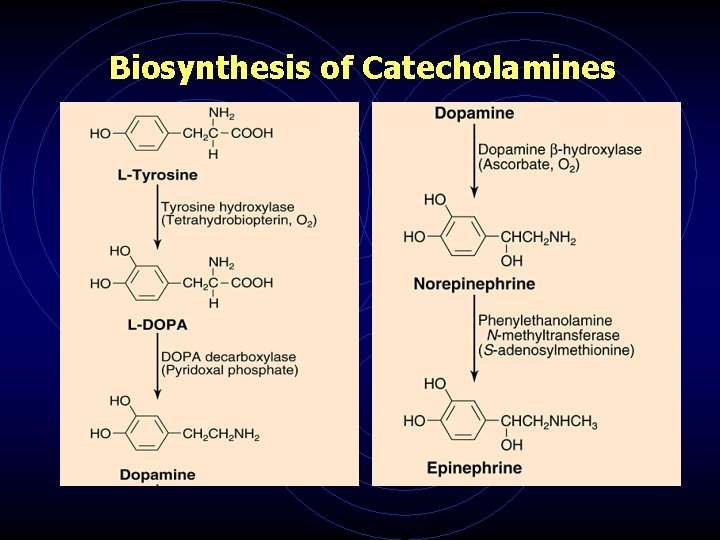
Biosynthesis of Catecholamines
Important fetures of catecholamine biosynthesis, uptake and signaling 1. Biosynthesis 2. Release 3. Uptake (transporter) 4. Receptormediated signaling 5. Catabolism
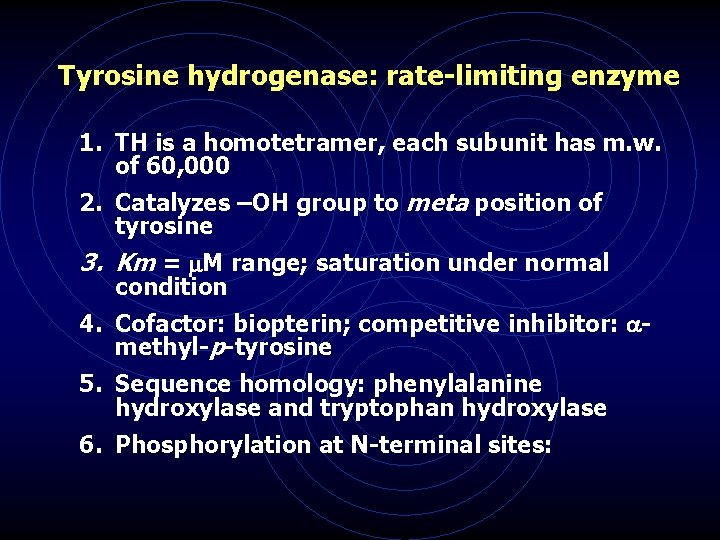
Tyrosine hydrogenase: rate-limiting enzyme 1. TH is a homotetramer, each subunit has m. w. of 60, 000 2. Catalyzes –OH group to meta position of tyrosine 3. Km = M range; saturation under normal condition 4. Cofactor: biopterin; competitive inhibitor: methyl-p-tyrosine 5. Sequence homology: phenylalanine hydroxylase and tryptophan hydroxylase 6. Phosphorylation at N-terminal sites:
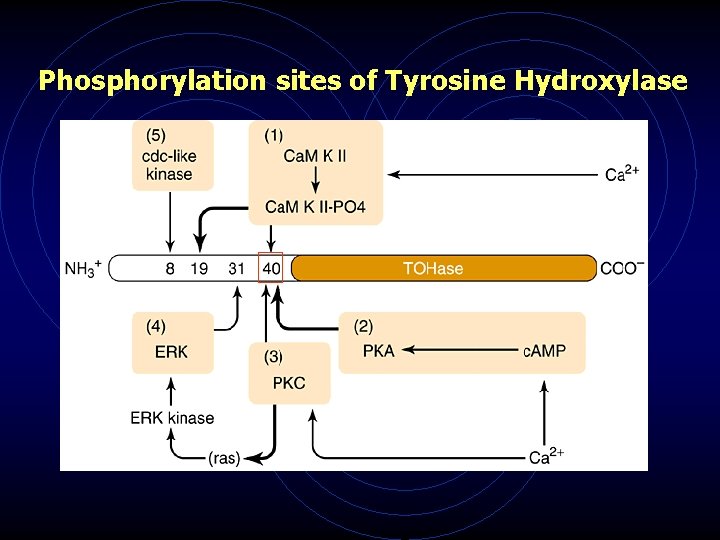
Phosphorylation sites of Tyrosine Hydroxylase
Modulation of catecholamine synthesis 1. Neuronal activity increase would enhance the amount of TH and DBH at both m. RNA and protein levels 2. TH is modulated by end-product inhibition (catecholamine competes with pterin cofactor) 3. Depolarization would activate TH activity 4. Activation of TH involves reversible phosphorylation (PKA, PKC, Ca. MKs and cdklike kinase)
Dopa decarboxylase 1. Cofactor: pyridoxine; low Km but high Vmax 2. Also decarboxylate 5 -HTP and other aromatic a. a. : aromatic amino acid decarboxylase (AAAD) 3. Inhibitor: -methyldopa Dopamine -hydroxylase 1. Cofactor: ascorbate; substrate: dopamine 2. Inhibitor: diethyldithiocarbamate (copper chelator) 3. DBH is a tetrameric glycoprotein (77 k. Da and 73 k. Da) 4. Store in the synaptic vesicle and releasable Phenylethanolamine N-methyltransferase (PNMT) Substrate: S-adenosylmethionine; regulated by corticosteroids
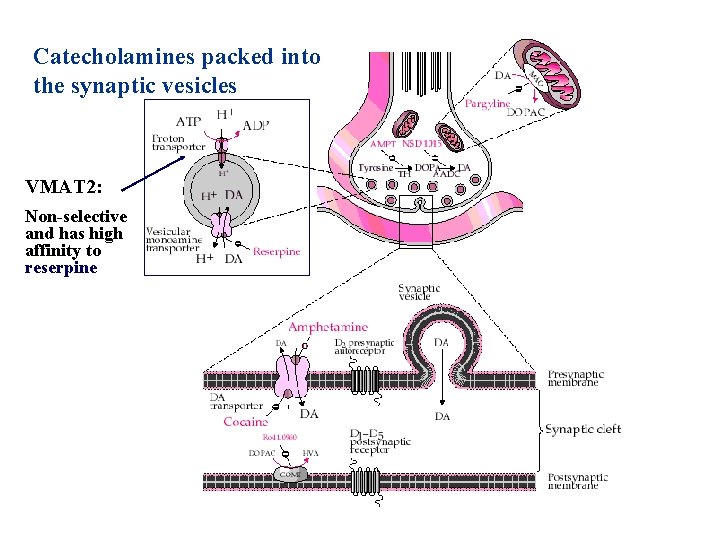
Catecholamines packed into the synaptic vesicles VMAT 2: Non-selective and has high affinity to reserpine
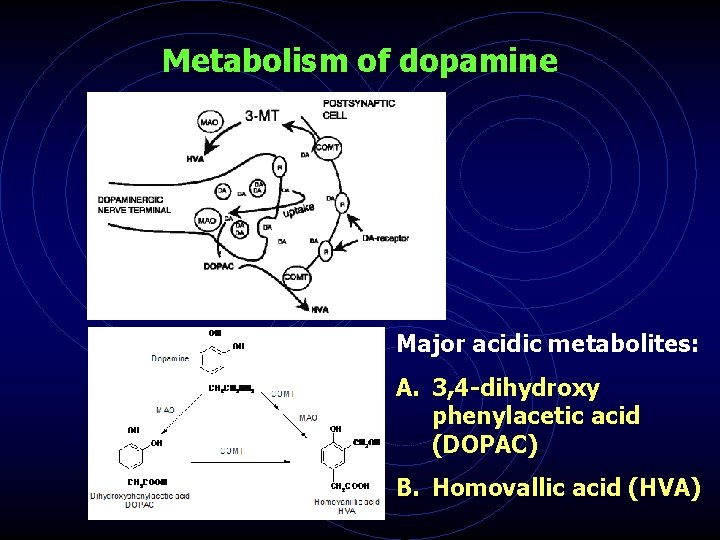
Metabolism of dopamine Major acidic metabolites: A. 3, 4 -dihydroxy phenylacetic acid (DOPAC) B. Homovallic acid (HVA)
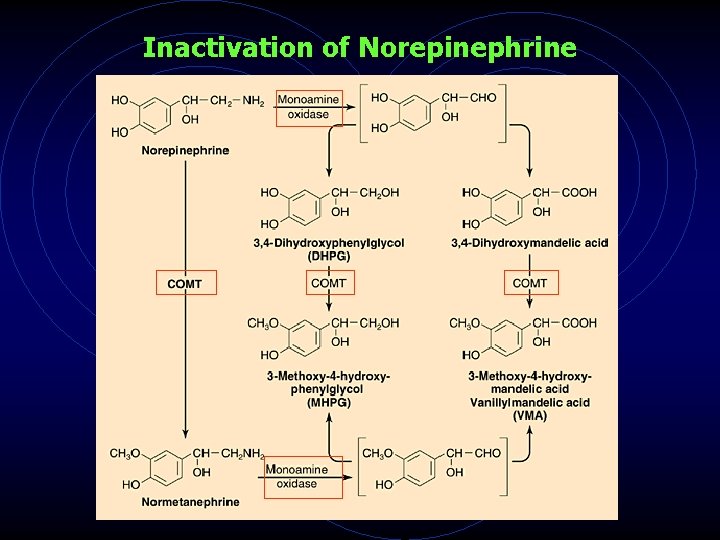
Inactivation of Norepinephrine
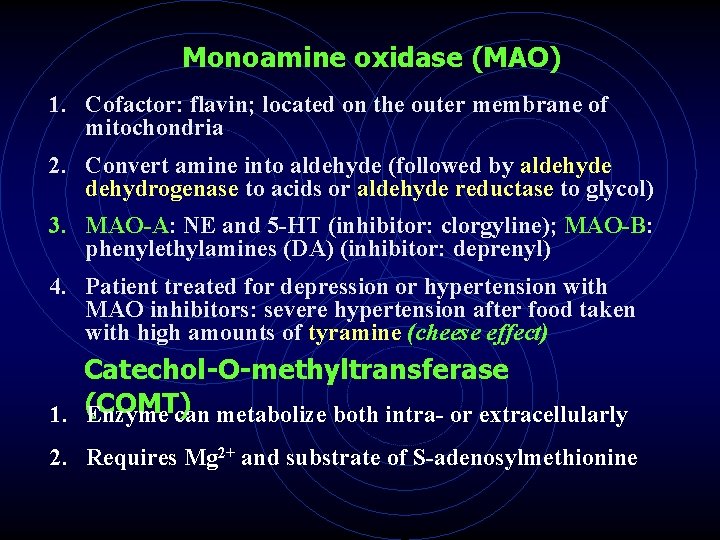
Monoamine oxidase (MAO) 1. Cofactor: flavin; located on the outer membrane of mitochondria 2. Convert amine into aldehyde (followed by aldehyde dehydrogenase to acids or aldehyde reductase to glycol) 3. MAO-A: NE and 5 -HT (inhibitor: clorgyline); MAO-B: phenylethylamines (DA) (inhibitor: deprenyl) 4. Patient treated for depression or hypertension with MAO inhibitors: severe hypertension after food taken with high amounts of tyramine (cheese effect) Catechol-O-methyltransferase 1. (COMT) Enzyme can metabolize both intra- or extracellularly 2. Requires Mg 2+ and substrate of S-adenosylmethionine
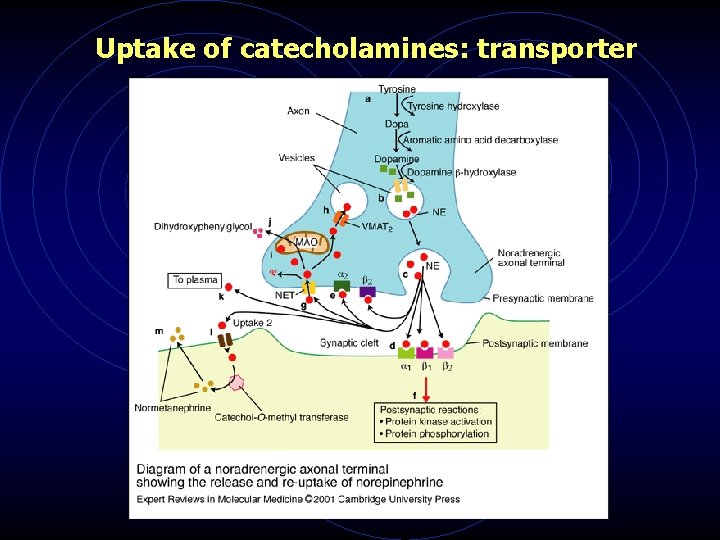
Uptake of catecholamines: transporter
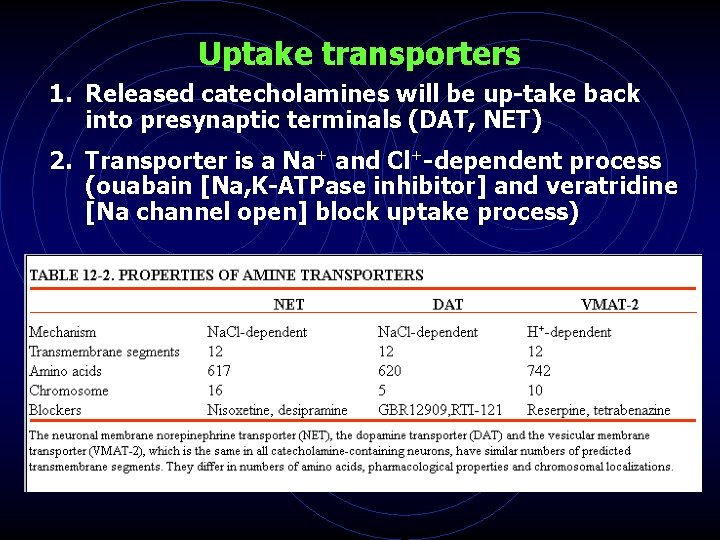
Uptake transporters 1. Released catecholamines will be up-take back into presynaptic terminals (DAT, NET) 2. Transporter is a Na+ and Cl+-dependent process (ouabain [Na, K-ATPase inhibitor] and veratridine [Na channel open] block uptake process)
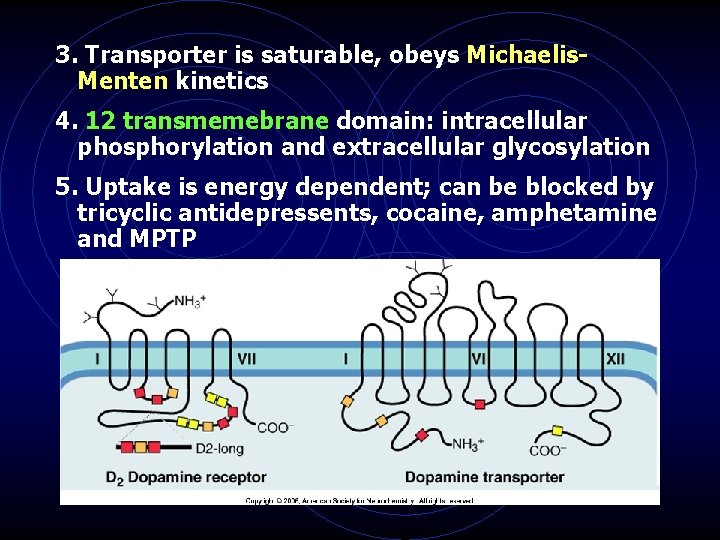
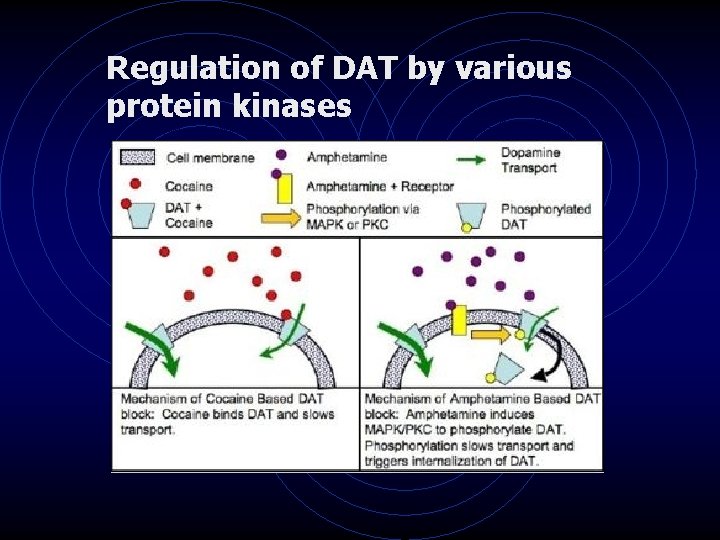
3. Transporter is saturable, obeys Michaelis. Menten kinetics 4. 12 transmemebrane domain: intracellular phosphorylation and extracellular glycosylation 5. Uptake is energy dependent; can be blocked by tricyclic antidepressents, cocaine, amphetamine and MPTP
Regulation of DAT by various protein kinases
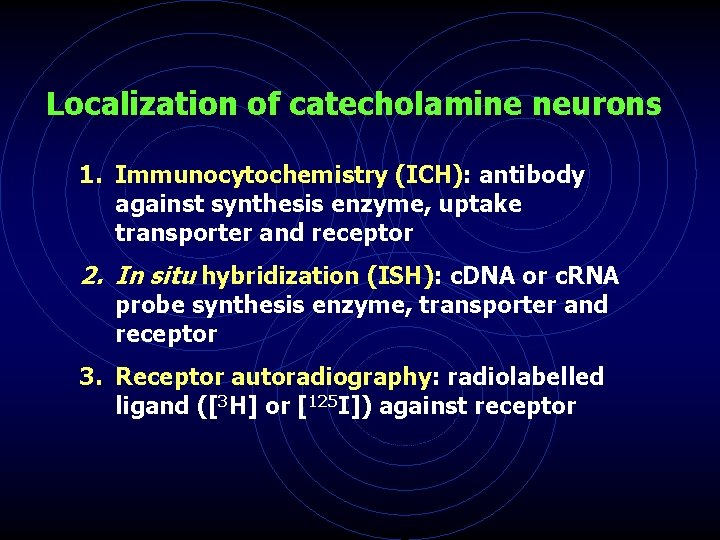
Localization of catecholamine neurons 1. Immunocytochemistry (ICH): antibody against synthesis enzyme, uptake transporter and receptor 2. In situ hybridization (ISH): c. DNA or c. RNA probe synthesis enzyme, transporter and receptor 3. Receptor autoradiography: radiolabelled ligand ([3 H] or [125 I]) against receptor
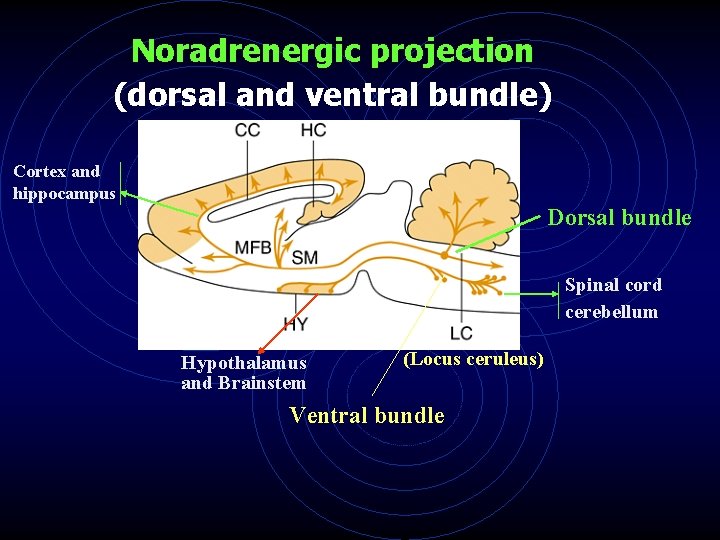
Noradrenergic projection (dorsal and ventral bundle) Cortex and hippocampus Dorsal bundle Spinal cord cerebellum Hypothalamus and Brainstem (Locus ceruleus) Ventral bundle
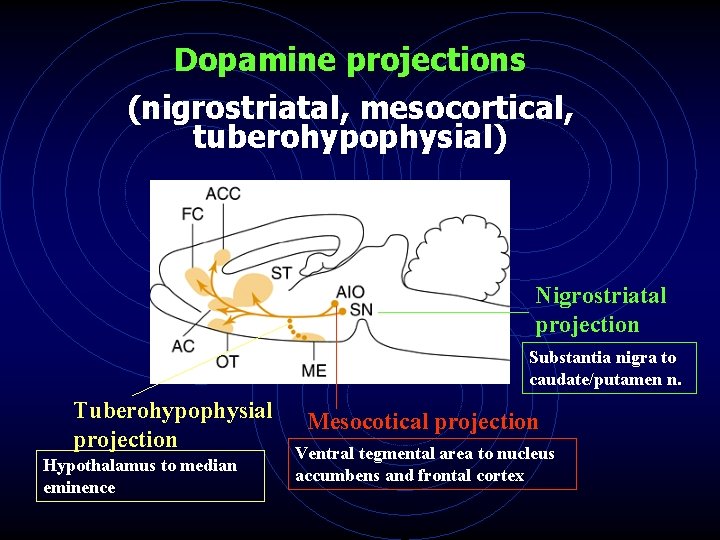
Dopamine projections (nigrostriatal, mesocortical, tuberohypophysial) Nigrostriatal projection Substantia nigra to caudate/putamen n. Tuberohypophysial projection Hypothalamus to median eminence Mesocotical projection Ventral tegmental area to nucleus accumbens and frontal cortex
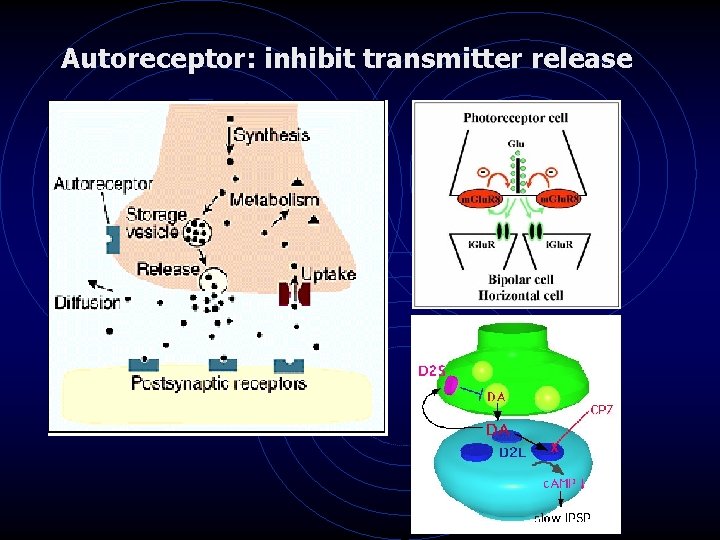
Catecholamine receptors 1. Postsynaptic receptors locate on dendrites or cell body, axons or nerve terminals 2. Presynaptic autoreceptors locate on the same neuron: 3. a. terminal autoreceptor: control release 4. b. somatodendritic autoreceptor: synthesis control 5. c. major autoreceptor type: 2 -adrenergic receptor in PNS/CNS; D 2 -dopamine receptor 6. d. exception: -adrenergic receptor facilitates NE release
Autoreceptor: inhibit transmitter release
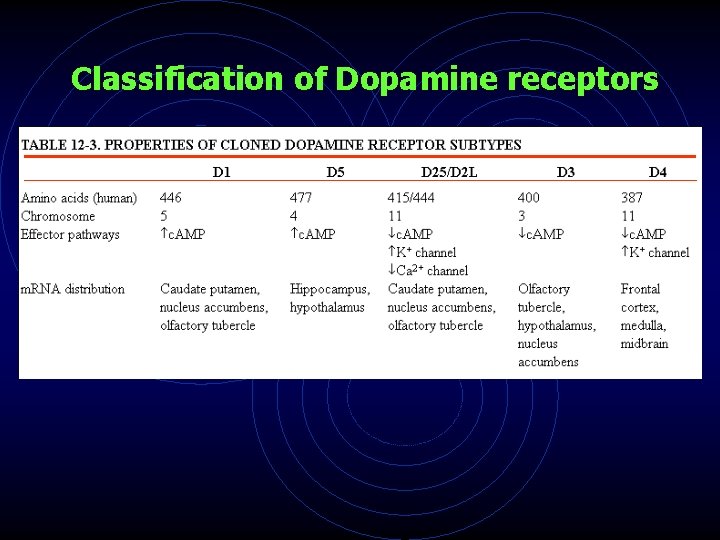
Classification of Dopamine receptors
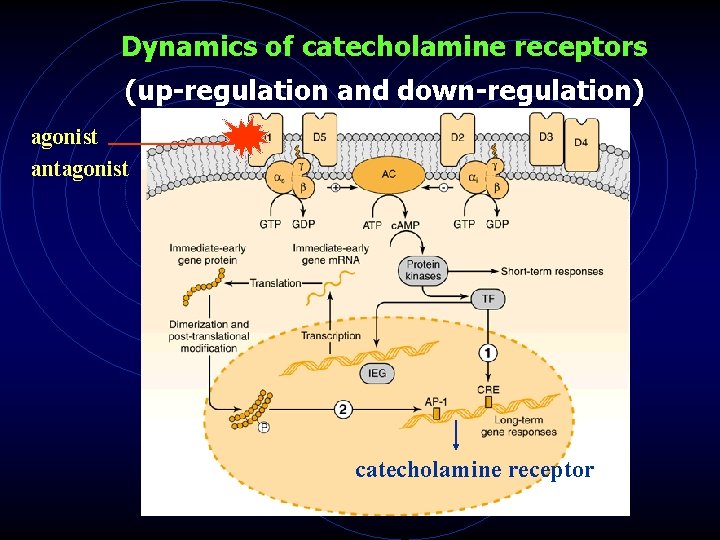
Feature of Dopamine receptors 1. Two subtypes of dopamine receptor: D-1 (short i 3, long Cterminal) and D-2 like (long i 3, short C-terminal) receptors 2. D 2 receptors contain splicing isoform: D 2 L and D 2 S (87 bp) 3. D 3 receptor has high affinity to atypical neuroleptics; D 4 receptor bind tightly with clozapine 4. Chronic antagonist treatment up-regulate D 2 receptors; agonist treatment might down-regulate the D 2 receptor 5. Pharmacological application: anti-Parkinson (D 2 agonist), anti-psychotic (D 2 antagonist), addictive drugs (DA transporter)
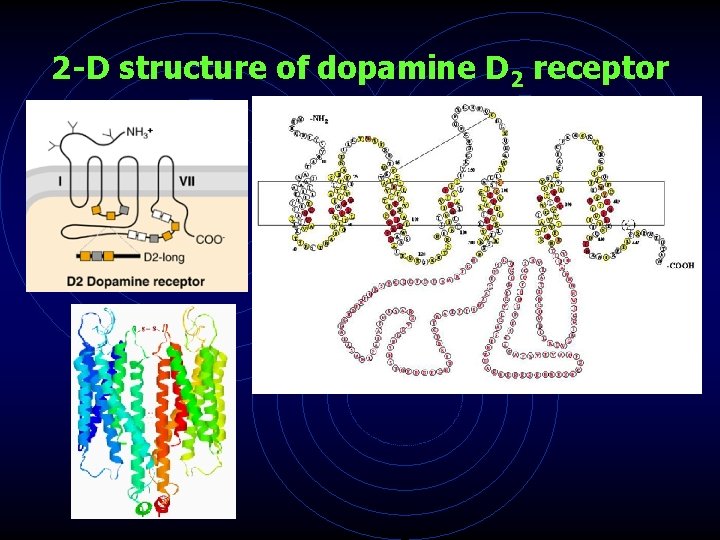
2 -D structure of dopamine D 2 receptor
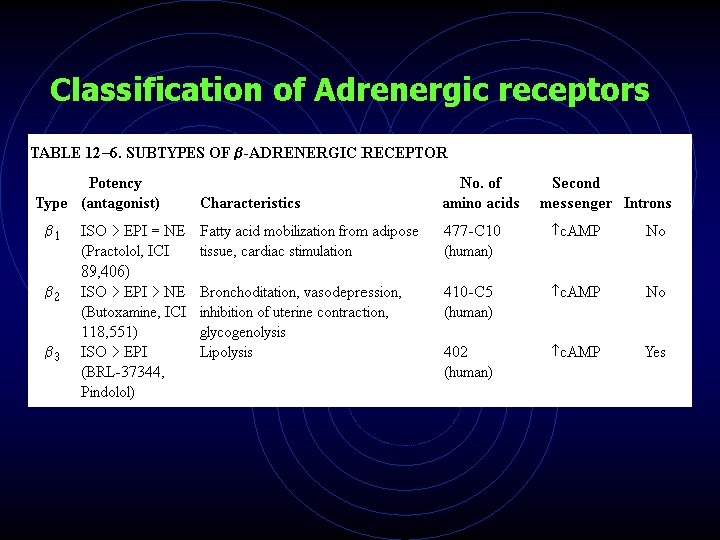
Classification of Adrenergic receptors
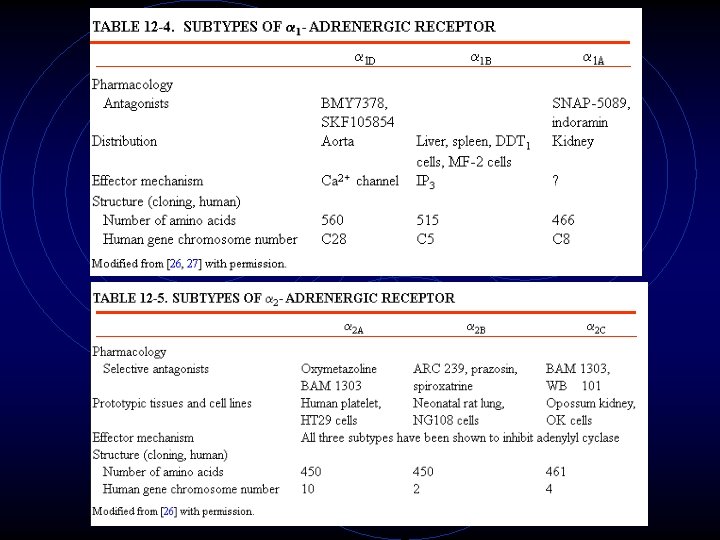
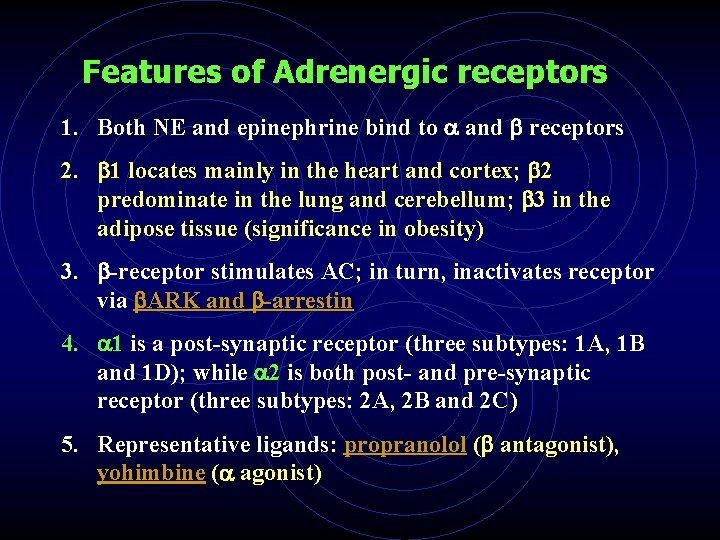
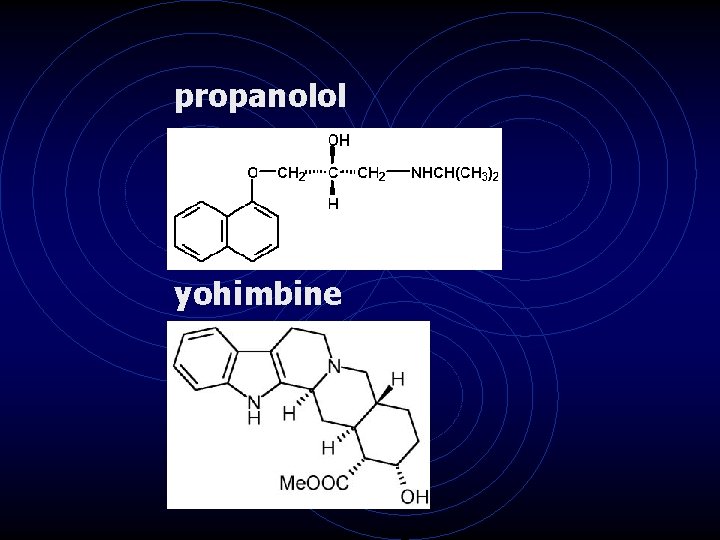
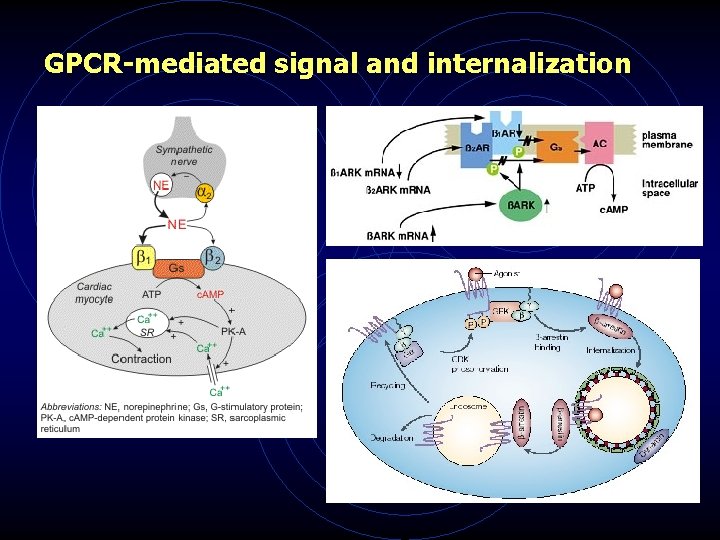
Features of Adrenergic receptors 1. Both NE and epinephrine bind to and receptors 2. 1 locates mainly in the heart and cortex; 2 predominate in the lung and cerebellum; 3 in the adipose tissue (significance in obesity) 3. -receptor stimulates AC; in turn, inactivates receptor via ARK and -arrestin 4. 1 is a post-synaptic receptor (three subtypes: 1 A, 1 B and 1 D); while 2 is both post- and pre-synaptic receptor (three subtypes: 2 A, 2 B and 2 C) 5. Representative ligands: propranolol ( antagonist), yohimbine ( agonist)
propanolol yohimbine
GPCR-mediated signal and internalization
Dynamics of catecholamine receptors (up-regulation and down-regulation) agonist antagonist catecholamine receptor